Types of Objectives
BEHAVIORALOR LEARNING OBJECTIVES
Action-oriented
Learner-centered
Outcome-focused
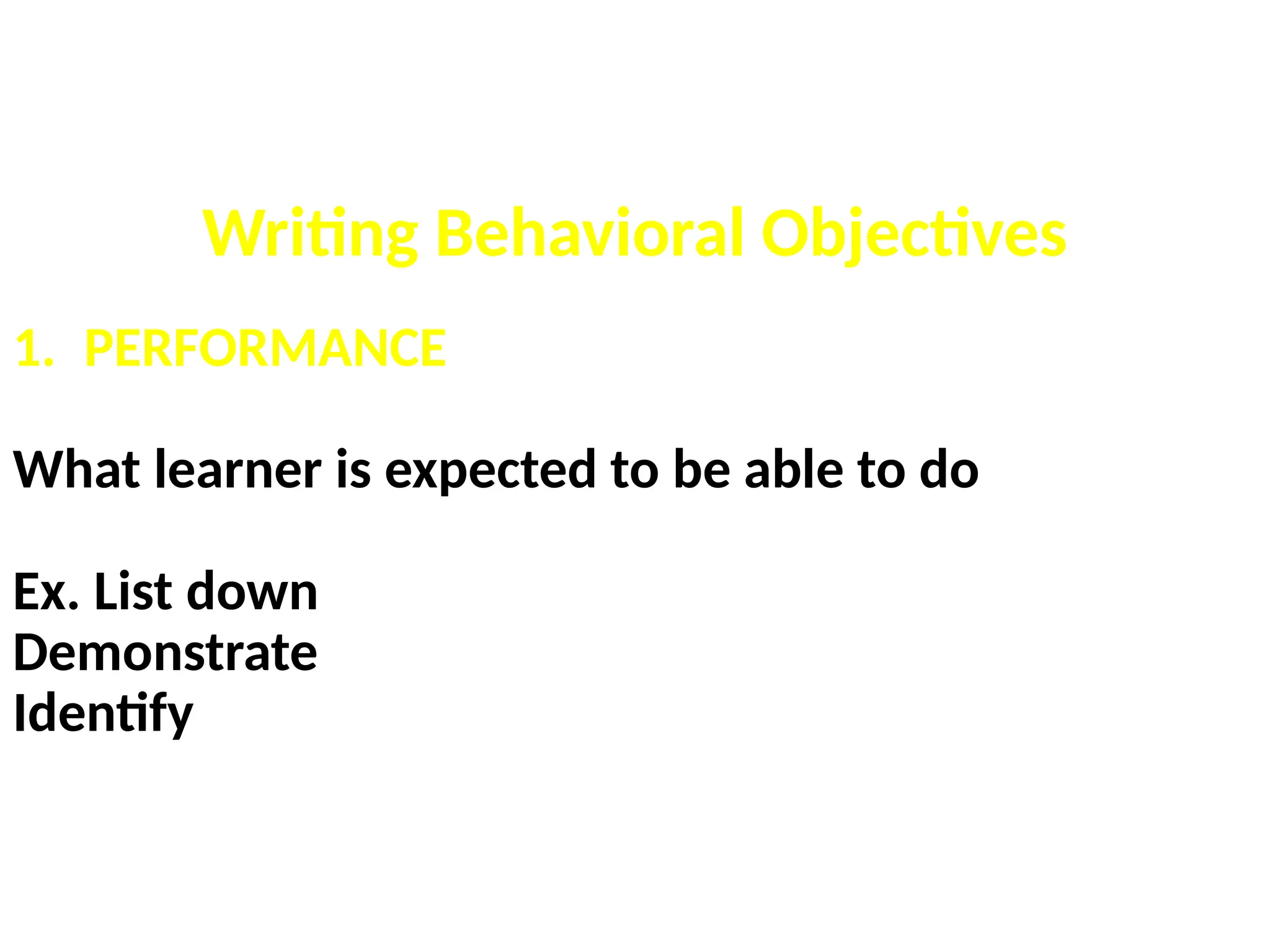
Describe what learner will be able to do
9.
• Learning outcomesdemonstrate what you
want students to know, do, or value by the
end of your course. A typical learning
outcome may start with "By the end of this
course, students will be able …" Then,
continue the sentence with an action verb
and a goal for the course.
10.
Characteristics of Goalsand Objectives
GOAL: final outcome of what is achieved at the
end of the teaching-learning process
Statement that describes what is IDEAL
Global and broad
Long-term targets
Multidimensional
11.
OBJECTIVE:
specific + single+ unidimensional behavior
Short term
Be achievable in one teaching session
Lead step by step to GOAL
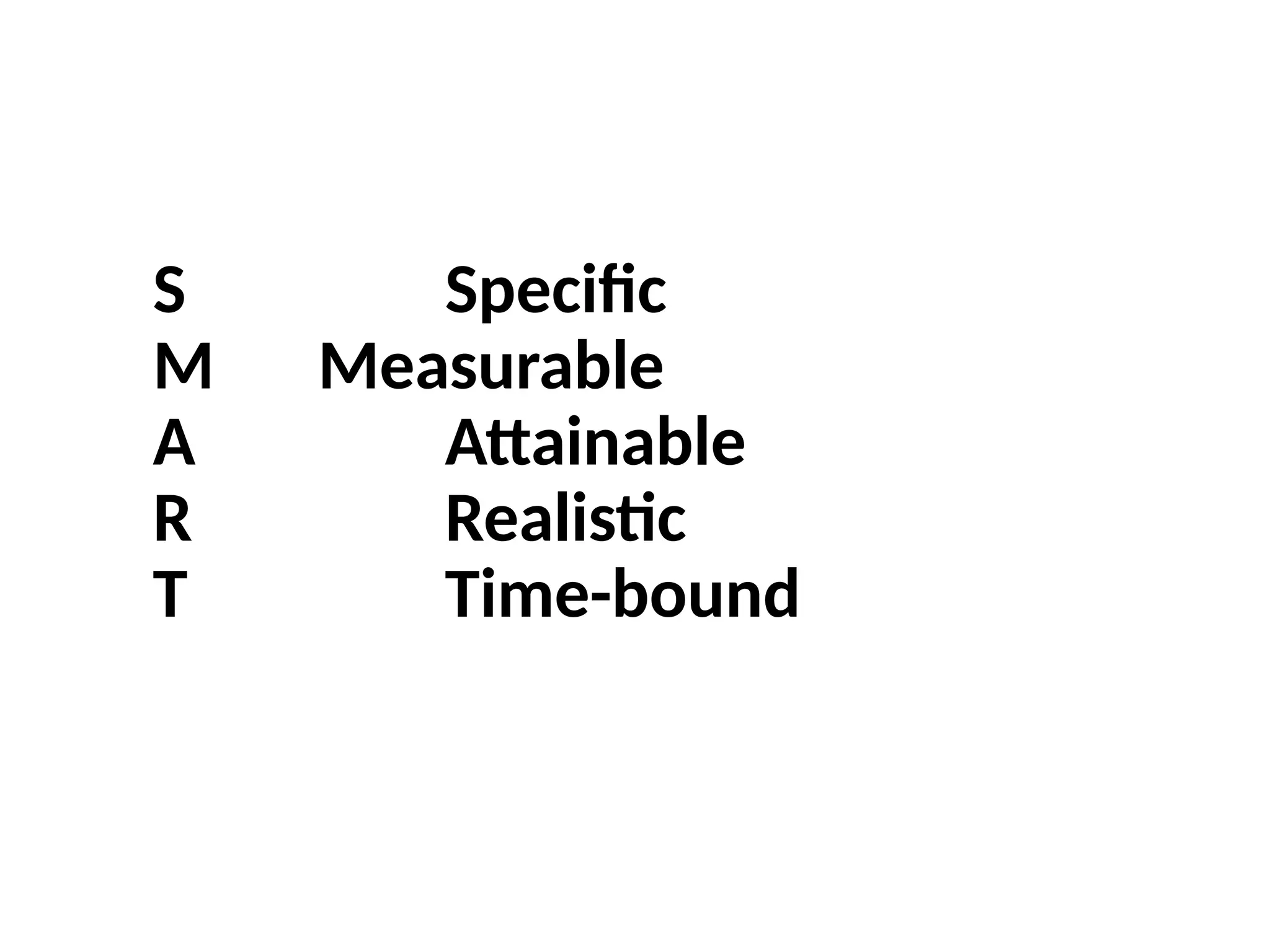
Must be observable + measurable
“advance organizers”
Derived from a goal + must be consistent
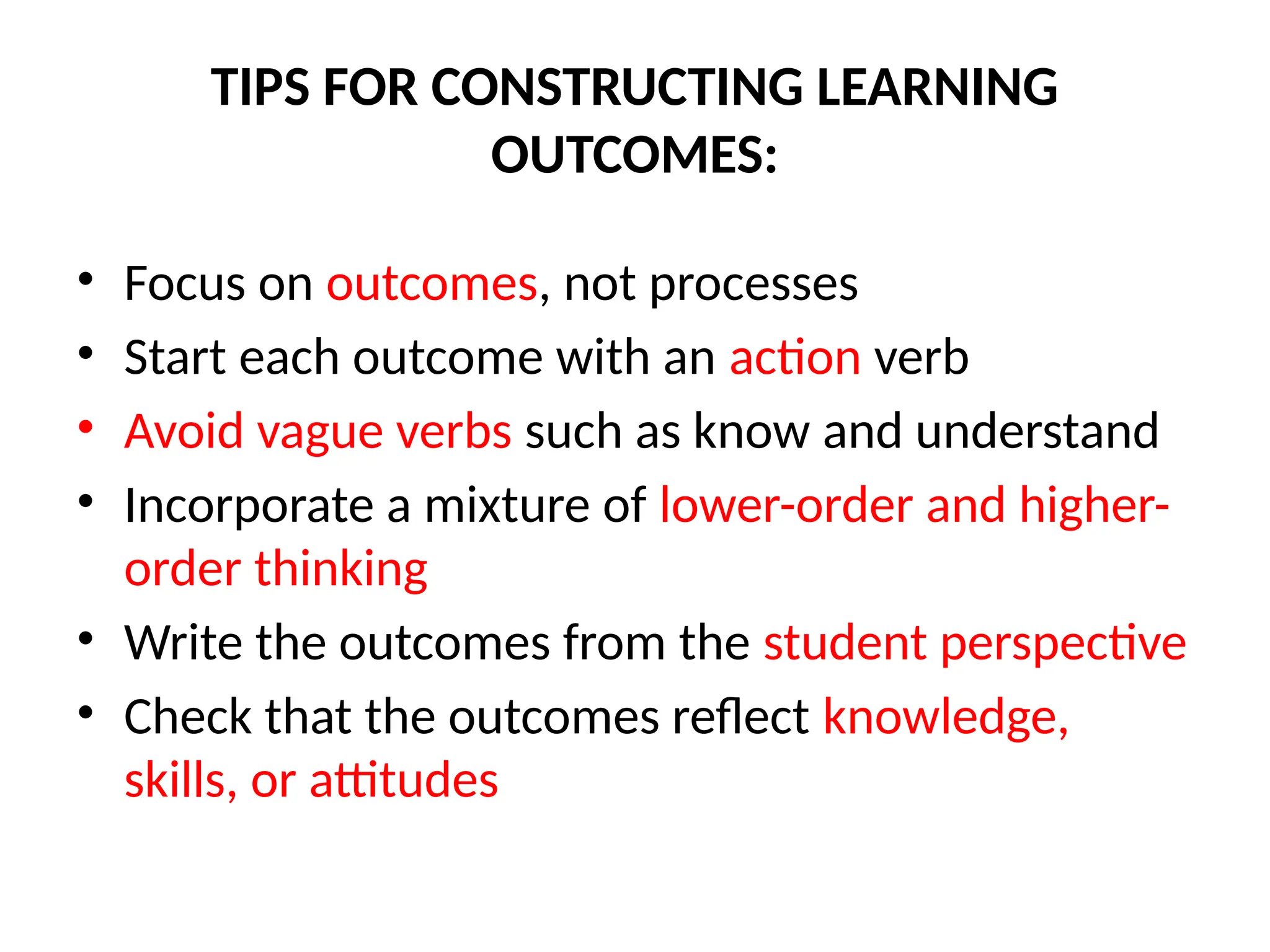
TIPS FOR CONSTRUCTINGLEARNING
OUTCOMES:
• Focus on outcomes, not processes
• Start each outcome with an action verb
• Avoid vague verbs such as know and understand
• Incorporate a mixture of lower-order and higher-
order thinking
• Write the outcomes from the student perspective
• Check that the outcomes reflect knowledge,
skills, or attitudes
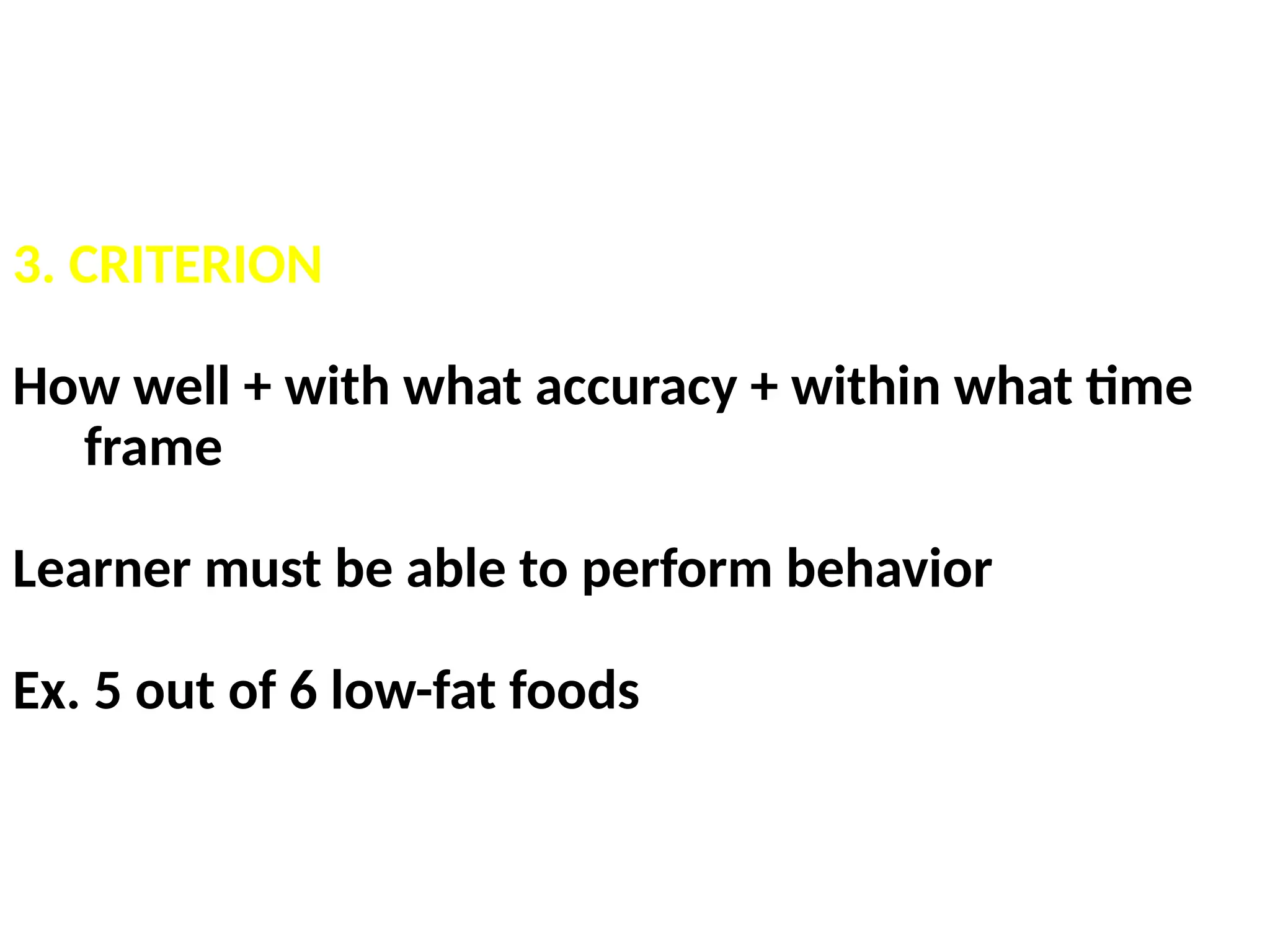
3. CRITERION
How well+ with what accuracy + within what time
frame
Learner must be able to perform behavior
Ex. 5 out of 6 low-fat foods
20.
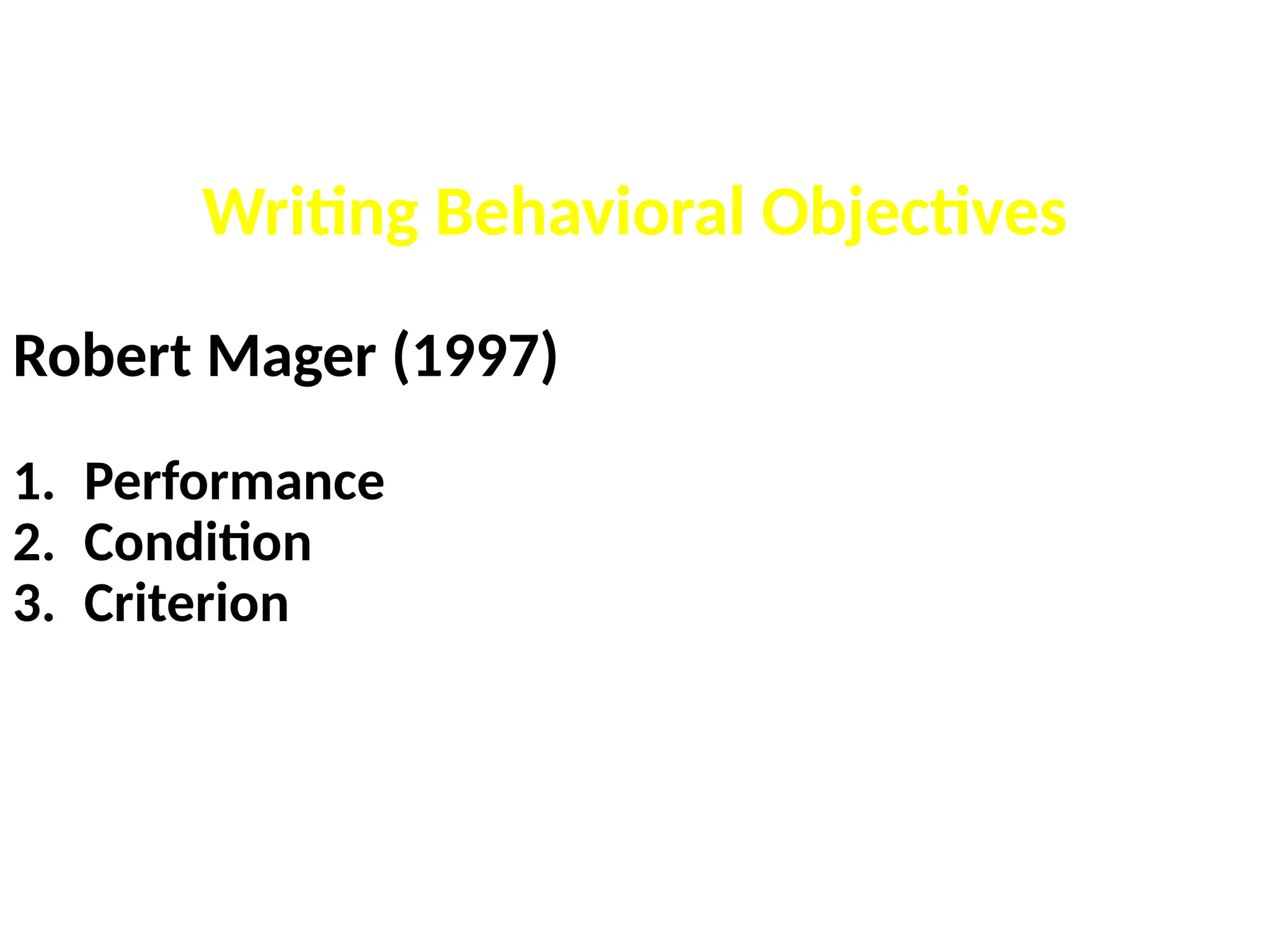
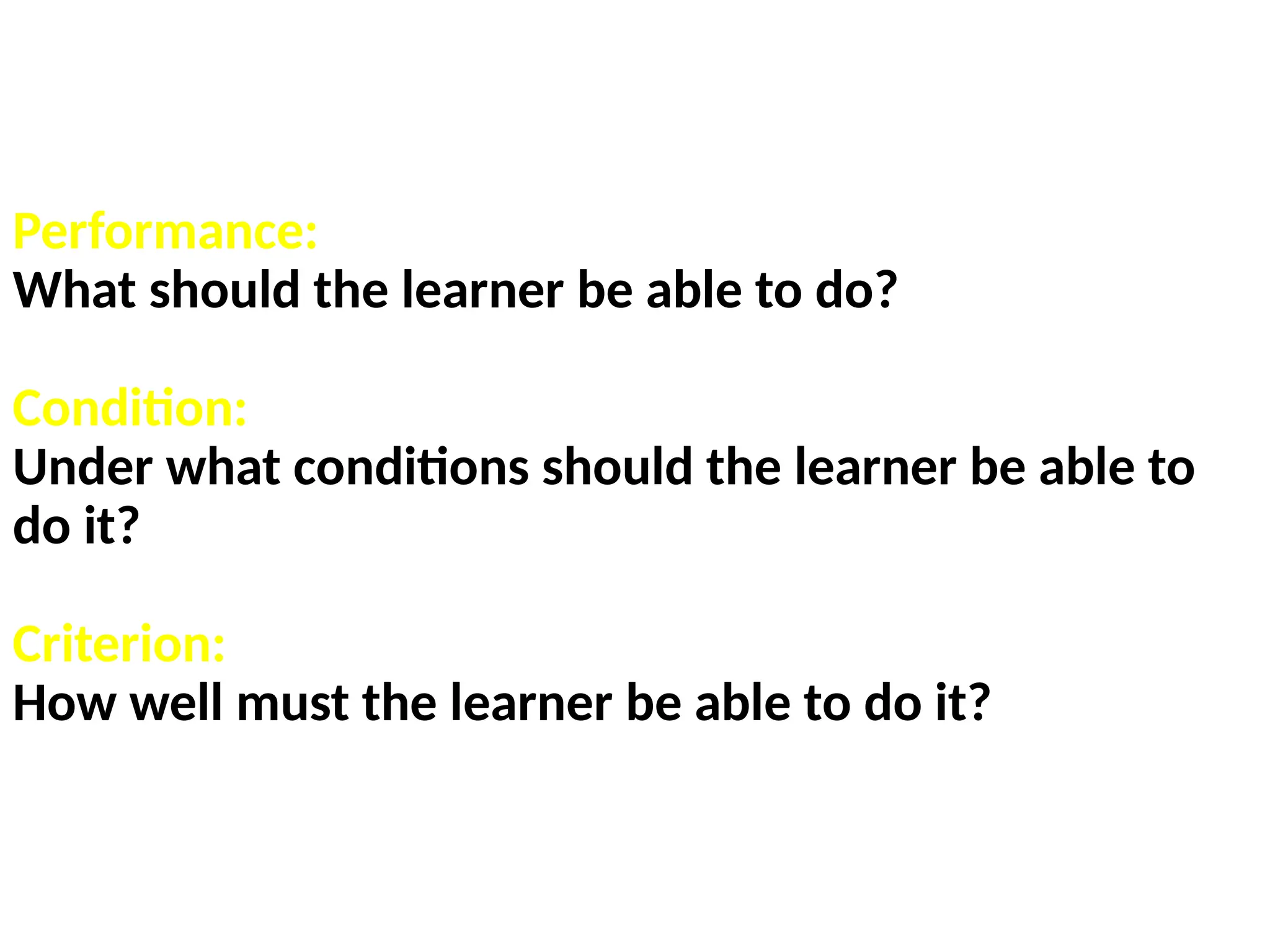
Performance:
What should thelearner be able to do?
Condition:
Under what conditions should the learner be able to
do it?
Criterion:
How well must the learner be able to do it?