In the name of Allah, the Most Gracious,
the Ever Merciful
Nouman Hussain (63)
Zohaib Nawaz (93)
Komal Younas (100)
Zunaira Kanwal (84)
Alisha Rukhsar (95)
Topics
 Latest technologies in computer system
 AI(Artificial Intelligence)
 Knowledge management and Wiki
Latest Technologies
in Computer System
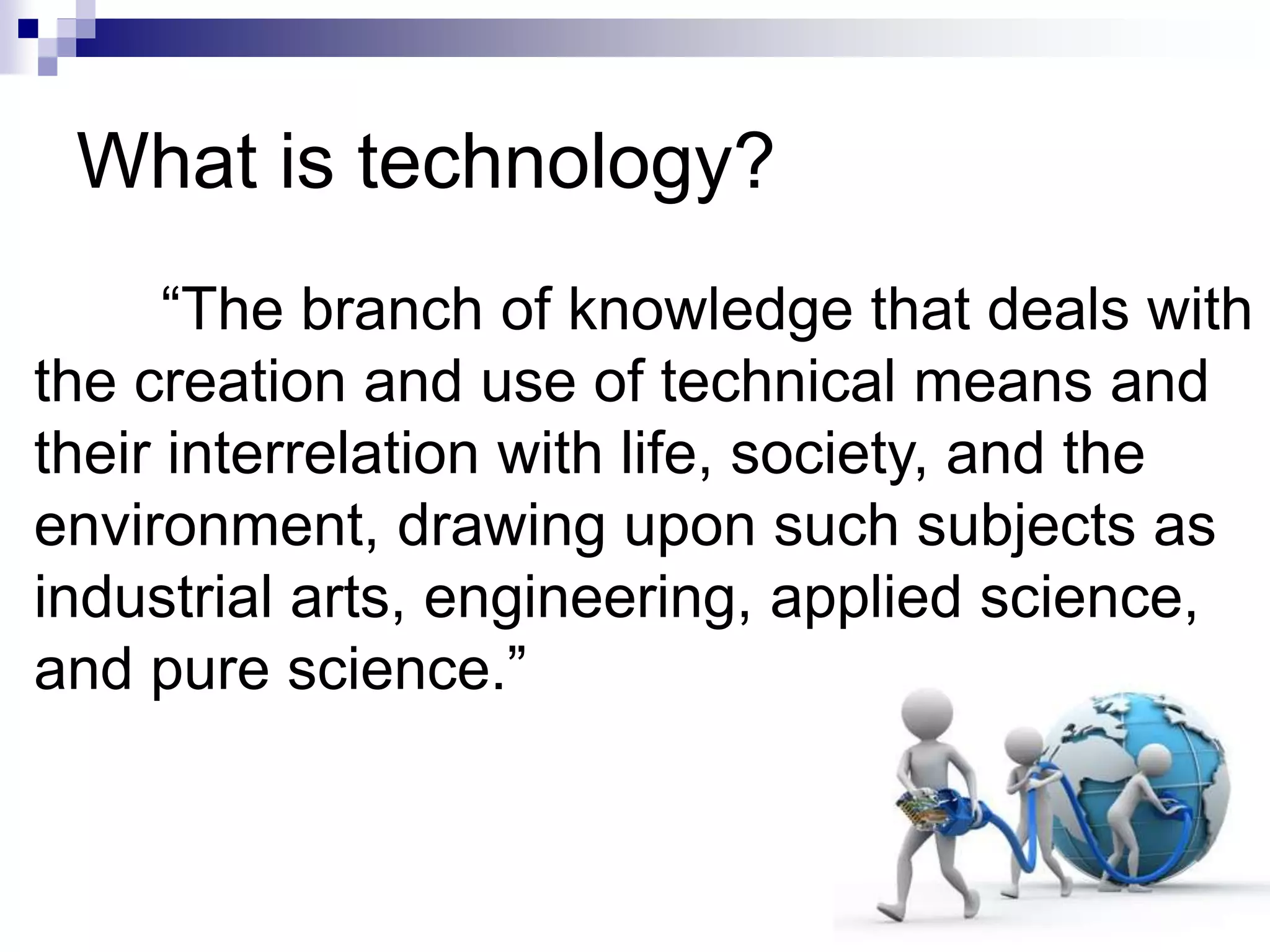
What is technology?
“The branch of knowledge that deals with
the creation and use of technical means and
their interrelation with life, society, and the
environment, drawing upon such subjects as
industrial arts, engineering, applied science,
and pure science.”
Types of technology
 Assistive Technology
 Medical Technology
 Information Technology
 Communication Technology
 Transport Technology
Artificial Intelligence
Contents
 What is Artificial Intelligence?
 History of AI
 Applications of AI
 Types of AI
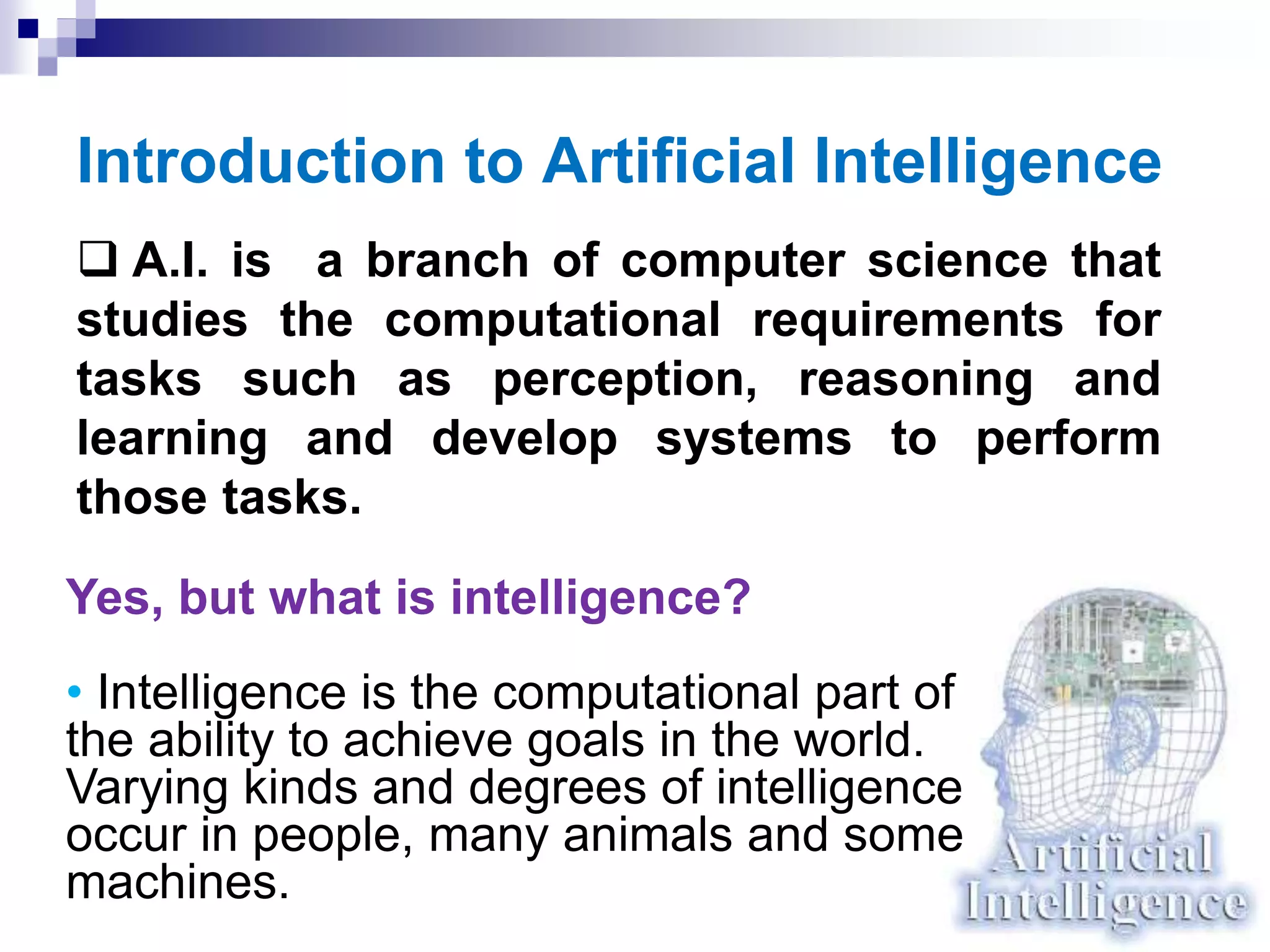
Introduction to Artificial Intelligence
 A.I. is a branch of computer science that
studies the computational requirements for
tasks such as perception, reasoning and
learning and develop systems to perform
those tasks.
Yes, but what is intelligence?
• Intelligence is the computational part of
the ability to achieve goals in the world.
Varying kinds and degrees of intelligence
occur in people, many animals and some
machines.
Introduction continue…
• System that thinks like “Human”.
• System that think “Rationally”.
• System that acts like “Humans”.
• System that acts “Rationally”.
Definition of A.I
“ The theory and development of computer systems
able to perform tasks normally requiring human
intelligence, such as visual perception, speech
recognition, decision-making, and translation
between languages.”
 An area of computer science that deals
with giving machines the ability to seem
like they have human intelligence.
History of Artificial Intelligence
 The history of artificial intelligence (AI) began in
antiquity.
 The field of AI research was founded at conference
on the
campus of Dartmouth College in the summer of 1956.
 Major AI researcher and textbook as AI is
the human-like intelligence exhibited by machine
or software.
 A variety of fields (mathematics, psychology,
engineering, economics and political science)
began to discuss the possibility of creating an
artificial brain.
Applications of Artificial Intelligence
 Game Playing
 Much of the early research in state space
search was done using common board games
such as checkers, chess, and the 15-puzzle
 Games can generate extremely large
search spaces. Theses are large and
complex enough to require powerful
techniques for determining what
alternative to explore.
Applications continue…
 Automated reasoning and Theorem
Proving
 Theorem-proving is one of the most fruitful
branches of the field
 Theorem-proving research was
responsible in formalizing search
algorithms and developing formal
representation languages such as
predicate calculus and the logic
programming language.
Applications continue…
 Natural Language Understanding and
Semantics
One of the long-standing goals of AI is the
creation of programming that are capable
of understanding and generating
human language
Applications continue…
 Robotics
A robot that blindly performs a sequence of
actions without responding to changes or
being able to detect and correct errors
could hardly considered intelligent
It should have some degree of
sensors and algorithms to guild it.
Robotics and future
Researches are going on these
days to implement the
complete “Theories of
Intelligence” and to make them
capable for tasks as Object
Manipulation, Navigation,
Mapping and Motion-Planning.
Types of Artificial Intelligence
1. Expert Systems
2. Fuzzy logic
3. Neural networks
4. Exhaustive Search
Knowledge
Management
Knowledge
Facts, information, and skills acquired
through experience or education; the
theoretical or practical understanding of a
subject.
Knowledge management
Knowledge management (KM) is the process
of capturing, developing, sharing, and
effectively using organizational knowledge.
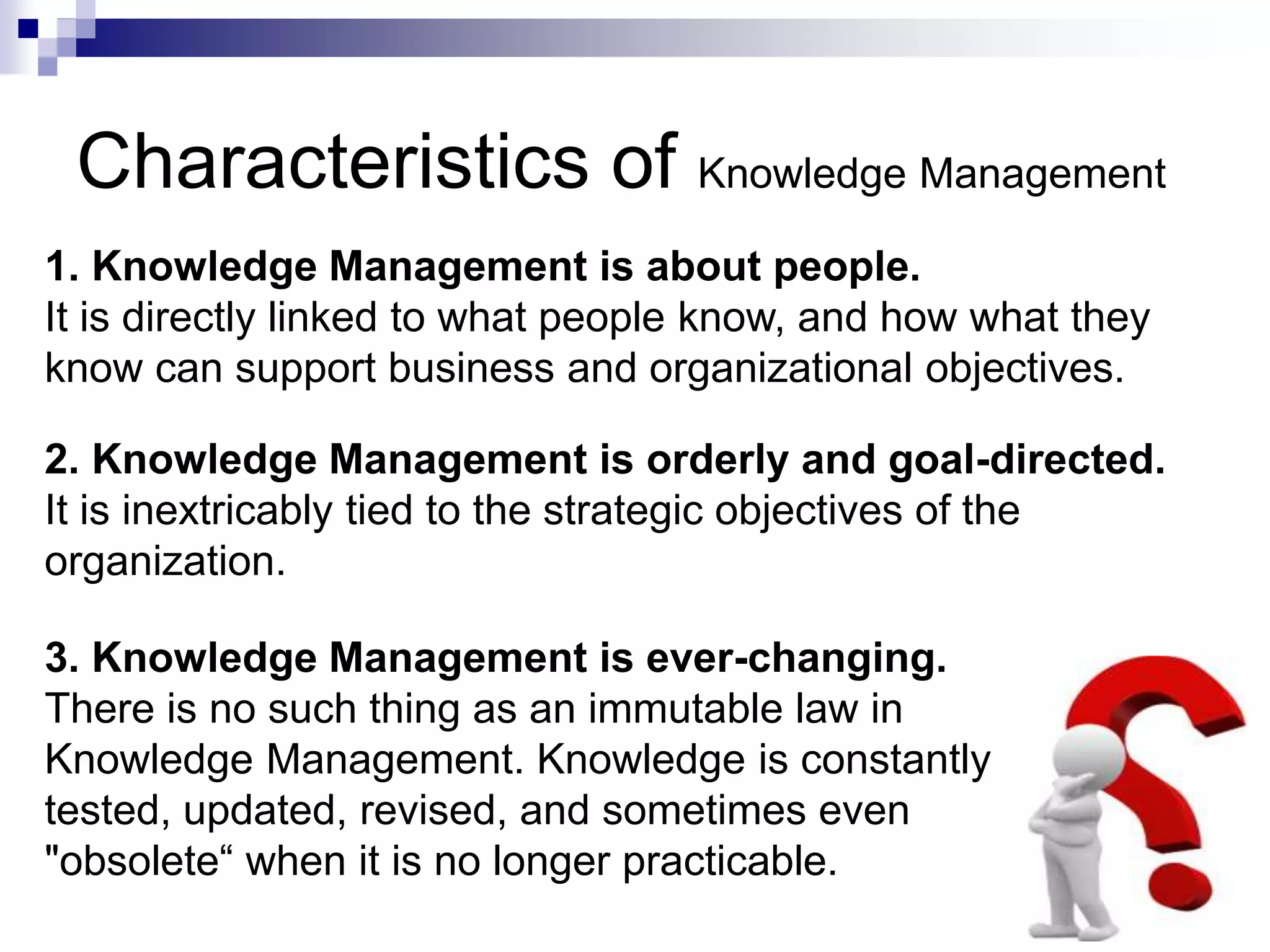
Characteristics of Knowledge Management
1. Knowledge Management is about people.
It is directly linked to what people know, and how what they
know can support business and organizational objectives.
2. Knowledge Management is orderly and goal-directed.
It is inextricably tied to the strategic objectives of the
organization.
3. Knowledge Management is ever-changing.
There is no such thing as an immutable law in
Knowledge Management. Knowledge is constantly
tested, updated, revised, and sometimes even
"obsolete“ when it is no longer practicable.
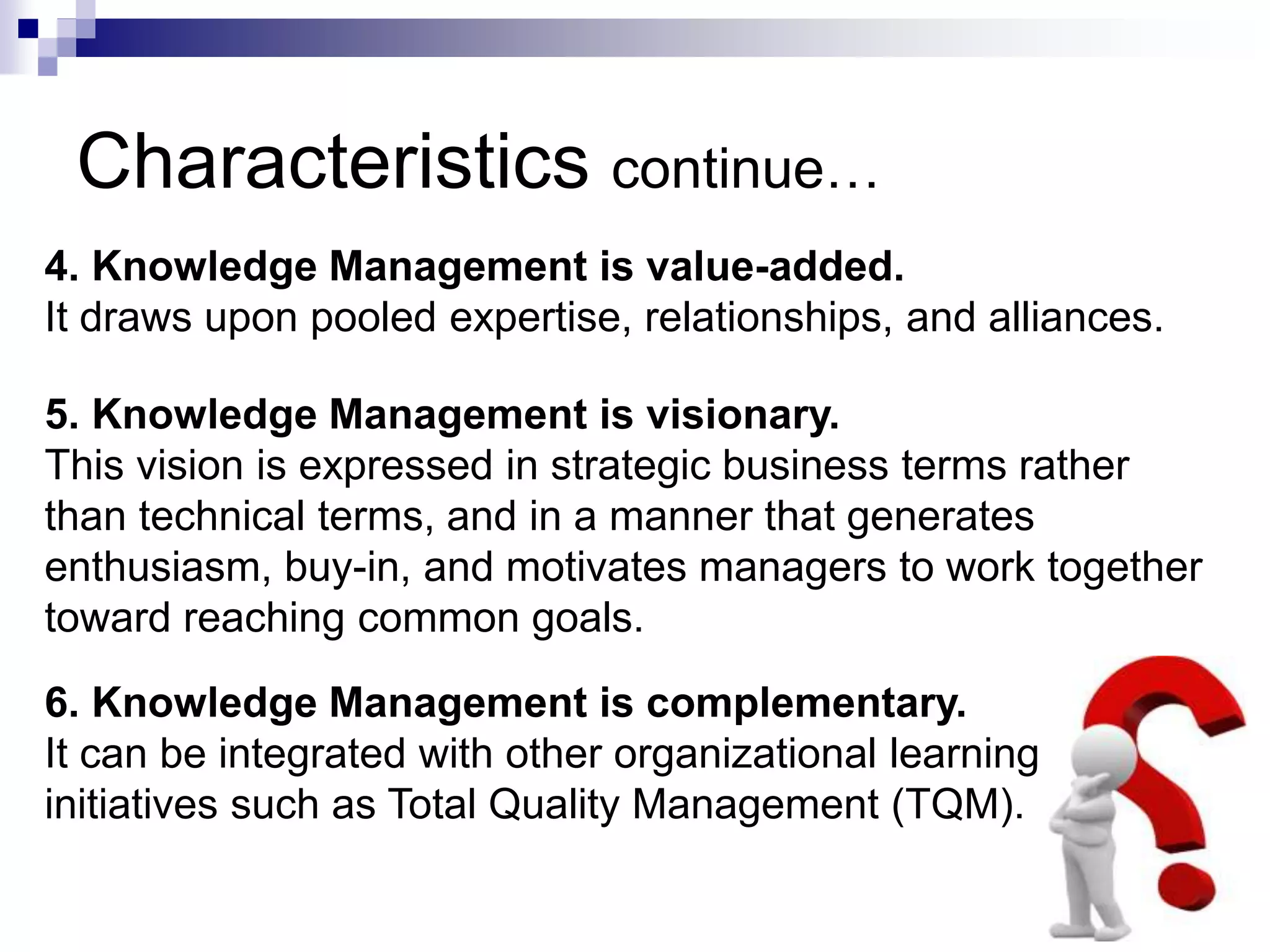
Characteristics continue…
4. Knowledge Management is value-added.
It draws upon pooled expertise, relationships, and alliances.
5. Knowledge Management is visionary.
This vision is expressed in strategic business terms rather
than technical terms, and in a manner that generates
enthusiasm, buy-in, and motivates managers to work together
toward reaching common goals.
6. Knowledge Management is complementary.
It can be integrated with other organizational learning
initiatives such as Total Quality Management (TQM).
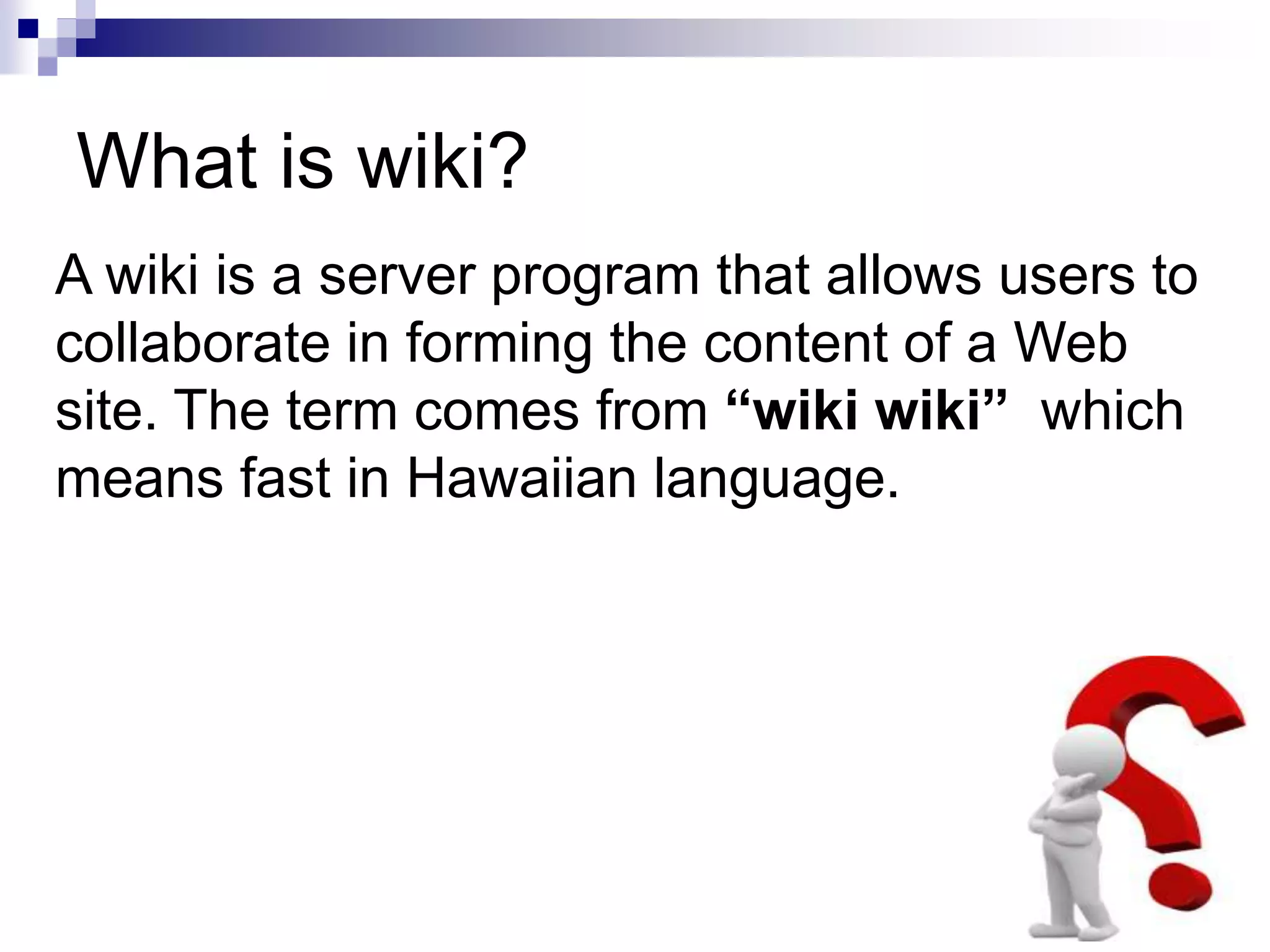
What is wiki?
A wiki is a server program that allows users to
collaborate in forming the content of a Web
site. The term comes from “wiki wiki” which
means fast in Hawaiian language.
Latest technologies in computer system  AI(Artificial Intelligence)  Knowledge management and Wiki

Latest technologies in computer system AI(Artificial Intelligence) Knowledge management and Wiki

  • 1.
    In the nameof Allah, the Most Gracious, the Ever Merciful
  • 2.
    Nouman Hussain (63) ZohaibNawaz (93) Komal Younas (100) Zunaira Kanwal (84) Alisha Rukhsar (95)
  • 3.
    Topics  Latest technologiesin computer system  AI(Artificial Intelligence)  Knowledge management and Wiki
  • 4.
  • 5.
    What is technology? “Thebranch of knowledge that deals with the creation and use of technical means and their interrelation with life, society, and the environment, drawing upon such subjects as industrial arts, engineering, applied science, and pure science.”
  • 6.
    Types of technology Assistive Technology  Medical Technology  Information Technology  Communication Technology  Transport Technology
  • 7.
  • 8.
    Contents  What isArtificial Intelligence?  History of AI  Applications of AI  Types of AI
  • 9.
    Introduction to ArtificialIntelligence  A.I. is a branch of computer science that studies the computational requirements for tasks such as perception, reasoning and learning and develop systems to perform those tasks. Yes, but what is intelligence? • Intelligence is the computational part of the ability to achieve goals in the world. Varying kinds and degrees of intelligence occur in people, many animals and some machines.
  • 10.
    Introduction continue… • Systemthat thinks like “Human”. • System that think “Rationally”. • System that acts like “Humans”. • System that acts “Rationally”.
  • 11.
    Definition of A.I “The theory and development of computer systems able to perform tasks normally requiring human intelligence, such as visual perception, speech recognition, decision-making, and translation between languages.”  An area of computer science that deals with giving machines the ability to seem like they have human intelligence.
  • 12.
    History of ArtificialIntelligence  The history of artificial intelligence (AI) began in antiquity.  The field of AI research was founded at conference on the campus of Dartmouth College in the summer of 1956.  Major AI researcher and textbook as AI is the human-like intelligence exhibited by machine or software.  A variety of fields (mathematics, psychology, engineering, economics and political science) began to discuss the possibility of creating an artificial brain.
  • 13.
    Applications of ArtificialIntelligence  Game Playing  Much of the early research in state space search was done using common board games such as checkers, chess, and the 15-puzzle  Games can generate extremely large search spaces. Theses are large and complex enough to require powerful techniques for determining what alternative to explore.
  • 14.
    Applications continue…  Automatedreasoning and Theorem Proving  Theorem-proving is one of the most fruitful branches of the field  Theorem-proving research was responsible in formalizing search algorithms and developing formal representation languages such as predicate calculus and the logic programming language.
  • 15.
    Applications continue…  NaturalLanguage Understanding and Semantics One of the long-standing goals of AI is the creation of programming that are capable of understanding and generating human language
  • 16.
    Applications continue…  Robotics Arobot that blindly performs a sequence of actions without responding to changes or being able to detect and correct errors could hardly considered intelligent It should have some degree of sensors and algorithms to guild it.
  • 17.
    Robotics and future Researchesare going on these days to implement the complete “Theories of Intelligence” and to make them capable for tasks as Object Manipulation, Navigation, Mapping and Motion-Planning.
  • 18.
    Types of ArtificialIntelligence 1. Expert Systems 2. Fuzzy logic 3. Neural networks 4. Exhaustive Search
  • 19.
  • 20.
    Knowledge Facts, information, andskills acquired through experience or education; the theoretical or practical understanding of a subject.
  • 21.
    Knowledge management Knowledge management(KM) is the process of capturing, developing, sharing, and effectively using organizational knowledge.
  • 22.
    Characteristics of KnowledgeManagement 1. Knowledge Management is about people. It is directly linked to what people know, and how what they know can support business and organizational objectives. 2. Knowledge Management is orderly and goal-directed. It is inextricably tied to the strategic objectives of the organization. 3. Knowledge Management is ever-changing. There is no such thing as an immutable law in Knowledge Management. Knowledge is constantly tested, updated, revised, and sometimes even "obsolete“ when it is no longer practicable.
  • 23.
    Characteristics continue… 4. KnowledgeManagement is value-added. It draws upon pooled expertise, relationships, and alliances. 5. Knowledge Management is visionary. This vision is expressed in strategic business terms rather than technical terms, and in a manner that generates enthusiasm, buy-in, and motivates managers to work together toward reaching common goals. 6. Knowledge Management is complementary. It can be integrated with other organizational learning initiatives such as Total Quality Management (TQM).
  • 24.
    What is wiki? Awiki is a server program that allows users to collaborate in forming the content of a Web site. The term comes from “wiki wiki” which means fast in Hawaiian language.