HOW DESIGN THINKING
SOLVES THE PROBLEM:
WHO WILL BE THE
NIGHT’S DESIGNATED
DRIVER
BY: PETER LANWES
TARGET MARKET
Typically college students
between the ages of 18-22, or
anyone who goes out drinking
with a group of friends
THE
PROCESS
INTERVIEWS AND RESEARCH WHILE
REMAINING EMPATHETIC
INTERVIEWS
• Interviewed 15 Quinnipiac students
( several from each year) in person,
all who partake in drinking.
• Asked several questions regarding
their drinking habits and means of
transportation after the “pregame”
RESULTS
• Everyone who was interviewed drinks at least once a
week, however, most drink up to 3 times a week
• Students typically rely on shuttles, cabs, or Uber to get
them to their destination, however, for local destinations
students often use a Designated Driver (DD), typically for
the students 21+
• No one wants to be the designated driver, only do if they
have to
• Students think that it should be chosen randomly,
however, they also think that other factors should be
considered that justify them not being the DD
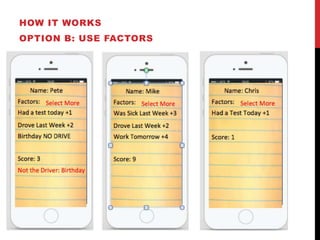
• Examples: Had work all day, drove last time, I’m meeting
someone tonight, etc.
RESEARCH
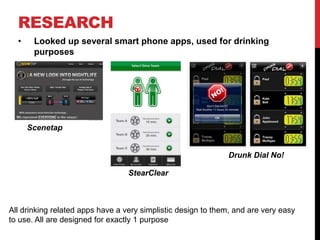
• Looked up several smart phone apps, used for drinking
purposes
Scenetap
StearClear
Drunk Dial No!
All drinking related apps have a very simplistic design to them, and are very easy
to use. All are designed for exactly 1 purpose
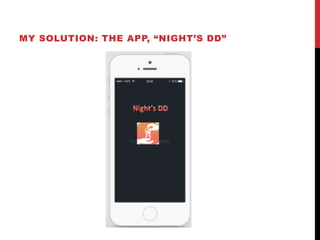
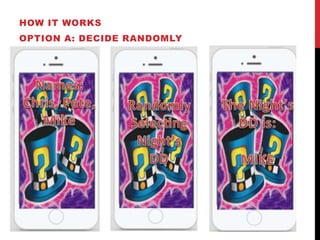
MY SOLUTION: THE APP, “NIGHT’S DD”
HOW IT WORKS
OPTION A: DECIDE RANDOMLY
HOW IT WORKS
OPTION B: USE FACTORS
CONTINUED: OPTION
B
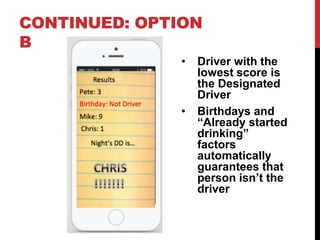
• Driver with the
lowest score is
the Designated
Driver
• Birthdays and
“Already started
drinking”
factors
automatically
guarantees that
person isn’t the
driver
PROBLEM/SOLUTION
SUMMARY
• Students on average rely on a DD once a week
• No one likes to be the driver
• Students think they should be chosen randomly, but also
sometimes think other factors should be considered
• “Night’s DD” app can choose a driver randomly or take
factors into consideration
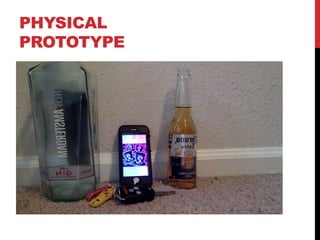
PHYSICAL
PROTOTYPE

Lanwes idd presentation

  • 1.
    HOW DESIGN THINKING SOLVESTHE PROBLEM: WHO WILL BE THE NIGHT’S DESIGNATED DRIVER BY: PETER LANWES
  • 2.
    TARGET MARKET Typically collegestudents between the ages of 18-22, or anyone who goes out drinking with a group of friends
  • 3.
    THE PROCESS INTERVIEWS AND RESEARCHWHILE REMAINING EMPATHETIC
  • 4.
    INTERVIEWS • Interviewed 15Quinnipiac students ( several from each year) in person, all who partake in drinking. • Asked several questions regarding their drinking habits and means of transportation after the “pregame”
  • 5.
    RESULTS • Everyone whowas interviewed drinks at least once a week, however, most drink up to 3 times a week • Students typically rely on shuttles, cabs, or Uber to get them to their destination, however, for local destinations students often use a Designated Driver (DD), typically for the students 21+ • No one wants to be the designated driver, only do if they have to • Students think that it should be chosen randomly, however, they also think that other factors should be considered that justify them not being the DD • Examples: Had work all day, drove last time, I’m meeting someone tonight, etc.
  • 6.
    RESEARCH • Looked upseveral smart phone apps, used for drinking purposes Scenetap StearClear Drunk Dial No! All drinking related apps have a very simplistic design to them, and are very easy to use. All are designed for exactly 1 purpose
  • 7.
    MY SOLUTION: THEAPP, “NIGHT’S DD”
  • 8.
    HOW IT WORKS OPTIONA: DECIDE RANDOMLY
  • 9.
    HOW IT WORKS OPTIONB: USE FACTORS
  • 10.
    CONTINUED: OPTION B • Driverwith the lowest score is the Designated Driver • Birthdays and “Already started drinking” factors automatically guarantees that person isn’t the driver
  • 11.
    PROBLEM/SOLUTION SUMMARY • Students onaverage rely on a DD once a week • No one likes to be the driver • Students think they should be chosen randomly, but also sometimes think other factors should be considered • “Night’s DD” app can choose a driver randomly or take factors into consideration
  • 12.