Kinesics
-AASHISH PATEL
Study Of Body Language
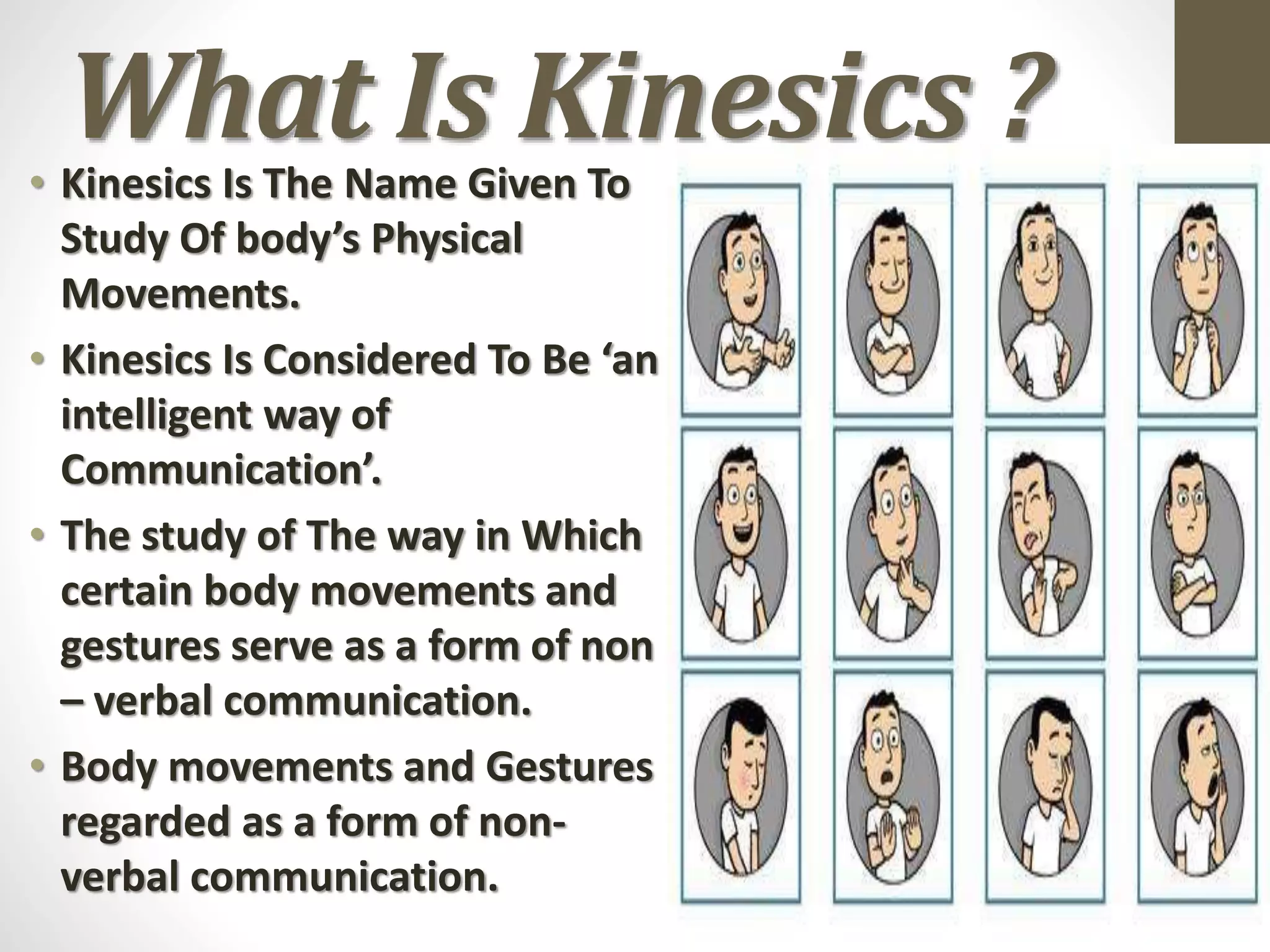
What Is Kinesics ?• Kinesics Is The Name Given To
Study Of body’s Physical
Movements.
• Kinesics Is Considered To Be ‘an
intelligent way of
Communication’.
• The study of The way in Which
certain body movements and
gestures serve as a form of non
– verbal communication.
• Body movements and Gestures
regarded as a form of non-
verbal communication.
Kinesics includes the
follwing things
•Personal appearance
•Posture
•Eye Contact
•Proxemics
•Chronemics
•Paralinguistics
Personal appearance
• The final area of Kinesics is appearance.
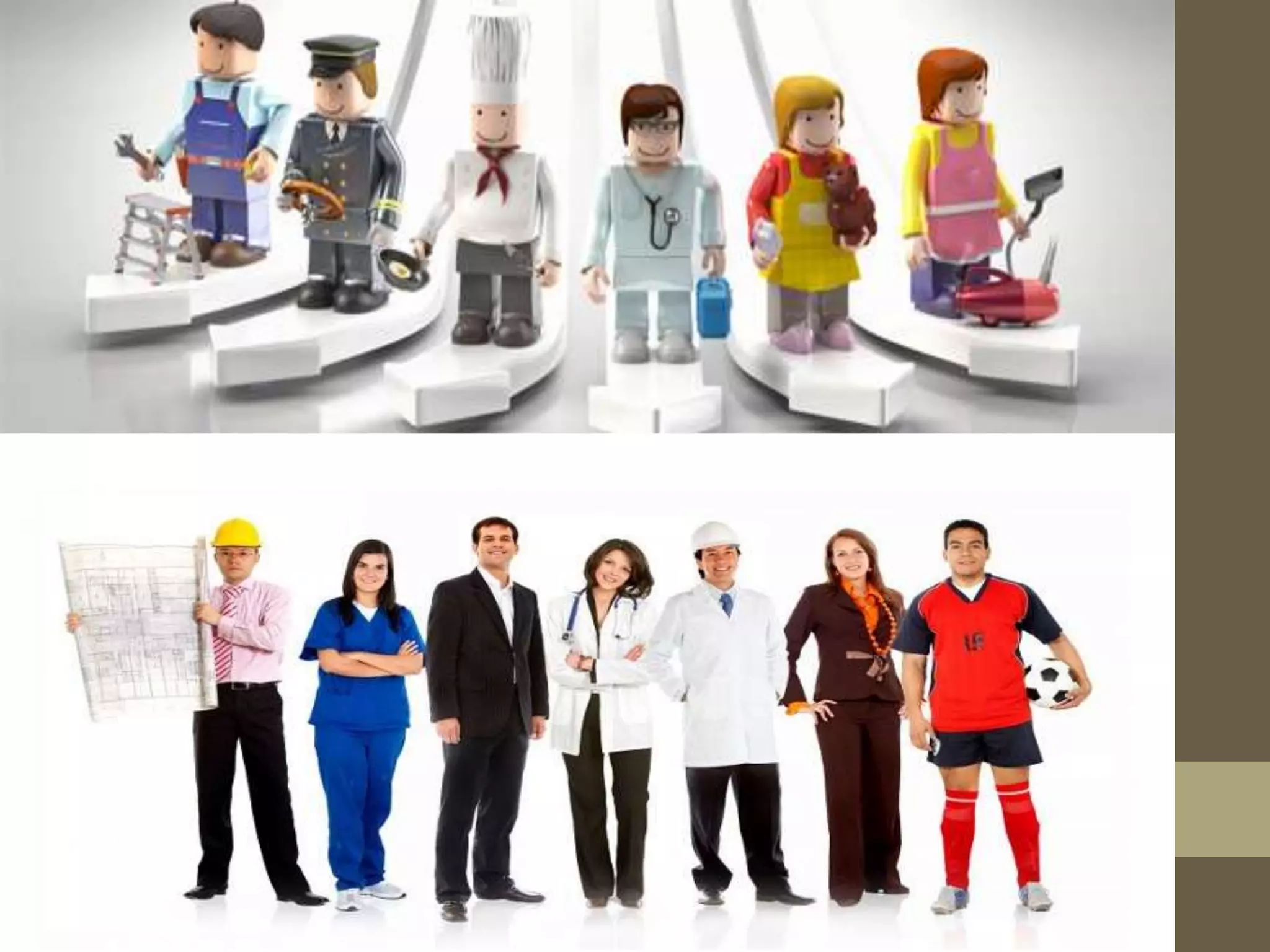
• Appearance includes clothes, hair , jewelry, cosmetics and such.it
accents our body movements and how we are perceived.
• Appearance tells others how we want to be seen. How we practice
the “ rules ” of the game in an organization.
• If you changed your appearance drastically-from formal to informal ,
for example-how would others respond?
• When do you give your appearance special attention ? These
occasions tell you about the importance of appearance.
• Most people indicate they are not influenced by another’s physical
appearance , but apparently they are.
• Expect your appearance to a part of the messages you communicate,
and should plan your appearance so that it will effectively
communicate to others.
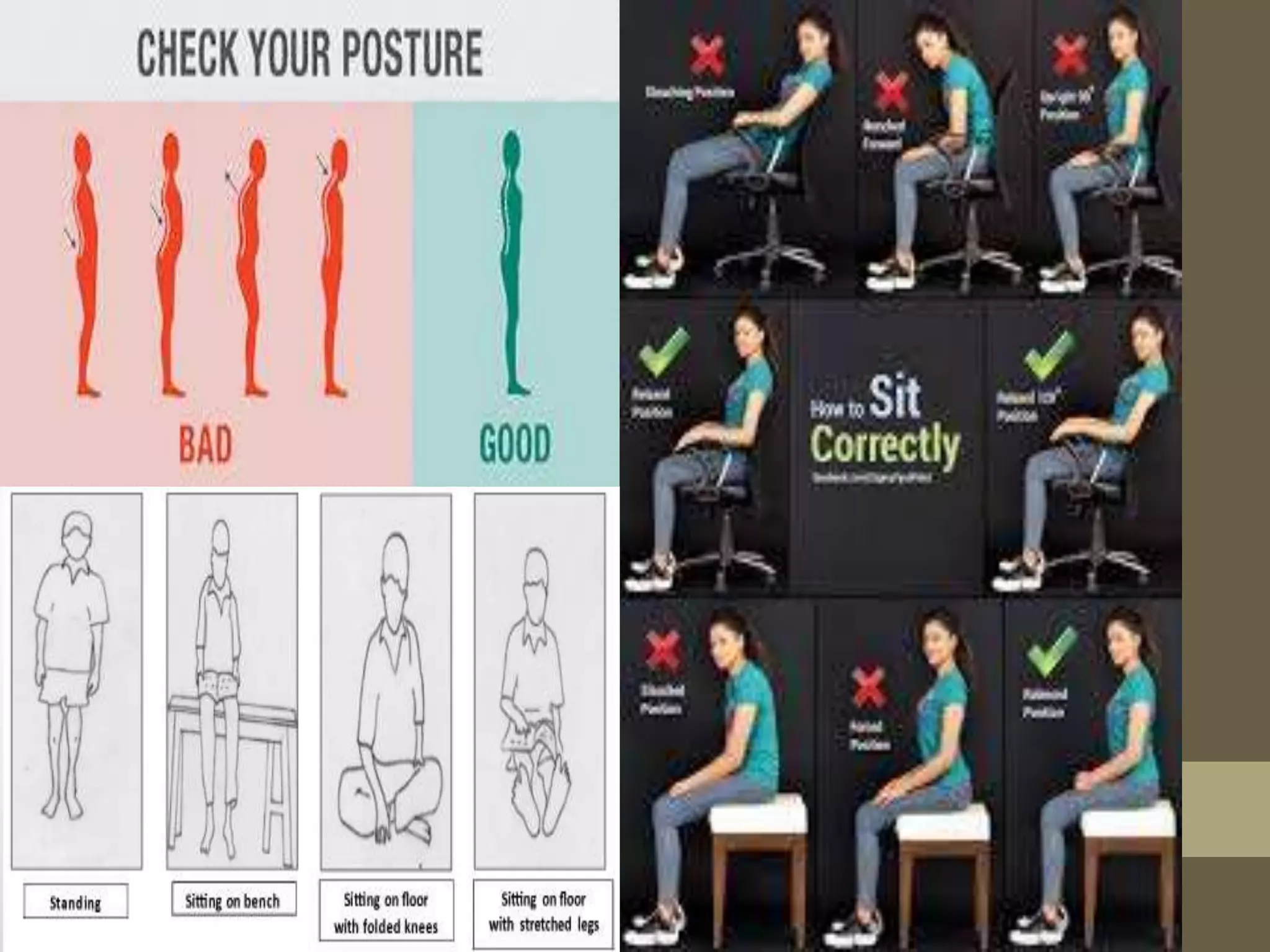
Posture• Body shape and posture are a part of kinesics . Body shape
and posture affect how we think about ourselves , how we
relate to other , and how others relate to us even though body
shape is mostly hereditary and largely uncontrollable .
• When we encounter an unfamiliar situation , we become
more aware of body shape and posture-interview or a formal
speech .
• Posture is part of any relationship , regardless of your degree
of awareness . Whether you lean forward/backward , stand or
sit erectly , or slouch , you tell another person something .
• The others mental filter gives meaning to your posture .
Eye Contact
• The eyes are considered to be the windows of the soul. You
look to the eyes of a speaker to help find out the truthfulness
of his speech , his intelligence , attitudes , and feelings. Eye
contact is a direct and powerful form of non-verbal
communication
Effective use of Facial Expression
• If you smile regularly you will be perceived as more likable , friendly , warm
and approachable.
• Smiling is often contagious and students will react favorably and learn more.
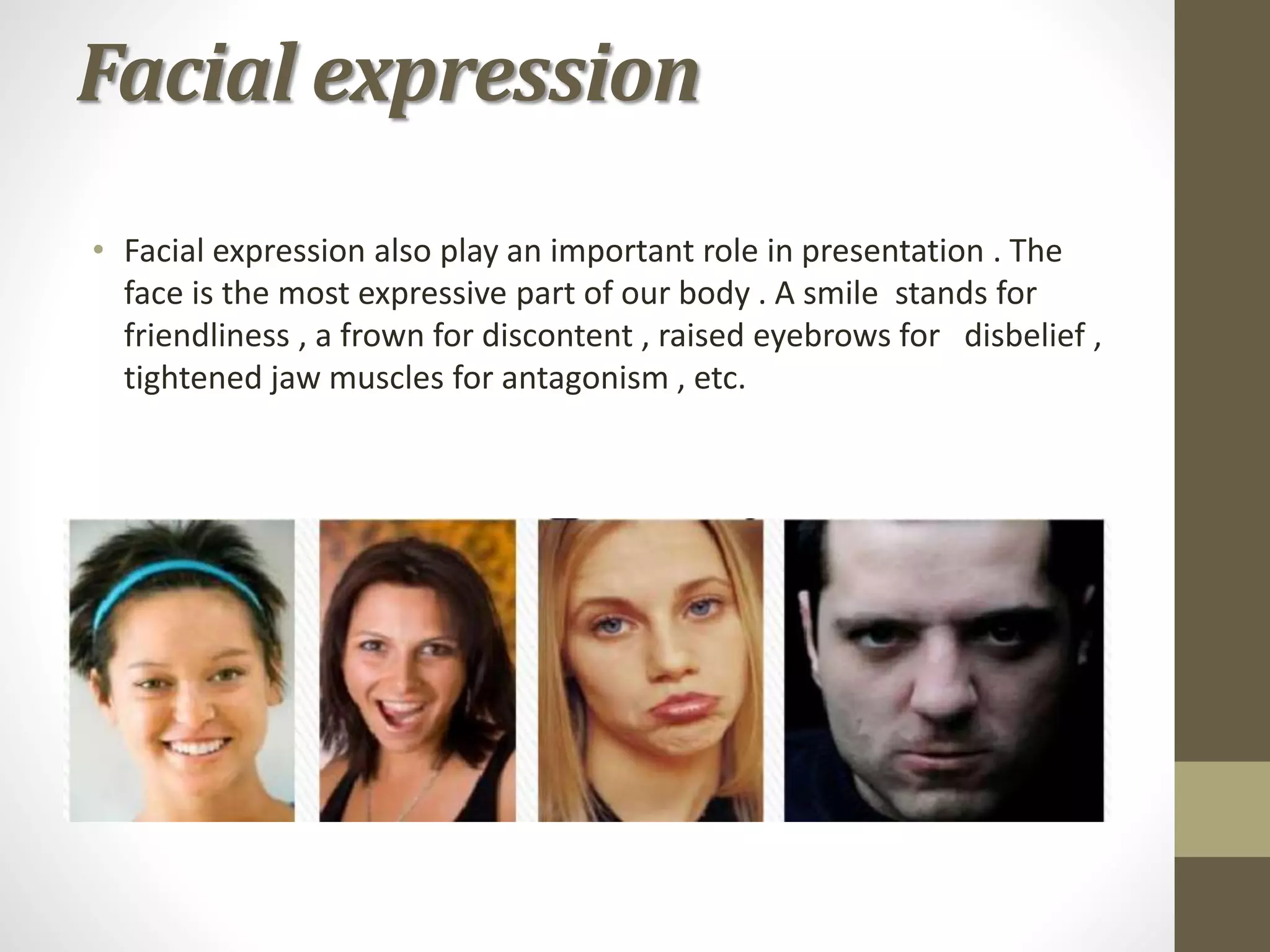
Facial expression
• Facial expression also play an important role in presentation . The
face is the most expressive part of our body . A smile stands for
friendliness , a frown for discontent , raised eyebrows for disbelief ,
tightened jaw muscles for antagonism , etc.
Proxemics
• Proxemics is a type of non verbal communication.
• It is the study of how we communicate with the space around
us.
• It involves how we arrange personal space and what we
arrange in it.
• Definition : “The interrelated observations and
theories of man’s use of space as a specialized
elaboration of culture.”
• - Edward T . Hall,
• The cultural anthropologist who coined the term in
1963 , emphasized the impact of Proxemics behavior on
interpersonal communication.
Meaning :
1. The study of spatial distances between individuals in
different cultures and situations.
Intimate distance for embracing , touching or
whispering
 close phase – less than 6 inches (15 cm)
 Far phase – 6 to 18 inches (15 to 46 cm)
2. personal distance for inactions among good friends
of family members
 close phase – 1.5 to 2.5 feet (46 to 76 cm)
 far phase – 2.5 to 4 feet (76 to 120 cm)
3. social distance for interactions among
acquaintances
 close phase -4 to 7 feet (1.2 to 2.1 m)
 far phase –7to 12feet (2.1to 3.7m)
4. public distance used for public speaking
 close phase – 12 to 25 feet (3.7 to 7.6 m)
 far phase – 25 feet (7.6 m ) or more.
Chronemics
• Ways that we use our time communicate
information about ourselves and our
feelings
• Interest & affection
• Power & status
• Activities
• Can indicate other messages- appropriate
times for phone calls (Call at 2 a.m. usually
indicates emergency)
• Our society values time highly; we as
Americans have an emphasis on watching
the clock and doing things on time- varies
from culture to culture
Paralinguistics
•Paralinguistics features are non-
verbal vocal cues that heip you to give
urgency to your voice. Your voice is
your trademark, it is that part of
yourself that adds human touch to
your words.
Below mentioned points can be
considered as characteristics of
paralinguistics
•volume:
Volume is the loudness or the softness of
the voice.
• Pitch
Pitch refers to the number of
vibrations per second of your voice.
THANK YOU
-AASHISH PATEL

Kinesics

  • 2.
  • 3.
    What Is Kinesics?• Kinesics Is The Name Given To Study Of body’s Physical Movements. • Kinesics Is Considered To Be ‘an intelligent way of Communication’. • The study of The way in Which certain body movements and gestures serve as a form of non – verbal communication. • Body movements and Gestures regarded as a form of non- verbal communication.
  • 4.
    Kinesics includes the follwingthings •Personal appearance •Posture •Eye Contact •Proxemics •Chronemics •Paralinguistics
  • 5.
    Personal appearance • Thefinal area of Kinesics is appearance. • Appearance includes clothes, hair , jewelry, cosmetics and such.it accents our body movements and how we are perceived. • Appearance tells others how we want to be seen. How we practice the “ rules ” of the game in an organization. • If you changed your appearance drastically-from formal to informal , for example-how would others respond? • When do you give your appearance special attention ? These occasions tell you about the importance of appearance. • Most people indicate they are not influenced by another’s physical appearance , but apparently they are. • Expect your appearance to a part of the messages you communicate, and should plan your appearance so that it will effectively communicate to others.
  • 8.
    Posture• Body shapeand posture are a part of kinesics . Body shape and posture affect how we think about ourselves , how we relate to other , and how others relate to us even though body shape is mostly hereditary and largely uncontrollable . • When we encounter an unfamiliar situation , we become more aware of body shape and posture-interview or a formal speech . • Posture is part of any relationship , regardless of your degree of awareness . Whether you lean forward/backward , stand or sit erectly , or slouch , you tell another person something . • The others mental filter gives meaning to your posture .
  • 10.
    Eye Contact • Theeyes are considered to be the windows of the soul. You look to the eyes of a speaker to help find out the truthfulness of his speech , his intelligence , attitudes , and feelings. Eye contact is a direct and powerful form of non-verbal communication
  • 13.
    Effective use ofFacial Expression • If you smile regularly you will be perceived as more likable , friendly , warm and approachable. • Smiling is often contagious and students will react favorably and learn more.
  • 14.
    Facial expression • Facialexpression also play an important role in presentation . The face is the most expressive part of our body . A smile stands for friendliness , a frown for discontent , raised eyebrows for disbelief , tightened jaw muscles for antagonism , etc.
  • 15.
    Proxemics • Proxemics isa type of non verbal communication. • It is the study of how we communicate with the space around us. • It involves how we arrange personal space and what we arrange in it. • Definition : “The interrelated observations and theories of man’s use of space as a specialized elaboration of culture.” • - Edward T . Hall, • The cultural anthropologist who coined the term in 1963 , emphasized the impact of Proxemics behavior on interpersonal communication.
  • 16.
    Meaning : 1. Thestudy of spatial distances between individuals in different cultures and situations. Intimate distance for embracing , touching or whispering  close phase – less than 6 inches (15 cm)  Far phase – 6 to 18 inches (15 to 46 cm) 2. personal distance for inactions among good friends of family members  close phase – 1.5 to 2.5 feet (46 to 76 cm)  far phase – 2.5 to 4 feet (76 to 120 cm)
  • 17.
    3. social distancefor interactions among acquaintances  close phase -4 to 7 feet (1.2 to 2.1 m)  far phase –7to 12feet (2.1to 3.7m) 4. public distance used for public speaking  close phase – 12 to 25 feet (3.7 to 7.6 m)  far phase – 25 feet (7.6 m ) or more.
  • 19.
    Chronemics • Ways thatwe use our time communicate information about ourselves and our feelings • Interest & affection • Power & status • Activities • Can indicate other messages- appropriate times for phone calls (Call at 2 a.m. usually indicates emergency) • Our society values time highly; we as Americans have an emphasis on watching the clock and doing things on time- varies from culture to culture
  • 21.
    Paralinguistics •Paralinguistics features arenon- verbal vocal cues that heip you to give urgency to your voice. Your voice is your trademark, it is that part of yourself that adds human touch to your words.
  • 22.
    Below mentioned pointscan be considered as characteristics of paralinguistics •volume: Volume is the loudness or the softness of the voice. • Pitch Pitch refers to the number of vibrations per second of your voice.
  • 23.