KPI’S YOU SHOULD
KNOW
Tested Digital Expert Ltd
Background:
 Let’s begin with the definition of a KPI, the
acronym stands for a Key Performance Indicator.
KPI’s help evaluate the success of a specific
activity an organisation partakes in, such as a
Marketing strategy. An organisation would set a
quantifiable measurement before a project and
then measure the outcome against the KPI, thus
illustrating the performance of the task. KPI’s are
usually integrated in long term plans, such as
executing a Digital Marketing strategy through a
Gantt chart.
Types of KPI’s:
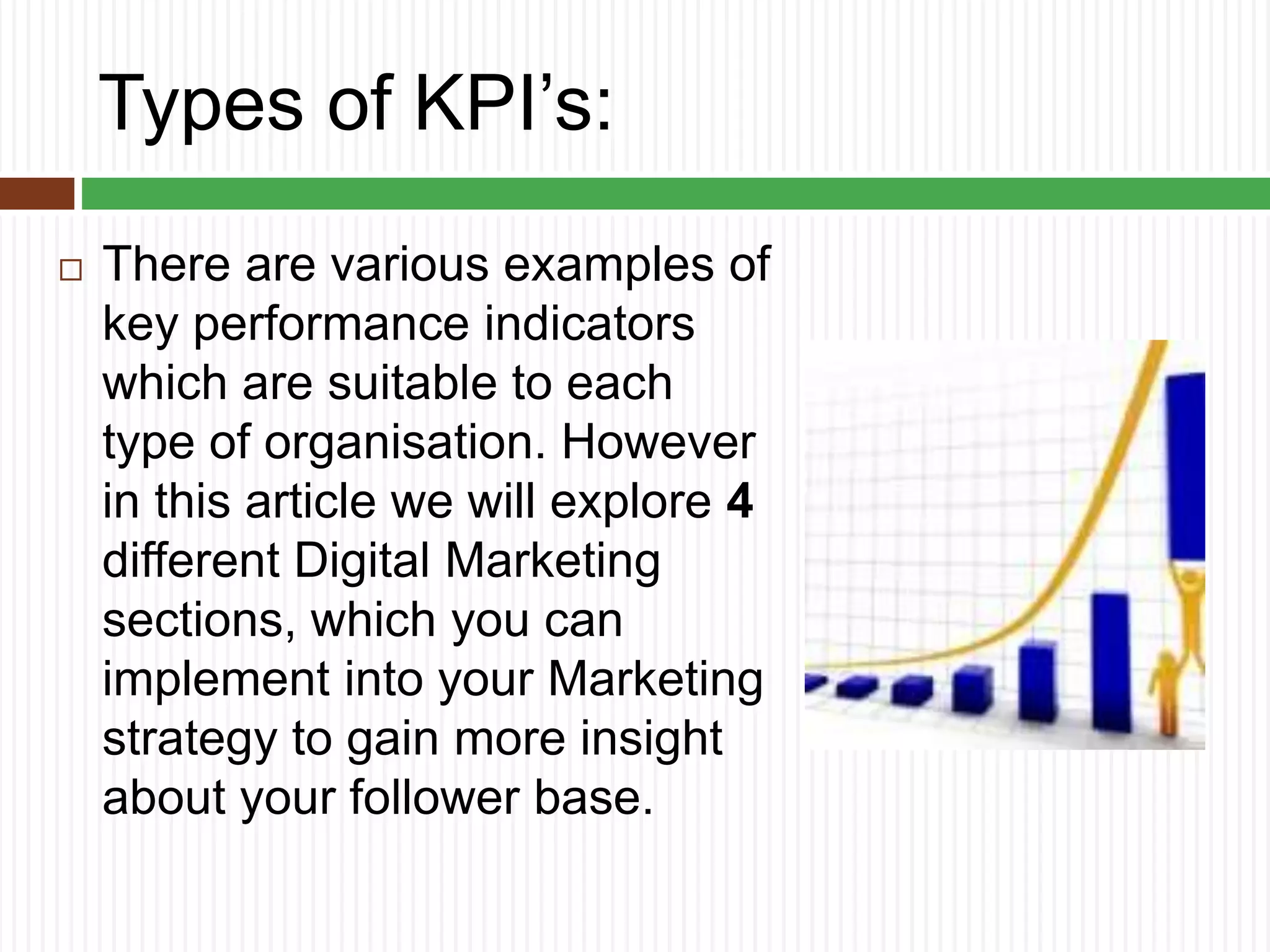
 There are various examples of
key performance indicators
which are suitable to each
type of organisation. However
in this article we will explore 4
different Digital Marketing
sections, which you can
implement into your Marketing
strategy to gain more insight
about your follower base.
Sales KPI’s:
 Sales Growth – is quite simply used to measure the rate at how much your
sales revenue is increasing or decreasing. Sales form a major part of an
organisations decision making strategy, therefore using such metrics will
allow you to set goals to measure your current performance and improve
your business’s profitability.
 Sales Opportunities – are in essence the possibility and opportunity value
of closing a sale.
 Product Performance – as with any business, some products sell more
than others. This performance metric ranks products based on their
popularity. Products lower down in rankings means that they may need
more R&D/ Marketing.
 Sales Target – measures the number of sales made and compares this to
a previous target figure. This is ideal for future sales projections and
motivating employees to aim higher.
 Average Purchase Value – this KPI is used to calculate the (average)
value of each sale made. It’s also used to measure your consumers’ buying
behaviour.
Sales KPI’s:
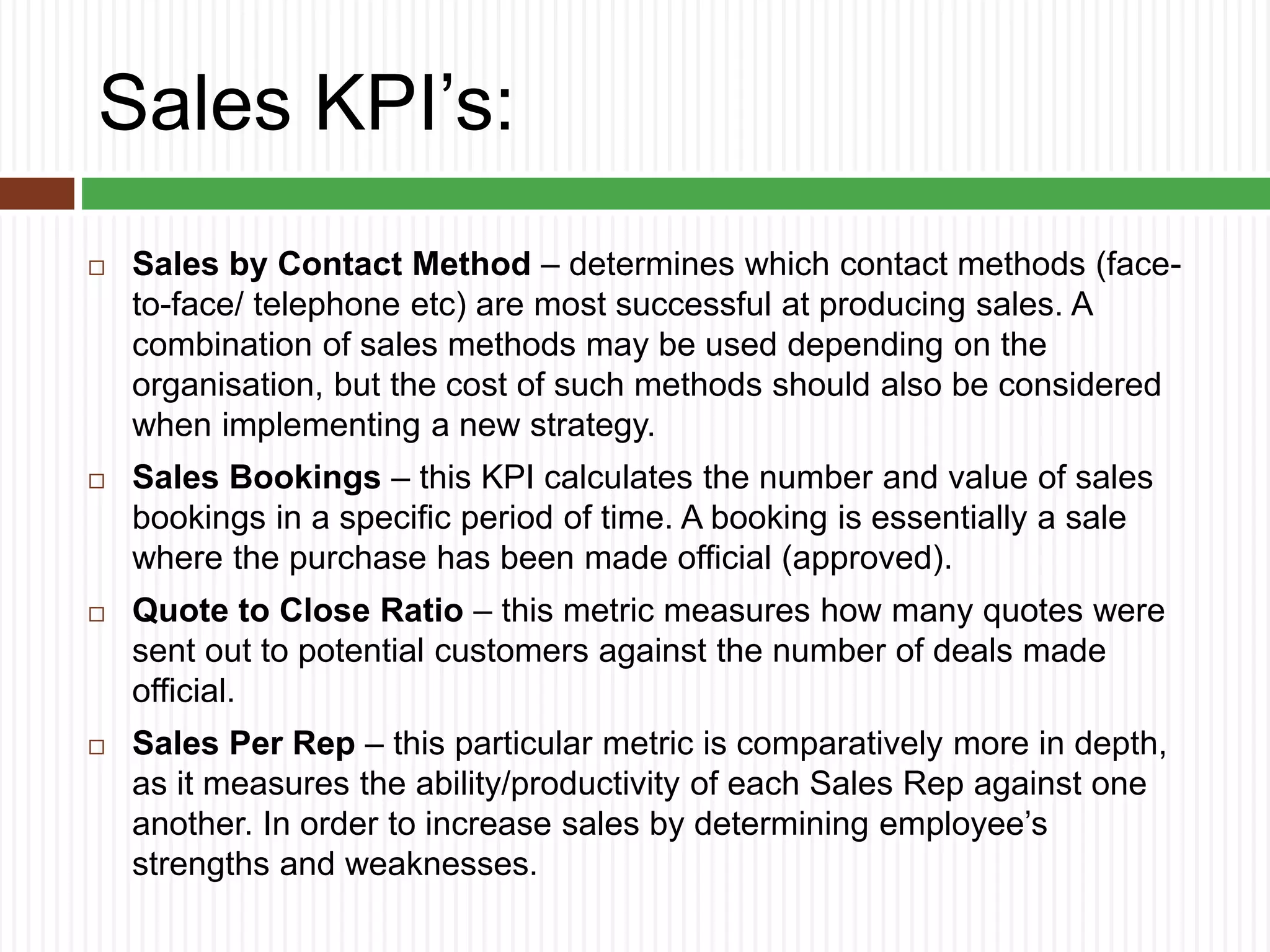
 Sales by Contact Method – determines which contact methods (face-
to-face/ telephone etc) are most successful at producing sales. A
combination of sales methods may be used depending on the
organisation, but the cost of such methods should also be considered
when implementing a new strategy.
 Sales Bookings – this KPI calculates the number and value of sales
bookings in a specific period of time. A booking is essentially a sale
where the purchase has been made official (approved).
 Quote to Close Ratio – this metric measures how many quotes were
sent out to potential customers against the number of deals made
official.
 Sales Per Rep – this particular metric is comparatively more in depth,
as it measures the ability/productivity of each Sales Rep against one
another. In order to increase sales by determining employee’s
strengths and weaknesses.
Marketing KPI’s:
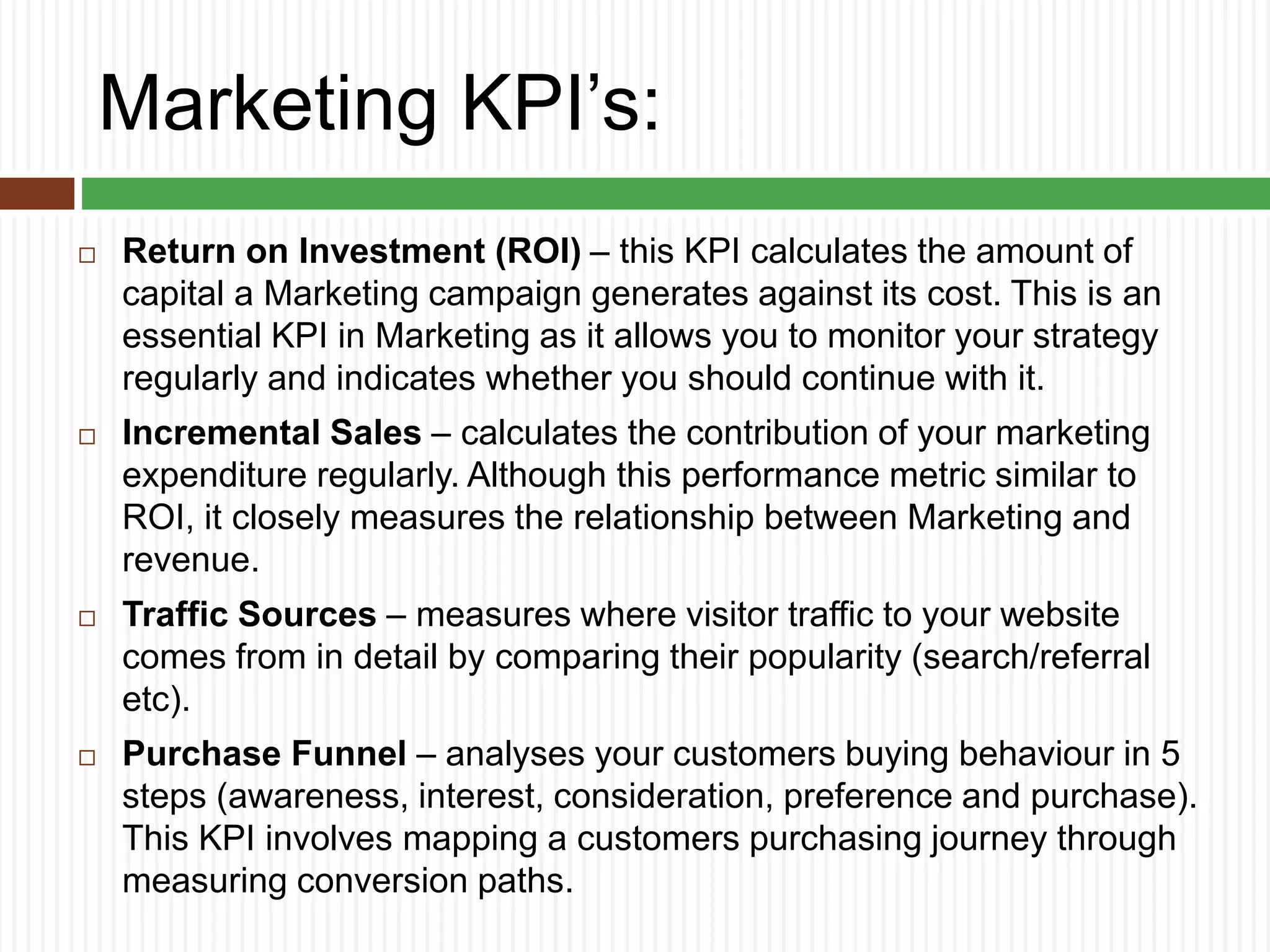
 Return on Investment (ROI) – this KPI calculates the amount of
capital a Marketing campaign generates against its cost. This is an
essential KPI in Marketing as it allows you to monitor your strategy
regularly and indicates whether you should continue with it.
 Incremental Sales – calculates the contribution of your marketing
expenditure regularly. Although this performance metric similar to
ROI, it closely measures the relationship between Marketing and
revenue.
 Traffic Sources – measures where visitor traffic to your website
comes from in detail by comparing their popularity (search/referral
etc).
 Purchase Funnel – analyses your customers buying behaviour in 5
steps (awareness, interest, consideration, preference and purchase).
This KPI involves mapping a customers purchasing journey through
measuring conversion paths.
Marketing KPI’s:
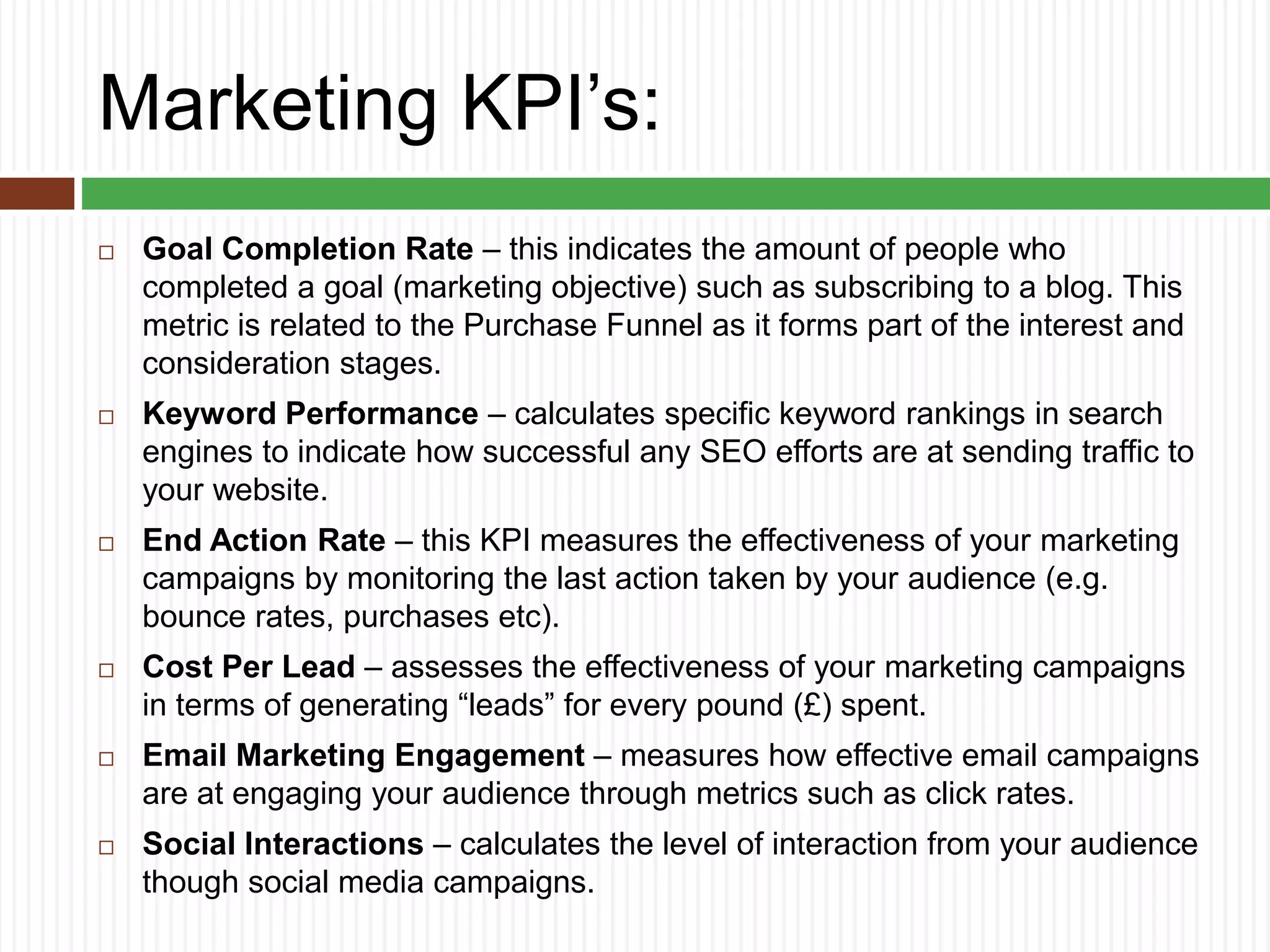
 Goal Completion Rate – this indicates the amount of people who
completed a goal (marketing objective) such as subscribing to a blog. This
metric is related to the Purchase Funnel as it forms part of the interest and
consideration stages.
 Keyword Performance – calculates specific keyword rankings in search
engines to indicate how successful any SEO efforts are at sending traffic to
your website.
 End Action Rate – this KPI measures the effectiveness of your marketing
campaigns by monitoring the last action taken by your audience (e.g.
bounce rates, purchases etc).
 Cost Per Lead – assesses the effectiveness of your marketing campaigns
in terms of generating “leads” for every pound (£) spent.
 Email Marketing Engagement – measures how effective email campaigns
are at engaging your audience through metrics such as click rates.
 Social Interactions – calculates the level of interaction from your audience
though social media campaigns.
Social Media KPI’s:
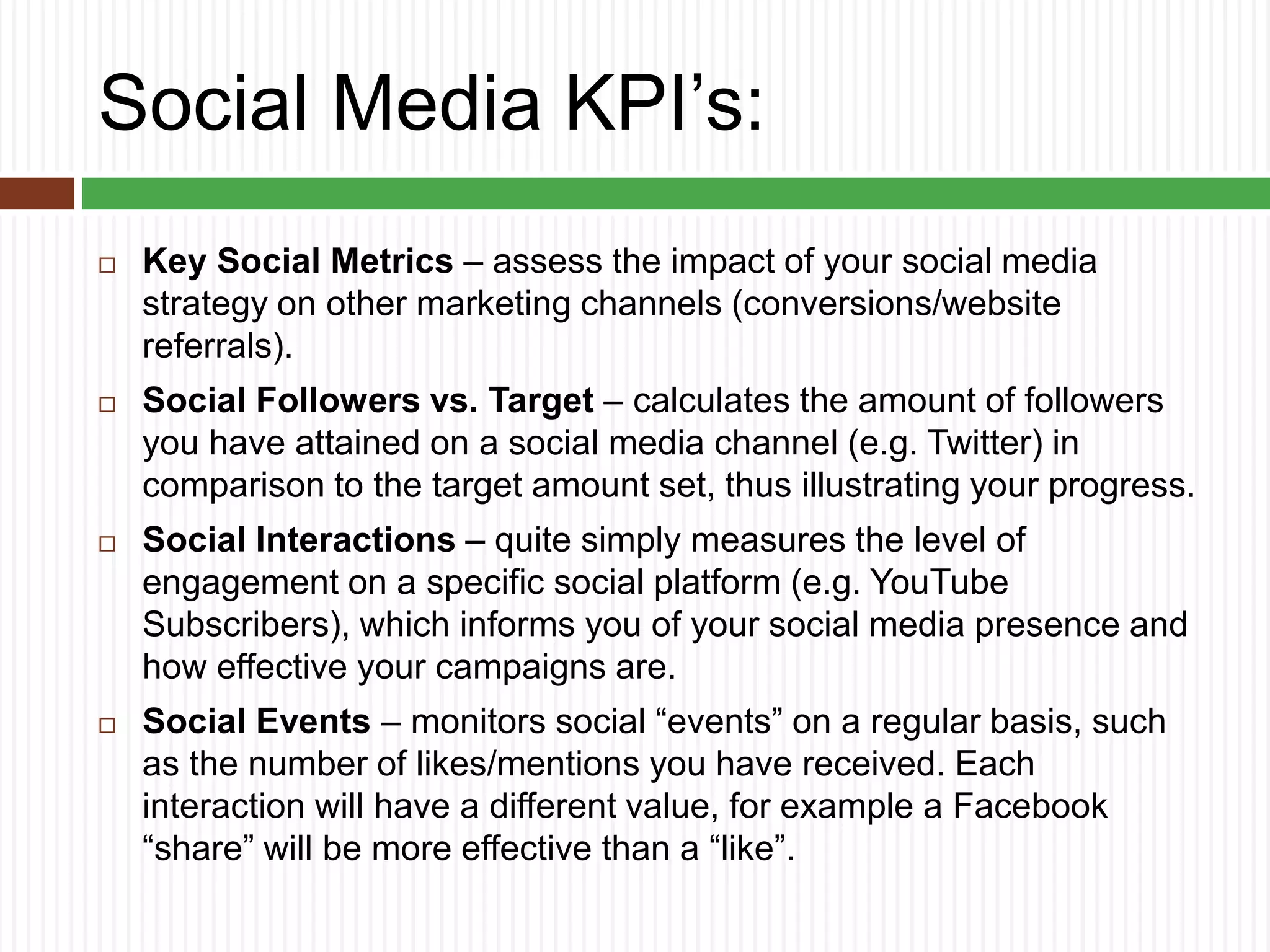
 Key Social Metrics – assess the impact of your social media
strategy on other marketing channels (conversions/website
referrals).
 Social Followers vs. Target – calculates the amount of followers
you have attained on a social media channel (e.g. Twitter) in
comparison to the target amount set, thus illustrating your progress.
 Social Interactions – quite simply measures the level of
engagement on a specific social platform (e.g. YouTube
Subscribers), which informs you of your social media presence and
how effective your campaigns are.
 Social Events – monitors social “events” on a regular basis, such
as the number of likes/mentions you have received. Each
interaction will have a different value, for example a Facebook
“share” will be more effective than a “like”.
Social Media KPI’s:
 Social Traffic & Conversions – this KPI measures how
successful a social media campaign is at generating goal
conversions and website traffic.
 Social Visits & Leads – calculates how effective your social
media strategies are at sending visitors and leads (new
prospects) to your website.
 New Followers – measures the number of new followers you
have achieved over a specific period of time.
 Facebook Page Demographics – collects and analyses
information about your followers; such as follower age,
gender and location. In order to give you more understanding
into whom your target market is primarily made up of.
SEO KPI’s:
 Keyword Opportunity – measures the opportunity of improving your
keyword search rankings by comparing them competitors’ current rankings
and traffic volume in search engines (e.g. Google).
 Keyword Click Through Rate – computes how frequently your website/ad
listing is clicked compared to the number of people conducting a particular
search.
 Search Traffic Performance – this KPI measures the number of visits to
your website that are either organic/paid search.
 Keyword Ranking – calculates your ranking based on targeted keywords
in search engines and then analyses their ranking over time. This KPI is
essential in Search Engine Marketing (SEM).
 Domain Authority – determines the “trust” factor if your website domain
based on the number and authority of links to your domain. Using such a
KPI can in effect, help increase the amount of trust that search engines
place on your domain.
Conclusion:
 Overall, Key Performance Indicators form a major part in
providing vital information to measure and analyse an
organisation’s strategic progress. These metrics also educate
organisations regarding their; current position in the market,
competitiveness, audience statistics and potential critical
issues they should develop. Lastly, KPI’s promote
implementing long term goals through regularly tracking and
measuring the marketing strategy.
 At TDE, we aim to provide you with insightful information on
the latest digital marketing news, so make sure you sign up to
our blog and like/share our posts!
References:
 http://smallbusiness.chron.com/importance-
kpi-4581.html

Key Performance Indicators You Should Know

  • 1.
  • 2.
    Background:  Let’s beginwith the definition of a KPI, the acronym stands for a Key Performance Indicator. KPI’s help evaluate the success of a specific activity an organisation partakes in, such as a Marketing strategy. An organisation would set a quantifiable measurement before a project and then measure the outcome against the KPI, thus illustrating the performance of the task. KPI’s are usually integrated in long term plans, such as executing a Digital Marketing strategy through a Gantt chart.
  • 3.
    Types of KPI’s: There are various examples of key performance indicators which are suitable to each type of organisation. However in this article we will explore 4 different Digital Marketing sections, which you can implement into your Marketing strategy to gain more insight about your follower base.
  • 4.
    Sales KPI’s:  SalesGrowth – is quite simply used to measure the rate at how much your sales revenue is increasing or decreasing. Sales form a major part of an organisations decision making strategy, therefore using such metrics will allow you to set goals to measure your current performance and improve your business’s profitability.  Sales Opportunities – are in essence the possibility and opportunity value of closing a sale.  Product Performance – as with any business, some products sell more than others. This performance metric ranks products based on their popularity. Products lower down in rankings means that they may need more R&D/ Marketing.  Sales Target – measures the number of sales made and compares this to a previous target figure. This is ideal for future sales projections and motivating employees to aim higher.  Average Purchase Value – this KPI is used to calculate the (average) value of each sale made. It’s also used to measure your consumers’ buying behaviour.
  • 5.
    Sales KPI’s:  Salesby Contact Method – determines which contact methods (face- to-face/ telephone etc) are most successful at producing sales. A combination of sales methods may be used depending on the organisation, but the cost of such methods should also be considered when implementing a new strategy.  Sales Bookings – this KPI calculates the number and value of sales bookings in a specific period of time. A booking is essentially a sale where the purchase has been made official (approved).  Quote to Close Ratio – this metric measures how many quotes were sent out to potential customers against the number of deals made official.  Sales Per Rep – this particular metric is comparatively more in depth, as it measures the ability/productivity of each Sales Rep against one another. In order to increase sales by determining employee’s strengths and weaknesses.
  • 6.
    Marketing KPI’s:  Returnon Investment (ROI) – this KPI calculates the amount of capital a Marketing campaign generates against its cost. This is an essential KPI in Marketing as it allows you to monitor your strategy regularly and indicates whether you should continue with it.  Incremental Sales – calculates the contribution of your marketing expenditure regularly. Although this performance metric similar to ROI, it closely measures the relationship between Marketing and revenue.  Traffic Sources – measures where visitor traffic to your website comes from in detail by comparing their popularity (search/referral etc).  Purchase Funnel – analyses your customers buying behaviour in 5 steps (awareness, interest, consideration, preference and purchase). This KPI involves mapping a customers purchasing journey through measuring conversion paths.
  • 7.
    Marketing KPI’s:  GoalCompletion Rate – this indicates the amount of people who completed a goal (marketing objective) such as subscribing to a blog. This metric is related to the Purchase Funnel as it forms part of the interest and consideration stages.  Keyword Performance – calculates specific keyword rankings in search engines to indicate how successful any SEO efforts are at sending traffic to your website.  End Action Rate – this KPI measures the effectiveness of your marketing campaigns by monitoring the last action taken by your audience (e.g. bounce rates, purchases etc).  Cost Per Lead – assesses the effectiveness of your marketing campaigns in terms of generating “leads” for every pound (£) spent.  Email Marketing Engagement – measures how effective email campaigns are at engaging your audience through metrics such as click rates.  Social Interactions – calculates the level of interaction from your audience though social media campaigns.
  • 8.
    Social Media KPI’s: Key Social Metrics – assess the impact of your social media strategy on other marketing channels (conversions/website referrals).  Social Followers vs. Target – calculates the amount of followers you have attained on a social media channel (e.g. Twitter) in comparison to the target amount set, thus illustrating your progress.  Social Interactions – quite simply measures the level of engagement on a specific social platform (e.g. YouTube Subscribers), which informs you of your social media presence and how effective your campaigns are.  Social Events – monitors social “events” on a regular basis, such as the number of likes/mentions you have received. Each interaction will have a different value, for example a Facebook “share” will be more effective than a “like”.
  • 9.
    Social Media KPI’s: Social Traffic & Conversions – this KPI measures how successful a social media campaign is at generating goal conversions and website traffic.  Social Visits & Leads – calculates how effective your social media strategies are at sending visitors and leads (new prospects) to your website.  New Followers – measures the number of new followers you have achieved over a specific period of time.  Facebook Page Demographics – collects and analyses information about your followers; such as follower age, gender and location. In order to give you more understanding into whom your target market is primarily made up of.
  • 10.
    SEO KPI’s:  KeywordOpportunity – measures the opportunity of improving your keyword search rankings by comparing them competitors’ current rankings and traffic volume in search engines (e.g. Google).  Keyword Click Through Rate – computes how frequently your website/ad listing is clicked compared to the number of people conducting a particular search.  Search Traffic Performance – this KPI measures the number of visits to your website that are either organic/paid search.  Keyword Ranking – calculates your ranking based on targeted keywords in search engines and then analyses their ranking over time. This KPI is essential in Search Engine Marketing (SEM).  Domain Authority – determines the “trust” factor if your website domain based on the number and authority of links to your domain. Using such a KPI can in effect, help increase the amount of trust that search engines place on your domain.
  • 11.
    Conclusion:  Overall, KeyPerformance Indicators form a major part in providing vital information to measure and analyse an organisation’s strategic progress. These metrics also educate organisations regarding their; current position in the market, competitiveness, audience statistics and potential critical issues they should develop. Lastly, KPI’s promote implementing long term goals through regularly tracking and measuring the marketing strategy.  At TDE, we aim to provide you with insightful information on the latest digital marketing news, so make sure you sign up to our blog and like/share our posts!
  • 12.