Who’s Telling  YOUR  Story? Increasing the effectiveness of your communication, one story at a time Marc A. Pitman,  FundraisingCoach.com Kansas Main Streets
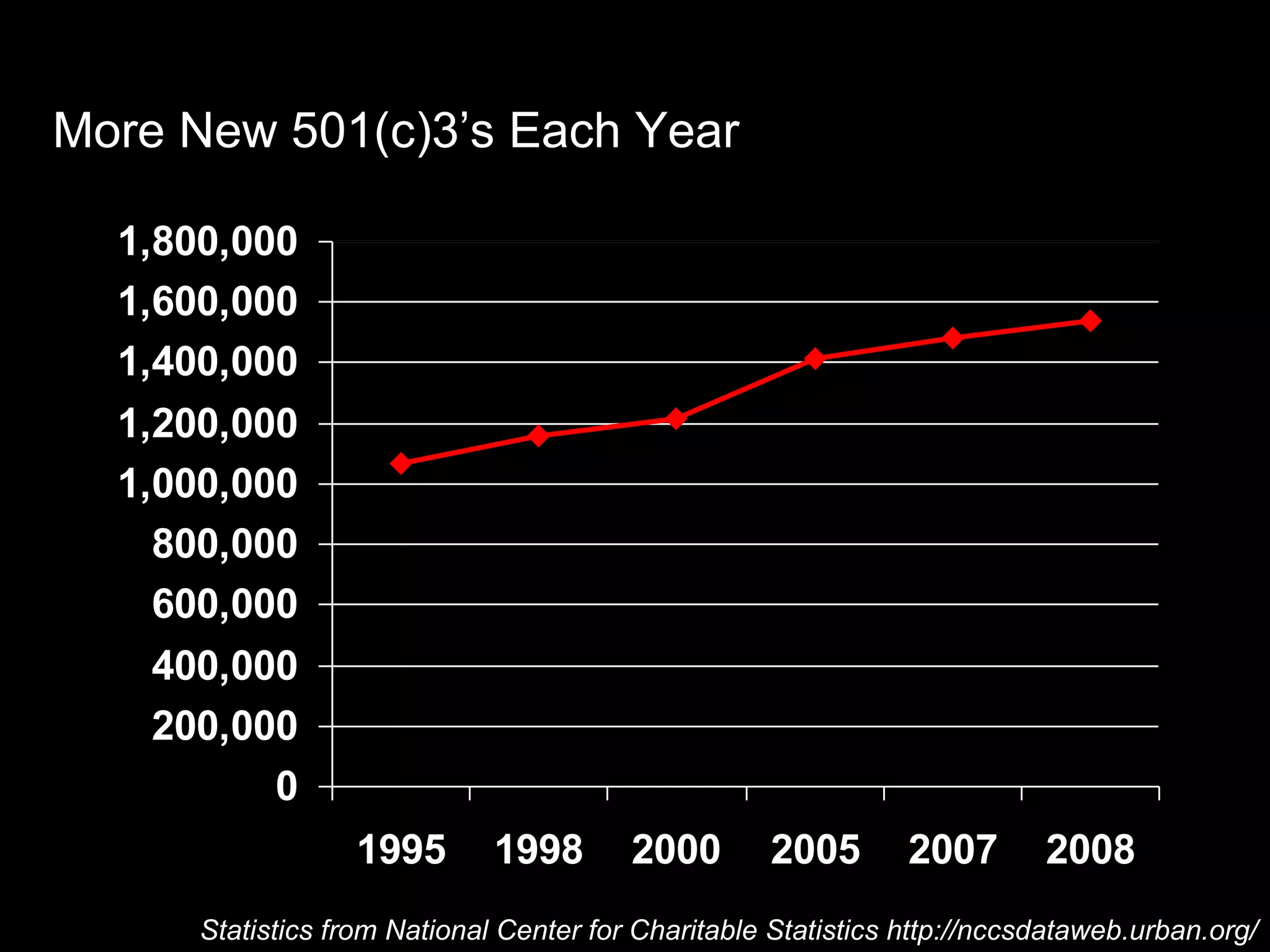
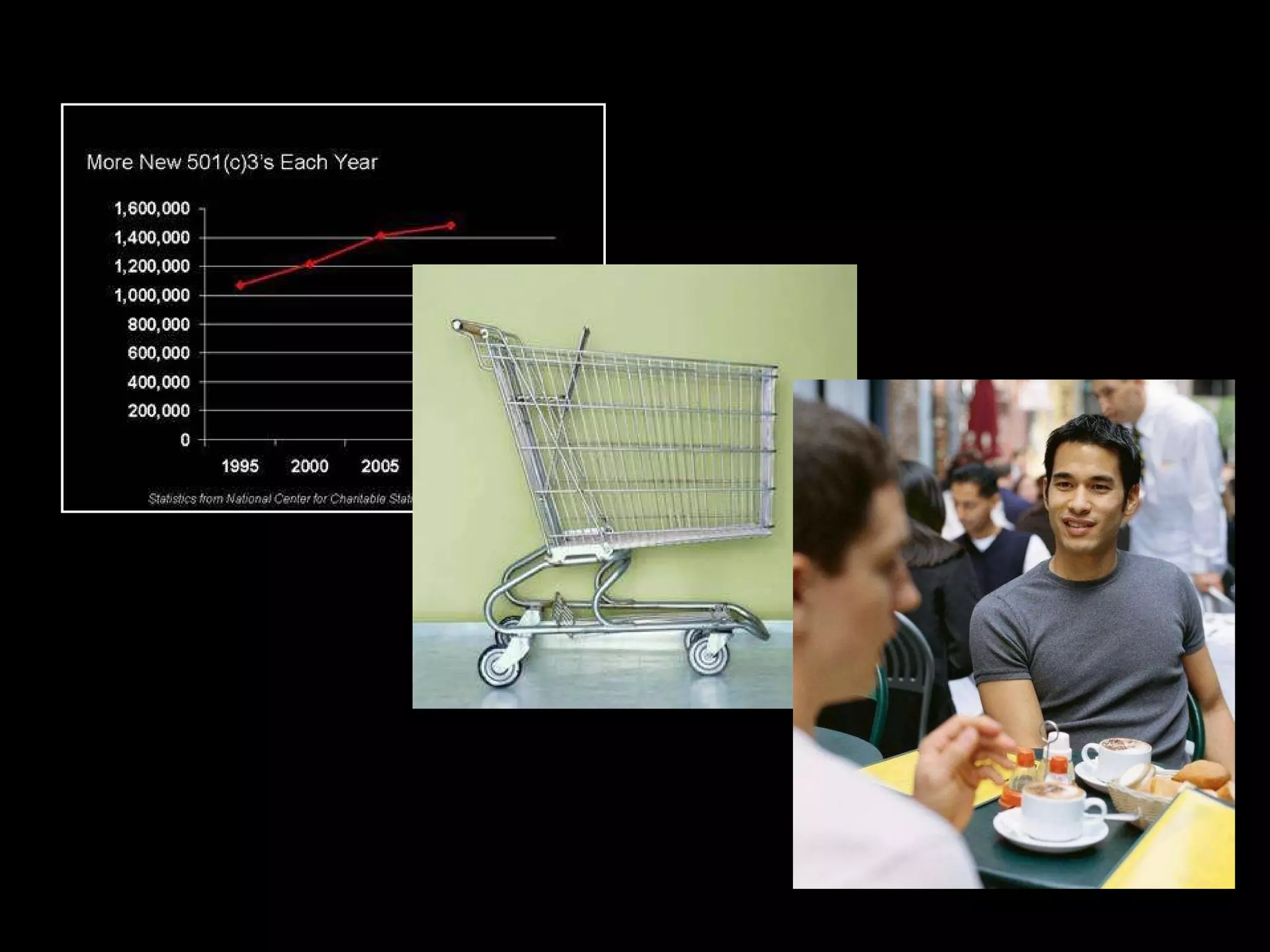
More New 501(c)3’s Each Year Statistics from National Center for Charitable Statistics http://nccsdataweb.urban.org/


Huge DNA picture strand
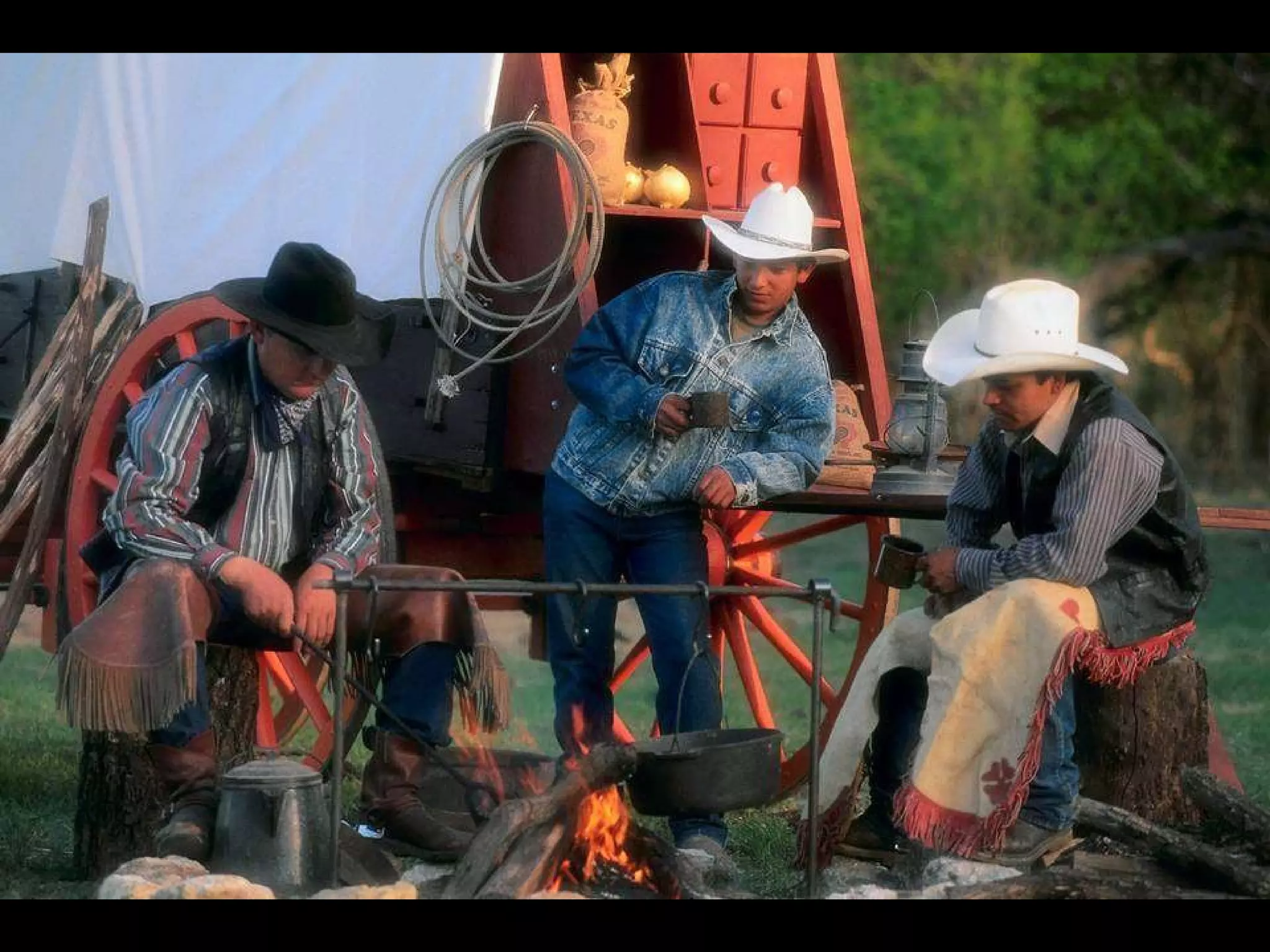
Campfire picture with people talking
 
Sylvan Learning Center
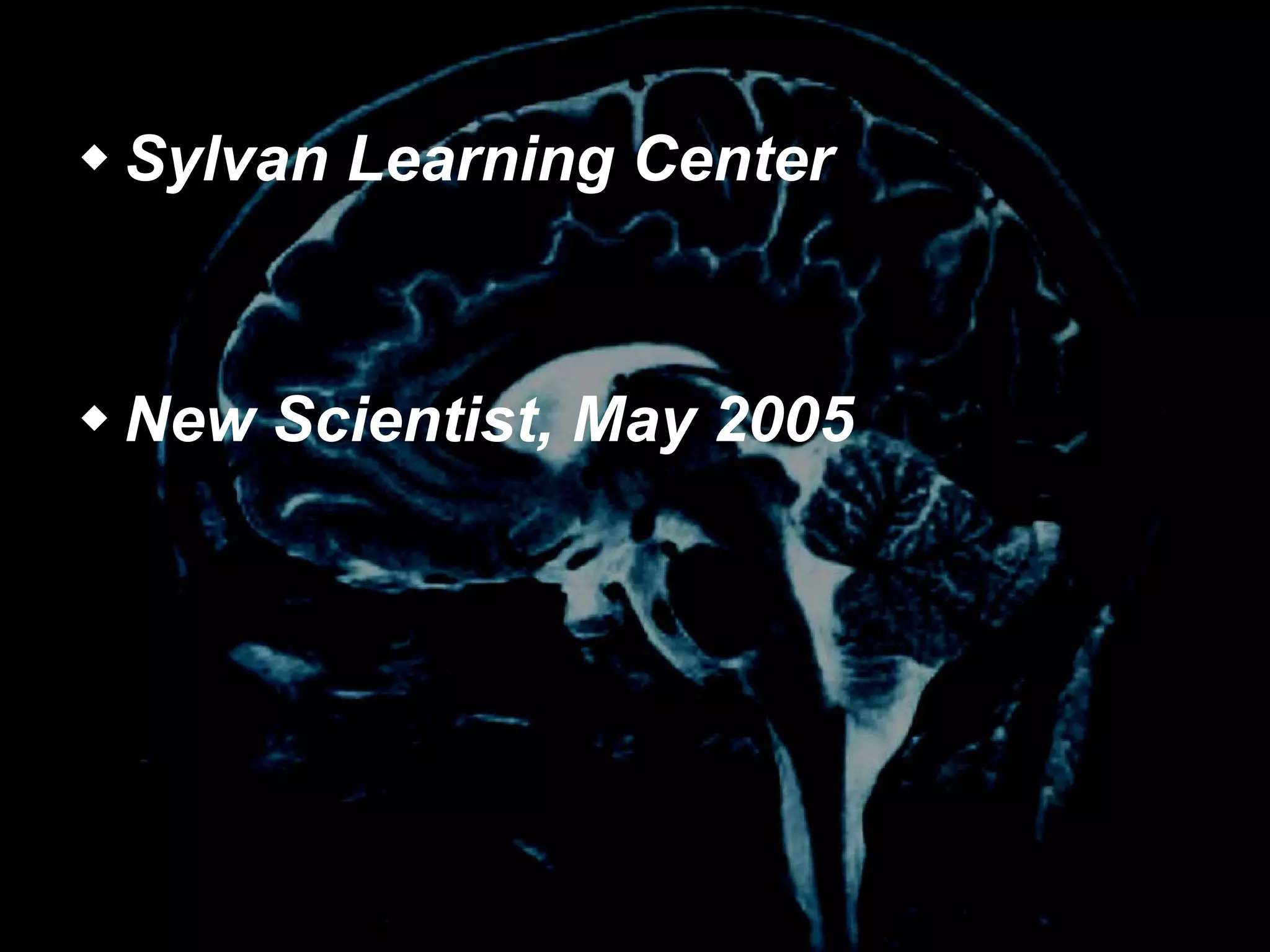
Sylvan Learning Center New Scientist, May 2005
A trip to the grocery store
Set structure of storytelling 2300 years ago Beginning, Middle, End
Set structure of storytelling 2300 years ago Beginning, Middle, End Has a hero
Set structure of storytelling 2300 years ago Beginning, Middle, End Has a hero Needs CONFLICT (hero+obstacle=conflict) ‏
Set structure of storytelling 2300 years ago Beginning, Middle, End Has a hero Needs CONFLICT (hero+obstacle=conflict) ‏ The storyteller works to help the listener be immersed in the story
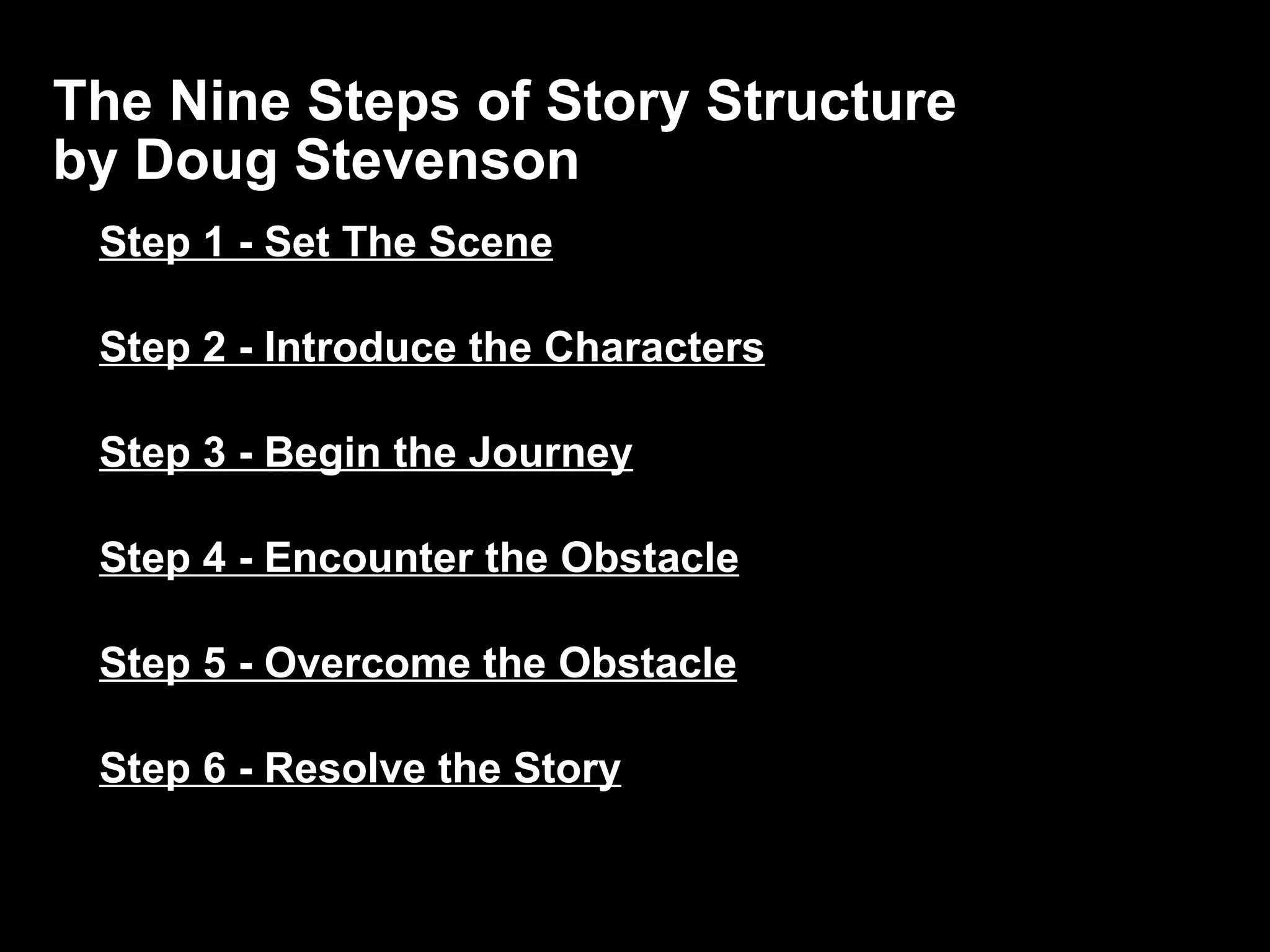
The Nine Steps of Story Structure  by Doug Stevenson Step 1 - Set The Scene Step 2 - Introduce the Characters Step 3 - Begin the Journey Step 4 - Encounter the Obstacle Step 5 - Overcome the Obstacle Step 6 - Resolve the Story
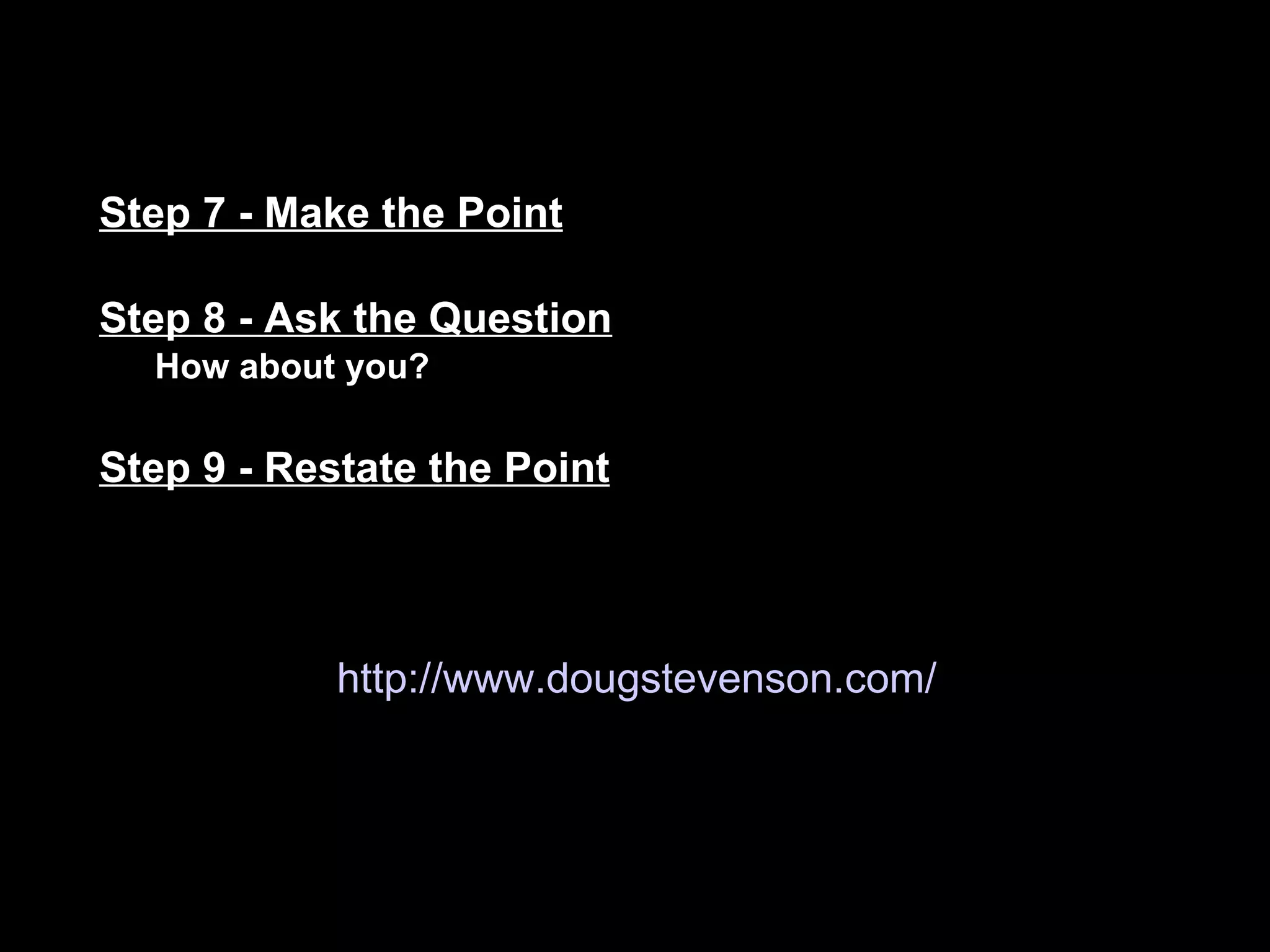
Step 7 - Make the Point Step 8 - Ask the Question How about you?  Step 9 - Restate the Point http://www.dougstevenson.com/
Be sure to use a “phrase that pays” (Doug Stevenson The phrase that pays
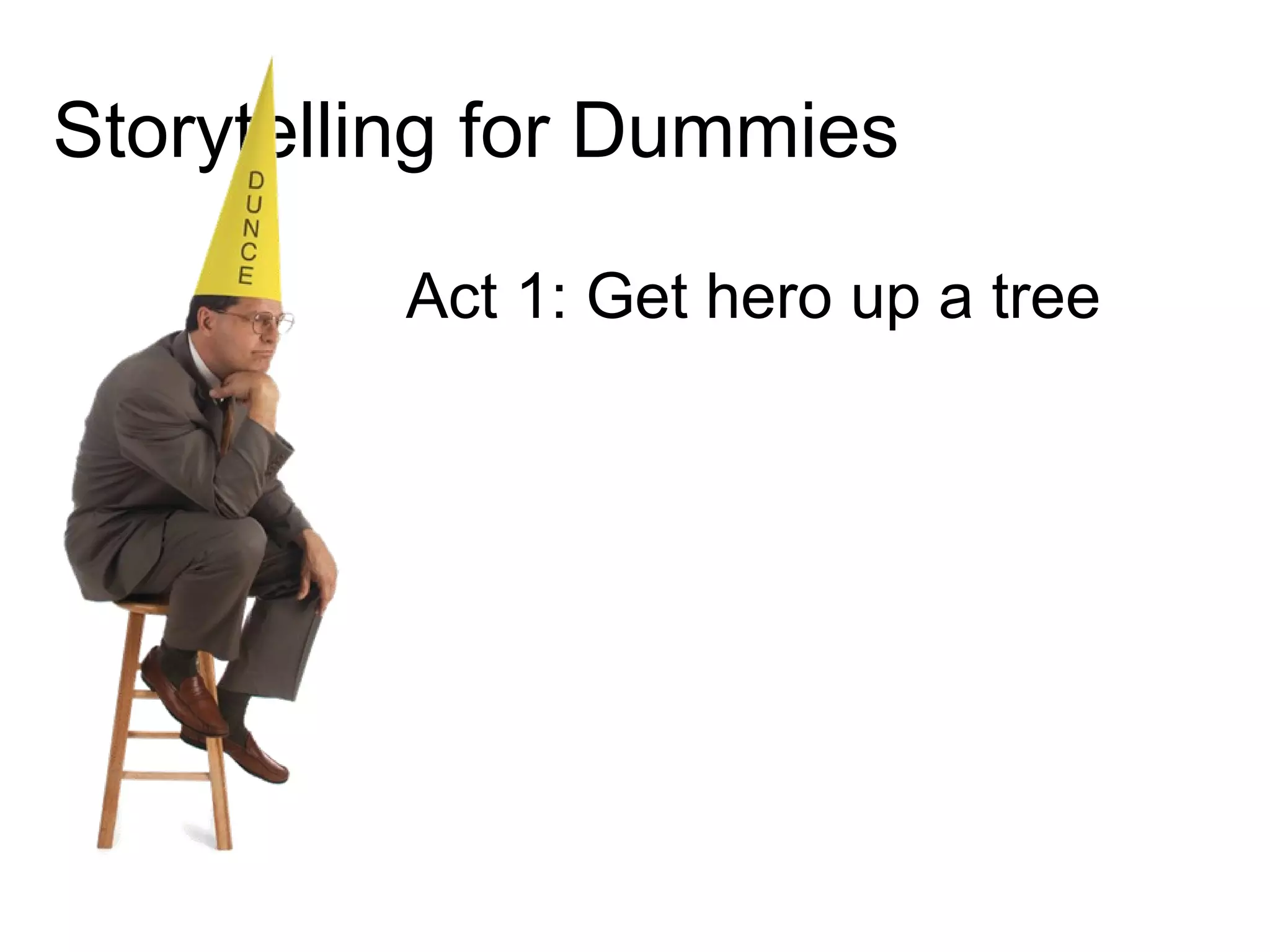
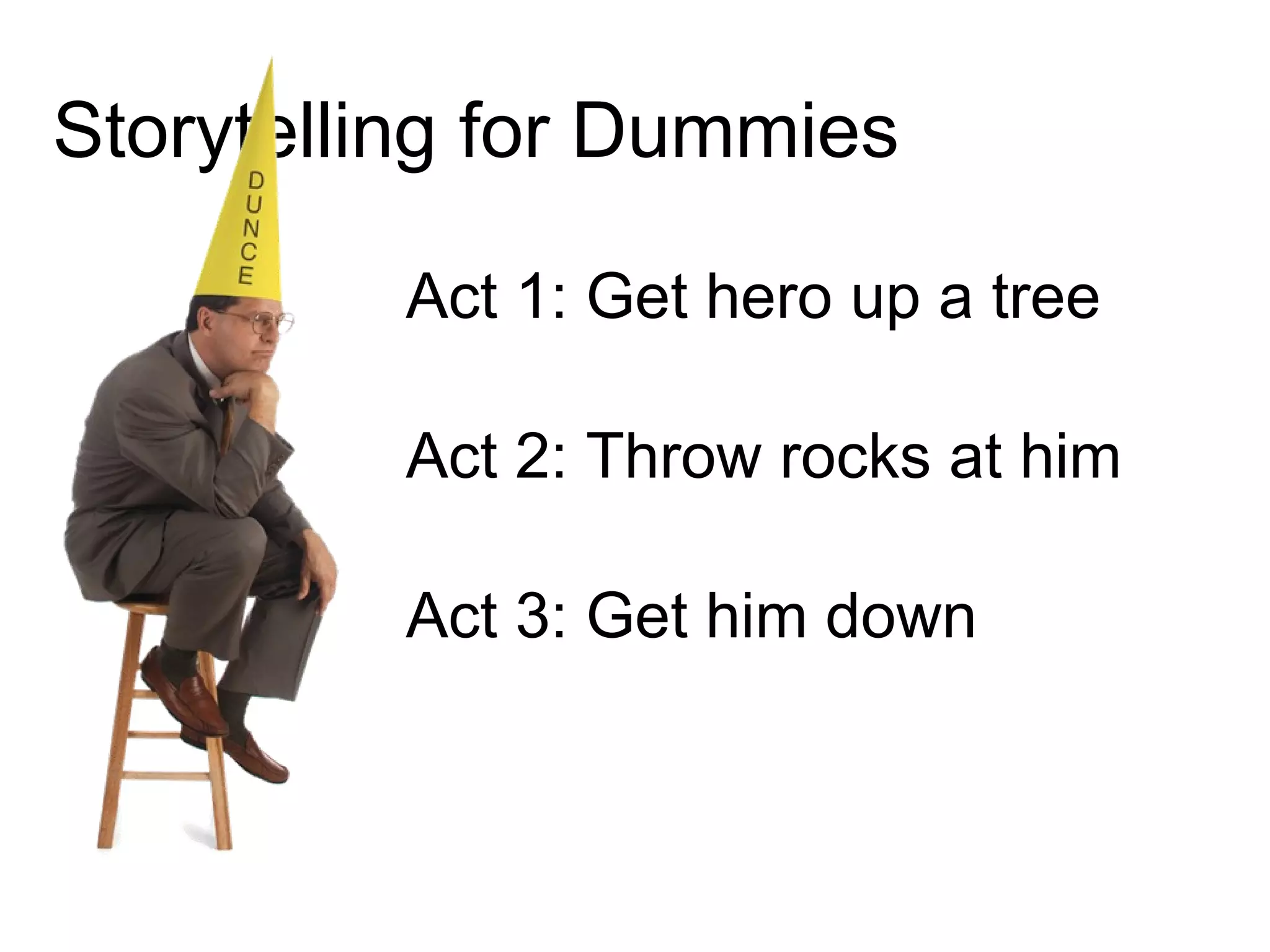
Storytelling for Dummies Act 1: Get hero up a tree
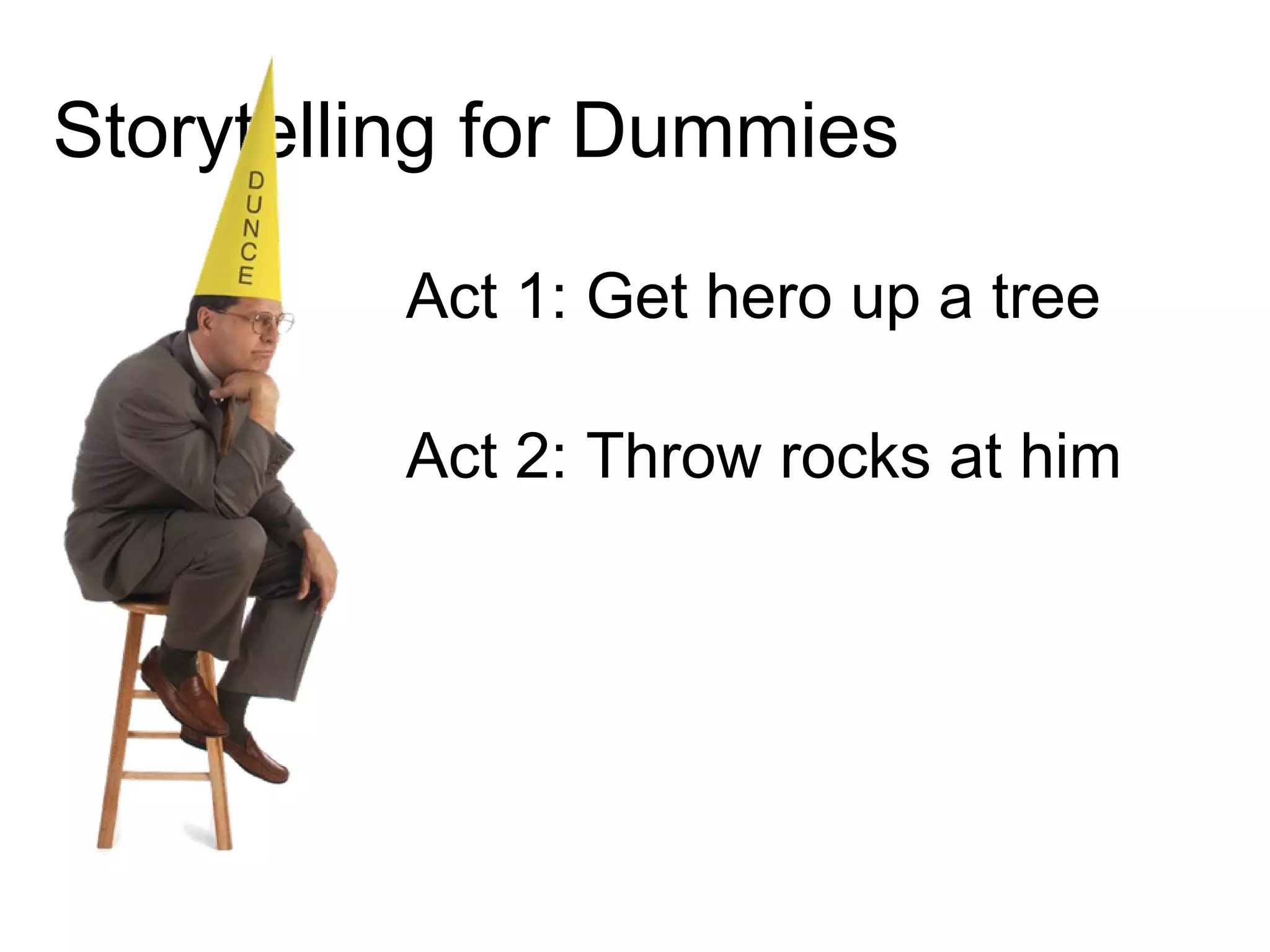
Storytelling for Dummies Act 1: Get hero up a tree Act 2: Throw rocks at him
Storytelling for Dummies Act 1: Get hero up a tree Act 2: Throw rocks at him Act 3: Get him down
Hero must be a person
Your Stories = Your Culture
Your Stories = Your Culture “ Genesis” Story
Your Stories = Your Culture “ Genesis” Story “ Balaam” Stories
Your Stories = Your Culture “ Genesis” Story “ Balaam” Stories  “ Job” Stories
Your Stories = Your Culture “ Genesis” Story “ Balaam” Stories  “ Job” Stories  “ Nehemiah” Stories
Your Stories = Your Culture “ Genesis” Story “ Balaam” Stories  “ Job” Stories  “ Nehemiah” Stories “ Revelation” Stories
Show & Tell
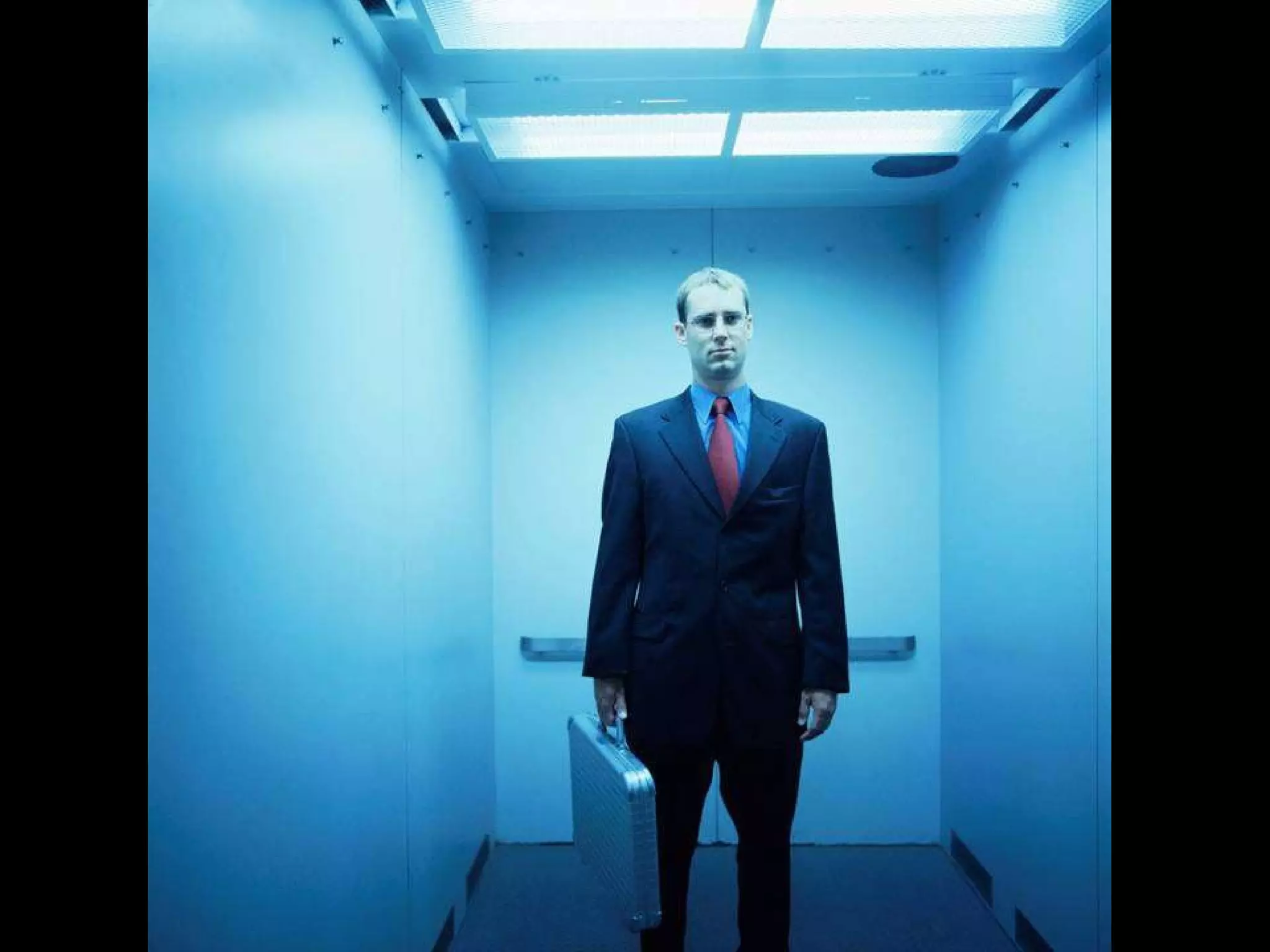
Picture of Elevator Or people in an elevator
Organizing Stories The Rule of 3’s
Organizing Stories The Rule of 3’s 0. Define Your Jennifer
Organizing Stories The Rule of 3’s 0. Define Your Jennifer 1. 3 Attributes
Organizing Stories The Rule of 3’s 0. Define Your Jennifer 1. 3 Attributes 2. 3 Channels
Organizing Stories The Rule of 3’s 0. Define Your Jennifer 1. 3 Attributes 2. 3 Channels 3. 3 Times a Month for 3 Months
Repeat. Repeat. Repeat.
Horse vet picture
Wrap up Problem:Tons of new nonprofits; outpacing population Solution: Uncovering and communicating your uniqueness in ways that “hand a script” to those around you Climax: The ah-ha of someone saying your script  back to you!
Storytelling Resources Andy Goodman  www.agoodmanonline.com  Cliff Atkinson  www.SociableMedia.com  Doug Stevenson  www.DougStevenson.com Marc A. Pitman  www.FundraisingCoach.com  [email_address] Give me your card to get a free copy of my email guide & bi-weekly ezine.

Kansas Main Street Part 3; Who's Telling Your Story?

  • 1.
    Who’s Telling YOUR Story? Increasing the effectiveness of your communication, one story at a time Marc A. Pitman, FundraisingCoach.com Kansas Main Streets
  • 2.
    More New 501(c)3’sEach Year Statistics from National Center for Charitable Statistics http://nccsdataweb.urban.org/
  • 3.
  • 4.
  • 5.
  • 6.
  • 7.
  • 8.
  • 9.
    Campfire picture withpeople talking
  • 10.
  • 11.
  • 12.
    Sylvan Learning CenterNew Scientist, May 2005
  • 13.
    A trip tothe grocery store
  • 14.
    Set structure ofstorytelling 2300 years ago Beginning, Middle, End
  • 15.
    Set structure ofstorytelling 2300 years ago Beginning, Middle, End Has a hero
  • 16.
    Set structure ofstorytelling 2300 years ago Beginning, Middle, End Has a hero Needs CONFLICT (hero+obstacle=conflict) ‏
  • 17.
    Set structure ofstorytelling 2300 years ago Beginning, Middle, End Has a hero Needs CONFLICT (hero+obstacle=conflict) ‏ The storyteller works to help the listener be immersed in the story
  • 18.
    The Nine Stepsof Story Structure by Doug Stevenson Step 1 - Set The Scene Step 2 - Introduce the Characters Step 3 - Begin the Journey Step 4 - Encounter the Obstacle Step 5 - Overcome the Obstacle Step 6 - Resolve the Story
  • 19.
    Step 7 -Make the Point Step 8 - Ask the Question How about you? Step 9 - Restate the Point http://www.dougstevenson.com/
  • 20.
    Be sure touse a “phrase that pays” (Doug Stevenson The phrase that pays
  • 21.
    Storytelling for DummiesAct 1: Get hero up a tree
  • 22.
    Storytelling for DummiesAct 1: Get hero up a tree Act 2: Throw rocks at him
  • 23.
    Storytelling for DummiesAct 1: Get hero up a tree Act 2: Throw rocks at him Act 3: Get him down
  • 24.
    Hero must bea person
  • 25.
    Your Stories =Your Culture
  • 26.
    Your Stories =Your Culture “ Genesis” Story
  • 27.
    Your Stories =Your Culture “ Genesis” Story “ Balaam” Stories
  • 28.
    Your Stories =Your Culture “ Genesis” Story “ Balaam” Stories “ Job” Stories
  • 29.
    Your Stories =Your Culture “ Genesis” Story “ Balaam” Stories “ Job” Stories “ Nehemiah” Stories
  • 30.
    Your Stories =Your Culture “ Genesis” Story “ Balaam” Stories “ Job” Stories “ Nehemiah” Stories “ Revelation” Stories
  • 31.
  • 32.
    Picture of ElevatorOr people in an elevator
  • 33.
  • 34.
    Organizing Stories TheRule of 3’s 0. Define Your Jennifer
  • 35.
    Organizing Stories TheRule of 3’s 0. Define Your Jennifer 1. 3 Attributes
  • 36.
    Organizing Stories TheRule of 3’s 0. Define Your Jennifer 1. 3 Attributes 2. 3 Channels
  • 37.
    Organizing Stories TheRule of 3’s 0. Define Your Jennifer 1. 3 Attributes 2. 3 Channels 3. 3 Times a Month for 3 Months
  • 38.
  • 39.
  • 40.
    Wrap up Problem:Tonsof new nonprofits; outpacing population Solution: Uncovering and communicating your uniqueness in ways that “hand a script” to those around you Climax: The ah-ha of someone saying your script back to you!
  • 41.
    Storytelling Resources AndyGoodman www.agoodmanonline.com Cliff Atkinson www.SociableMedia.com Doug Stevenson www.DougStevenson.com Marc A. Pitman www.FundraisingCoach.com [email_address] Give me your card to get a free copy of my email guide & bi-weekly ezine.

Editor's Notes

  • #3 More charities; stable population 801 new 501(c)3's each WEEK for the last 12 years!! Not including churches, etc!
  • #4 We still want gifts!
  • #5 You need funds for your nonprofit
  • #6 Donors are increasingly distracted
  • #7 Donors much more targeted in their giving; with GLOBAL reach
  • #8 How do we get them listening like this?
  • #9 Why note like this? “Storytelling is in our DNA” Humans are “storytelling primates” Jane Goodall
  • #10 Millenia of campfires and pubs have gotten us acclimated to story. KEEPERS OF THE LORE: externally AND internally!!!!
  • #11 Go where the conversations are! Check out social media. -Create videos with a Flip -upload photos with Flickr (Or Microsoft Photosynth) **Not a fundraising substitute.** Fans, donor evangelists, will use it to fundraise. So orgs should be familiar these tools. Start a blog. Play with Twitter. Seek out colleagues. Seek out people interested in your cause. Most importantly: LISTEN. Use these tools to LISTEN.
  • #12 Sylvan Larning Center kids given text remembered much better when adding one or two story words New Scientist, May 2005 : stories stimulate areas of the brain associated with movement and navigation
  • #13 Sylvan Larning Center kids given text remembered much better when adding one or two story words New Scientist, May 2005 : stories stimulate areas of the brain associated with movement and navigation
  • #14 Andy Goodman, “ I am Jennifer.”
  • #15 Q&A with attendees Hero? Conflict? Obstacle?
  • #16 Q&A with attendees Hero? Conflict? Obstacle?
  • #17 Q&A with attendees Hero? Conflict? Obstacle?
  • #18 Q&A with attendees Hero? Conflict? Obstacle?
  • #19 1. Scripting a Story Using The Nine Steps of Story Structure - The Hill by Doug StevensonBefore you start telling a story and using it in your presentations, it is valuable to write the script out according to the Nine Steps of Story Structure. Here is an example of a story scripted with the Nine Steps. Step 1 - Set The Scene A good deal of my work involves giving storytelling workshops for large corporations. They're usually one-day workshops at some remote location like a conference resort or a fancy hotel. When you combine the natural stress that accompanies airports, shuttle busses and hotels with the physical work of being on your feet for 8 hours, it's pretty exhausting. A year ago, after one of these workshops, I went back to my room and laid down on the bed. I woke up four hours later at 9 pm in the same clothes I'd worn for the workshop. It was dark outside and for a moment, I didn't know where I was. It was at that point that I realized I had to make a change. Either I had to stop doing one-day workshops, which I love, or I had to get in better shape and develop more stamina. Step 2 - Introduce the Characters (There are no other characters in this story. In the Nine Steps of Story Structure, introduce the characters when they naturally appear in the story. This step is not necessarily Step 2.) Step 3 - Begin the Journey In March 2009, I made the decision to get back into running. I'd taken up running many times in my life, but never very seriously. At 59, I knew it was going to be like starting from scratch. And it was. I found a running path near my house along an abandoned railroad track: the Rock Island Trail. It was 1.9 miles to the end, 3.8 miles round trip. On my first run, I had to stop and walk after about ¼ mile. It was pretty bad. I walked and jogged for maybe a mile total. But it was a start. After a couple of weeks I was really getting into it. I could run farther and faster and longer. I bought some serious running shoes, subscribed to Runner's World magazine and, because I'm deadline oriented, I decided to sign up to run some races. Over the years, I've met and coached at least 70 people who have run marathons. After listening to their marathon stories of great pain and amazing endurance, I just couldn't fathom running 26.2 miles for 7 hours and hurting myself. So I set a goal to run two half-marathons in 2009. Step 4 - Encounter the Obstacle Now that I had a true stretch goal, I knew I had to be more serious and knowledgeable about my workouts. For the first six weeks I kept running on the old railroad bed because it was flat. Right next to the railroad bed was a paved walking, biking and running path that the city had put in. But it wasn't flat; it had a couple of hills. I didn't want to run on the hills, but in the running magazine articles I was reading, the authors kept talking about how essential hill training was. No pain no gain right? So the next time out, I decided to take the road less traveled, at least by me, and run on the path with the hills. And I hated it. It was painful enough getting back into running at 59, but the hills were killers. Within seconds of running up the first hill, my calves were burning and my lungs wanted to explode. I kept saying to myself, "I hate this. I hate these hills," but I ran them day after day; and when I was finished running for the day, I felt great. Mixed in with the soreness and exhaustion, there was a euphoria that I couldn't explain. Runners understand. And I couldn't wait to run again. Step 5 - Overcome the Obstacle A few weeks later I added an extra mile to my run. I was now running 4.8 miles on a regular basis, with hills, and sometimes I could even sprint a little at the end. I was in the best shape of my life. It was fun - except for those darn hills. I cursed them every time I ran them. And that bothered me. One day, as I was lacing up my running shoes, I made the decision to practice what I preach. I teach that when you change your thinking - you change your life. So I decided to change my thinking about the hills. Instead of cursing them, I decided to thank them. As I started to climb the first hill and my calves started to burn I said aloud, "Thank you hill for making me stronger. Thank you for strong calves and powerful lungs. Thank you hill. Thank you hill." The hills were still hard. But now they were my friends and allies. I started looked forward to the hills.


  • #21 Doug Stevenson calls it “The Phrase that Pays” I am Jennifer Or “Sharpen your pencil” “Will you help us sharpen the pencil for others?” Script it!
  • #22 Andy Goodman’s Three Act
  • #23 Andy Goodman’s Three Act
  • #24 Andy Goodman’s Three Act
  • #25 It can’t be your organization We need to be able to relate to her Sadie Baldic & goats
  • #26 Loosely inspired from Robert Reich’s “Tales for a New America” (1988) Your “Genesis” Story: how did it all start? Your “Balaam” Stories: celebrating glorious failures helps you create a risk taking culture Your “Job” Stories: what heroic suffering have your people endured (staff, clients, donors, whatever)‏ Your “Nehemiah” Stories: your emblematic success stories; how does success look to you? Your “Revelation” Stories: what does your glorious future look like?
  • #27 Your “Genesis” Story: how did it all start? Your “Balaam” Stories: celebrating glorious failures helps you create a risk taking culture Your “Job” Stories: what heroic suffering have your people endured (staff, clients, donors, whatever)‏ Your “Nehemiah” Stories: your emblematic success stories; how does success look to you? Your “Revelation” Stories: what does your glorious future look like?
  • #28 Your “Genesis” Story: how did it all start? Your “Balaam” Stories: celebrating glorious failures helps you create a risk taking culture Your “Job” Stories: what heroic suffering have your people endured (staff, clients, donors, whatever)‏ Your “Nehemiah” Stories: your emblematic success stories; how does success look to you? Your “Revelation” Stories: what does your glorious future look like?
  • #29 Your “Genesis” Story: how did it all start? Your “Balaam” Stories: celebrating glorious failures helps you create a risk taking culture Your “Job” Stories: what heroic suffering have your people endured (staff, clients, donors, whatever)‏ Your “Nehemiah” Stories: your emblematic success stories; how does success look to you? Your “Revelation” Stories: what does your glorious future look like?
  • #30 Your “Genesis” Story: how did it all start? Your “Balaam” Stories: celebrating glorious failures helps you create a risk taking culture Your “Job” Stories: what heroic suffering have your people endured (staff, clients, donors, whatever)‏ Your “Nehemiah” Stories: your emblematic success stories; how does success look to you? Your “Revelation” Stories: what does your glorious future look like?
  • #31 Your “Genesis” Story: how did it all start? Your “Balaam” Stories: celebrating glorious failures helps you create a risk taking culture Your “Job” Stories: what heroic suffering have your people endured (staff, clients, donors, whatever)‏ Your “Nehemiah” Stories: your emblematic success stories; how does success look to you? Your “Revelation” Stories: what does your glorious future look like?
  • #33 Elevator Pitch: SBS mission * 10 sec / 30 sec * Good exercise **Can sound REALLY canned
  • #34 Effective way to group your stories, to speak w/o sounding canned Honesty & Authenticity Helps your donors market your school in ways you’re proud of
  • #35 Effective way to group your stories, to speak w/o sounding canned Honesty & Authenticity Helps your donors market your school in ways you’re proud of
  • #36 Effective way to group your stories, to speak w/o sounding canned Honesty & Authenticity Helps your donors market your school in ways you’re proud of
  • #37 Effective way to group your stories, to speak w/o sounding canned Honesty & Authenticity Helps your donors market your school in ways you’re proud of
  • #38 Effective way to group your stories, to speak w/o sounding canned Honesty & Authenticity Helps your donors market your school in ways you’re proud of
  • #39 Do you see how this can simplify publications without killing creativity
  • #40 Client Stories I helped: picking hoof is communication channel; AYC, starting staff meetings with fresh new stories