Omkar M. Bhagat
•Method
•Method Overloading
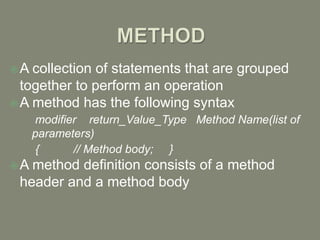
A collection of statements that are grouped
together to perform an operation
A method has the following syntax
modifier return_Value_Type Method Name(list of
parameters)
{ // Method body; }
A method definition consists of a method
header and a method body
1. Modifiers:
• Optional
• Tells the compiler how to call the method.
• Defines the access type of the method.
2. Return Types
• The data type of the value the method returns.
• the return type is the keyword void when no
value is returned
Method Name
• The actual name of the method.
• Method name and the parameter list together
constitute the method signature.
Parameters
• Act as a placeholder.
• When a method is invoked, a value is passed to
parameter.
• This value is referred to as actual parameter or
argument.
• The parameter list refers to the type, order, and
number of the parameters of a method.
• Parameters are optional; that is,
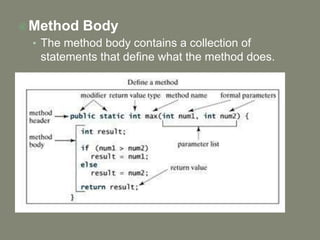
Method Body
• The method body contains a collection of
statements that define what the method does.
A concept in Java which allows
programmer to declare method with same
name but different behavior.
Method with same name co-exists in same
class but they must have different method
signature
When you overload a method in Java its
method signature gets changed
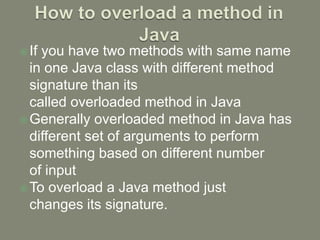
If you have two methods with same name
in one Java class with different method
signature than its
called overloaded method in Java
Generally overloaded method in Java has
different set of arguments to perform
something based on different number
of input
To overload a Java method just
changes its signature.
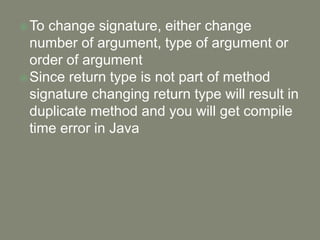
To change signature, either change
number of argument, type of argument or
order of argument
Since return type is not part of method
signature changing return type will result in
duplicate method and you will get compile
time error in Java
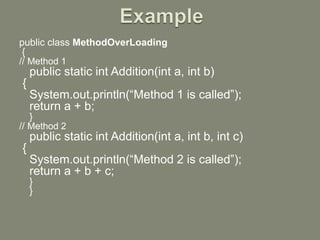
public class MethodOverLoading
{
// Method 1
public static int Addition(int a, int b)
{
System.out.println(“Method 1 is called”);
return a + b;
}
// Method 2
public static int Addition(int a, int b, int c)
{
System.out.println(“Method 2 is called”);
return a + b + c;
}
}
public static void main(String[] args)
{
int Answer1 = Addition(5, 6);
// In this case Method 1 will be called
System.out.println(“Answer 1 = ” + Answer1);
System.out.println(“----------------------------”);
int Answer2 = Addition(5, 6, 7);
// In this case Method 2 will be called
System.out.println(“Answer 2 = ” + Answer2);
}
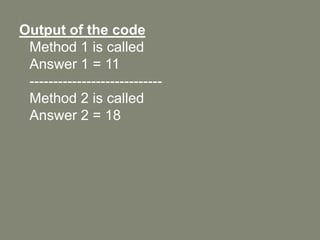
Output of the code
Method 1 is called
Answer 1 = 11
----------------------------
Method 2 is called
Answer 2 = 18

java Method Overloading

  • 1.
  • 2.
  • 3.
    A collection ofstatements that are grouped together to perform an operation A method has the following syntax modifier return_Value_Type Method Name(list of parameters) { // Method body; } A method definition consists of a method header and a method body
  • 4.
    1. Modifiers: • Optional •Tells the compiler how to call the method. • Defines the access type of the method. 2. Return Types • The data type of the value the method returns. • the return type is the keyword void when no value is returned
  • 5.
    Method Name • Theactual name of the method. • Method name and the parameter list together constitute the method signature. Parameters • Act as a placeholder. • When a method is invoked, a value is passed to parameter. • This value is referred to as actual parameter or argument. • The parameter list refers to the type, order, and number of the parameters of a method. • Parameters are optional; that is,
  • 6.
    Method Body • Themethod body contains a collection of statements that define what the method does.
  • 7.
    A concept inJava which allows programmer to declare method with same name but different behavior. Method with same name co-exists in same class but they must have different method signature When you overload a method in Java its method signature gets changed
  • 8.
    If you havetwo methods with same name in one Java class with different method signature than its called overloaded method in Java Generally overloaded method in Java has different set of arguments to perform something based on different number of input To overload a Java method just changes its signature.
  • 9.
    To change signature,either change number of argument, type of argument or order of argument Since return type is not part of method signature changing return type will result in duplicate method and you will get compile time error in Java
  • 10.
    public class MethodOverLoading { //Method 1 public static int Addition(int a, int b) { System.out.println(“Method 1 is called”); return a + b; } // Method 2 public static int Addition(int a, int b, int c) { System.out.println(“Method 2 is called”); return a + b + c; } }
  • 11.
    public static voidmain(String[] args) { int Answer1 = Addition(5, 6); // In this case Method 1 will be called System.out.println(“Answer 1 = ” + Answer1); System.out.println(“----------------------------”); int Answer2 = Addition(5, 6, 7); // In this case Method 2 will be called System.out.println(“Answer 2 = ” + Answer2); }
  • 12.
    Output of thecode Method 1 is called Answer 1 = 11 ---------------------------- Method 2 is called Answer 2 = 18