RYAN MILLS, PHARM.D CANDIDATE Pharmacist  role in MTM at Charleston Area Medical Center Switching patients Intravenous to oral
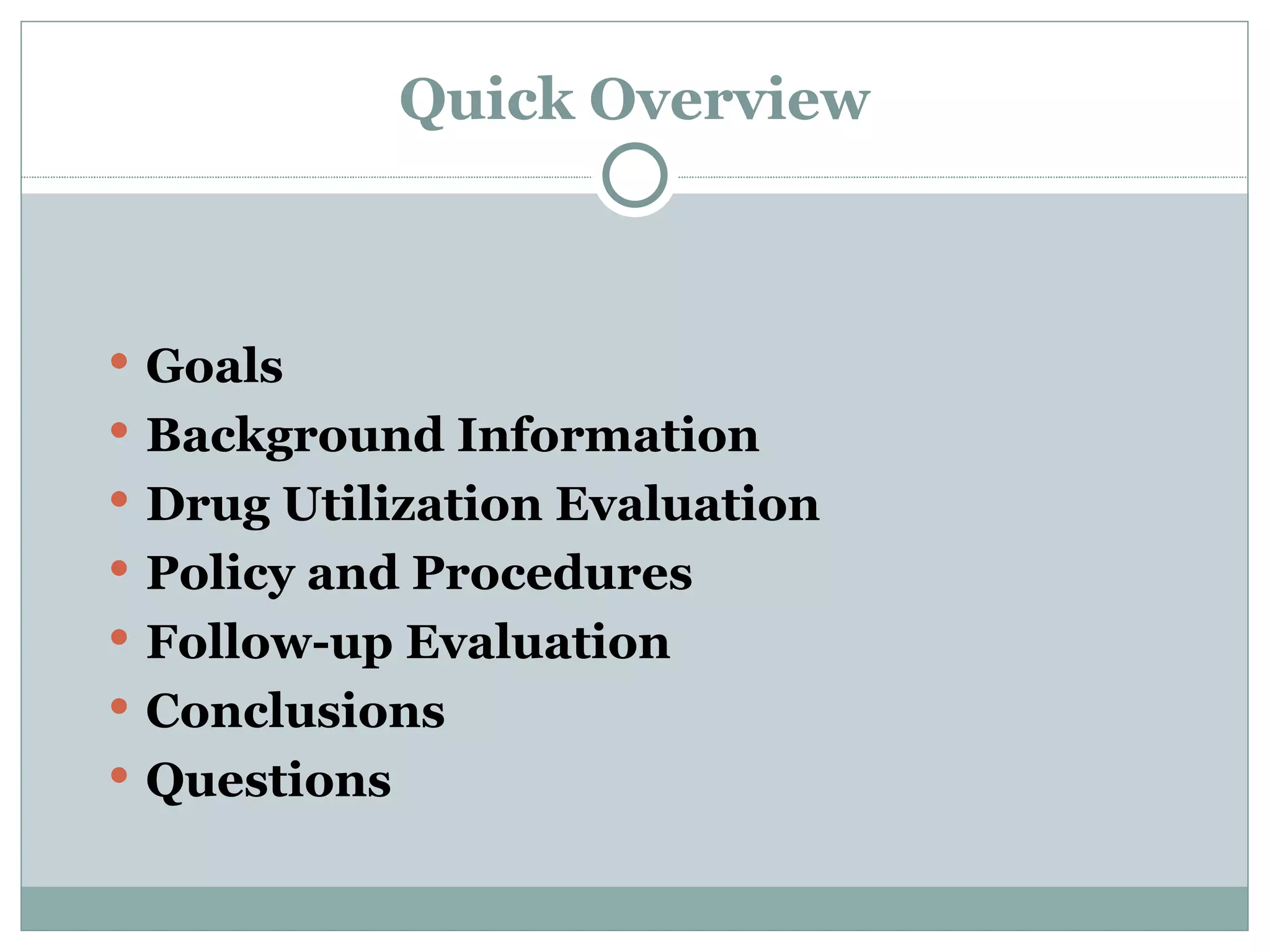
Quick Overview Goals Background Information Drug Utilization Evaluation Policy and Procedures Follow-up Evaluation Conclusions Questions
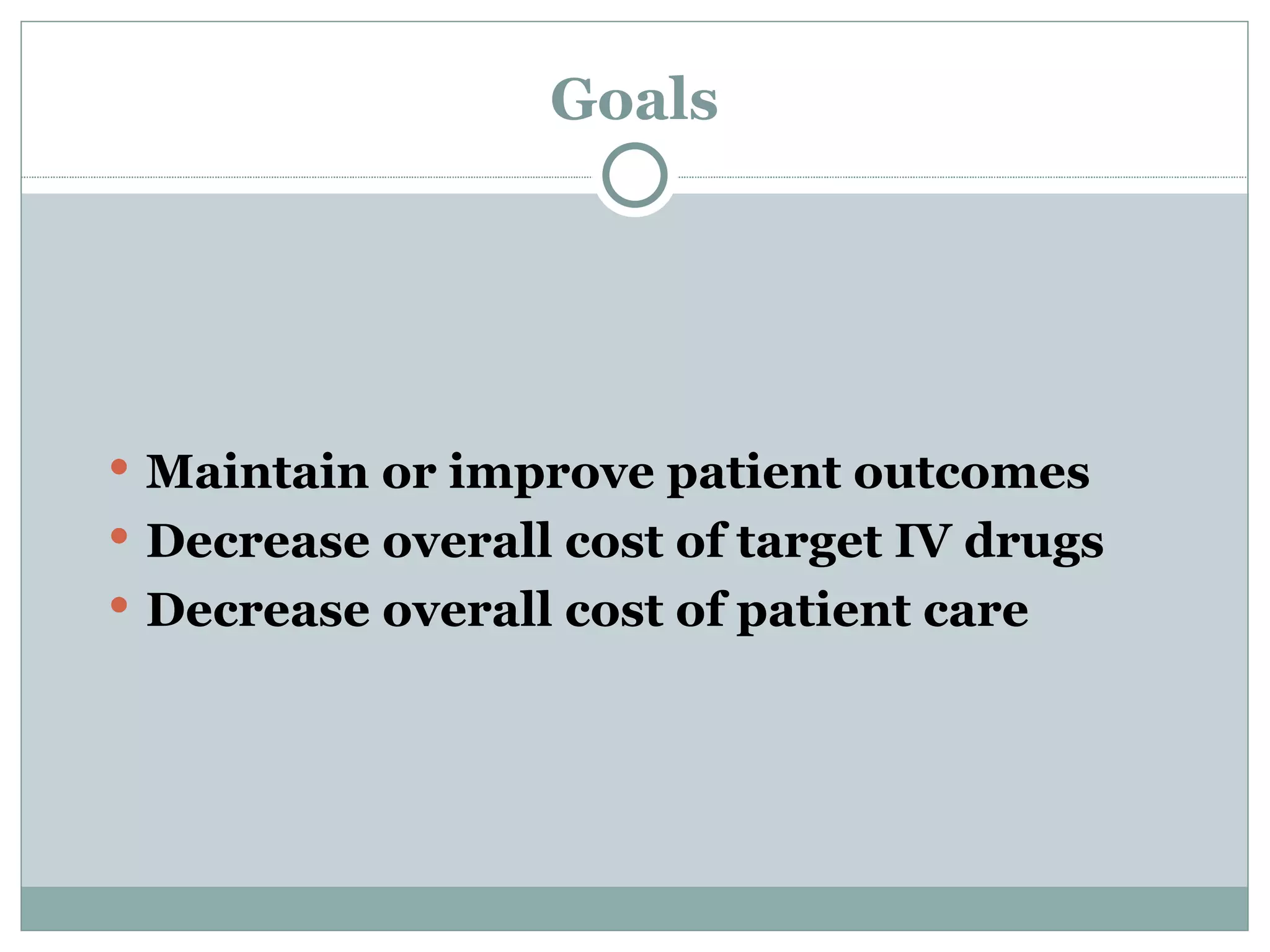
Goals Maintain or improve patient outcomes  Decrease overall cost of target IV drugs Decrease overall cost of patient care
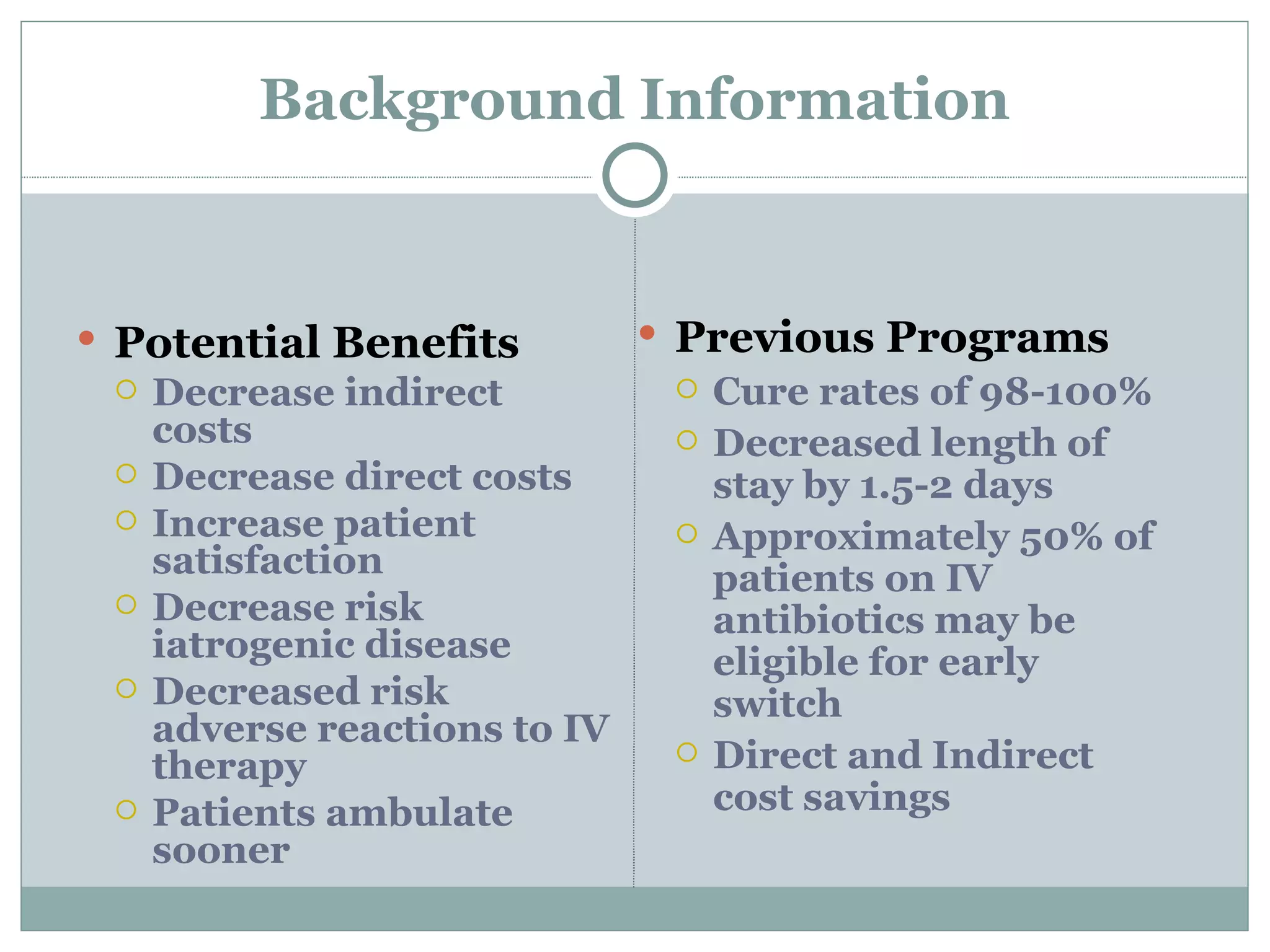
Background Information Potential Benefits Decrease indirect costs Decrease direct costs Increase patient satisfaction Decrease risk iatrogenic disease Decreased risk adverse reactions to IV therapy Patients ambulate sooner Previous Programs Cure rates of 98-100% Decreased length of stay by 1.5-2 days Approximately 50% of patients on IV antibiotics may be eligible for early switch Direct and Indirect cost savings
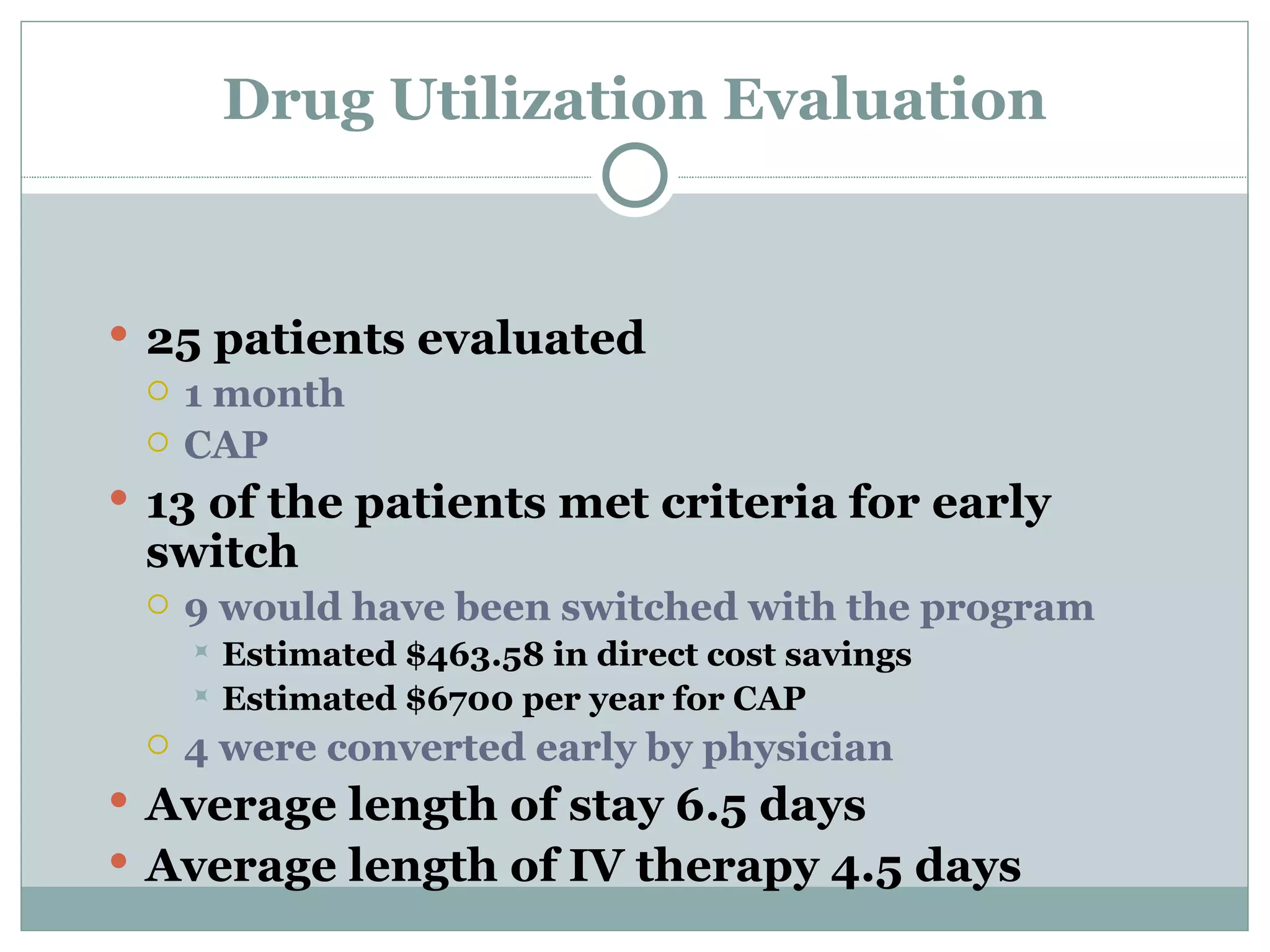
Drug Utilization Evaluation 25 patients evaluated  1 month  CAP 13 of the patients met criteria for early switch 9 would have been switched with the program Estimated $463.58 in direct cost savings Estimated $6700 per year for CAP 4 were converted early by physician Average length of stay 6.5 days Average length of IV therapy 4.5 days
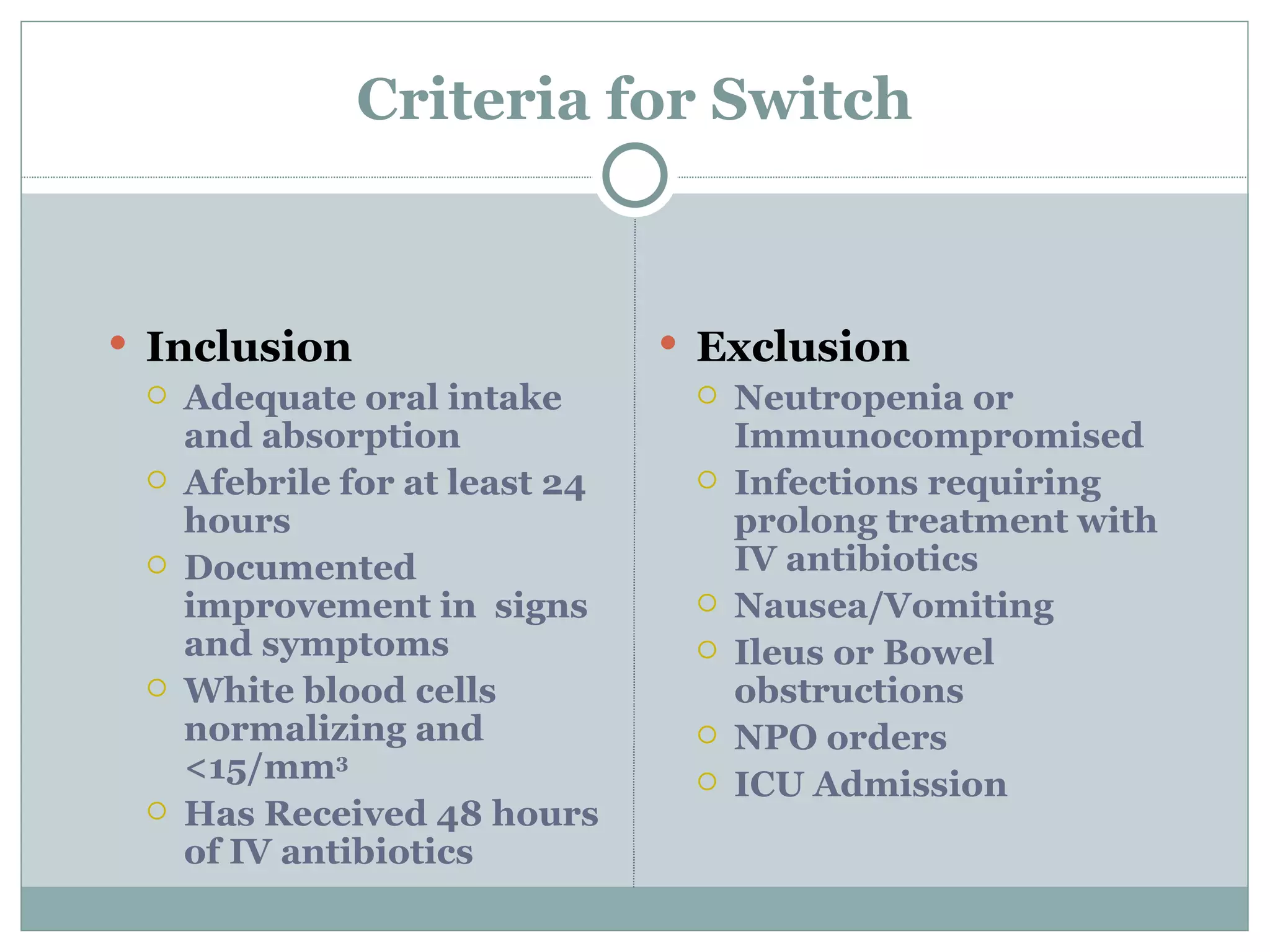
Criteria for Switch Inclusion Adequate oral intake and absorption Afebrile for at least 24 hours Documented improvement in  signs and symptoms White blood cells normalizing and <15/mm 3 Has Received 48 hours of IV antibiotics Exclusion Neutropenia or Immunocompromised Infections requiring prolong treatment with IV antibiotics Nausea/Vomiting Ileus or Bowel obstructions NPO orders ICU Admission
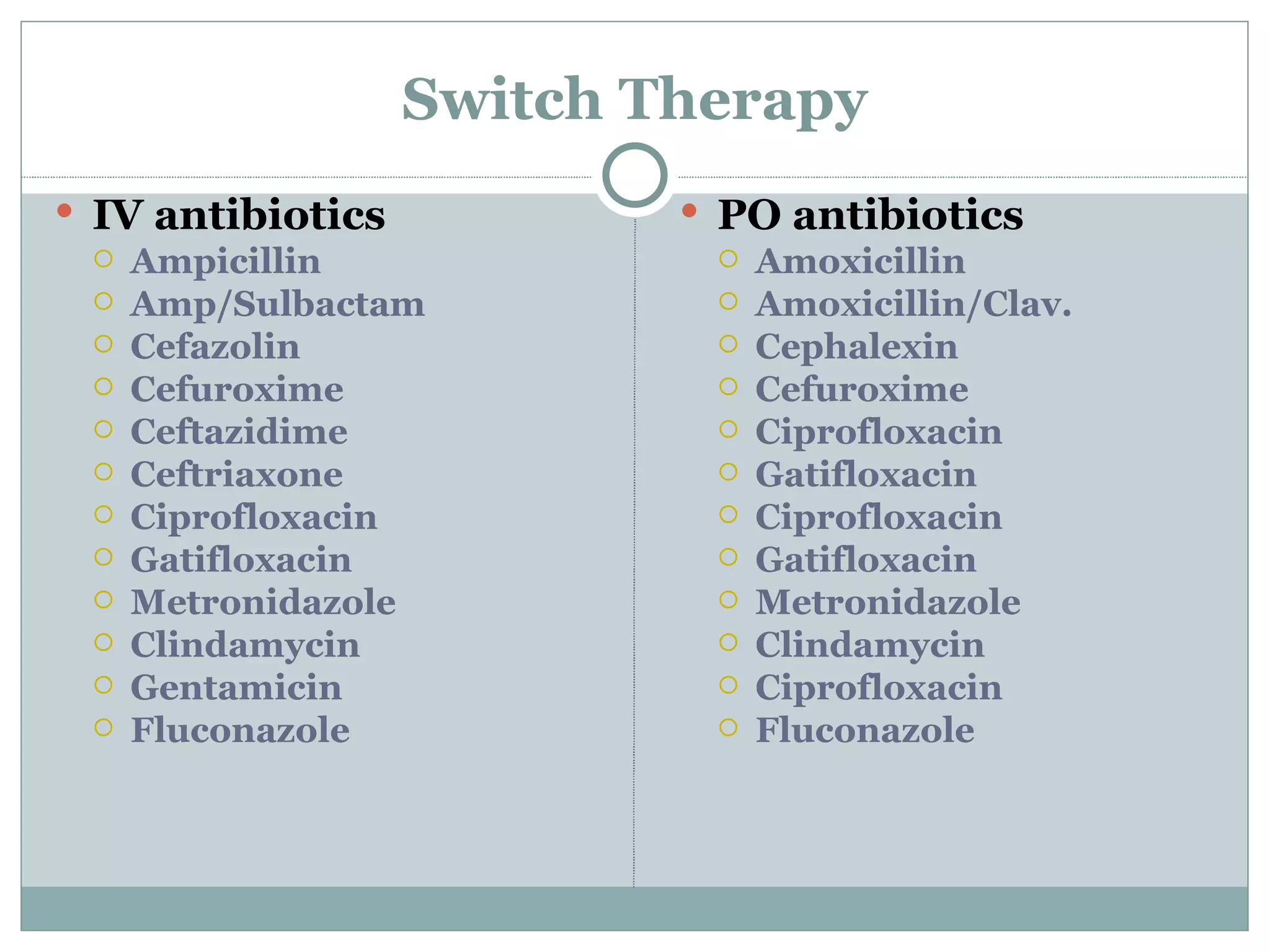
Switch Therapy IV antibiotics Ampicillin Amp/Sulbactam Cefazolin Cefuroxime Ceftazidime Ceftriaxone Ciprofloxacin Gatifloxacin Metronidazole Clindamycin Gentamicin Fluconazole PO antibiotics Amoxicillin Amoxicillin/Clav. Cephalexin Cefuroxime Ciprofloxacin Gatifloxacin Ciprofloxacin Gatifloxacin Metronidazole Clindamycin Ciprofloxacin Fluconazole
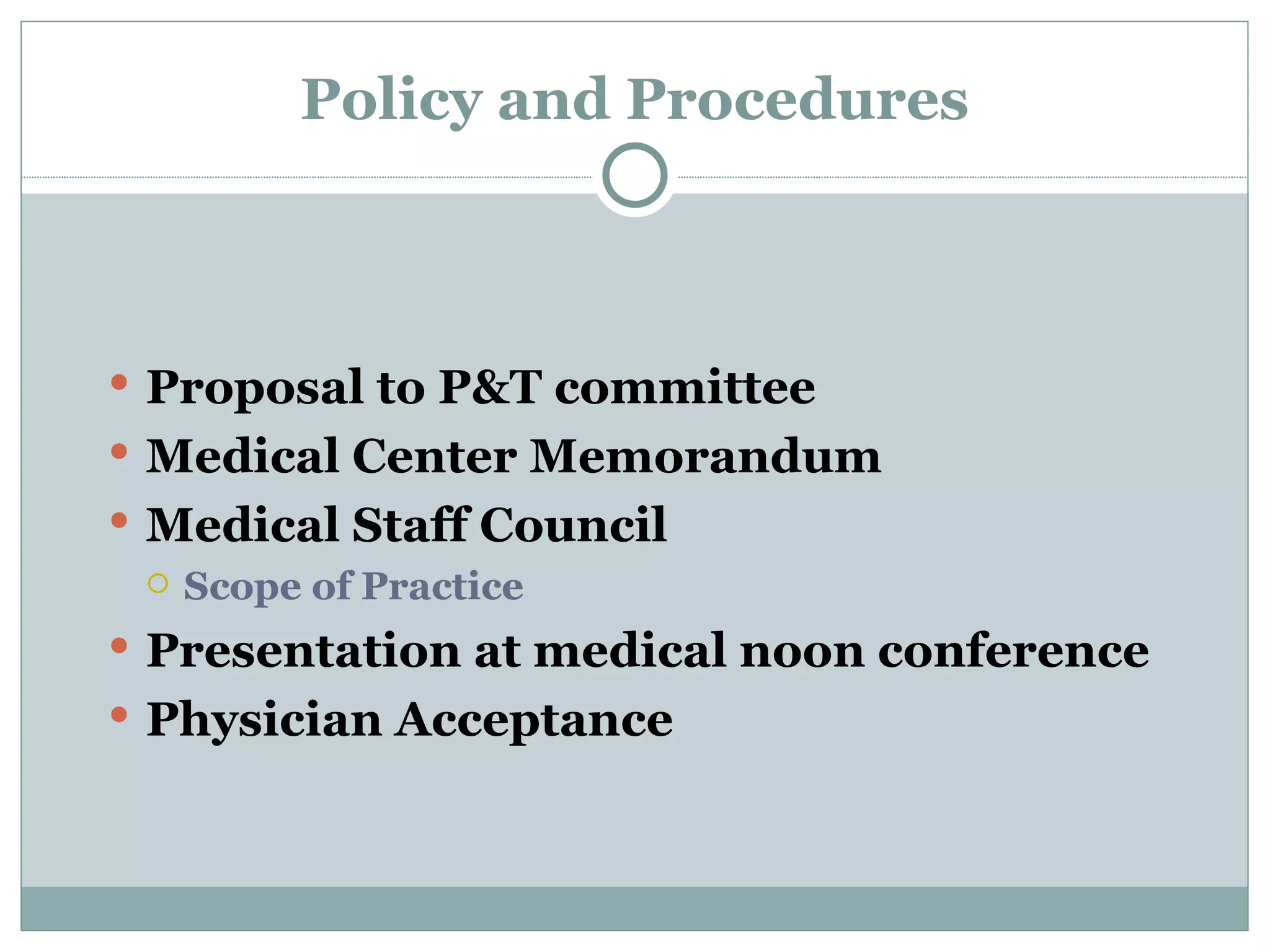
Policy and Procedures Proposal to P&T committee Medical Center Memorandum Medical Staff Council Scope of Practice Presentation at medical noon conference Physician Acceptance
Methods
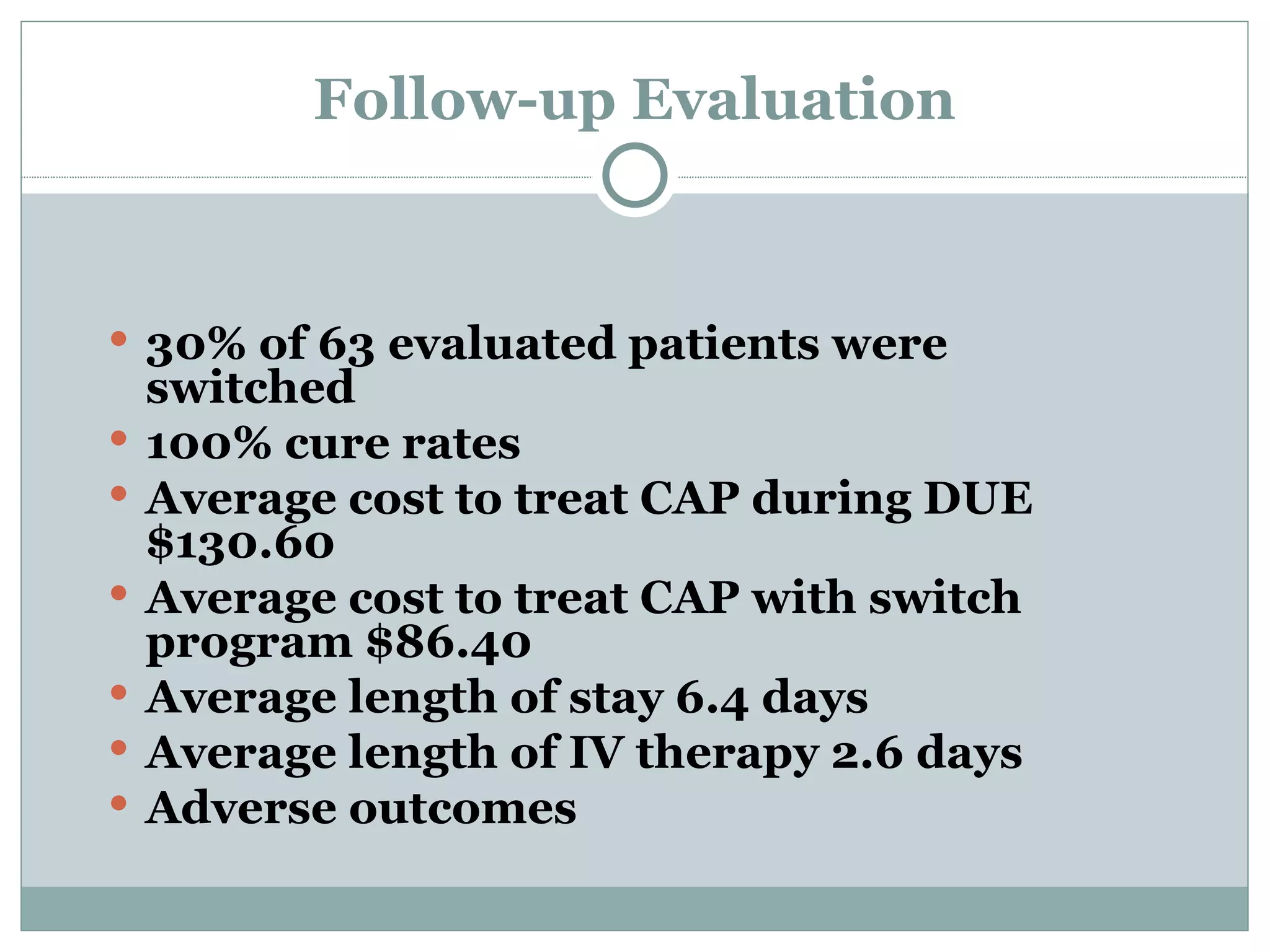
Follow-up Evaluation 30% of 63 evaluated patients were switched 100% cure rates Average cost to treat CAP during DUE $130.60  Average cost to treat CAP with switch program $86.40 Average length of stay 6.4 days  Average length of IV therapy 2.6 days Adverse outcomes
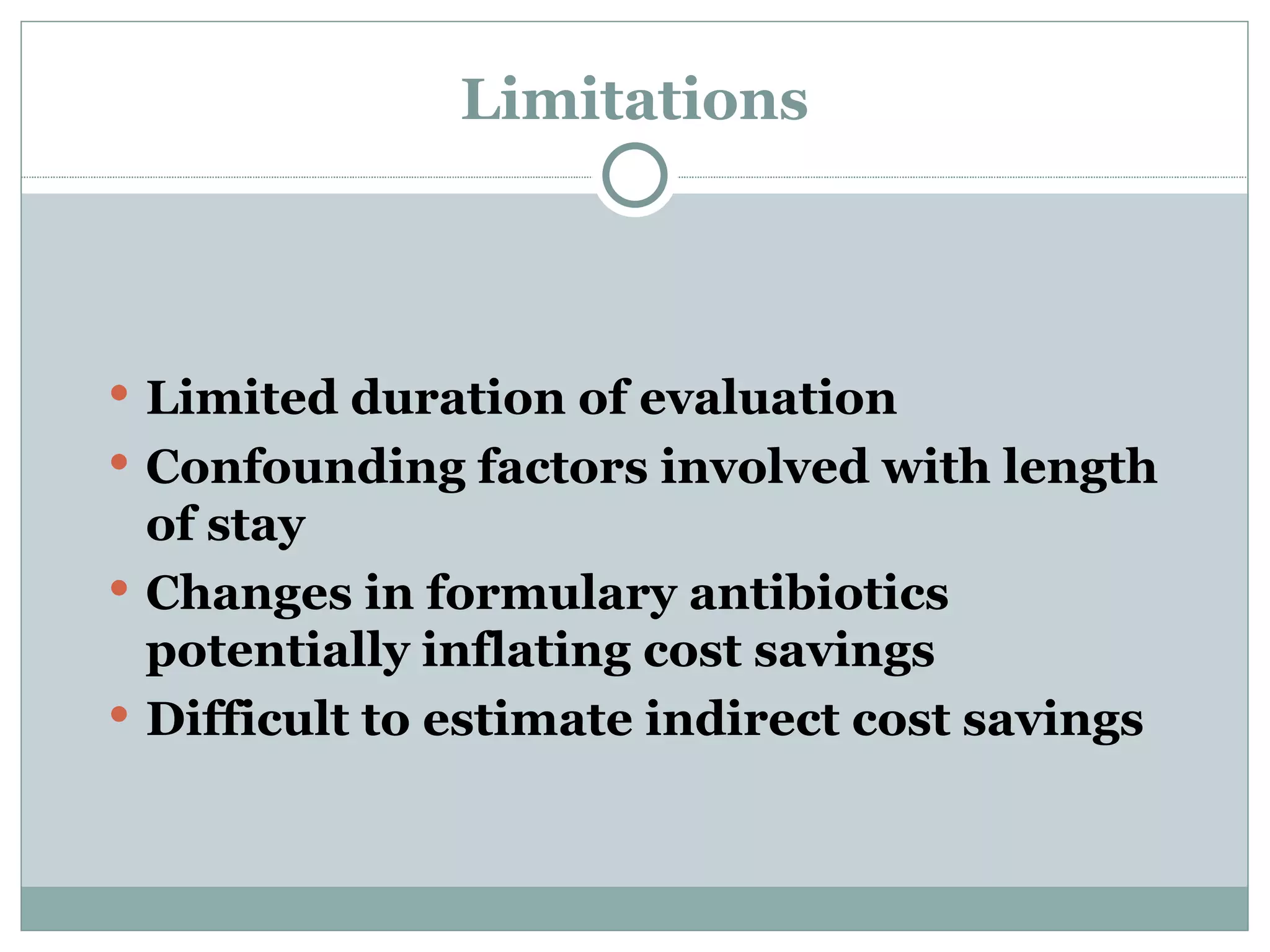
Limitations Limited duration of evaluation Confounding factors involved with length of stay Changes in formulary antibiotics potentially inflating cost savings Difficult to estimate indirect cost savings
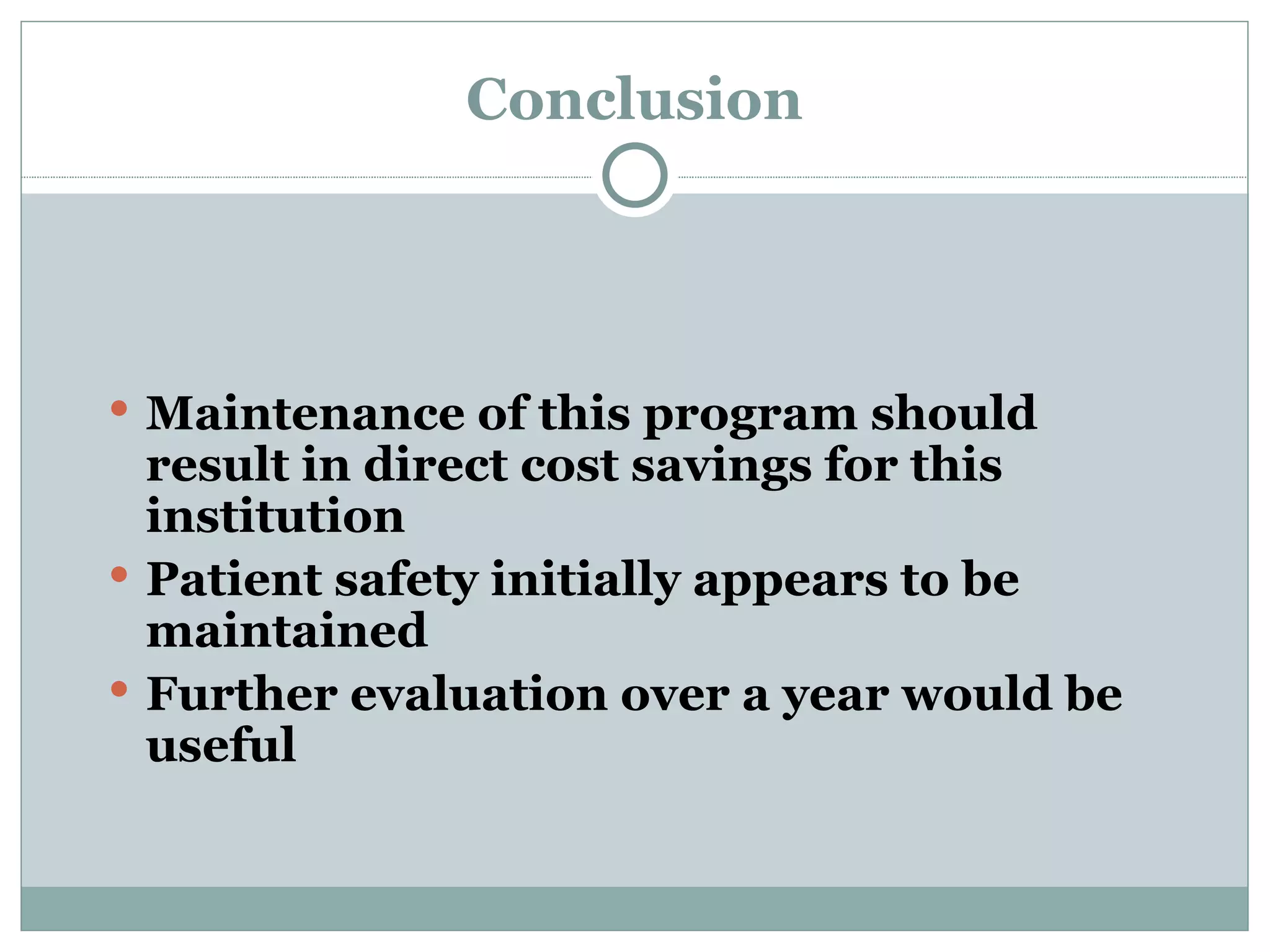
Conclusion Maintenance of this program should result in direct cost savings for this institution Patient safety initially appears to be maintained Further evaluation over a year would be useful
References Ahkee Sunket. Early Switch from Intravenous to Oral Antibiotics in Hospitalized Patients with Infections: A 6-Month Prospective Study.  Pharmacotherapy.  1997;17(3):569-575 Elbe Dean,  et al.  Use of cefixime in an IV to oral stepdwn program to reduce antimicrobial costs.  Formulary.  1998;3354-63. Fraser Giles L.,  et al.  Antibiotic Optimization: An Evaluation of Patient Safety and Economic Outcomes.  Arch Intern Med.  1997;157:1689-1694. Przybylski Kevin G.,  et al.  A Pharmacist-Initiated Program of Intravenous to Oral Antibiotic Convesion.  Pharmacotherapy.  1997;17(2):271-276 Ramirez Julio A. Managing Antiinfective Therapy of Community-Acquired Pneumonia in the Hospital Setting: Focus on Switch Therapy.  Pharmacotherapy.  2001;27(7Pt2):79S-82S

Iv To Po Pp[1]

  • 1.
    RYAN MILLS, PHARM.DCANDIDATE Pharmacist role in MTM at Charleston Area Medical Center Switching patients Intravenous to oral
  • 2.
    Quick Overview GoalsBackground Information Drug Utilization Evaluation Policy and Procedures Follow-up Evaluation Conclusions Questions
  • 3.
    Goals Maintain orimprove patient outcomes Decrease overall cost of target IV drugs Decrease overall cost of patient care
  • 4.
    Background Information PotentialBenefits Decrease indirect costs Decrease direct costs Increase patient satisfaction Decrease risk iatrogenic disease Decreased risk adverse reactions to IV therapy Patients ambulate sooner Previous Programs Cure rates of 98-100% Decreased length of stay by 1.5-2 days Approximately 50% of patients on IV antibiotics may be eligible for early switch Direct and Indirect cost savings
  • 5.
    Drug Utilization Evaluation25 patients evaluated 1 month CAP 13 of the patients met criteria for early switch 9 would have been switched with the program Estimated $463.58 in direct cost savings Estimated $6700 per year for CAP 4 were converted early by physician Average length of stay 6.5 days Average length of IV therapy 4.5 days
  • 6.
    Criteria for SwitchInclusion Adequate oral intake and absorption Afebrile for at least 24 hours Documented improvement in signs and symptoms White blood cells normalizing and <15/mm 3 Has Received 48 hours of IV antibiotics Exclusion Neutropenia or Immunocompromised Infections requiring prolong treatment with IV antibiotics Nausea/Vomiting Ileus or Bowel obstructions NPO orders ICU Admission
  • 7.
    Switch Therapy IVantibiotics Ampicillin Amp/Sulbactam Cefazolin Cefuroxime Ceftazidime Ceftriaxone Ciprofloxacin Gatifloxacin Metronidazole Clindamycin Gentamicin Fluconazole PO antibiotics Amoxicillin Amoxicillin/Clav. Cephalexin Cefuroxime Ciprofloxacin Gatifloxacin Ciprofloxacin Gatifloxacin Metronidazole Clindamycin Ciprofloxacin Fluconazole
  • 8.
    Policy and ProceduresProposal to P&T committee Medical Center Memorandum Medical Staff Council Scope of Practice Presentation at medical noon conference Physician Acceptance
  • 9.
  • 10.
    Follow-up Evaluation 30%of 63 evaluated patients were switched 100% cure rates Average cost to treat CAP during DUE $130.60 Average cost to treat CAP with switch program $86.40 Average length of stay 6.4 days Average length of IV therapy 2.6 days Adverse outcomes
  • 11.
    Limitations Limited durationof evaluation Confounding factors involved with length of stay Changes in formulary antibiotics potentially inflating cost savings Difficult to estimate indirect cost savings
  • 12.
    Conclusion Maintenance ofthis program should result in direct cost savings for this institution Patient safety initially appears to be maintained Further evaluation over a year would be useful
  • 13.
    References Ahkee Sunket.Early Switch from Intravenous to Oral Antibiotics in Hospitalized Patients with Infections: A 6-Month Prospective Study. Pharmacotherapy. 1997;17(3):569-575 Elbe Dean, et al. Use of cefixime in an IV to oral stepdwn program to reduce antimicrobial costs. Formulary. 1998;3354-63. Fraser Giles L., et al. Antibiotic Optimization: An Evaluation of Patient Safety and Economic Outcomes. Arch Intern Med. 1997;157:1689-1694. Przybylski Kevin G., et al. A Pharmacist-Initiated Program of Intravenous to Oral Antibiotic Convesion. Pharmacotherapy. 1997;17(2):271-276 Ramirez Julio A. Managing Antiinfective Therapy of Community-Acquired Pneumonia in the Hospital Setting: Focus on Switch Therapy. Pharmacotherapy. 2001;27(7Pt2):79S-82S