Effective Methods on
How to Fix Gap Teeth
Without Braces
Exploring Non-Brace Solutions for Gap Teeth
Introduction
Gap teeth, also called diastema, are common dental
issues.
Traditional treatment often involves braces, but several
non-brace methods exist.
This presentation will explore various effective ways to
close gap teeth without braces.
Also research how to fix gap teeth.
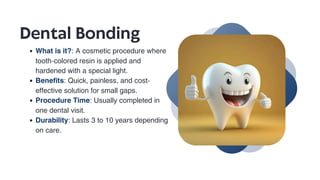
Dental Bonding
What is it?: A cosmetic procedure where
tooth-colored resin is applied and
hardened with a special light.
Benefits: Quick, painless, and cost-
effective solution for small gaps.
Procedure Time: Usually completed in
one dental visit.
Durability: Lasts 3 to 10 years depending
on care.
Veneers
What are Veneers?: Thin porcelain or composite
shells placed on the front surface of teeth.
Benefits: Veneers improve the appearance of teeth
by covering gaps and other imperfections.
Procedure: Requires two visits—first for preparation
and second for application.
Durability: Can last up to 20 years with proper care.
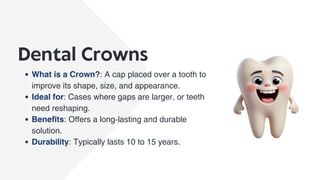
Dental Crowns
What is a Crown?: A cap placed over a tooth to
improve its shape, size, and appearance.
Ideal for: Cases where gaps are larger, or teeth
need reshaping.
Benefits: Offers a long-lasting and durable
solution.
Durability: Typically lasts 10 to 15 years.
Invisalign
What is Invisalign?: Clear aligners that gradually shift
teeth into place.
Benefits: Almost invisible, removable, and more
comfortable than traditional braces.
Procedure: Custom-fitted trays are replaced every few
weeks.
Treatment Time: Typically takes 6 to 18 months.
Dental Contouring (Enamel Shaping)
What is Contouring?: A process where small
amounts of enamel are removed to reshape teeth.
Ideal for: Small gaps or uneven teeth.
Procedure: Quick and painless; typically done in
one visit.
Limitations: Only suitable for minor adjustments.
Retainers
What are Retainers?: A custom-made device used to hold
teeth in their new position.
Used for: Minor gap adjustments after other treatments.
Benefits: Less invasive and helps maintain results long-term.
Procedure: Worn full-time initially, then only at night.
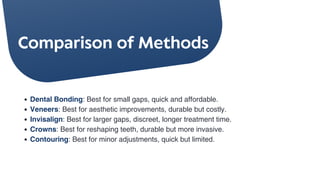
Comparison of Methods
Dental Bonding: Best for small gaps, quick and affordable.
Veneers: Best for aesthetic improvements, durable but costly.
Invisalign: Best for larger gaps, discreet, longer treatment time.
Crowns: Best for reshaping teeth, durable but more invasive.
Contouring: Best for minor adjustments, quick but limited.
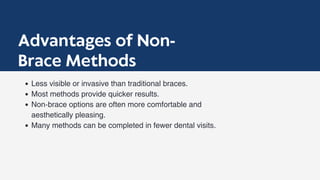
Advantages of Non-
Brace Methods
Less visible or invasive than traditional braces.
Most methods provide quicker results.
Non-brace options are often more comfortable and
aesthetically pleasing.
Many methods can be completed in fewer dental visits.
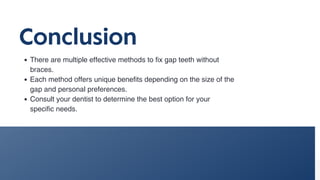
Conclusion
There are multiple effective methods to fix gap teeth without
braces.
Each method offers unique benefits depending on the size of the
gap and personal preferences.
Consult your dentist to determine the best option for your
specific needs.
Thank
You.

Invisalign: The Clear Path to Close Gaps

  • 1.
    Effective Methods on Howto Fix Gap Teeth Without Braces Exploring Non-Brace Solutions for Gap Teeth
  • 2.
    Introduction Gap teeth, alsocalled diastema, are common dental issues. Traditional treatment often involves braces, but several non-brace methods exist. This presentation will explore various effective ways to close gap teeth without braces. Also research how to fix gap teeth.
  • 3.
    Dental Bonding What isit?: A cosmetic procedure where tooth-colored resin is applied and hardened with a special light. Benefits: Quick, painless, and cost- effective solution for small gaps. Procedure Time: Usually completed in one dental visit. Durability: Lasts 3 to 10 years depending on care.
  • 4.
    Veneers What are Veneers?:Thin porcelain or composite shells placed on the front surface of teeth. Benefits: Veneers improve the appearance of teeth by covering gaps and other imperfections. Procedure: Requires two visits—first for preparation and second for application. Durability: Can last up to 20 years with proper care.
  • 5.
    Dental Crowns What isa Crown?: A cap placed over a tooth to improve its shape, size, and appearance. Ideal for: Cases where gaps are larger, or teeth need reshaping. Benefits: Offers a long-lasting and durable solution. Durability: Typically lasts 10 to 15 years.
  • 6.
    Invisalign What is Invisalign?:Clear aligners that gradually shift teeth into place. Benefits: Almost invisible, removable, and more comfortable than traditional braces. Procedure: Custom-fitted trays are replaced every few weeks. Treatment Time: Typically takes 6 to 18 months.
  • 7.
    Dental Contouring (EnamelShaping) What is Contouring?: A process where small amounts of enamel are removed to reshape teeth. Ideal for: Small gaps or uneven teeth. Procedure: Quick and painless; typically done in one visit. Limitations: Only suitable for minor adjustments.
  • 8.
    Retainers What are Retainers?:A custom-made device used to hold teeth in their new position. Used for: Minor gap adjustments after other treatments. Benefits: Less invasive and helps maintain results long-term. Procedure: Worn full-time initially, then only at night.
  • 9.
    Comparison of Methods DentalBonding: Best for small gaps, quick and affordable. Veneers: Best for aesthetic improvements, durable but costly. Invisalign: Best for larger gaps, discreet, longer treatment time. Crowns: Best for reshaping teeth, durable but more invasive. Contouring: Best for minor adjustments, quick but limited.
  • 10.
    Advantages of Non- BraceMethods Less visible or invasive than traditional braces. Most methods provide quicker results. Non-brace options are often more comfortable and aesthetically pleasing. Many methods can be completed in fewer dental visits.
  • 11.
    Conclusion There are multipleeffective methods to fix gap teeth without braces. Each method offers unique benefits depending on the size of the gap and personal preferences. Consult your dentist to determine the best option for your specific needs.
  • 12.