2022. 01. 21.
Invertible Denoising Network: A Light Solution for Real
Noise Removal
Yang Liu, Zhenyue Qin, Saeed Anwar, Pan Ji, Dongwoo Kim,
Sabrina Caldwell, Tom Gedeon
CVPR 2021
Hyunwook Lee
Contents
• Overview
• Contributions
• Design Concept
• Invertible Denoising Networks
• Experimental Results
• Conclusion
3
Overview
4
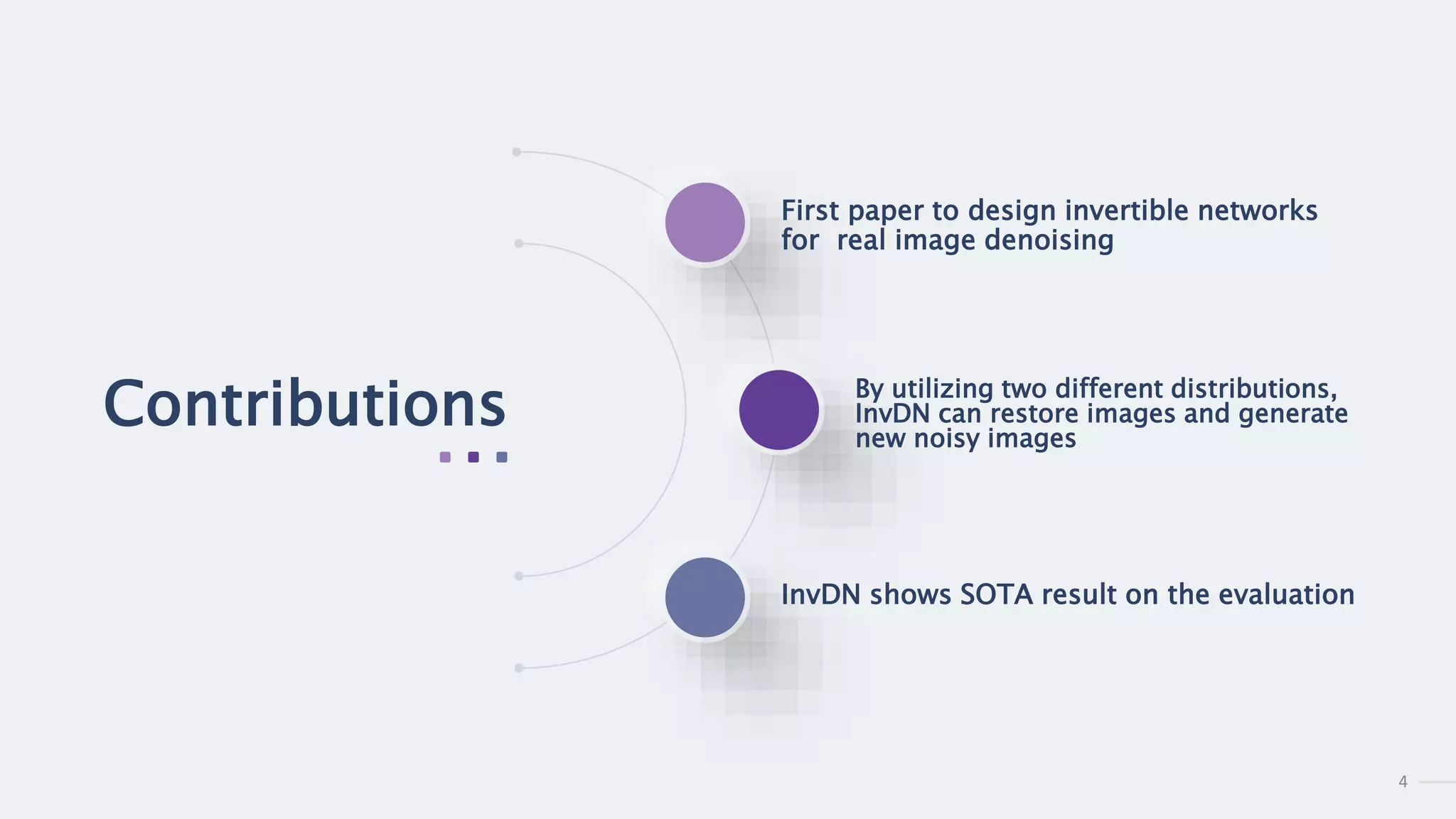
Contributions
First paper to design invertible networks
for real image denoising
By utilizing two different distributions,
InvDN can restore images and generate
new noisy images
InvDN shows SOTA result on the evaluation
5
Design Concepts: Invertible Neural Networks
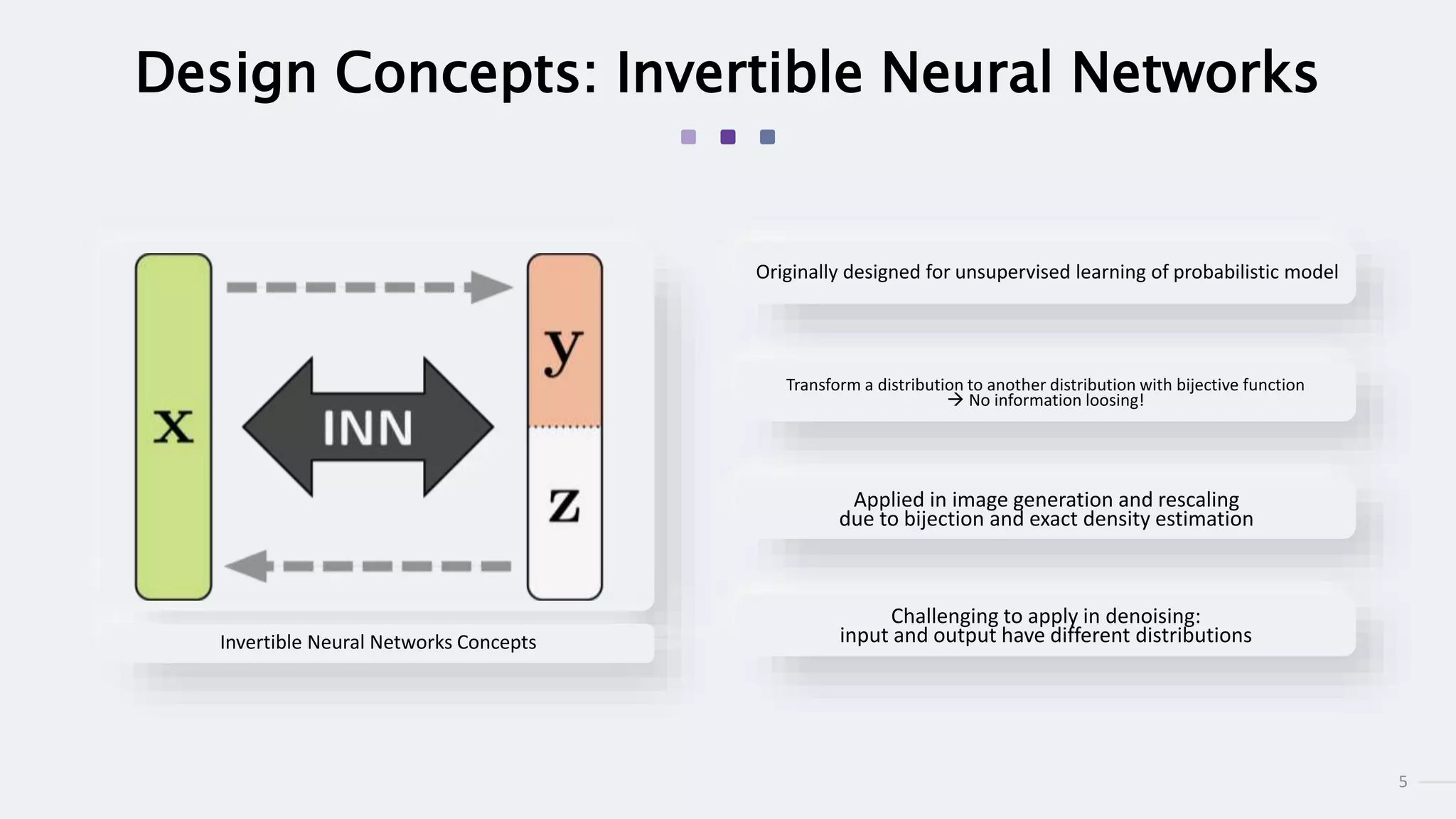
Invertible Neural Networks Concepts
Originally designed for unsupervised learning of probabilistic model
Transform a distribution to another distribution with bijective function
 No information loosing!
Applied in image generation and rescaling
due to bijection and exact density estimation
Challenging to apply in denoising:
input and output have different distributions
6
Design Concepts: Invertible Neural Networks
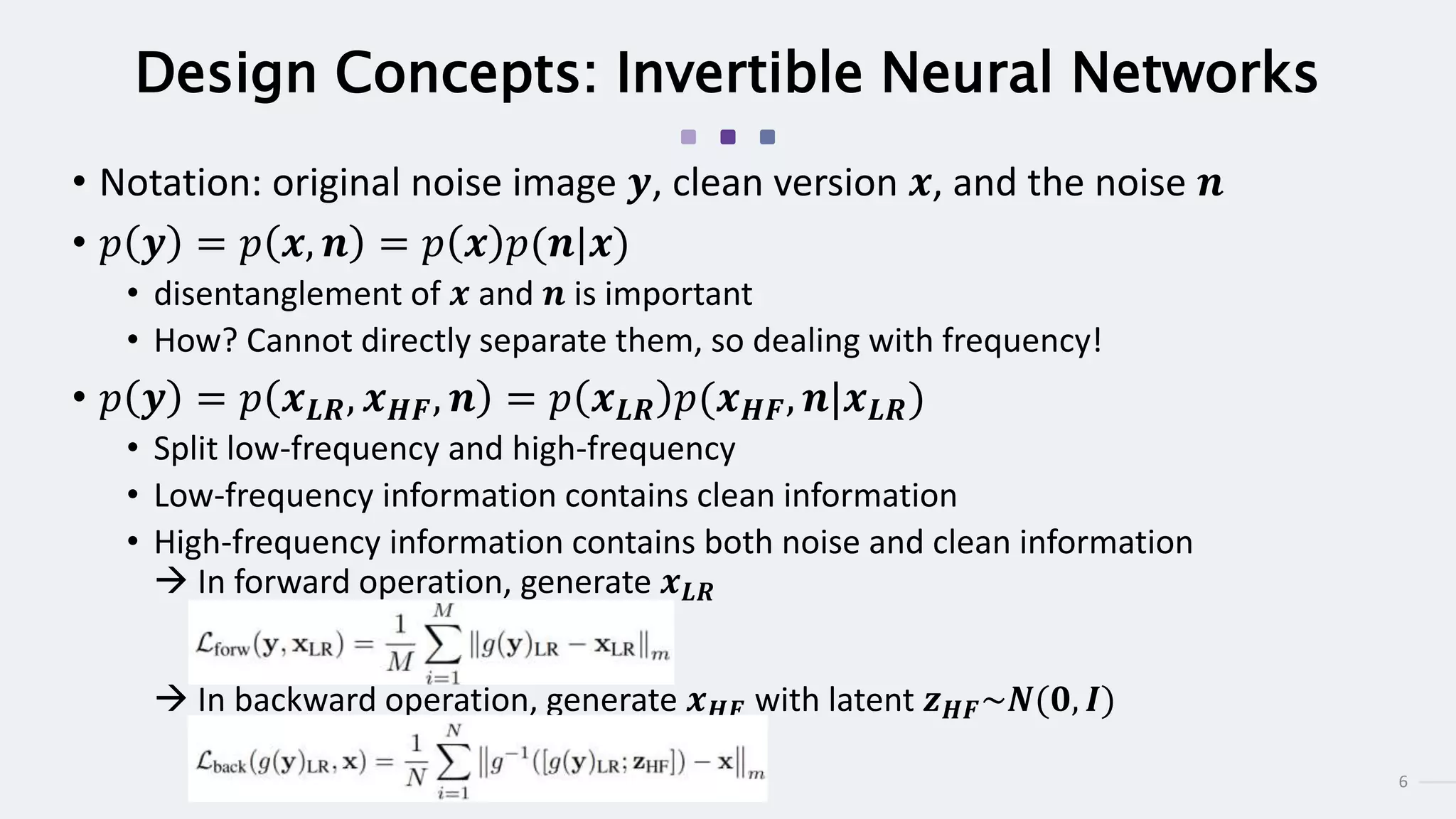
• Notation: original noise image 𝒚, clean version 𝒙, and the noise 𝒏
• 𝑝 𝒚 = 𝑝 𝒙, 𝒏 = 𝑝 𝒙 𝑝(𝒏|𝒙)
• disentanglement of 𝒙 and 𝒏 is important
• How? Cannot directly separate them, so dealing with frequency!
• 𝑝 𝒚 = 𝑝 𝒙𝑳𝑹, 𝒙𝑯𝑭, 𝒏 = 𝑝 𝒙𝑳𝑹 𝑝(𝒙𝑯𝑭, 𝒏|𝒙𝑳𝑹)
• Split low-frequency and high-frequency
• Low-frequency information contains clean information
• High-frequency information contains both noise and clean information
 In forward operation, generate 𝒙𝑳𝑹
 In backward operation, generate 𝒙𝑯𝑭 with latent 𝒛𝑯𝑭~𝑵(𝟎, 𝑰)
7
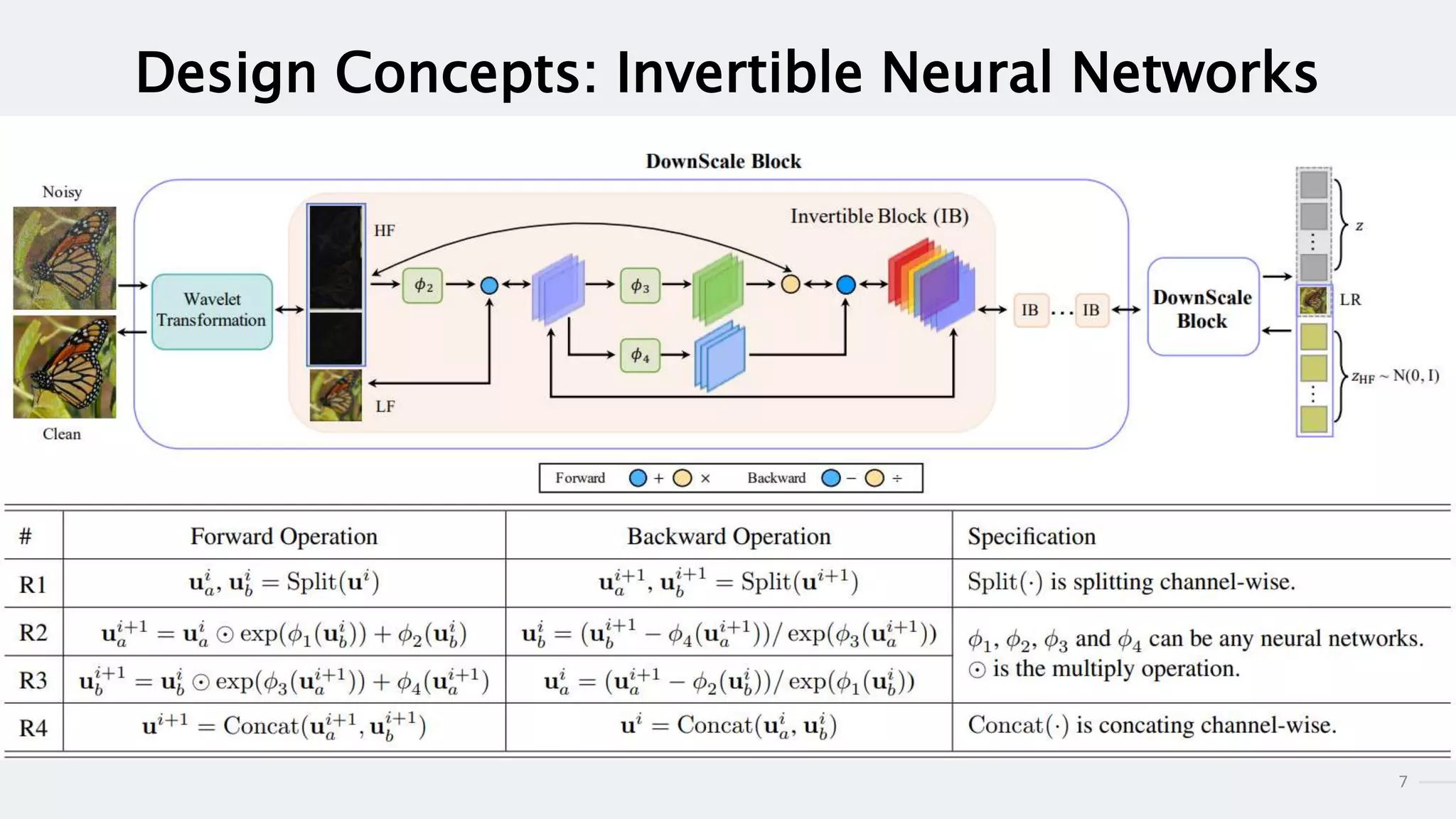
Design Concepts: Invertible Neural Networks
8
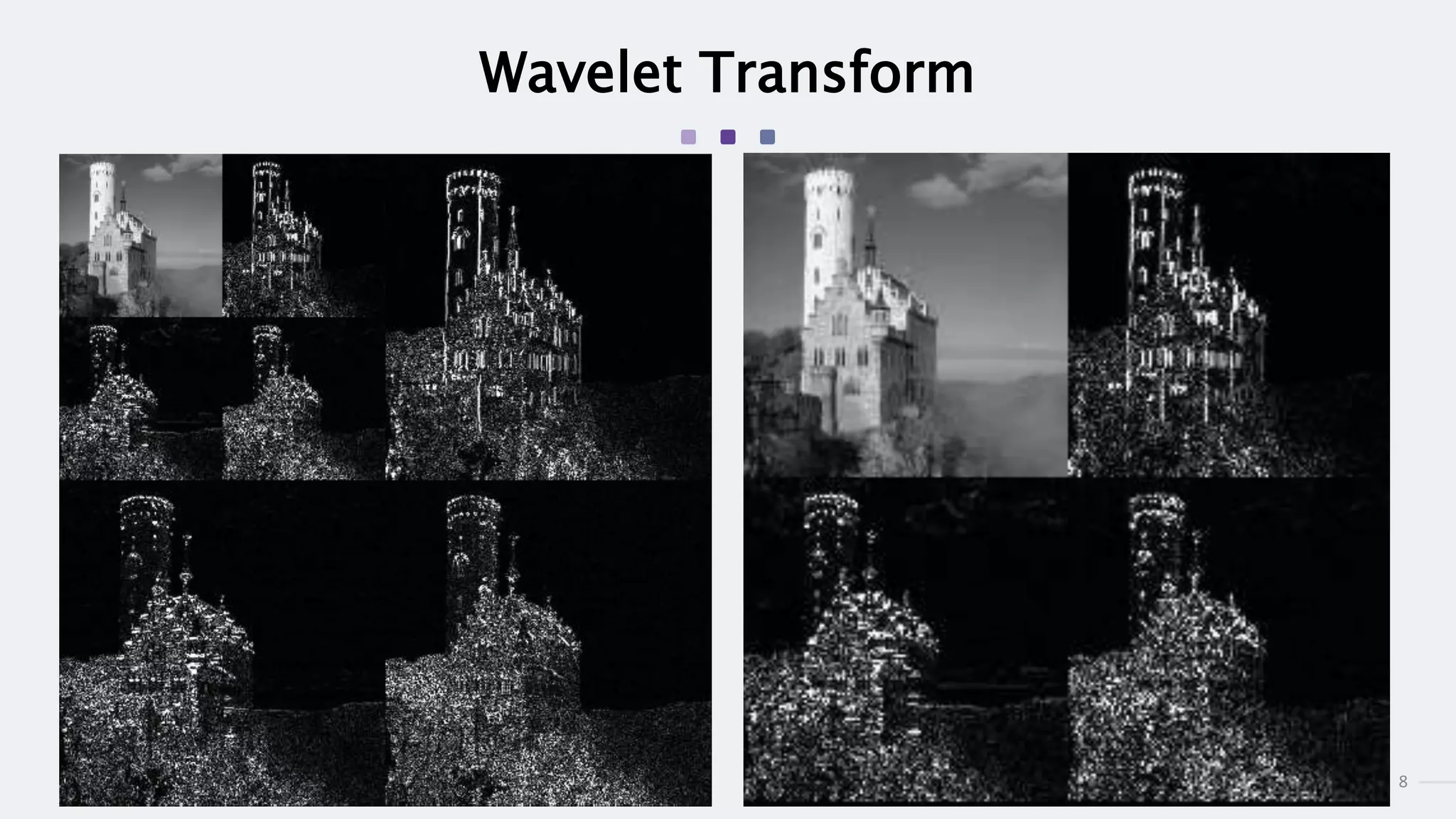
Wavelet Transform
9
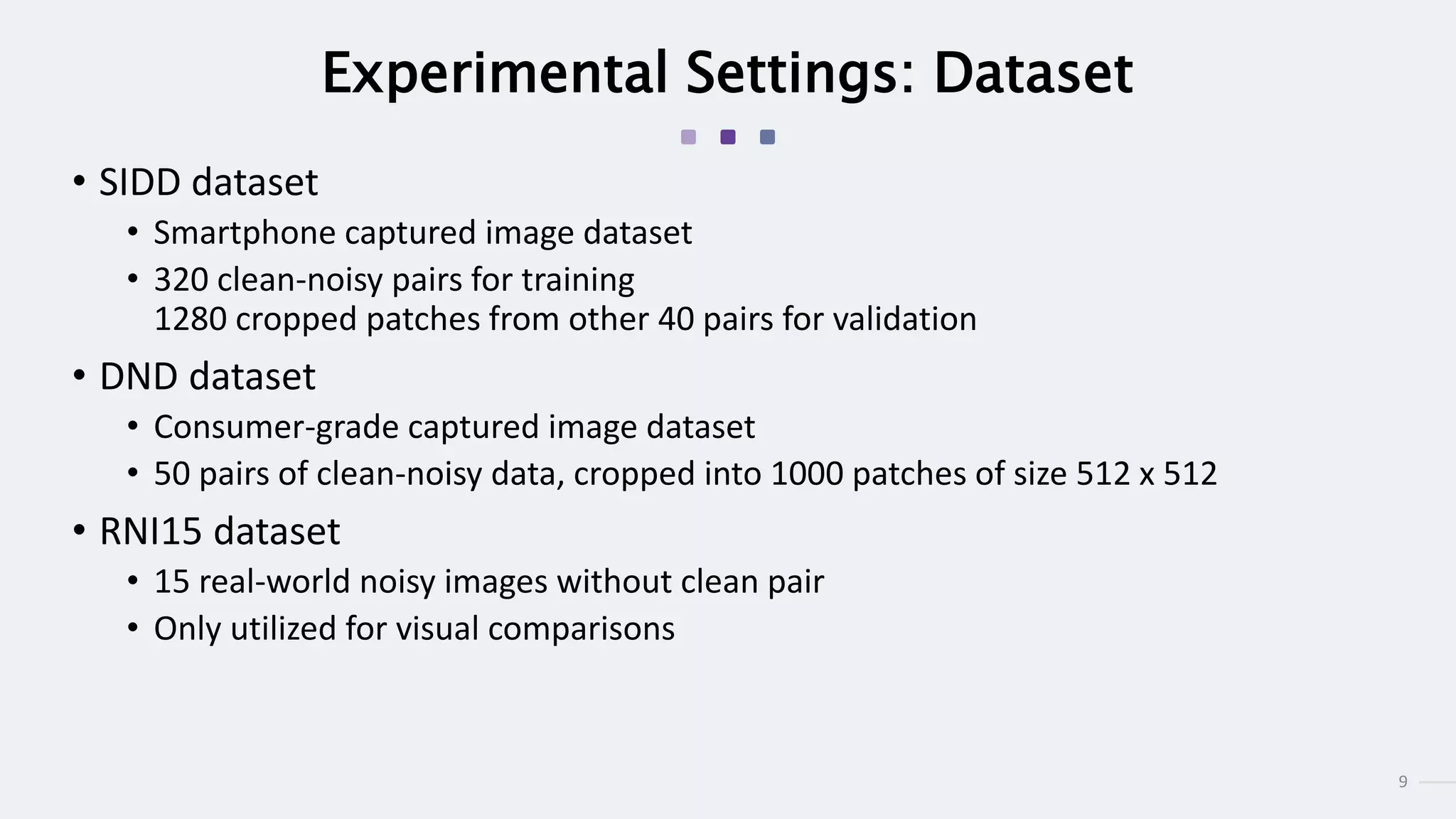
Experimental Settings: Dataset
• SIDD dataset
• Smartphone captured image dataset
• 320 clean-noisy pairs for training
1280 cropped patches from other 40 pairs for validation
• DND dataset
• Consumer-grade captured image dataset
• 50 pairs of clean-noisy data, cropped into 1000 patches of size 512 x 512
• RNI15 dataset
• 15 real-world noisy images without clean pair
• Only utilized for visual comparisons
10
Experimental Results
11
Experimental Results
12
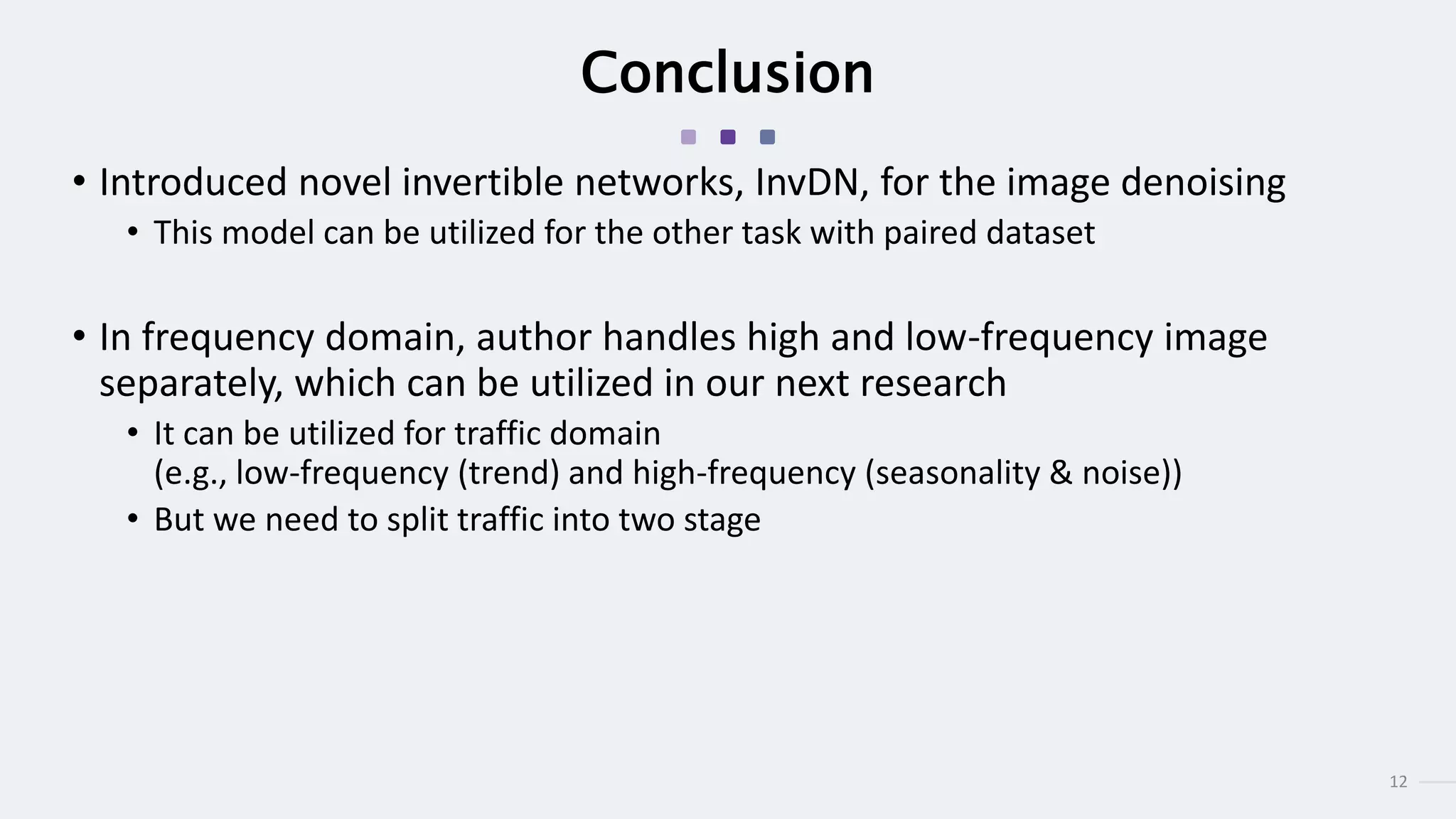
Conclusion
• Introduced novel invertible networks, InvDN, for the image denoising
• This model can be utilized for the other task with paired dataset
• In frequency domain, author handles high and low-frequency image
separately, which can be utilized in our next research
• It can be utilized for traffic domain
(e.g., low-frequency (trend) and high-frequency (seasonality & noise))
• But we need to split traffic into two stage
Thank you

Invertible Denoising Network: A Light Solution for Real Noise Removal

  • 1.
    2022. 01. 21. InvertibleDenoising Network: A Light Solution for Real Noise Removal Yang Liu, Zhenyue Qin, Saeed Anwar, Pan Ji, Dongwoo Kim, Sabrina Caldwell, Tom Gedeon CVPR 2021 Hyunwook Lee
  • 2.
    Contents • Overview • Contributions •Design Concept • Invertible Denoising Networks • Experimental Results • Conclusion
  • 3.
  • 4.
    4 Contributions First paper todesign invertible networks for real image denoising By utilizing two different distributions, InvDN can restore images and generate new noisy images InvDN shows SOTA result on the evaluation
  • 5.
    5 Design Concepts: InvertibleNeural Networks Invertible Neural Networks Concepts Originally designed for unsupervised learning of probabilistic model Transform a distribution to another distribution with bijective function  No information loosing! Applied in image generation and rescaling due to bijection and exact density estimation Challenging to apply in denoising: input and output have different distributions
  • 6.
    6 Design Concepts: InvertibleNeural Networks • Notation: original noise image 𝒚, clean version 𝒙, and the noise 𝒏 • 𝑝 𝒚 = 𝑝 𝒙, 𝒏 = 𝑝 𝒙 𝑝(𝒏|𝒙) • disentanglement of 𝒙 and 𝒏 is important • How? Cannot directly separate them, so dealing with frequency! • 𝑝 𝒚 = 𝑝 𝒙𝑳𝑹, 𝒙𝑯𝑭, 𝒏 = 𝑝 𝒙𝑳𝑹 𝑝(𝒙𝑯𝑭, 𝒏|𝒙𝑳𝑹) • Split low-frequency and high-frequency • Low-frequency information contains clean information • High-frequency information contains both noise and clean information  In forward operation, generate 𝒙𝑳𝑹  In backward operation, generate 𝒙𝑯𝑭 with latent 𝒛𝑯𝑭~𝑵(𝟎, 𝑰)
  • 7.
  • 8.
  • 9.
    9 Experimental Settings: Dataset •SIDD dataset • Smartphone captured image dataset • 320 clean-noisy pairs for training 1280 cropped patches from other 40 pairs for validation • DND dataset • Consumer-grade captured image dataset • 50 pairs of clean-noisy data, cropped into 1000 patches of size 512 x 512 • RNI15 dataset • 15 real-world noisy images without clean pair • Only utilized for visual comparisons
  • 10.
  • 11.
  • 12.
    12 Conclusion • Introduced novelinvertible networks, InvDN, for the image denoising • This model can be utilized for the other task with paired dataset • In frequency domain, author handles high and low-frequency image separately, which can be utilized in our next research • It can be utilized for traffic domain (e.g., low-frequency (trend) and high-frequency (seasonality & noise)) • But we need to split traffic into two stage
  • 13.

Editor's Notes

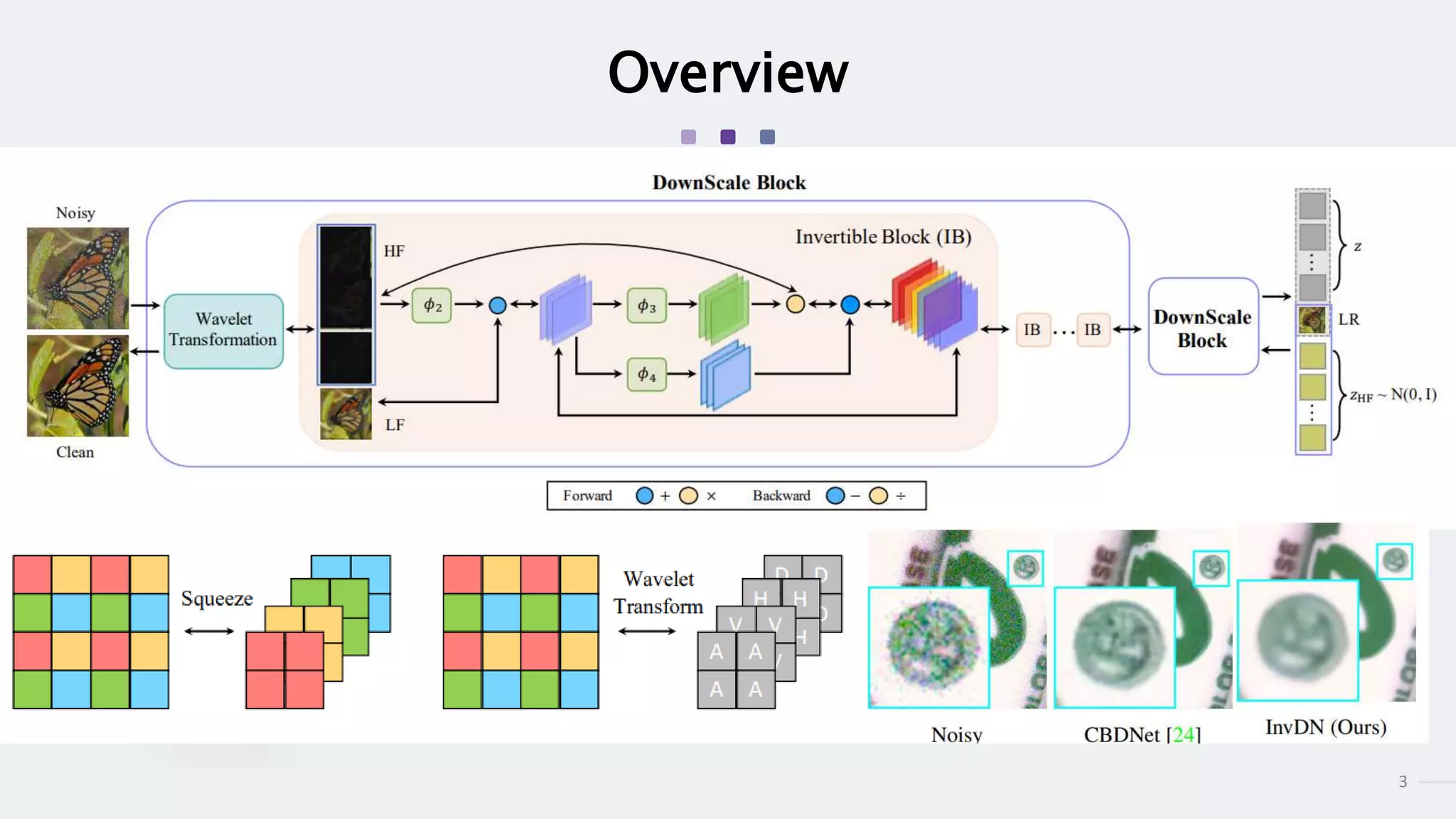
  • #4 Average, Vertical, Horizon, Diagonal