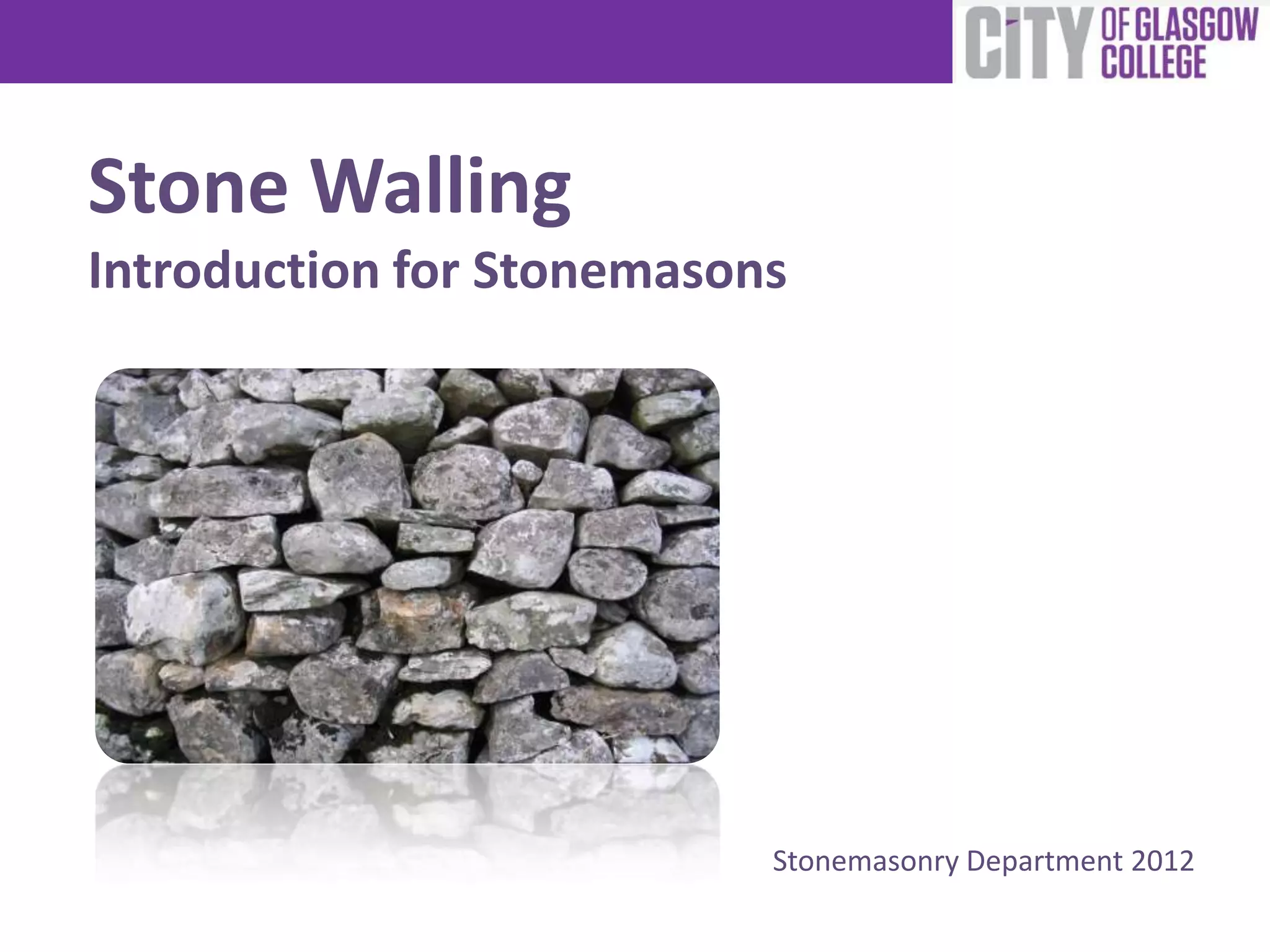
Stone Walling
Introduction for Stonemasons
Stonemasonry Department 2012
Ashlar Walling
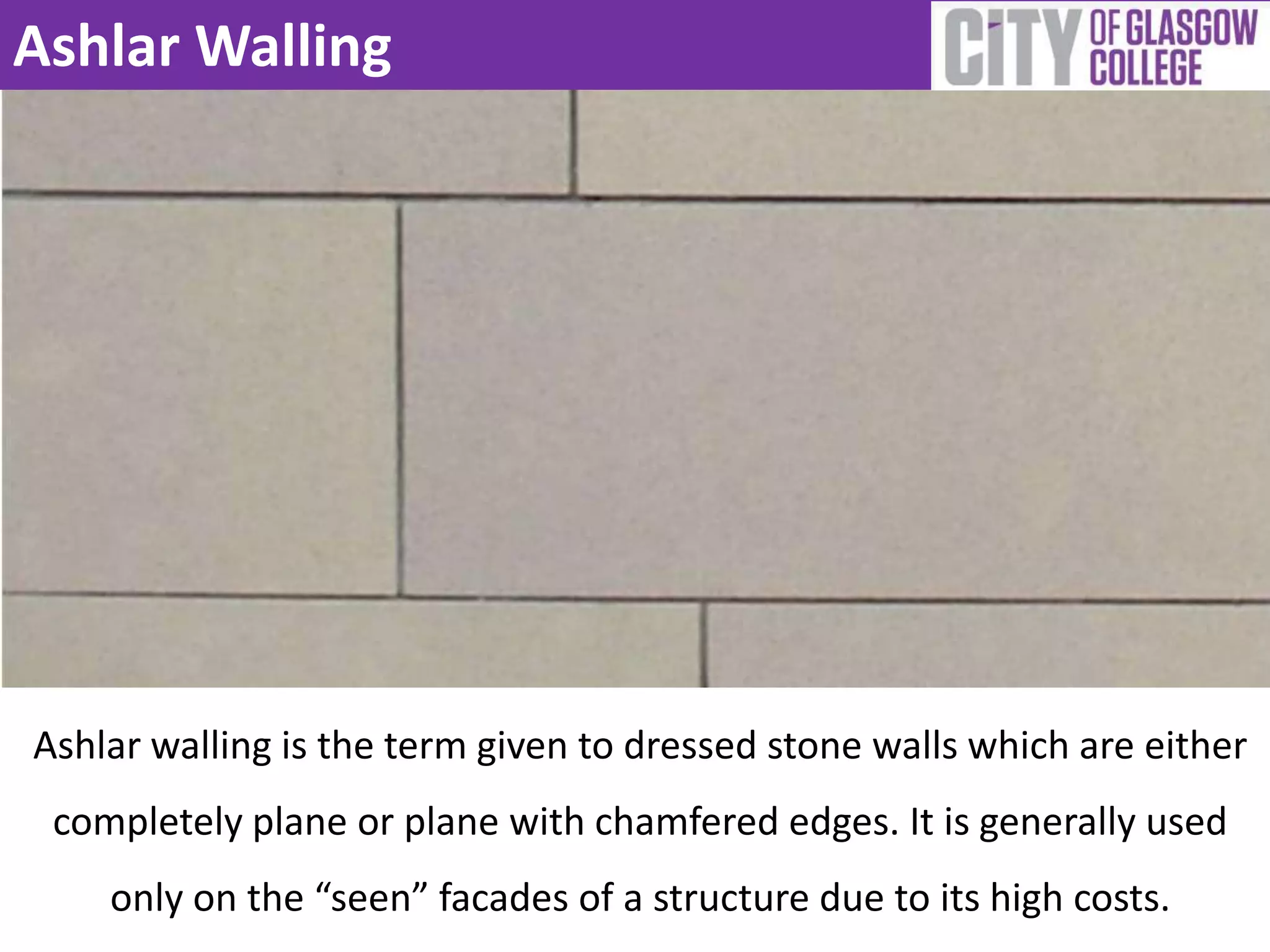
Ashlar walling is the term given to dressed stone walls which are either
completely plane or plane with chamfered edges. It is generally used
only on the “seen” facades of a structure due to its high costs.
Coursed Rubble Walling
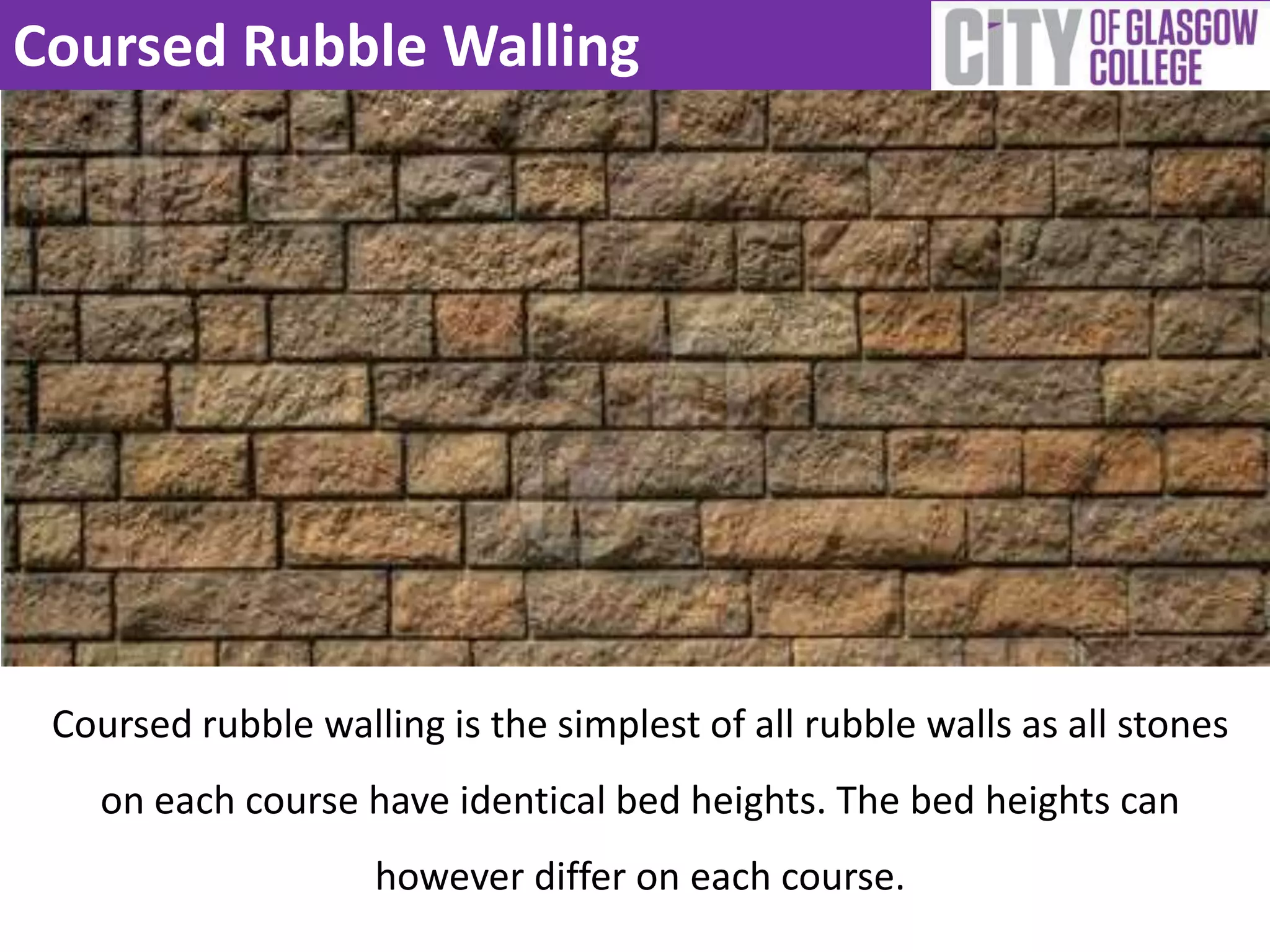
Coursed rubble walling is the simplest of all rubble walls as all stones
on each course have identical bed heights. The bed heights can
however differ on each course.
Snecked Rubble Walling
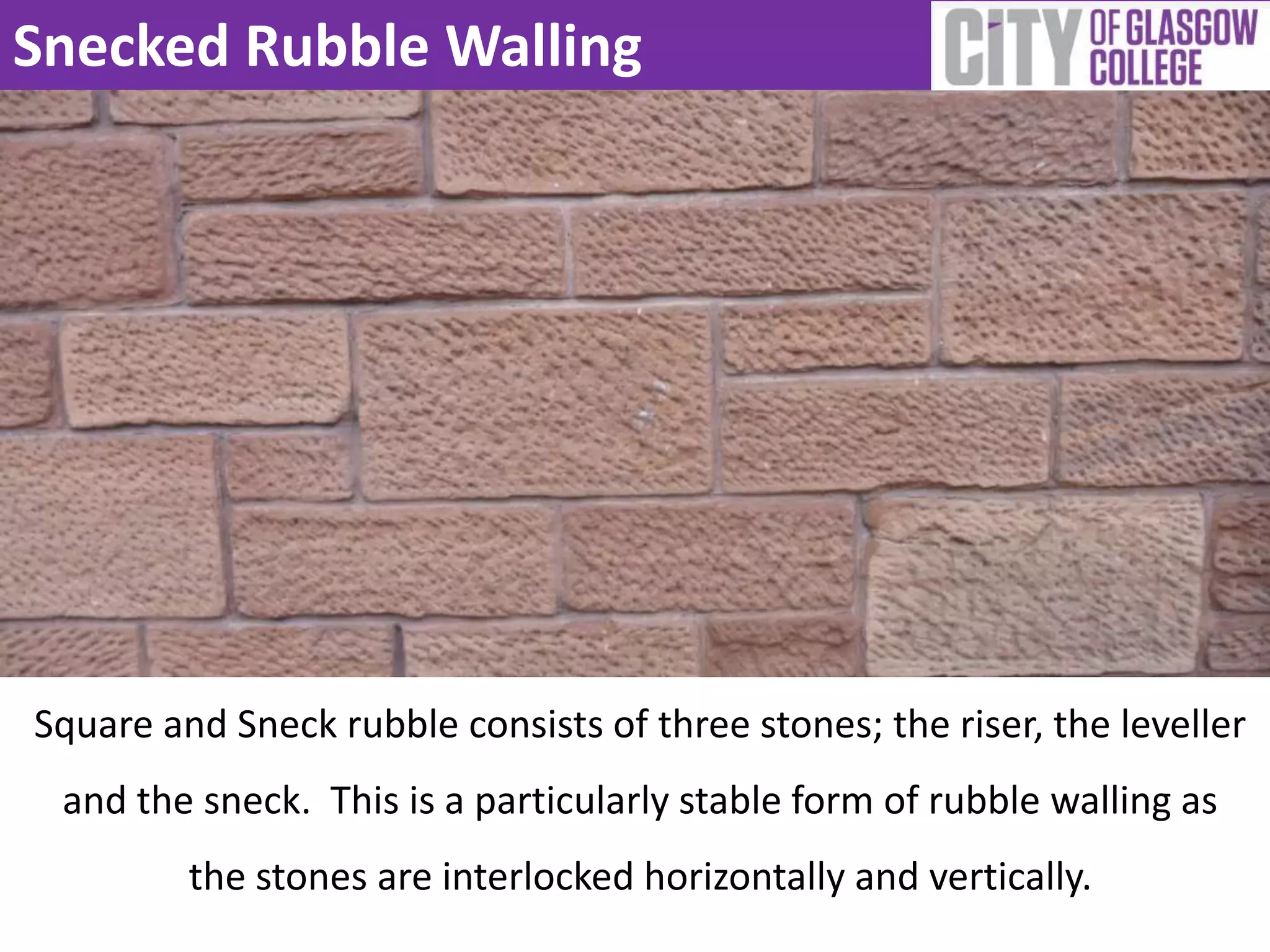
Square and Sneck rubble consists of three stones; the riser, the leveller
and the sneck. This is a particularly stable form of rubble walling as
the stones are interlocked horizontally and vertically.
Random Rubble Walling
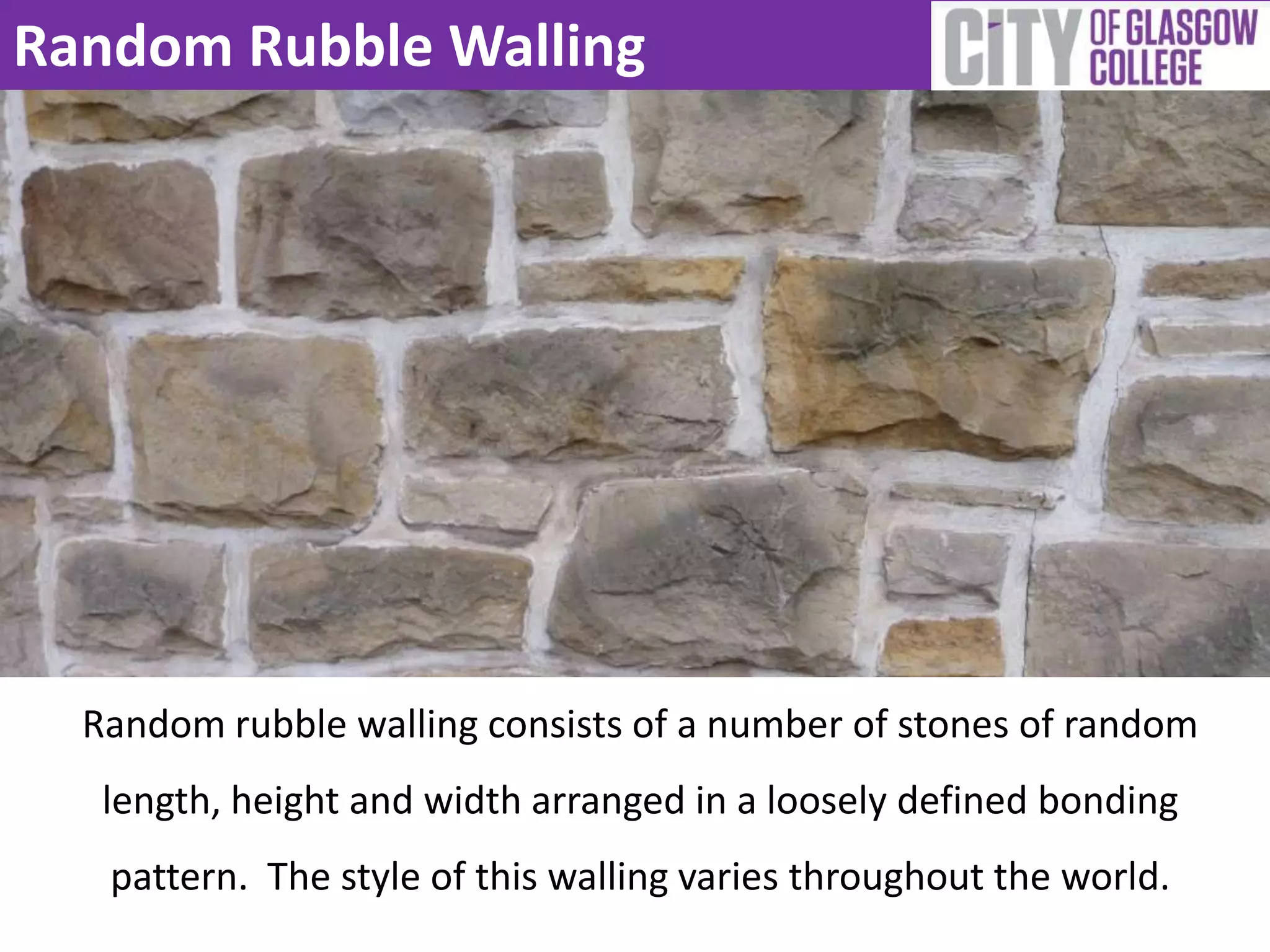
Random rubble walling consists of a number of stones of random
length, height and width arranged in a loosely defined bonding
pattern. The style of this walling varies throughout the world.
Random Rubble Built to Courses
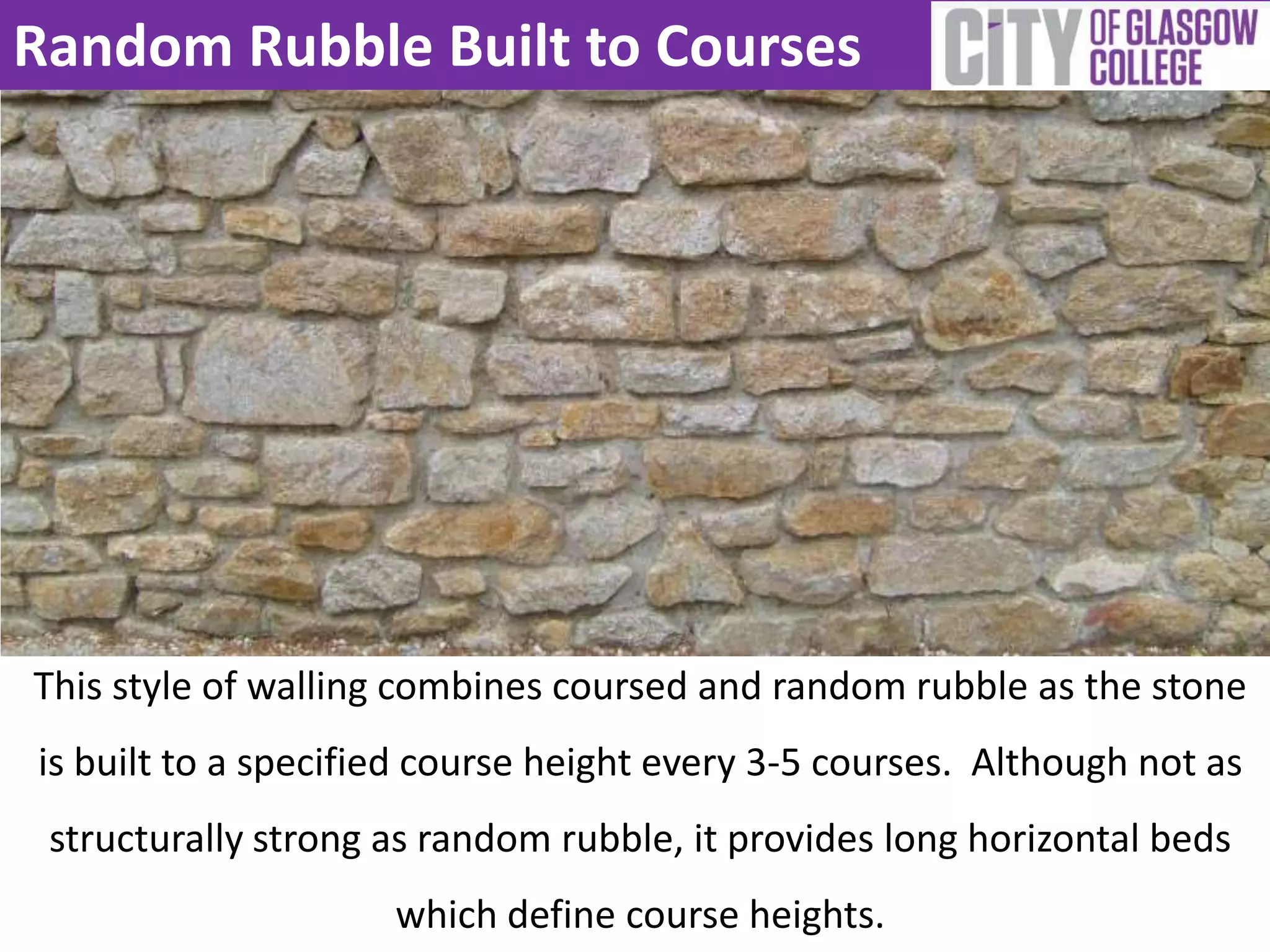
This style of walling combines coursed and random rubble as the stone
is built to a specified course height every 3-5 courses. Although not as
structurally strong as random rubble, it provides long horizontal beds
which define course heights.
Broken Coursed Rubble
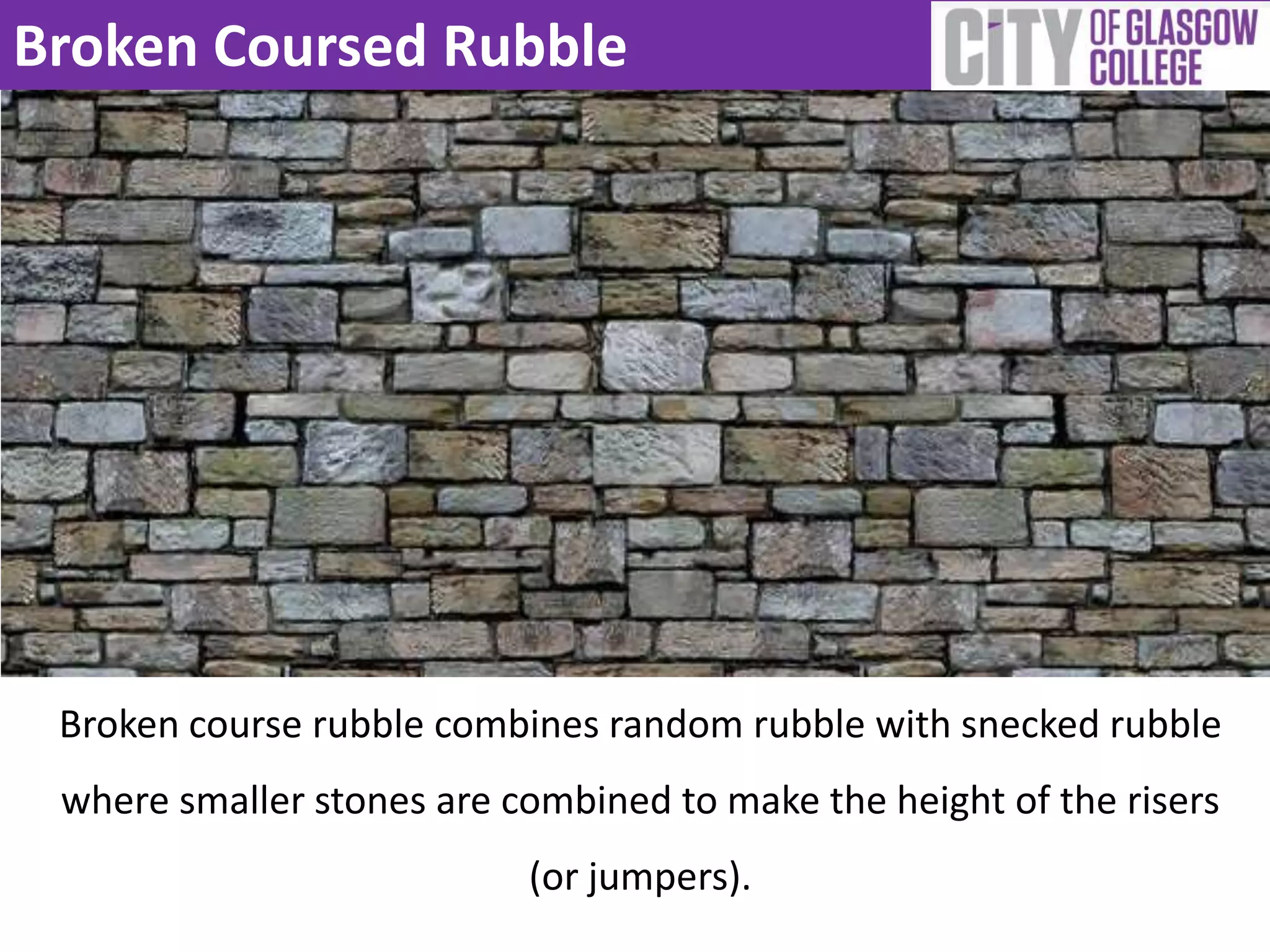
Broken course rubble combines random rubble with snecked rubble
where smaller stones are combined to make the height of the risers
(or jumpers).
Polygonal Rubble
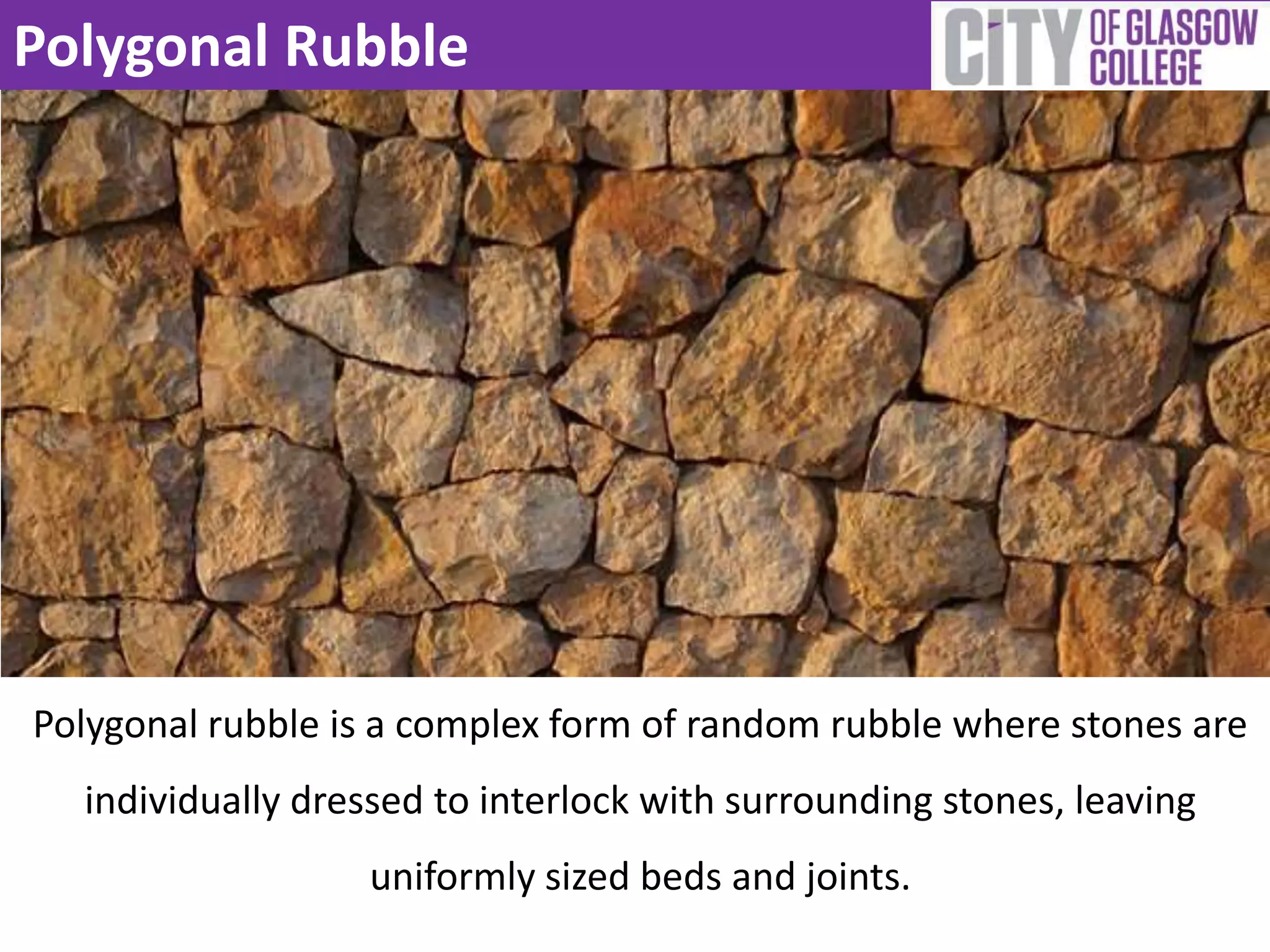
Polygonal rubble is a complex form of random rubble where stones are
individually dressed to interlock with surrounding stones, leaving
uniformly sized beds and joints.
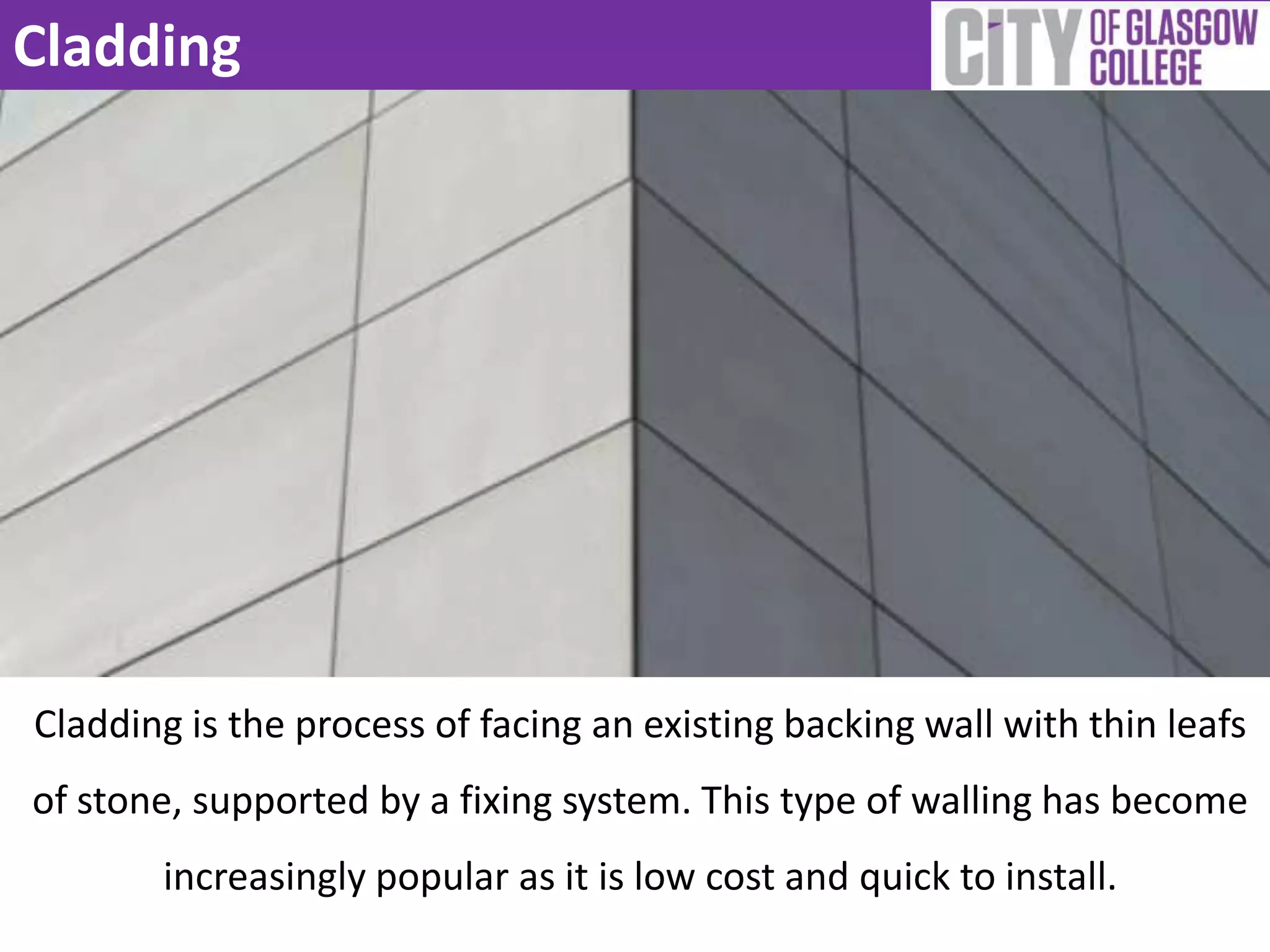
Cladding
Cladding is the process of facing an existing backing wall with thin leafs
of stone, supported by a fixing system. This type of walling has become
increasingly popular as it is low cost and quick to install.
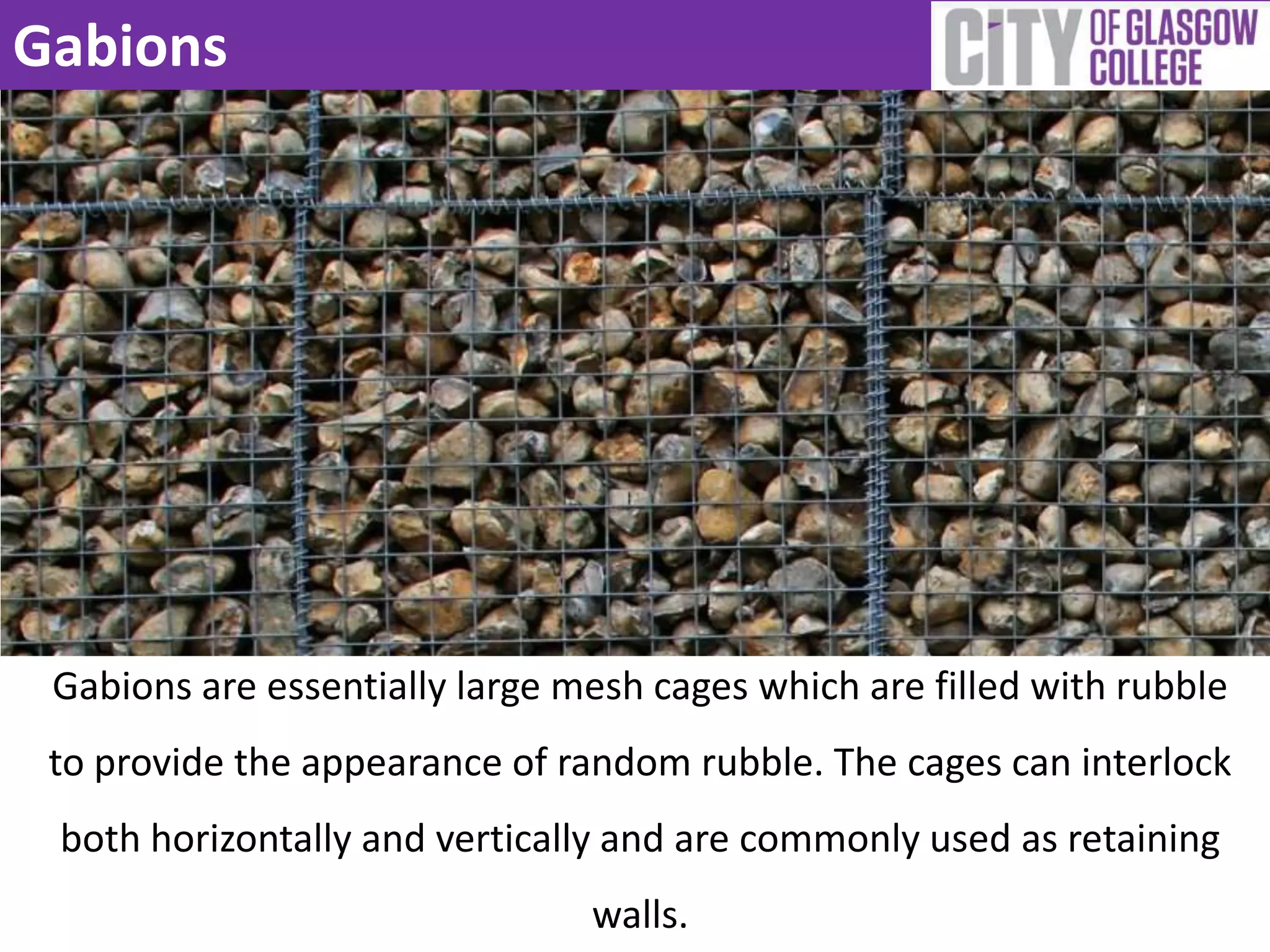
Gabions
Gabions are essentially large mesh cages which are filled with rubble
to provide the appearance of random rubble. The cages can interlock
both horizontally and vertically and are commonly used as retaining
walls.
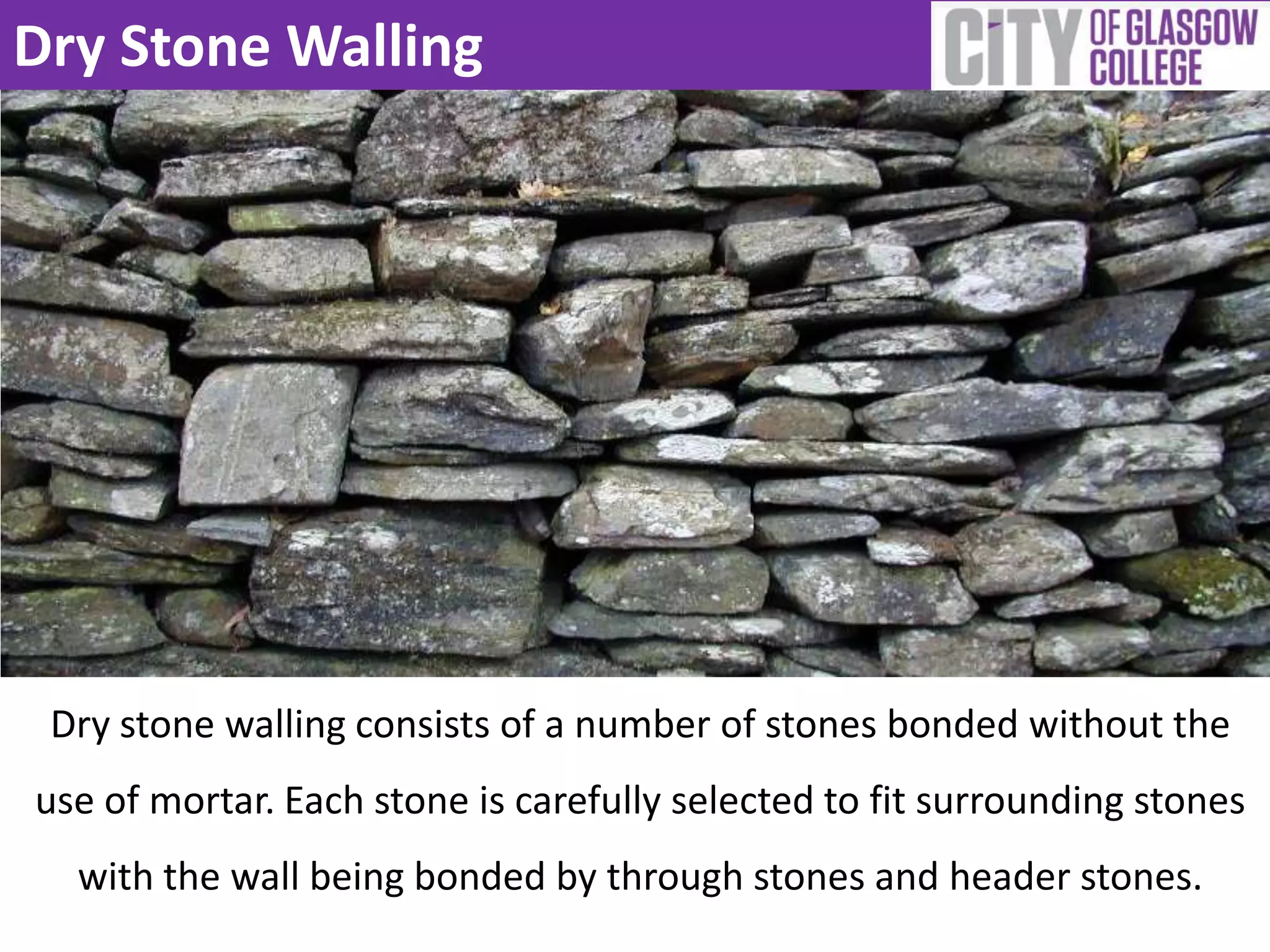
Dry Stone Walling
Dry stone walling consists of a number of stones bonded without the
use of mortar. Each stone is carefully selected to fit surrounding stones
with the wall being bonded by through stones and header stones.
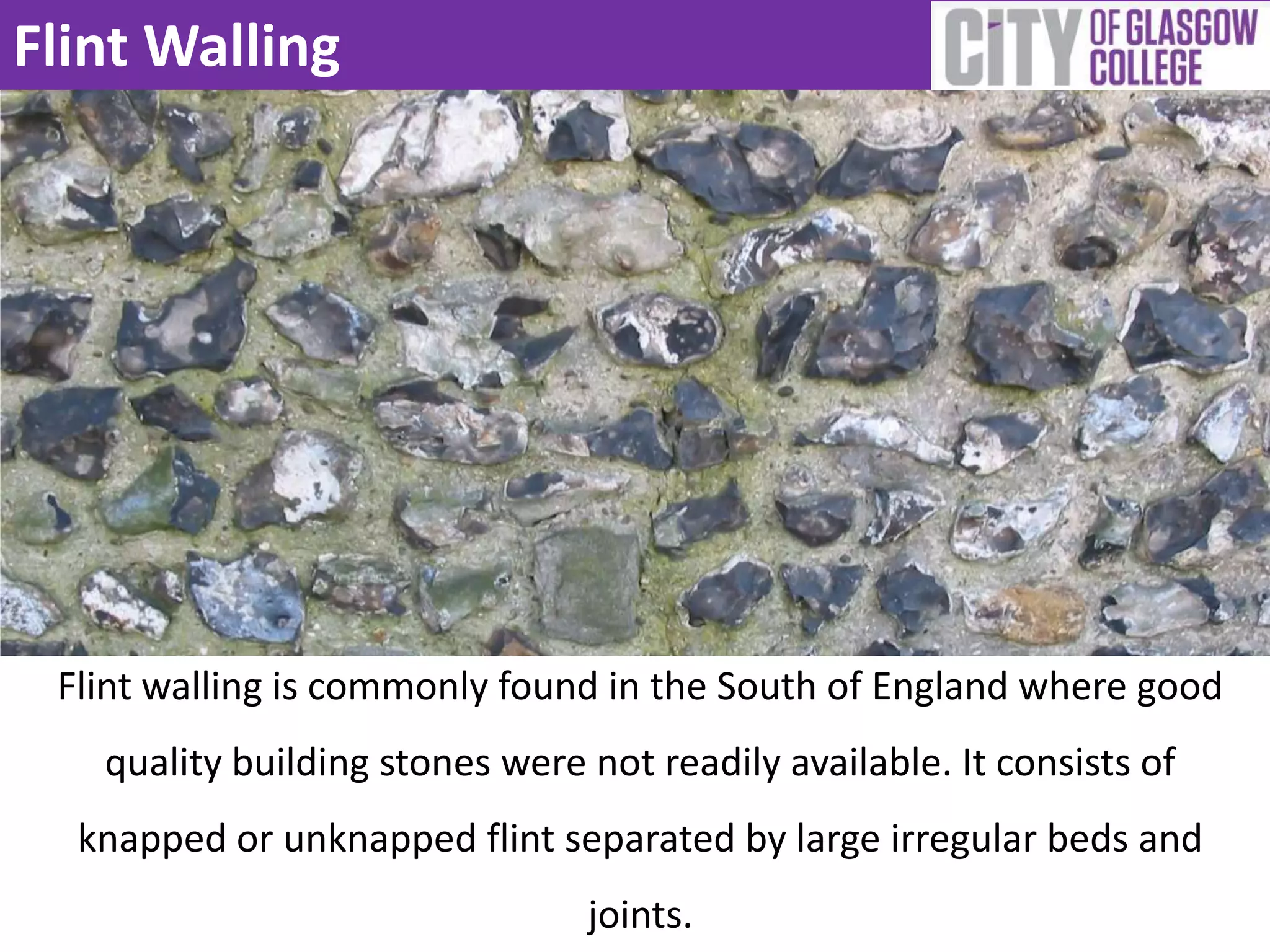
Flint Walling
Flint walling is commonly found in the South of England where good
quality building stones were not readily available. It consists of
knapped or unknapped flint separated by large irregular beds and
joints.
Developed by The Stonemasonry Department
City of Glasgow College
2012

Introduction to masonry walling

  • 1.
    Stone Walling Introduction forStonemasons Stonemasonry Department 2012
  • 2.
    Ashlar Walling Ashlar wallingis the term given to dressed stone walls which are either completely plane or plane with chamfered edges. It is generally used only on the “seen” facades of a structure due to its high costs.
  • 3.
    Coursed Rubble Walling Coursedrubble walling is the simplest of all rubble walls as all stones on each course have identical bed heights. The bed heights can however differ on each course.
  • 4.
    Snecked Rubble Walling Squareand Sneck rubble consists of three stones; the riser, the leveller and the sneck. This is a particularly stable form of rubble walling as the stones are interlocked horizontally and vertically.
  • 5.
    Random Rubble Walling Randomrubble walling consists of a number of stones of random length, height and width arranged in a loosely defined bonding pattern. The style of this walling varies throughout the world.
  • 6.
    Random Rubble Builtto Courses This style of walling combines coursed and random rubble as the stone is built to a specified course height every 3-5 courses. Although not as structurally strong as random rubble, it provides long horizontal beds which define course heights.
  • 7.
    Broken Coursed Rubble Brokencourse rubble combines random rubble with snecked rubble where smaller stones are combined to make the height of the risers (or jumpers).
  • 8.
    Polygonal Rubble Polygonal rubbleis a complex form of random rubble where stones are individually dressed to interlock with surrounding stones, leaving uniformly sized beds and joints.
  • 9.
    Cladding Cladding is theprocess of facing an existing backing wall with thin leafs of stone, supported by a fixing system. This type of walling has become increasingly popular as it is low cost and quick to install.
  • 10.
    Gabions Gabions are essentiallylarge mesh cages which are filled with rubble to provide the appearance of random rubble. The cages can interlock both horizontally and vertically and are commonly used as retaining walls.
  • 11.
    Dry Stone Walling Drystone walling consists of a number of stones bonded without the use of mortar. Each stone is carefully selected to fit surrounding stones with the wall being bonded by through stones and header stones.
  • 12.
    Flint Walling Flint wallingis commonly found in the South of England where good quality building stones were not readily available. It consists of knapped or unknapped flint separated by large irregular beds and joints.
  • 13.
    Developed by TheStonemasonry Department City of Glasgow College 2012