The Power of
Content
Marketing
for Travel
Brands
Africa Roman
The Importance of Content Marketing in Travel
Content marketing plays a vital role in the travel industry by enabling brands to connect with their audience in
meaningful and non-intrusive ways. Its primary purpose is to create and share valuable, relevant, and
engaging content that inspires, informs, and ultimately drives customer action.
Key benefits of content marketing in the travel industry include:
Increased Visibility: By producing high-quality, SEO-optimised content, travel brands improve their search
engine rankings and are more easily discovered by potential customers.
1.
Building Trust: Authentic and informative content establishes authority and credibility, which are critical
factors for travellers seeking reliable sources of information. User-generated content, such as reviews or
testimonials, further reinforces trust in the brand.
2.
Engagement: Travel content tailored to specific needs such as destination guides, travel tips, or itineraries
encourages interaction and loyalty. Engaging formats like videos, podcasts, and interactive tools enhance
the overall user experience.
3.
Driving Conversions: Content marketing helps nurture potential customers by guiding them through the
decision-making process, from inspiration to booking. For instance, limited-time offers or detailed
itineraries shared via social media create urgency and motivate travellers to act.
4.
Example 1: Lonely Planet Blog
Why is effective:
SEO: Lonely Planet's travel blogs are optimised for
SEO, targeting long-tail keywords like “best travel
destinations in 2025”.
Engagement: The blog includes share buttons, and
visual content like images and infographics,
encouraging interaction.
Impact: This blog helps Lonely Planet maintain its
position as a trusted authority in the travel space,
driving website traffic and fostering loyalty.
Lonely Planet's blog is an industry leader, offering in-depth travel guides, expert advice, and destination
insights.
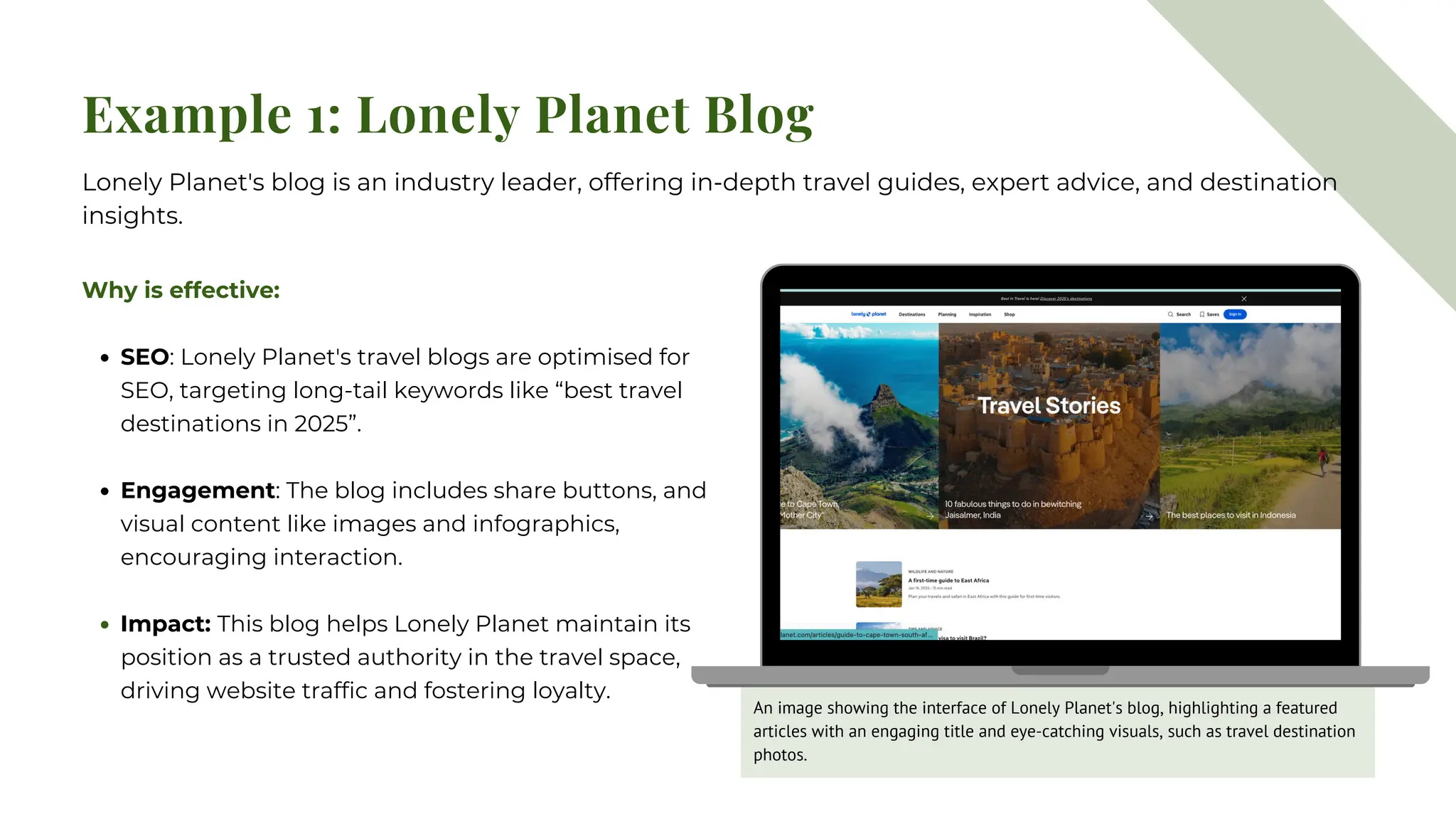
An image showing the interface of Lonely Planet's blog, highlighting a featured
articles with an engaging title and eye-catching visuals, such as travel destination
photos.
Example 2: Lonely Planet Guides
Why it is effective:
Comprehensive Content: Guides offer in-depth
details tailored to specific destinations and interests.
Format Availability: Available as physical books
(classic and pocket guides) and e-books for
flexibility.
Brand Positioning: Reinforces Lonely Planet as a
go-to resource for planning trips, enhancing
credibility.
Lonely Planet’s digital and physical guides provide travellers with detailed information about destinations,
including itineraries, maps, and cultural insights.
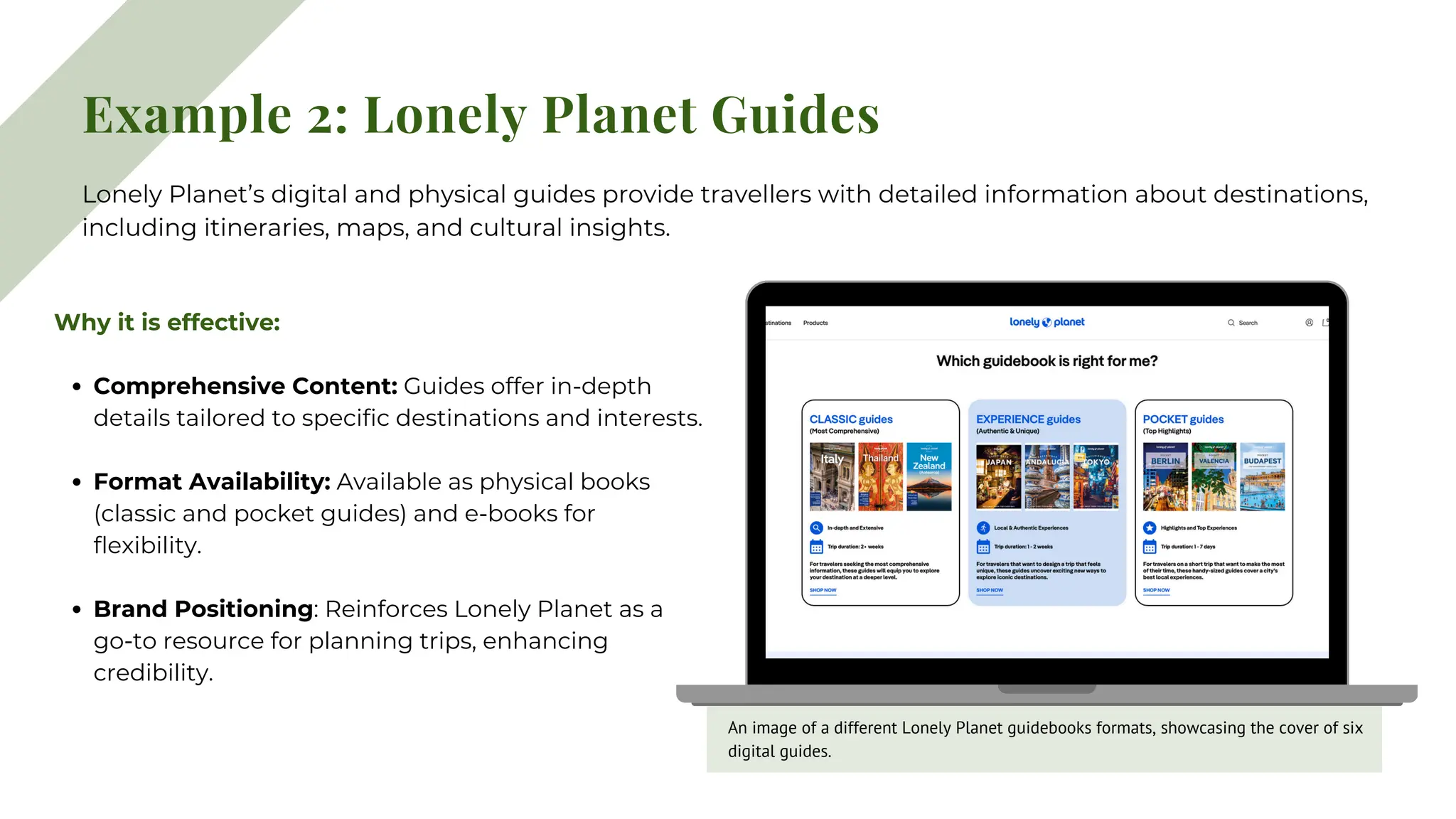
An image of a different Lonely Planet guidebooks formats, showcasing the cover of six
digital guides.
Example 3: Sailing SV Delos Youtube Channel
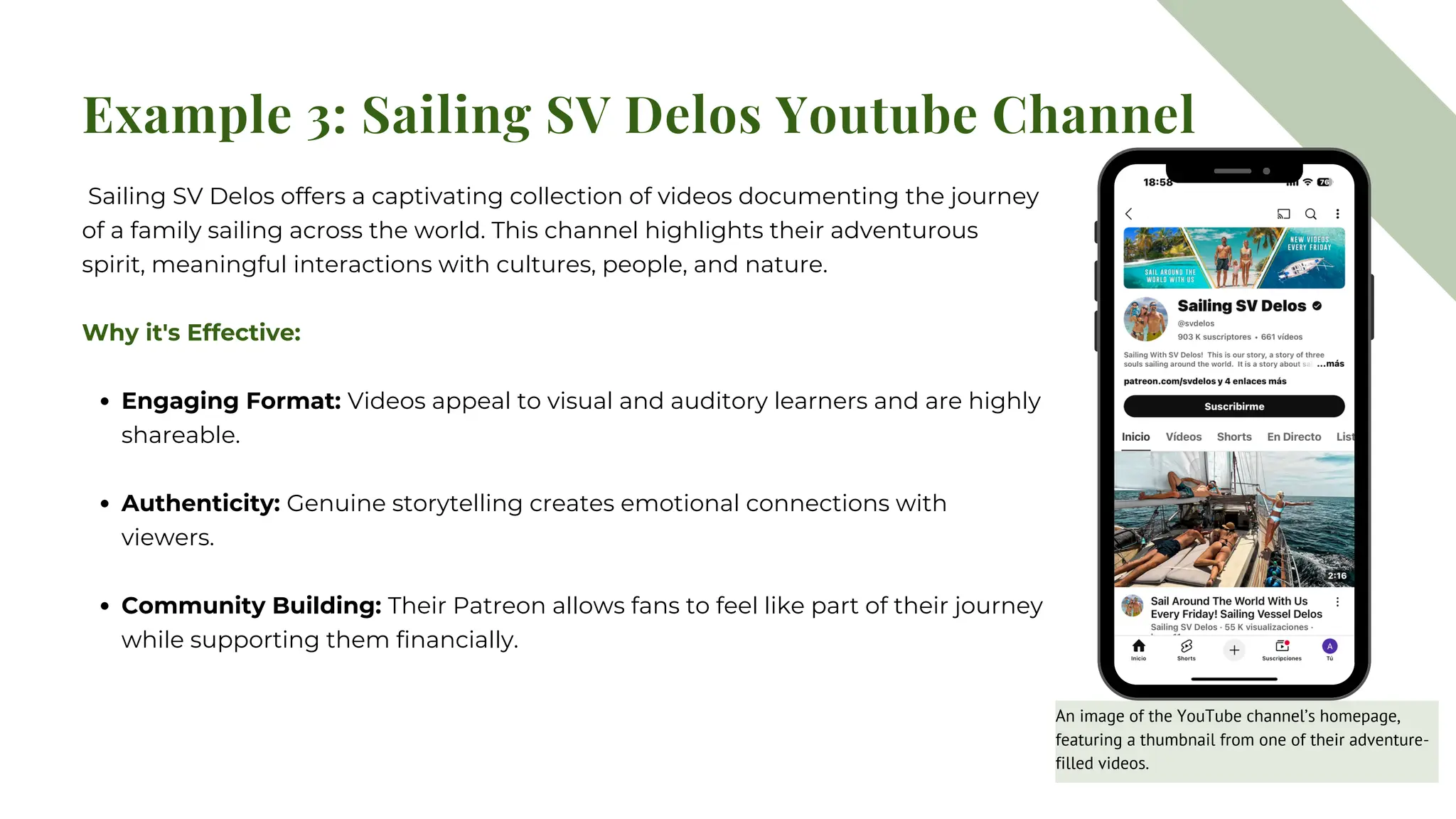
Sailing SV Delos offers a captivating collection of videos documenting the journey
of a family sailing across the world. This channel highlights their adventurous
spirit, meaningful interactions with cultures, people, and nature.
Why it's Effective:
Engaging Format: Videos appeal to visual and auditory learners and are highly
shareable.
Authenticity: Genuine storytelling creates emotional connections with
viewers.
Community Building: Their Patreon allows fans to feel like part of their journey
while supporting them financially.
An image of the YouTube channel’s homepage,
featuring a thumbnail from one of their adventure-
filled videos.
Example 4: Sailing SV Delos Website
Why it is effective:
Monetisation Hub: Sells branded merchandise and
promotes their Patreon for financial support.
Additional Value: Blogs provide further insights
into their adventures and sailing tips, enriching the
experience.
SEO: Optimised content ensures better visibility for
sailing and travel enthusiasts searching for related
topics.
The Sailing SV Delos website complements their YouTube channel, featuring blogs, merchandise, and
exclusive behind-the-scenes content.
An image of the Sailing SV Delos website home page, highlighting their
storytelling.
Example 5: Airbnb Instagram Account
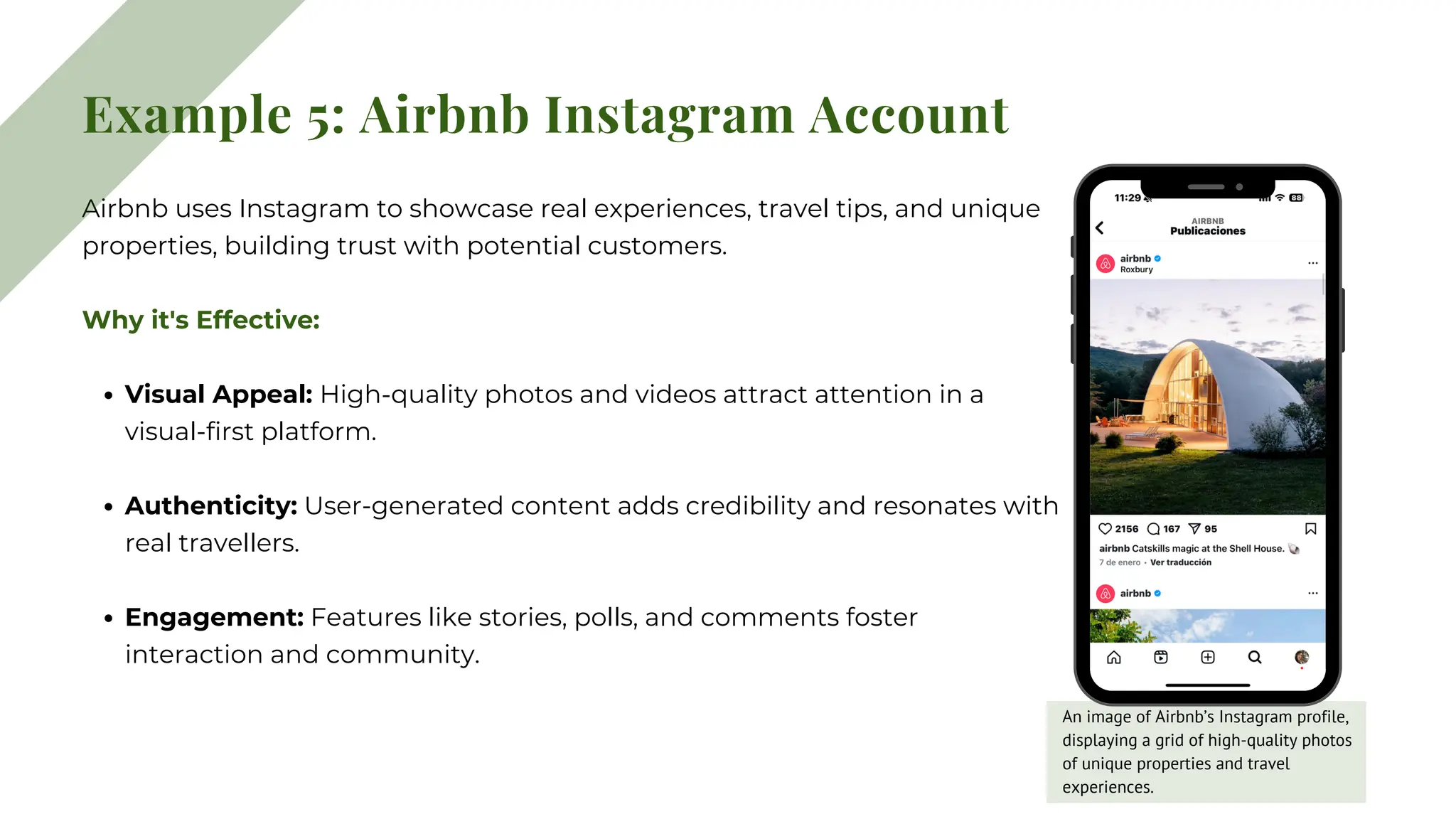
Airbnb uses Instagram to showcase real experiences, travel tips, and unique
properties, building trust with potential customers.
Why it's Effective:
Visual Appeal: High-quality photos and videos attract attention in a
visual-first platform.
Authenticity: User-generated content adds credibility and resonates with
real travellers.
Engagement: Features like stories, polls, and comments foster
interaction and community.
An image of Airbnb’s Instagram profile,
displaying a grid of high-quality photos
of unique properties and travel
experiences.
Example 6: Airbnb App
Airbnb’s app provides travellers with a seamless platform to find and book
accommodations, experiences, and travel insights.
Why it is effective:
User Experience: Intuitive interface ensures ease of booking and
browsing.
Personalisation: Tailored recommendations based on user
behaviour improve engagement.
All-in-One Platform: Integrates stays, experiences, and itineraries,
simplifying travel planning.
An image of the Airbnb app interface, showing
the search functionality and personalised
recommendations.
Example 7: Expedia Blog
Why it is effective:
Diverse Content: The blog provides advice tailored
to a variety of holidays, traveller interests, special
occasions, and sources of inspiration.
SEO Strategy: Optimised articles attract organic
traffic through search engines.
Value-Driven: Builds brand trust by solving
common travel challenges with practical tips.
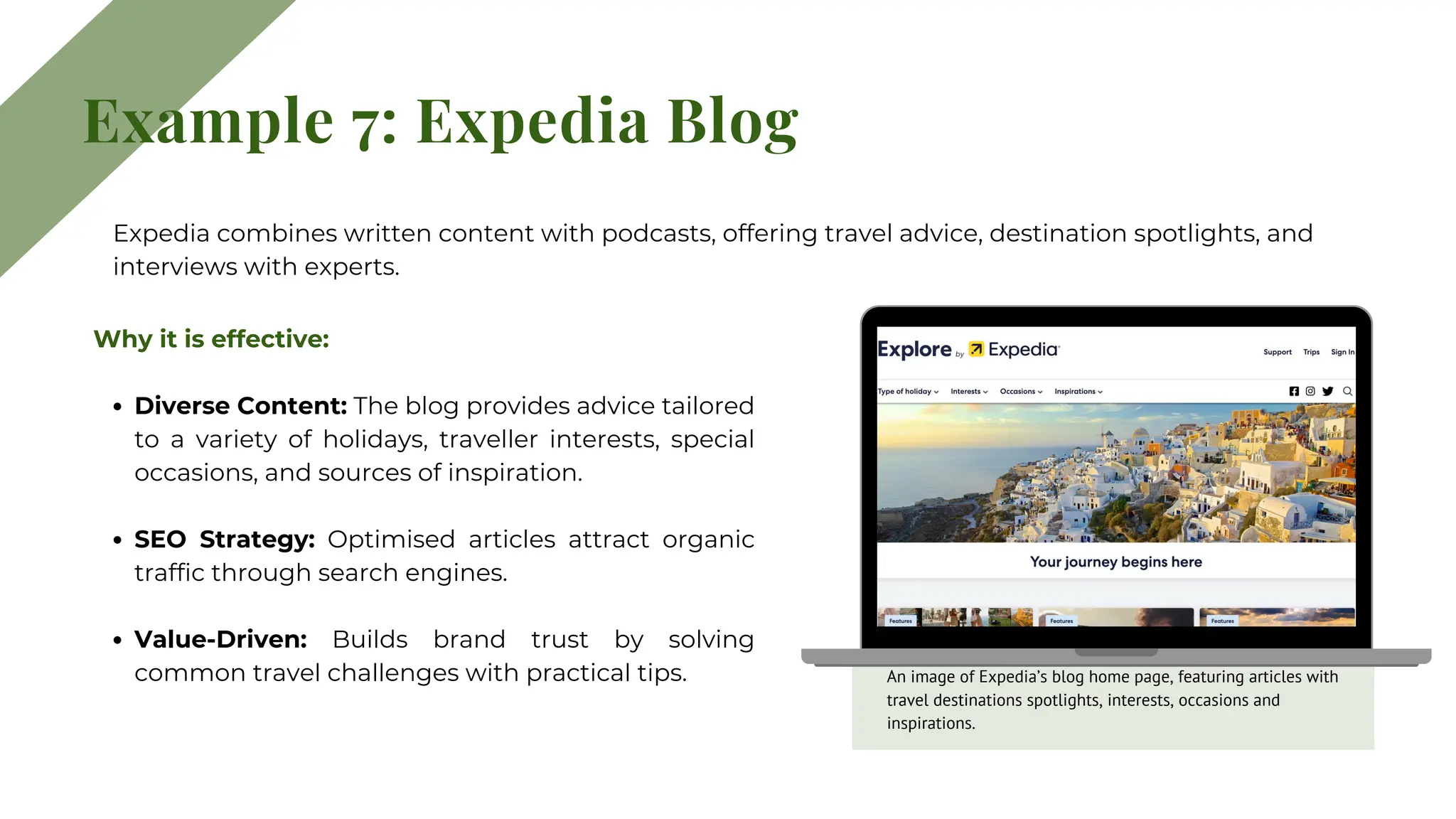
Expedia combines written content with podcasts, offering travel advice, destination spotlights, and
interviews with experts.
An image of Expedia’s blog home page, featuring articles with
travel destinations spotlights, interests, occasions and
inspirations.
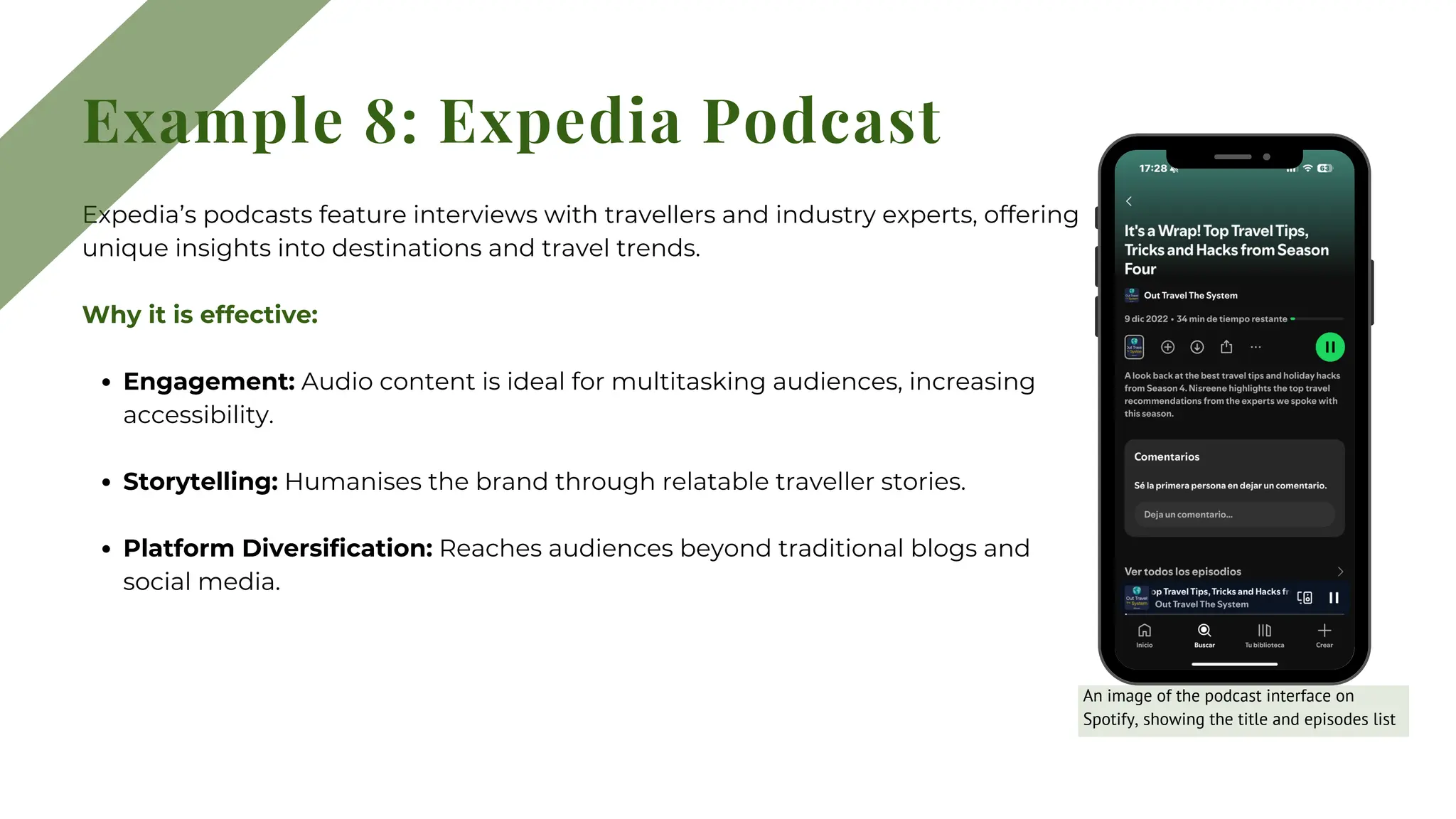
Expedia’s podcasts feature interviews with travellers and industry experts, offering
unique insights into destinations and travel trends.
Why it is effective:
Engagement: Audio content is ideal for multitasking audiences, increasing
accessibility.
Storytelling: Humanises the brand through relatable traveller stories.
Platform Diversification: Reaches audiences beyond traditional blogs and
social media.
Example 8: Expedia Podcast
An image of the podcast interface on
Spotify, showing the title and episodes list
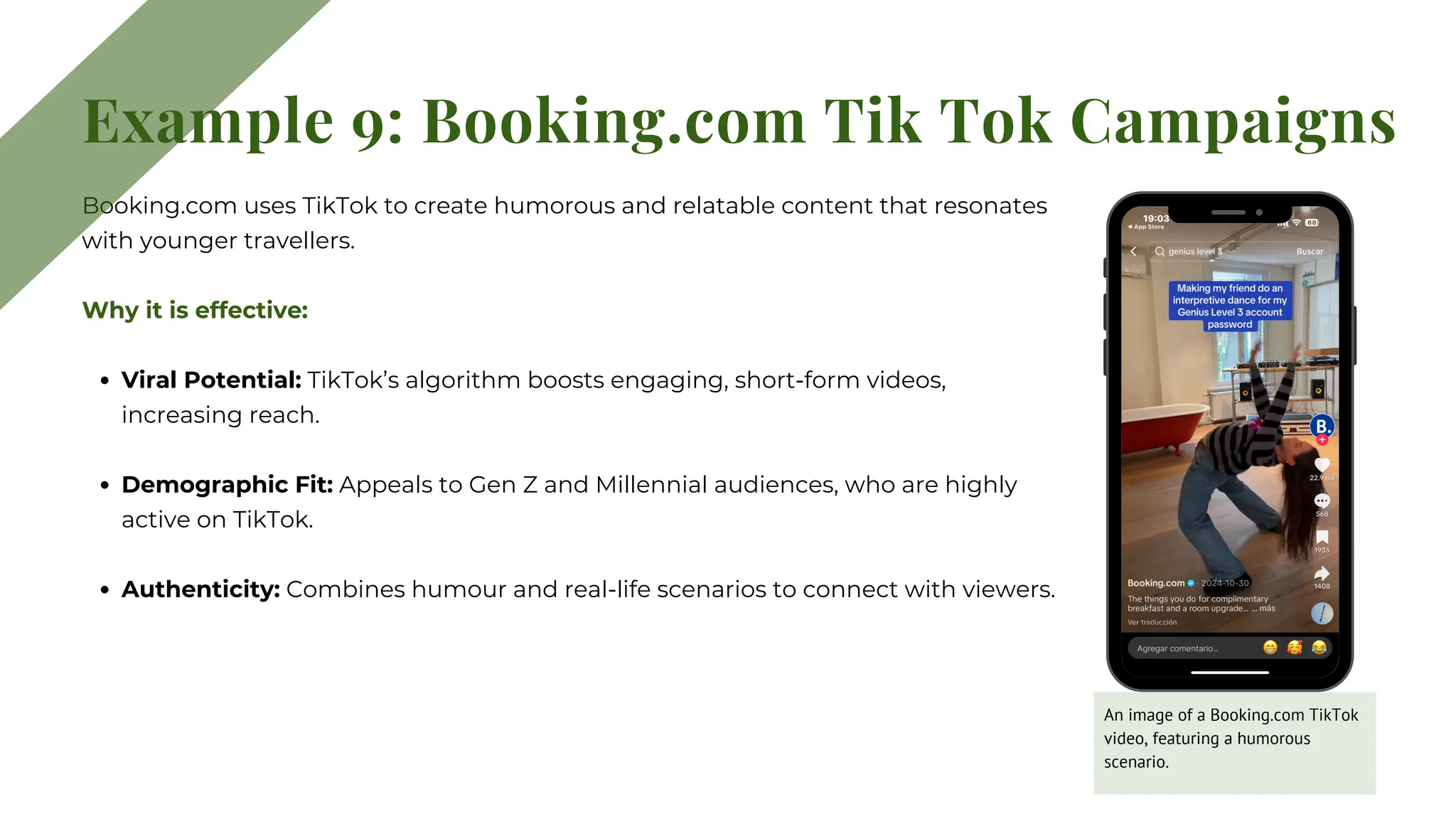
Booking.com uses TikTok to create humorous and relatable content that resonates
with younger travellers.
Why it is effective:
Viral Potential: TikTok’s algorithm boosts engaging, short-form videos,
increasing reach.
Demographic Fit: Appeals to Gen Z and Millennial audiences, who are highly
active on TikTok.
Authenticity: Combines humour and real-life scenarios to connect with viewers.
Example 9: Booking.com Tik Tok Campaigns
An image of a Booking.com TikTok
video, featuring a humorous
scenario.
Example 10: Booking.com Website Personalisation
Why it is effective:
AI Integration: Utilises machine learning to suggest
accommodations based on user preferences.
Urgency: Features like “Last room left!” and countdowns
encourage immediate bookings.
Localised Content: Presents options based on location and
language, improving relevance.
Booking.com’s website uses personalisation to enhance the user experience, offering tailored travel
recommendations and deals.
An image of Booking.com’s website, showing special offers and tips to save on
future bookings.
Content marketing for travel brands needs to be informative, engaging, and visually appealing.
Diverse Content Formats: Use a mix of blogs, videos, social media, and podcasts to reach a broad
audience.
Authenticity: Real traveler experiences help build trust.
Urgency & Engagement: Use time-sensitive content (e.g., Instagram Stories, special deals) to
create urgency and drive action.
Personalisation and Targeting: Tailored content ensures that travellers receive recommendations
and information relevant to their interests and behaviours.
Storytelling and Emotional Appeal: Stories that evoke emotion and connect with travellers on a
personal level make brands memorable.
SEO and Discoverability : Optimising content for search engines ensures that travel brands reach
their audience during the research phase of their journey.
Community Building Through User-Generated Content (UGC): UGC fosters trust and creates a
sense of belonging by involving the audience in the brand’s content strategy.
Key Takeaways on Content Marketing in Travel
By implementing these best practices, your travel website can improve its content marketing
efforts, enhance customer engagement, and ultimately increase conversions.
Consider integrating visual content, user-generated material, and multi-format content (videos,
blogs, and podcasts) into your marketing strategy.
Let's start crafting a custom content plan tailored to your target audience and business goals.
Conclusion and Next Steps for Your Travel Website

Introduction to Content Marketing in Travel.pdf

  • 1.
    The Power of Content Marketing forTravel Brands Africa Roman
  • 2.
    The Importance ofContent Marketing in Travel Content marketing plays a vital role in the travel industry by enabling brands to connect with their audience in meaningful and non-intrusive ways. Its primary purpose is to create and share valuable, relevant, and engaging content that inspires, informs, and ultimately drives customer action. Key benefits of content marketing in the travel industry include: Increased Visibility: By producing high-quality, SEO-optimised content, travel brands improve their search engine rankings and are more easily discovered by potential customers. 1. Building Trust: Authentic and informative content establishes authority and credibility, which are critical factors for travellers seeking reliable sources of information. User-generated content, such as reviews or testimonials, further reinforces trust in the brand. 2. Engagement: Travel content tailored to specific needs such as destination guides, travel tips, or itineraries encourages interaction and loyalty. Engaging formats like videos, podcasts, and interactive tools enhance the overall user experience. 3. Driving Conversions: Content marketing helps nurture potential customers by guiding them through the decision-making process, from inspiration to booking. For instance, limited-time offers or detailed itineraries shared via social media create urgency and motivate travellers to act. 4.
  • 3.
    Example 1: LonelyPlanet Blog Why is effective: SEO: Lonely Planet's travel blogs are optimised for SEO, targeting long-tail keywords like “best travel destinations in 2025”. Engagement: The blog includes share buttons, and visual content like images and infographics, encouraging interaction. Impact: This blog helps Lonely Planet maintain its position as a trusted authority in the travel space, driving website traffic and fostering loyalty. Lonely Planet's blog is an industry leader, offering in-depth travel guides, expert advice, and destination insights. An image showing the interface of Lonely Planet's blog, highlighting a featured articles with an engaging title and eye-catching visuals, such as travel destination photos.
  • 4.
    Example 2: LonelyPlanet Guides Why it is effective: Comprehensive Content: Guides offer in-depth details tailored to specific destinations and interests. Format Availability: Available as physical books (classic and pocket guides) and e-books for flexibility. Brand Positioning: Reinforces Lonely Planet as a go-to resource for planning trips, enhancing credibility. Lonely Planet’s digital and physical guides provide travellers with detailed information about destinations, including itineraries, maps, and cultural insights. An image of a different Lonely Planet guidebooks formats, showcasing the cover of six digital guides.
  • 5.
    Example 3: SailingSV Delos Youtube Channel Sailing SV Delos offers a captivating collection of videos documenting the journey of a family sailing across the world. This channel highlights their adventurous spirit, meaningful interactions with cultures, people, and nature. Why it's Effective: Engaging Format: Videos appeal to visual and auditory learners and are highly shareable. Authenticity: Genuine storytelling creates emotional connections with viewers. Community Building: Their Patreon allows fans to feel like part of their journey while supporting them financially. An image of the YouTube channel’s homepage, featuring a thumbnail from one of their adventure- filled videos.
  • 6.
    Example 4: SailingSV Delos Website Why it is effective: Monetisation Hub: Sells branded merchandise and promotes their Patreon for financial support. Additional Value: Blogs provide further insights into their adventures and sailing tips, enriching the experience. SEO: Optimised content ensures better visibility for sailing and travel enthusiasts searching for related topics. The Sailing SV Delos website complements their YouTube channel, featuring blogs, merchandise, and exclusive behind-the-scenes content. An image of the Sailing SV Delos website home page, highlighting their storytelling.
  • 7.
    Example 5: AirbnbInstagram Account Airbnb uses Instagram to showcase real experiences, travel tips, and unique properties, building trust with potential customers. Why it's Effective: Visual Appeal: High-quality photos and videos attract attention in a visual-first platform. Authenticity: User-generated content adds credibility and resonates with real travellers. Engagement: Features like stories, polls, and comments foster interaction and community. An image of Airbnb’s Instagram profile, displaying a grid of high-quality photos of unique properties and travel experiences.
  • 8.
    Example 6: AirbnbApp Airbnb’s app provides travellers with a seamless platform to find and book accommodations, experiences, and travel insights. Why it is effective: User Experience: Intuitive interface ensures ease of booking and browsing. Personalisation: Tailored recommendations based on user behaviour improve engagement. All-in-One Platform: Integrates stays, experiences, and itineraries, simplifying travel planning. An image of the Airbnb app interface, showing the search functionality and personalised recommendations.
  • 9.
    Example 7: ExpediaBlog Why it is effective: Diverse Content: The blog provides advice tailored to a variety of holidays, traveller interests, special occasions, and sources of inspiration. SEO Strategy: Optimised articles attract organic traffic through search engines. Value-Driven: Builds brand trust by solving common travel challenges with practical tips. Expedia combines written content with podcasts, offering travel advice, destination spotlights, and interviews with experts. An image of Expedia’s blog home page, featuring articles with travel destinations spotlights, interests, occasions and inspirations.
  • 10.
    Expedia’s podcasts featureinterviews with travellers and industry experts, offering unique insights into destinations and travel trends. Why it is effective: Engagement: Audio content is ideal for multitasking audiences, increasing accessibility. Storytelling: Humanises the brand through relatable traveller stories. Platform Diversification: Reaches audiences beyond traditional blogs and social media. Example 8: Expedia Podcast An image of the podcast interface on Spotify, showing the title and episodes list
  • 11.
    Booking.com uses TikTokto create humorous and relatable content that resonates with younger travellers. Why it is effective: Viral Potential: TikTok’s algorithm boosts engaging, short-form videos, increasing reach. Demographic Fit: Appeals to Gen Z and Millennial audiences, who are highly active on TikTok. Authenticity: Combines humour and real-life scenarios to connect with viewers. Example 9: Booking.com Tik Tok Campaigns An image of a Booking.com TikTok video, featuring a humorous scenario.
  • 12.
    Example 10: Booking.comWebsite Personalisation Why it is effective: AI Integration: Utilises machine learning to suggest accommodations based on user preferences. Urgency: Features like “Last room left!” and countdowns encourage immediate bookings. Localised Content: Presents options based on location and language, improving relevance. Booking.com’s website uses personalisation to enhance the user experience, offering tailored travel recommendations and deals. An image of Booking.com’s website, showing special offers and tips to save on future bookings.
  • 13.
    Content marketing fortravel brands needs to be informative, engaging, and visually appealing. Diverse Content Formats: Use a mix of blogs, videos, social media, and podcasts to reach a broad audience. Authenticity: Real traveler experiences help build trust. Urgency & Engagement: Use time-sensitive content (e.g., Instagram Stories, special deals) to create urgency and drive action. Personalisation and Targeting: Tailored content ensures that travellers receive recommendations and information relevant to their interests and behaviours. Storytelling and Emotional Appeal: Stories that evoke emotion and connect with travellers on a personal level make brands memorable. SEO and Discoverability : Optimising content for search engines ensures that travel brands reach their audience during the research phase of their journey. Community Building Through User-Generated Content (UGC): UGC fosters trust and creates a sense of belonging by involving the audience in the brand’s content strategy. Key Takeaways on Content Marketing in Travel
  • 14.
    By implementing thesebest practices, your travel website can improve its content marketing efforts, enhance customer engagement, and ultimately increase conversions. Consider integrating visual content, user-generated material, and multi-format content (videos, blogs, and podcasts) into your marketing strategy. Let's start crafting a custom content plan tailored to your target audience and business goals. Conclusion and Next Steps for Your Travel Website