#2 Hi! And welcome to English 242, which is a survey of American literature from 1865 to present. I’m delighted to have all of you in my class and look forward to working with you this semester. This slide show is intended to give you an overview of the class.
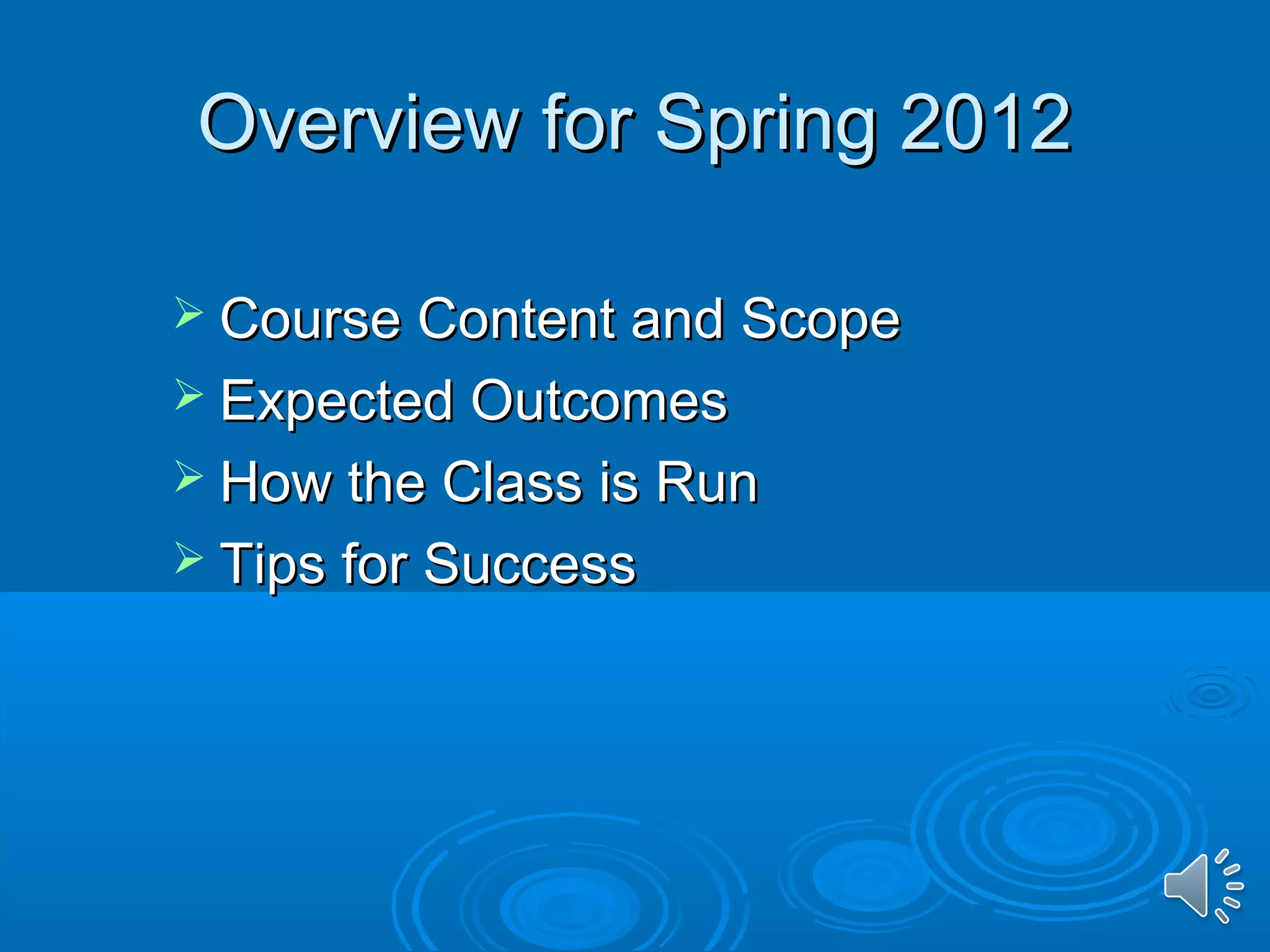
#3 I’m going to tell you about four major areas. The first is course content, or the “what” of English 242. I’ll tell you about some of the types of literature we’ll examine and the way things are arranged. The second area I’ll talk about is “Outcomes.” Outcomes are the things you will be expected to know about or the skills you will demonstrate as a result of being in the class. I will also talk a bit about how the class is run; and finally I’ll offer you my best advice for success in this distance learning class.
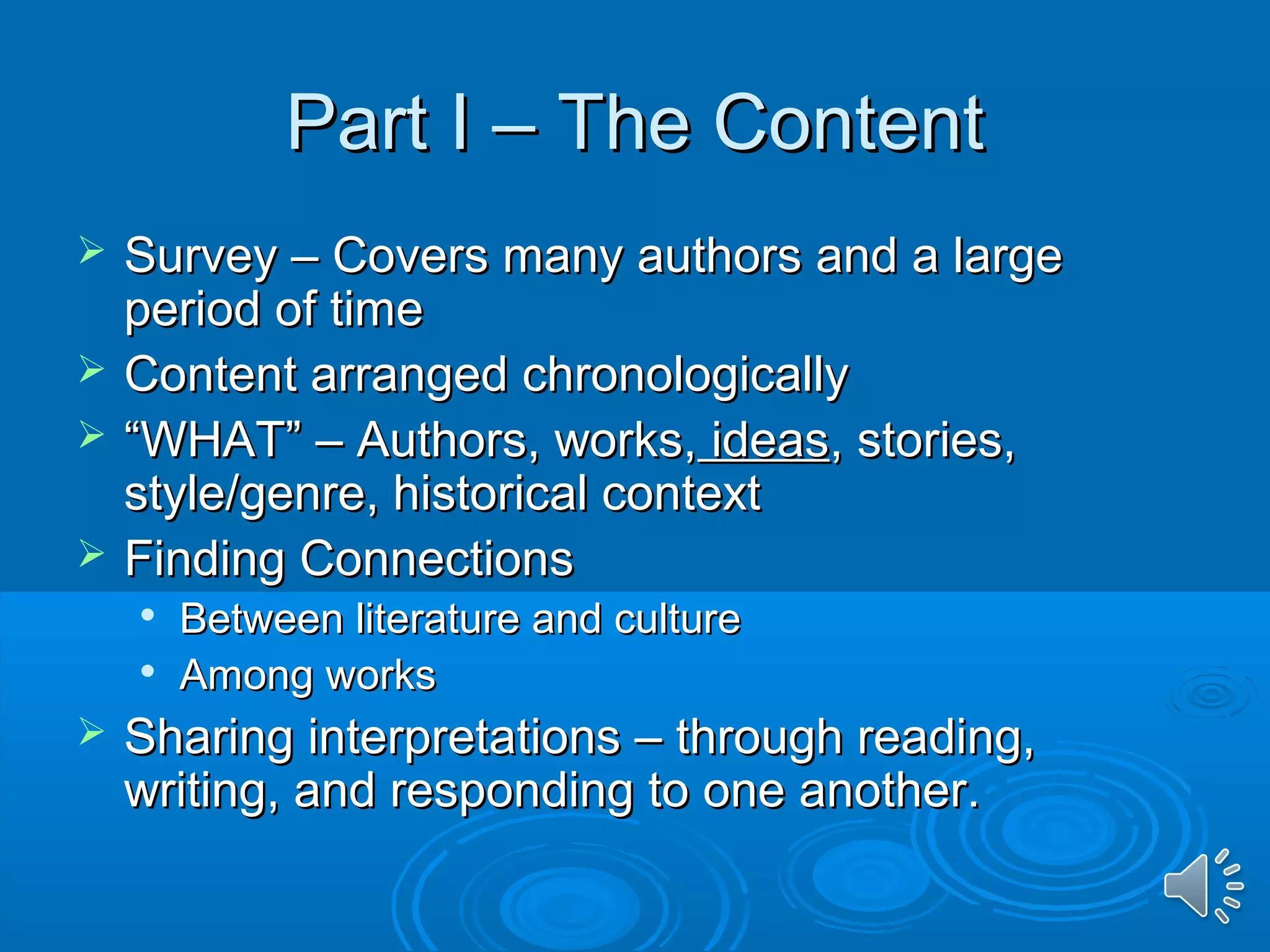
#4 OK. Content. First, understand that this is a SURVEY course, and it will cover a large number of authors and works over a long period of time. You probably gathered that when you looked at those three huge volumes of the Heath Anthology! Post-Civil War American literature is a treasure chest of wonderful work, and you could dedicate the rest of your life to studying it. Many people have. I’ve chosen for you representative works from various time periods, and the readings are organized chronologically and by theme. So, if you look at your schedule of assignments in the syllabus, you’ll see that we begin right after the Civil War and end with short stories from the last decade or two. Keeping in mind that this IS a survey course, we are going to focus primarily on the WHAT…the work itself, its content, the authors, the history, the various movements and genres. And as we go through, we will always be looking for thematic connections – between literature and culture, and among works. Finally, part of the content for this course will be what we make ourselves – our discussion, our interests, our connections, our ongoing conversation.
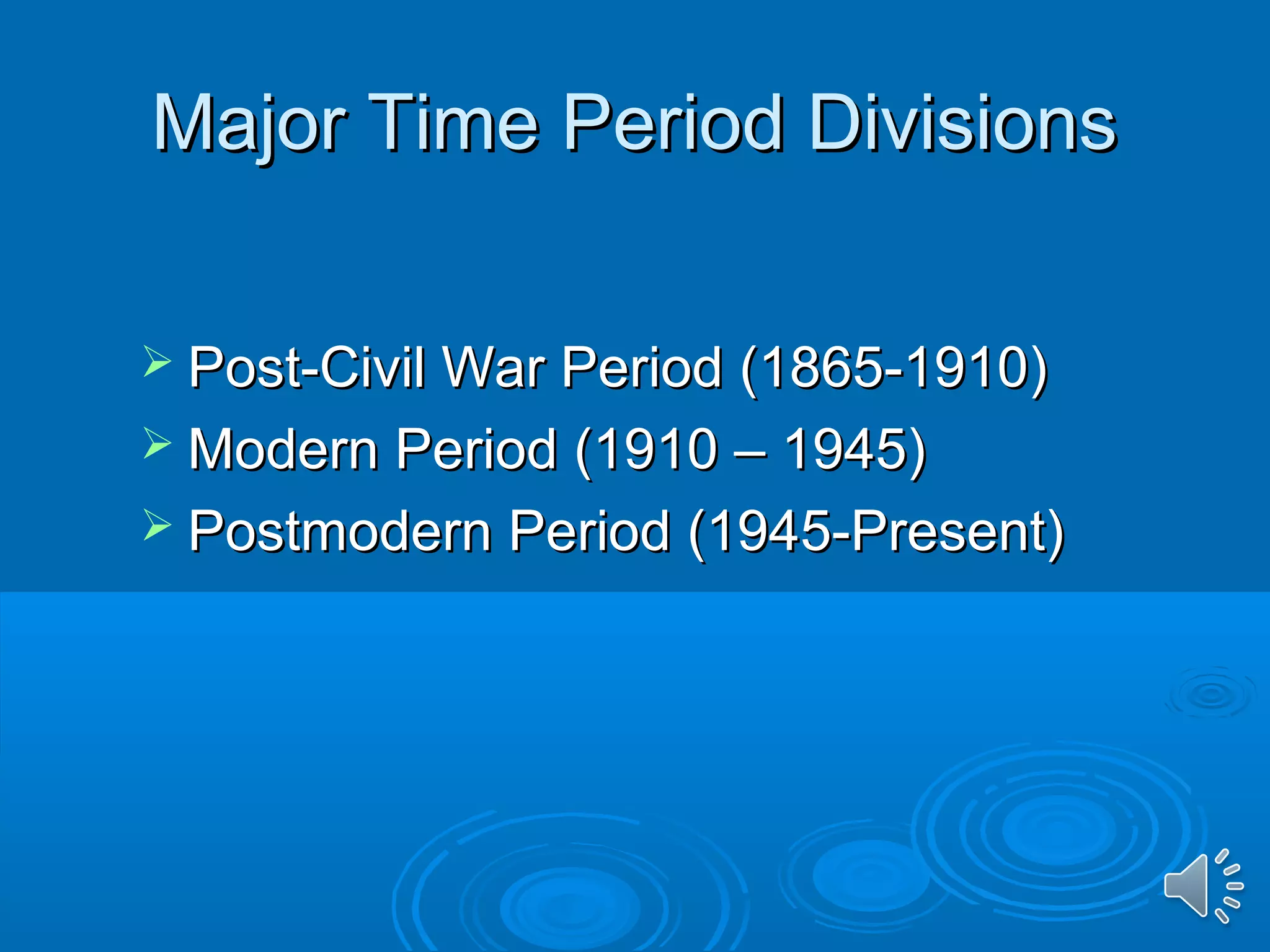
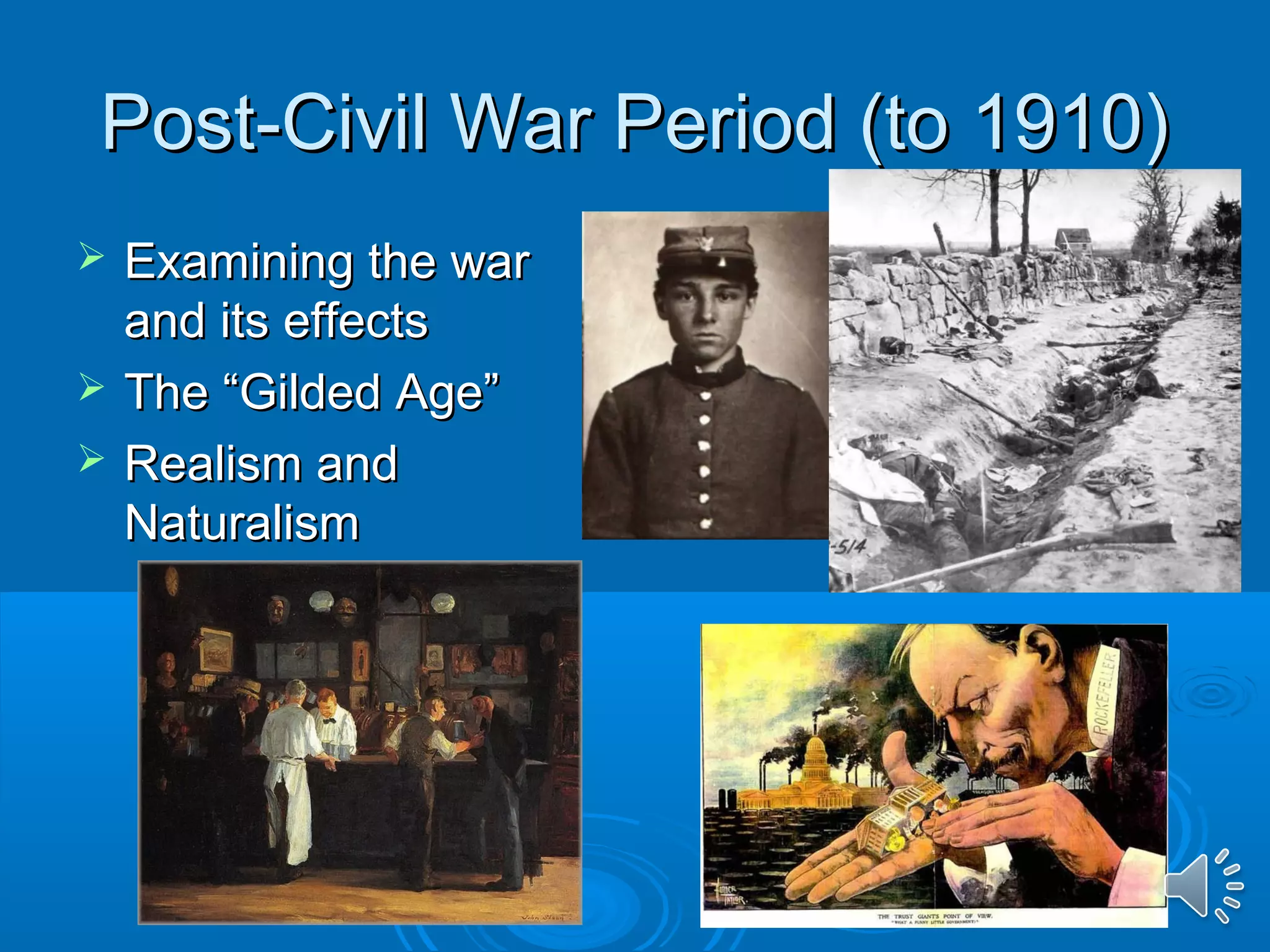
#5 At the simplest level, the course includes three time periods: post-Civil War through about 1910; the so-called Modern period, which takes us through World War II; and the period of American Literature that we live in now, which is called “Post-Modern.”
#6 Now within each of the three major periods, we will examine specific thematic threads, popular styles, or in some cases, sub-periods. The Post-Civil war period will incorporate writings about the war…Our first two readings, “War Prayer” by Mark Twain and “Chicamauga” by Ambrose Bierce, fall into this category. We will also talk about the Gilded Age as a historic period; and we’ll look at the Realist and Naturalist movements as stylistic developments in fiction writing.
#7 As I mentioned previously, we will spend much of our time discussing certain prevailing themes in American Literature – here is a list of some of them… This list is not all-inclusive. We may decide to discuss additional themes such as “Class Distinctions or Class Envy;” “the Retention or Revelation of Secrets”; “The meaning of Freedom.”
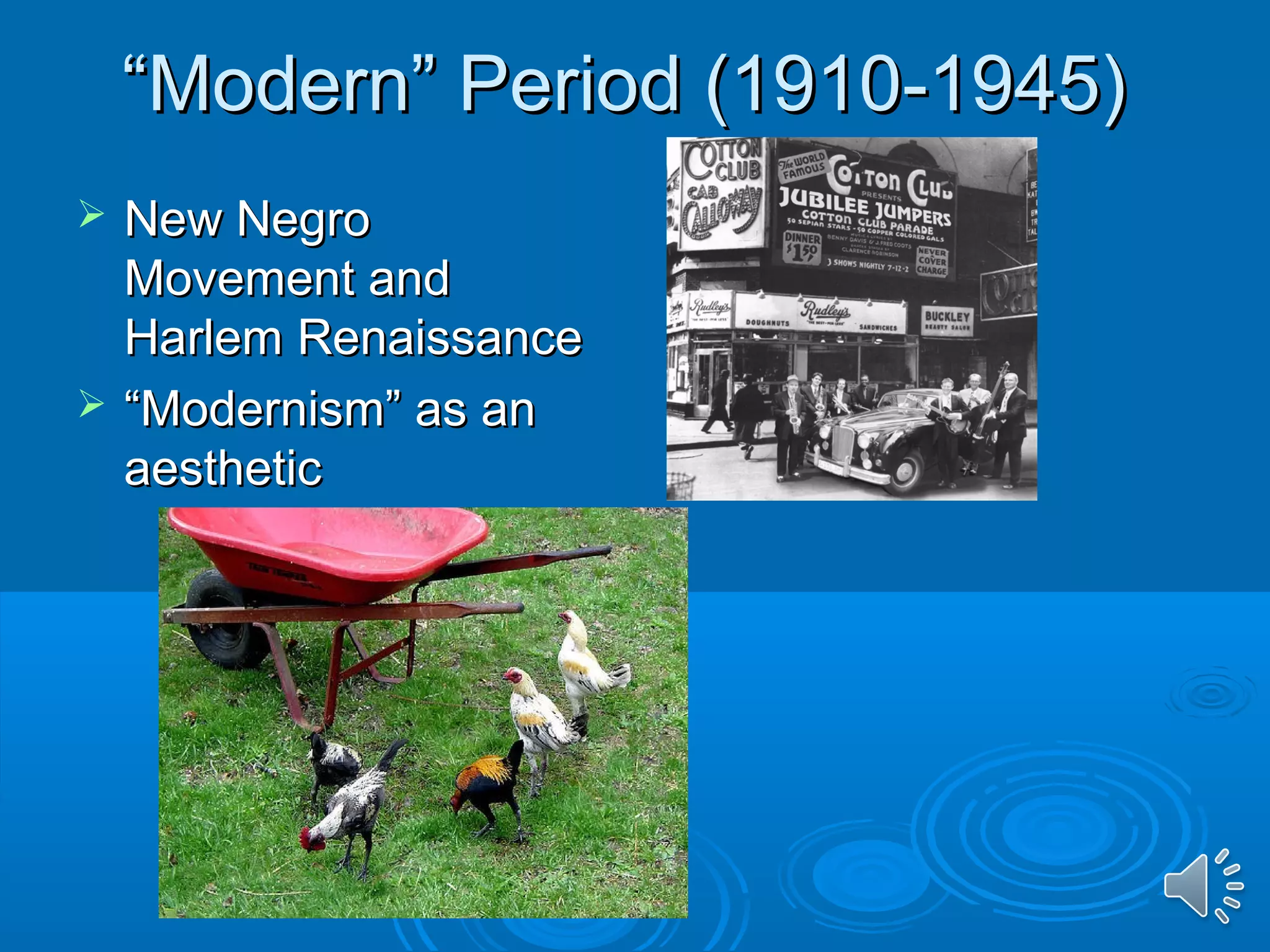
#8 As we move from Post-Civil-War to the Modernist period, we’ll examine some writings from the Harlem Renaissance, a very interesting and fruitful period in American Literature. We’ll also look at the “Modernists,” sometimes referred to as the “High Modernists,” because of their unique aesthetic…Hemingway, Faulkner, and some modernist poets.
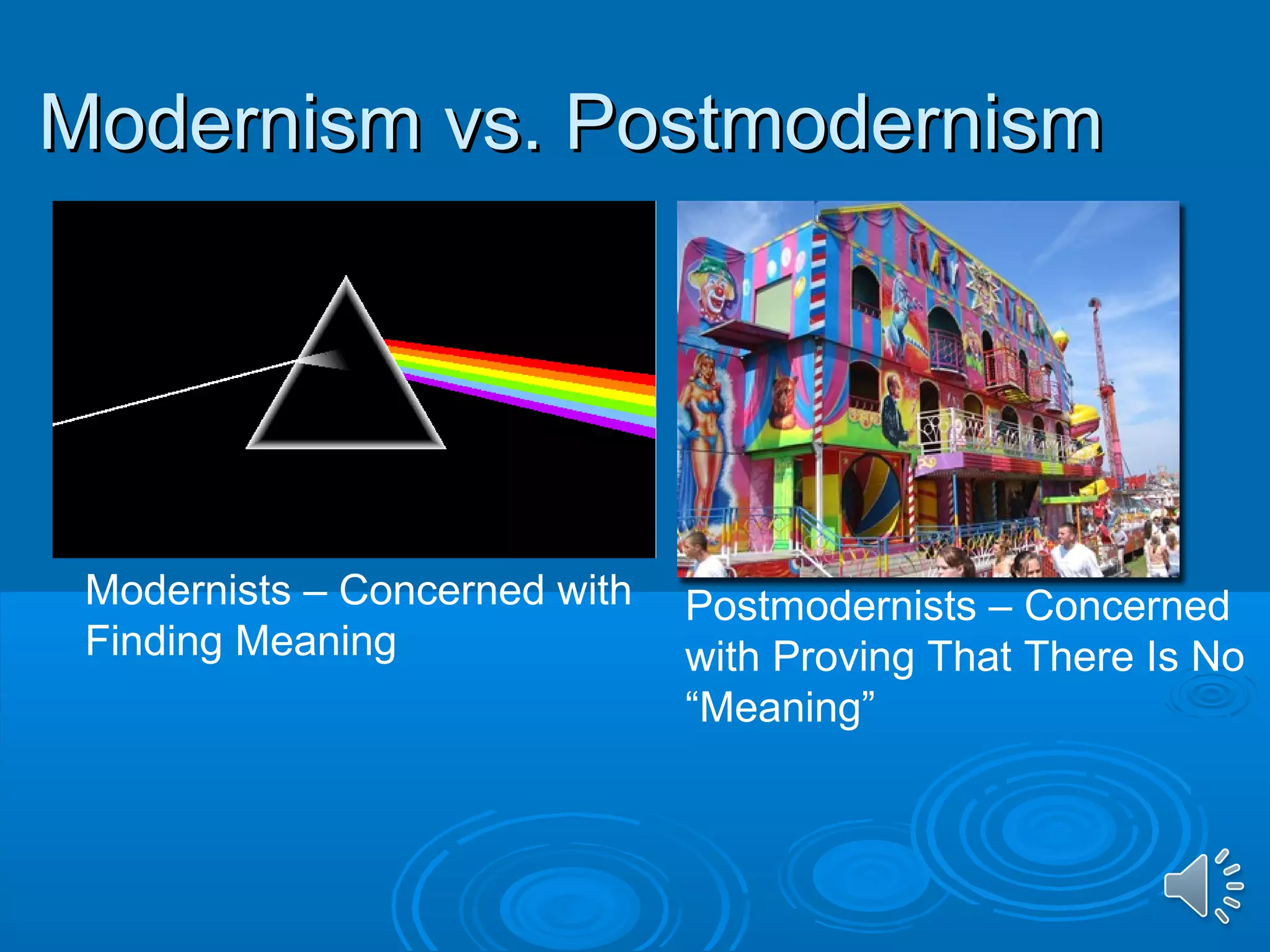
#9 You’ll notice couple of things as we transition from the “Modern” period to the “PostModern.” … One is that, of course, no artificial time line or barrier neatly separates literary periods. There will always be work that spans many categories or that seems to be break the mold we try to establish to classify it. Another is that, as time marches on, there is a trend toward complicating or de-centering established patterns. The Modernists did this by using experimental and unusual styles, but they still seemed to be looking to distill meaning from the work. As we move to what’s known as “High Postmodernism,” we find writers who make it their mission to prove there IS no one meaning, no single story.
#10 As we work through the Postmodern period, we’ll examine works by writers of the cold war period; the rebellious “Beats” or “Beat-niks.” We will also read some works related to the Civil Rights Movement, and the Vietnam War. And our last selections will include some new and multi-cultural American voices – people looking for meaning and identity who bring with them traditions and conflicts from around the globe.
#11 I’ve given you here a list of outcomes. You will find that much of this class is knowing, becoming familiar with, the content and themes. In terms of what you need to be able to do, this is a class primarily of reading and writing. When you write literary analysis, you need to be able to apply an idea or set of ideas to a text, read it closely, and be able to selectively choose meaningful passages to discuss and explain. For many of you, writing literary analysis is a new skill; so it may take you some time and practice to master the vocabulary and the conventions. You will of course need to do some research of your own; and you will practice using MLA style documentation, which you have covered in English 111 and 112. Each of you will choose an author to focus on for your individual presentations; and here you will get to practice the art of organizing and presenting information and asking intelligent, open-ended questions.
#12 A few words about how this class is run…As I said before, it’s lots of reading and writing. You can’t write meaningfully about these works unless you READ them first, so that is key. The syllabus gives you a list of the major assignments, but it may change as we move along – so always look at “Announcements” and “Assignments” on the Blackboard site. As far as our activities or assignments, much of what we do happens via the Discussion Board. This lets us share a common body of ideas and engage in a conversation, as we would if we were meeting in a classroom. You’ll also do some individual writing assignments. We’ll use the Wimba voice board some, so you will need a microphone of some type. As far as conduct, you need to observe what’s called “netiquette,” or etiquette for the internet. You may find that our expectations for communicating are slightly more formal than what you are accustomed to in everyday life. So take a look at the syllabus for some guidelines there.
#13 We’re nearly at the end now, and here are a few tips for success that I can offer you. You need to go on Blackboard frequently. It’s not enough to put in your own comments and writing – you also need to read and comment on the work of fellow students. This takes a fair amount of time. Certainly, you can work ahead some, particularly when it comes to reading. But for some assignments, when you need to respond to other students, you need to work in conjunction with the class. Do pay attention to clarity in your writing. As I said previously, this type of writing is brand new to some of you; but as we move through the semester, you will find that it becomes more natural and easier, provided you pay attention to feedback given by me and other students. And finally, don’t be afraid to ask questions. I’m out here, just an e-mail or a phone call away. Thanks for being part of the class. I look forward to getting to know you.