Setting the foundation
 Keep an open mind
   Yet, be skeptical


 Critique an argument based on:
     Logically consistent?
     Factually correct?
     Sufficient evidence?
     Better explanation?
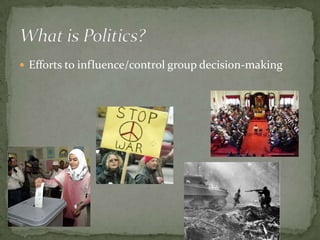
 Efforts to influence/control group decision-making
 Power: constraining others
   Influence
   Coercion (force)
      Resources (tangible/intangible goods)


• Authority: legitimacy of rulers/rules
   Choose to obey
   “Social Contract”
 The Preamble: “We the People”


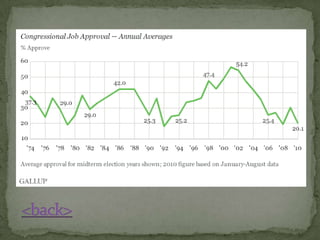
 Article I: the legislature.
   The intended primary branch?
   Approval ratings?


 Article II: the president
   The current primary branch?


 Article III: federal judicial system
   The unaccountable branch?
 Article IV: the states
   The states or the people?
      the power of the Senate & the Electoral College?


 The remaining articles deal with a variety of issues
   including the supremacy clause
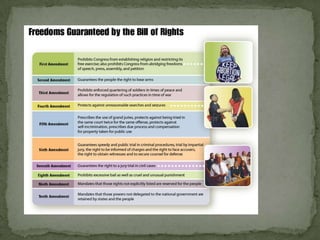
 BoR not original:
   is it worth less?


 Most rights prohibit govt. infringing on liberty
   Which limit liberty?


 Are our rights clearly stated?
   EX: 2nd Amendment?
 Slavery outlawed (13th in 1865)


 Senators directly elected (17th in 1913)


 Limit state’s abilities to limit rights/liberties (14th in
  1868)

 Increased Equality (Race via the 15th in 1870; Gender
  via the 19th in 1920; D.C. via the 23rd in 1961; Class via
  the 24th in 1964); and Age via the 26th in 1971)
 Liberty vs. Order


 Equality vs. Liberty
   Economic Equality
   Property Rights & Capitalism


                      Copyright © 2009 Cengage Learning   11
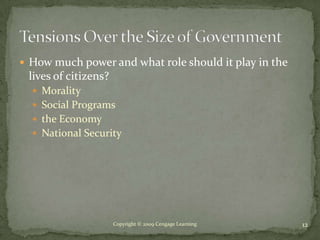
 How much power and what role should it play in the
 lives of citizens?
   Morality
   Social Programs
   the Economy
   National Security


                      Copyright © 2009 Cengage Learning   12
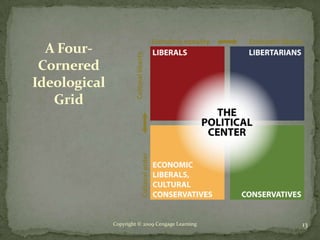
A Four-
 Cornered
Ideological
   Grid


              Copyright © 2009 Cengage Learning   13
“Here is not merely a nation
but a teeming Nation of
nations”
                                       Walt Whitman


          Copyright © 2009 Cengage Learning           15
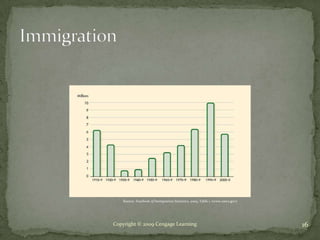
Source: Yearbook of Immigration Statistics, 2005, Table 1. (www.usics.gov)


Copyright © 2009 Cengage Learning                                               16
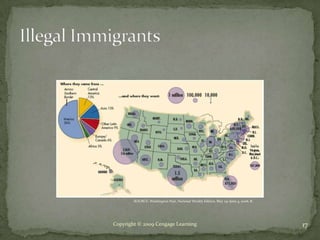
SOURCE: Washington Post, National Weekly Edition, May 29–June 4, 2006, 8.


Copyright © 2009 Cengage Learning                                                   17
18
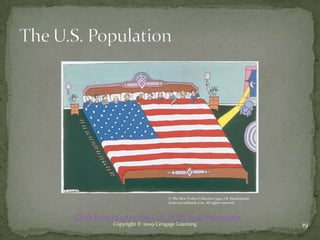
© The New Yorker Collection 1992. J.B. Handelsman
                                from cartoonbank.com. All rights reserved.


Click here to go to the U.S. POPClock Projection
           Copyright © 2009 Cengage Learning                                        19
 Aging
 Population Growth
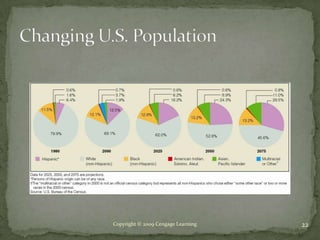
 Ethnic Change
   Changes in Hispanic Community
 Women in the Workforce


                  Copyright © 2009 Cengage Learning   20
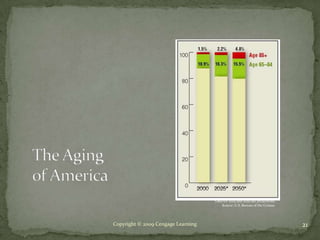
*Data for 2025 and 2050 are projections.
                                         Source: U.S. Bureau of the Census.


Copyright © 2009 Cengage Learning                                              21
Copyright © 2009 Cengage Learning   22
 Politics center on the meaning of the “social contract”


 Americans must reconcile tradition and change
   Continuity vs. change
Introducing the constitution

Introducing the constitution

  • 1.
  • 2.
     Keep anopen mind  Yet, be skeptical  Critique an argument based on:  Logically consistent?  Factually correct?  Sufficient evidence?  Better explanation?
  • 3.
     Efforts toinfluence/control group decision-making
  • 4.
     Power: constrainingothers  Influence  Coercion (force)  Resources (tangible/intangible goods) • Authority: legitimacy of rulers/rules  Choose to obey  “Social Contract”
  • 5.
     The Preamble:“We the People”  Article I: the legislature.  The intended primary branch?  Approval ratings?  Article II: the president  The current primary branch?  Article III: federal judicial system  The unaccountable branch?
  • 6.
     Article IV:the states  The states or the people?  the power of the Senate & the Electoral College?  The remaining articles deal with a variety of issues  including the supremacy clause
  • 8.
     BoR notoriginal:  is it worth less?  Most rights prohibit govt. infringing on liberty  Which limit liberty?  Are our rights clearly stated?  EX: 2nd Amendment?
  • 10.
     Slavery outlawed(13th in 1865)  Senators directly elected (17th in 1913)  Limit state’s abilities to limit rights/liberties (14th in 1868)  Increased Equality (Race via the 15th in 1870; Gender via the 19th in 1920; D.C. via the 23rd in 1961; Class via the 24th in 1964); and Age via the 26th in 1971)
  • 11.
     Liberty vs.Order  Equality vs. Liberty  Economic Equality  Property Rights & Capitalism Copyright © 2009 Cengage Learning 11
  • 12.
     How muchpower and what role should it play in the lives of citizens?  Morality  Social Programs  the Economy  National Security Copyright © 2009 Cengage Learning 12
  • 13.
    A Four- Cornered Ideological Grid Copyright © 2009 Cengage Learning 13
  • 15.
    “Here is notmerely a nation but a teeming Nation of nations” Walt Whitman Copyright © 2009 Cengage Learning 15
  • 16.
    Source: Yearbook ofImmigration Statistics, 2005, Table 1. (www.usics.gov) Copyright © 2009 Cengage Learning 16
  • 17.
    SOURCE: Washington Post,National Weekly Edition, May 29–June 4, 2006, 8. Copyright © 2009 Cengage Learning 17
  • 18.
  • 19.
    © The NewYorker Collection 1992. J.B. Handelsman from cartoonbank.com. All rights reserved. Click here to go to the U.S. POPClock Projection Copyright © 2009 Cengage Learning 19
  • 20.
     Aging  PopulationGrowth  Ethnic Change  Changes in Hispanic Community  Women in the Workforce Copyright © 2009 Cengage Learning 20
  • 21.
    *Data for 2025and 2050 are projections. Source: U.S. Bureau of the Census. Copyright © 2009 Cengage Learning 21
  • 22.
    Copyright © 2009Cengage Learning 22
  • 23.
     Politics centeron the meaning of the “social contract”  Americans must reconcile tradition and change  Continuity vs. change