Digital Scholar
Webinar
June 6, 2018
Hosted by the Southern California Clinical and Translational Science Institute (SC CTSI)
University of Southern California (USC) and Children’s Hospital Los Angeles (CHLA)
Katja Reuter, PhD,
Director of the Digital
Scholar Program
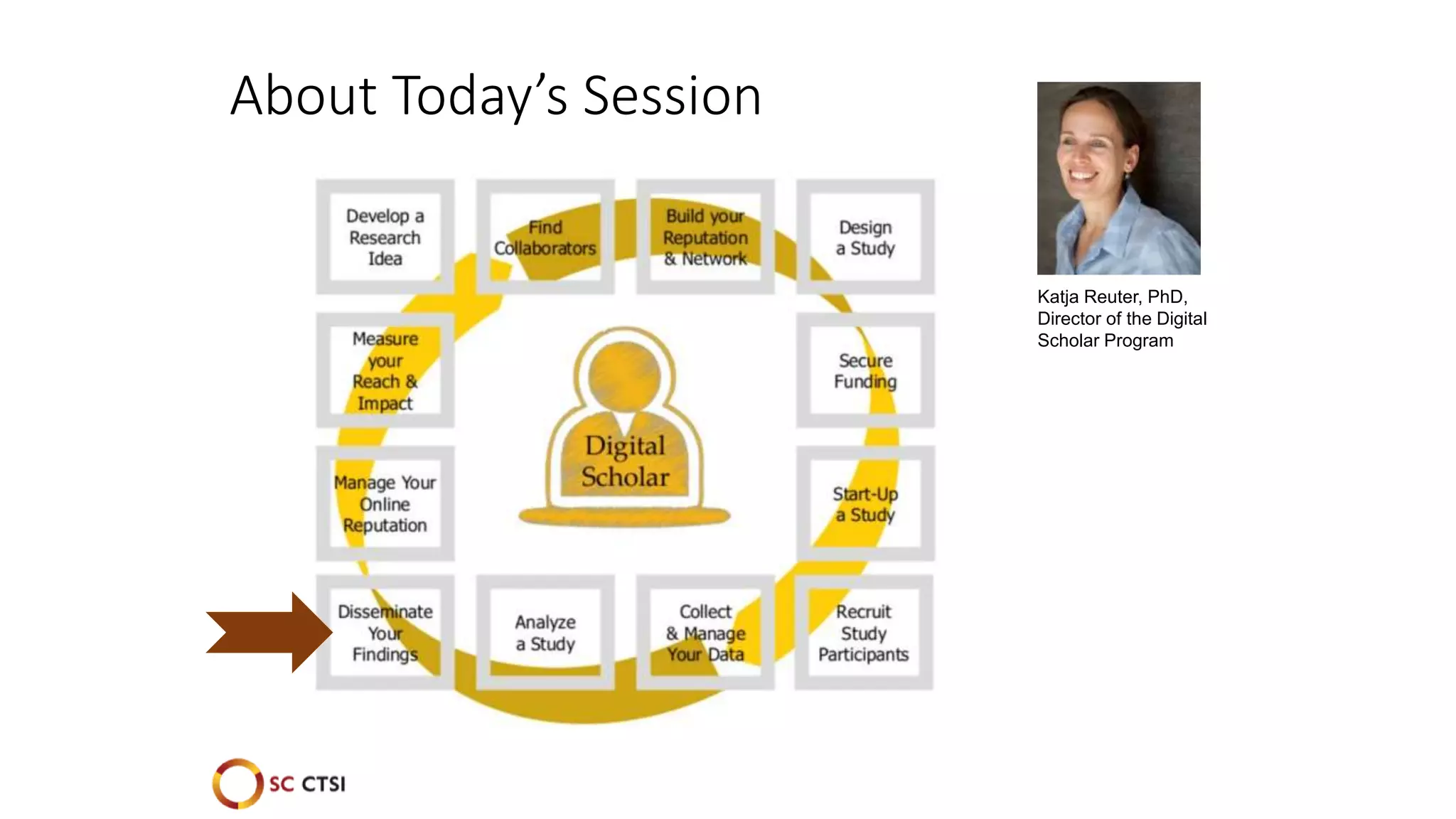
About Today’s Session
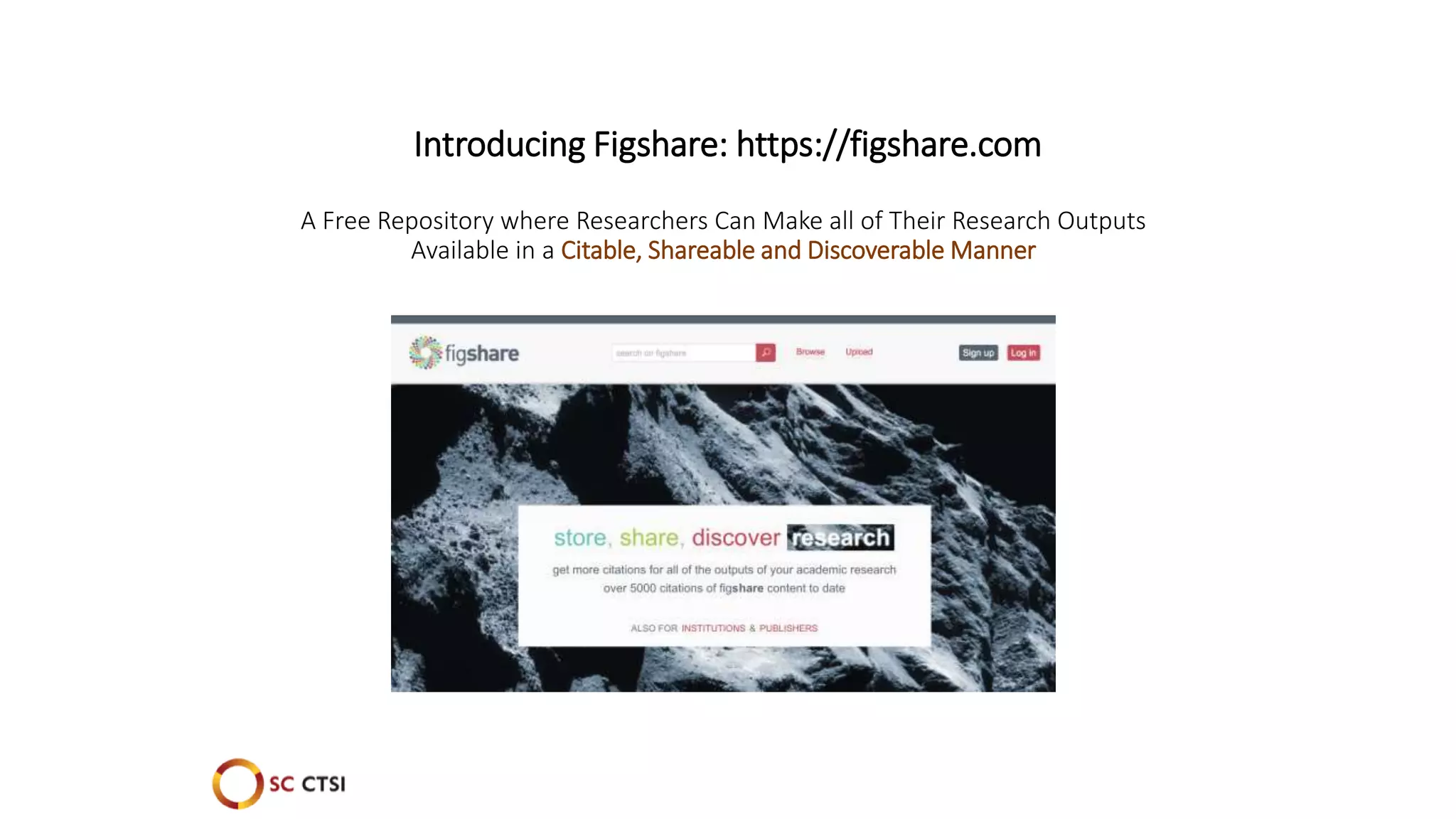
Introducing Figshare: https://figshare.com
A Free Repository where Researchers Can Make all of Their Research Outputs
Available in a Citable, Shareable and Discoverable Manner
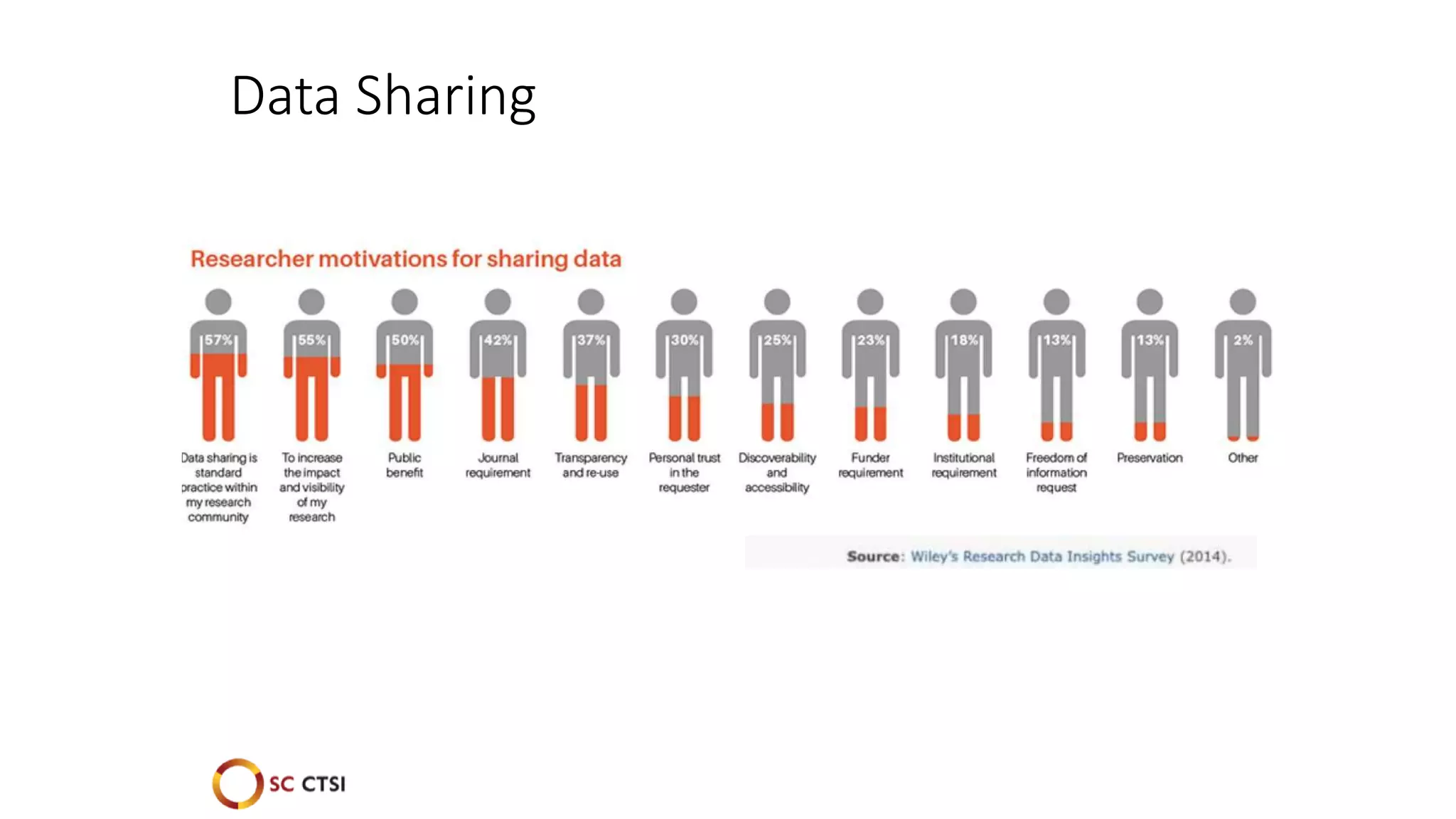
Data Sharing
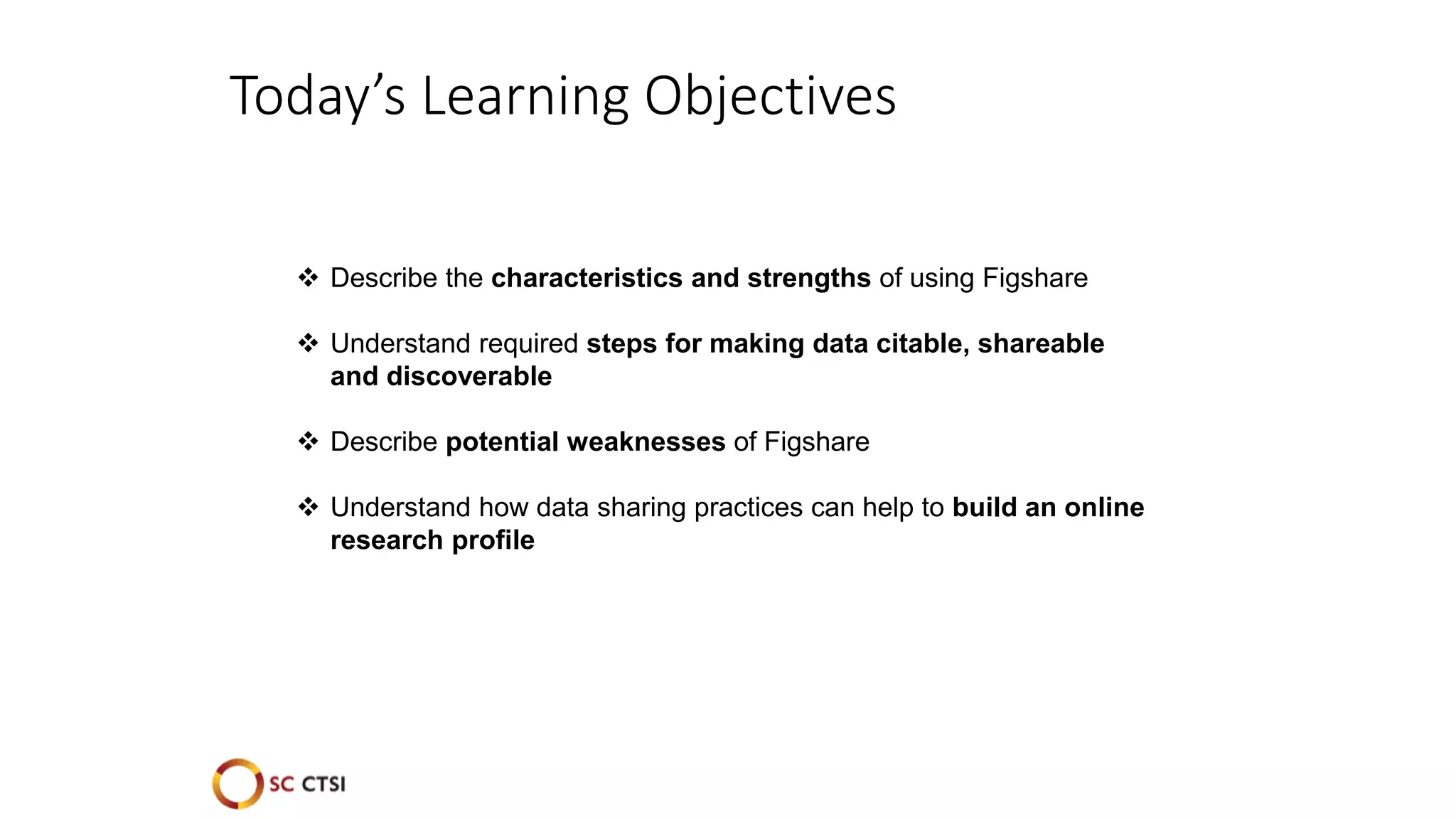
Today’s Learning Objectives
 Describe the characteristics and strengths of using Figshare
 Understand required steps for making data citable, shareable
and discoverable
 Describe potential weaknesses of Figshare
 Understand how data sharing practices can help to build an online
research profile
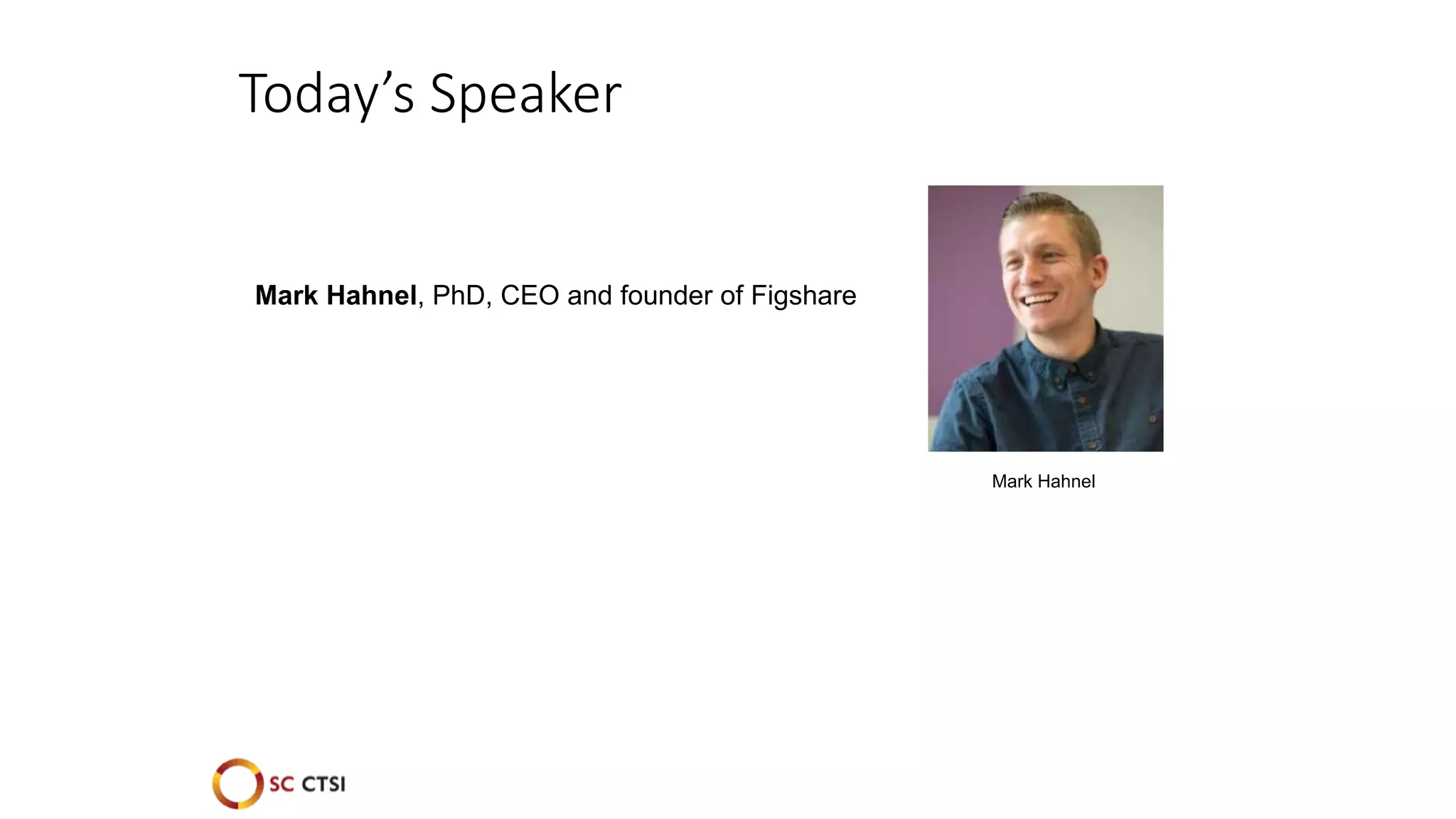
Mark Hahnel
Today’s Speaker
Mark Hahnel, PhD, CEO and founder of Figshare
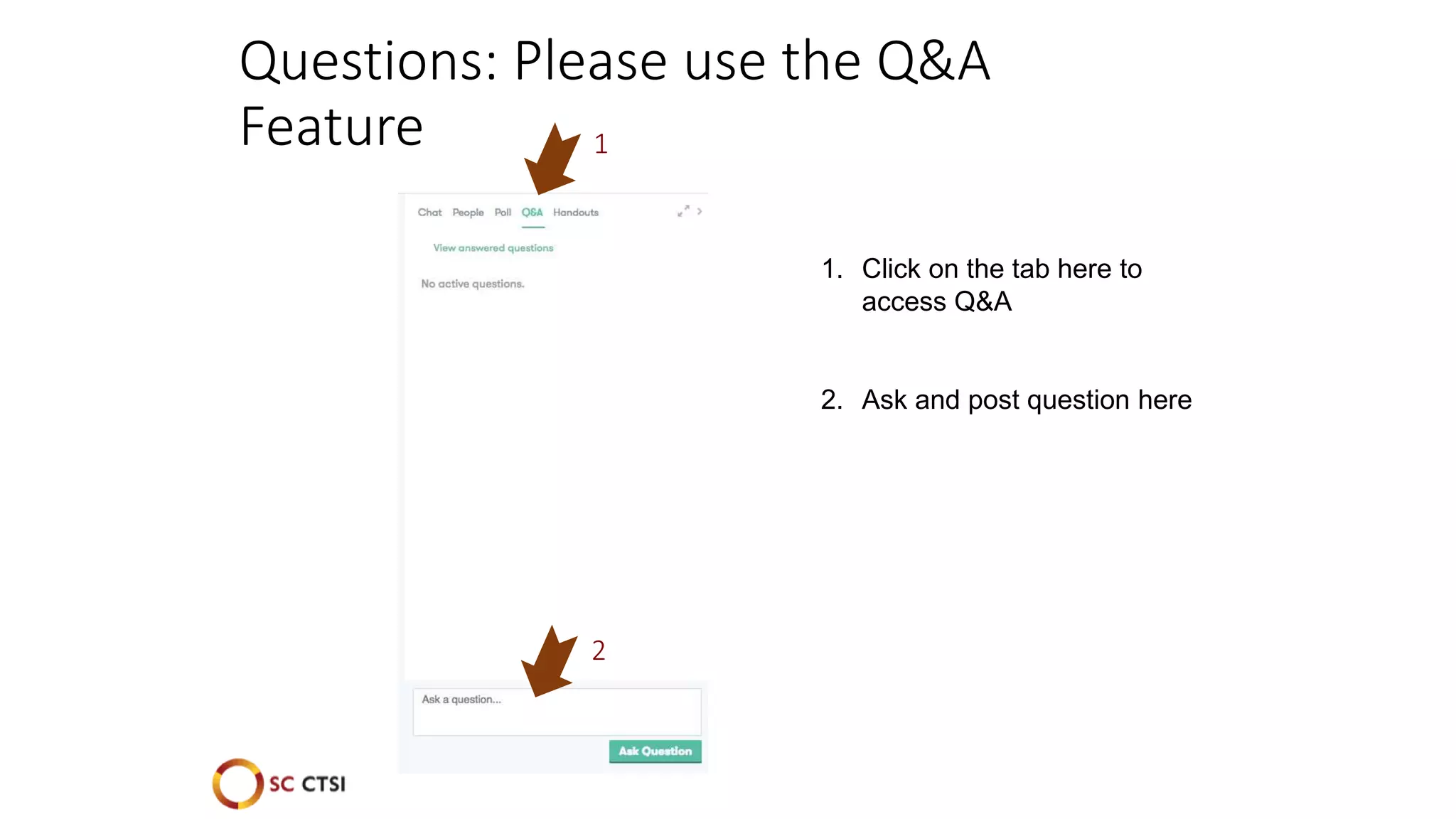
Questions: Please use the Q&A
Feature
1. Click on the tab here to
access Q&A
2. Ask and post question here
1
2
Mark Hahnel, CEO
@MarkHahnel
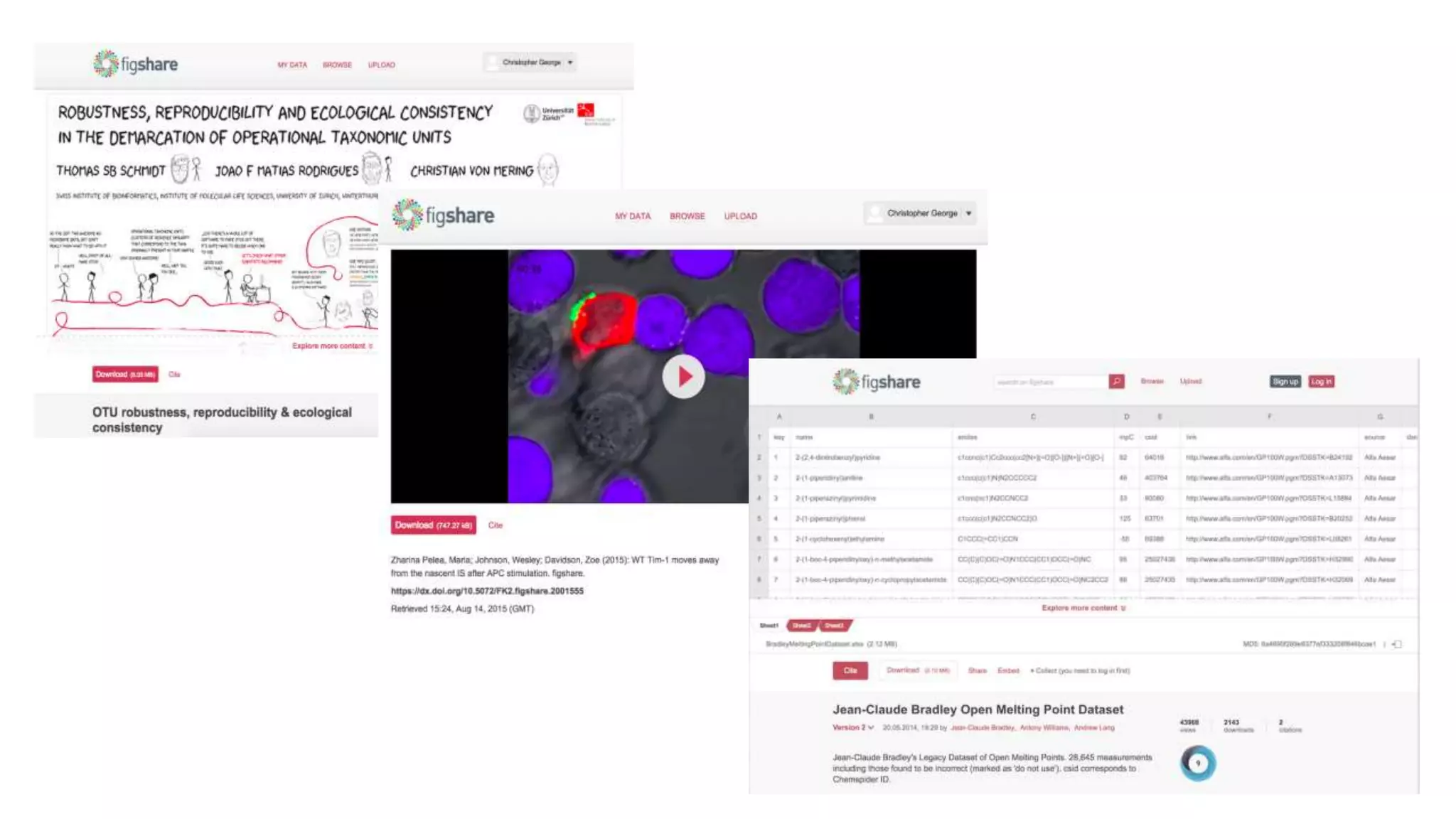
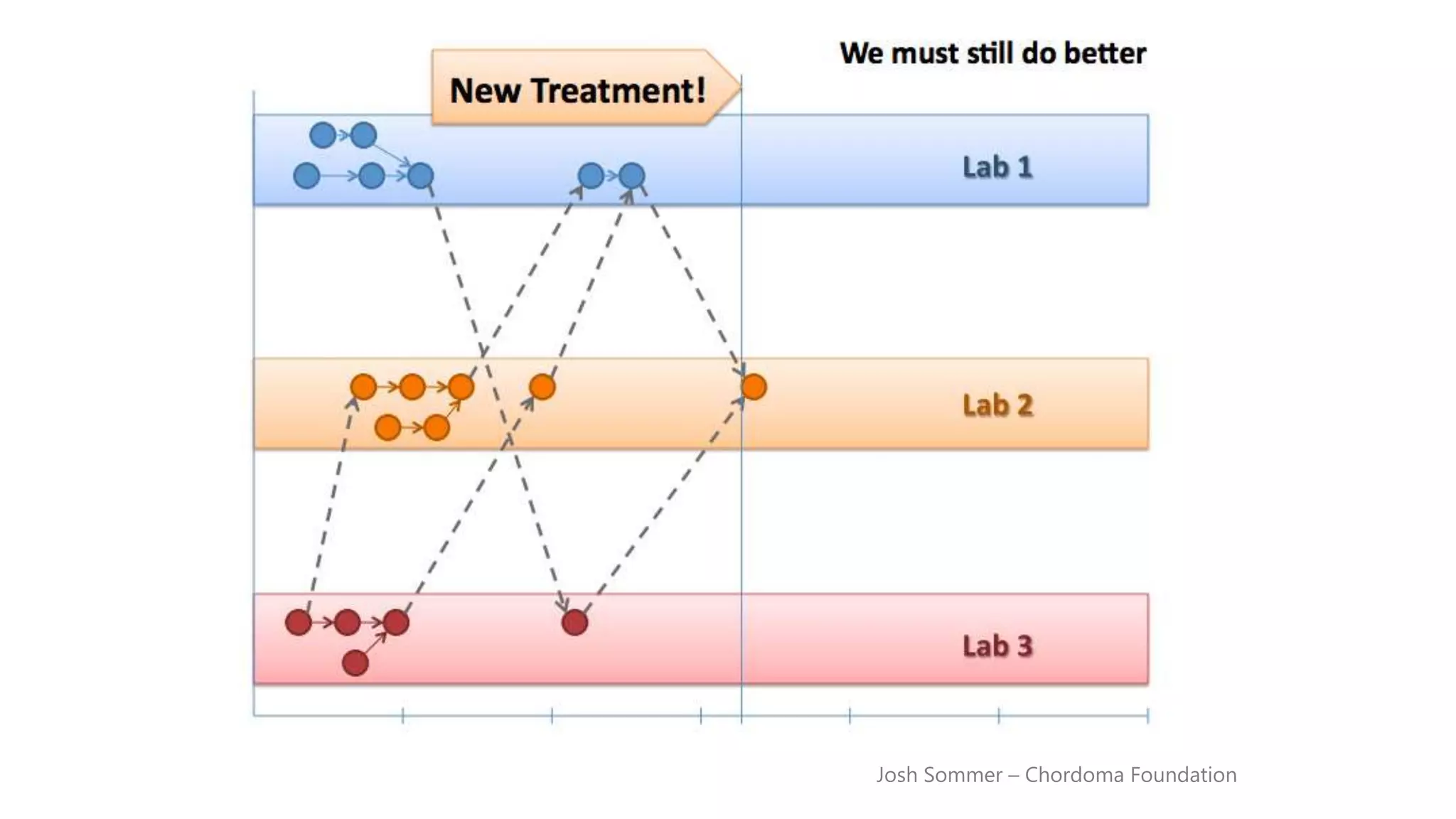
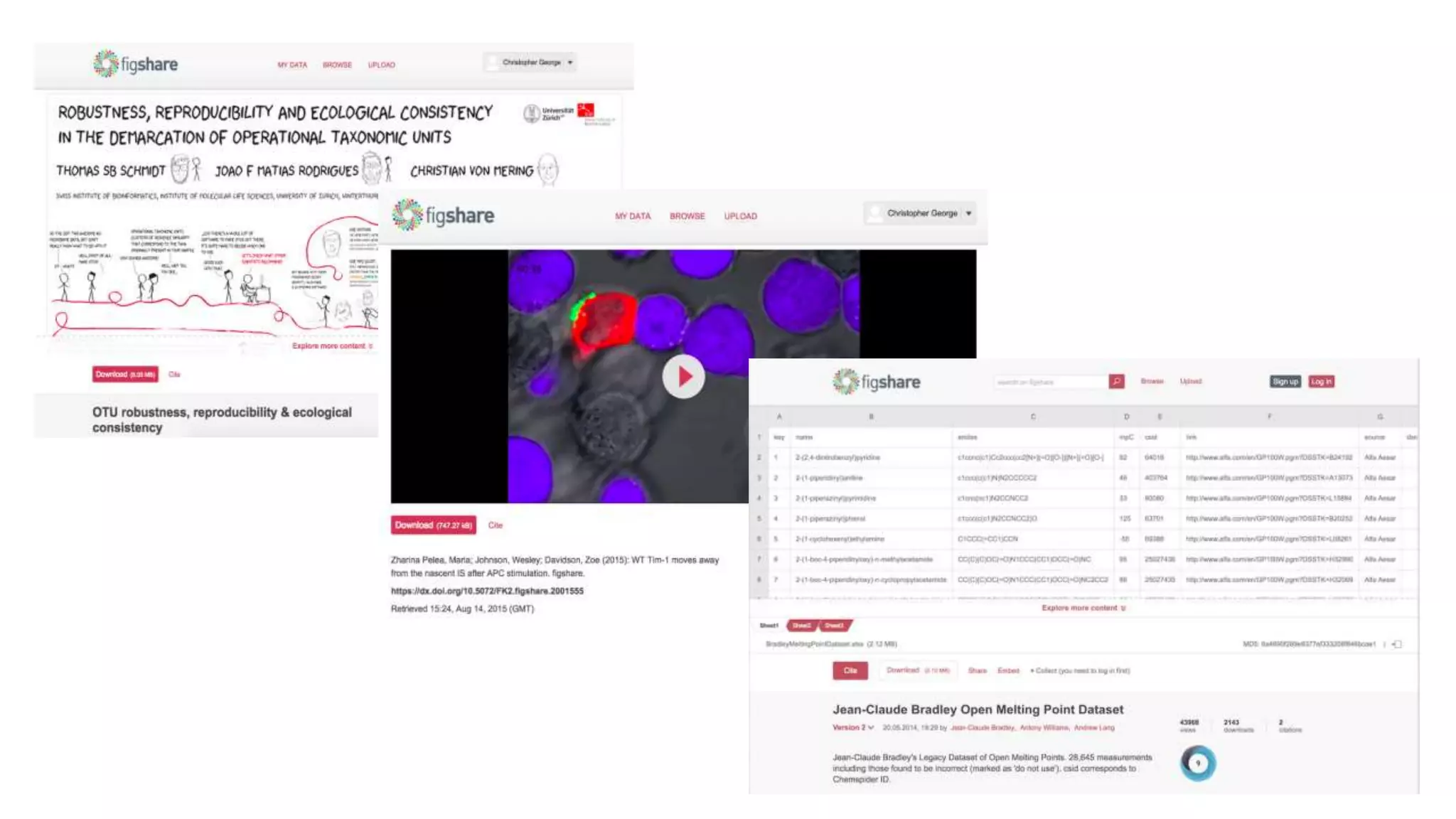
A story
Josh Sommer – Chordoma Foundation
Why should I care?
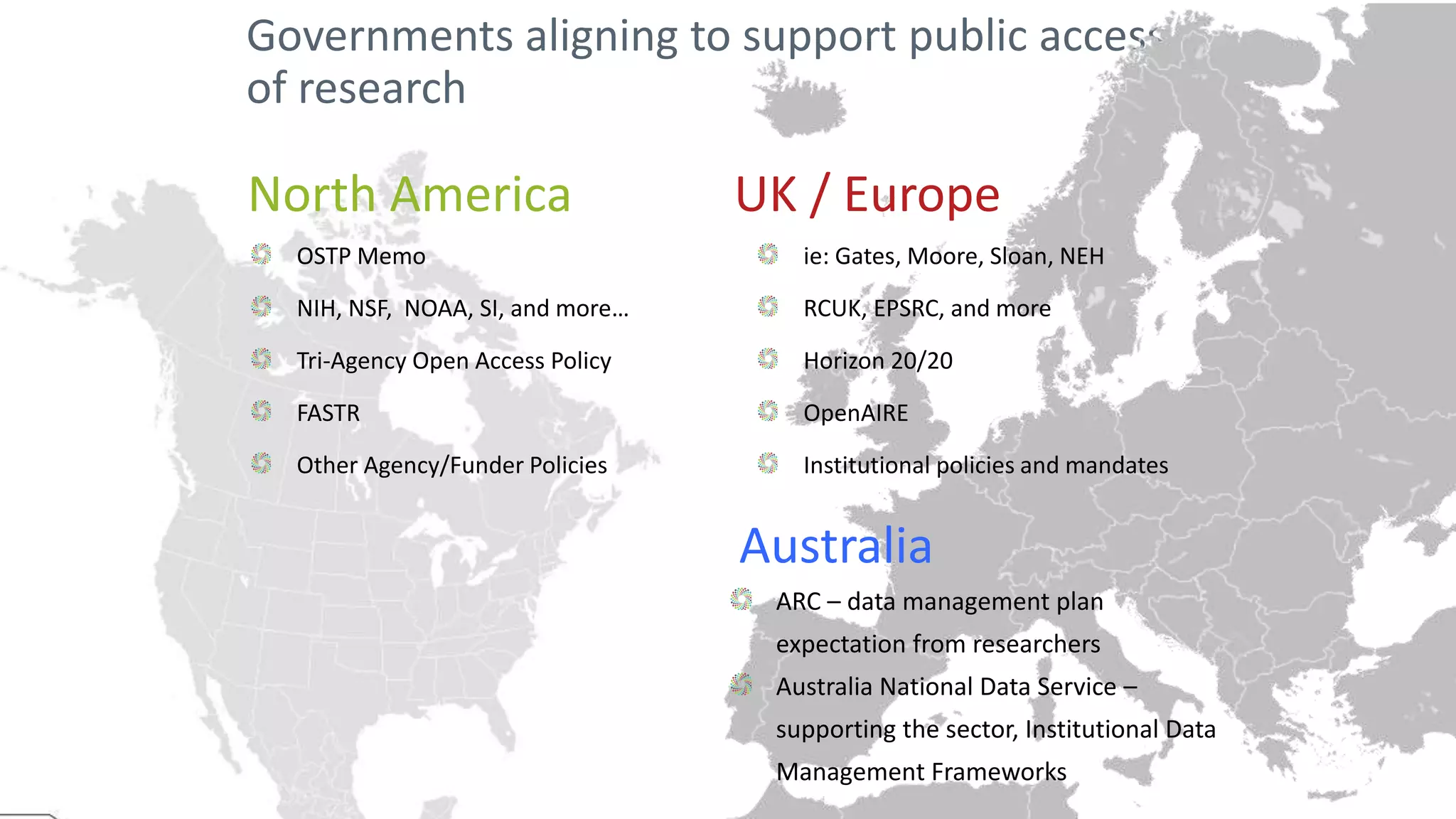
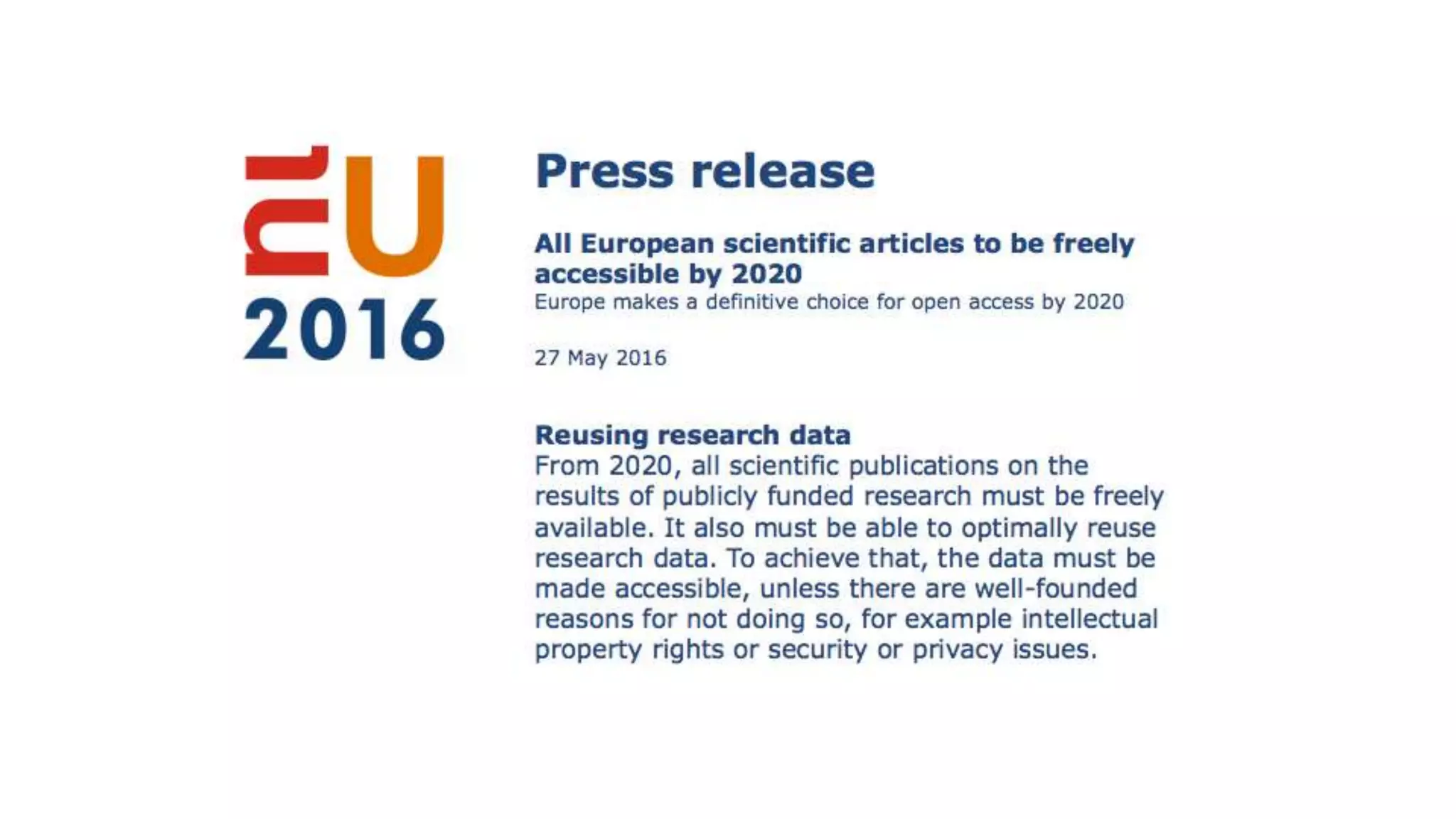
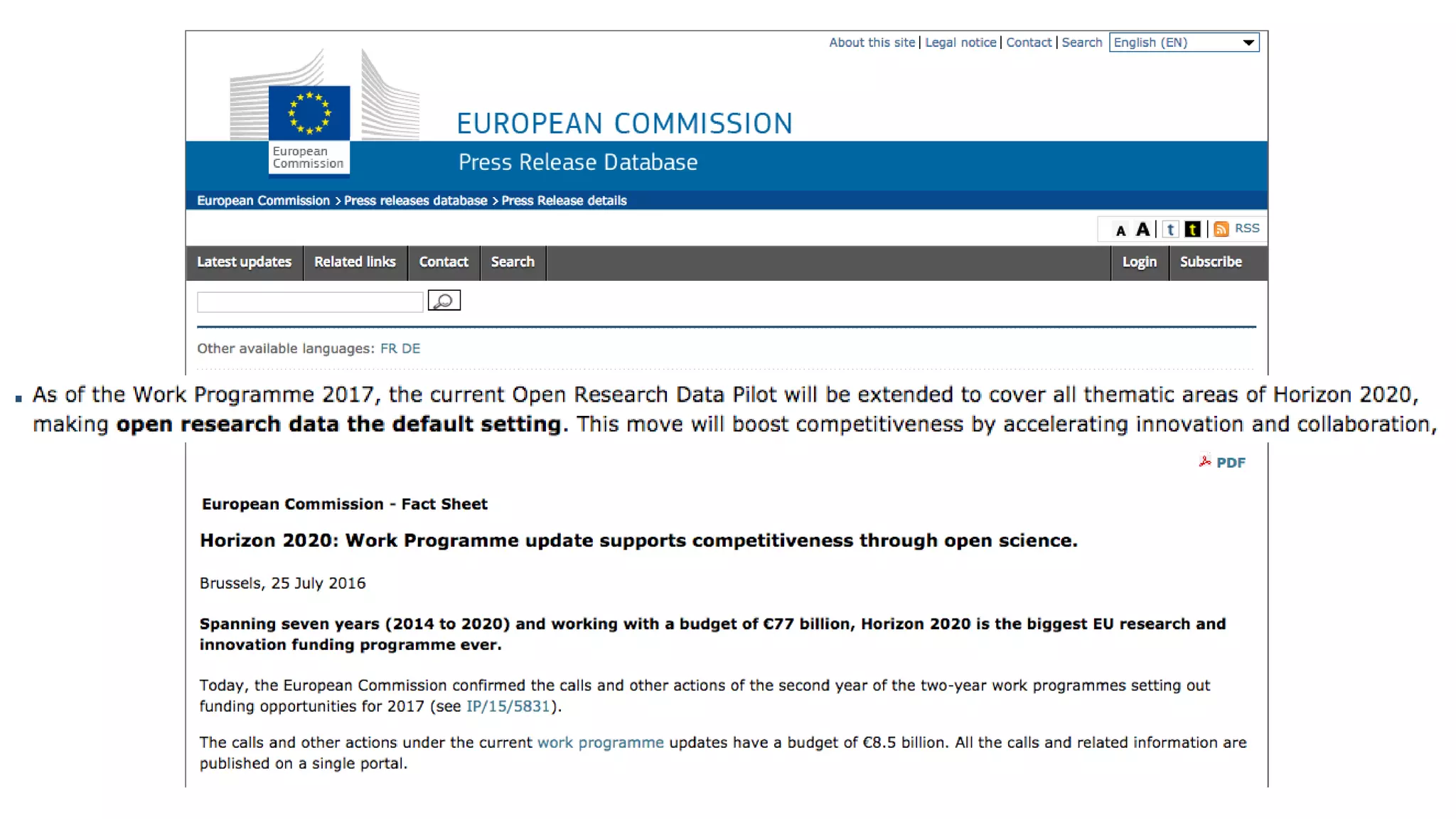
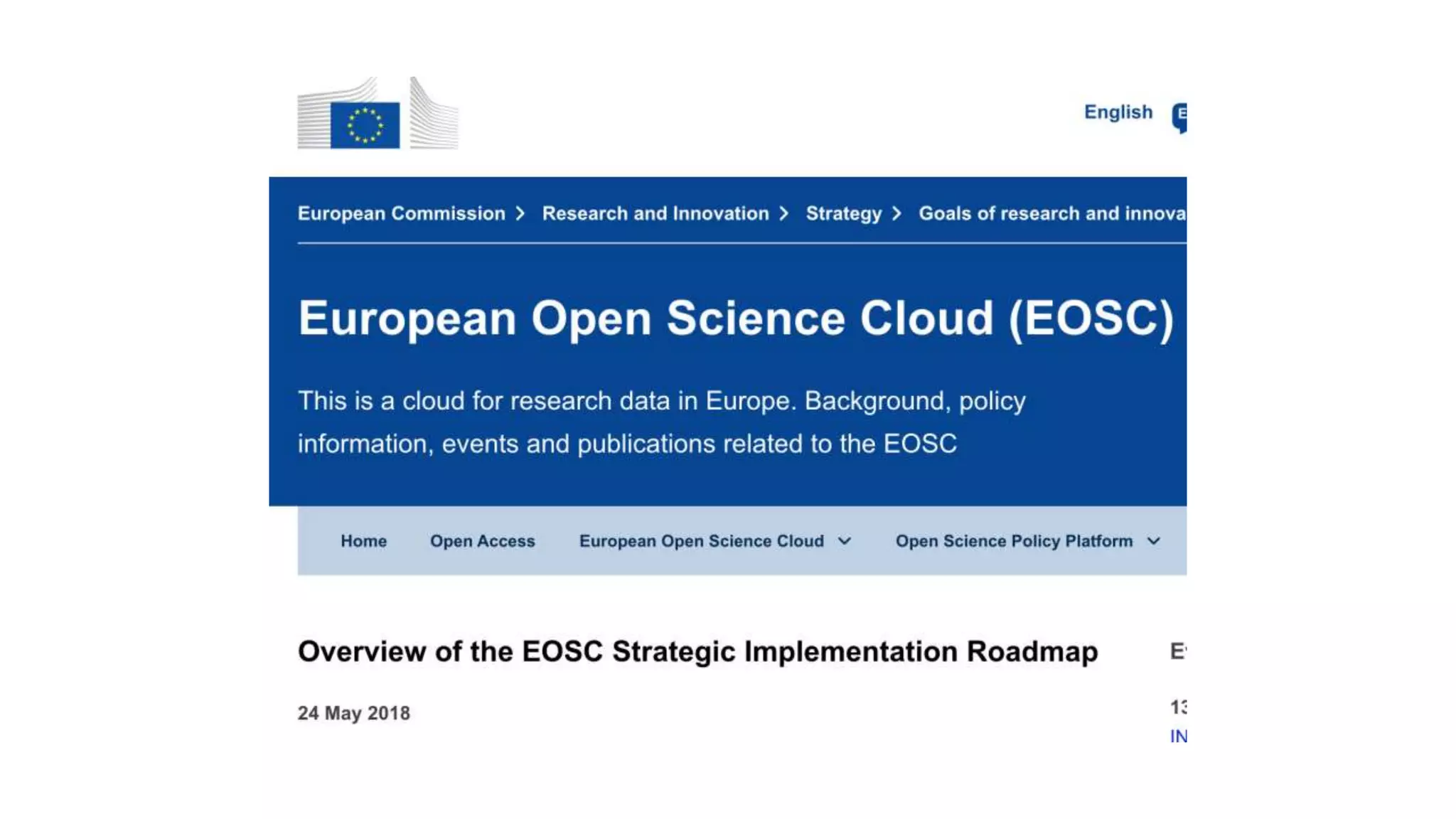
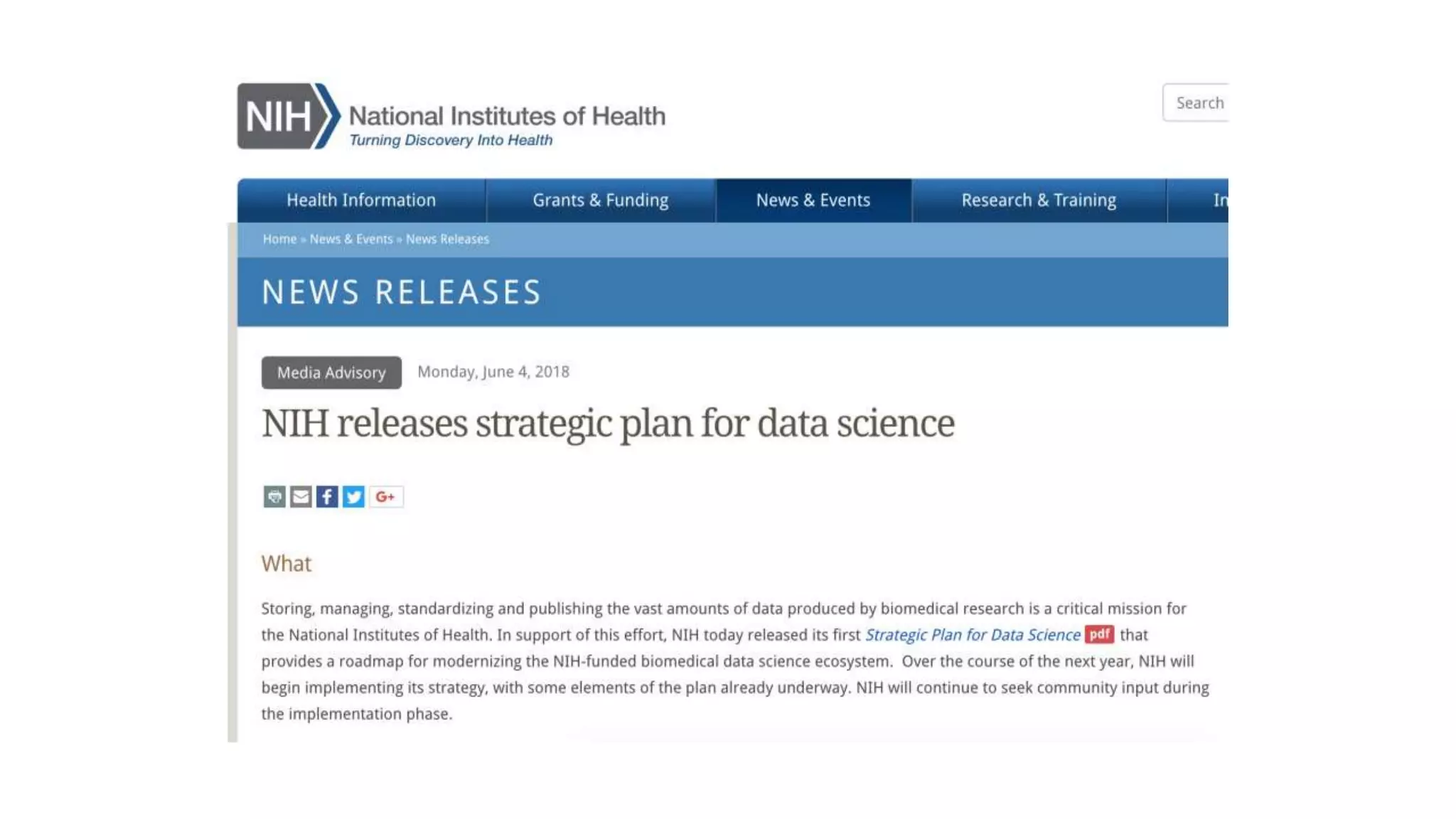
Governments aligning to support public access
of research
OSTP Memo
NIH, NSF, NOAA, SI, and more…
Tri-Agency Open Access Policy
FASTR
Other Agency/Funder Policies
ie: Gates, Moore, Sloan, NEH
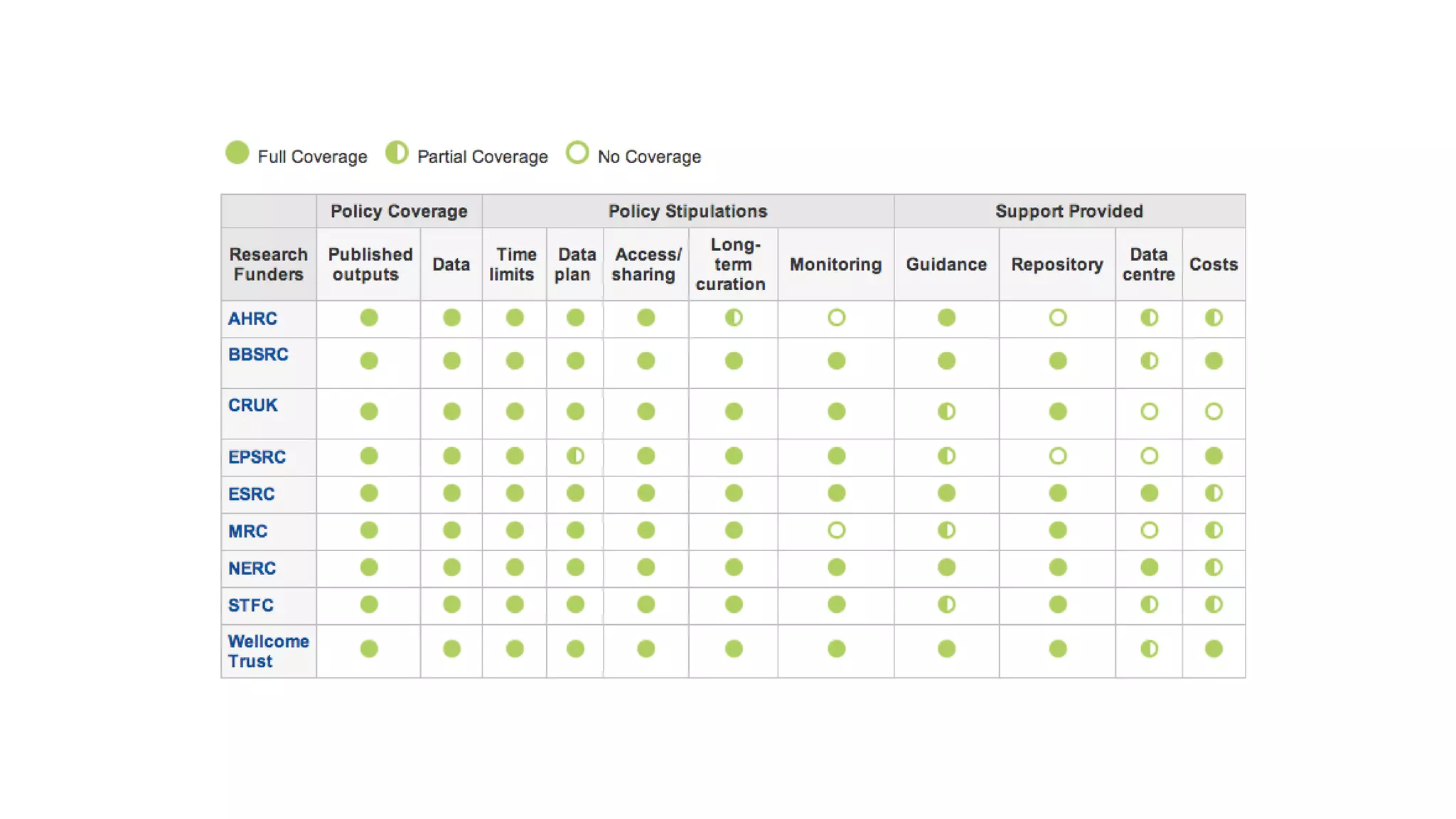
RCUK, EPSRC, and more
Horizon 20/20
OpenAIRE
Institutional policies and mandates
North America UK / Europe
Australia
ARC – data management plan
expectation from researchers
Australia National Data Service –
supporting the sector, Institutional Data
Management Frameworks
FAIR
FAIR
So what’s happening?
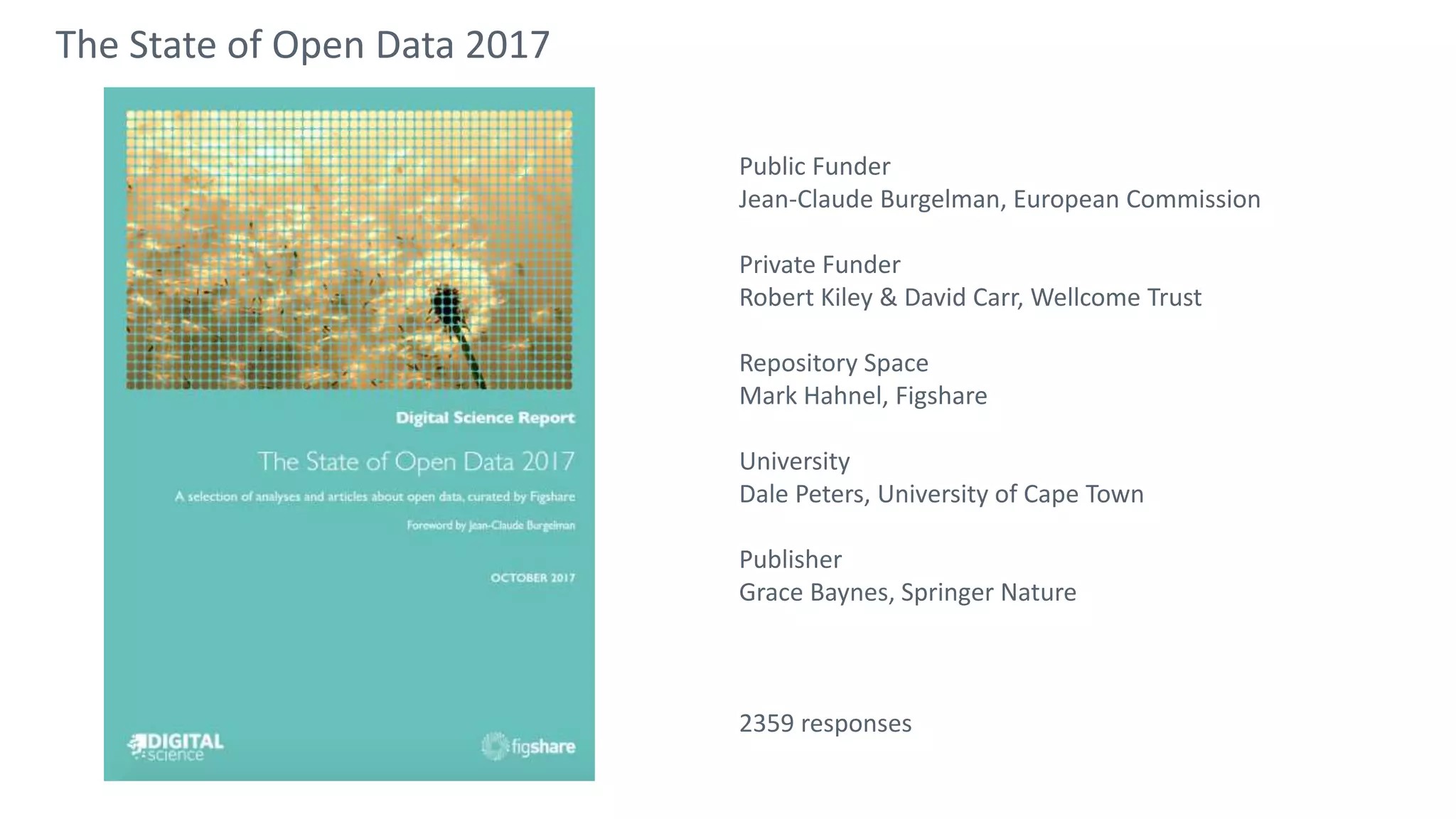
Public Funder
Jean-Claude Burgelman, European Commission
Private Funder
Robert Kiley & David Carr, Wellcome Trust
Repository Space
Mark Hahnel, Figshare
University
Dale Peters, University of Cape Town
Publisher
Grace Baynes, Springer Nature
2359 responses
The State of Open Data 2017
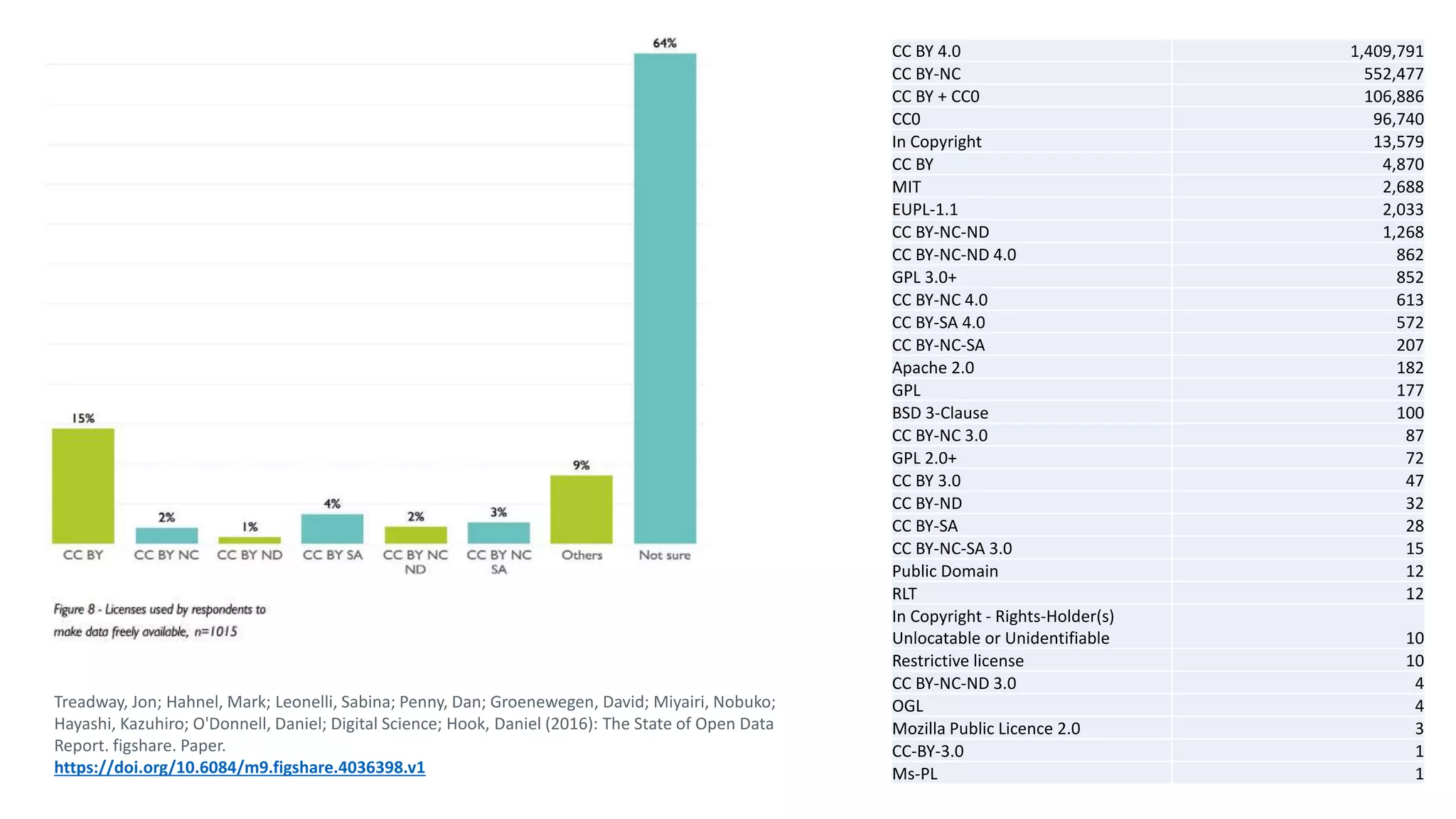
CC BY 4.0 1,409,791
CC BY-NC 552,477
CC BY + CC0 106,886
CC0 96,740
In Copyright 13,579
CC BY 4,870
MIT 2,688
EUPL-1.1 2,033
CC BY-NC-ND 1,268
CC BY-NC-ND 4.0 862
GPL 3.0+ 852
CC BY-NC 4.0 613
CC BY-SA 4.0 572
CC BY-NC-SA 207
Apache 2.0 182
GPL 177
BSD 3-Clause 100
CC BY-NC 3.0 87
GPL 2.0+ 72
CC BY 3.0 47
CC BY-ND 32
CC BY-SA 28
CC BY-NC-SA 3.0 15
Public Domain 12
RLT 12
In Copyright - Rights-Holder(s)
Unlocatable or Unidentifiable 10
Restrictive license 10
CC BY-NC-ND 3.0 4
OGL 4
Mozilla Public Licence 2.0 3
CC-BY-3.0 1
Ms-PL 1
Treadway, Jon; Hahnel, Mark; Leonelli, Sabina; Penny, Dan; Groenewegen, David; Miyairi, Nobuko;
Hayashi, Kazuhiro; O'Donnell, Daniel; Digital Science; Hook, Daniel (2016): The State of Open Data
Report. figshare. Paper.
https://doi.org/10.6084/m9.figshare.4036398.v1
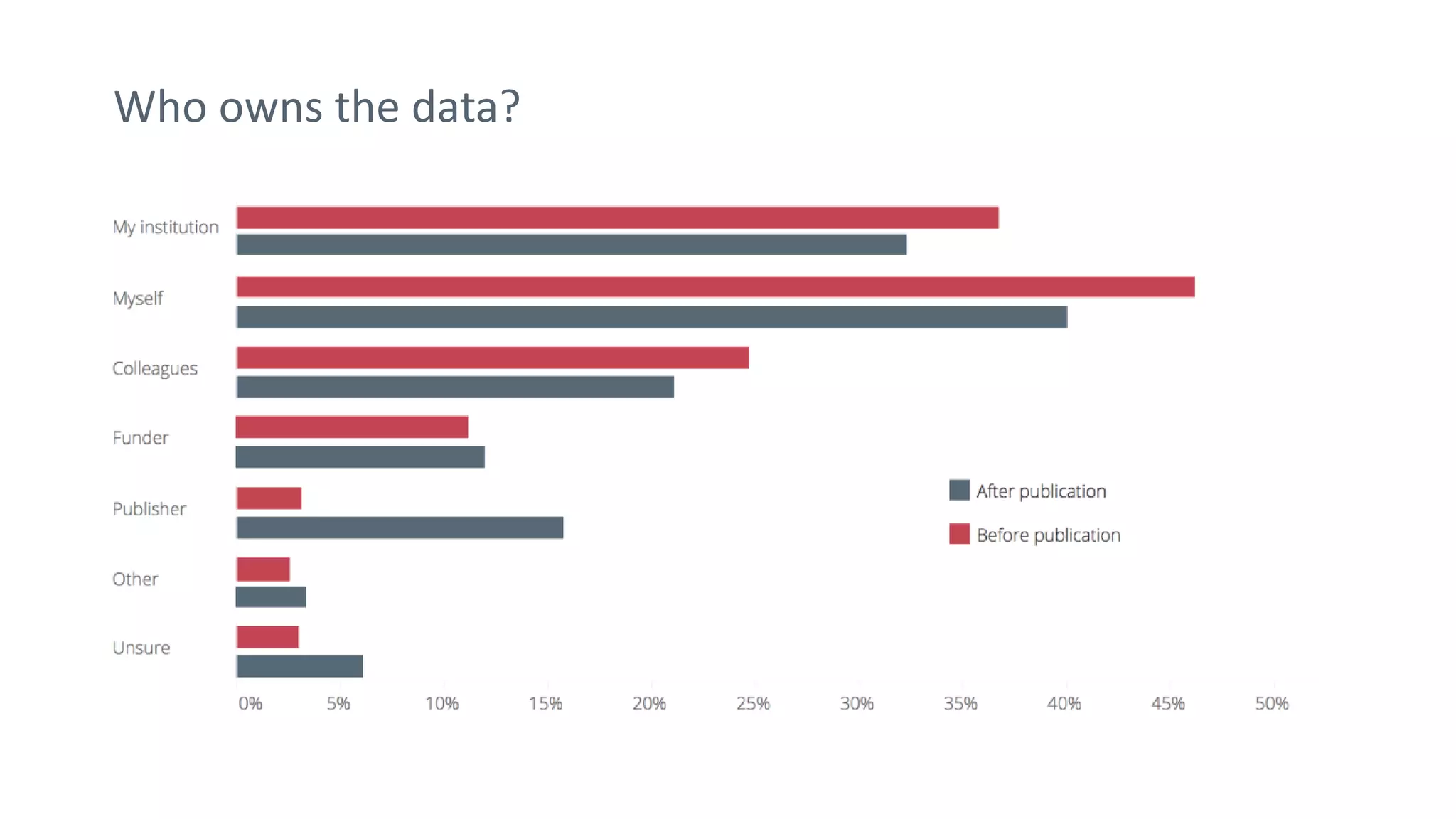
Who owns the data?
Status
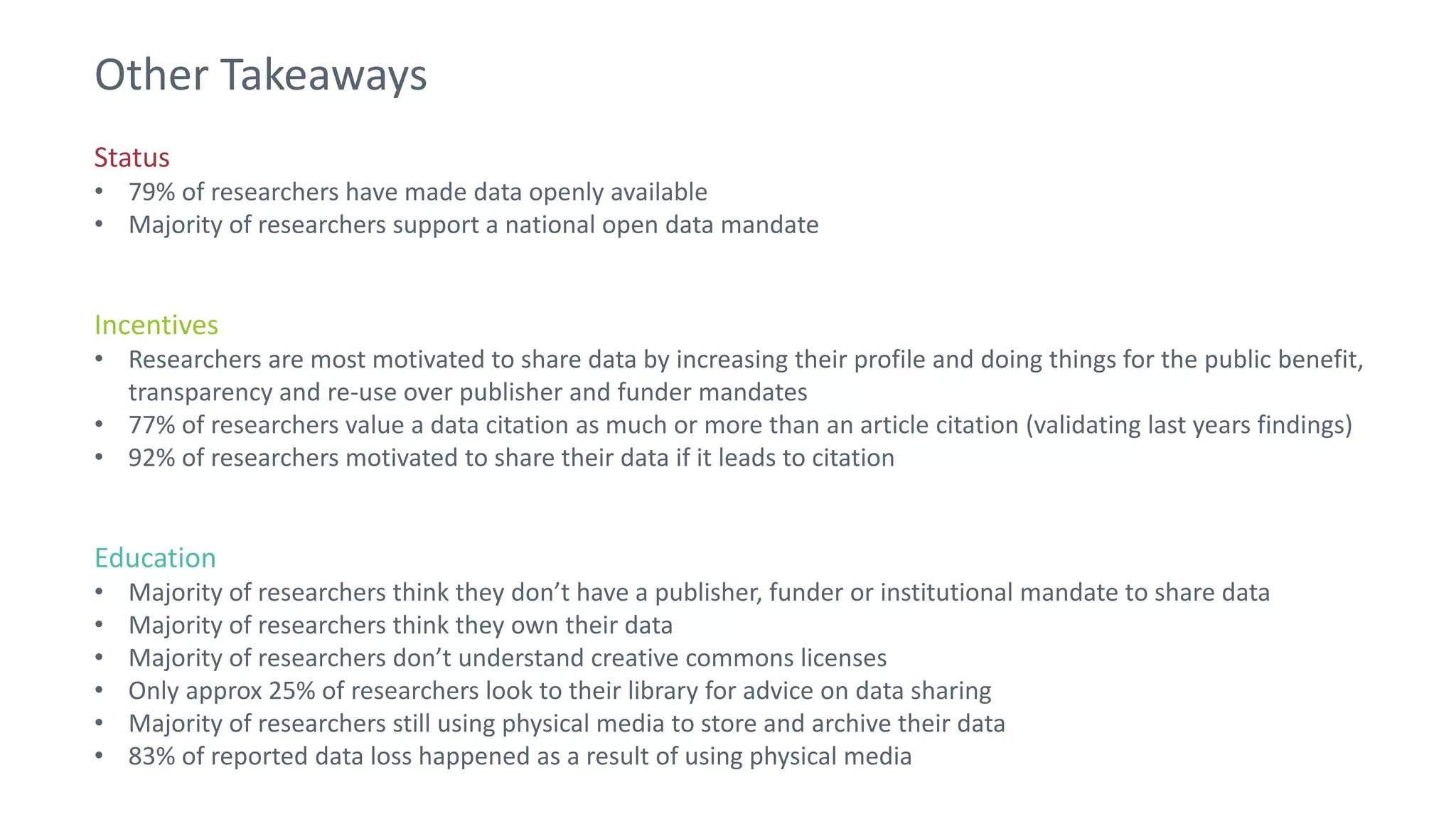
• 79% of researchers have made data openly available
• Majority of researchers support a national open data mandate
Incentives
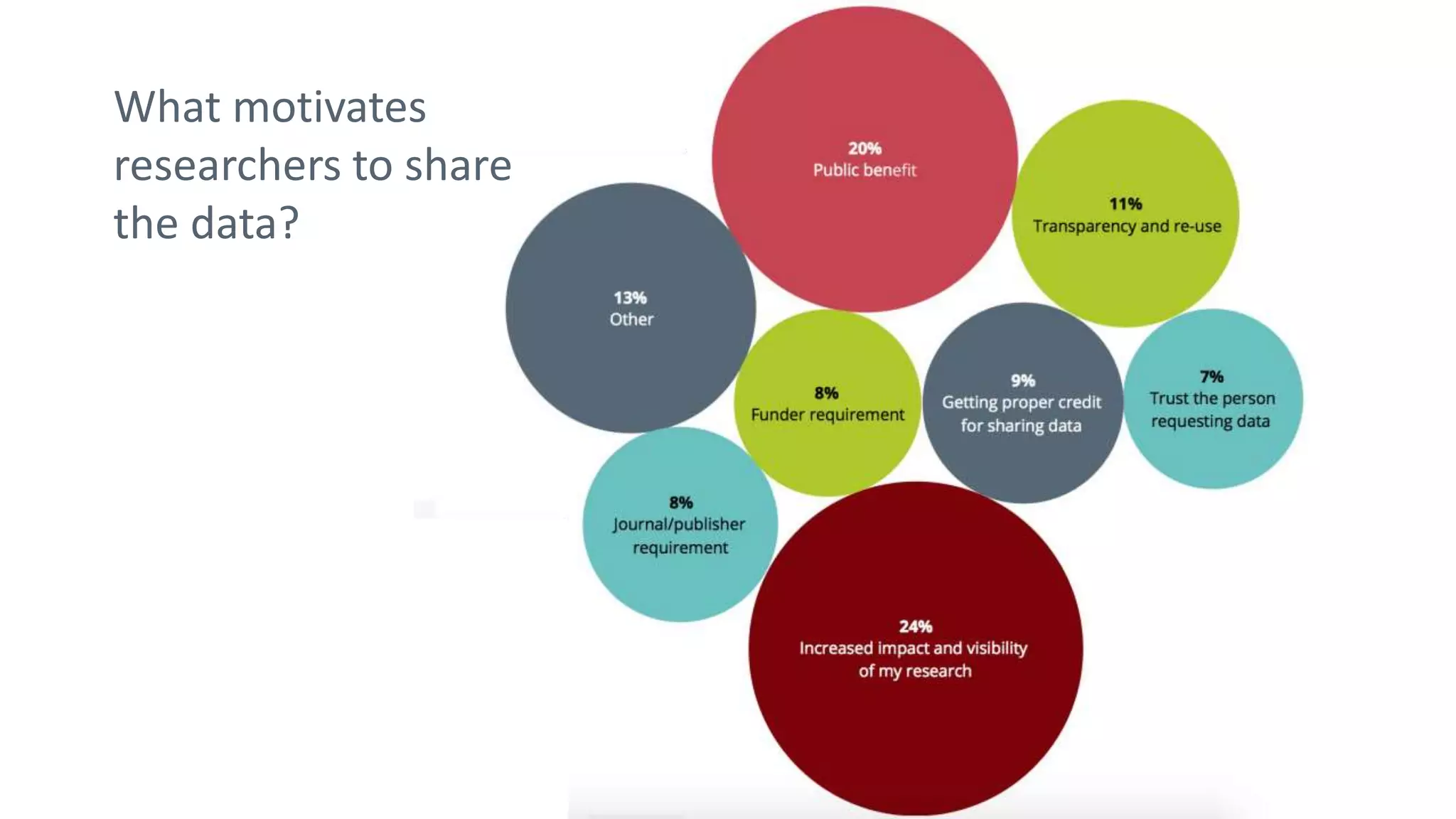
• Researchers are most motivated to share data by increasing their profile and doing things for the public benefit,
transparency and re-use over publisher and funder mandates
• 77% of researchers value a data citation as much or more than an article citation (validating last years findings)
• 92% of researchers motivated to share their data if it leads to citation
Education
• Majority of researchers think they don’t have a publisher, funder or institutional mandate to share data
• Majority of researchers think they own their data
• Majority of researchers don’t understand creative commons licenses
• Only approx 25% of researchers look to their library for advice on data sharing
• Majority of researchers still using physical media to store and archive their data
• 83% of reported data loss happened as a result of using physical media
Other Takeaways
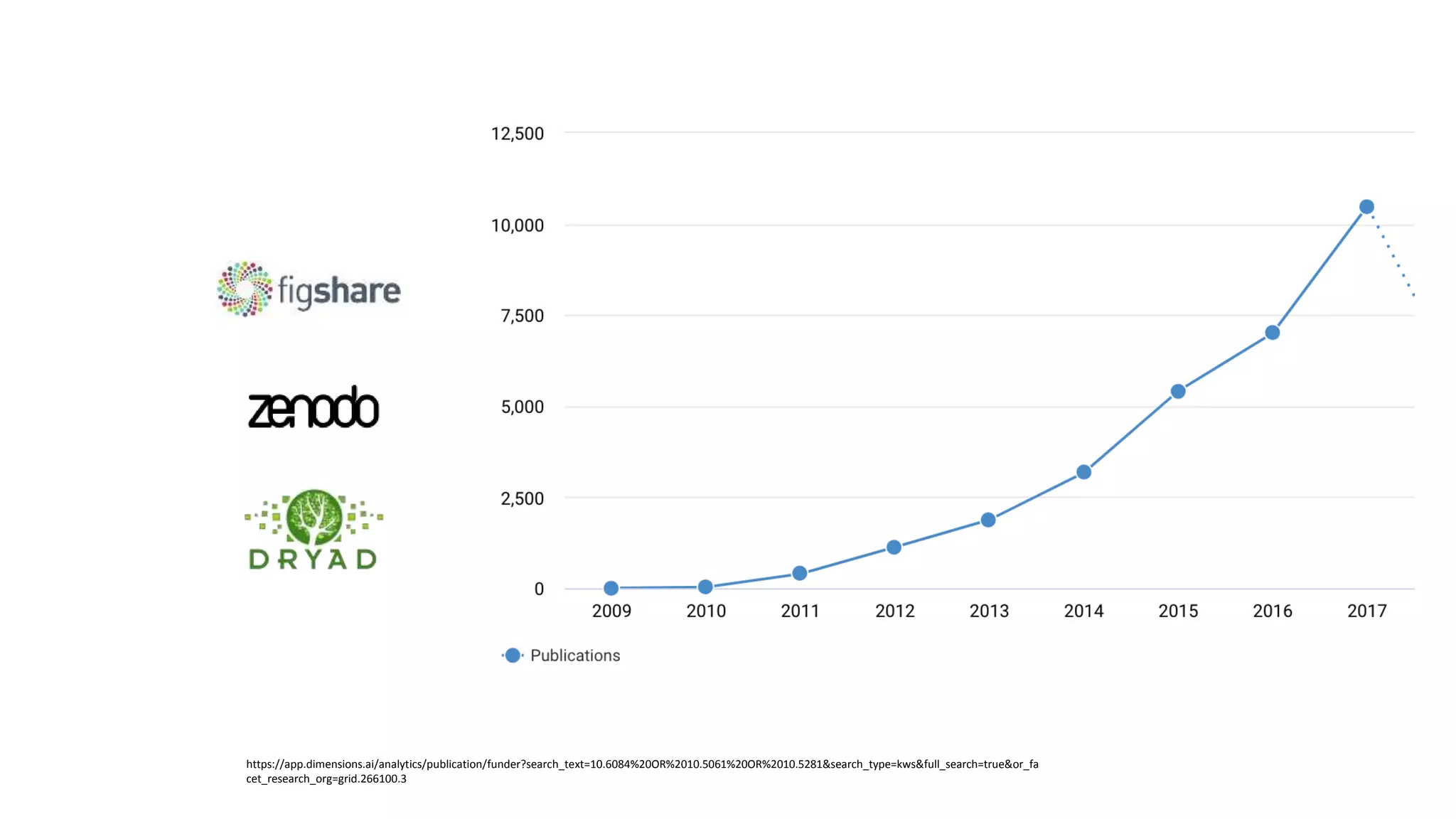
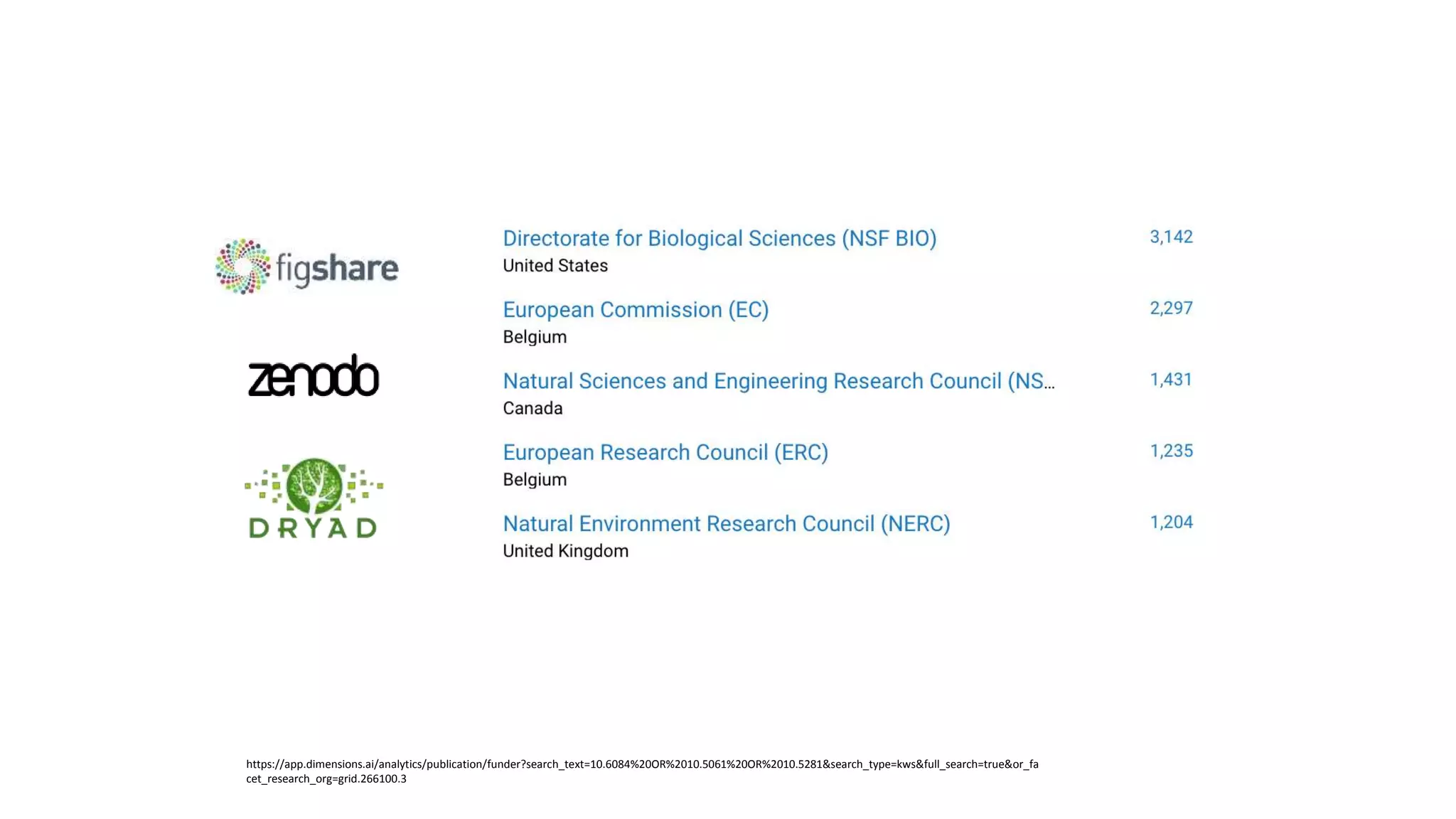
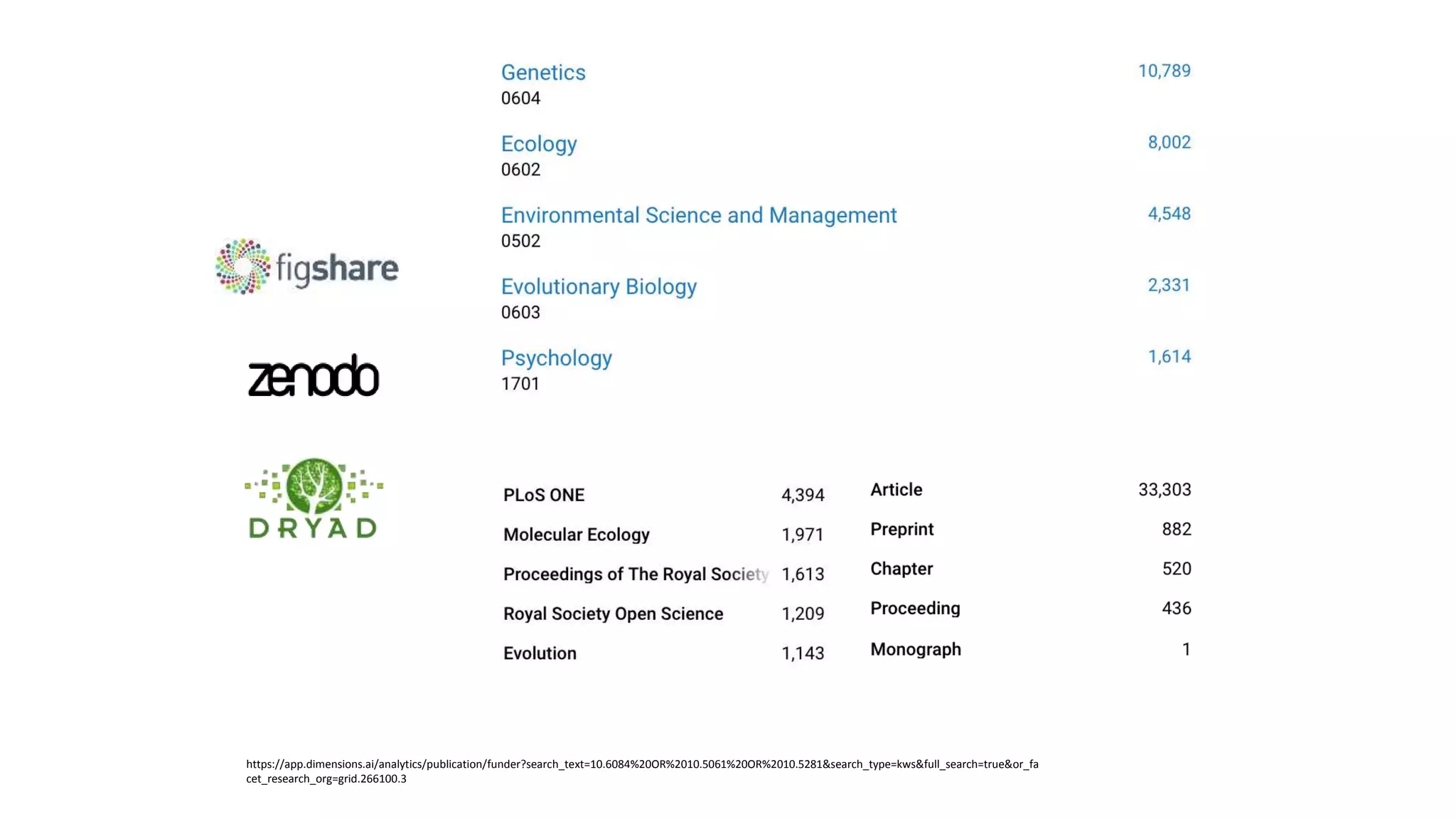
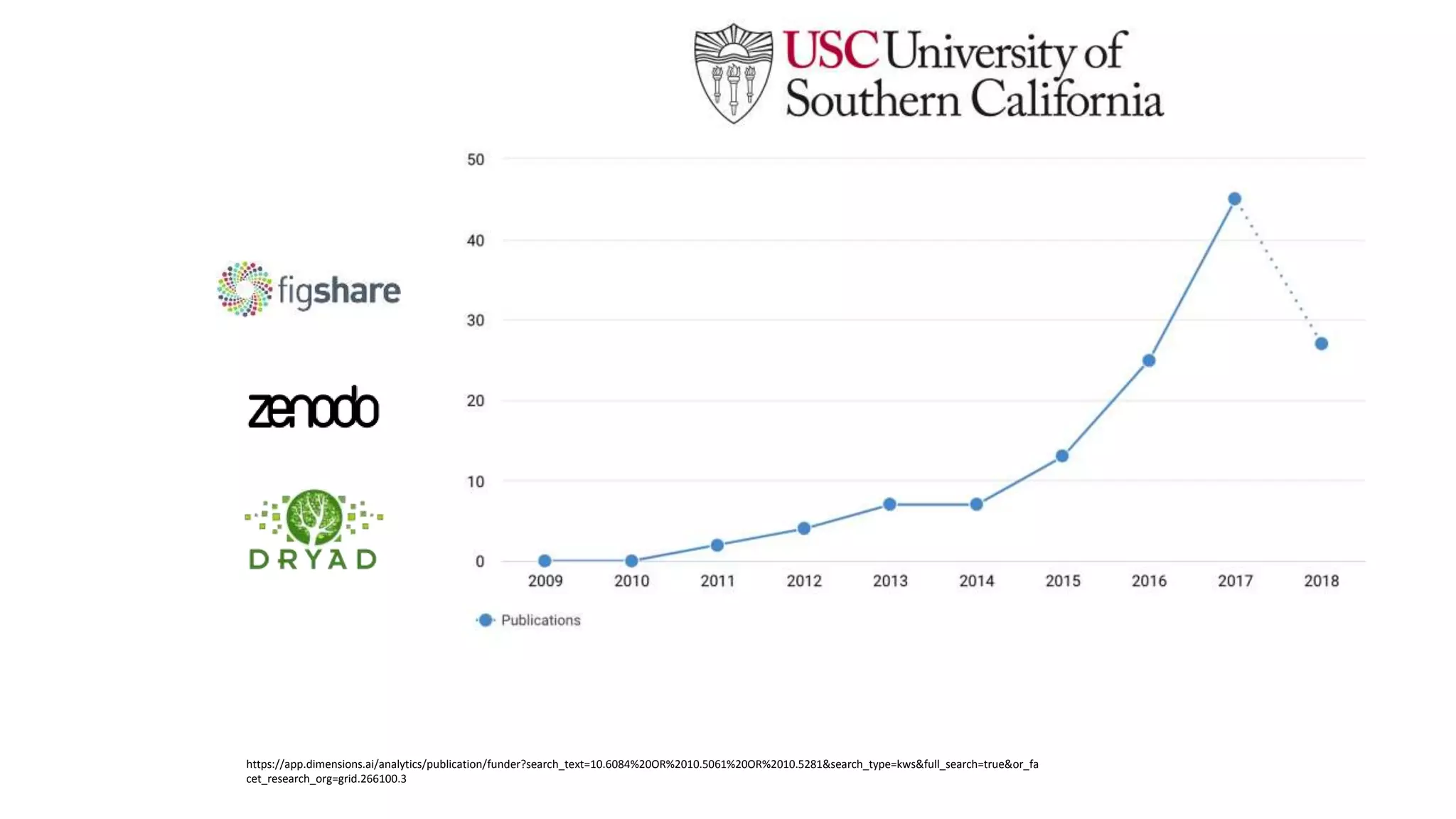
So is anyone doing this?
https://app.dimensions.ai/analytics/publication/funder?search_text=10.6084%20OR%2010.5061%20OR%2010.5281&search_type=kws&full_search=true&or_fa
cet_research_org=grid.266100.3
https://app.dimensions.ai/analytics/publication/funder?search_text=10.6084%20OR%2010.5061%20OR%2010.5281&search_type=kws&full_search=true&or_fa
cet_research_org=grid.266100.3
https://app.dimensions.ai/analytics/publication/funder?search_text=10.6084%20OR%2010.5061%20OR%2010.5281&search_type=kws&full_search=true&or_fa
cet_research_org=grid.266100.3
https://app.dimensions.ai/analytics/publication/funder?search_text=10.6084%20OR%2010.5061%20OR%2010.5281&search_type=kws&full_search=true&or_fa
cet_research_org=grid.266100.3
What motivates
researchers to share
the data?
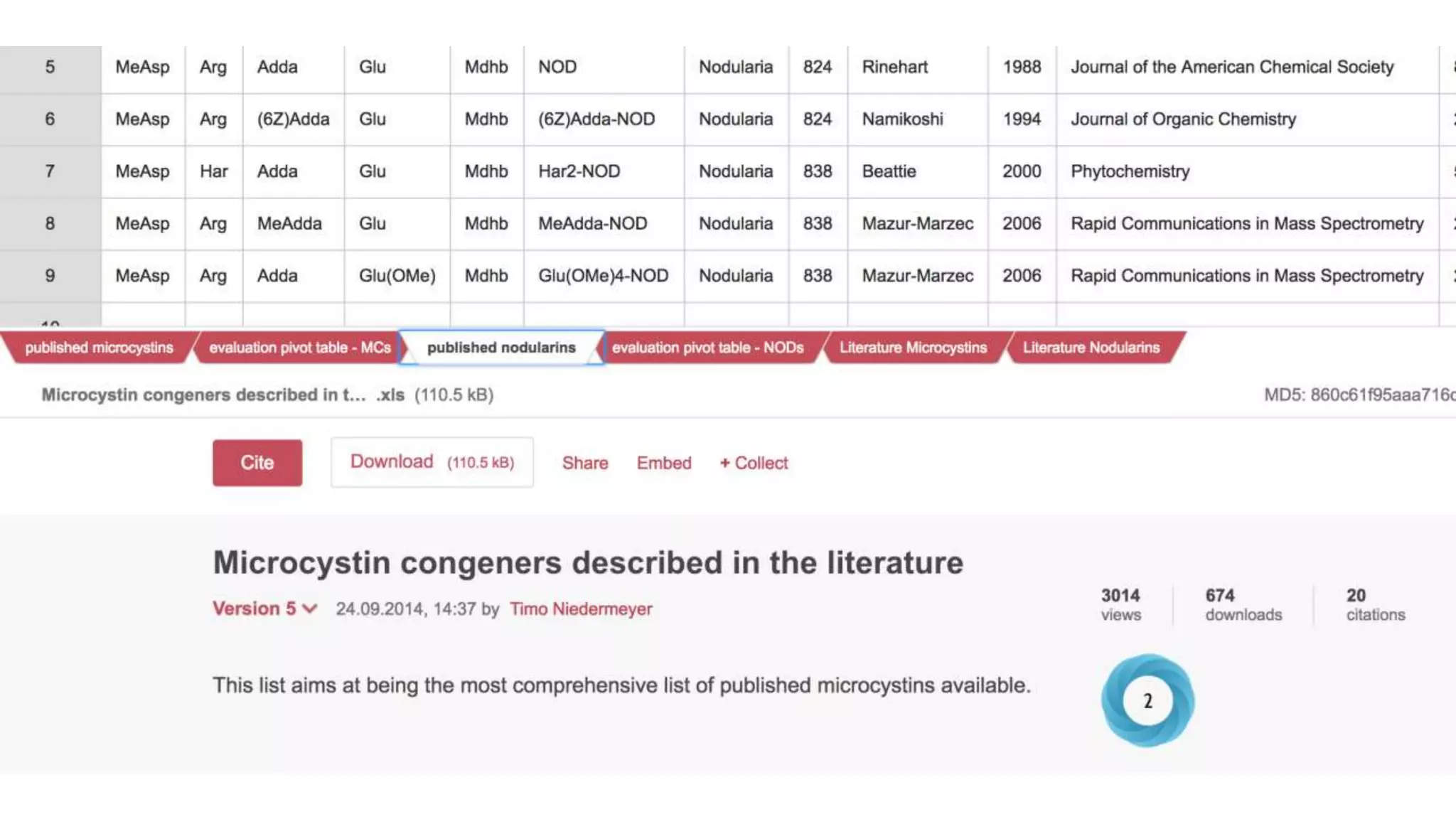
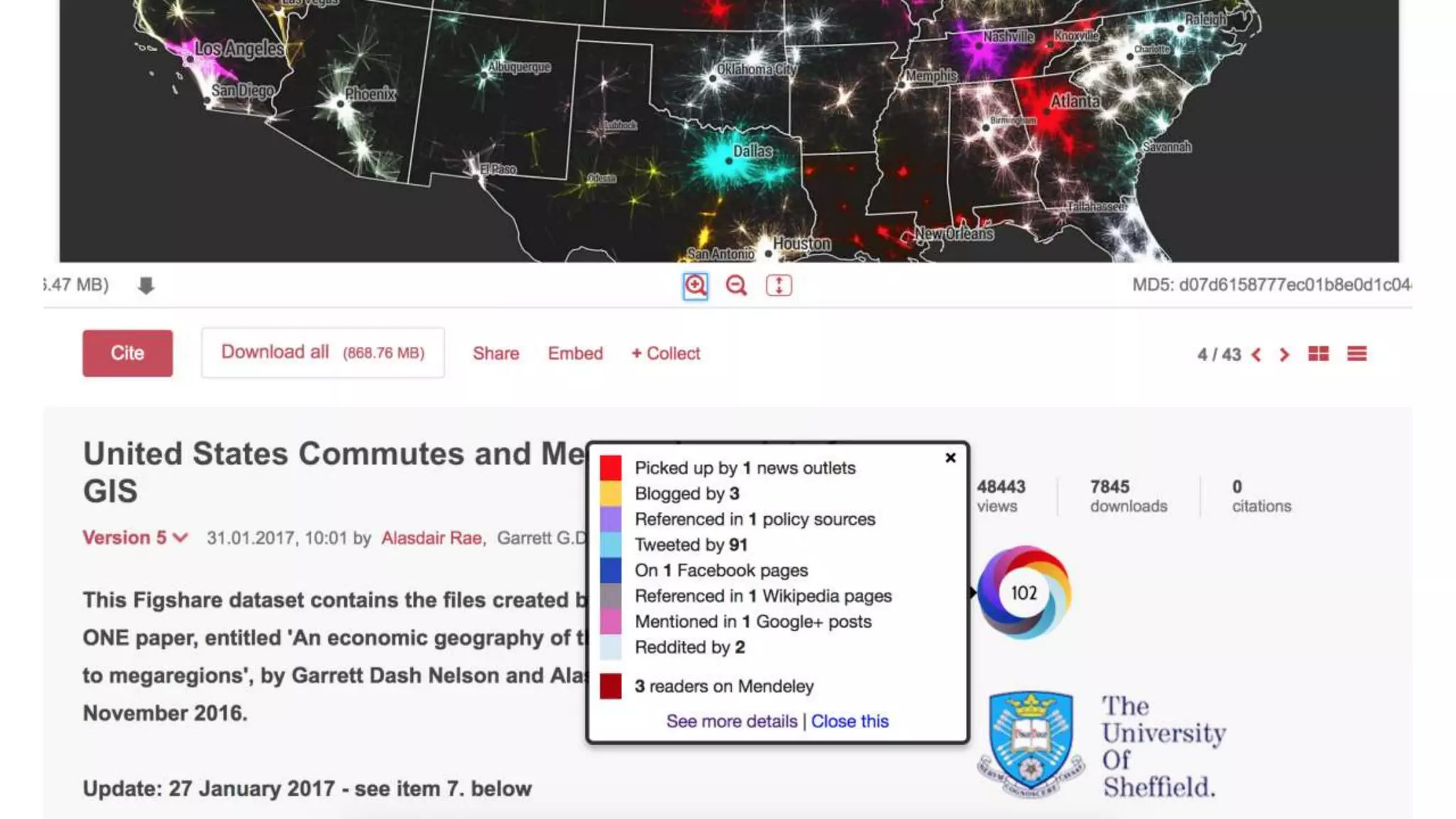
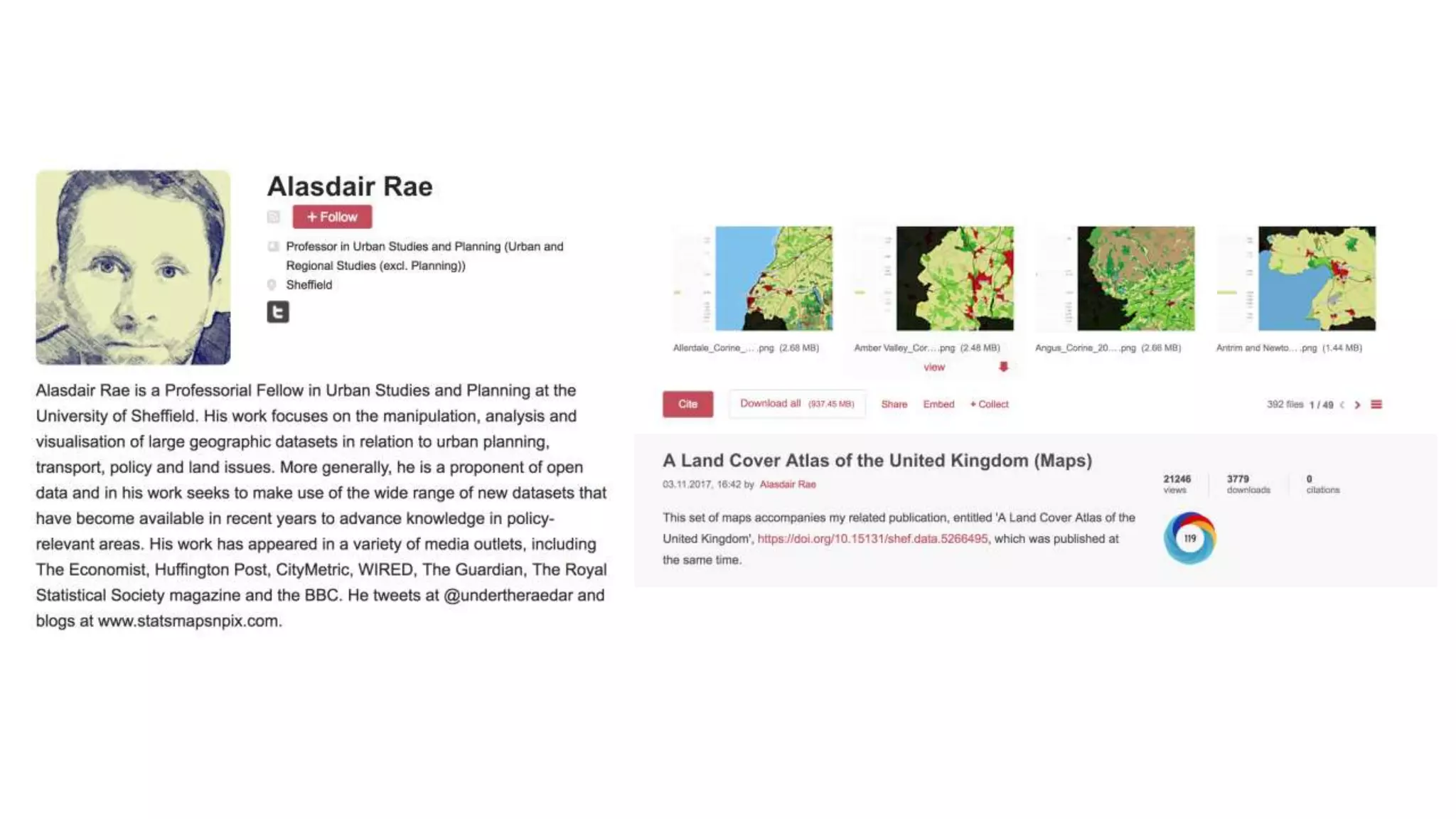
How can I benefit?
What should I remember?
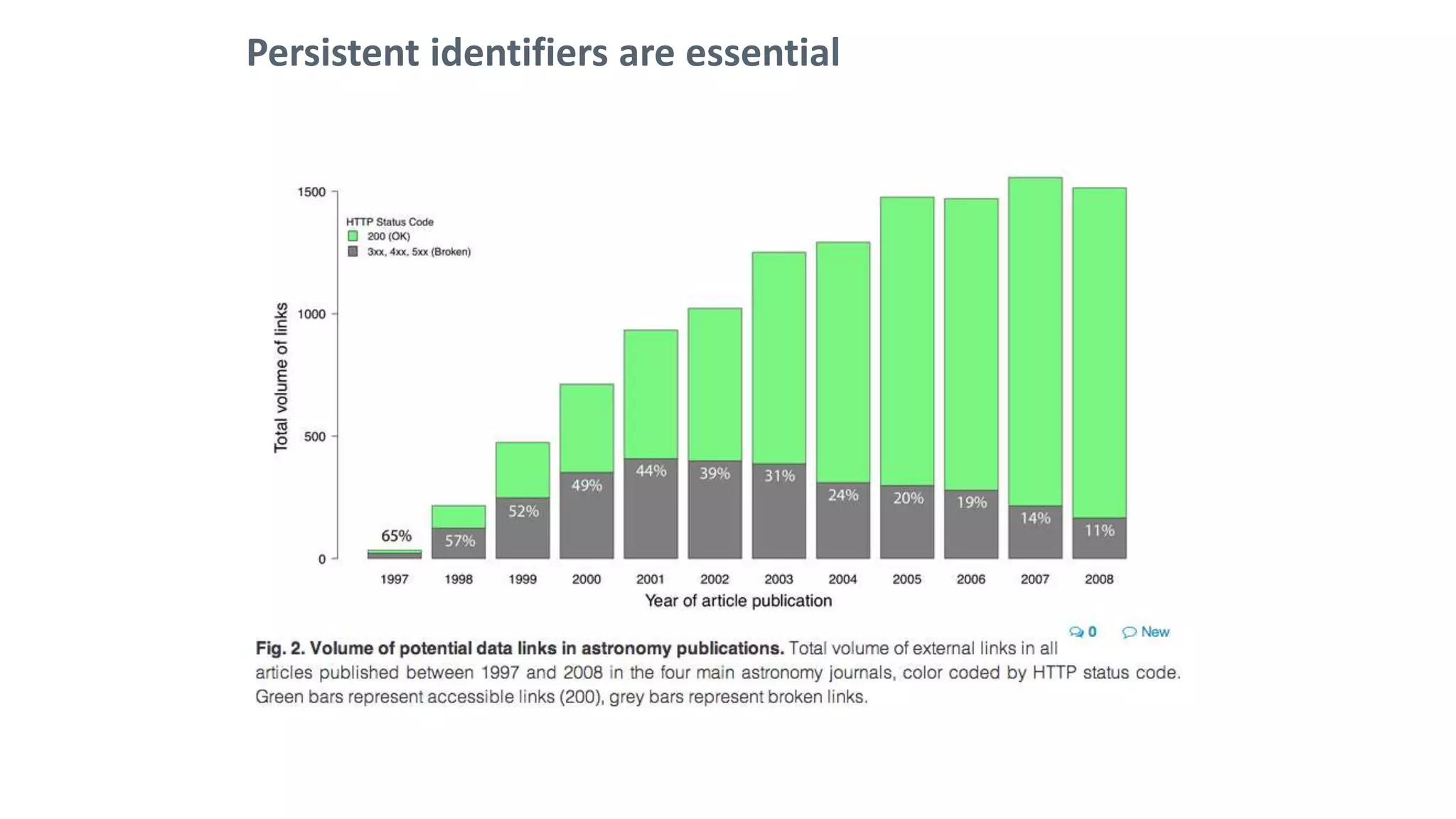
Persistent identifiers are essential
41
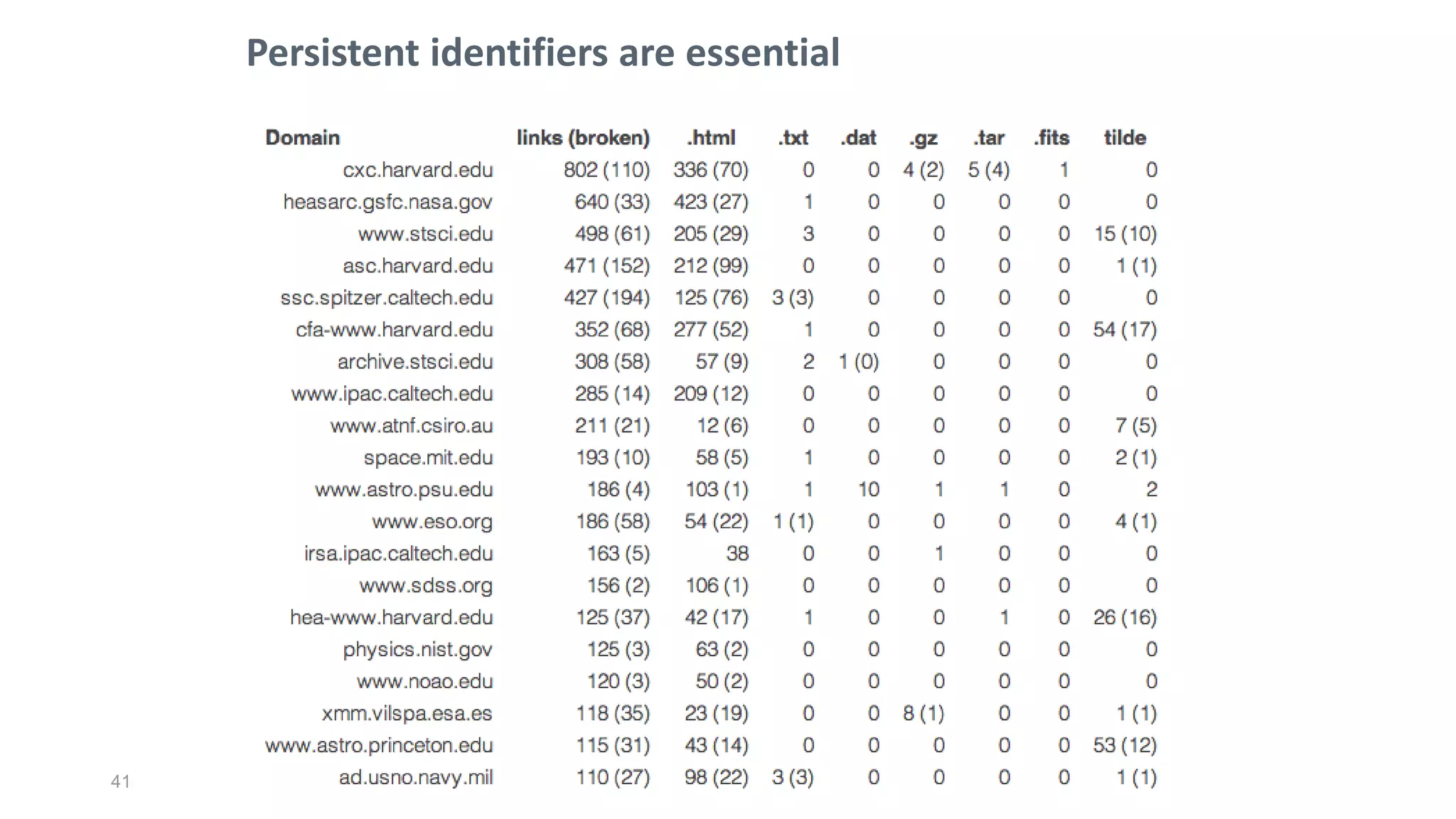
Persistent identifiers are essential
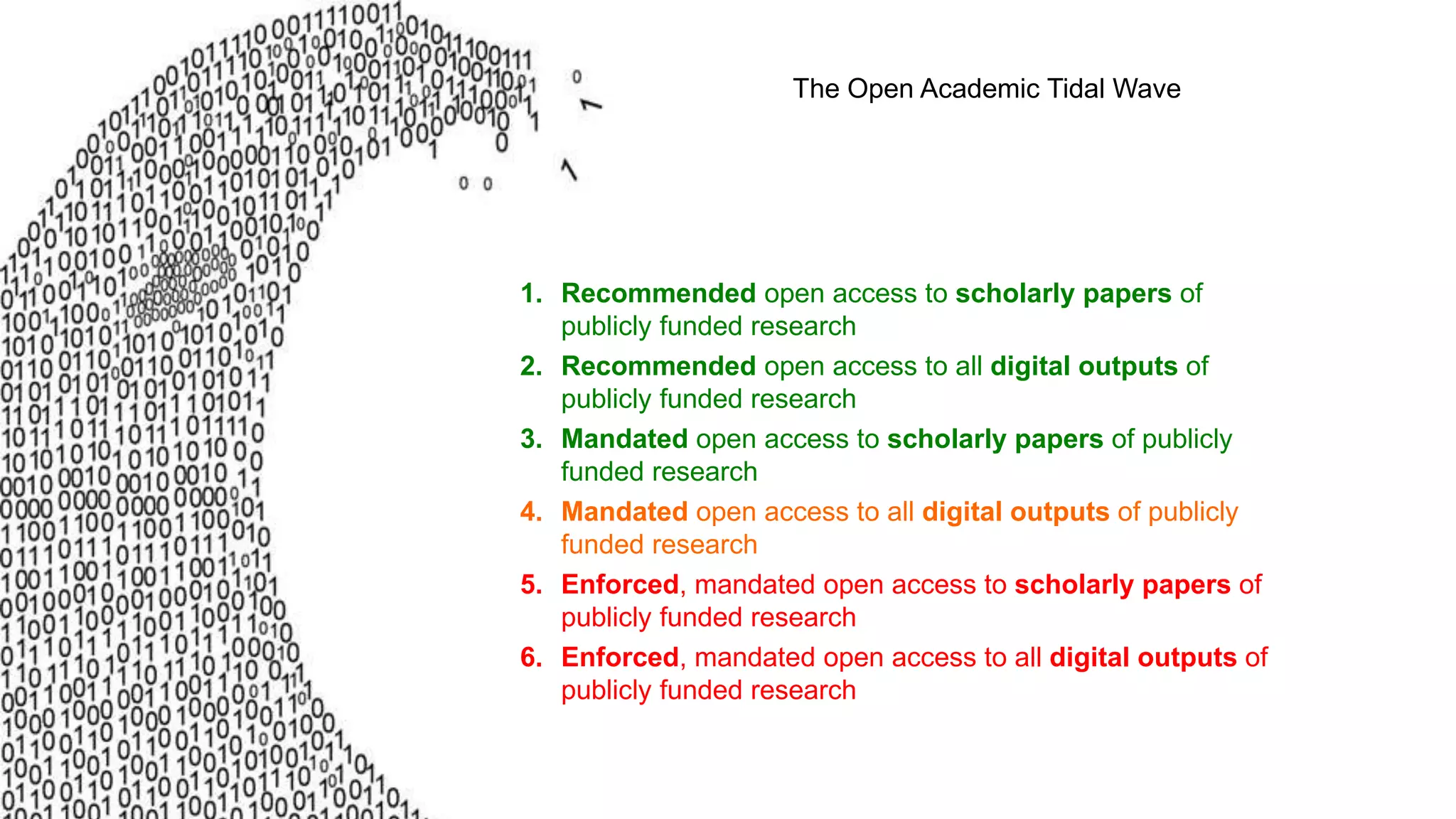
1. Recommended open access to scholarly papers of
publicly funded research
2. Recommended open access to all digital outputs of
publicly funded research
3. Mandated open access to scholarly papers of publicly
funded research
4. Mandated open access to all digital outputs of publicly
funded research
5. Enforced, mandated open access to scholarly papers of
publicly funded research
6. Enforced, mandated open access to all digital outputs of
publicly funded research
The Open Academic Tidal Wave
43
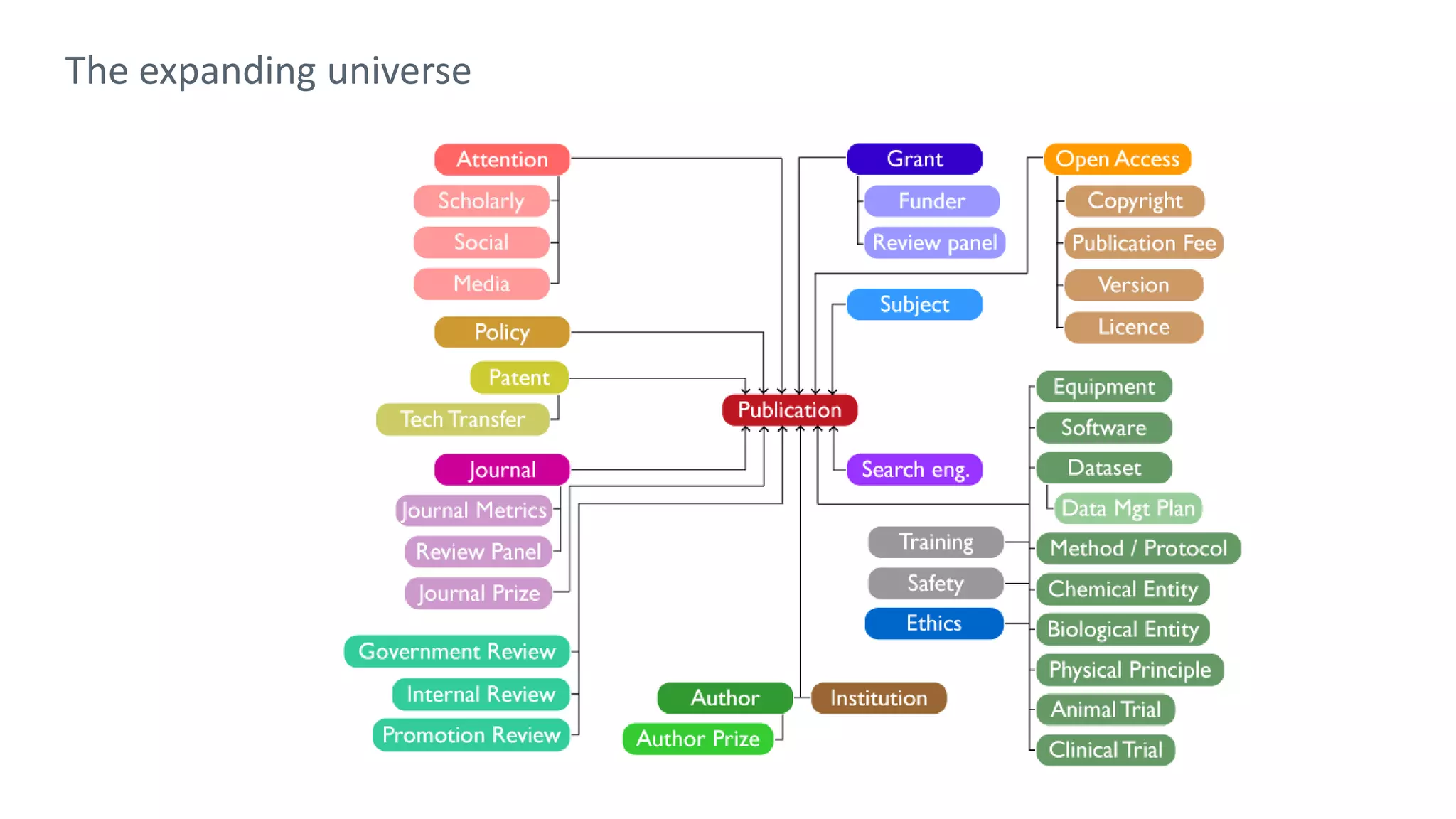
The expanding universe
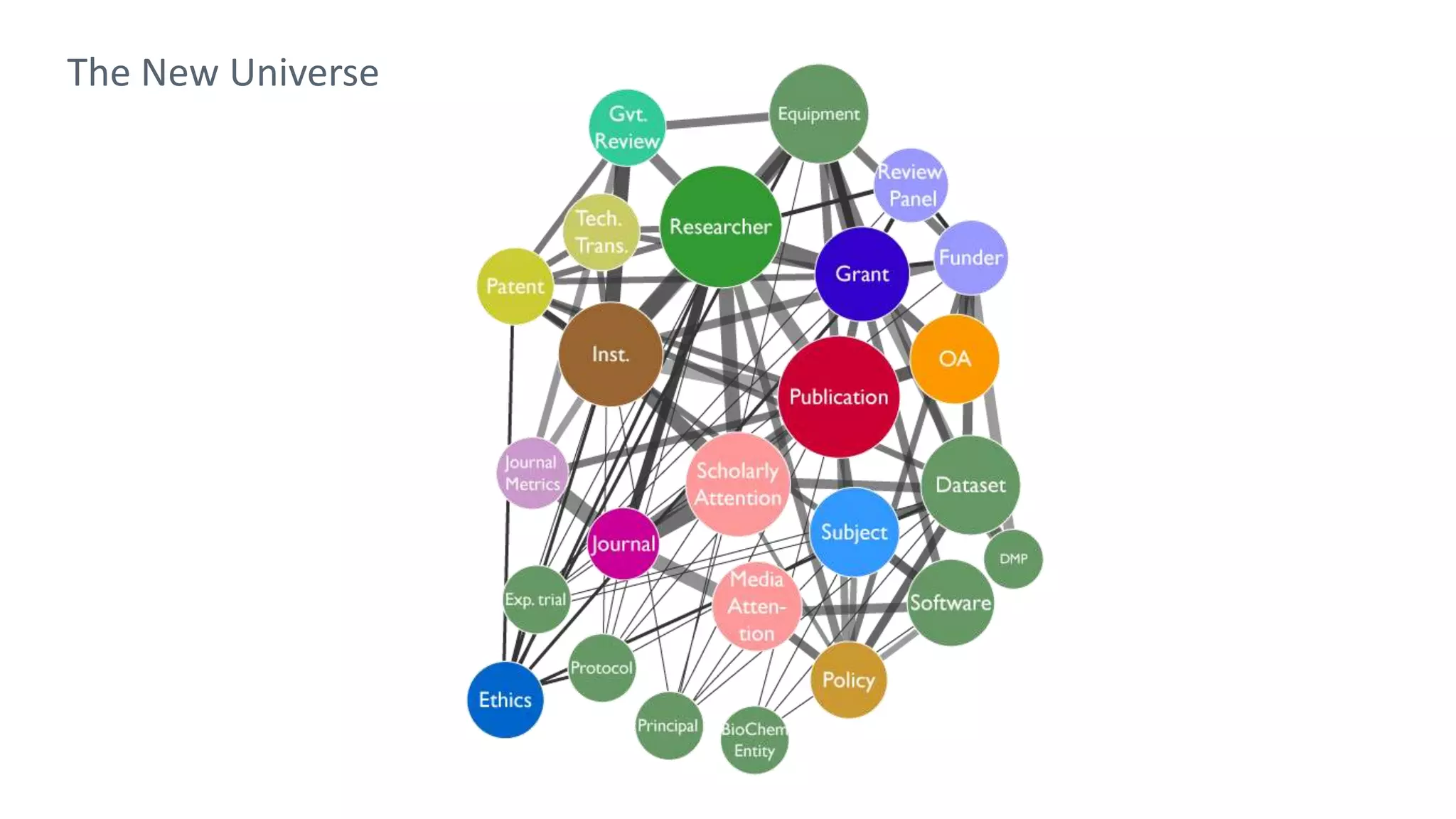
The New Universe
Mark Hahnel
Function: CEO
email: mark@figshare.com
@markhahnel
@figshare
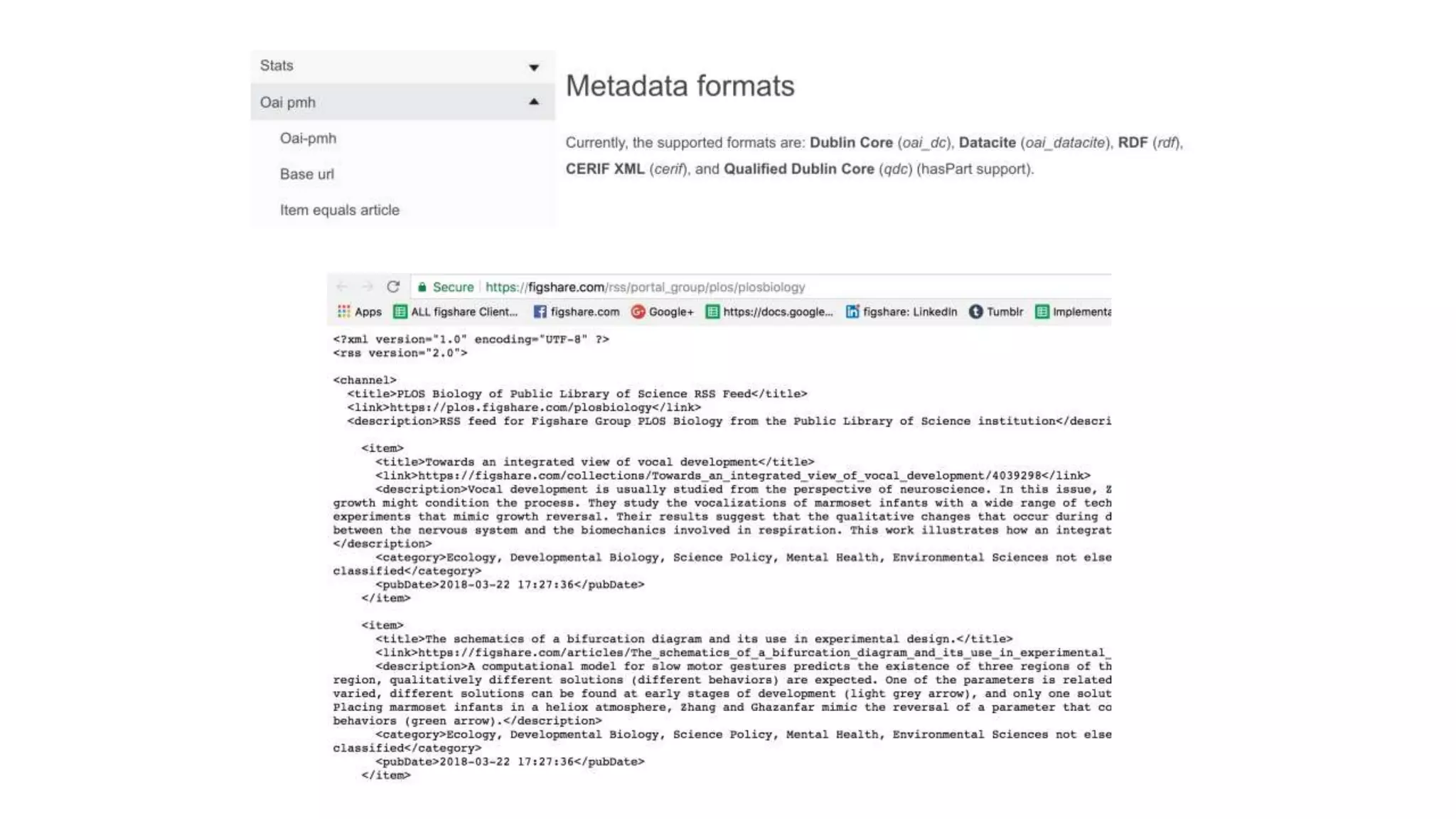
APIs
Q u e s t i o n s
Program director: Katja Reuter, PhD
Email: katja.reuter@usc.edu
Twitter: @dmsci
Next Digital Scholar Webinar
I n f o r m a t i o n a b o u t
t h e p r o g r a m
http://sc-ctsi.org/digital-scholar/

Introducing Figshare, a Free Repository where Researchers Can Make all of Their Research Outputs Available in a Citable, Shareable and Discoverable Manner

Editor's Notes

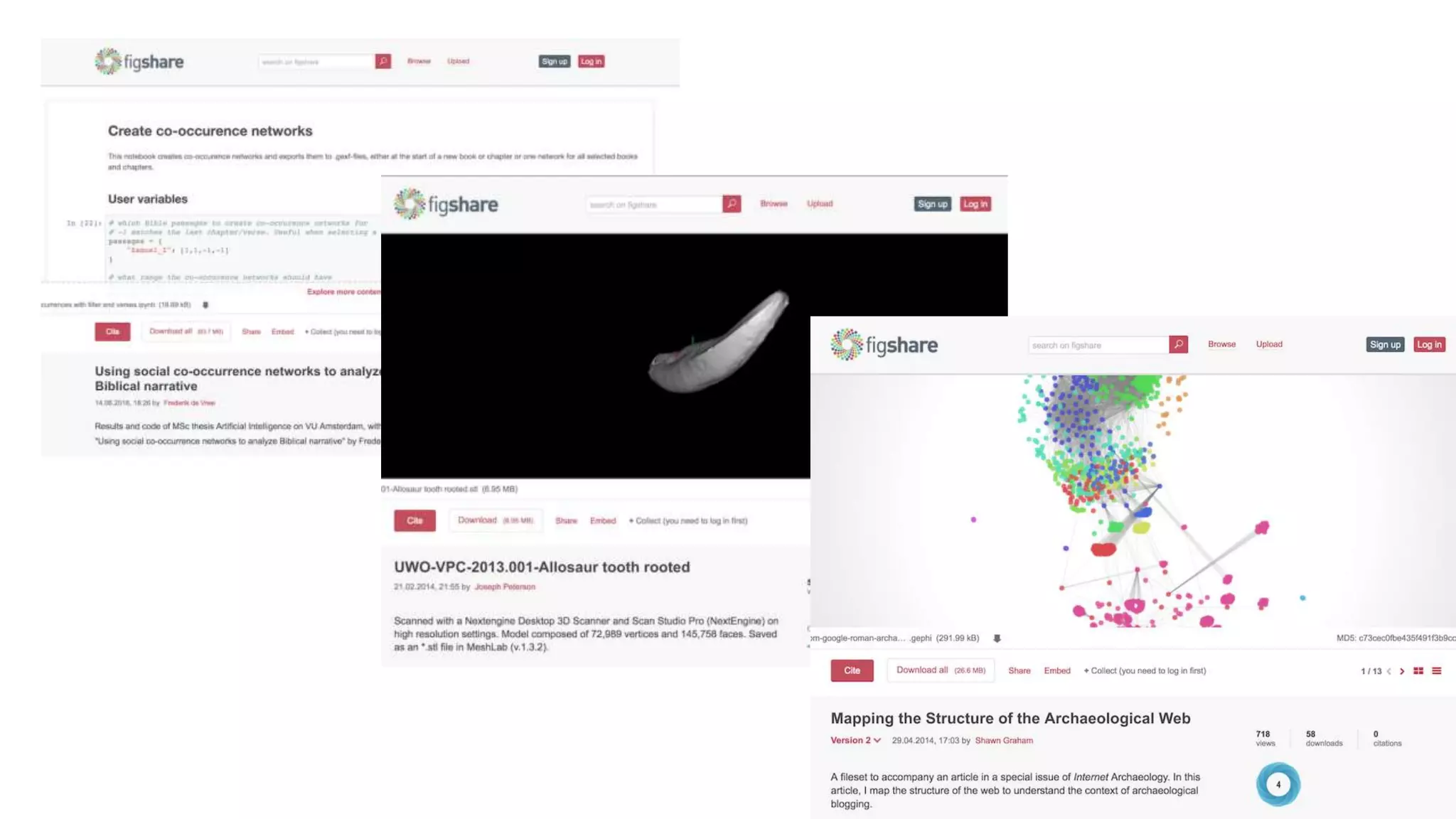
  • #11 What do we do – provide publishing platforms for all of academic files other than peer reviewed papers – started with NTROs
  • #13 What do we do – provide publishing platforms for all of academic files other than peer reviewed papers – started with NTROs
  • #14 What do we do – provide publishing platforms for all of academic files other than peer reviewed papers – started with NTROs
  • #16 Include ARC and ANDS statement
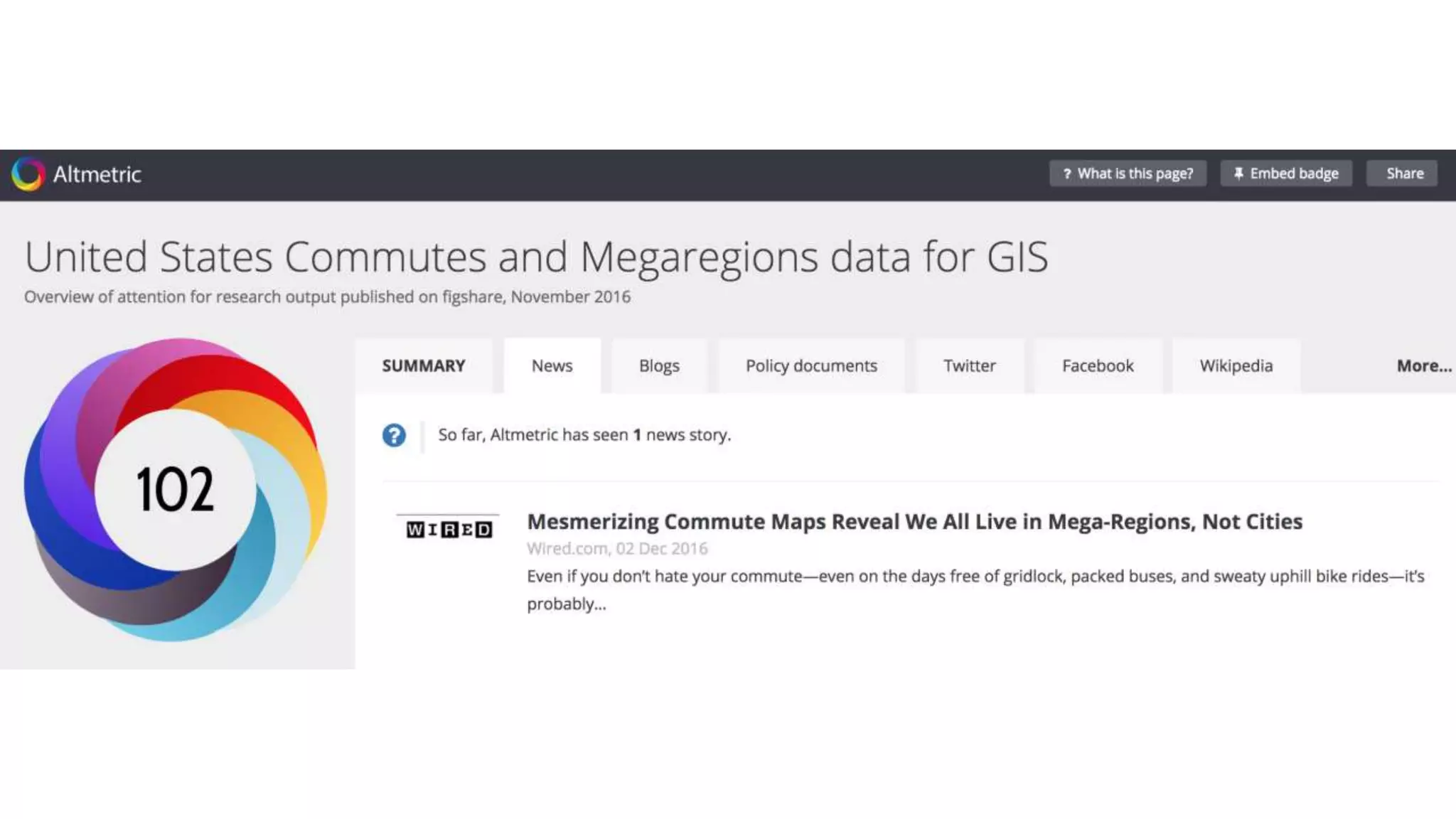
  • #22 Getting the ROI – making open data useful
  • #24 Accountability – responsibility?!
  • #26 Big barrier – I don’t know if I can?!
  • #27 Highlight several key areas
  • #33 Highlight several key areas
  • #35 Highlight several key areas
  • #36 Highlight several key areas
  • #37 Highlight several key areas
  • #38 Highlight several key areas
  • #39 Highlight several key areas
  • #44 Avalanche of information – too many papers
  • #51 78 portals