 Write 2 things about
yourself on a piece
of paper. (habit,
characteristic,
unique experience)
-insights ?
-realizations as you were writing and
describing yourself?
 WHAT ARE THE 1 OR 2 KEY
THINGS YOU HAVE DECIDED TO
WORK ON?
PERSONAL DEVELOPMENT GOALS
 1.speed up my decision-making process
 2. manage my tendency to over react to
criticisms and stress
 3. improve communication with others
 4.listen and be open to others’ feedback
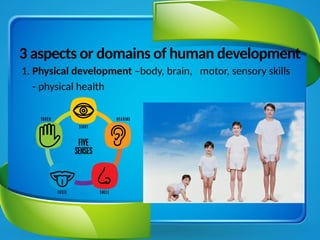
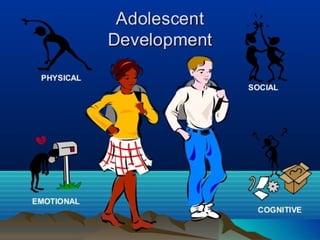
3 aspects or domains of human development
1. Physical development –body, brain, motor, sensory skills
- physical health
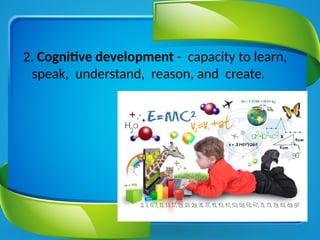
2. Cognitive development - capacity to learn,
speak, understand, reason, and create.
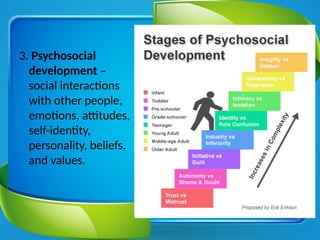
3. Psychosocial
development –
social interactions
with other people,
emotions, attitudes,
self-identity,
personality, beliefs,
and values.
 How does the age and stage of development of
a person influence his or her personal
development?
FACTORS AFFECTING/INFLUENCING HUMAN DEVELOPMENT:
1. Heredity /inborn traits
2. Environment- experiences
3. Maturation -cognitive, psychological, social dimensions
 influence of physical maturation over a person’s
development is most pronounced during his childhood
and adolescence stages.
ALTHOUGH SIMILAR TO MANY OTHER LIVING ORGANISMS
birth, growth, development,
regeneration, and death
x human beings -more complex
capabilities
self-awareness
analytical thinking
 self-evaluation
Motivation
decision-making
reflective thought.
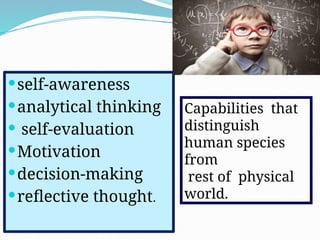
Capabilities that
distinguish
human species
from
rest of physical
world.
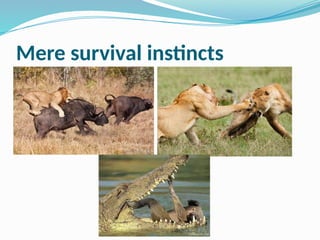
Mere survival instincts
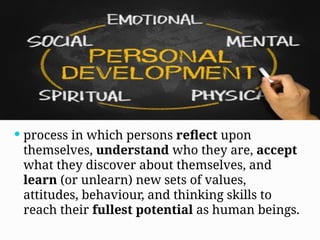
 process in which persons reflect upon
themselves, understand who they are, accept
what they discover about themselves, and
learn (or unlearn) new sets of values,
attitudes, behaviour, and thinking skills to
reach their fullest potential as human beings.
 PSYCHOLOGY - study of human thinking & behaviour
- foundation for personal development
THE 2 PROPONENTS OF HUMANISTIC PSYCHOLOGY:
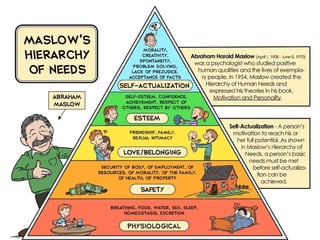
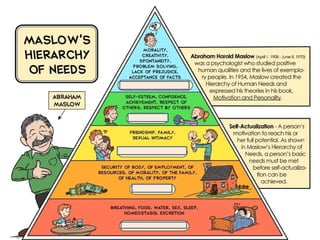
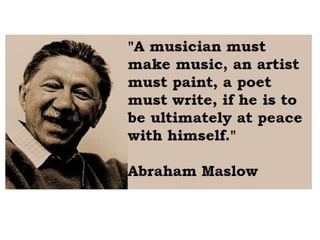
 Abraham Maslow- 5 stages of human development
based on a hierarchy of needs, peaking in what he
termed as “self-actualization,”
 Carl Rogers- “the individual has within himself the
capacity and the tendency, latent if not evident, to
move forward toward maturity
MASLOW’S HIERARCHY
• progress is often disrupted by failure to meet lower
level needs
• Life experiences= fluctuate between levels of the
hierarchy.
• not everyone will move through the hierarchy in a
uni-directional manner.
• In Maslow’s Hierarchy of needs, where do
you find yourself? What do you have to do
to fulfill your needs so that you can move
closer towards self-actualization?
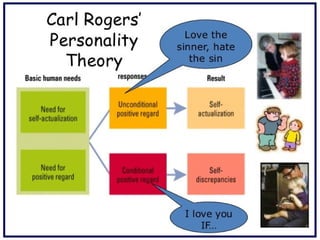
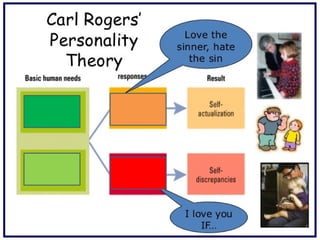
Carl Rogers’ Personality Theory
feelings of self-worth = self-actualization
• high self-worth =confidence and positive feelings about him
or herself, faces challenges, accepts failure and unhappiness
at times; open with people.
• low self-worth =avoid challenges, not accept that life can be
painful and unhappy at times ; defensive
Positive regard= feel valued, respected, treated with affection &
loved
• Unconditional positive regard
• Conditional positive
 constantly seeks approval.
• How is personal development linked to
psychology?
• How can positive Psychology help you
become happier?
•
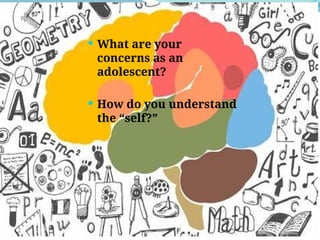
 What are your
concerns as an
adolescent?
 How do you understand
the “self?”
ADOLESCENCE
 transition period between childhood & early adulthood.
3 STAGES OF ADOLESCENCE:
 Early adolescence – 10 and 13 years of age
 Middle adolescence – 14 and 16 years of age
 Late adolescence – 17 and 20 years of age
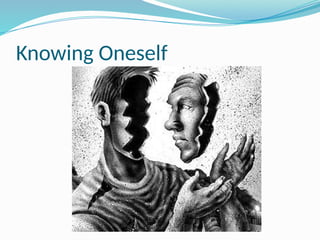
Knowing Oneself
IDENTITY
 I am___________(personality/characteristics)
 I can___________(talents/abilities)
 I enjoy __________(hobbies)
 I believe__________(values/principles)
DEFINING THE “SELF”
 Who am I?
 Adolescence
 ask questions about
themselves, future, religious
and political beliefs.
 grapples with his or her
identity.
 know oneself - first step in
personal development.
“Self”
 identified in various contexts (psychology, sociology, or
religion)
 essence of a person: thoughts, feeling, actions,
experiences, beliefs, values, principles, relationships
 includes a person’s life purpose, meaning, aspirations
PERSONAL DEVELOPMENT
 holistic
 integrate the various definitions of “Self”(philosophical,
spiritual, psychological )
 emphasis = psychological definition
 “Self” - cognitive and affective representation of one’s
identity =behaviour and thought.
IN PSYCHOLOGY, PERSONALITY
 set of behaviors, feelings, thoughts, and motives that
identifies an individual.
 essence of the who we are and is the embodiment of
one’s physical, psychological, cognitive, affective, and
spiritual self.
PERSONALITY
 “Personality - unique and relatively enduring set of
behaviours, feelings, thoughts, and motives that
characterize an individual”.
2 KEY COMPONENTS OF PERSONALITY :
 uniqueness of an individual’s thoughts, feelings,
and behaviour
 enduring, or consistent, over different situations
and over time.
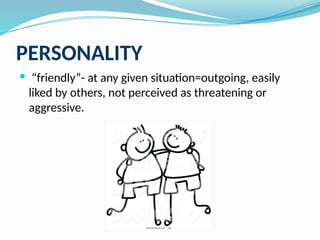
PERSONALITY
 “friendly”- at any given situation=outgoing, easily
liked by others, not perceived as threatening or
aggressive.
1. UNIQUENESS
 own brand of showing friendliness: a sunny
disposition, a readiness to give advice when needed,
and generosity to those in need
 shown by how a person’s physical, behavioural
traits are combined to depict friendliness.
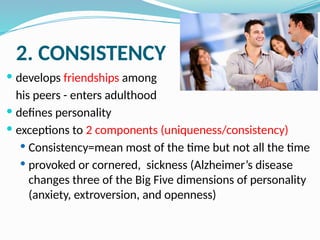
2. CONSISTENCY
 develops friendships among
his peers - enters adulthood
 defines personality
 exceptions to 2 components (uniqueness/consistency)
 Consistency=mean most of the time but not all the time
 provoked or cornered, sickness (Alzheimer’s disease
changes three of the Big Five dimensions of personality
(anxiety, extroversion, and openness)
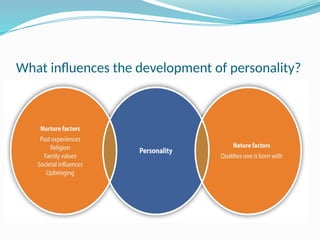
What influences the development of personality?
NATURE, NURTURE, AND PERSONALITY
-no single gene creates a trait = combination of genes,
environmental exposure, experiences, cultural
backgrounds
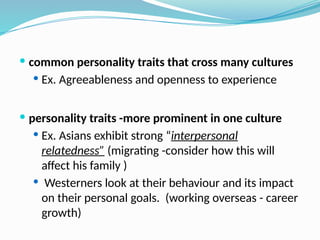
 common personality traits that cross many cultures
 Ex. Agreeableness and openness to experience
 personality traits -more prominent in one culture
 Ex. Asians exhibit strong “interpersonal
relatedness” (migrating -consider how this will
affect his family )
 Westerners look at their behaviour and its impact
on their personal goals. (working overseas - career
growth)
 TRAIT THEORY- approach in identifying types of
personalities based on certain traits or attributes
 PERSONALITY TRAIT – disposition to behave
consistently in a particular way
 PERSONALITY - broader term that comprises of traits,
motives, thoughts, self-concept, and feelings.
 Ex. shyness or social awkwardness.
 DIFFERENT WAYS TO MEASURE PERSONALITY:
1. observing people’s behaviour (limited=loneliness-
subjective)
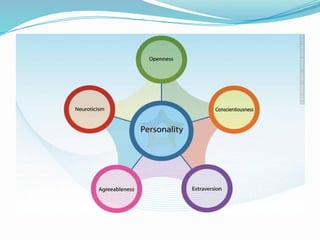
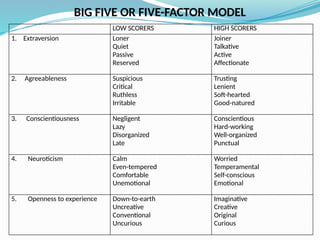
BIG FIVE OR FIVE-FACTOR MODEL
LOW SCORERS HIGH SCORERS
1. Extraversion Loner
Quiet
Passive
Reserved
Joiner
Talkative
Active
Affectionate
2. Agreeableness Suspicious
Critical
Ruthless
Irritable
Trusting
Lenient
Soft-hearted
Good-natured
3. Conscientiousness Negligent
Lazy
Disorganized
Late
Conscientious
Hard-working
Well-organized
Punctual
4. Neuroticism Calm
Even-tempered
Comfortable
Unemotional
Worried
Temperamental
Self-conscious
Emotional
5. Openness to experience Down-to-earth
Uncreative
Conventional
Uncurious
Imaginative
Creative
Original
Curious
THE MYERS-BRIGGS TYPE INDICATOR
 E OR I (EXTROVERSION OF INTROVERSION)- how an individual prefers to channel
his or her energy when dealing with people.
 inward (introversion)
 outward (extroversion)
 S OR N (SENSING OR INTUITION)- how one prefers to process information
 senses - describe what one sees
 intuitively - dealing with ideas.
 T OR F (THINKING OR FEELING)-how an individual prefers to make decisions
 thinking - logic and analysis
 feeling - cognitive senses based on values or beliefs.
 J OR P (JUDGEMENT OR PERCEPTION)- how an individual prefers to manage one’s
life
 judging - planned and organized life
 perceptions - a more flexible approach to living.
Who am I?
 group with 4 members
 Describe yourself using either the Myer’s Briggs Type
Indicator or Big Five Model.
 (remind students not to share very personal or sensitive
issues/topics)
Example: Myer’s Briggs Type Indicator
 1. I choose introversion because___
 2. I choose intuition because___
 3. I choose thinking because___
 4. I choose perception because___
 20 minutes to do the activity
Questions:
 According to the Big Five Model, what are the Big Five
dimensions or tendencies of personality?
 According to the Myer’s Briggs Type Indicator, what are the
four preferences of individuals?
 Which ones are you most inclined to have?(1 member per
group will share)
 How did these personality tests make you understand why you
react differently from others to similar situations?
 How can these tests help you determine your strengths and
weaknesses?
 Why are personality tests important?
 Give some real-life situations that you went
through to affirm the choices in the activity.
 Explain the quotation by Oscar Wilde:
 “TO LOVE ONESELF IS THE BEGINNING OF A LIFELONG
ROMANCE”
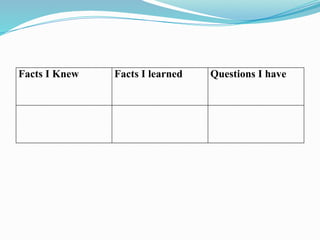
Facts I Knew Facts I learned Questions I have
 How does knowing oneself can make you better
accept your strength and limitations, improve
the way you deal with others and maximize your
potentials?
Intro-to-Perdev-Knowing-Oneself-1-pptx.pptx

Intro-to-Perdev-Knowing-Oneself-1-pptx.pptx

  • 2.
     Write 2things about yourself on a piece of paper. (habit, characteristic, unique experience)
  • 3.
    -insights ? -realizations asyou were writing and describing yourself?
  • 5.
     WHAT ARETHE 1 OR 2 KEY THINGS YOU HAVE DECIDED TO WORK ON?
  • 6.
    PERSONAL DEVELOPMENT GOALS 1.speed up my decision-making process  2. manage my tendency to over react to criticisms and stress  3. improve communication with others  4.listen and be open to others’ feedback
  • 7.
    3 aspects ordomains of human development 1. Physical development –body, brain, motor, sensory skills - physical health
  • 8.
    2. Cognitive development- capacity to learn, speak, understand, reason, and create.
  • 9.
    3. Psychosocial development – socialinteractions with other people, emotions, attitudes, self-identity, personality, beliefs, and values.
  • 10.
     How doesthe age and stage of development of a person influence his or her personal development?
  • 11.
    FACTORS AFFECTING/INFLUENCING HUMANDEVELOPMENT: 1. Heredity /inborn traits 2. Environment- experiences 3. Maturation -cognitive, psychological, social dimensions  influence of physical maturation over a person’s development is most pronounced during his childhood and adolescence stages.
  • 12.
    ALTHOUGH SIMILAR TOMANY OTHER LIVING ORGANISMS birth, growth, development, regeneration, and death x human beings -more complex capabilities
  • 13.
    self-awareness analytical thinking  self-evaluation Motivation decision-making reflectivethought. Capabilities that distinguish human species from rest of physical world.
  • 14.
  • 16.
     process inwhich persons reflect upon themselves, understand who they are, accept what they discover about themselves, and learn (or unlearn) new sets of values, attitudes, behaviour, and thinking skills to reach their fullest potential as human beings.
  • 17.
     PSYCHOLOGY -study of human thinking & behaviour - foundation for personal development THE 2 PROPONENTS OF HUMANISTIC PSYCHOLOGY:  Abraham Maslow- 5 stages of human development based on a hierarchy of needs, peaking in what he termed as “self-actualization,”  Carl Rogers- “the individual has within himself the capacity and the tendency, latent if not evident, to move forward toward maturity
  • 20.
    MASLOW’S HIERARCHY • progressis often disrupted by failure to meet lower level needs • Life experiences= fluctuate between levels of the hierarchy. • not everyone will move through the hierarchy in a uni-directional manner.
  • 21.
    • In Maslow’sHierarchy of needs, where do you find yourself? What do you have to do to fulfill your needs so that you can move closer towards self-actualization?
  • 25.
    Carl Rogers’ PersonalityTheory feelings of self-worth = self-actualization • high self-worth =confidence and positive feelings about him or herself, faces challenges, accepts failure and unhappiness at times; open with people. • low self-worth =avoid challenges, not accept that life can be painful and unhappy at times ; defensive Positive regard= feel valued, respected, treated with affection & loved • Unconditional positive regard • Conditional positive  constantly seeks approval.
  • 26.
    • How ispersonal development linked to psychology? • How can positive Psychology help you become happier?
  • 27.
  • 37.
     What areyour concerns as an adolescent?  How do you understand the “self?”
  • 38.
    ADOLESCENCE  transition periodbetween childhood & early adulthood. 3 STAGES OF ADOLESCENCE:  Early adolescence – 10 and 13 years of age  Middle adolescence – 14 and 16 years of age  Late adolescence – 17 and 20 years of age
  • 39.
  • 40.
    IDENTITY  I am___________(personality/characteristics) I can___________(talents/abilities)  I enjoy __________(hobbies)  I believe__________(values/principles)
  • 41.
    DEFINING THE “SELF” Who am I?  Adolescence  ask questions about themselves, future, religious and political beliefs.  grapples with his or her identity.  know oneself - first step in personal development.
  • 42.
    “Self”  identified invarious contexts (psychology, sociology, or religion)  essence of a person: thoughts, feeling, actions, experiences, beliefs, values, principles, relationships  includes a person’s life purpose, meaning, aspirations
  • 43.
    PERSONAL DEVELOPMENT  holistic integrate the various definitions of “Self”(philosophical, spiritual, psychological )  emphasis = psychological definition  “Self” - cognitive and affective representation of one’s identity =behaviour and thought.
  • 44.
    IN PSYCHOLOGY, PERSONALITY set of behaviors, feelings, thoughts, and motives that identifies an individual.  essence of the who we are and is the embodiment of one’s physical, psychological, cognitive, affective, and spiritual self.
  • 45.
    PERSONALITY  “Personality -unique and relatively enduring set of behaviours, feelings, thoughts, and motives that characterize an individual”. 2 KEY COMPONENTS OF PERSONALITY :  uniqueness of an individual’s thoughts, feelings, and behaviour  enduring, or consistent, over different situations and over time.
  • 46.
    PERSONALITY  “friendly”- atany given situation=outgoing, easily liked by others, not perceived as threatening or aggressive.
  • 47.
    1. UNIQUENESS  ownbrand of showing friendliness: a sunny disposition, a readiness to give advice when needed, and generosity to those in need  shown by how a person’s physical, behavioural traits are combined to depict friendliness.
  • 48.
    2. CONSISTENCY  developsfriendships among his peers - enters adulthood  defines personality  exceptions to 2 components (uniqueness/consistency)  Consistency=mean most of the time but not all the time  provoked or cornered, sickness (Alzheimer’s disease changes three of the Big Five dimensions of personality (anxiety, extroversion, and openness)
  • 49.
    What influences thedevelopment of personality?
  • 50.
    NATURE, NURTURE, ANDPERSONALITY -no single gene creates a trait = combination of genes, environmental exposure, experiences, cultural backgrounds
  • 51.
     common personalitytraits that cross many cultures  Ex. Agreeableness and openness to experience  personality traits -more prominent in one culture  Ex. Asians exhibit strong “interpersonal relatedness” (migrating -consider how this will affect his family )  Westerners look at their behaviour and its impact on their personal goals. (working overseas - career growth)
  • 52.
     TRAIT THEORY-approach in identifying types of personalities based on certain traits or attributes  PERSONALITY TRAIT – disposition to behave consistently in a particular way  PERSONALITY - broader term that comprises of traits, motives, thoughts, self-concept, and feelings.  Ex. shyness or social awkwardness.  DIFFERENT WAYS TO MEASURE PERSONALITY: 1. observing people’s behaviour (limited=loneliness- subjective)
  • 54.
    BIG FIVE ORFIVE-FACTOR MODEL LOW SCORERS HIGH SCORERS 1. Extraversion Loner Quiet Passive Reserved Joiner Talkative Active Affectionate 2. Agreeableness Suspicious Critical Ruthless Irritable Trusting Lenient Soft-hearted Good-natured 3. Conscientiousness Negligent Lazy Disorganized Late Conscientious Hard-working Well-organized Punctual 4. Neuroticism Calm Even-tempered Comfortable Unemotional Worried Temperamental Self-conscious Emotional 5. Openness to experience Down-to-earth Uncreative Conventional Uncurious Imaginative Creative Original Curious
  • 55.
    THE MYERS-BRIGGS TYPEINDICATOR  E OR I (EXTROVERSION OF INTROVERSION)- how an individual prefers to channel his or her energy when dealing with people.  inward (introversion)  outward (extroversion)  S OR N (SENSING OR INTUITION)- how one prefers to process information  senses - describe what one sees  intuitively - dealing with ideas.  T OR F (THINKING OR FEELING)-how an individual prefers to make decisions  thinking - logic and analysis  feeling - cognitive senses based on values or beliefs.  J OR P (JUDGEMENT OR PERCEPTION)- how an individual prefers to manage one’s life  judging - planned and organized life  perceptions - a more flexible approach to living.
  • 56.
    Who am I? group with 4 members  Describe yourself using either the Myer’s Briggs Type Indicator or Big Five Model.  (remind students not to share very personal or sensitive issues/topics) Example: Myer’s Briggs Type Indicator  1. I choose introversion because___  2. I choose intuition because___  3. I choose thinking because___  4. I choose perception because___  20 minutes to do the activity
  • 57.
    Questions:  According tothe Big Five Model, what are the Big Five dimensions or tendencies of personality?  According to the Myer’s Briggs Type Indicator, what are the four preferences of individuals?  Which ones are you most inclined to have?(1 member per group will share)  How did these personality tests make you understand why you react differently from others to similar situations?  How can these tests help you determine your strengths and weaknesses?  Why are personality tests important?
  • 58.
     Give somereal-life situations that you went through to affirm the choices in the activity.
  • 59.
     Explain thequotation by Oscar Wilde:  “TO LOVE ONESELF IS THE BEGINNING OF A LIFELONG ROMANCE”
  • 60.
    Facts I KnewFacts I learned Questions I have
  • 61.
     How doesknowing oneself can make you better accept your strength and limitations, improve the way you deal with others and maximize your potentials?

Editor's Notes

  • #2 Activity 1: “Guess Who?” Let the students write 2 things about themselves on a piece of paper. (habit, characteristic, unique experience) After writing, they will be allowed to go around the classroom to show their paper. Teacher will collect all their papers. The students will be asked to group themselves: 5 members per group. Each group will be given a marker and pieces of paper where they can write their answers. The teacher will be reading the content of 1 paper to the students. Each group will now try to determine who the teacher is describing. They write their answer on the piece of paper within 5 seconds. All groups must raise their paper so that the teacher can check which groups got the right answer. The group with the most number of correct answers win.
  • #3 Linking statement: Describing oneself helps develop self-awareness. Knowing and understanding your personality, your likes and dislikes, strengths and weaknesses, your tolerances and limitations will help you develop your self-concept. Today we will be discussing about knowing oneself.
  • #13 Although similar to many other living organisms that go through the process of birth, growth, development, regeneration, and death human beings are different as we possess more complex capabilities such as self-awareness, analytical thinking, self-evaluation, motivation, decision-making, and reflective thought. These capabilities, beyond mere survival instincts, are what distinguish the human species from the rest of the physical world.
  • #18 -people are motivated to achieve certain needs, and that some needs take precedence over others. -most basic need is physical survival -first thing that motivates our behaviour. Once that level is fulfilled, the next level up is what motivates us, and so on.
  • #19 -people are motivated to achieve certain needs, and that some needs take precedence over others. -most basic need is physical survival -first thing that motivates our behaviour. Once that level is fulfilled, the next level up is what motivates us, and so on.
  • #25 Unconditional positive regard =parents /others accepts and loves the person for what he or she is.  Positive regard is not withdrawn if the person does something wrong or makes a mistake.  Conditional positive =child is not loved for the person he or she is, but on condition that he or she behaves only in ways approved by the parent(s). A person who constantly seeks approval from other people is likely only to have experienced conditional positive regard as a child.
  • #39 While personal development falls within the realm of psychology, it cannot be detached from the development of the brain and the rest of the physical body.