Intransitive and Transitive
           Verbs
Intransitive and Transitive
            Verbs
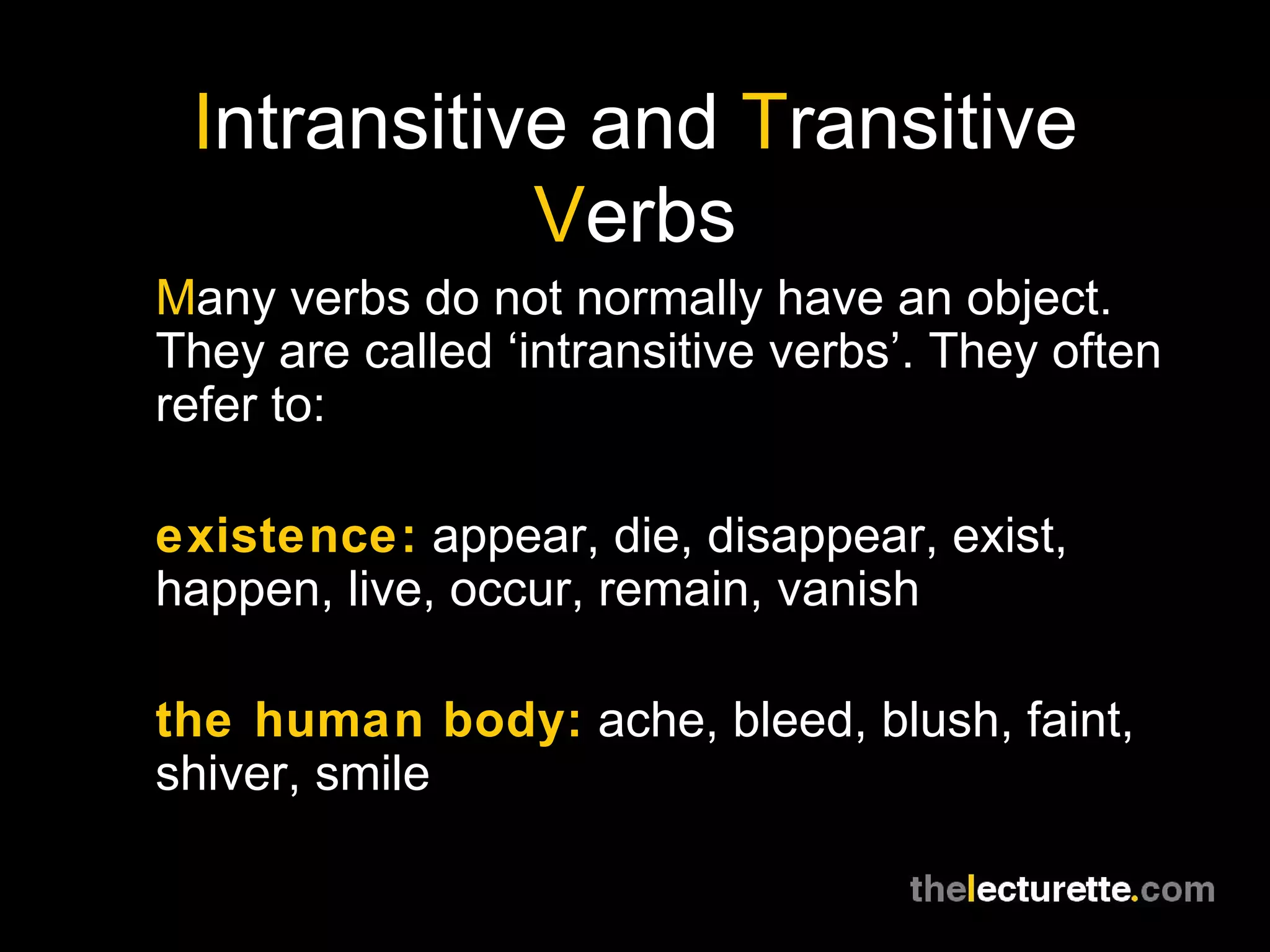
Many verbs do not normally have an object.
They are called ‘intransitive verbs’. They often
refer to:

existence: appear, die, disappear, exist,
happen, live, occur, remain, vanish

the human body: ache, bleed, blush, faint,
shiver, smile
Intransitive and Transitive
            Verbs
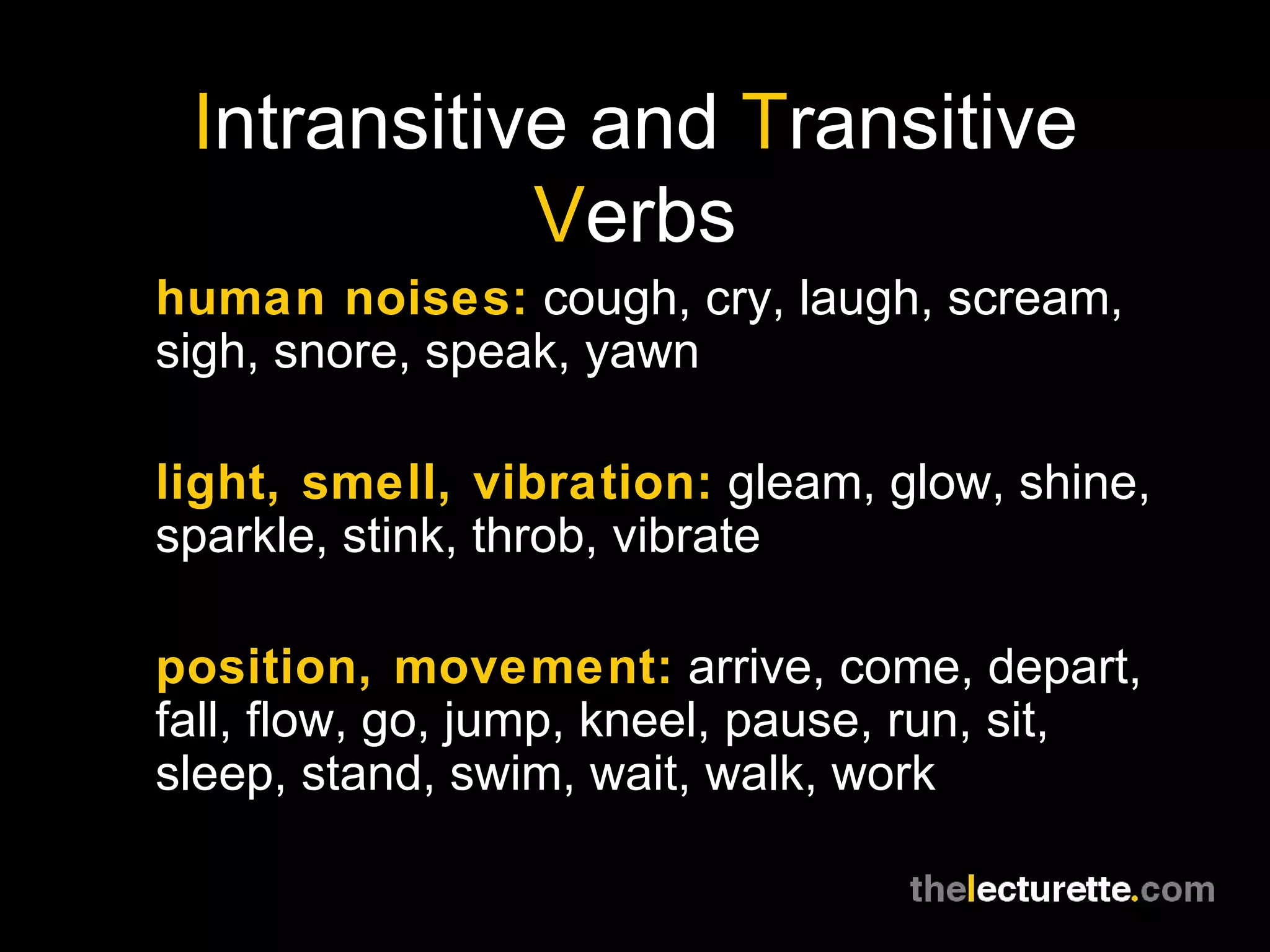
human noises: cough, cry, laugh, scream,
sigh, snore, speak, yawn

light, smell, vibration: gleam, glow, shine,
sparkle, stink, throb, vibrate

position, movement: arrive, come, depart,
fall, flow, go, jump, kneel, pause, run, sit,
sleep, stand, swim, wait, walk, work
Intransitive and Transitive
            Verbs
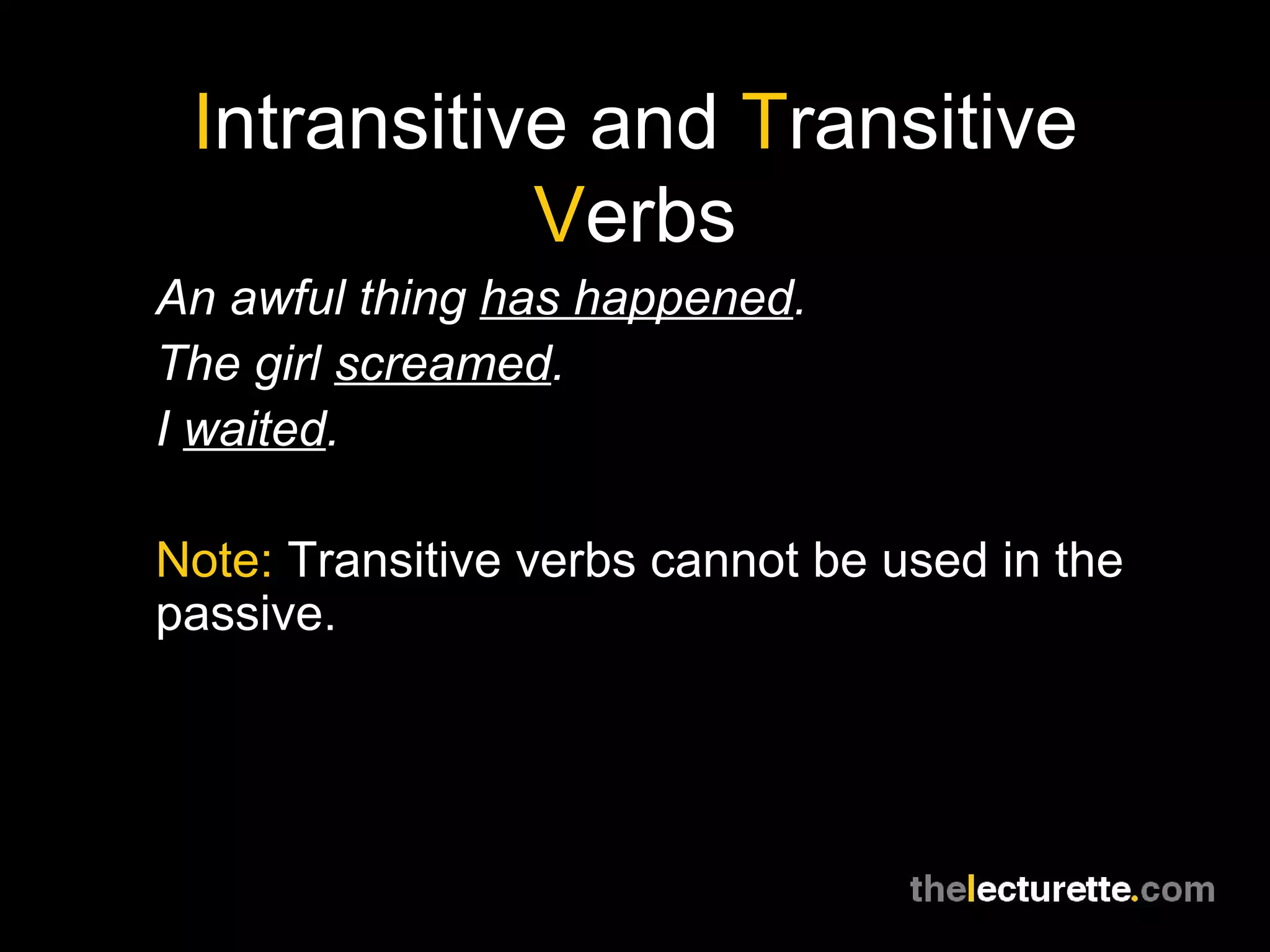
An awful thing has happened.
The girl screamed.
I waited.

Note: Transitive verbs cannot be used in the
passive.
Intransitive and Transitive
            Verbs
Many verbs normally have an object. These
verbs are called ‘transitive’ verbs. They are
often connected with:

physical objects: build, buy, carry, catch,
cover, cut, damage, destroy, fill, hit, own,
remove, rent, sell, use, waste, wear

senses: feel, hear, see, smell, taste, touch
Intransitive and Transitive
            Verbs
feelings: admire, dislike, enjoy, fear,
frighten, hate, interest, like, love, need,
prefer, surprise, trust, want

facts, ideas: accept, believe, consider,
correct, discuss, expect, express, forget,
include, know, mean, remember, report

people: address, blame, comfort, contact,
convince, defy, kill, persuade, please, tease,
thank, warn
Intransitive and Transitive
            Verbs
He hit the ball really hard.
Did you see the rainbow?
They both enjoyed the film.
She reported the accident to the police.
Don’ t blame me.
Intransitive and Transitive
            Verbs
Note: Transitive verbs can be used in the
passive.

They were blamed for everything.
Intransitive and Transitive
            Verbs
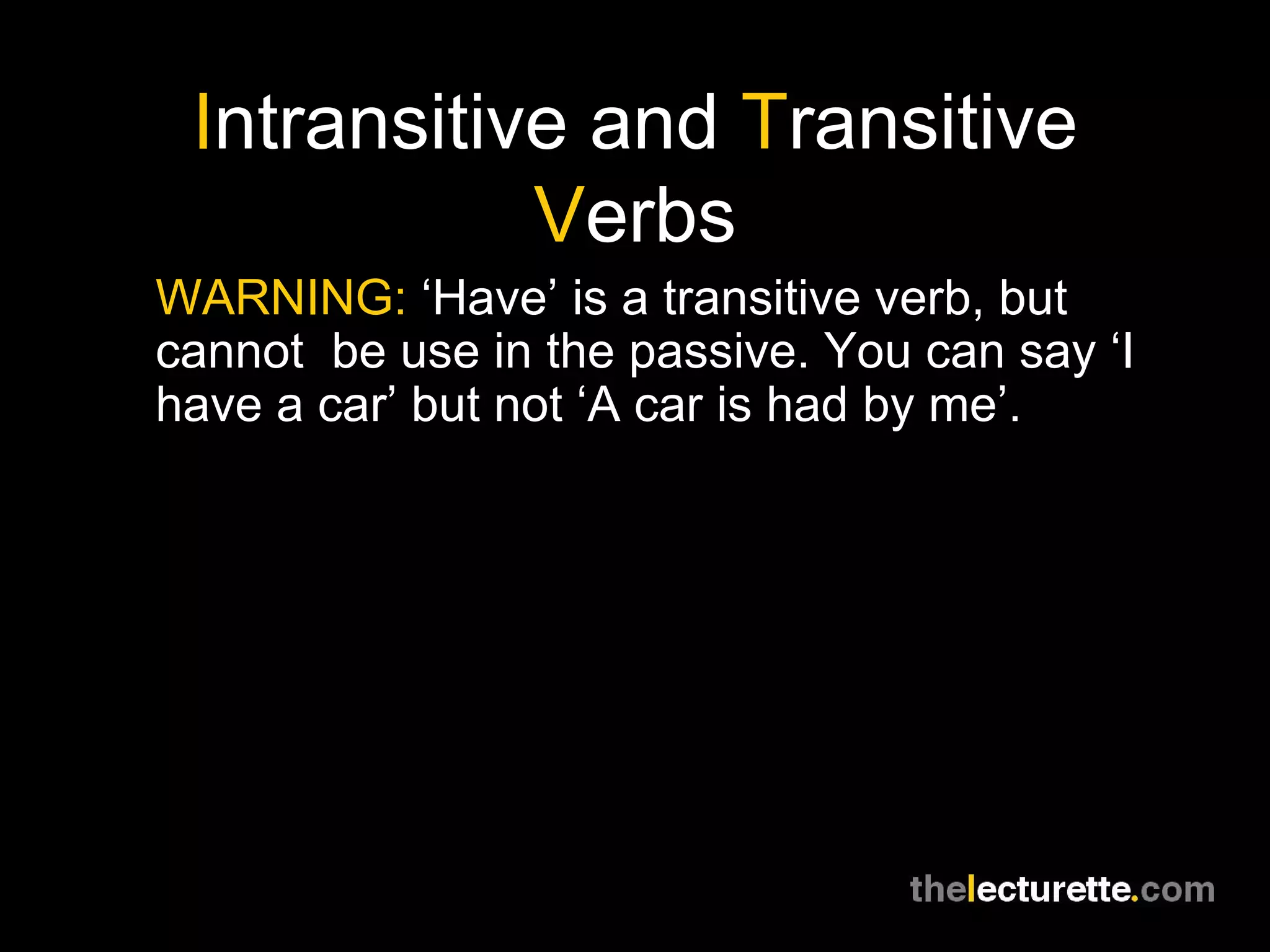
WARNING: ‘Have’ is a transitive verb, but
cannot be use in the passive. You can say ‘I
have a car’ but not ‘A car is had by me’.
Intransitive and Transitive
            Verbs
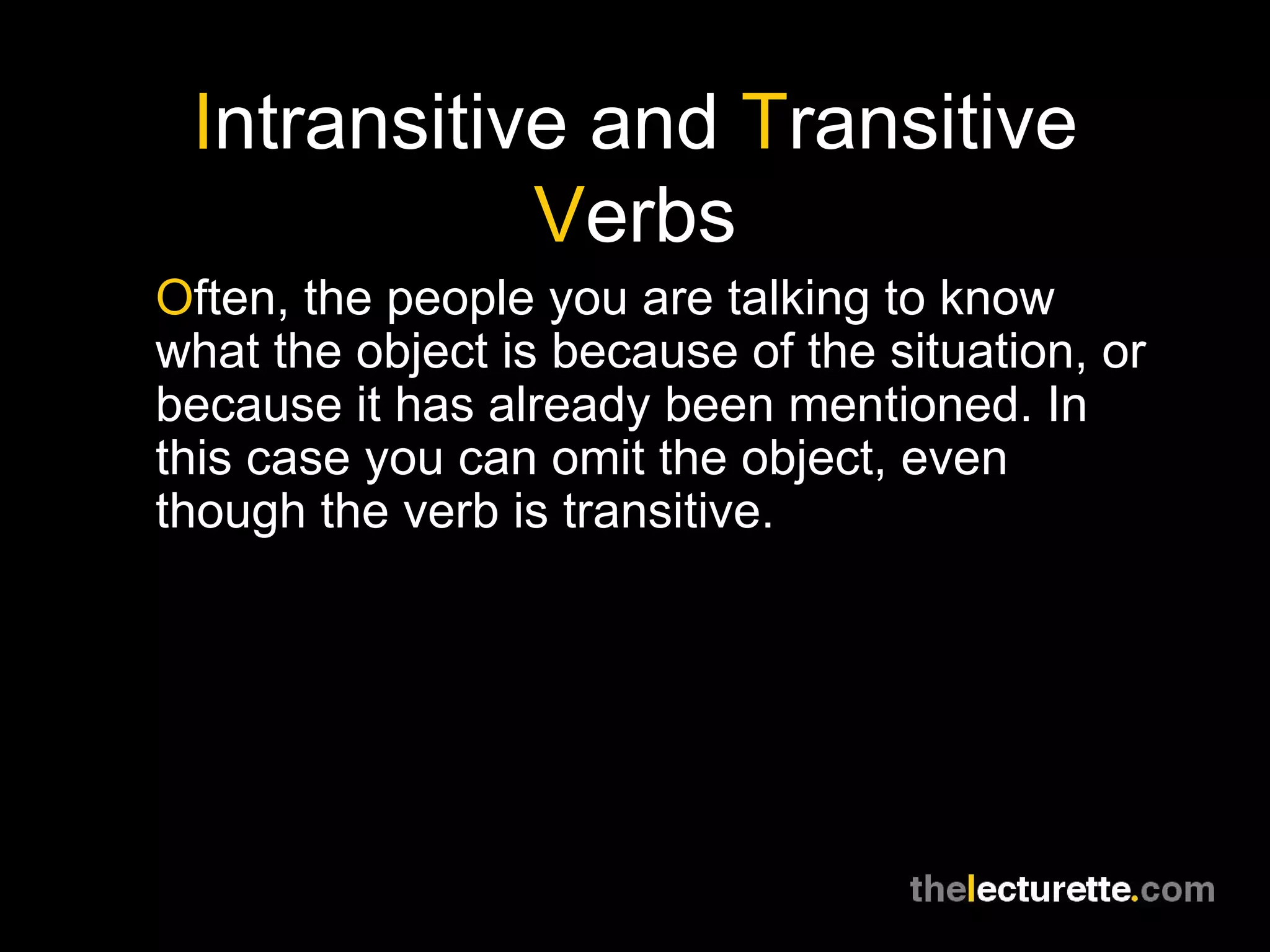
Often, the people you are talking to know
what the object is because of the situation, or
because it has already been mentioned. In
this case you can omit the object, even
though the verb is transitive.
Intransitive and Transitive
            Verbs
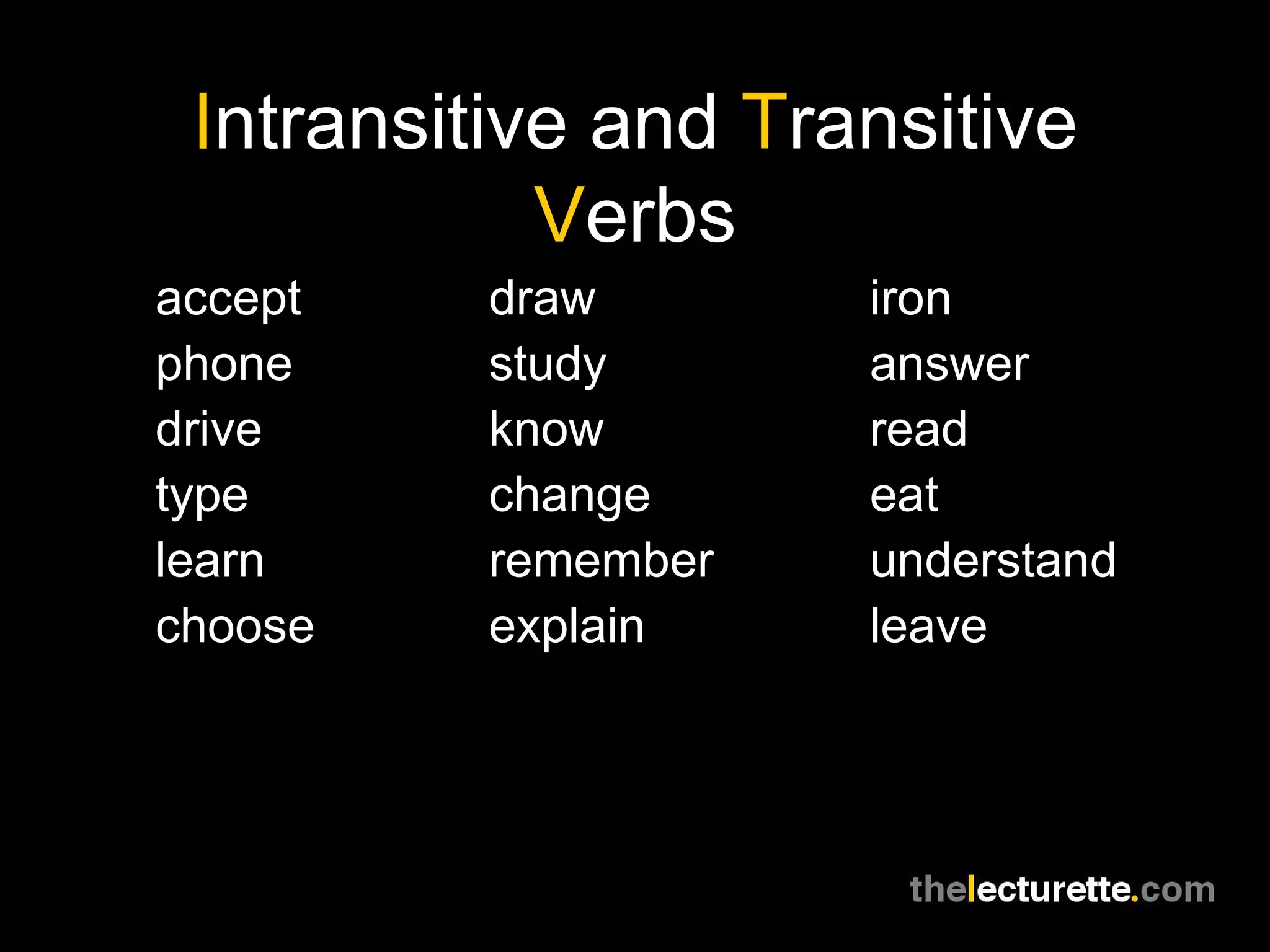
accept    draw       iron
phone     study      answer
drive     know       read
type      change     eat
learn     remember   understand
choose    explain    leave
Intransitive and Transitive
            Verbs
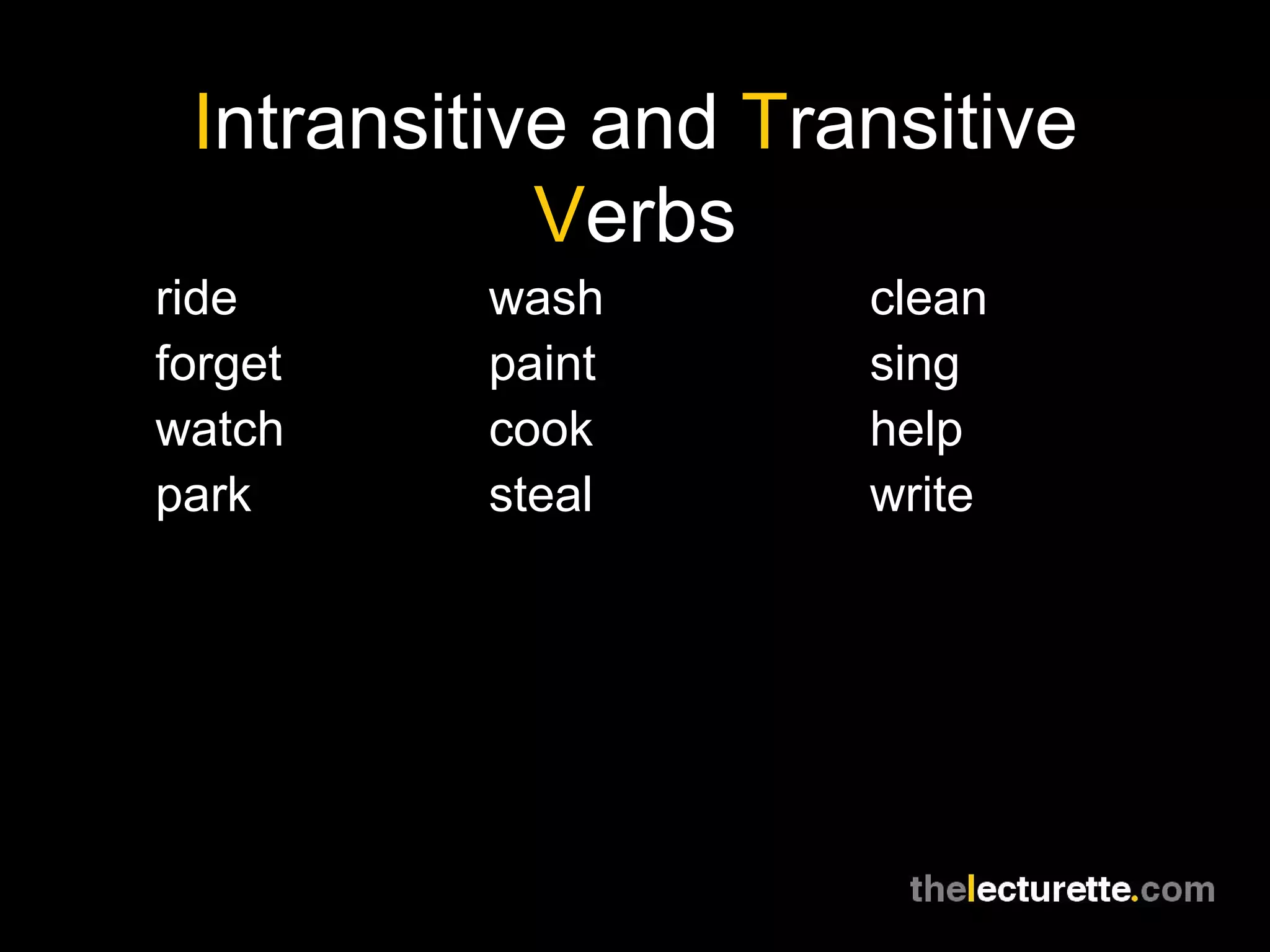
ride      wash       clean
forget    paint      sing
watch     cook       help
park      steal      write
Intransitive and Transitive
            Verbs
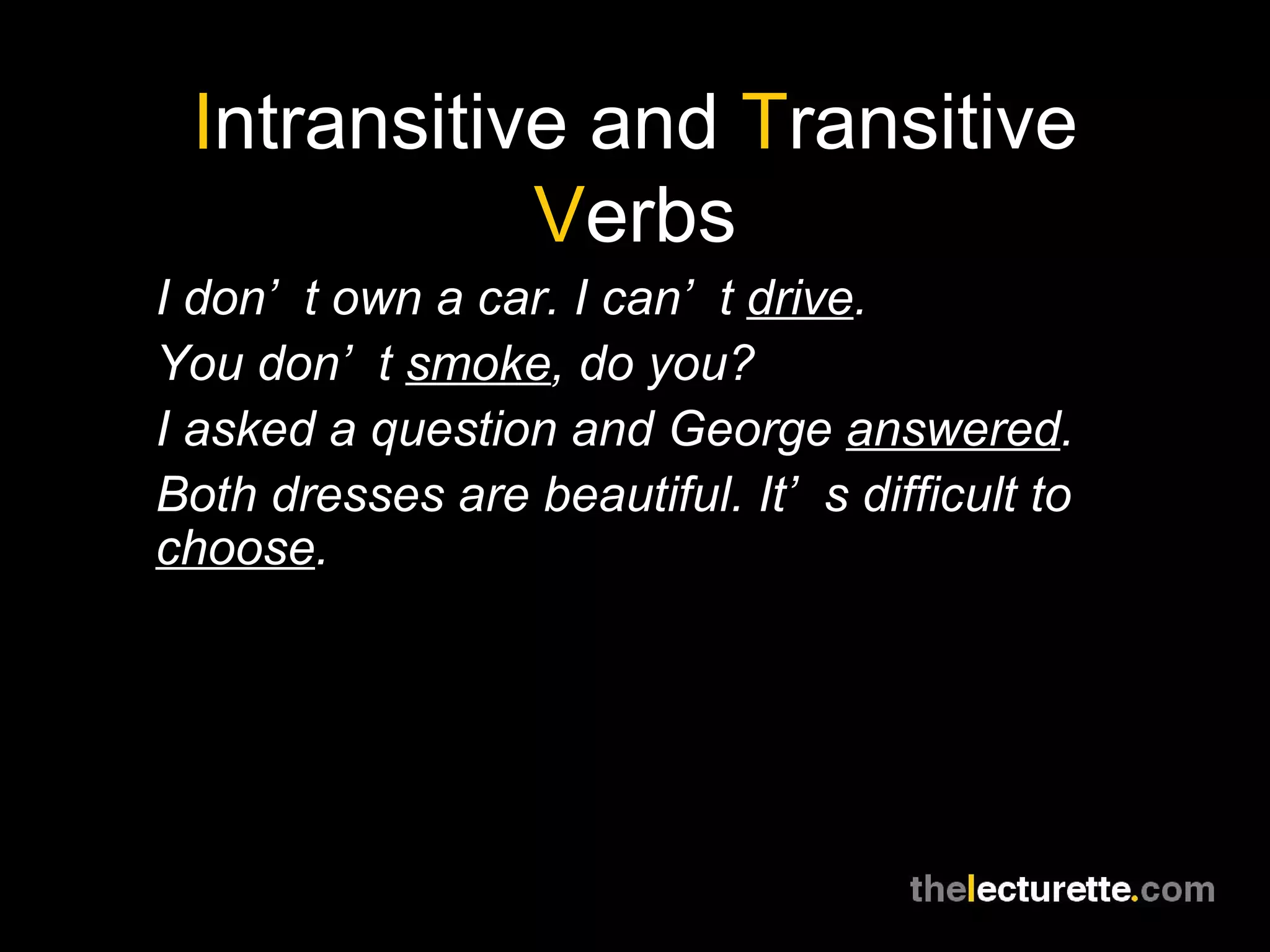
I don’ t own a car. I can’ t drive.
You don’ t smoke, do you?
I asked a question and George answered.
Both dresses are beautiful. It’ s difficult to
choose.
Intransitive and Transitive
            Verbs
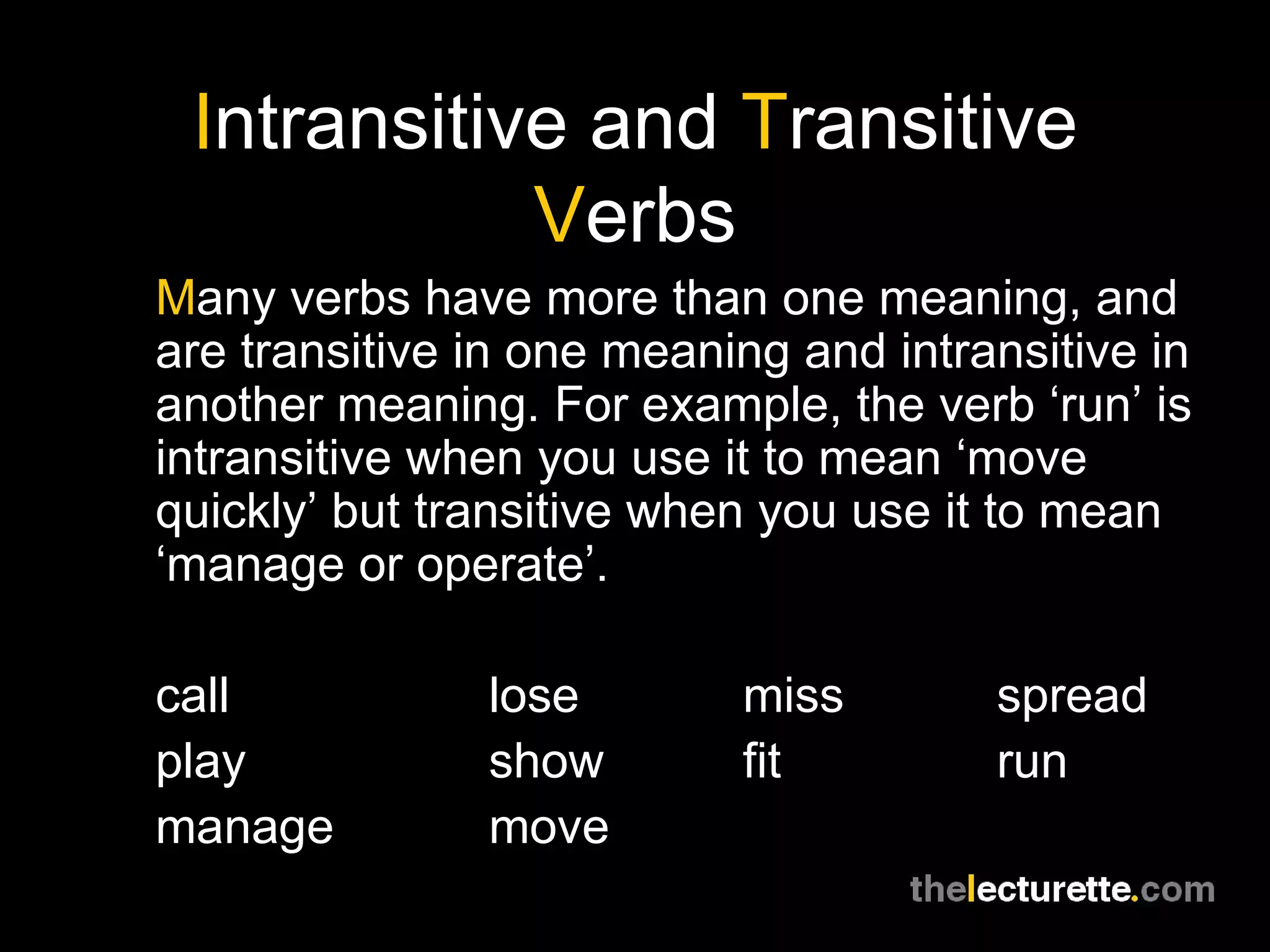
Many verbs have more than one meaning, and
are transitive in one meaning and intransitive in
another meaning. For example, the verb ‘run’ is
intransitive when you use it to mean ‘move
quickly’ but transitive when you use it to mean
‘manage or operate’.

call           lose        miss        spread
play           show        fit         run
manage         move
Intransitive and Transitive
            Verbs
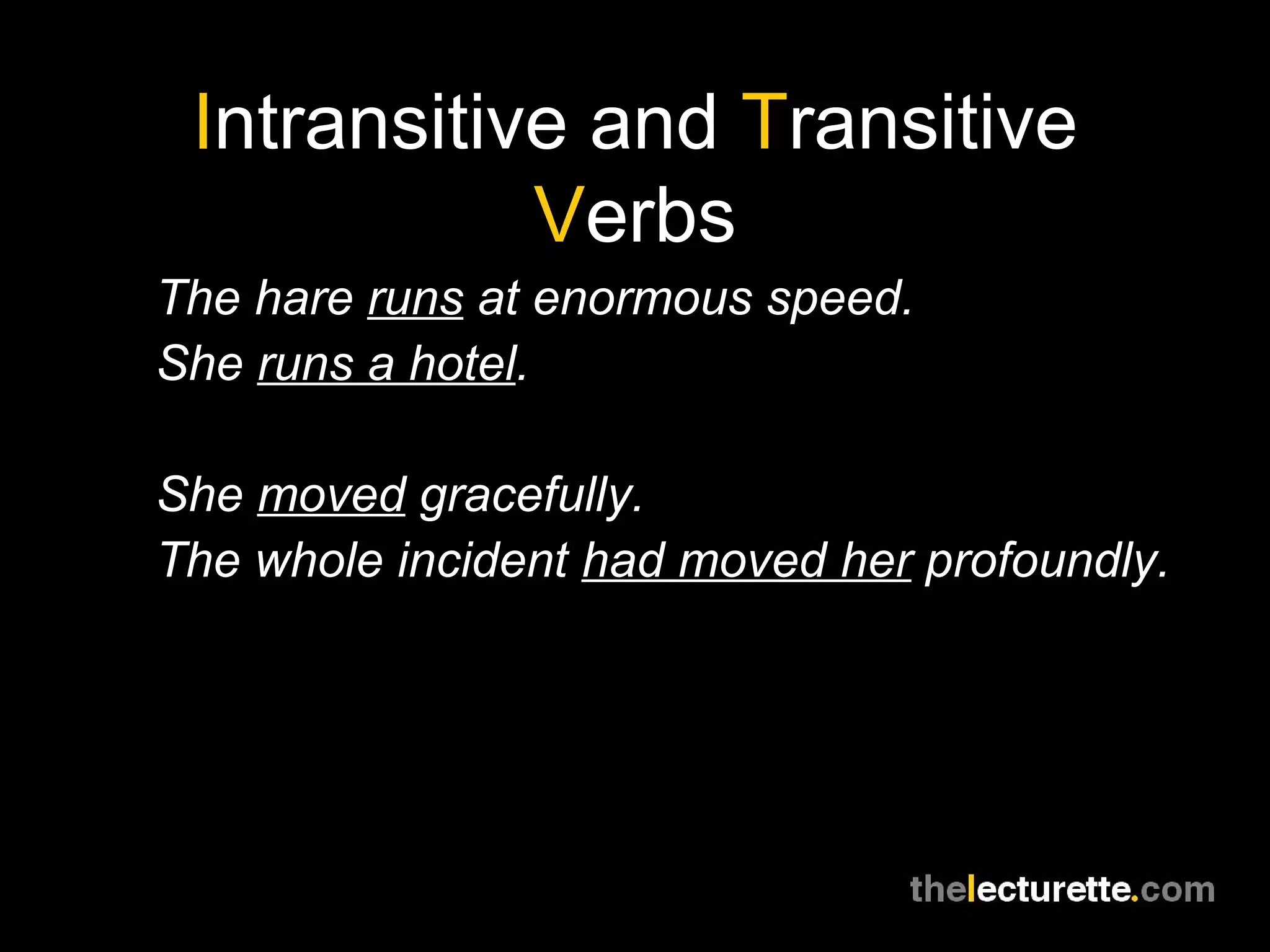
The hare runs at enormous speed.
She runs a hotel.

She moved gracefully.
The whole incident had moved her profoundly.
Intransitive and Transitive
            Verbs
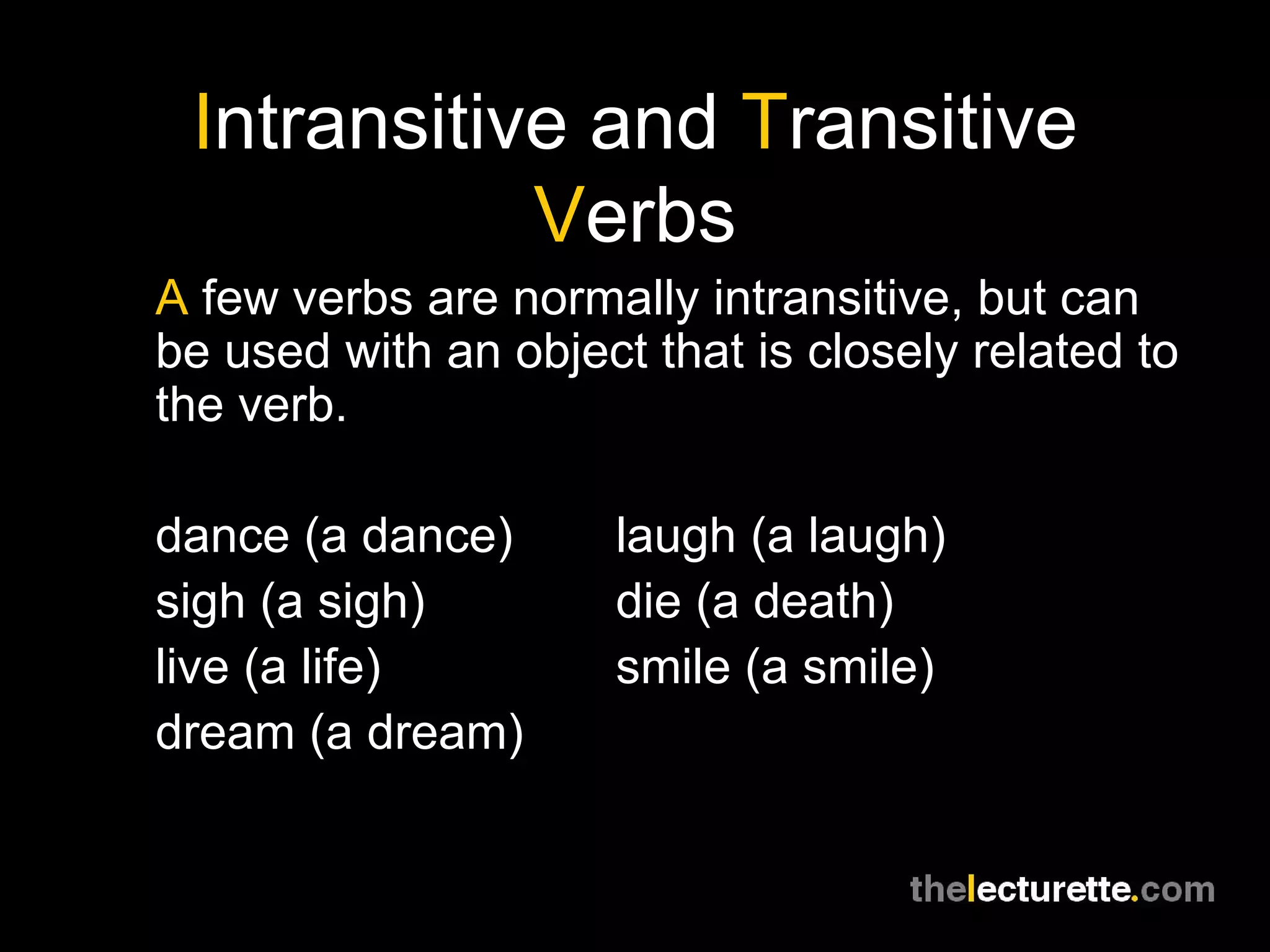
A few verbs are normally intransitive, but can
be used with an object that is closely related to
the verb.

dance (a dance)       laugh (a laugh)
sigh (a sigh)         die (a death)
live (a life)         smile (a smile)
dream (a dream)
Intransitive and Transitive
            Verbs
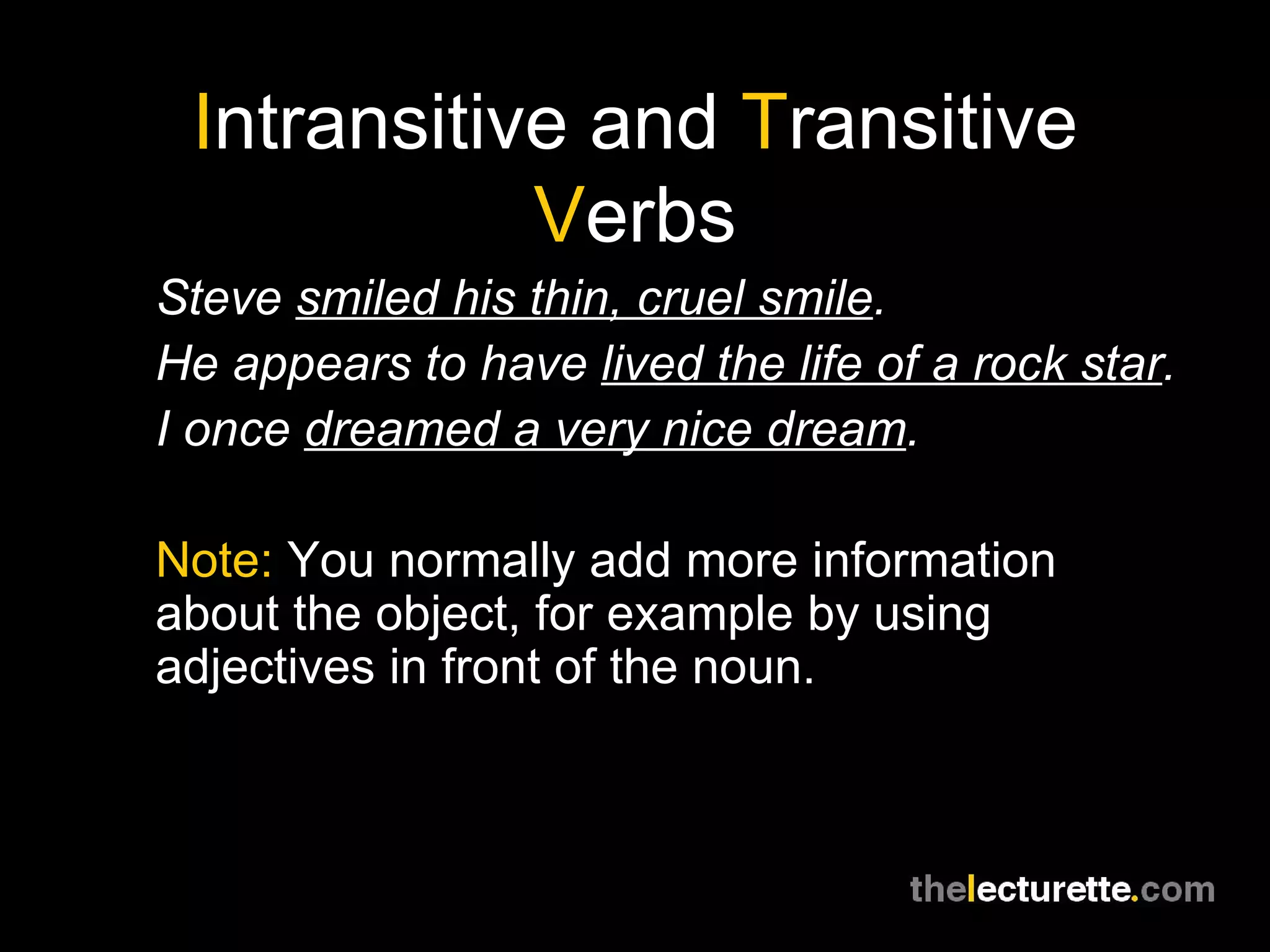
Steve smiled his thin, cruel smile.
He appears to have lived the life of a rock star.
I once dreamed a very nice dream.

Note: You normally add more information
about the object, for example by using
adjectives in front of the noun.
Questions?
For more slide presentations visit:

Intransitive and Transitive Verbs

  • 1.
  • 2.
    Intransitive and Transitive Verbs Many verbs do not normally have an object. They are called ‘intransitive verbs’. They often refer to: existence: appear, die, disappear, exist, happen, live, occur, remain, vanish the human body: ache, bleed, blush, faint, shiver, smile
  • 3.
    Intransitive and Transitive Verbs human noises: cough, cry, laugh, scream, sigh, snore, speak, yawn light, smell, vibration: gleam, glow, shine, sparkle, stink, throb, vibrate position, movement: arrive, come, depart, fall, flow, go, jump, kneel, pause, run, sit, sleep, stand, swim, wait, walk, work
  • 4.
    Intransitive and Transitive Verbs An awful thing has happened. The girl screamed. I waited. Note: Transitive verbs cannot be used in the passive.
  • 5.
    Intransitive and Transitive Verbs Many verbs normally have an object. These verbs are called ‘transitive’ verbs. They are often connected with: physical objects: build, buy, carry, catch, cover, cut, damage, destroy, fill, hit, own, remove, rent, sell, use, waste, wear senses: feel, hear, see, smell, taste, touch
  • 6.
    Intransitive and Transitive Verbs feelings: admire, dislike, enjoy, fear, frighten, hate, interest, like, love, need, prefer, surprise, trust, want facts, ideas: accept, believe, consider, correct, discuss, expect, express, forget, include, know, mean, remember, report people: address, blame, comfort, contact, convince, defy, kill, persuade, please, tease, thank, warn
  • 7.
    Intransitive and Transitive Verbs He hit the ball really hard. Did you see the rainbow? They both enjoyed the film. She reported the accident to the police. Don’ t blame me.
  • 8.
    Intransitive and Transitive Verbs Note: Transitive verbs can be used in the passive. They were blamed for everything.
  • 9.
    Intransitive and Transitive Verbs WARNING: ‘Have’ is a transitive verb, but cannot be use in the passive. You can say ‘I have a car’ but not ‘A car is had by me’.
  • 10.
    Intransitive and Transitive Verbs Often, the people you are talking to know what the object is because of the situation, or because it has already been mentioned. In this case you can omit the object, even though the verb is transitive.
  • 11.
    Intransitive and Transitive Verbs accept draw iron phone study answer drive know read type change eat learn remember understand choose explain leave
  • 12.
    Intransitive and Transitive Verbs ride wash clean forget paint sing watch cook help park steal write
  • 13.
    Intransitive and Transitive Verbs I don’ t own a car. I can’ t drive. You don’ t smoke, do you? I asked a question and George answered. Both dresses are beautiful. It’ s difficult to choose.
  • 14.
    Intransitive and Transitive Verbs Many verbs have more than one meaning, and are transitive in one meaning and intransitive in another meaning. For example, the verb ‘run’ is intransitive when you use it to mean ‘move quickly’ but transitive when you use it to mean ‘manage or operate’. call lose miss spread play show fit run manage move
  • 15.
    Intransitive and Transitive Verbs The hare runs at enormous speed. She runs a hotel. She moved gracefully. The whole incident had moved her profoundly.
  • 16.
    Intransitive and Transitive Verbs A few verbs are normally intransitive, but can be used with an object that is closely related to the verb. dance (a dance) laugh (a laugh) sigh (a sigh) die (a death) live (a life) smile (a smile) dream (a dream)
  • 17.
    Intransitive and Transitive Verbs Steve smiled his thin, cruel smile. He appears to have lived the life of a rock star. I once dreamed a very nice dream. Note: You normally add more information about the object, for example by using adjectives in front of the noun.
  • 18.
    Questions? For more slidepresentations visit: