Drupal 8
What’s coming?
Piyuesh kumar
QED42
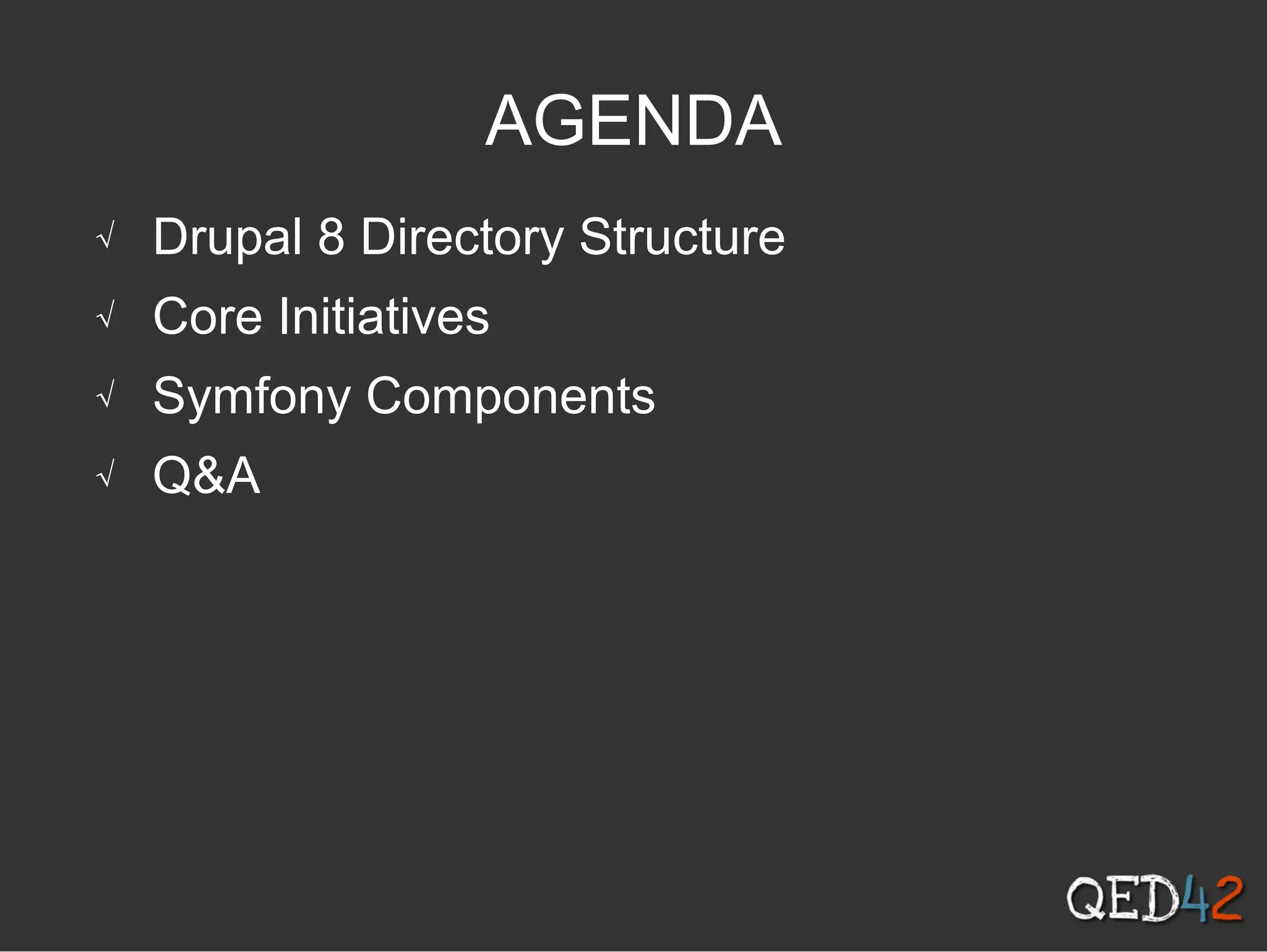
AGENDA
√ Drupal 8 Directory Structure
√ Core Initiatives
√ Symfony Components
√ Q&A
Drupal 8 Directory Structure
Lets take a look at it?
Core Initiatives
√ Configuration Management
√ Web Services
√ Multilingual
√ HTML 5
√ Mobile
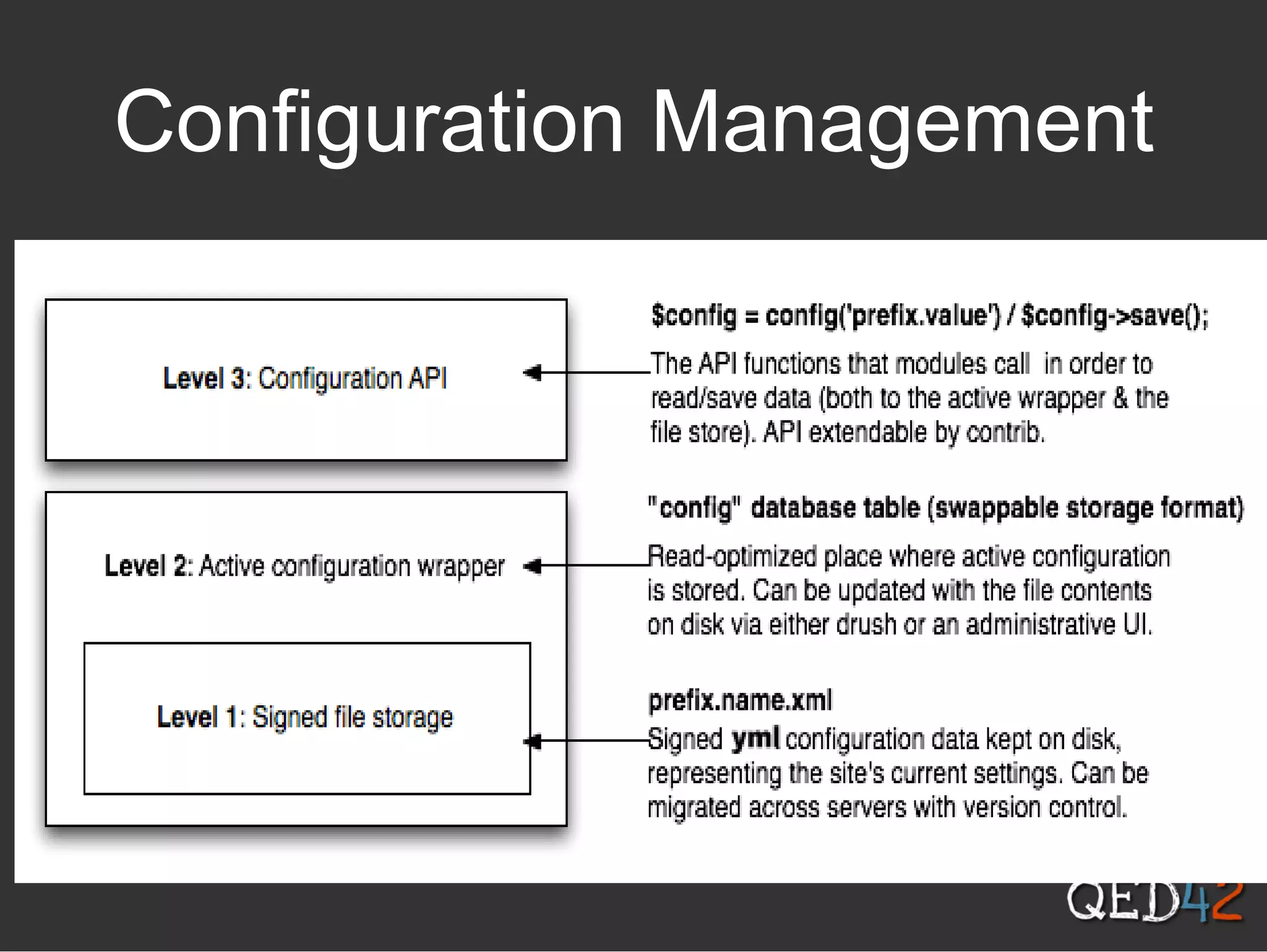
Configuration Management
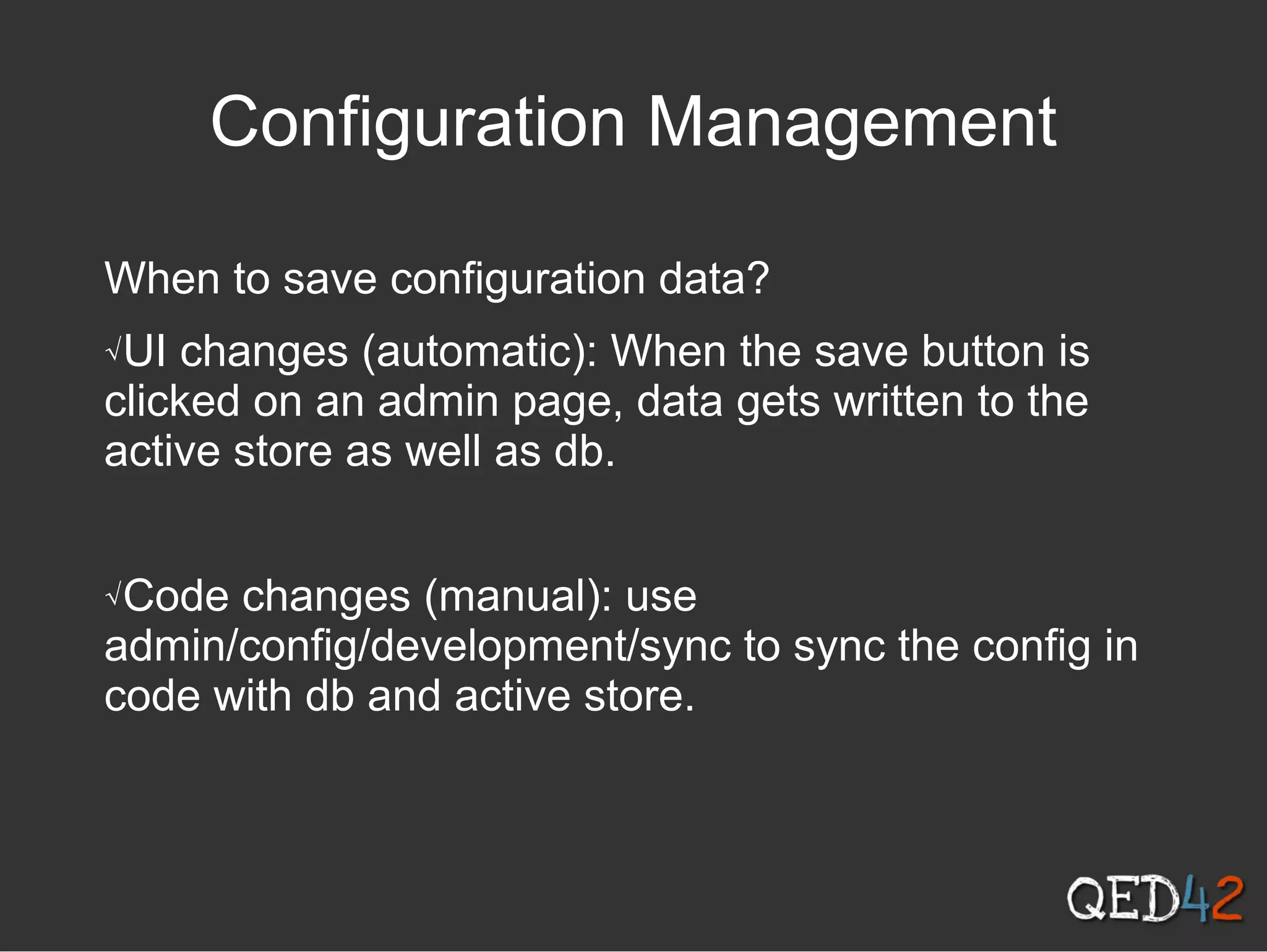
When to save configuration data?
√UI changes (automatic): When the save button is
clicked on an admin page, data gets written to the
active store as well as db.
√Code changes (manual): use
admin/config/development/sync to sync the config in
code with db and active store.
Configuration Management
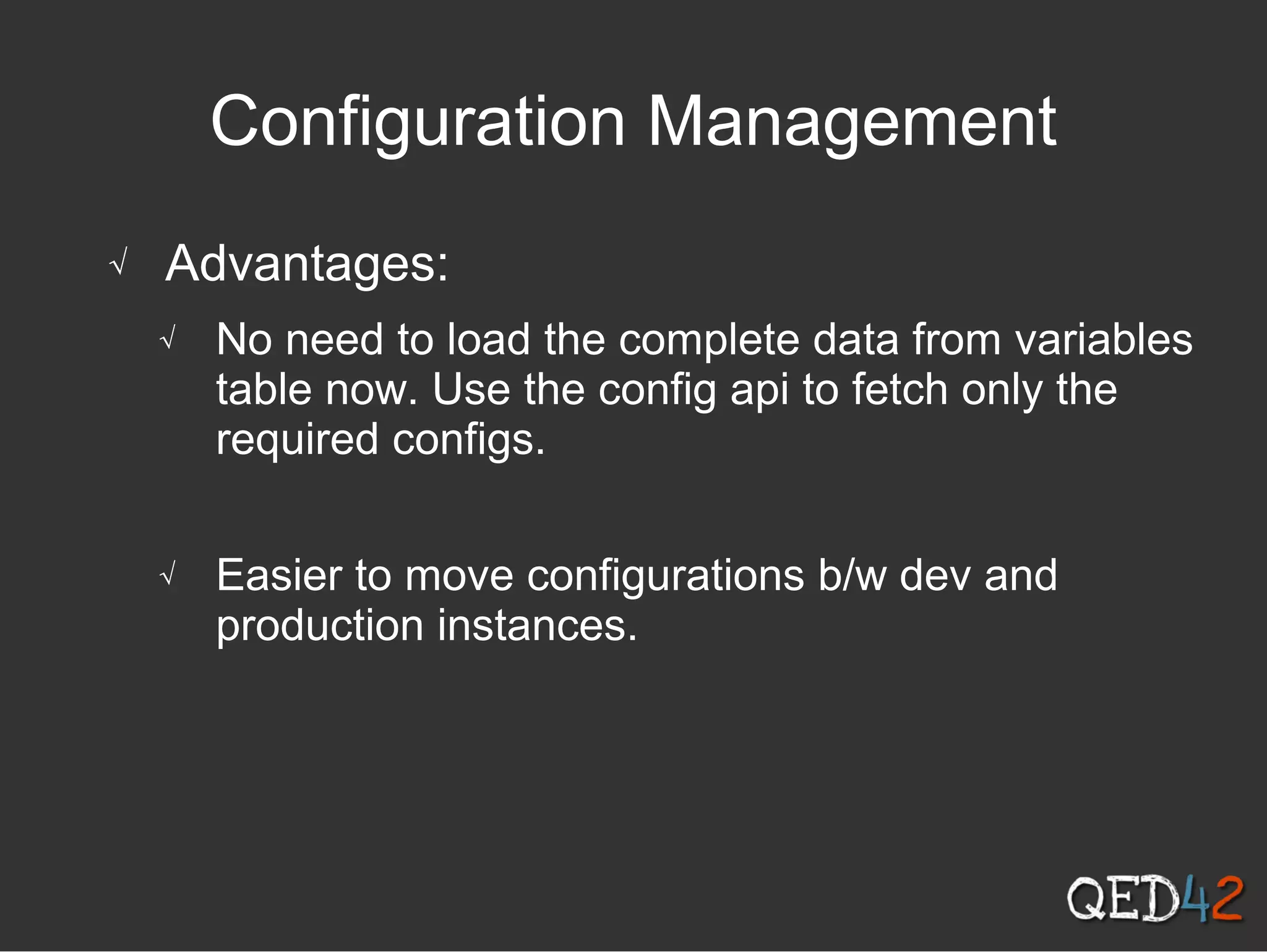
√ Advantages:
√ No need to load the complete data from variables
table now. Use the config api to fetch only the
required configs.
√ Easier to move configurations b/w dev and
production instances.
Example
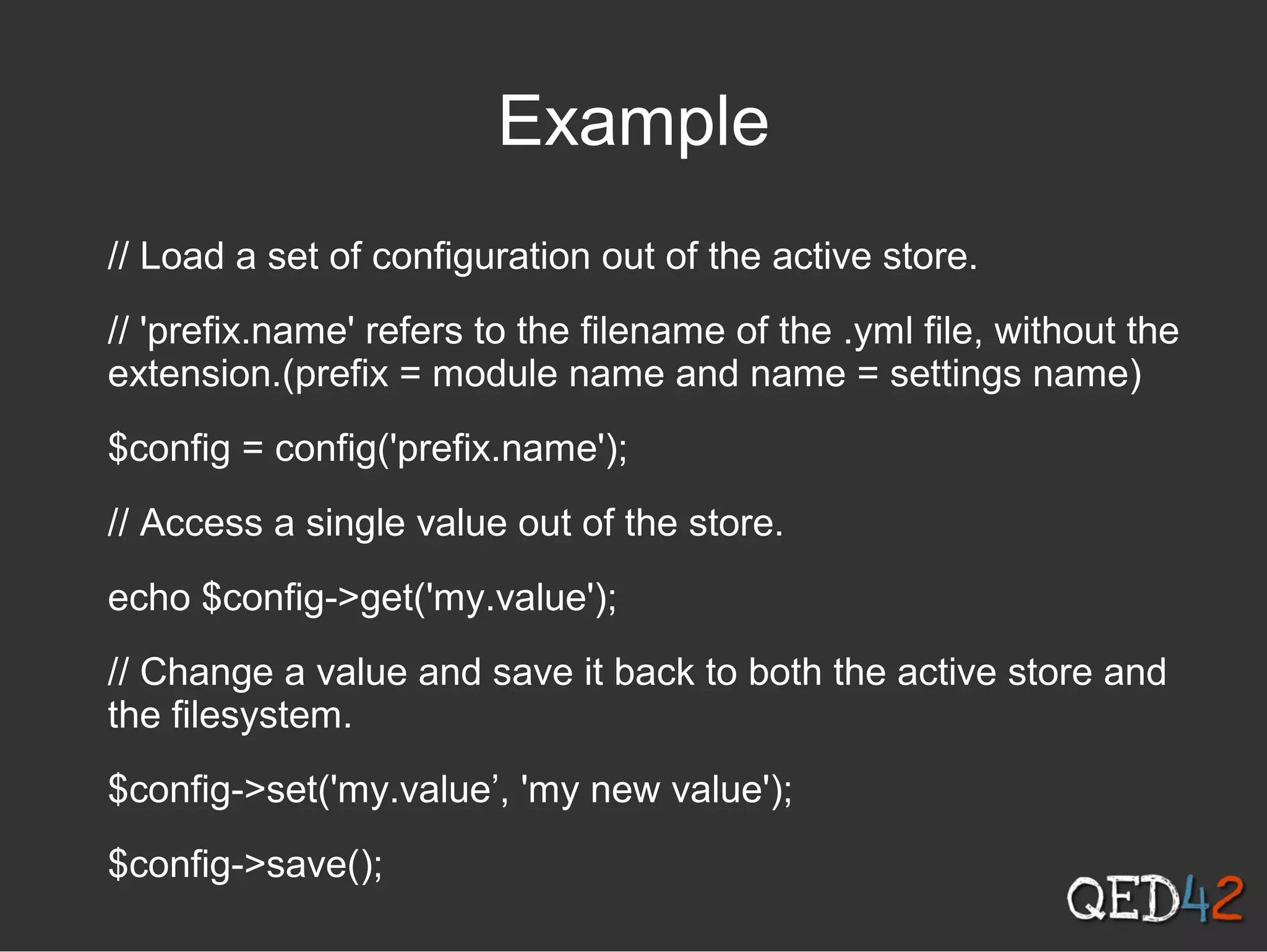
// Load a set of configuration out of the active store.
// 'prefix.name' refers to the filename of the .yml file, without the
extension.(prefix = module name and name = settings name)
$config = config('prefix.name');
// Access a single value out of the store.
echo $config->get('my.value');
// Change a value and save it back to both the active store and
the filesystem.
$config->set('my.value’, 'my new value');
$config->save();
Web Services
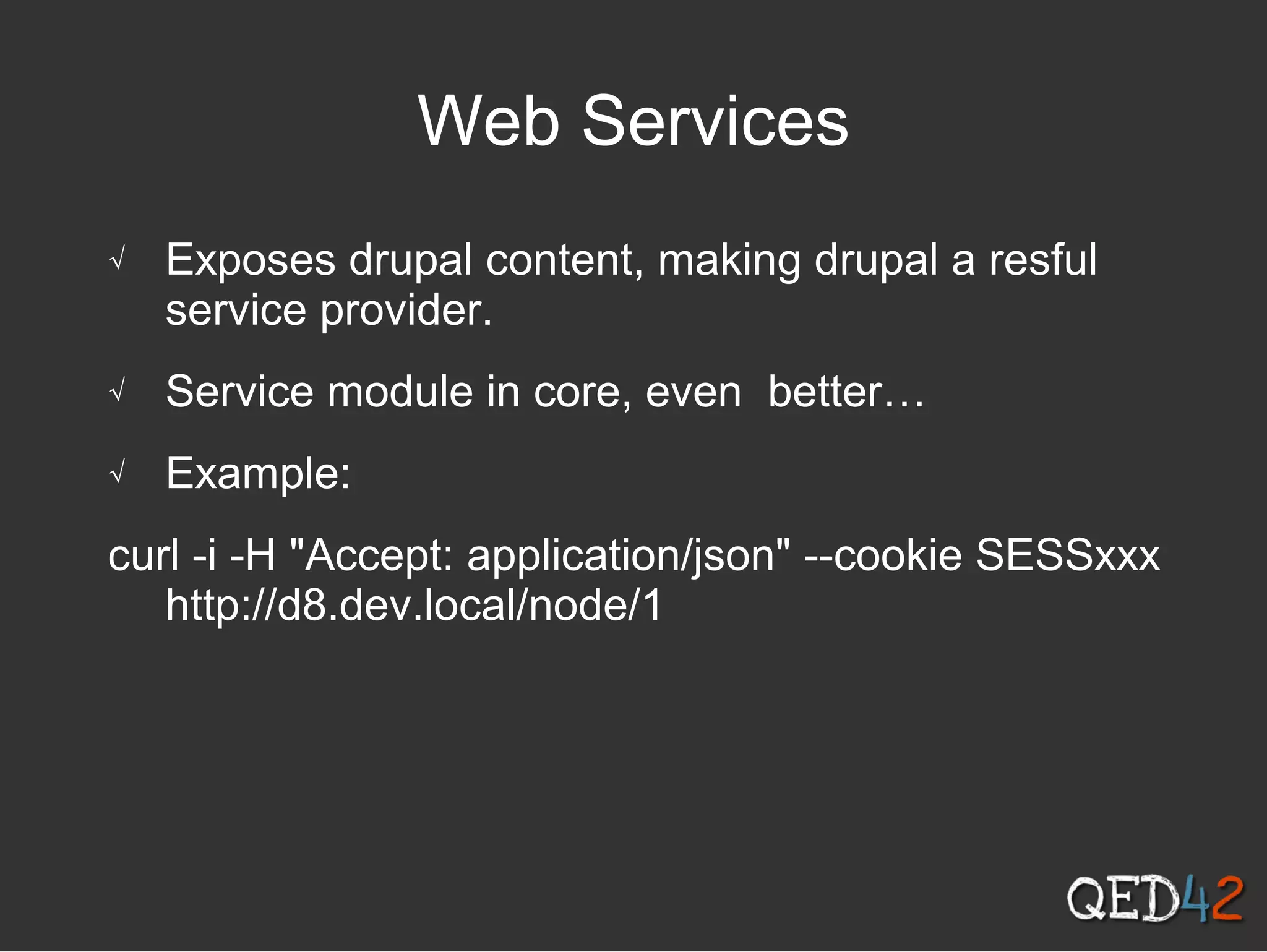
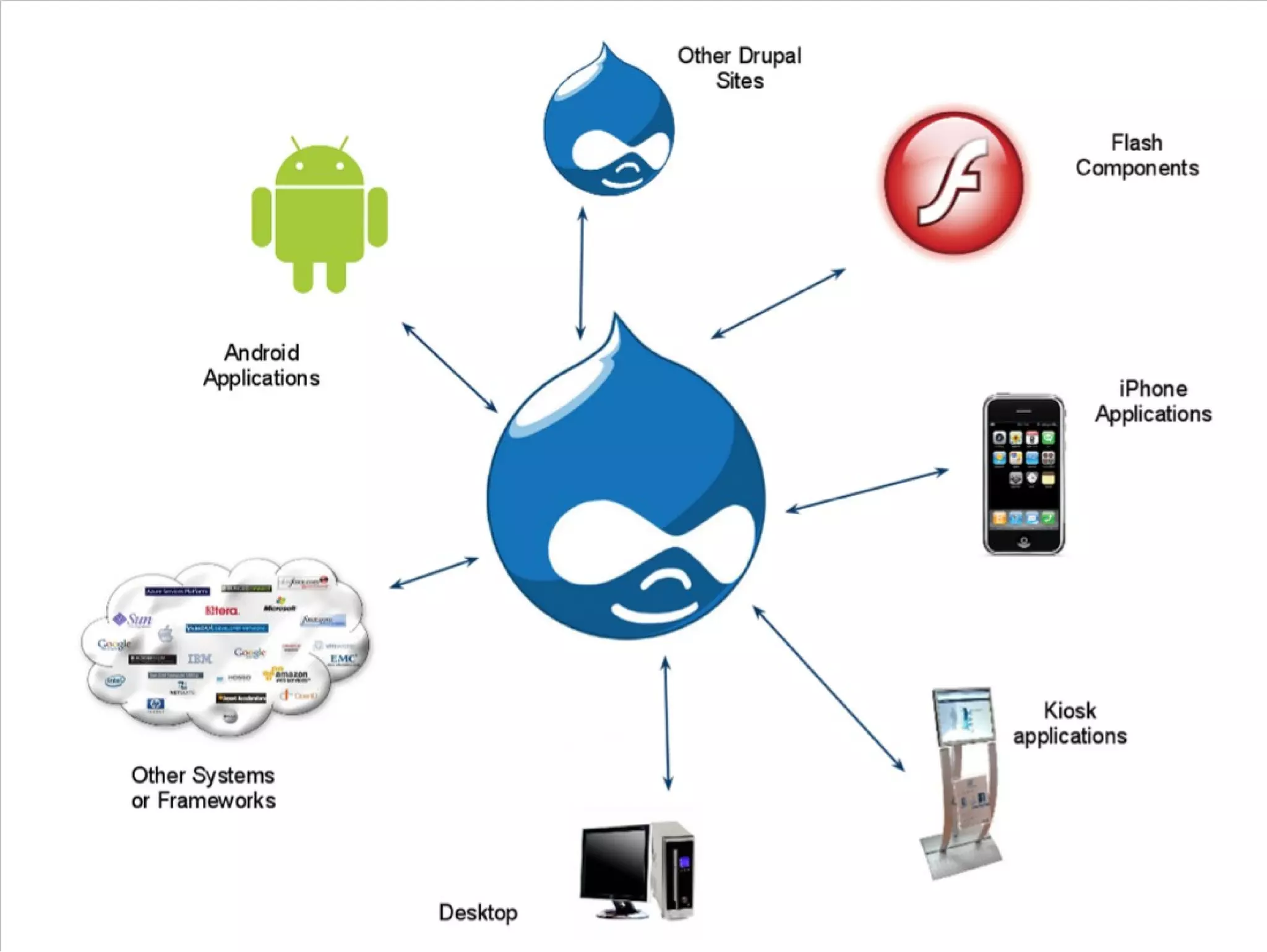
√ Exposes drupal content, making drupal a resful
service provider.
√ Service module in core, even better…
√ Example:
curl -i -H "Accept: application/json" --cookie SESSxxx
http://d8.dev.local/node/1
Multilingual
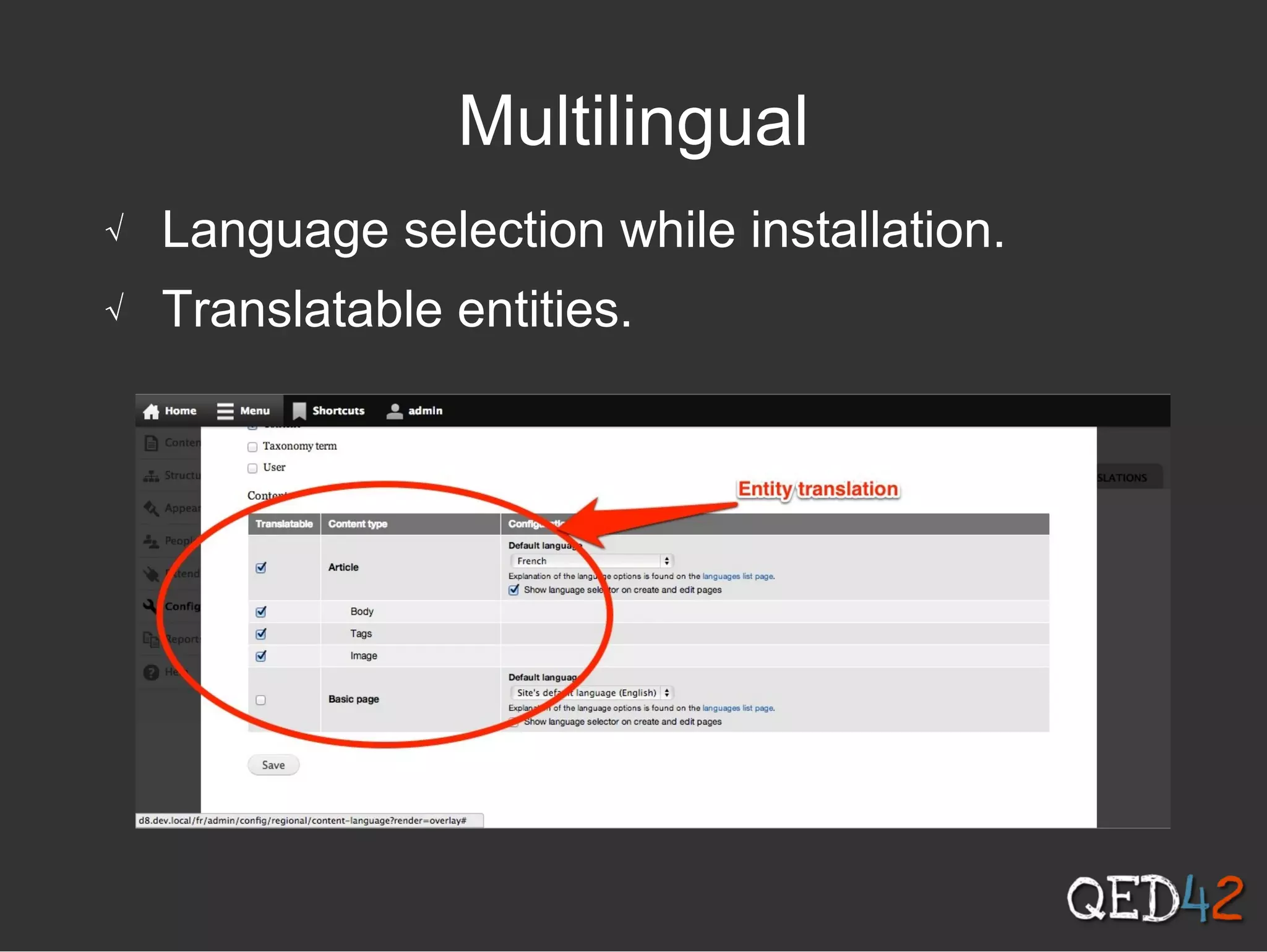
√ Language selection while installation.
√ Translatable entities.
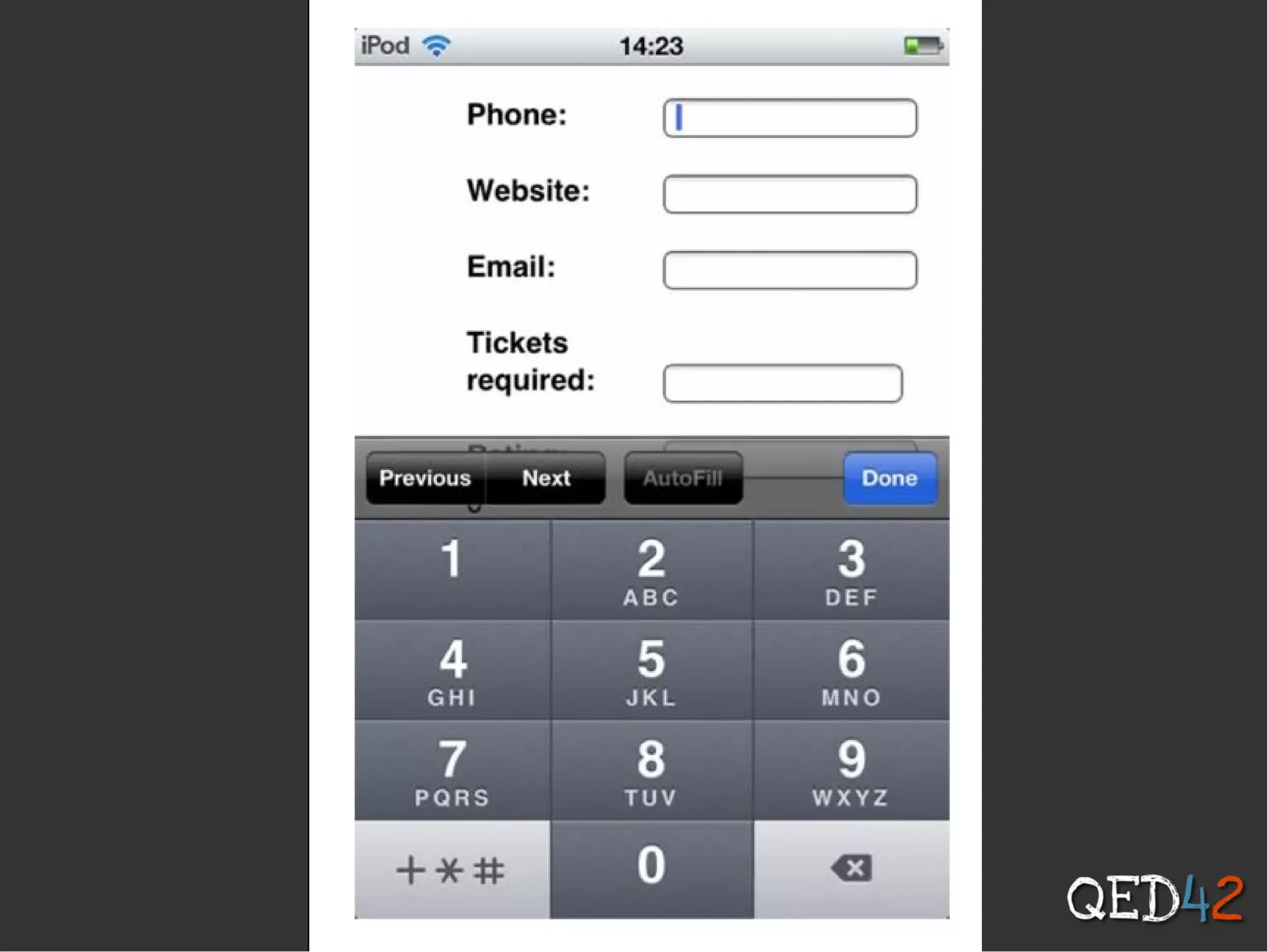
HTML5
$form['telephone'] = array(
'#type' => 'tel',
'#title' => t('Phone'),
);
$form['website'] = array(
'#type' => 'url',
'#title' => t('Website'),
);
$form['email'] = array(
'#type' => 'email',
'#title' => t('Email'),
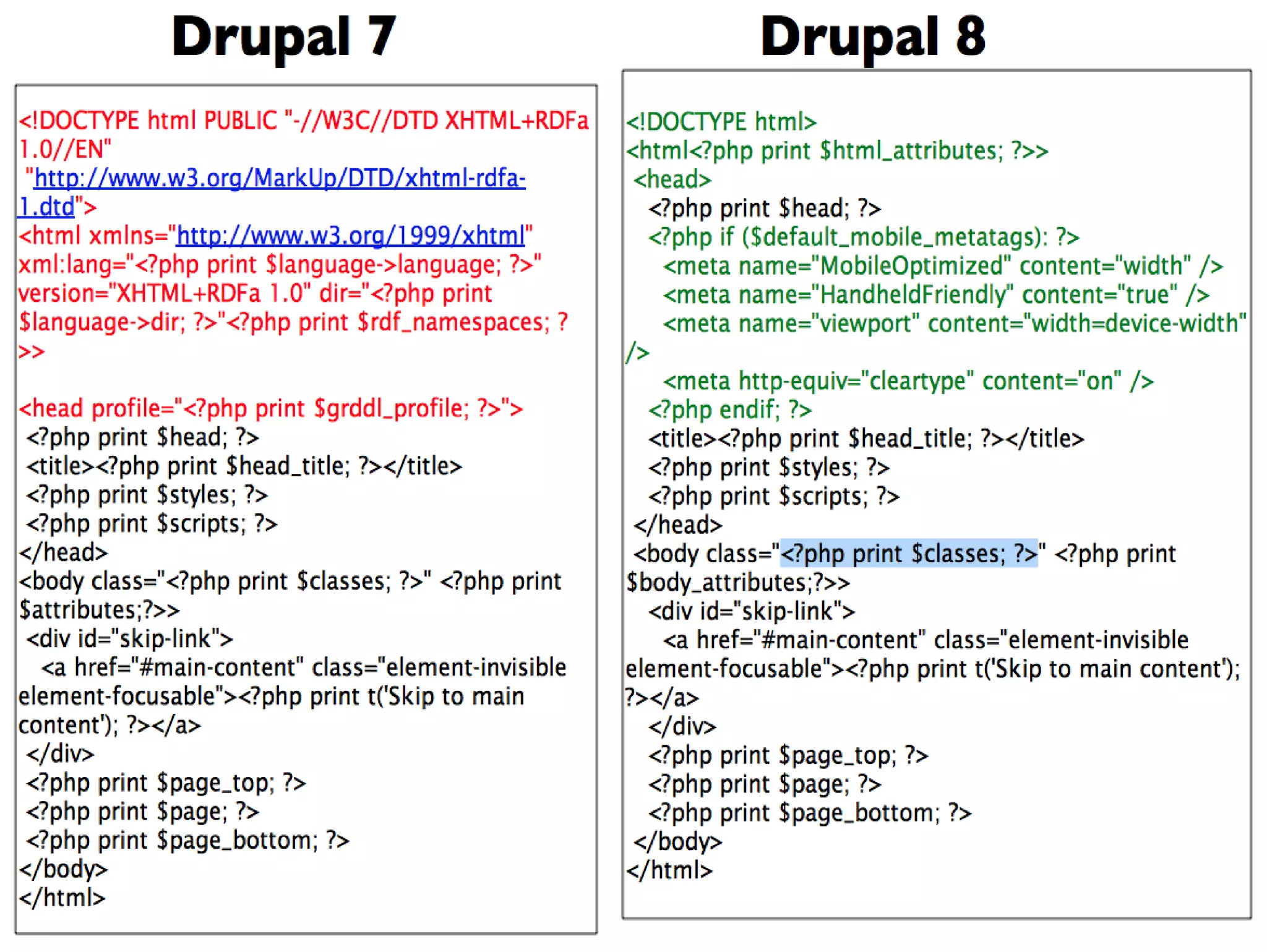
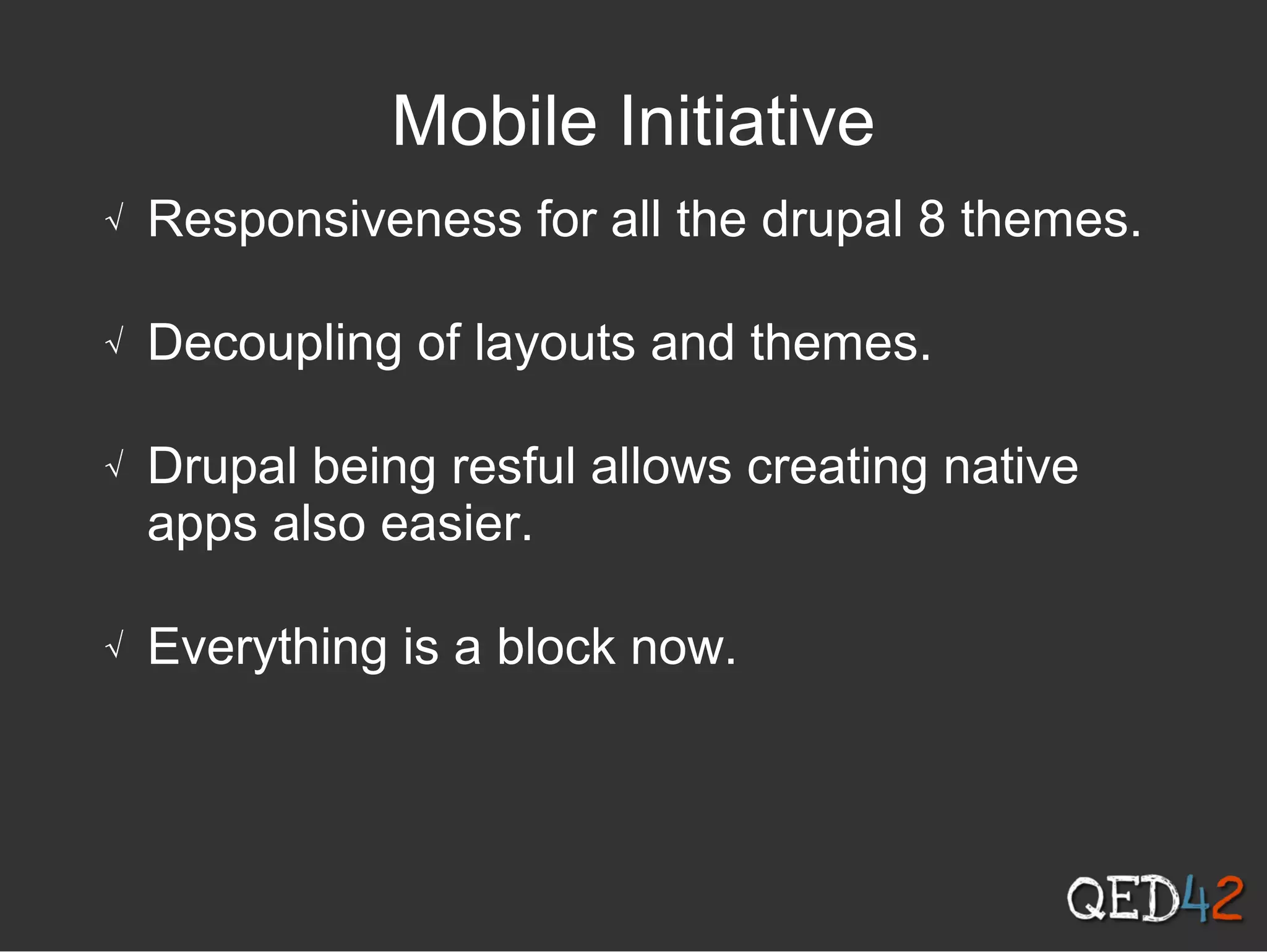
Mobile Initiative
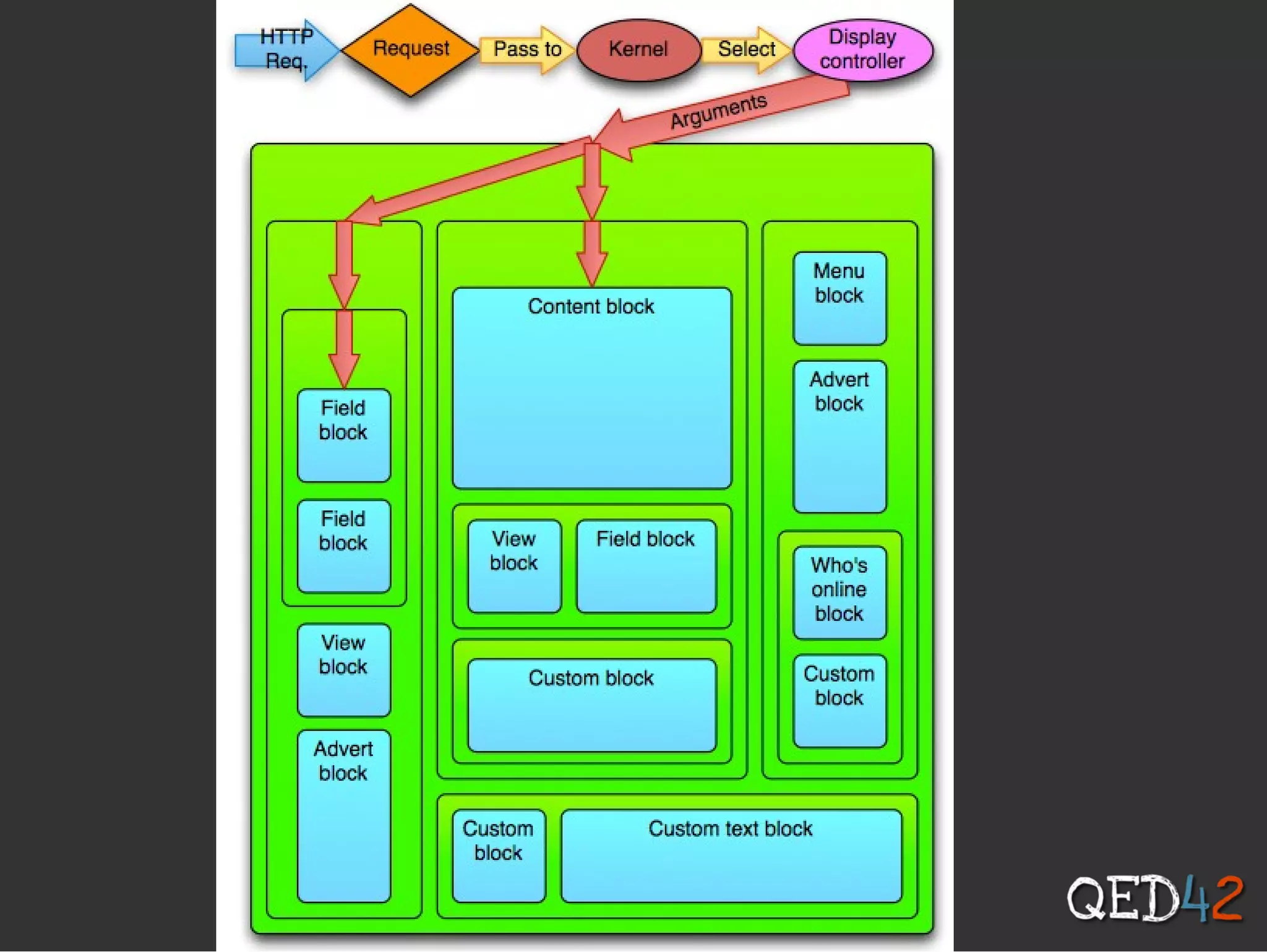
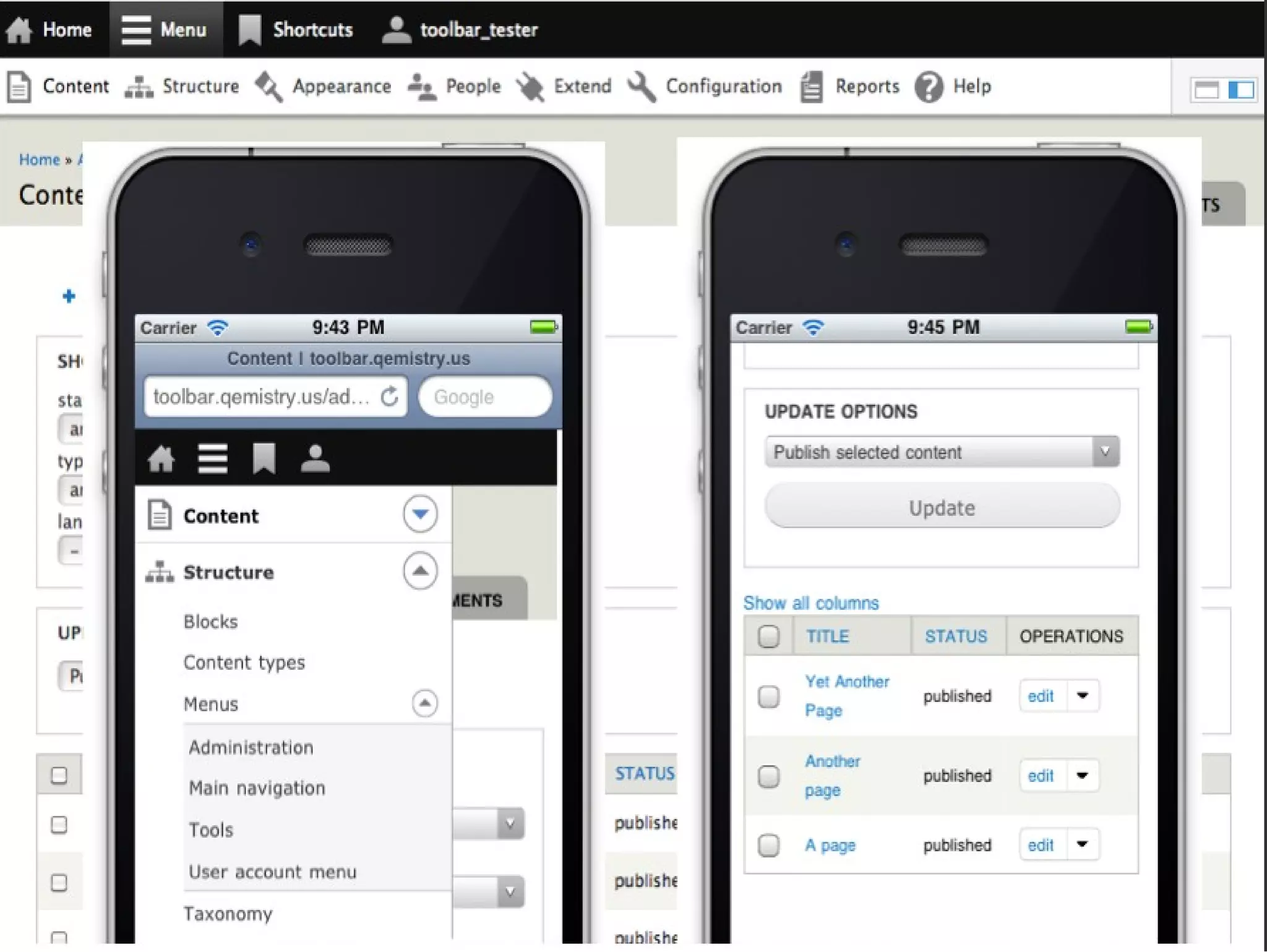
√ Responsiveness for all the drupal 8 themes.
√ Decoupling of layouts and themes.
√ Drupal being resful allows creating native
apps also easier.
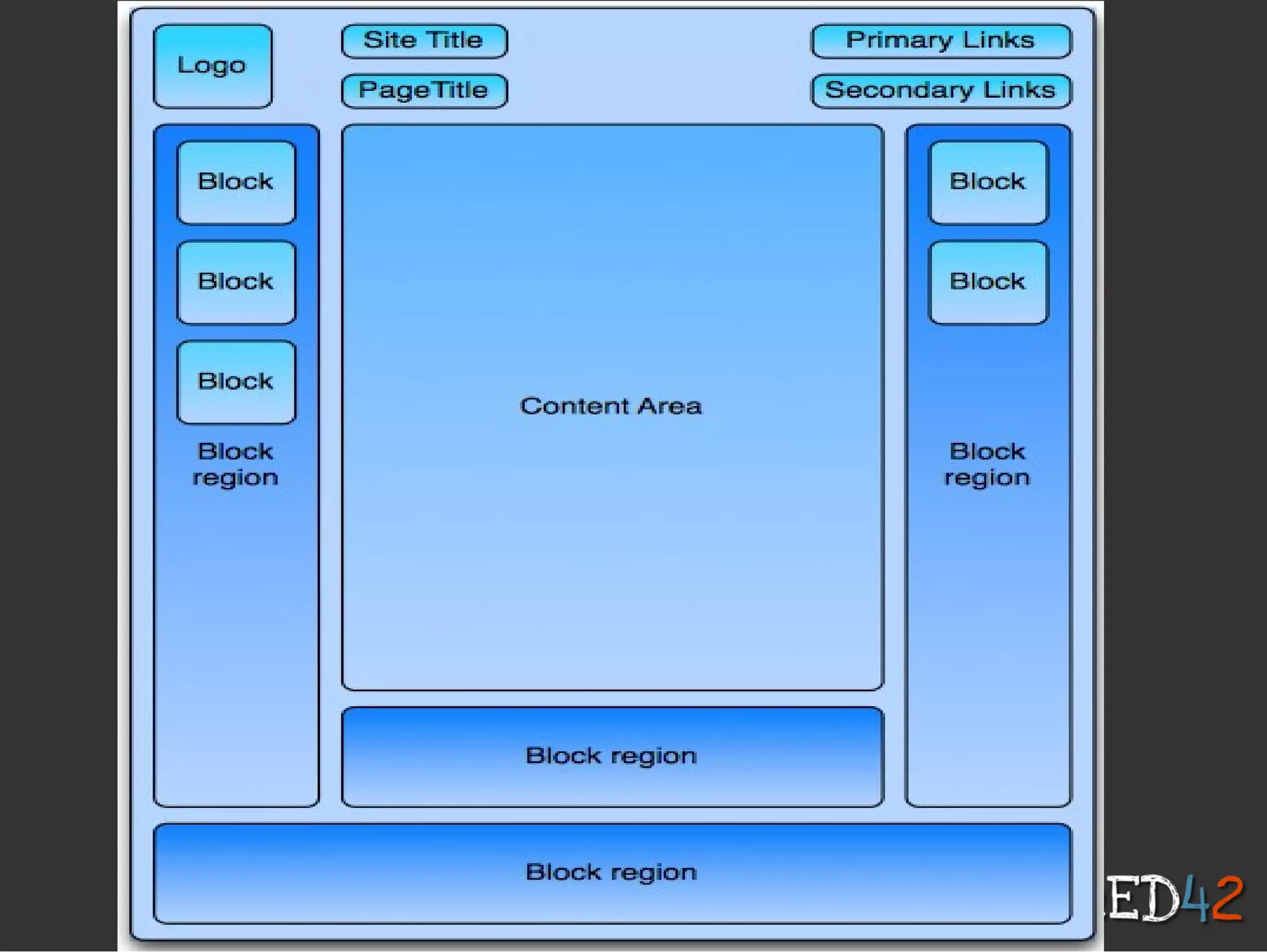
√ Everything is a block now.
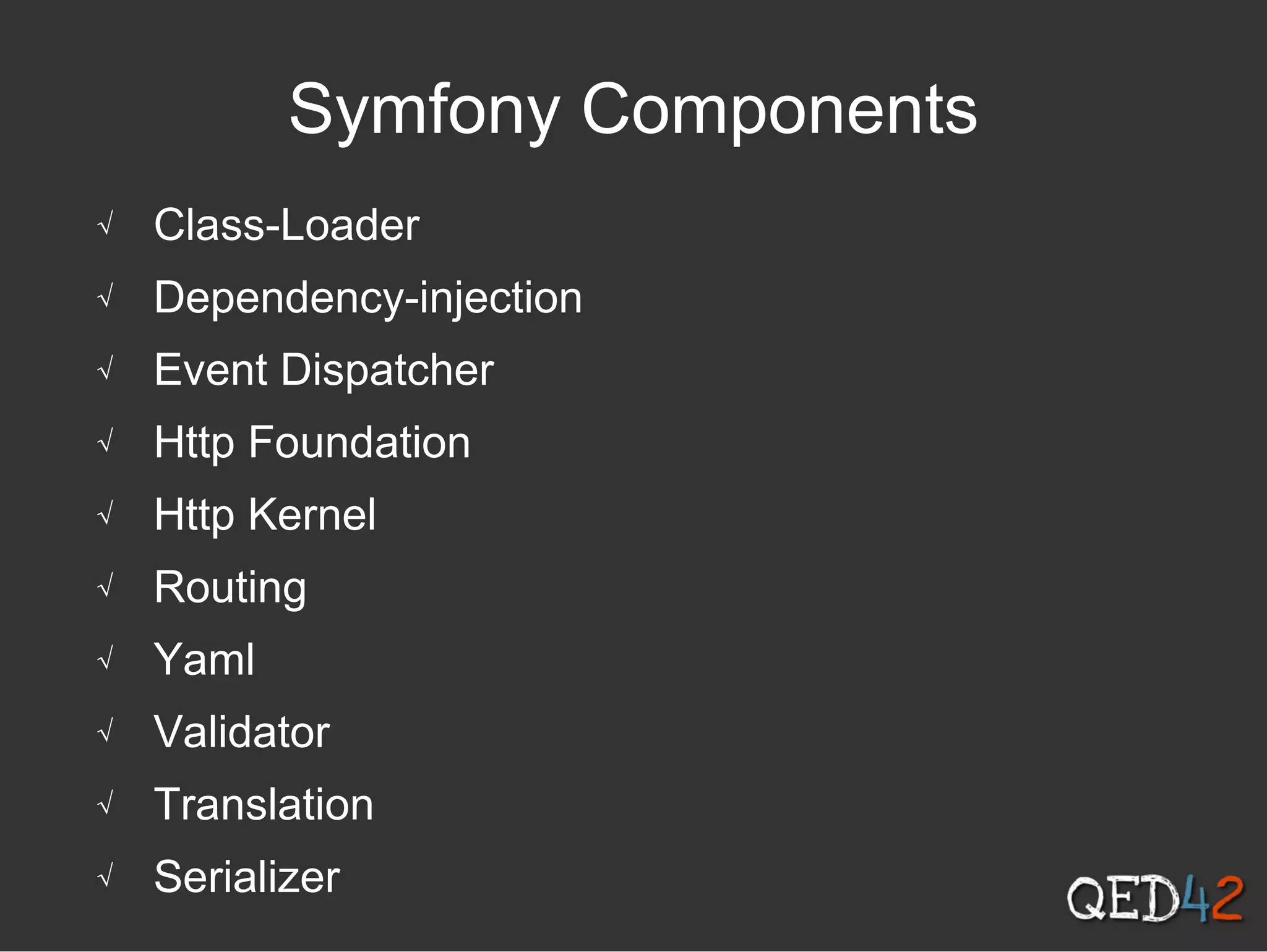
Symfony Components
√ Class-Loader
√ Dependency-injection
√ Event Dispatcher
√ Http Foundation
√ Http Kernel
√ Routing
√ Yaml
√ Validator
√ Translation
√ Serializer
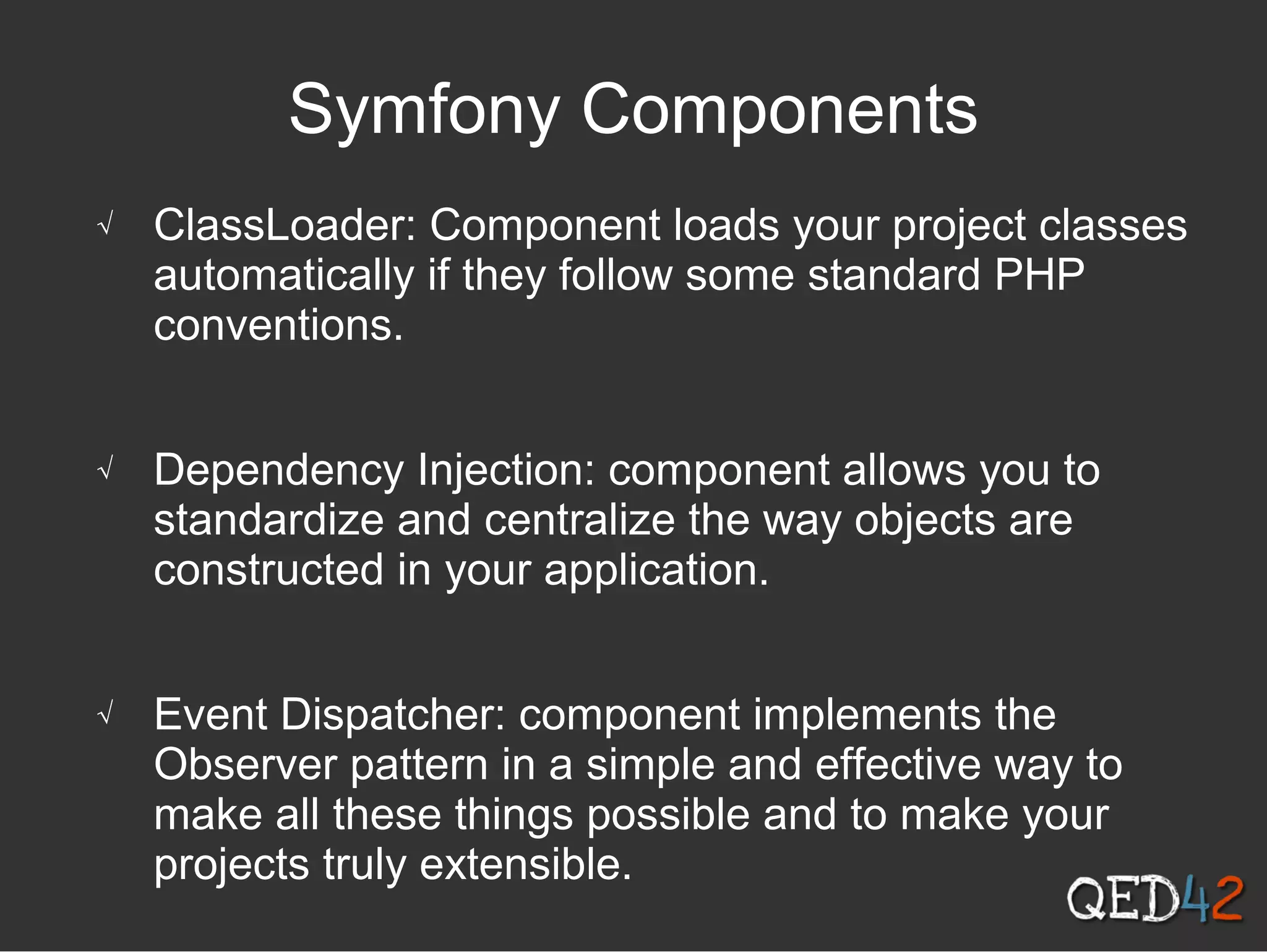
Symfony Components
√ ClassLoader: Component loads your project classes
automatically if they follow some standard PHP
conventions.
√ Dependency Injection: component allows you to
standardize and centralize the way objects are
constructed in your application.
√ Event Dispatcher: component implements the
Observer pattern in a simple and effective way to
make all these things possible and to make your
projects truly extensible.
Symfony Components
√ HttpFoundation: Component defines an object-
oriented layer for the HTTP specification.
√ HttpKernel: notifies events to convert a Request
object to a Response one.
√ Routing: allows mapping from a URL pattern to a
controller.
√ Yaml: loads and dumps yml files used for config
management.
√ Serializer: Component is meant to be used to
turn objects into a specific format (XML, JSON,
Yaml, ...) and the other way around.
Symfony components
√ This component is based on the JSR-303 Bean
Validation specification and enables specifying
validation rules for classes using XML, YAML, PHP
or annotations, which can then be checked against
instances of these classes.
√ Translation provides for internationalization. Helps in
abstracting strings and other locale-specific pieces
out of your application and into a layer where they
can be translated and converted based on the
user's locale
√ The Process Component executes commands in
sub-processes.
Thank You!!
Questions?

Into to drupal8

  • 1.
  • 3.
    AGENDA √ Drupal 8Directory Structure √ Core Initiatives √ Symfony Components √ Q&A
  • 4.
    Drupal 8 DirectoryStructure Lets take a look at it?
  • 5.
    Core Initiatives √ ConfigurationManagement √ Web Services √ Multilingual √ HTML 5 √ Mobile
  • 6.
  • 7.
    Configuration Management When tosave configuration data? √UI changes (automatic): When the save button is clicked on an admin page, data gets written to the active store as well as db. √Code changes (manual): use admin/config/development/sync to sync the config in code with db and active store.
  • 8.
    Configuration Management √ Advantages: √No need to load the complete data from variables table now. Use the config api to fetch only the required configs. √ Easier to move configurations b/w dev and production instances.
  • 9.
    Example // Load aset of configuration out of the active store. // 'prefix.name' refers to the filename of the .yml file, without the extension.(prefix = module name and name = settings name) $config = config('prefix.name'); // Access a single value out of the store. echo $config->get('my.value'); // Change a value and save it back to both the active store and the filesystem. $config->set('my.value’, 'my new value'); $config->save();
  • 10.
    Web Services √ Exposesdrupal content, making drupal a resful service provider. √ Service module in core, even better… √ Example: curl -i -H "Accept: application/json" --cookie SESSxxx http://d8.dev.local/node/1
  • 12.
    Multilingual √ Language selectionwhile installation. √ Translatable entities.
  • 13.
    HTML5 $form['telephone'] = array( '#type'=> 'tel', '#title' => t('Phone'), ); $form['website'] = array( '#type' => 'url', '#title' => t('Website'), ); $form['email'] = array( '#type' => 'email', '#title' => t('Email'),
  • 16.
    Mobile Initiative √ Responsivenessfor all the drupal 8 themes. √ Decoupling of layouts and themes. √ Drupal being resful allows creating native apps also easier. √ Everything is a block now.
  • 20.
    Symfony Components √ Class-Loader √Dependency-injection √ Event Dispatcher √ Http Foundation √ Http Kernel √ Routing √ Yaml √ Validator √ Translation √ Serializer
  • 21.
    Symfony Components √ ClassLoader:Component loads your project classes automatically if they follow some standard PHP conventions. √ Dependency Injection: component allows you to standardize and centralize the way objects are constructed in your application. √ Event Dispatcher: component implements the Observer pattern in a simple and effective way to make all these things possible and to make your projects truly extensible.
  • 22.
    Symfony Components √ HttpFoundation:Component defines an object- oriented layer for the HTTP specification. √ HttpKernel: notifies events to convert a Request object to a Response one. √ Routing: allows mapping from a URL pattern to a controller. √ Yaml: loads and dumps yml files used for config management. √ Serializer: Component is meant to be used to turn objects into a specific format (XML, JSON, Yaml, ...) and the other way around.
  • 23.
    Symfony components √ Thiscomponent is based on the JSR-303 Bean Validation specification and enables specifying validation rules for classes using XML, YAML, PHP or annotations, which can then be checked against instances of these classes. √ Translation provides for internationalization. Helps in abstracting strings and other locale-specific pieces out of your application and into a layer where they can be translated and converted based on the user's locale √ The Process Component executes commands in sub-processes.
  • 24.