AND THEIR

APPLICATIONS
A
PRESENTATION
By

SE
MECHANICAL
A4

     SEPTEMBER 2008
An Introduction
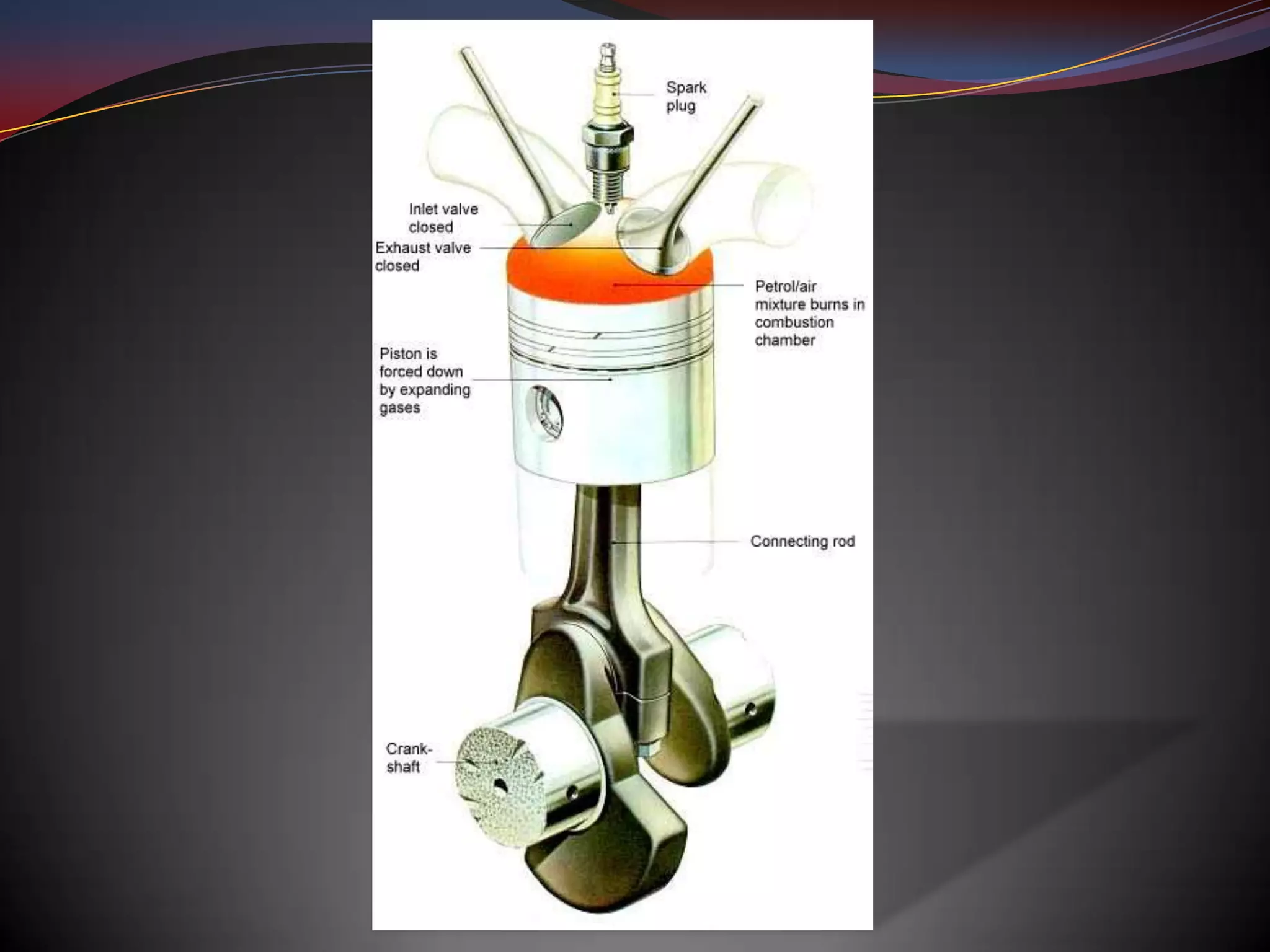
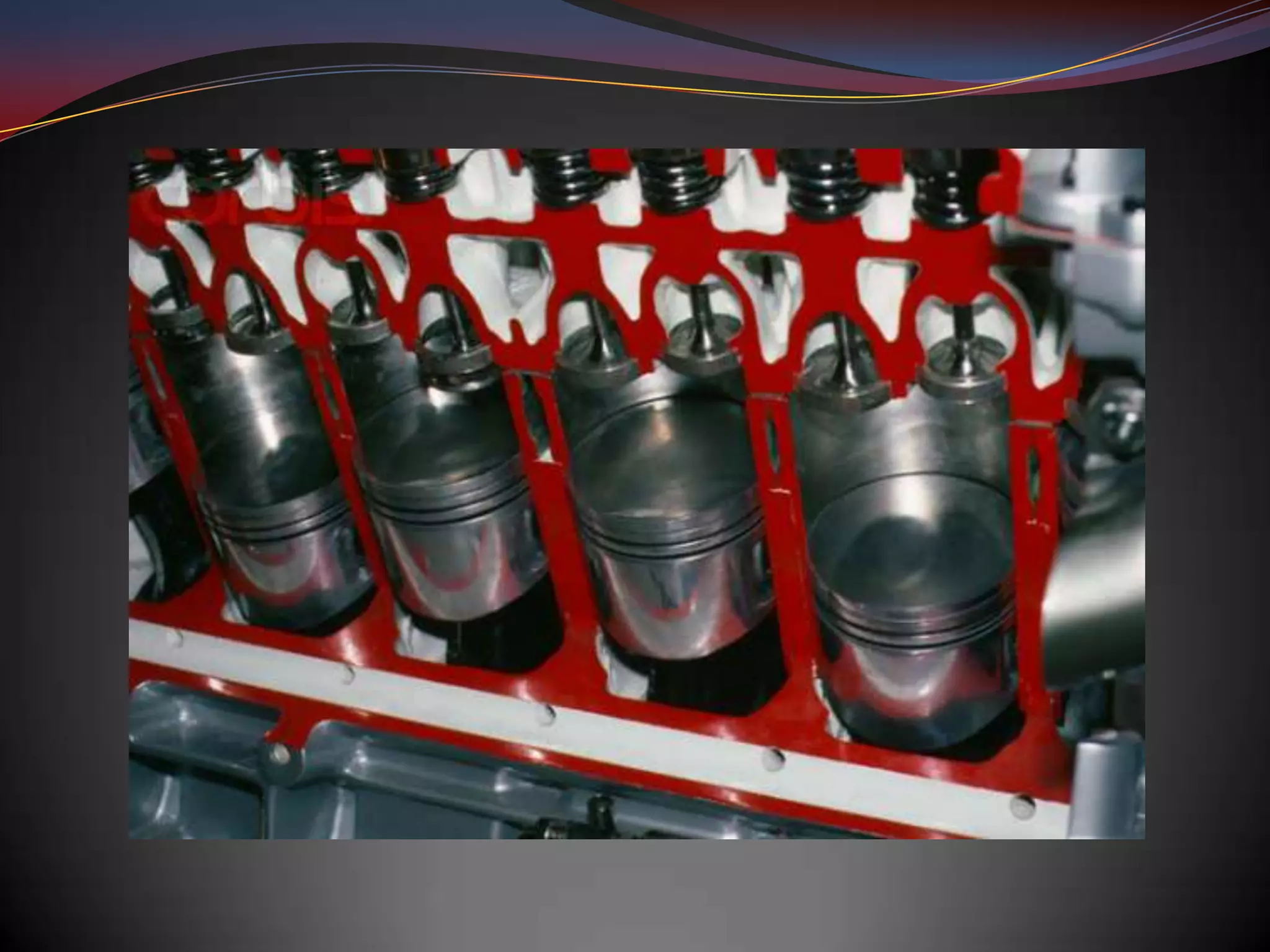
 The internal combustion (IC) engine converts
  chemical energy into useful mechanical energy by
  burning fuel.
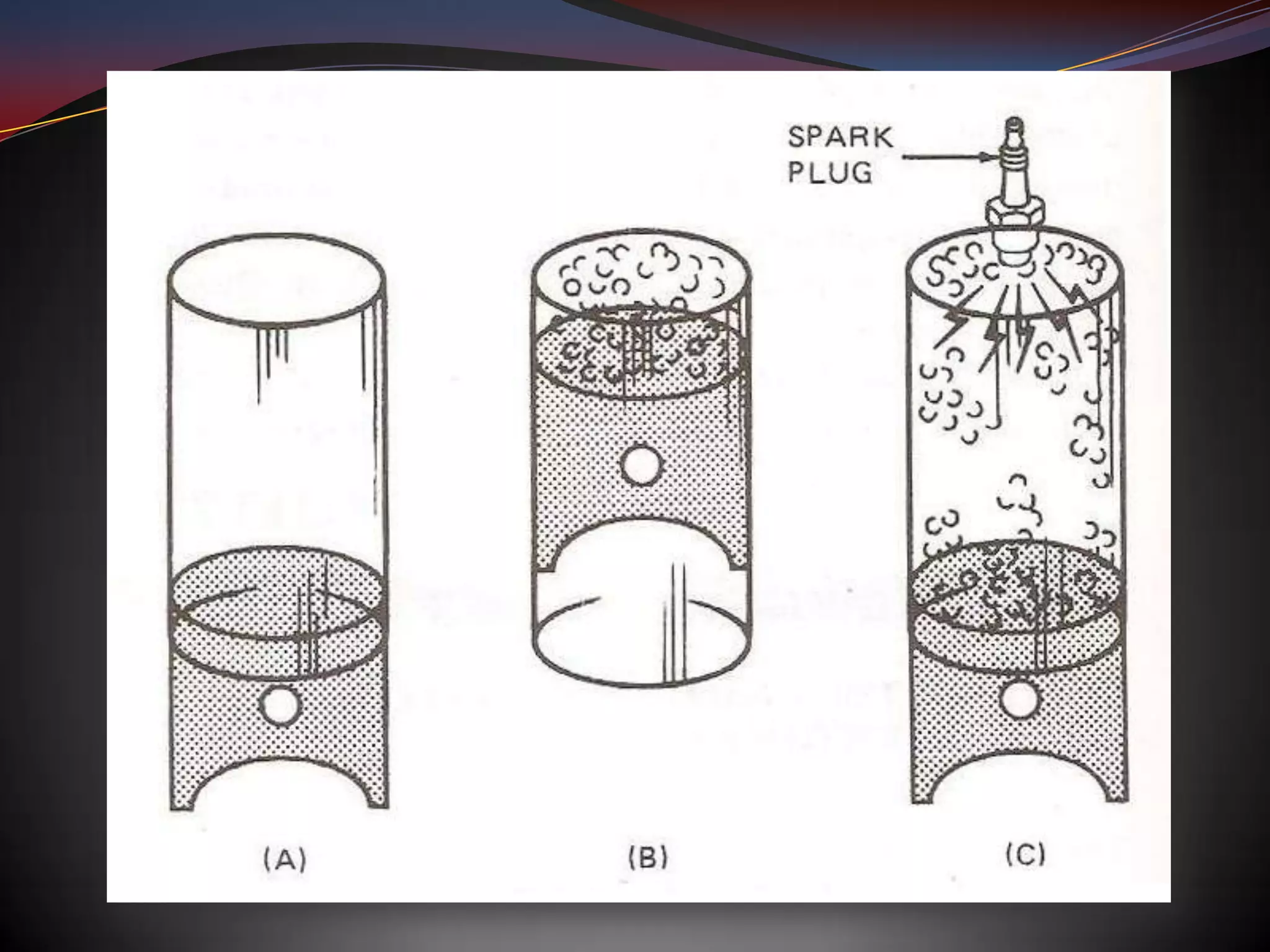
 Chemical energy is released when the fuel-air mixture
  is ignited by the spark in the combustion chamber.
 The gas produced in this reaction rapidly expands
  forcing the piston down the cylinder on the power
  stroke.
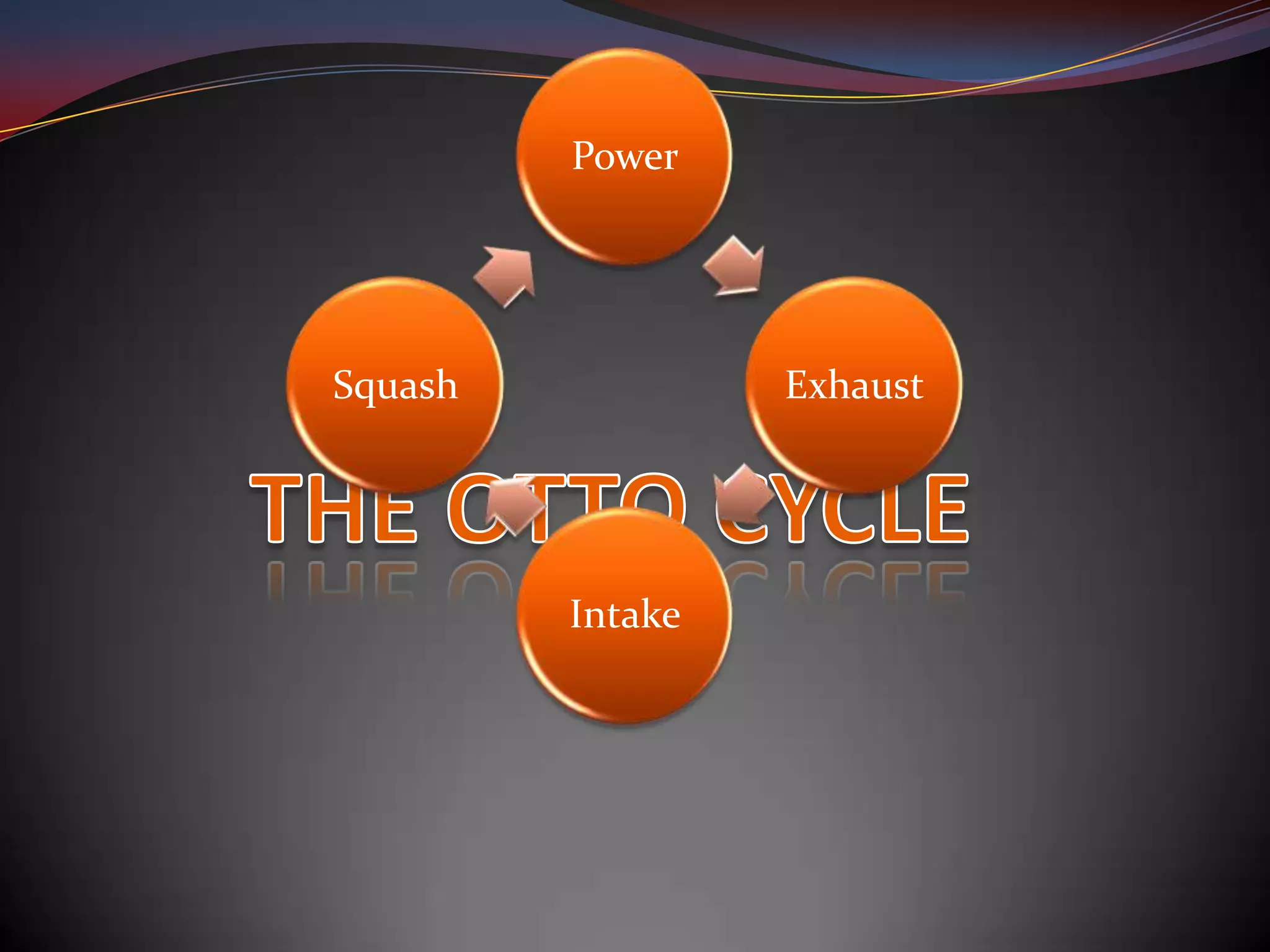
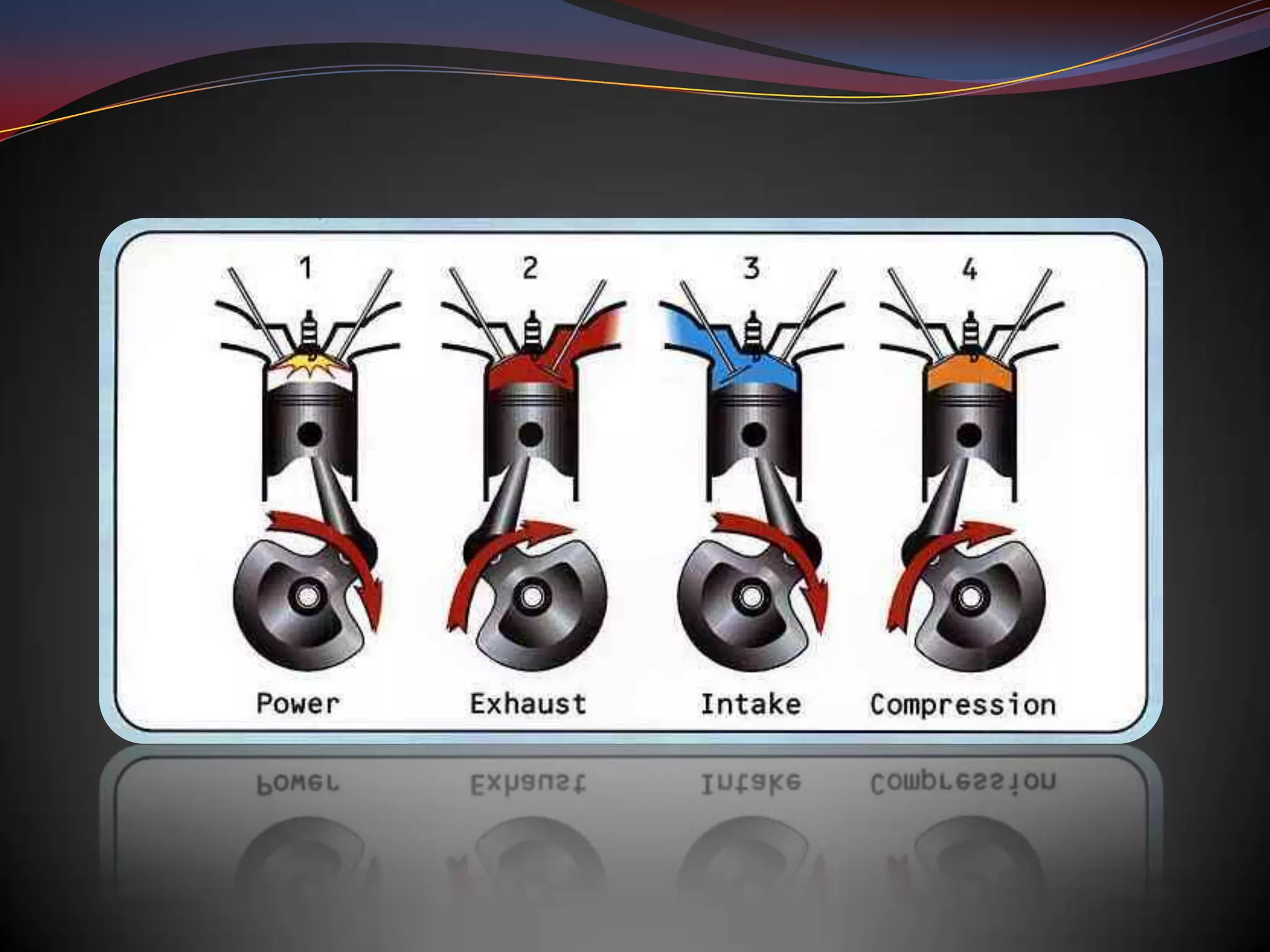
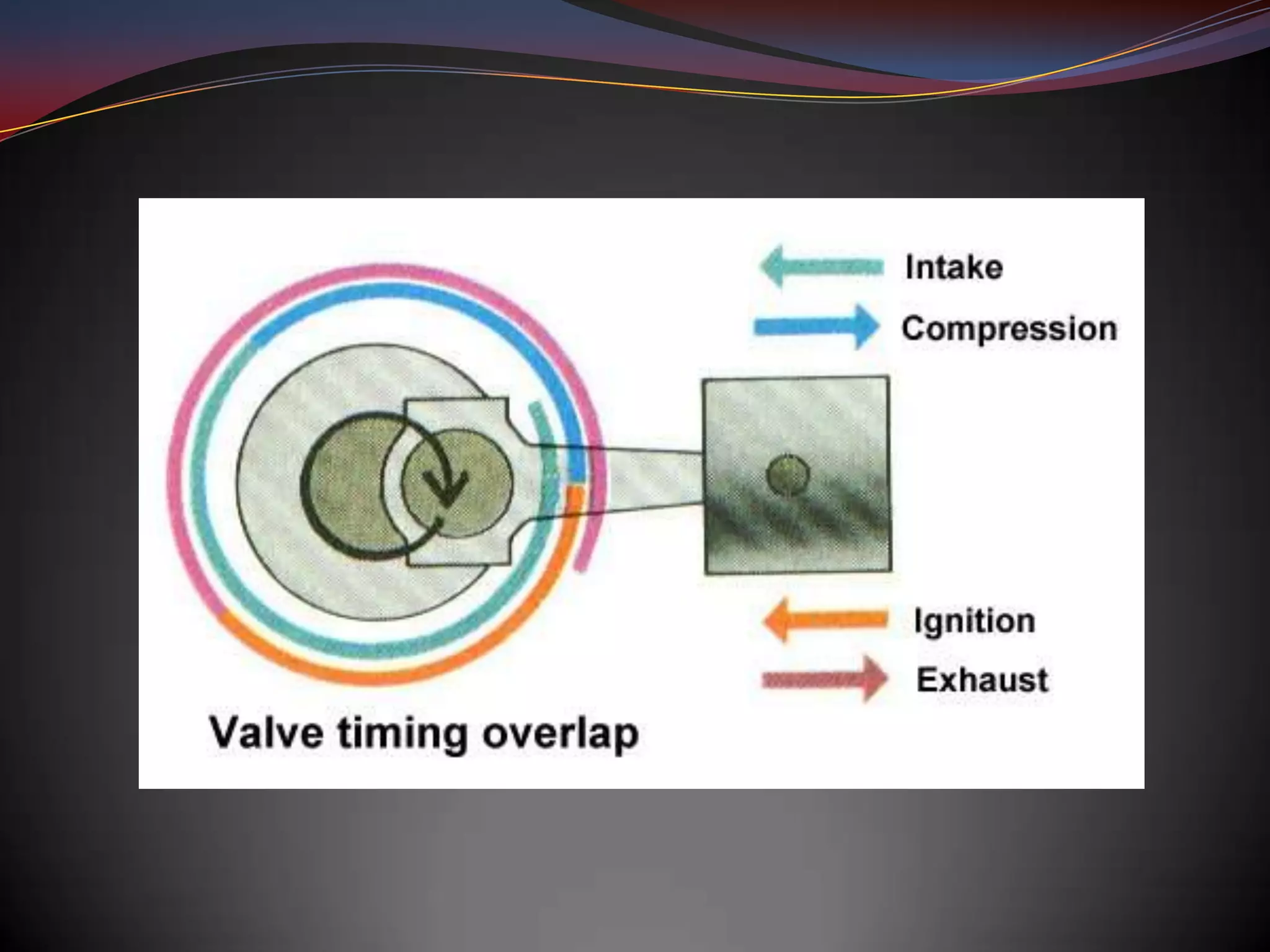
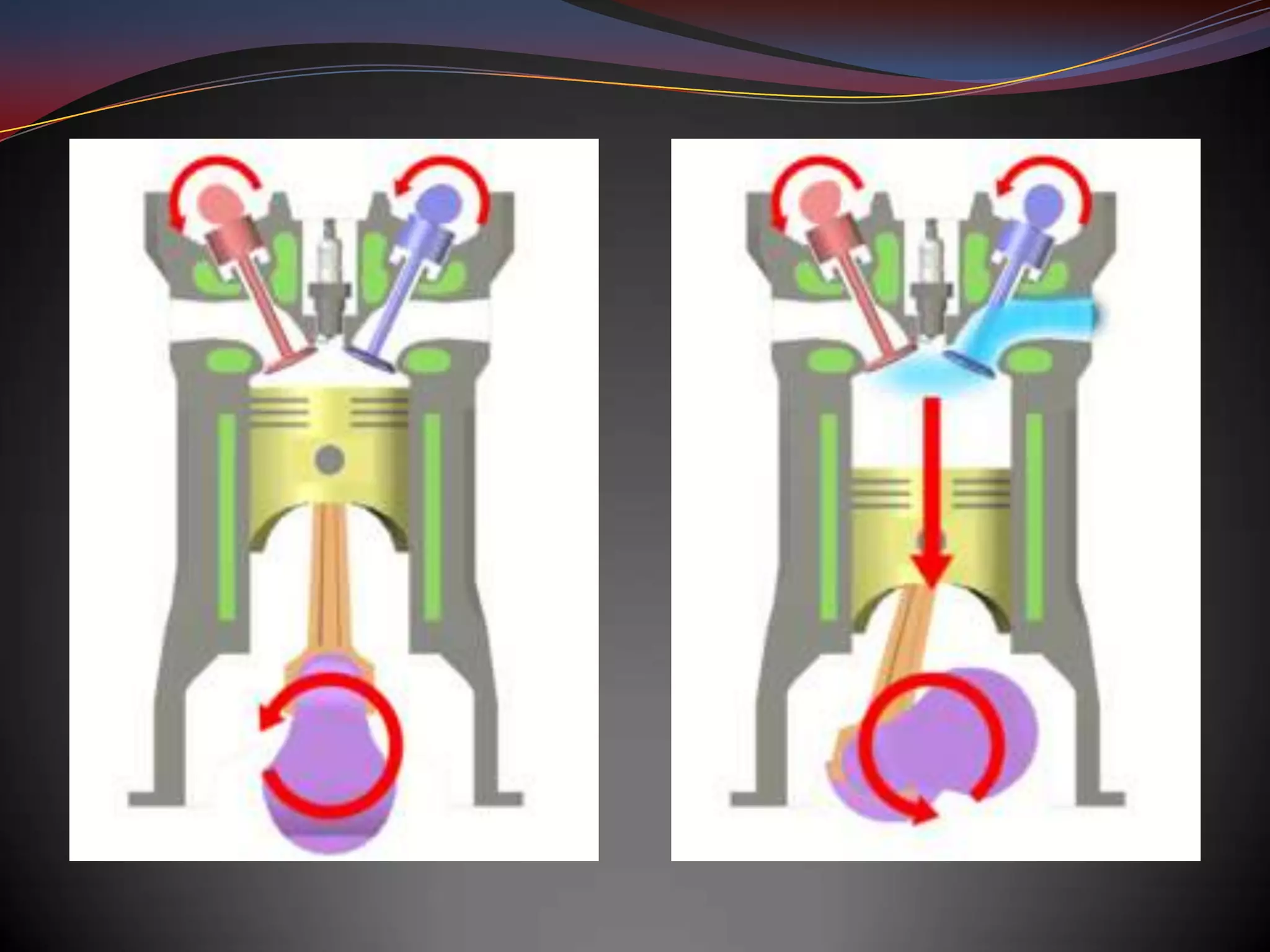
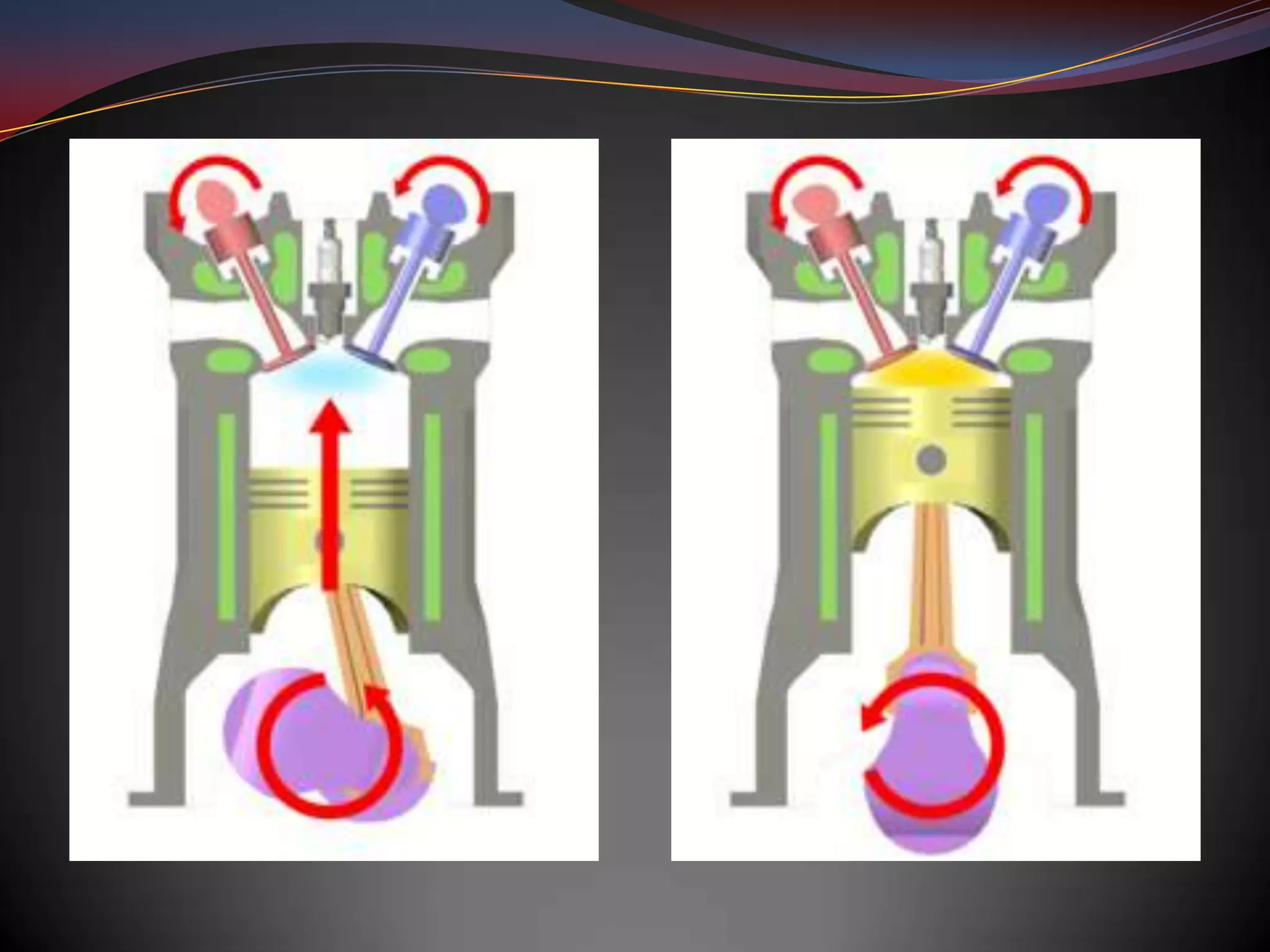
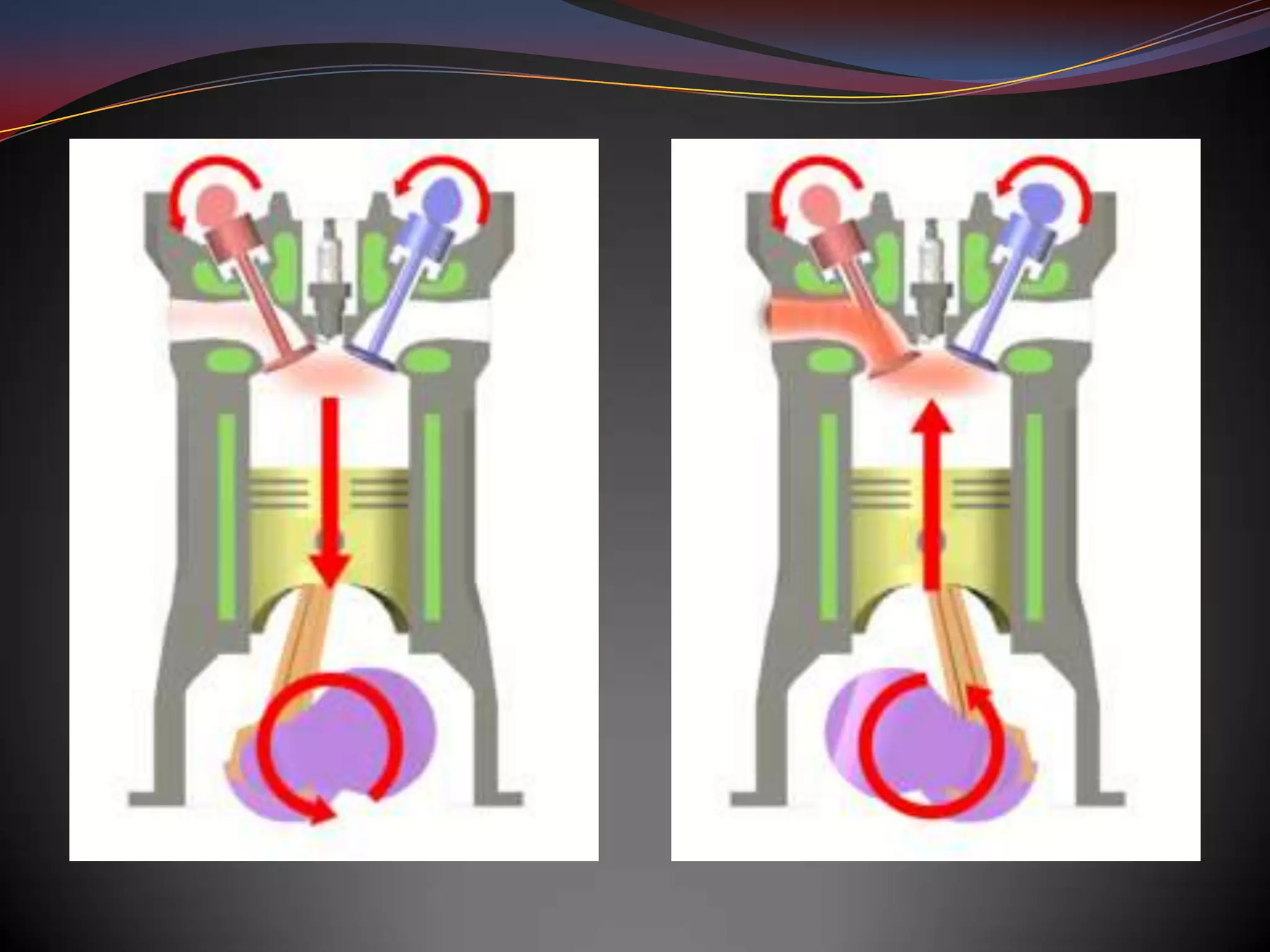
Power


Squash            Exhaust


         Intake
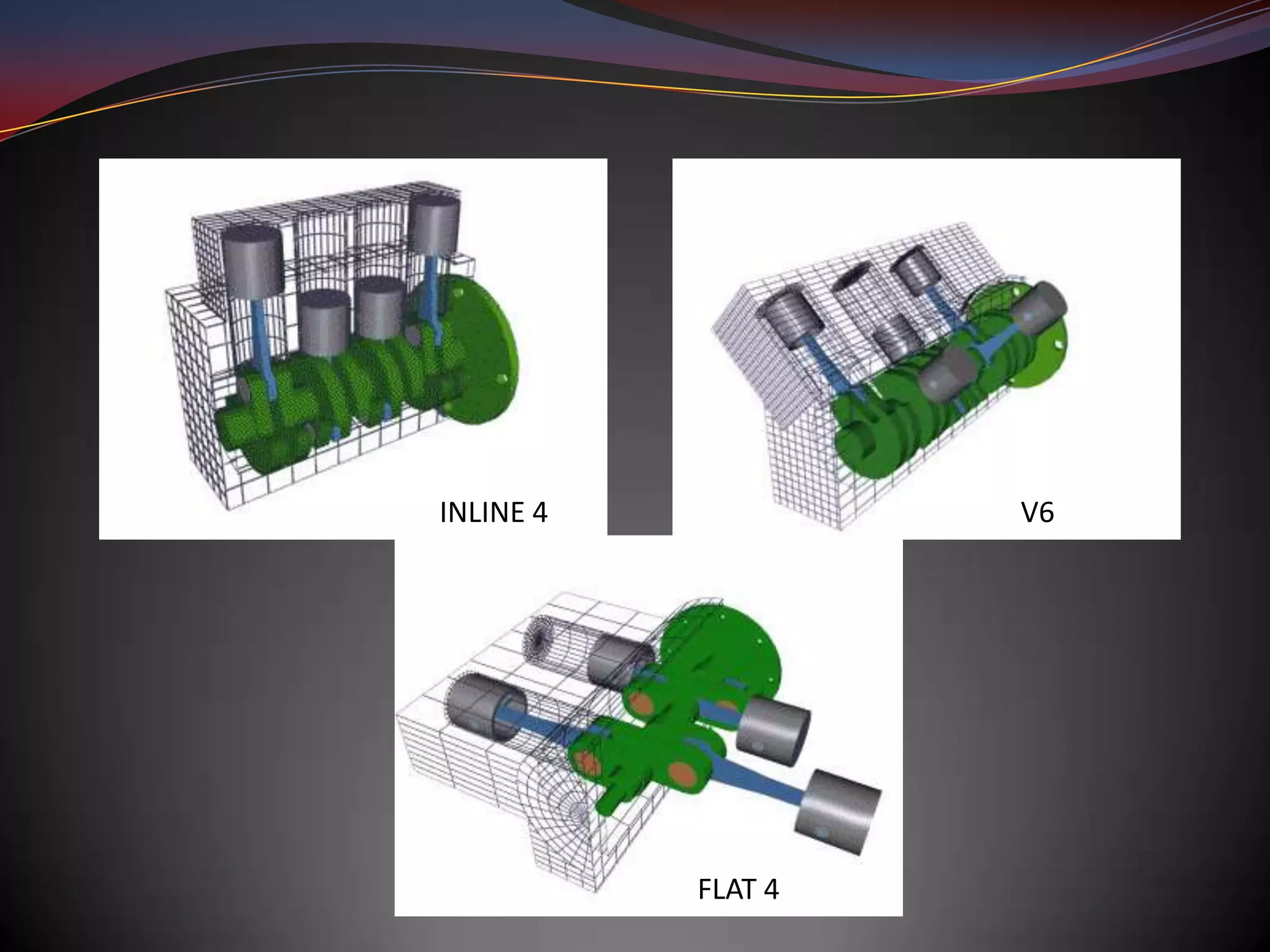
INLINE 4            V6


           FLAT 4
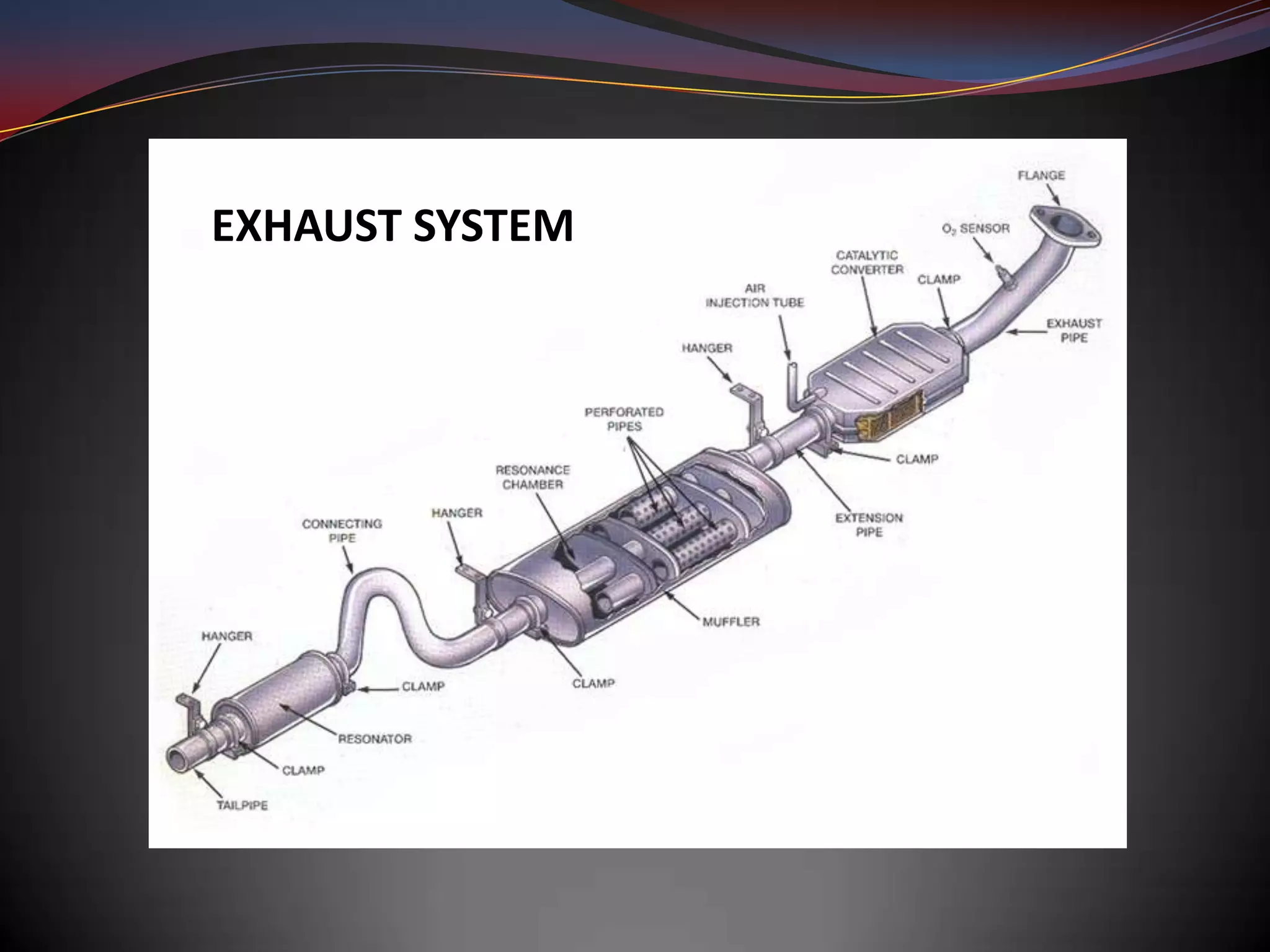
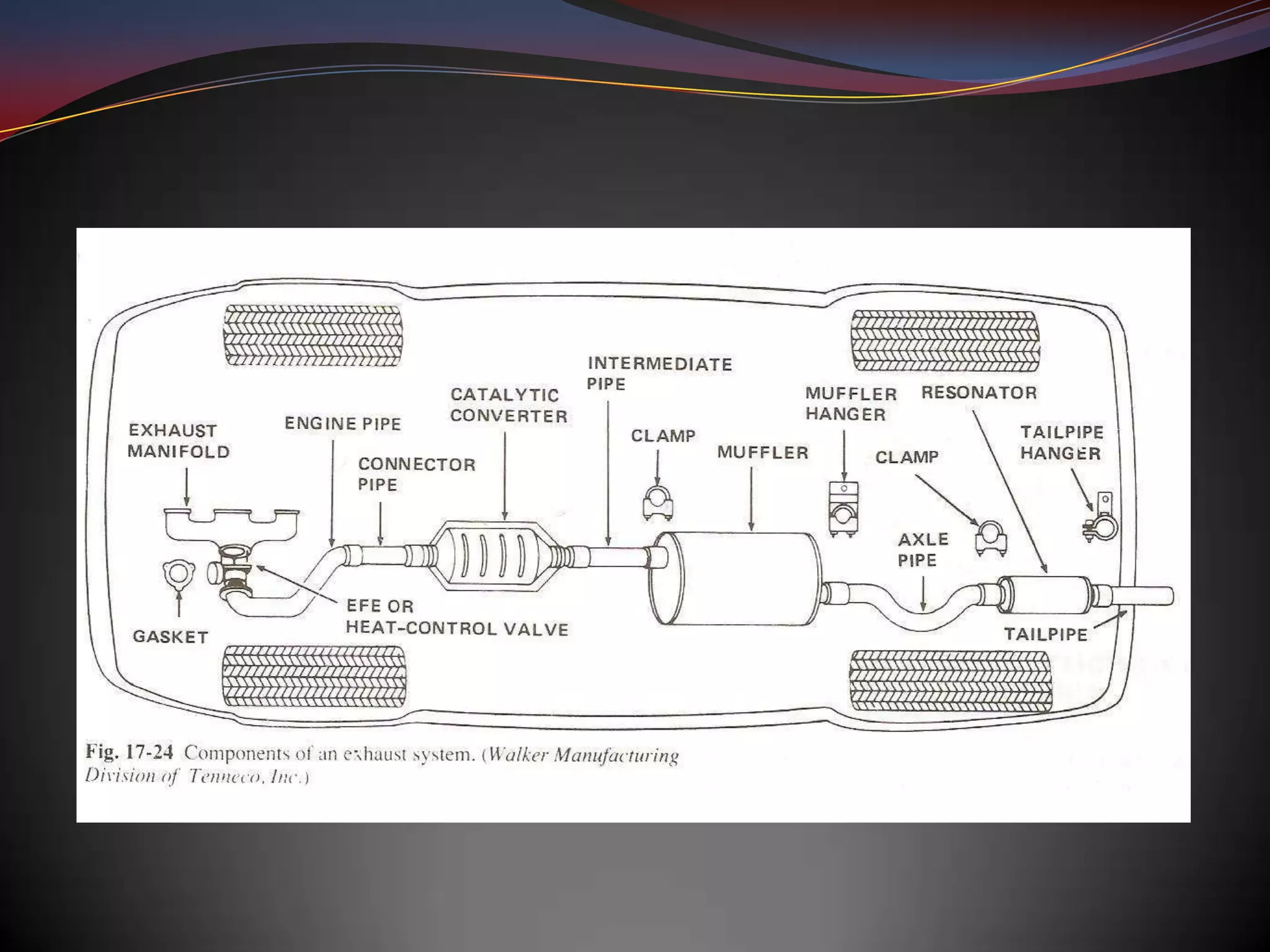
EXHAUST SYSTEM
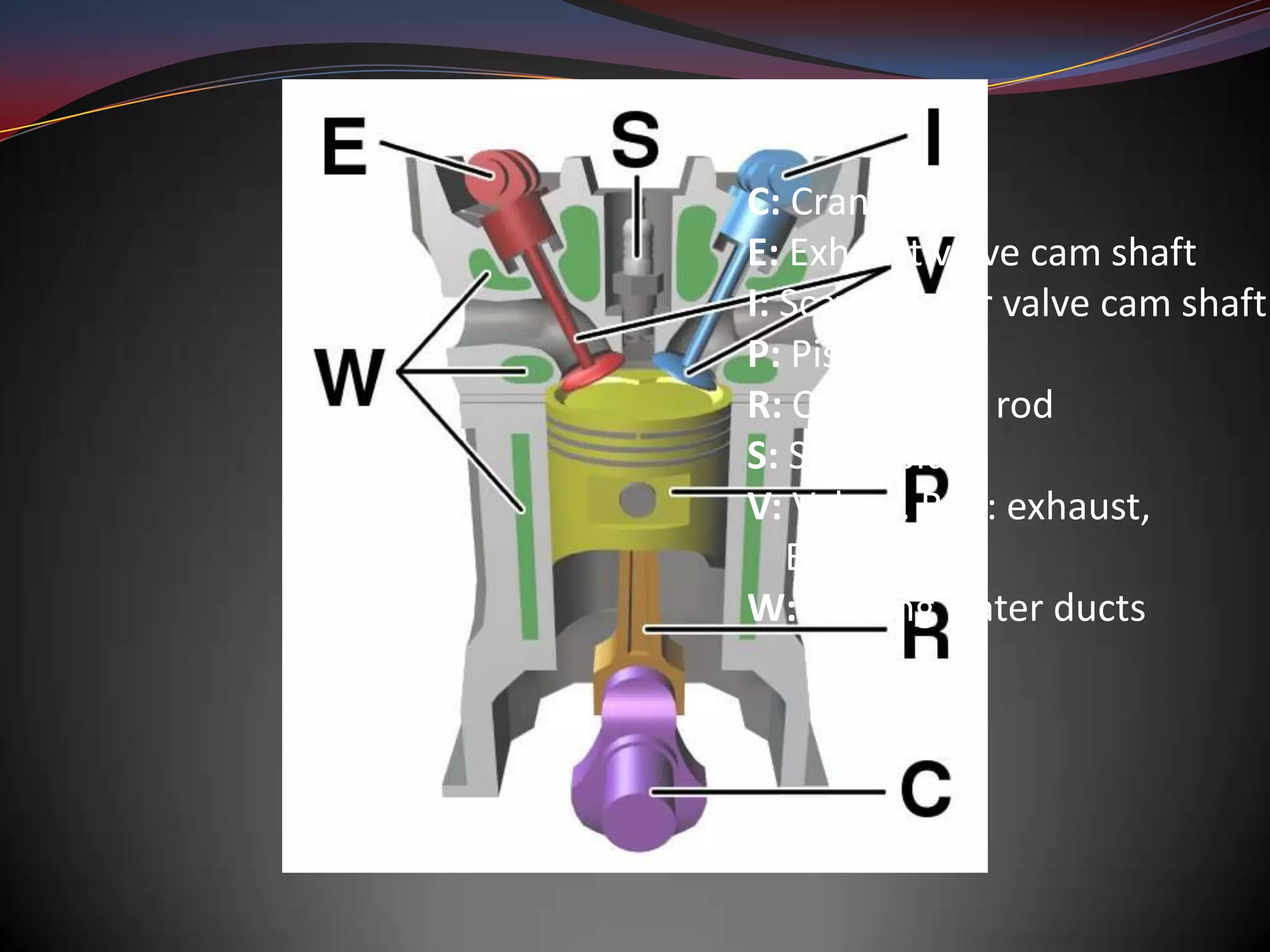
C: Crankshaft
E: Exhaust valve cam shaft
I: Scavenge air valve cam shaft
P: Piston
R: Connecting rod
S: Spark plug
V: Valves. Red: exhaust,
   Blue: intake
W: Cooling water ducts
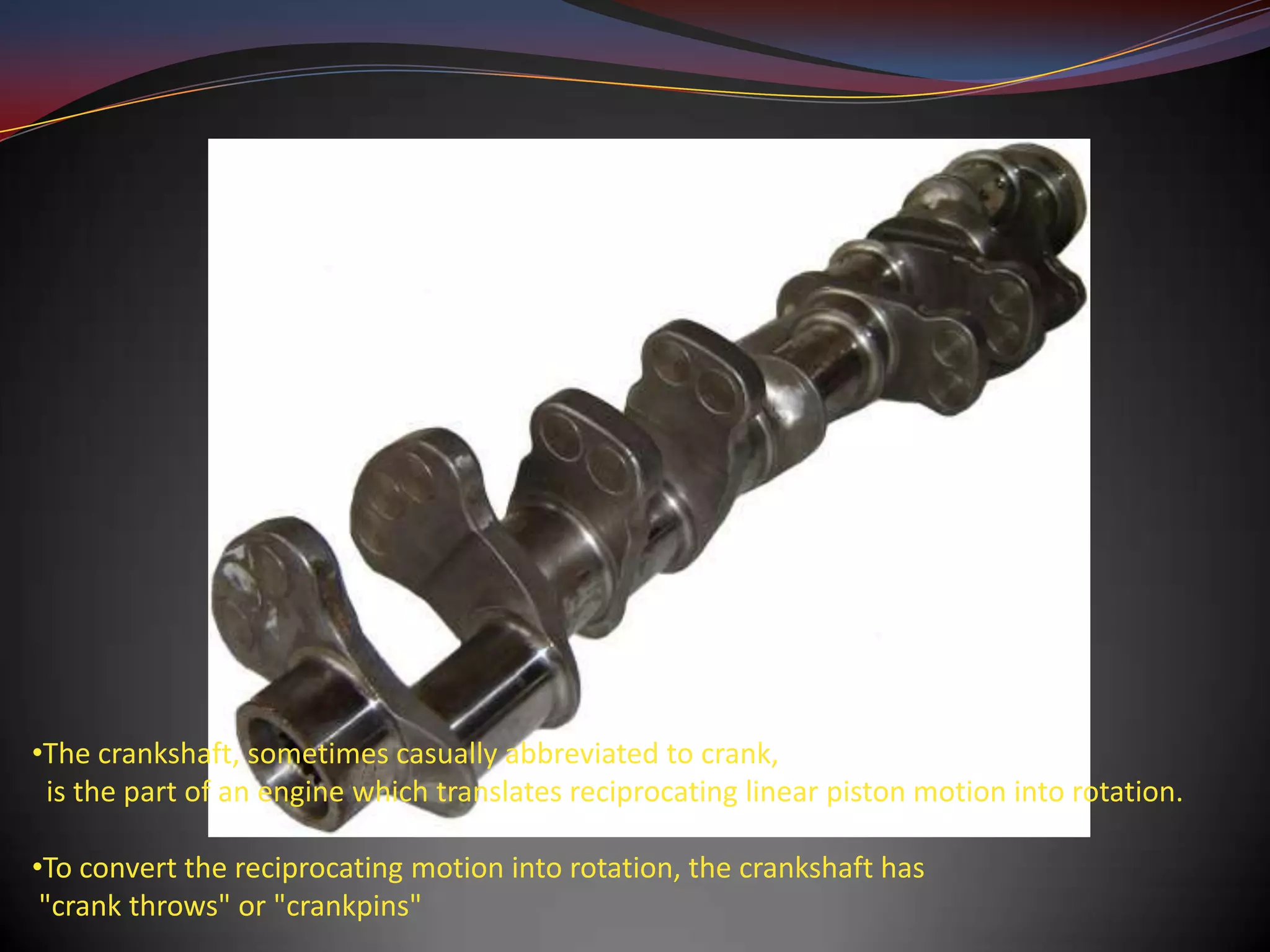
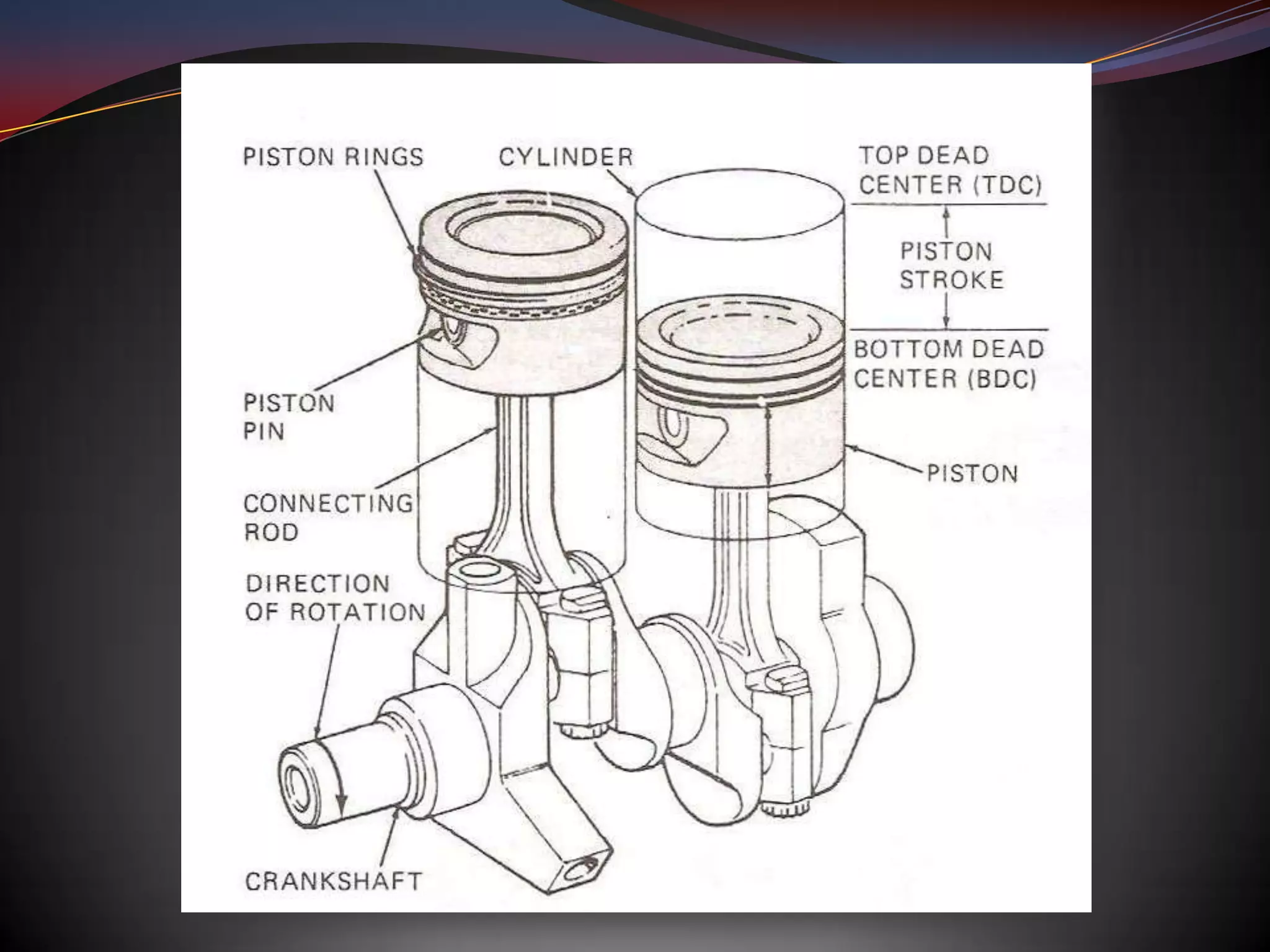
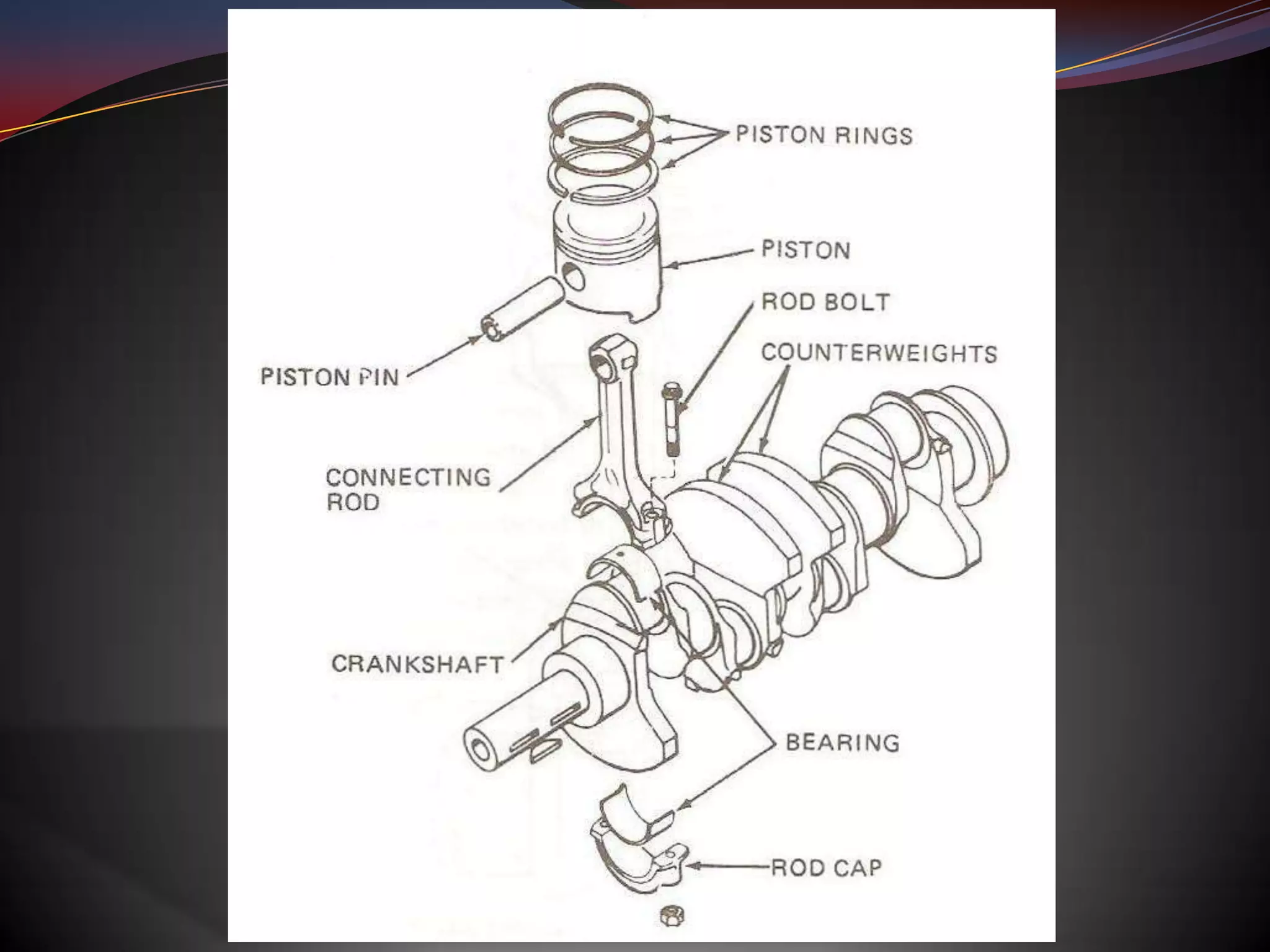
•The crankshaft, sometimes casually abbreviated to crank,

 is the part of an engine which translates reciprocating linear piston motion into rotation.

•To convert the reciprocating motion into rotation, the crankshaft has
 "crank throws" or "crankpins"
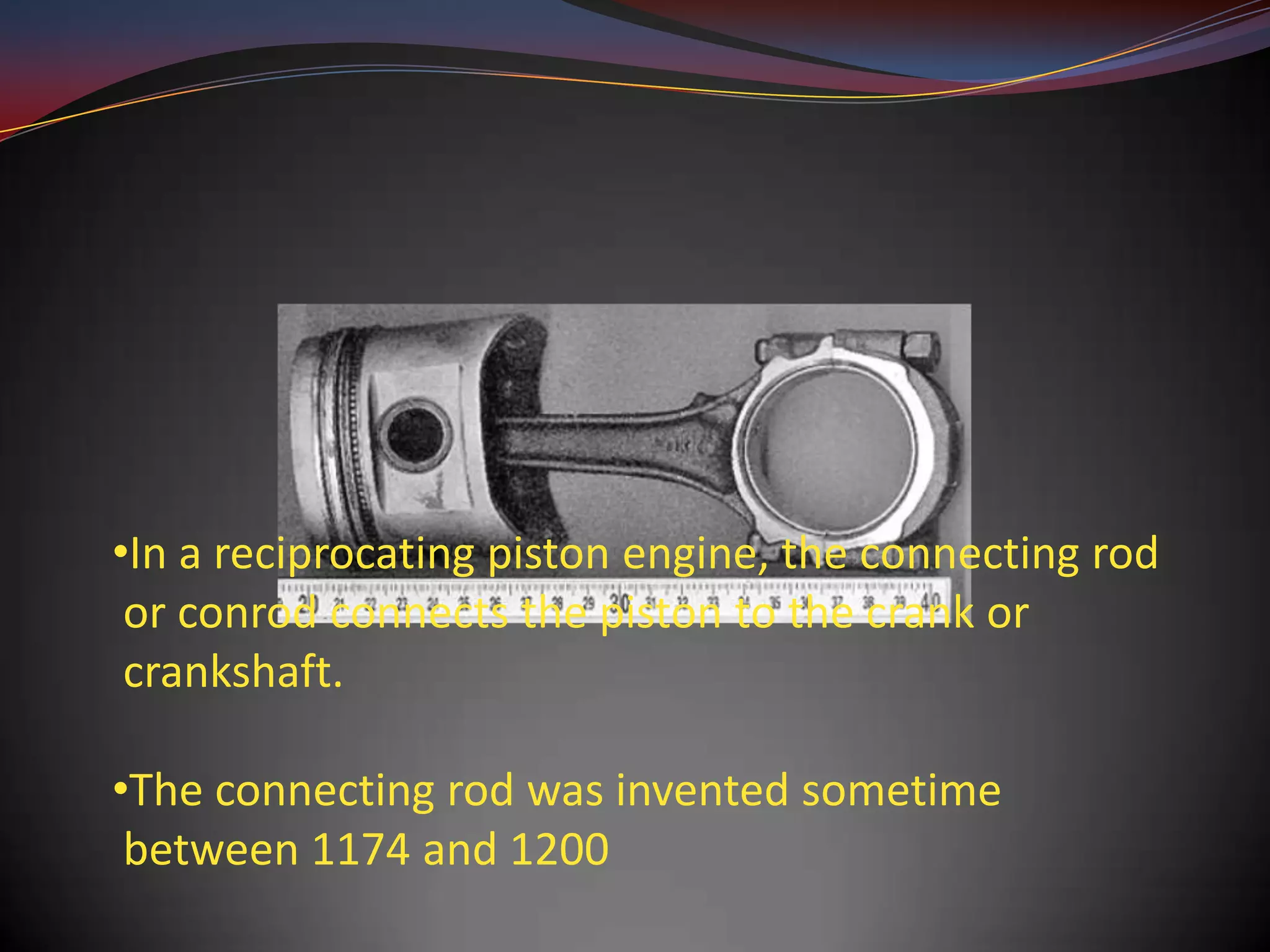
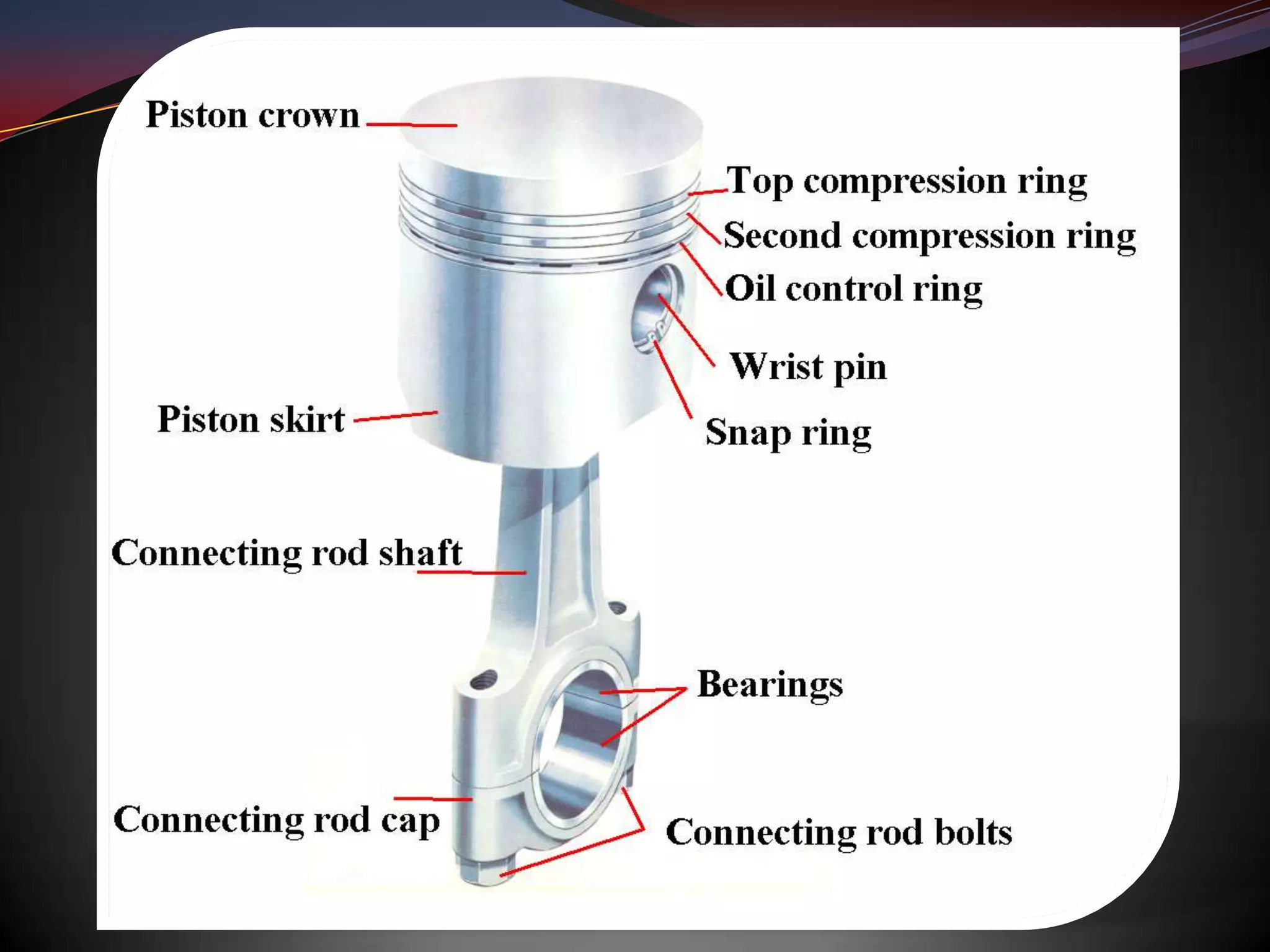
•In a reciprocating piston engine, the connecting rod
 or conrod connects the piston to the crank or
 crankshaft.

•The connecting rod was invented sometime
 between 1174 and 1200
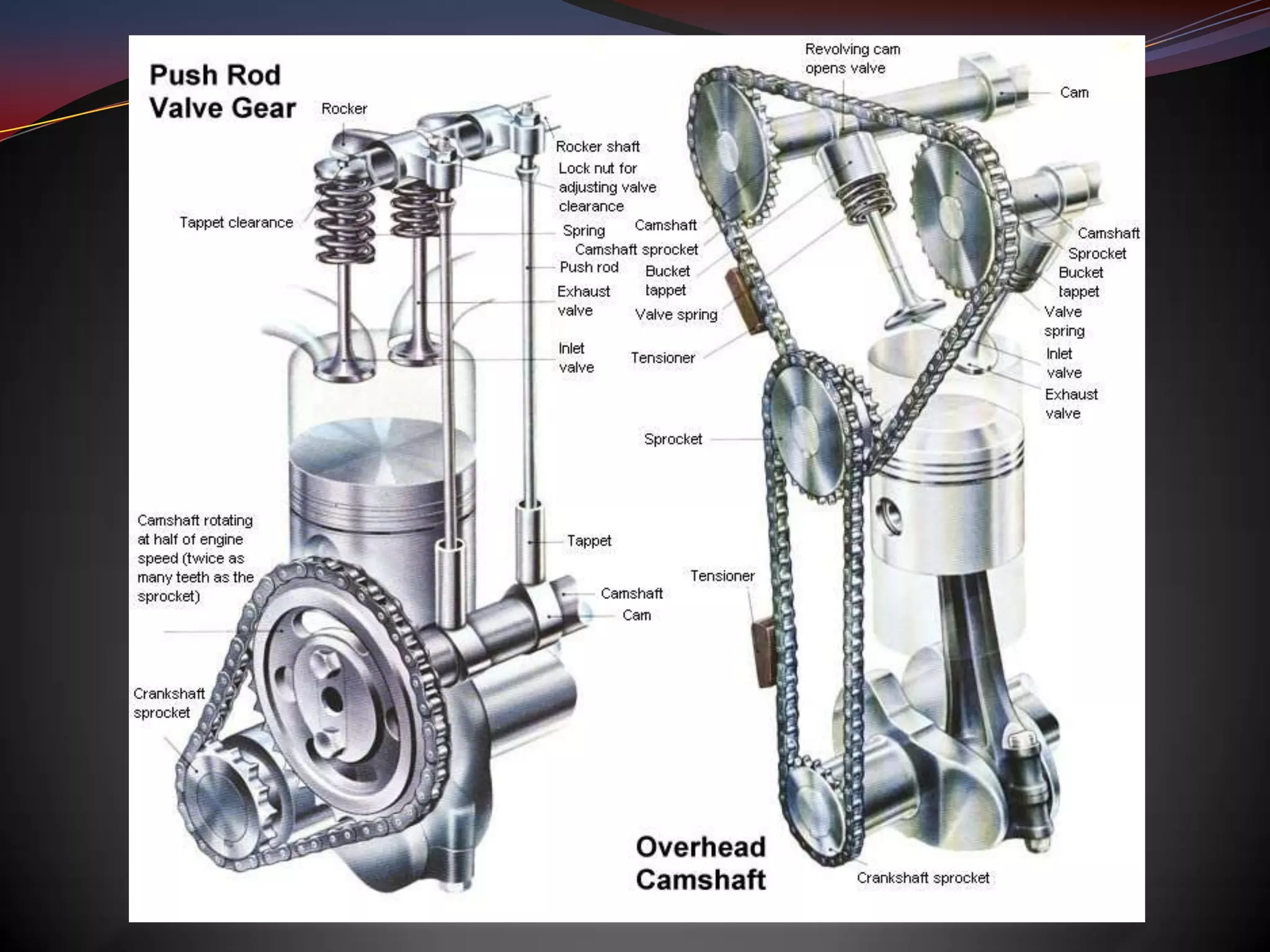
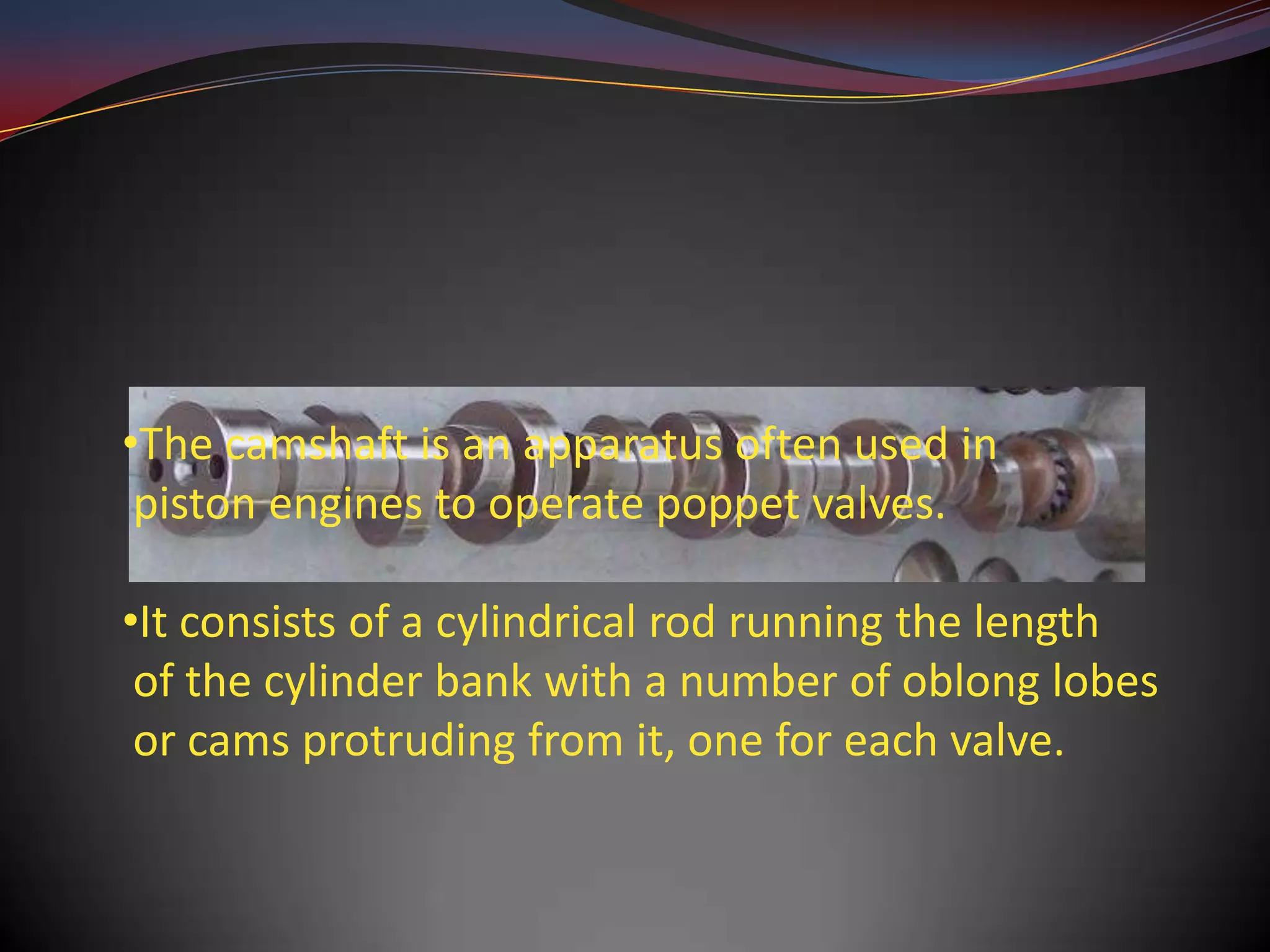
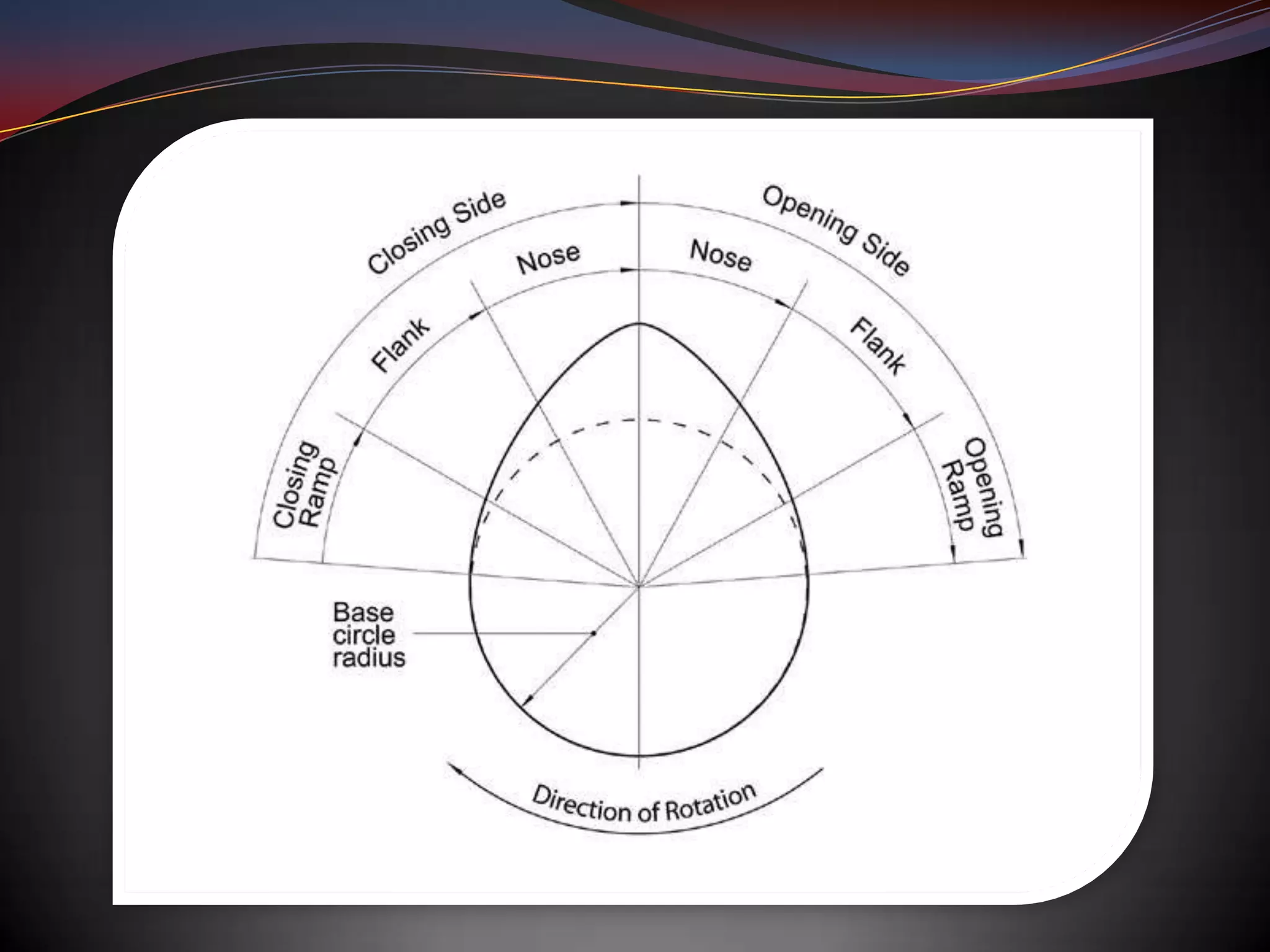
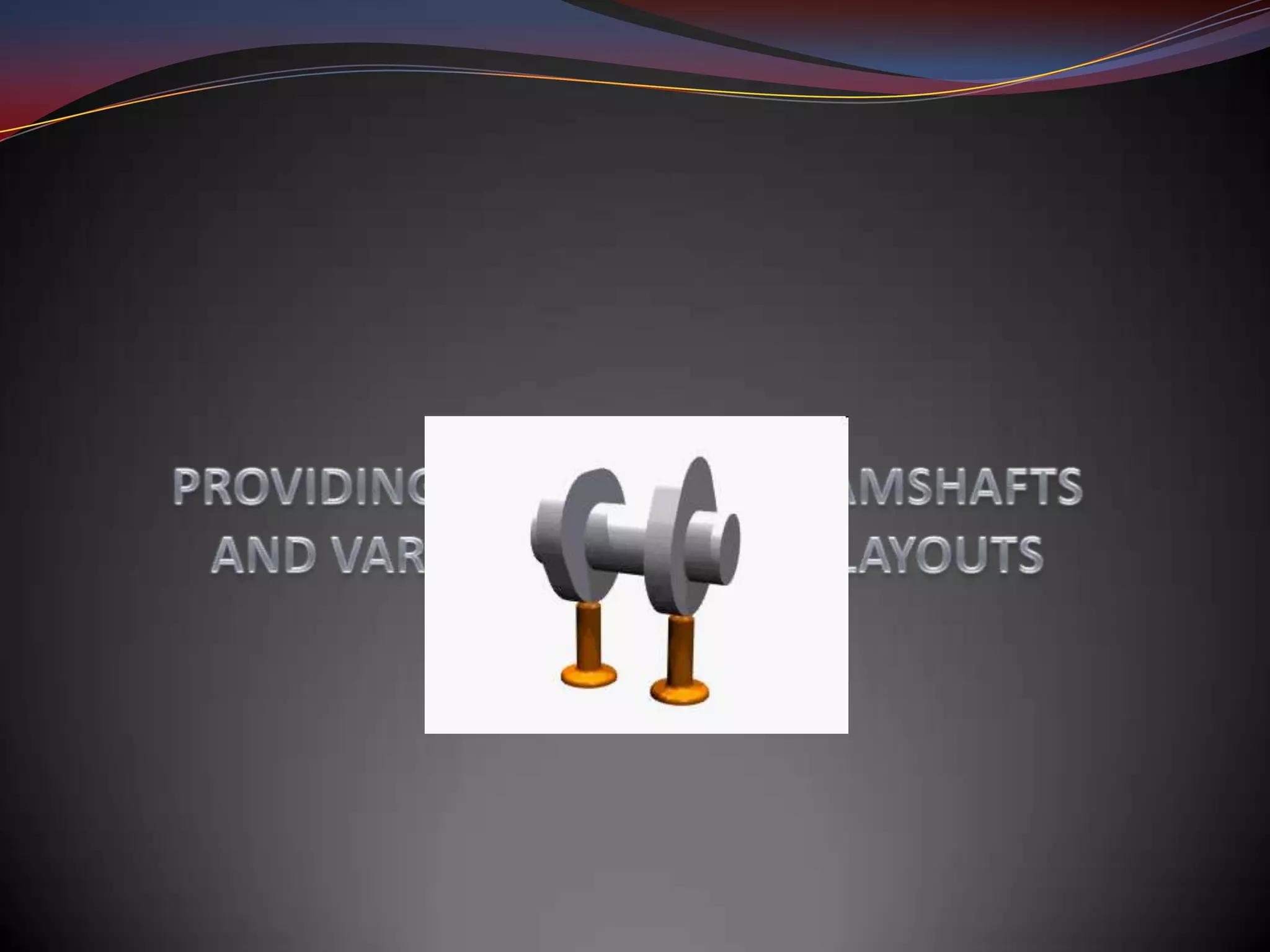
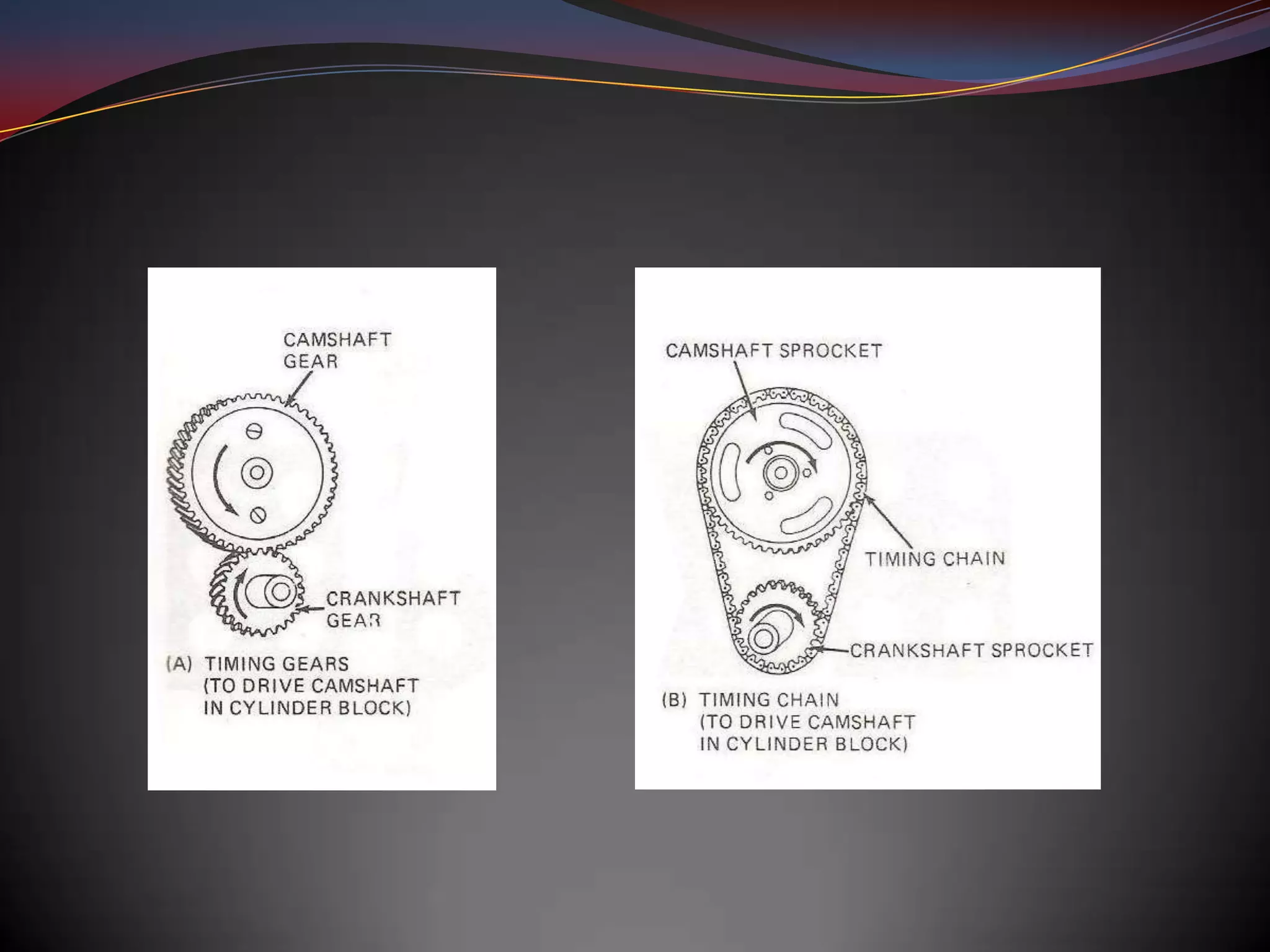
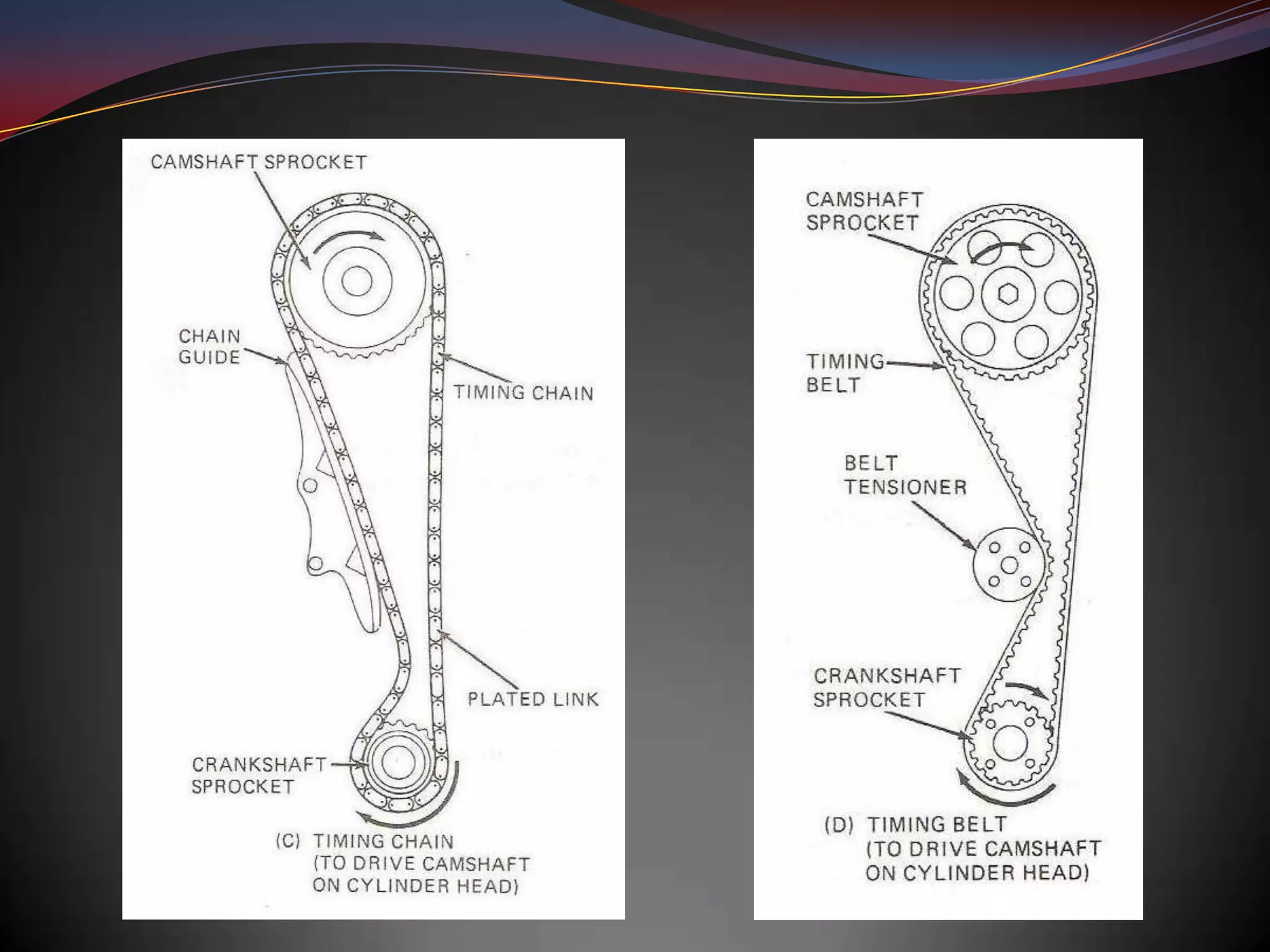
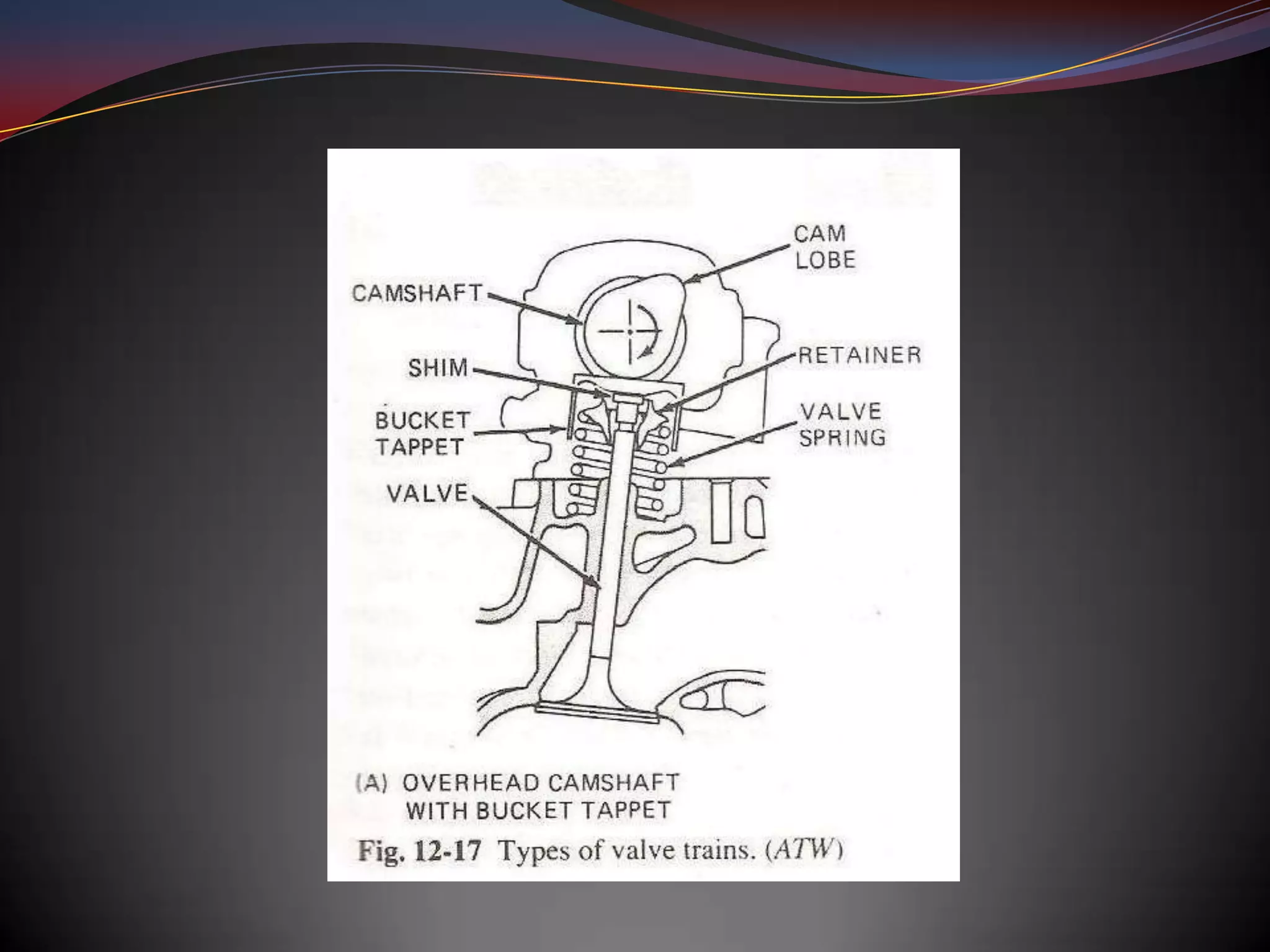
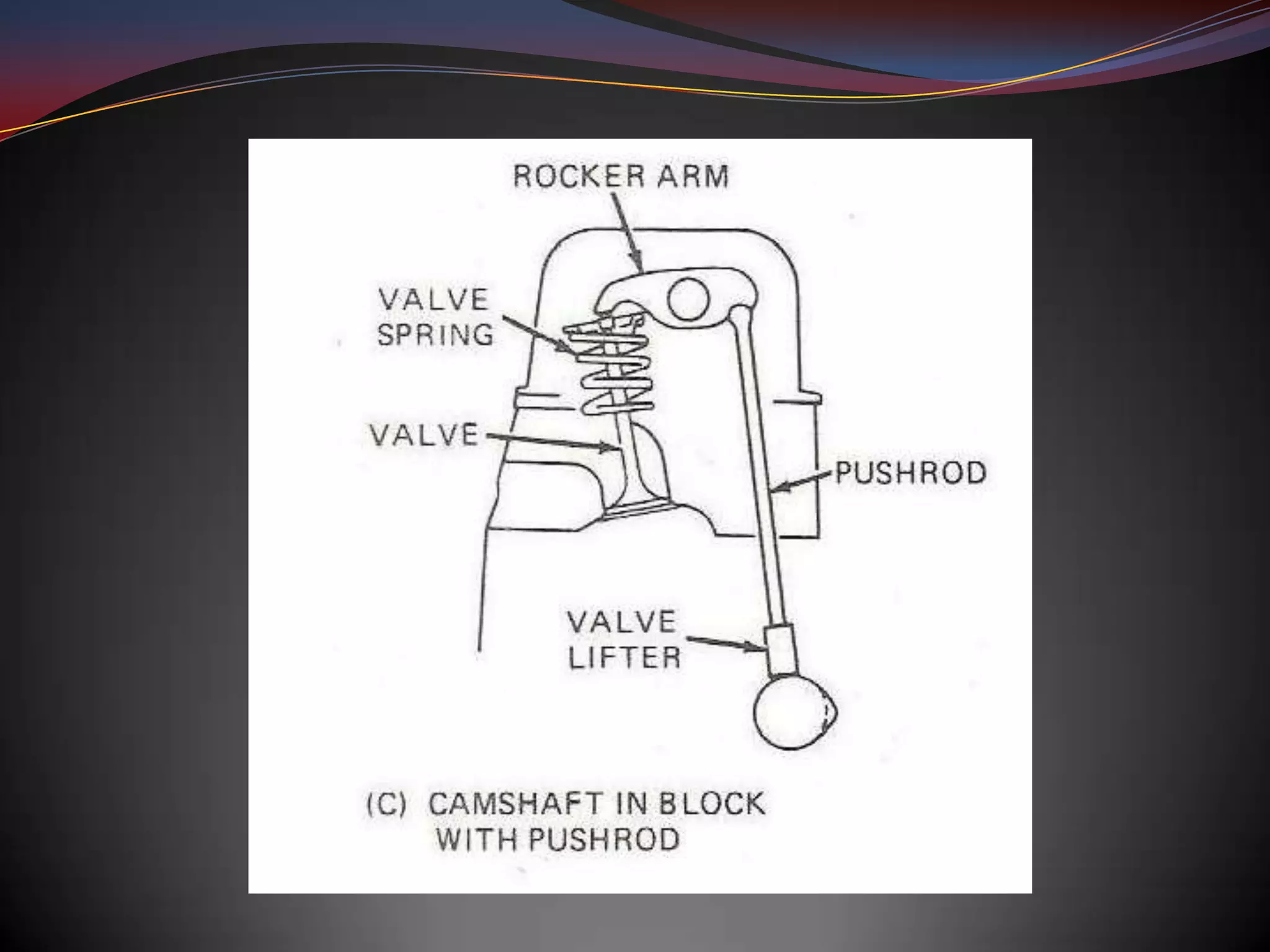
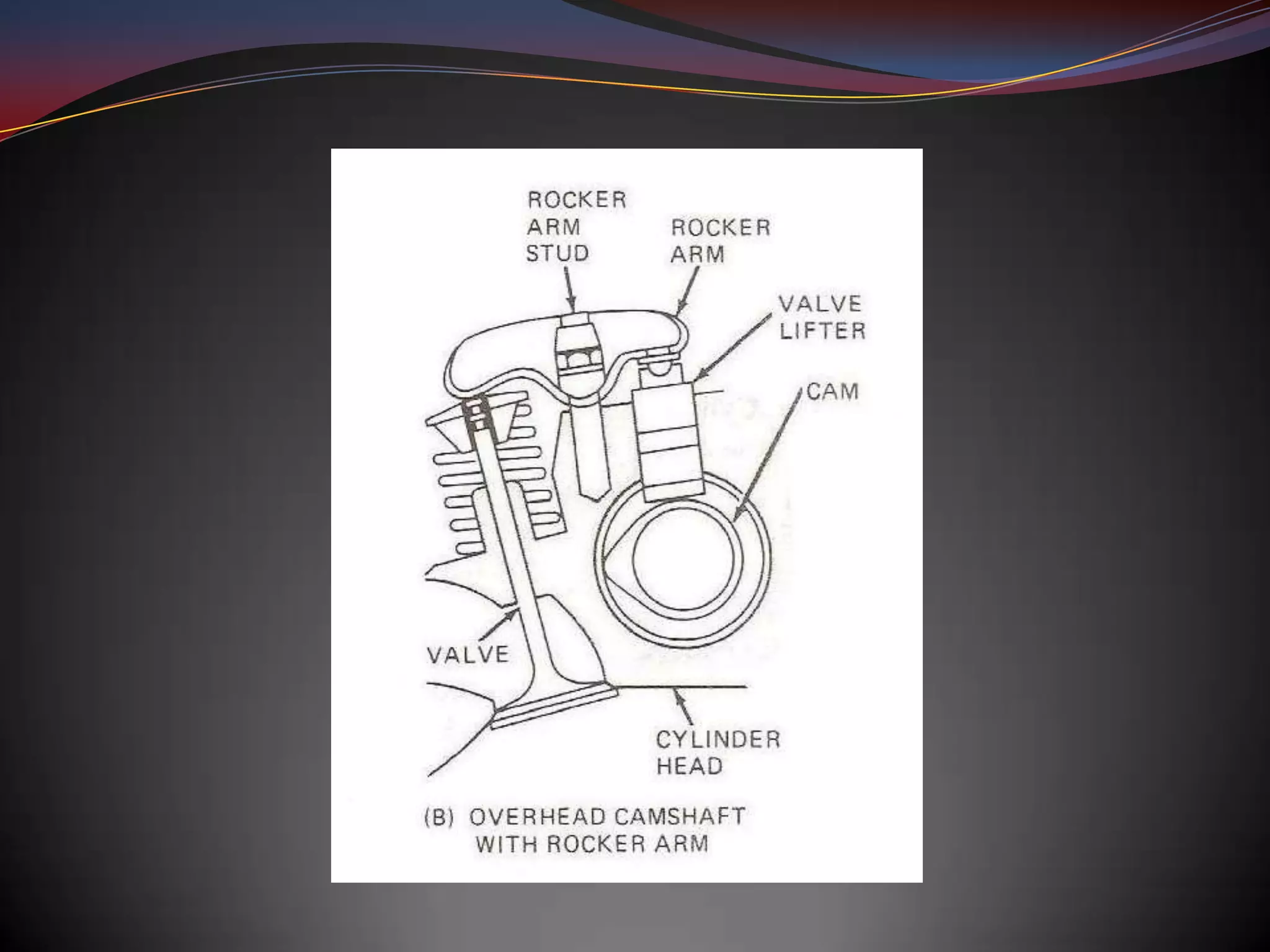
•The camshaft is an apparatus often used in
 piston engines to operate poppet valves.

•It consists of a cylindrical rod running the length
 of the cylinder bank with a number of oblong lobes
 or cams protruding from it, one for each valve.
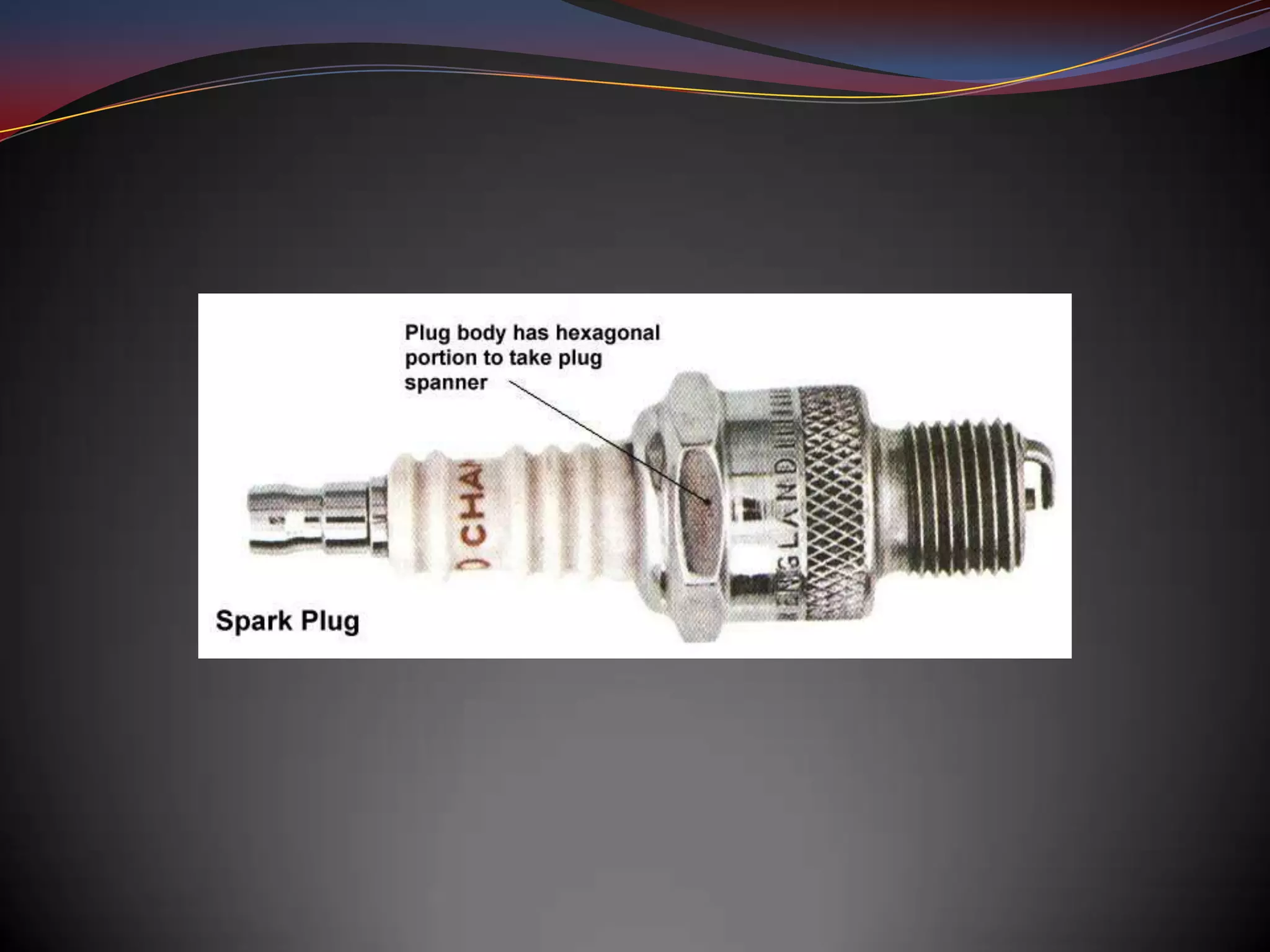
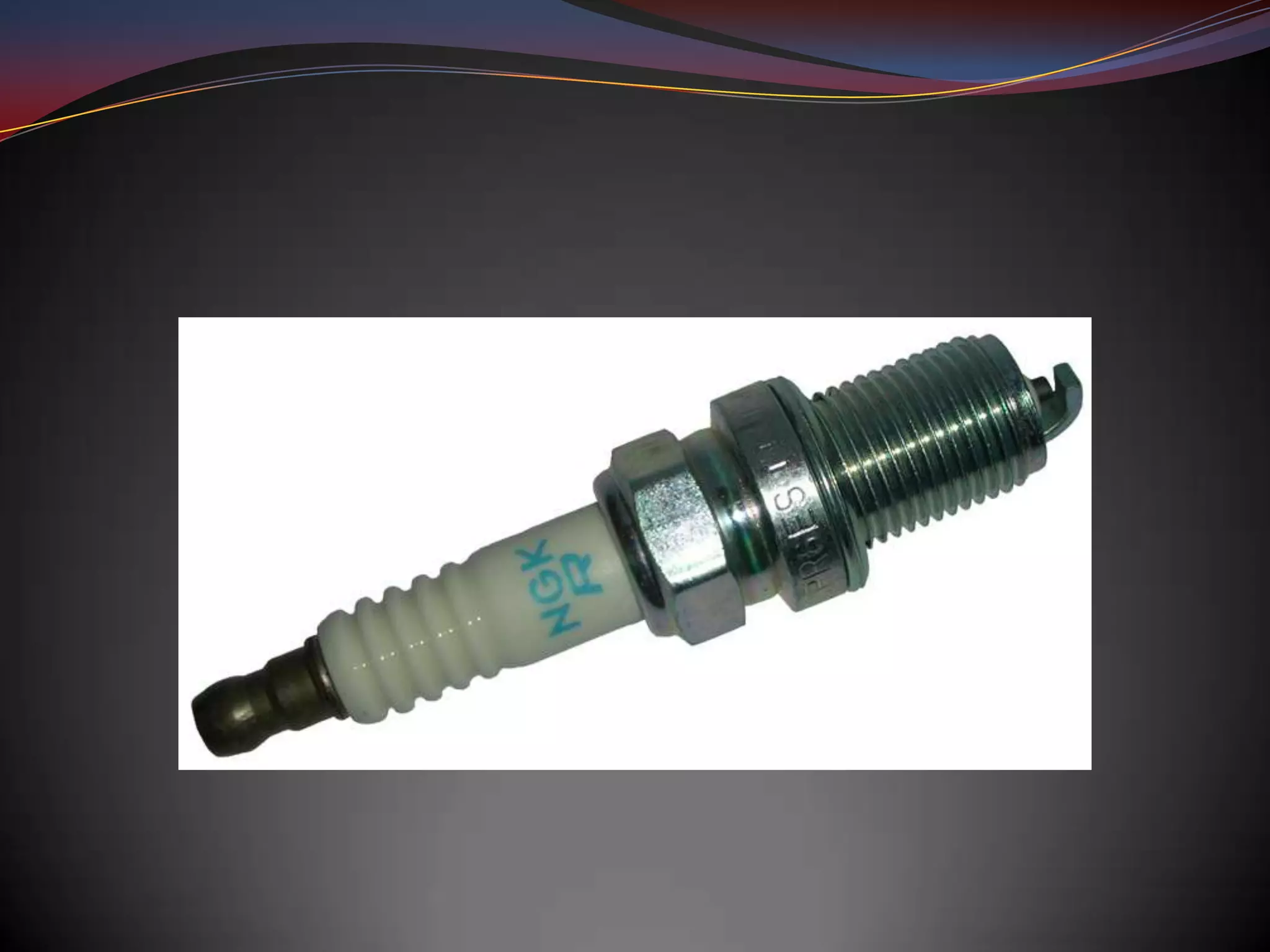
• A spark plug is an electrical device that fits into
 the cylinder head of internal combustion engines
 and ignites compressed aerosol gasoline by means
 of an electric spark.

• Internal combustion engines can be divided into
 spark-ignition engines, which require spark plugs
 to begin combustion, and compression-ignition engines
 (diesel engines), which compress the air and then inject
 diesel fuel into the heated compressed air mixture
 where it auto-ignites.
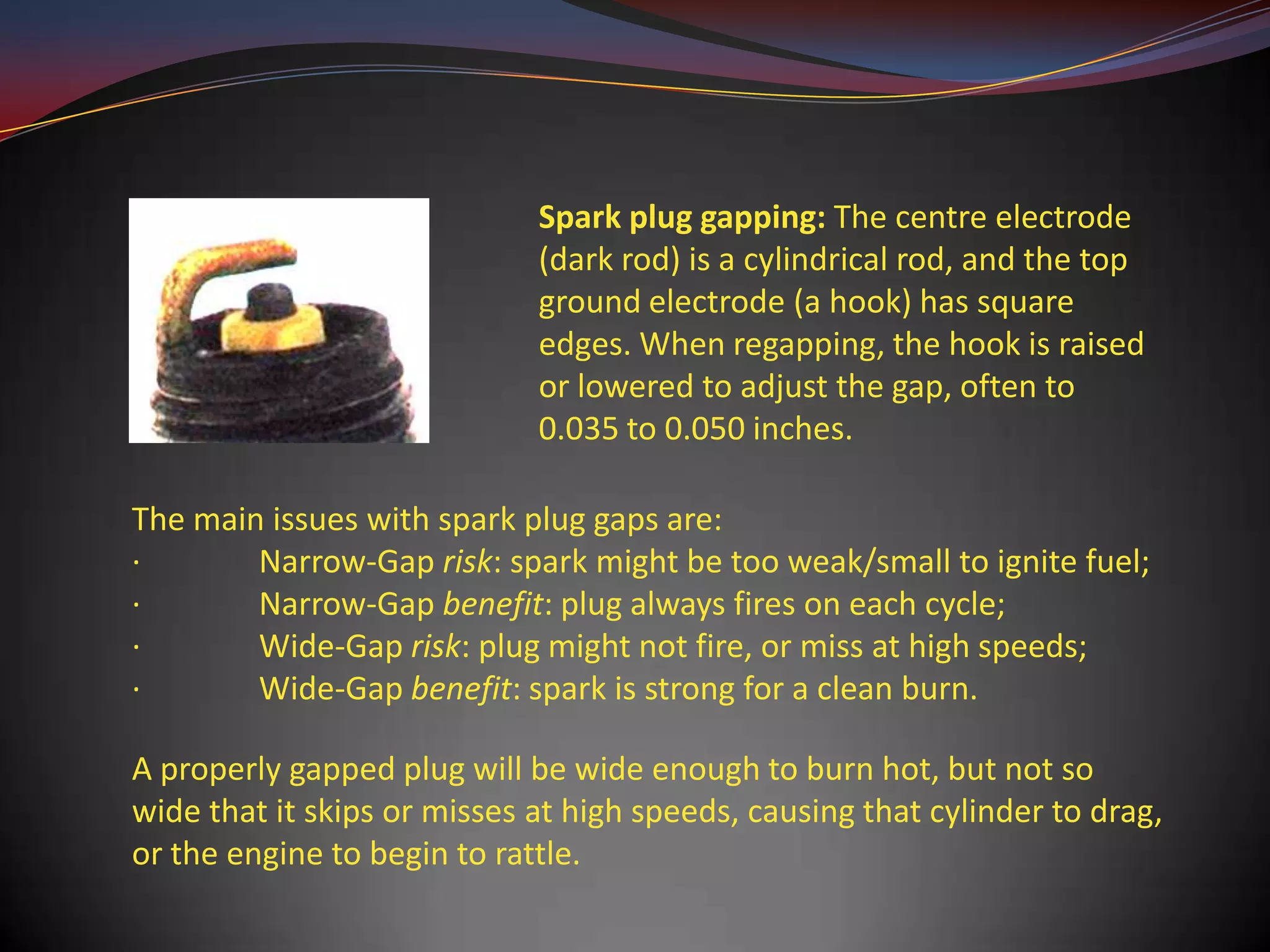
Spark plug gapping: The centre electrode
                             (dark rod) is a cylindrical rod, and the top
                             ground electrode (a hook) has square
                             edges. When regapping, the hook is raised
                             or lowered to adjust the gap, often to
                             0.035 to 0.050 inches.

The main issues with spark plug gaps are:
·       Narrow-Gap risk: spark might be too weak/small to ignite fuel;
·       Narrow-Gap benefit: plug always fires on each cycle;
·       Wide-Gap risk: plug might not fire, or miss at high speeds;
·       Wide-Gap benefit: spark is strong for a clean burn.

A properly gapped plug will be wide enough to burn hot, but not so
wide that it skips or misses at high speeds, causing that cylinder to drag,
or the engine to begin to rattle.
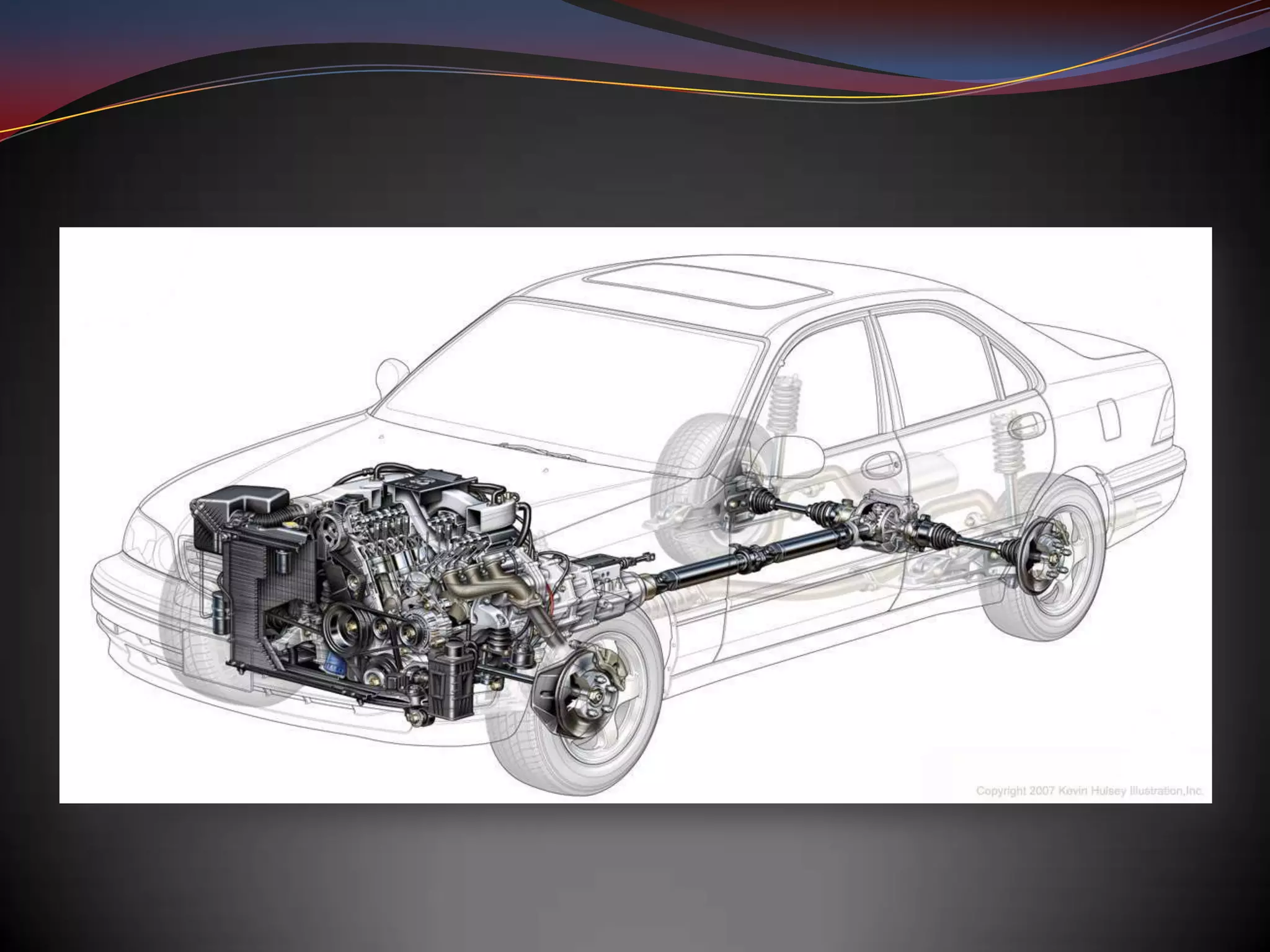
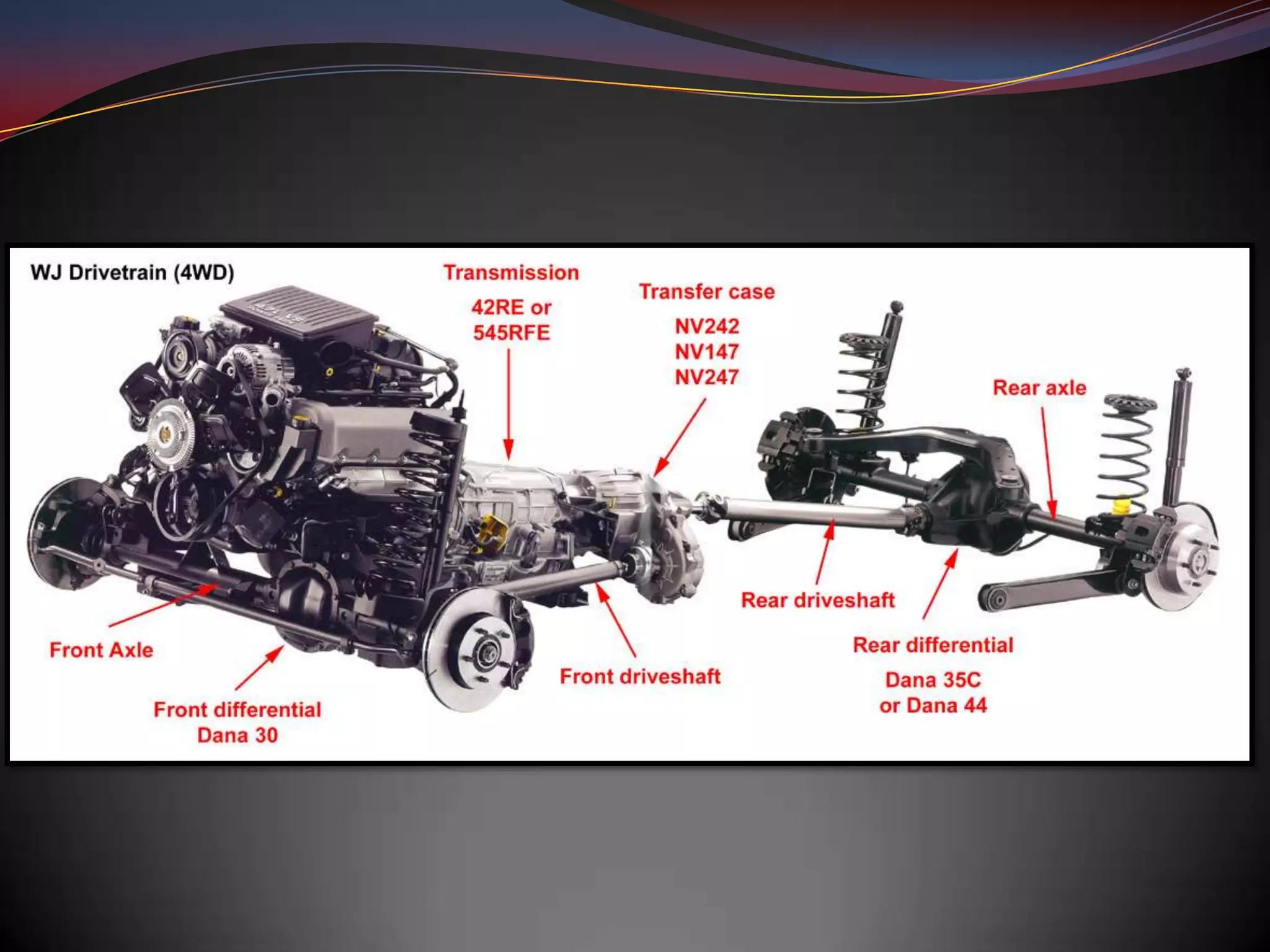
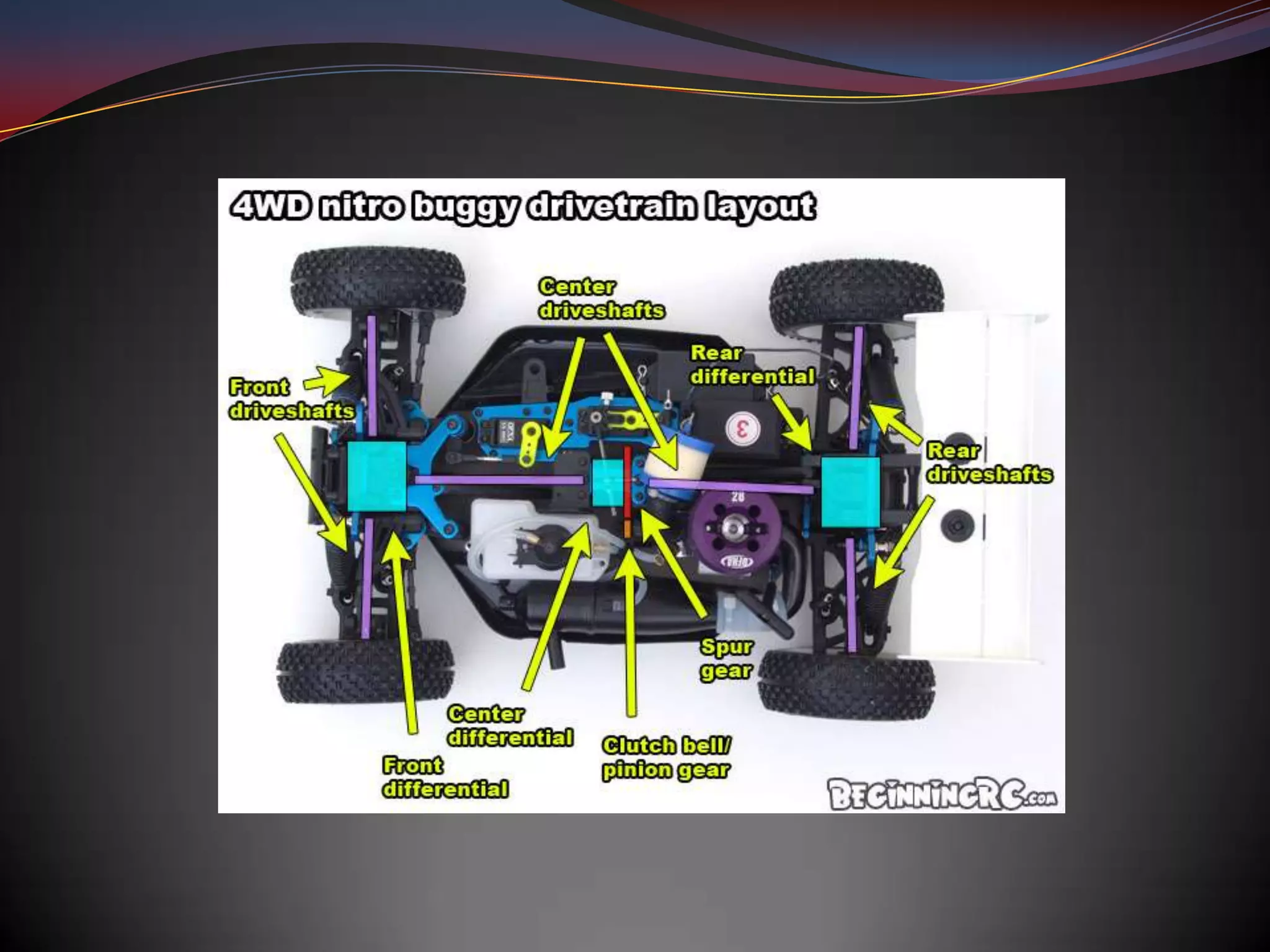
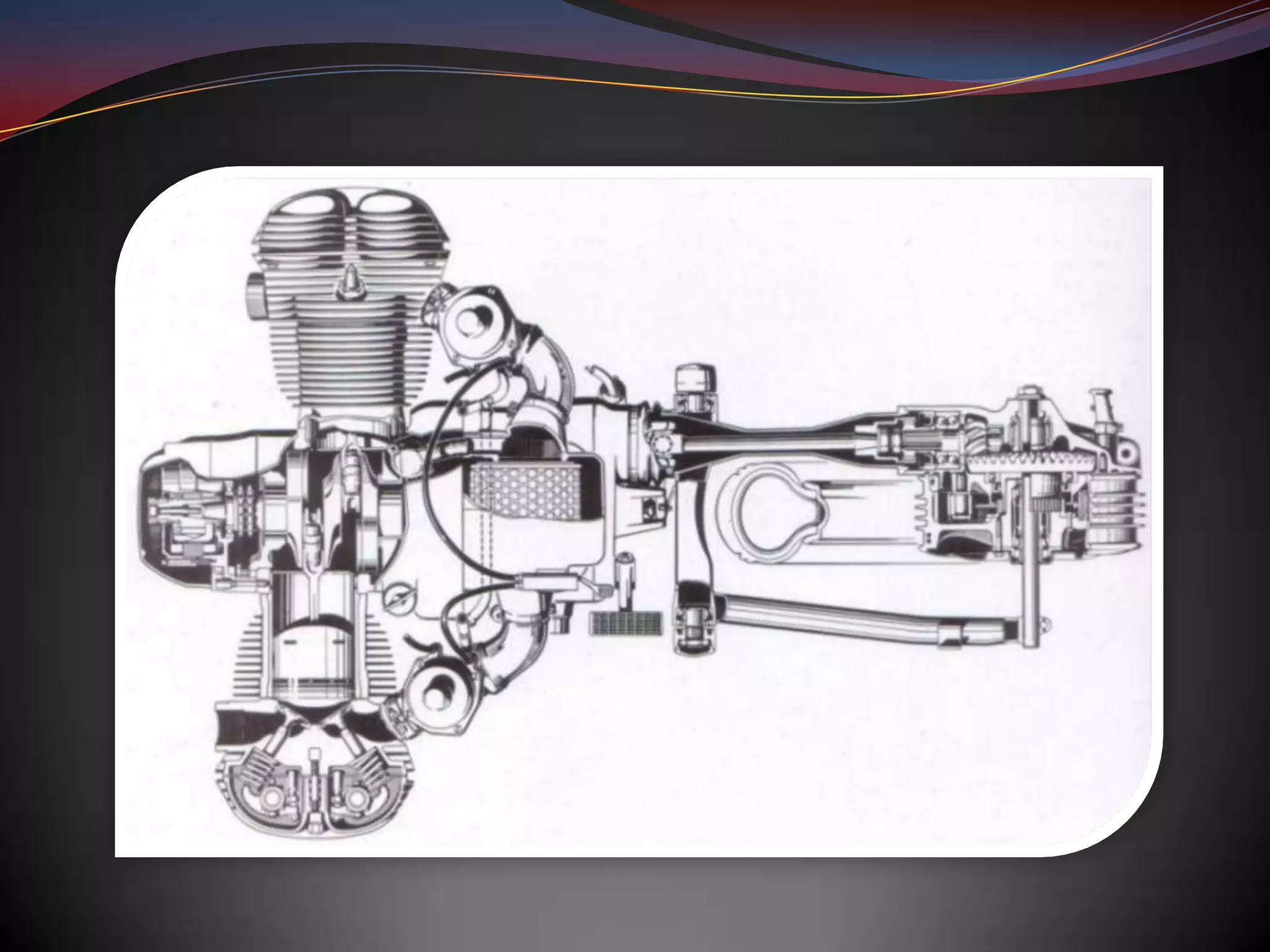
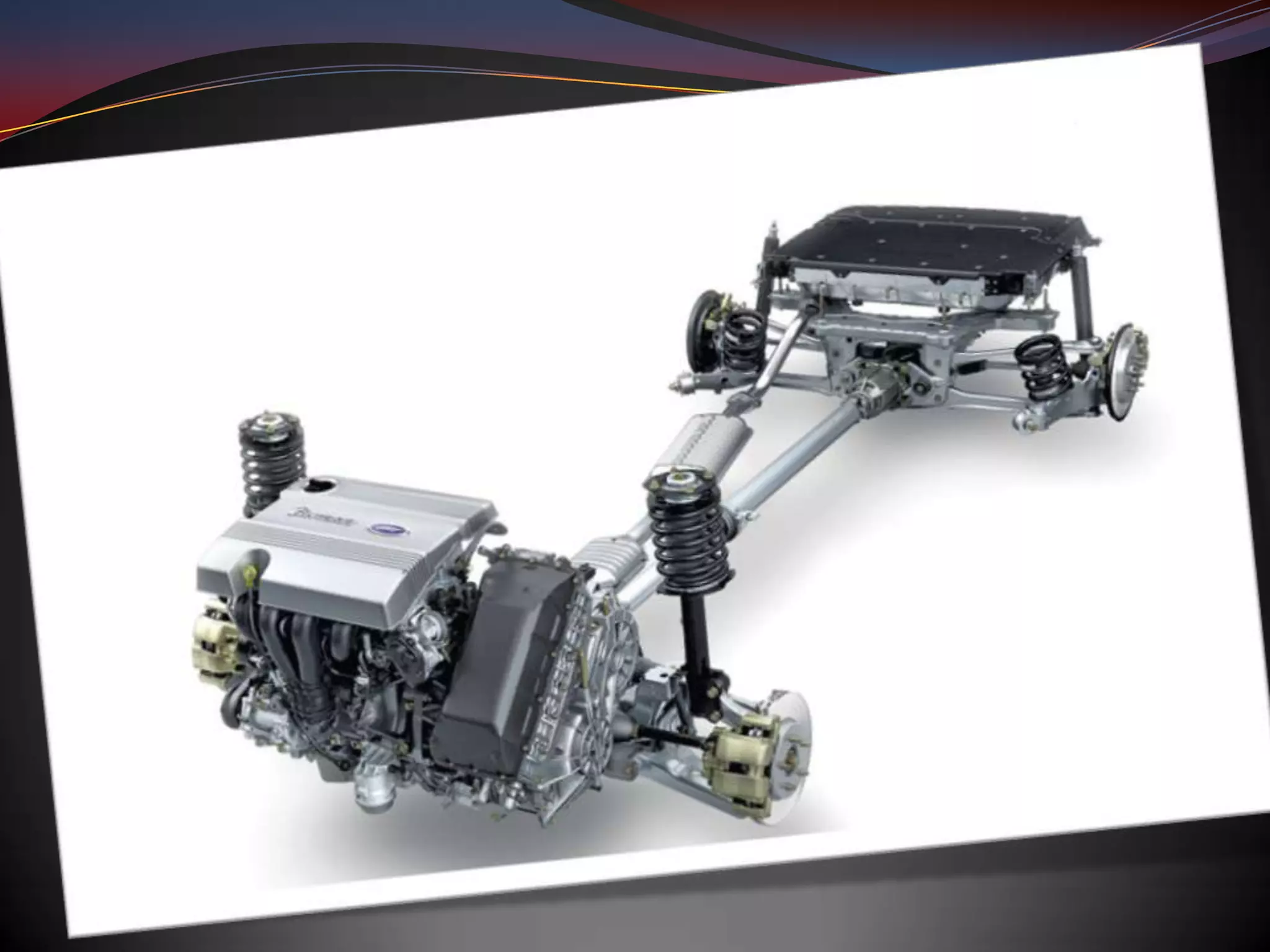
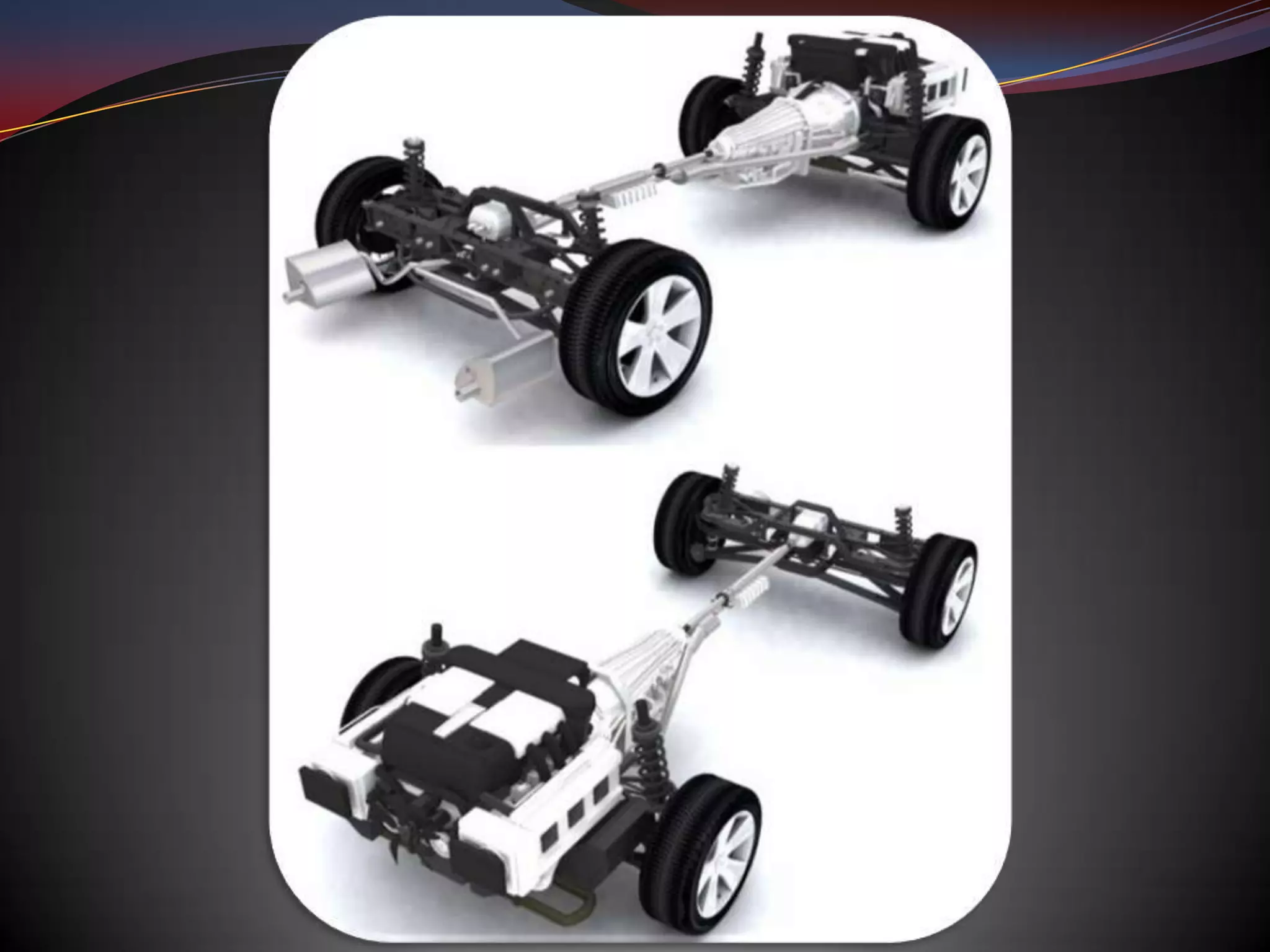
• The drivetrain is the mechanical path by which the engine
sends power to the wheels (i.e. provides drive).


• The drivetrain includes a gearbox, a power transmission
or transfer system i.e. chain and sprocket or drive shaft,
a differential, axles, CV joints, wheels and tyres and finally
the braking system.
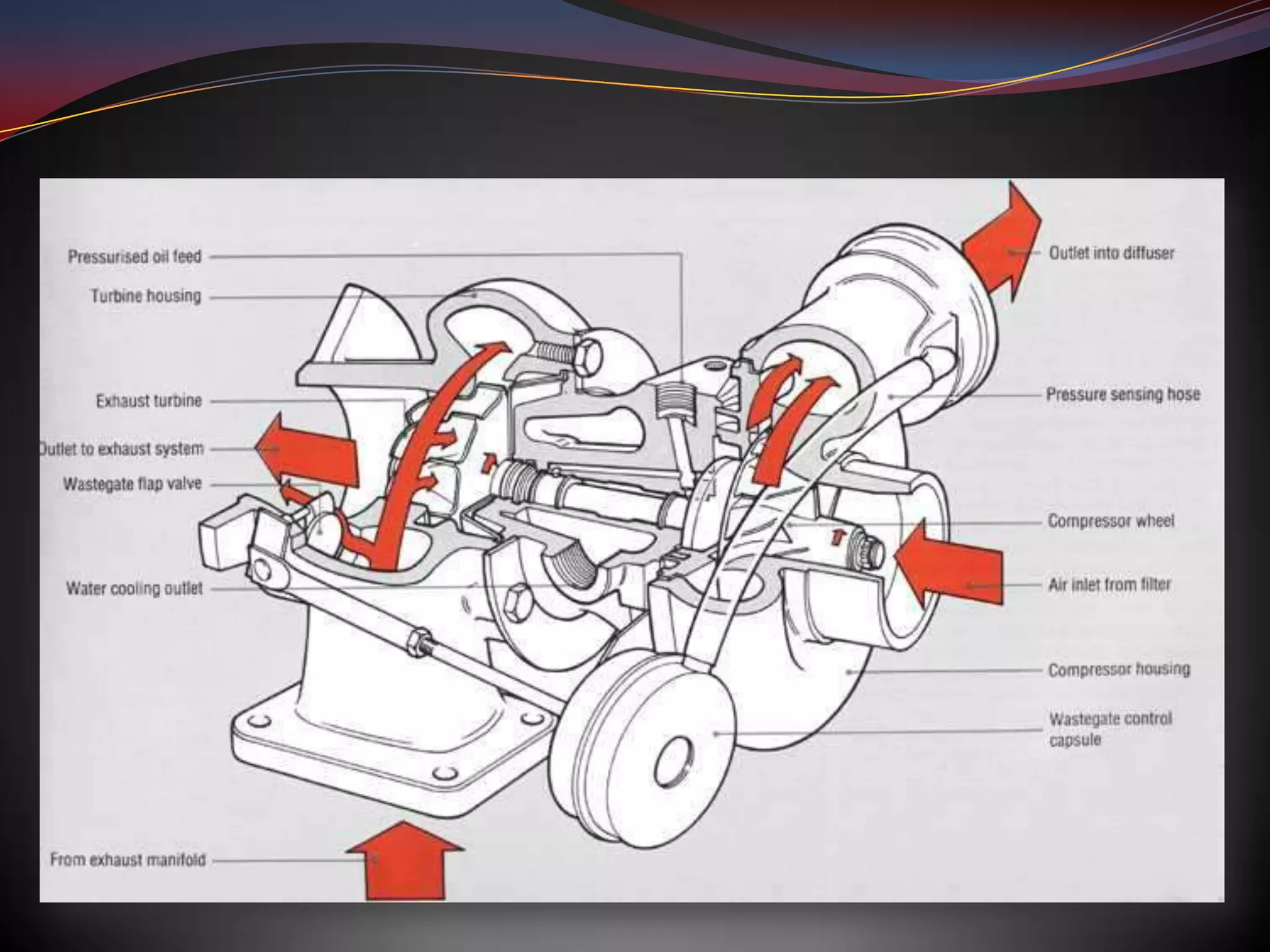
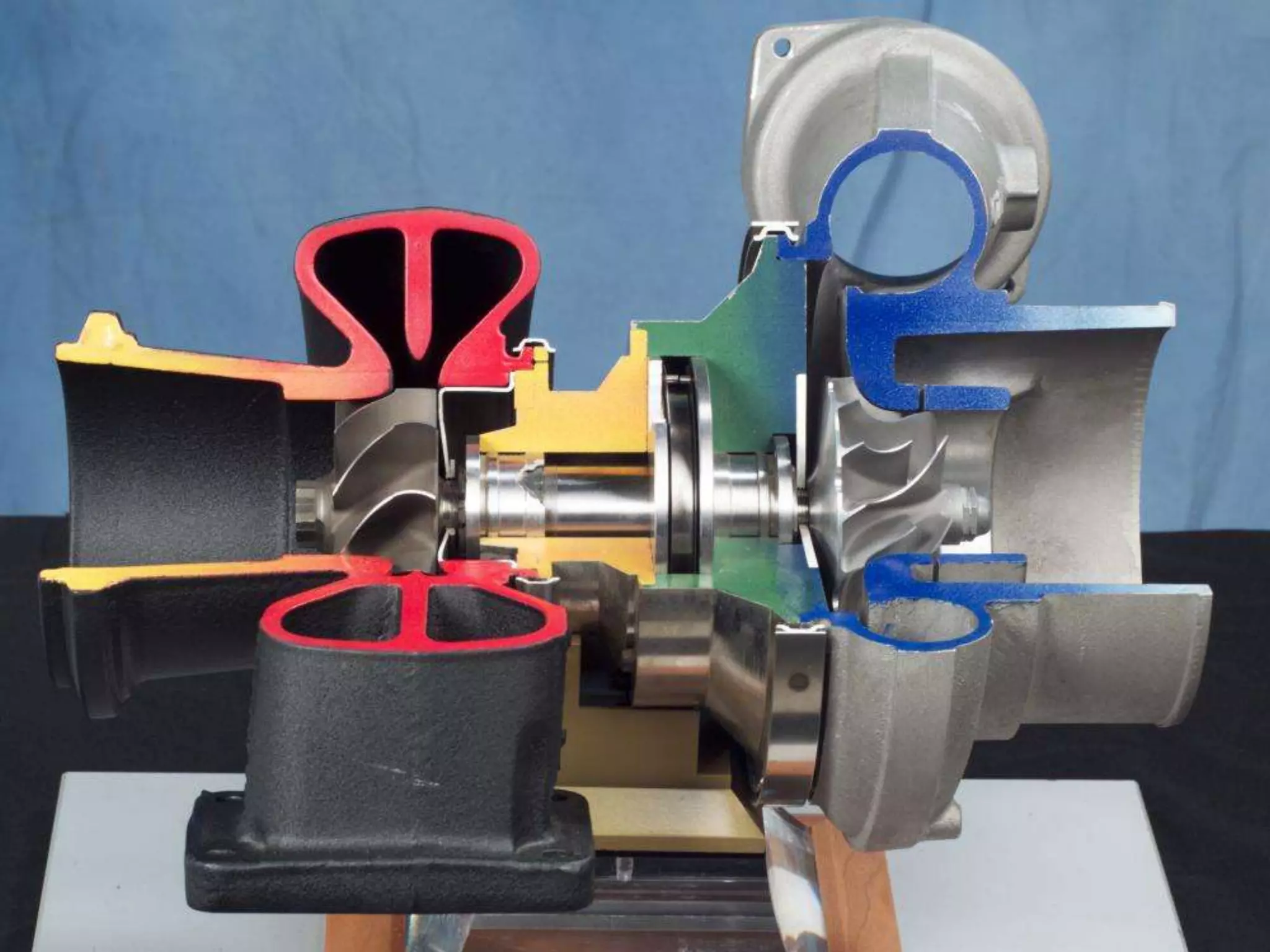
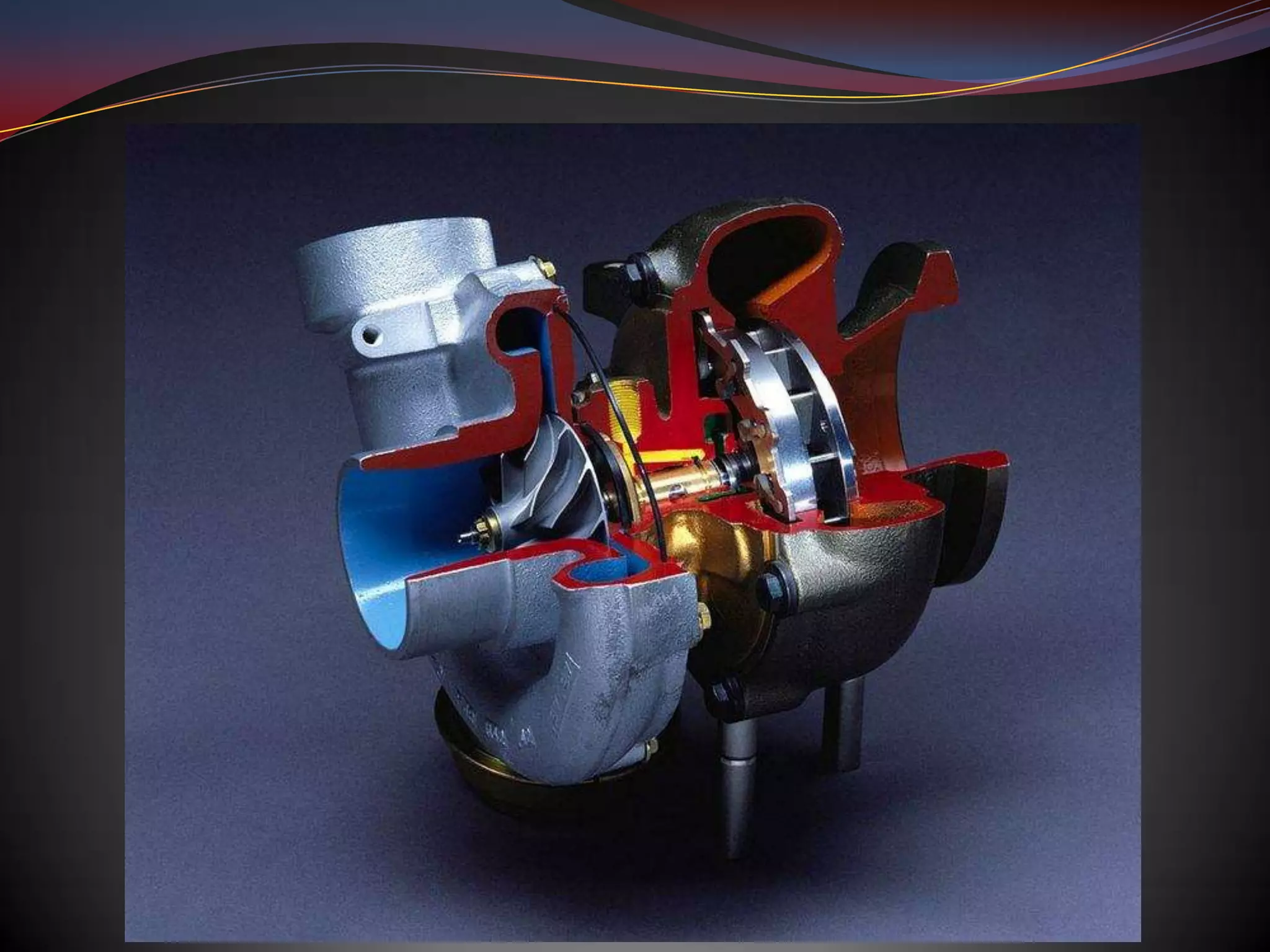
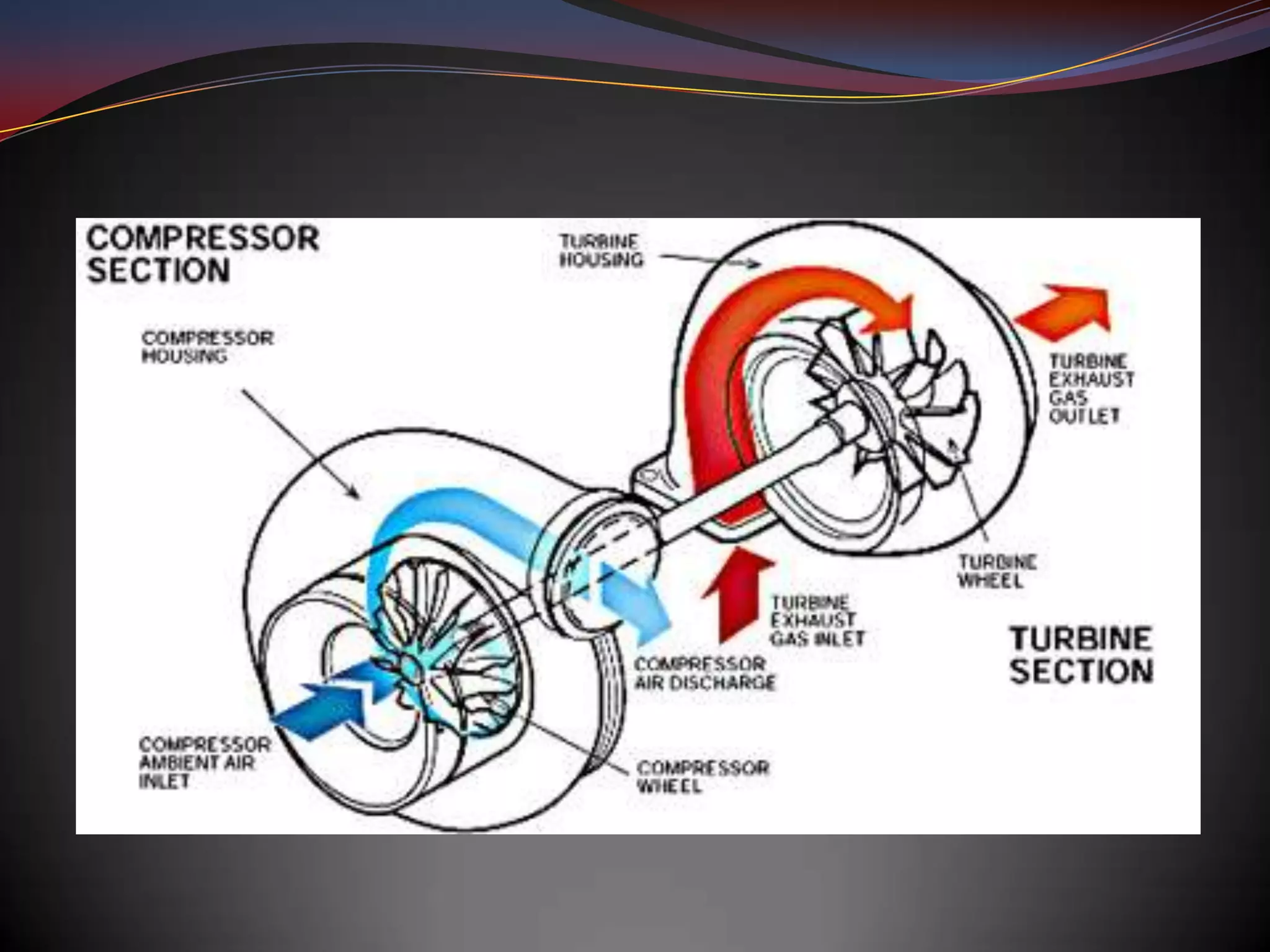
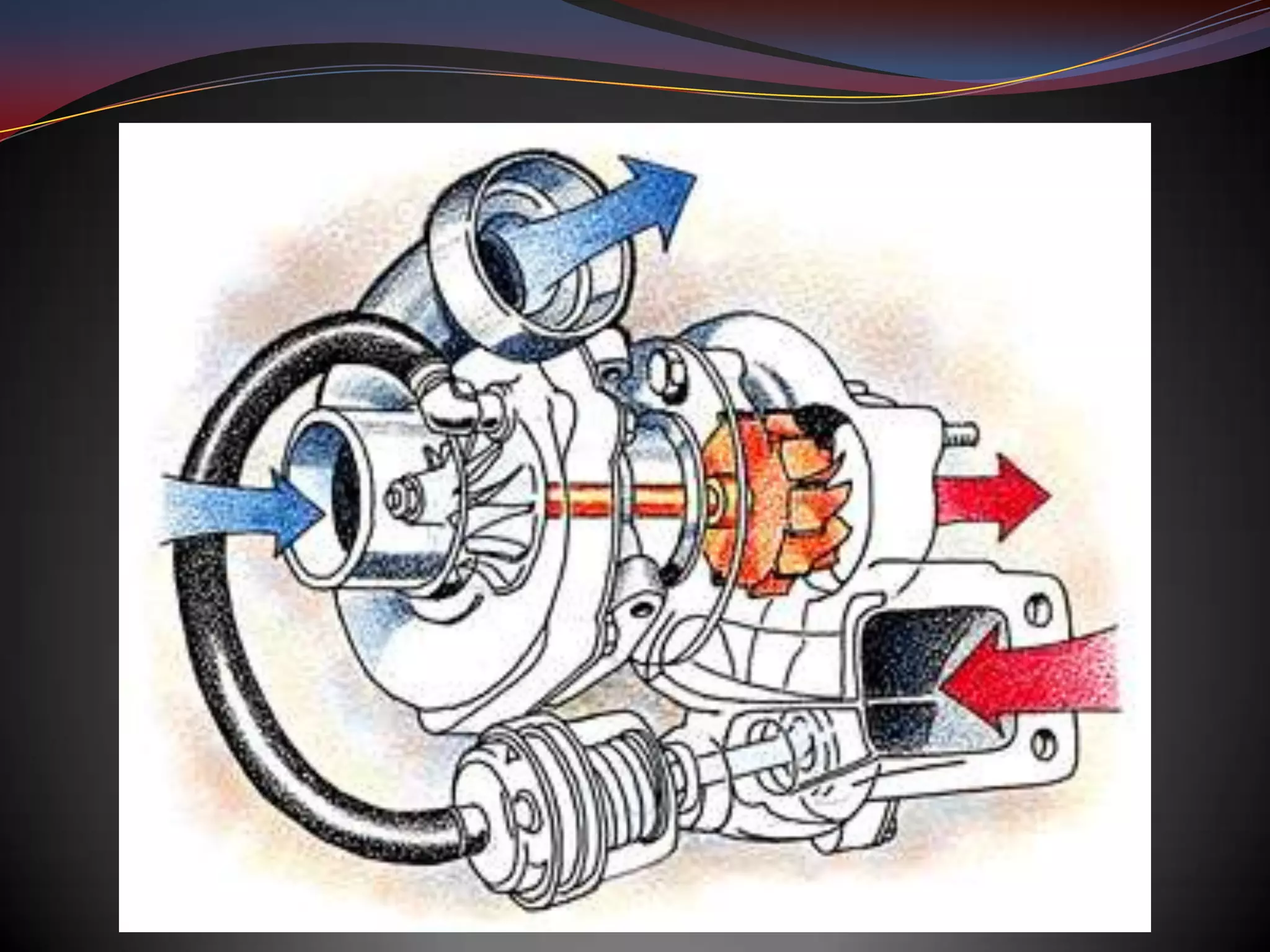
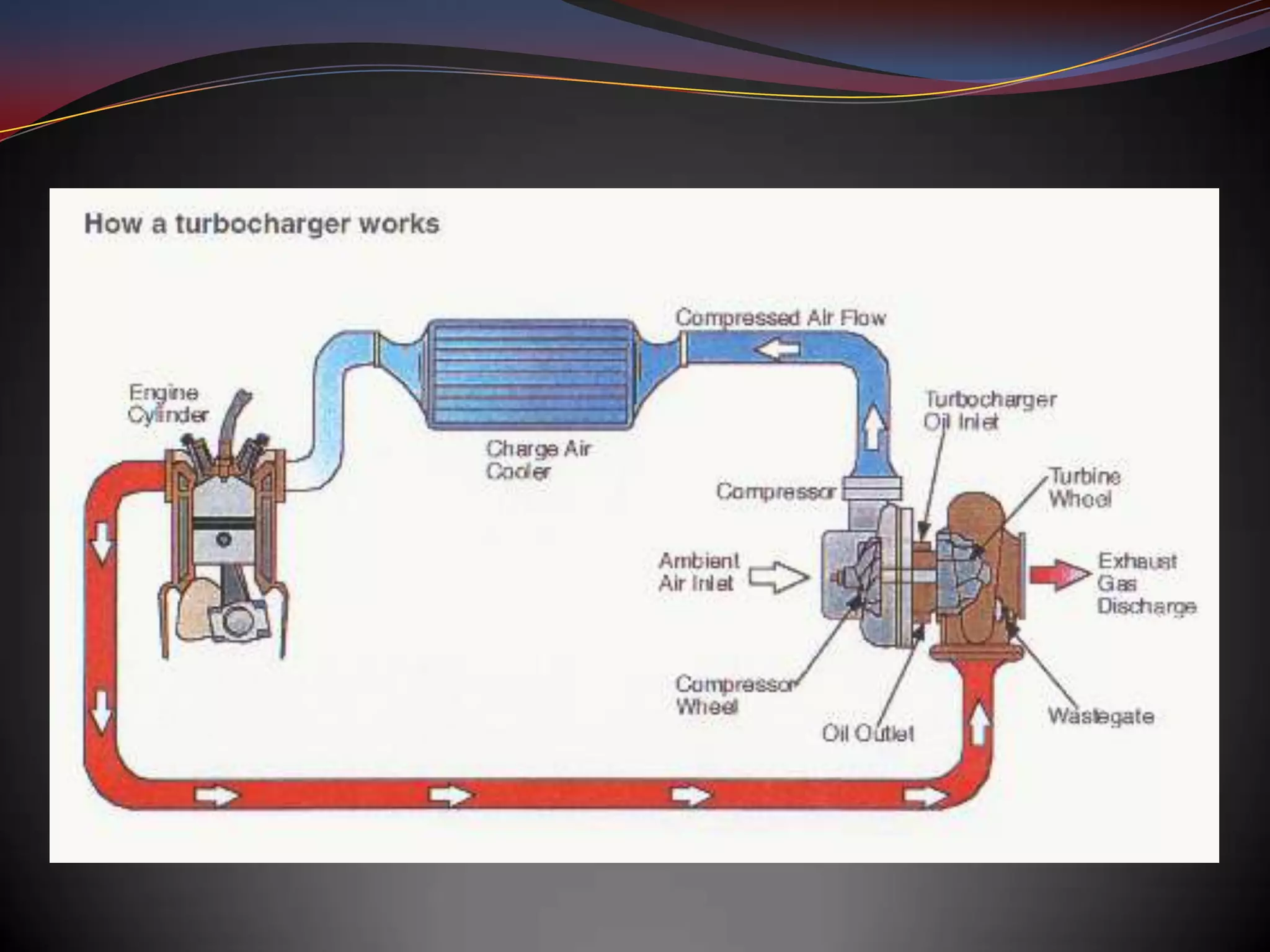
Turbochargers are a type of forced induction system which has
its compressor powered by a gas turbine running off the exhaust
gases from the engine.


The purpose of a turbocharger is to increase the mass of air
entering the engine to create more power. The compressor which
drives the turbocharger is powered by a turbine driven by the
engine‘s own exhaust gases.
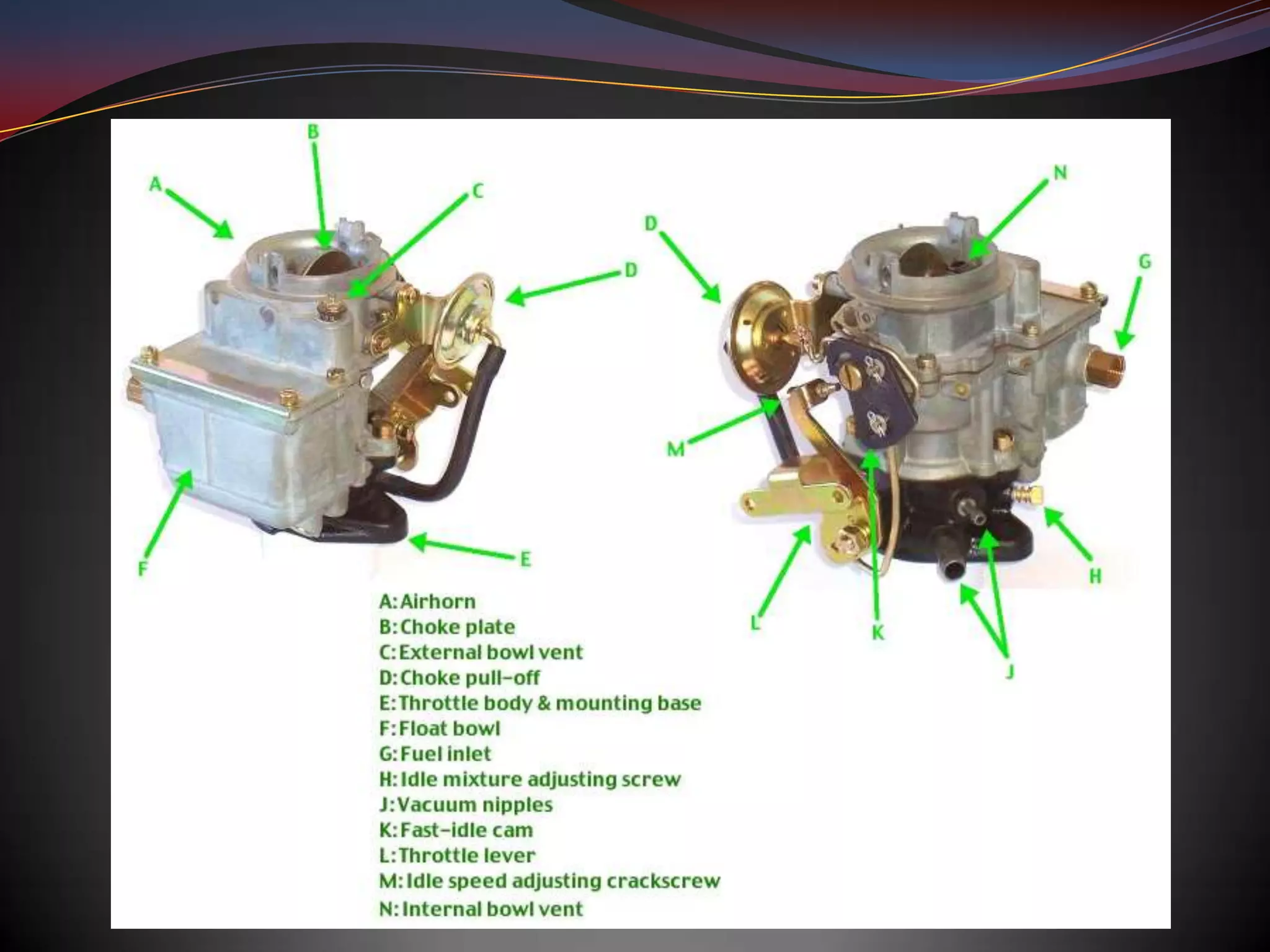
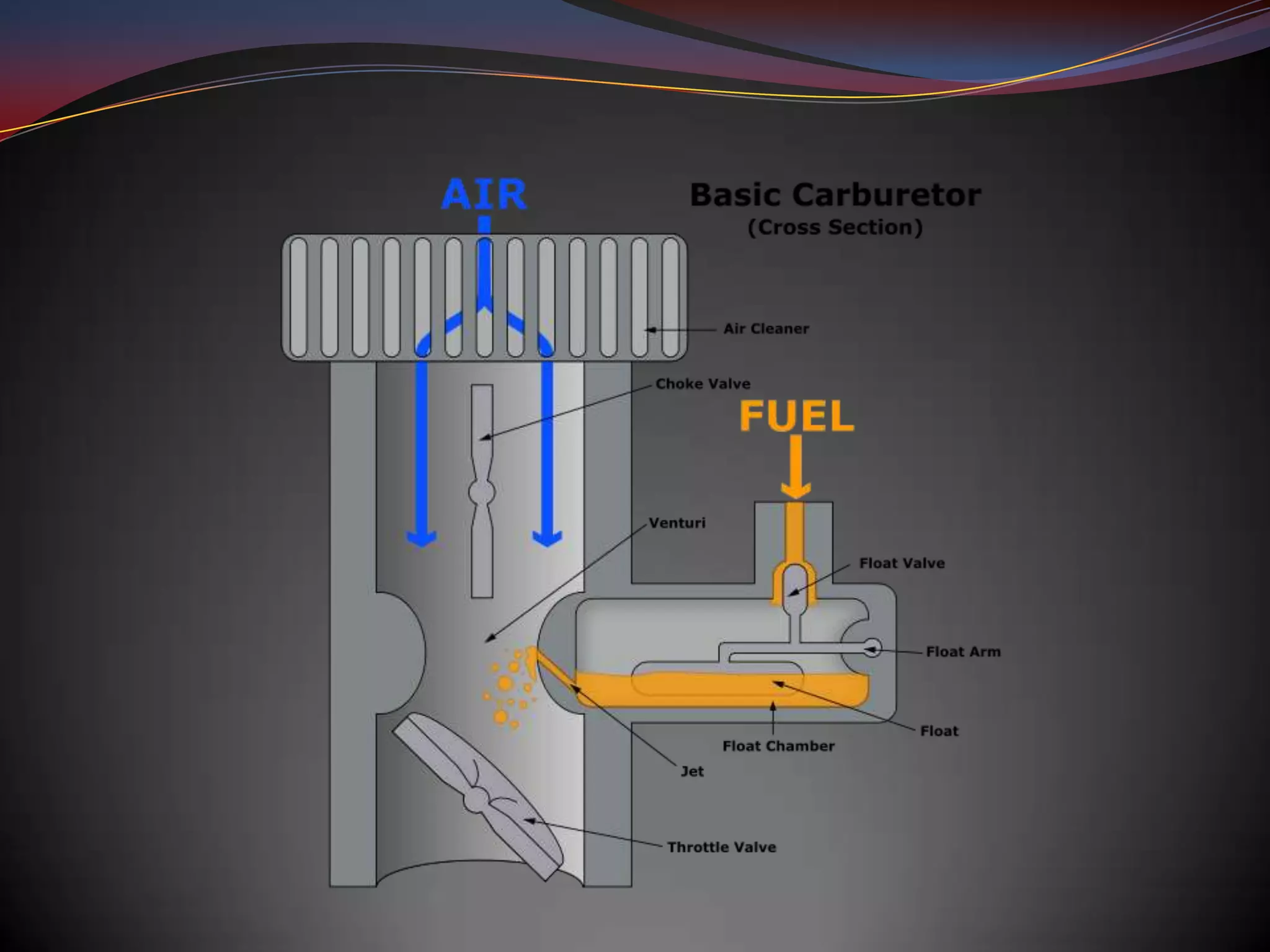
A carburettor is a device that blends air and fuel for an
internal combustion engine. It was invented by Karl Benz
before 1885 , patented in 1886. It is colloquially called a carb
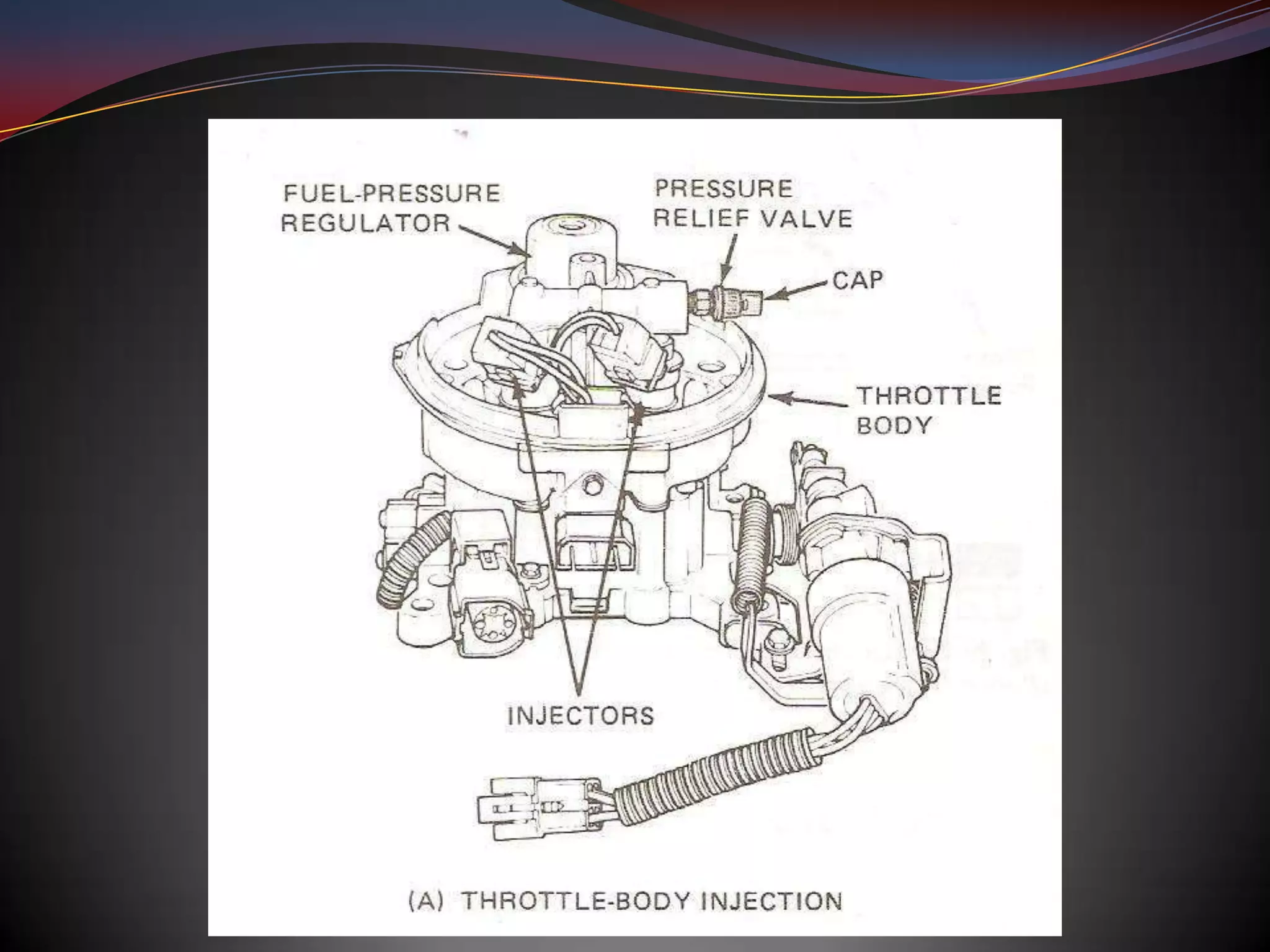
Fuel injection is a system for mixing fuel with air in an
internal combustion engine. It has become the primary system
used in automotive engines, having almost completely replaced
carburettors in the late 1980s.
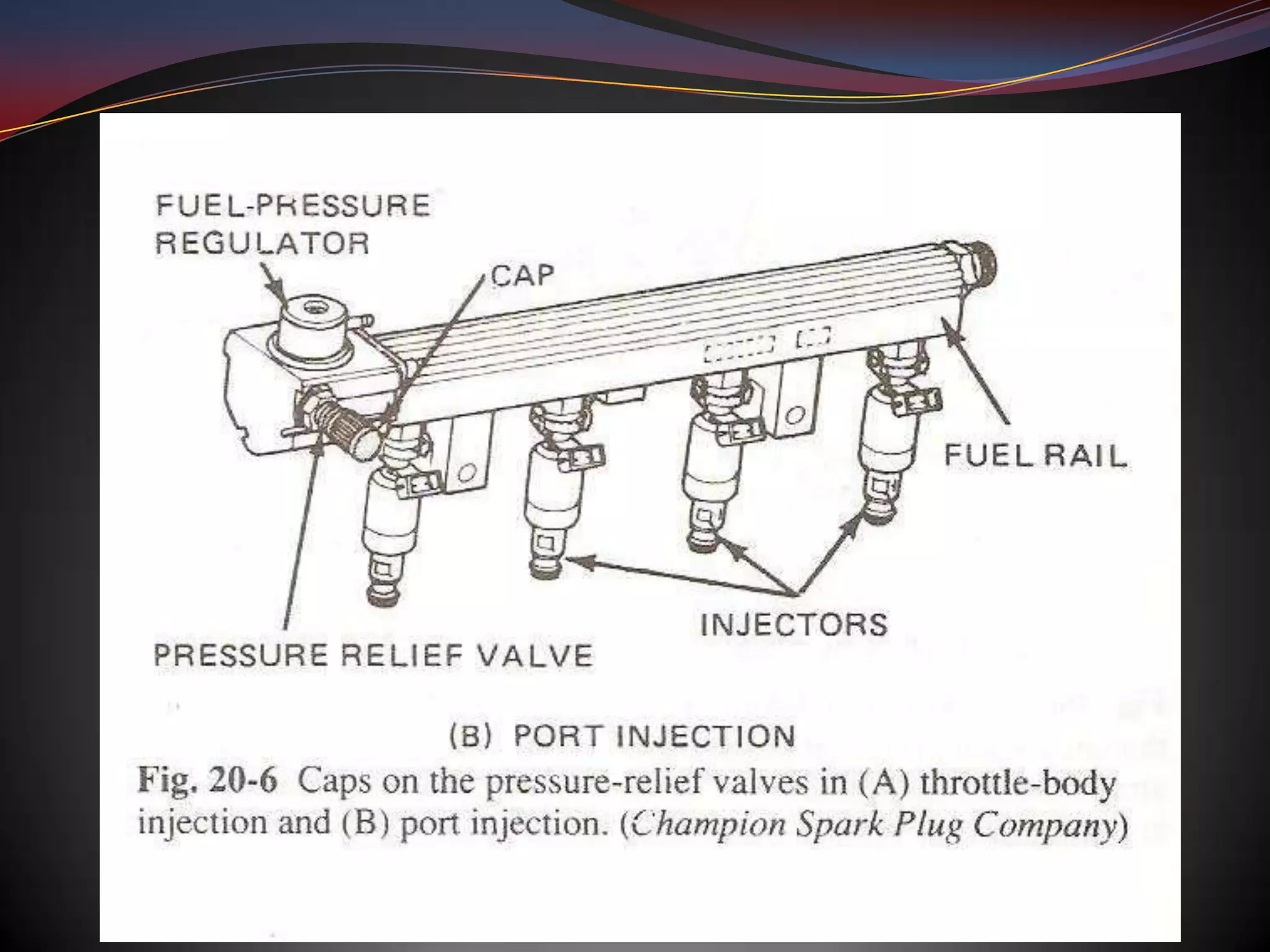
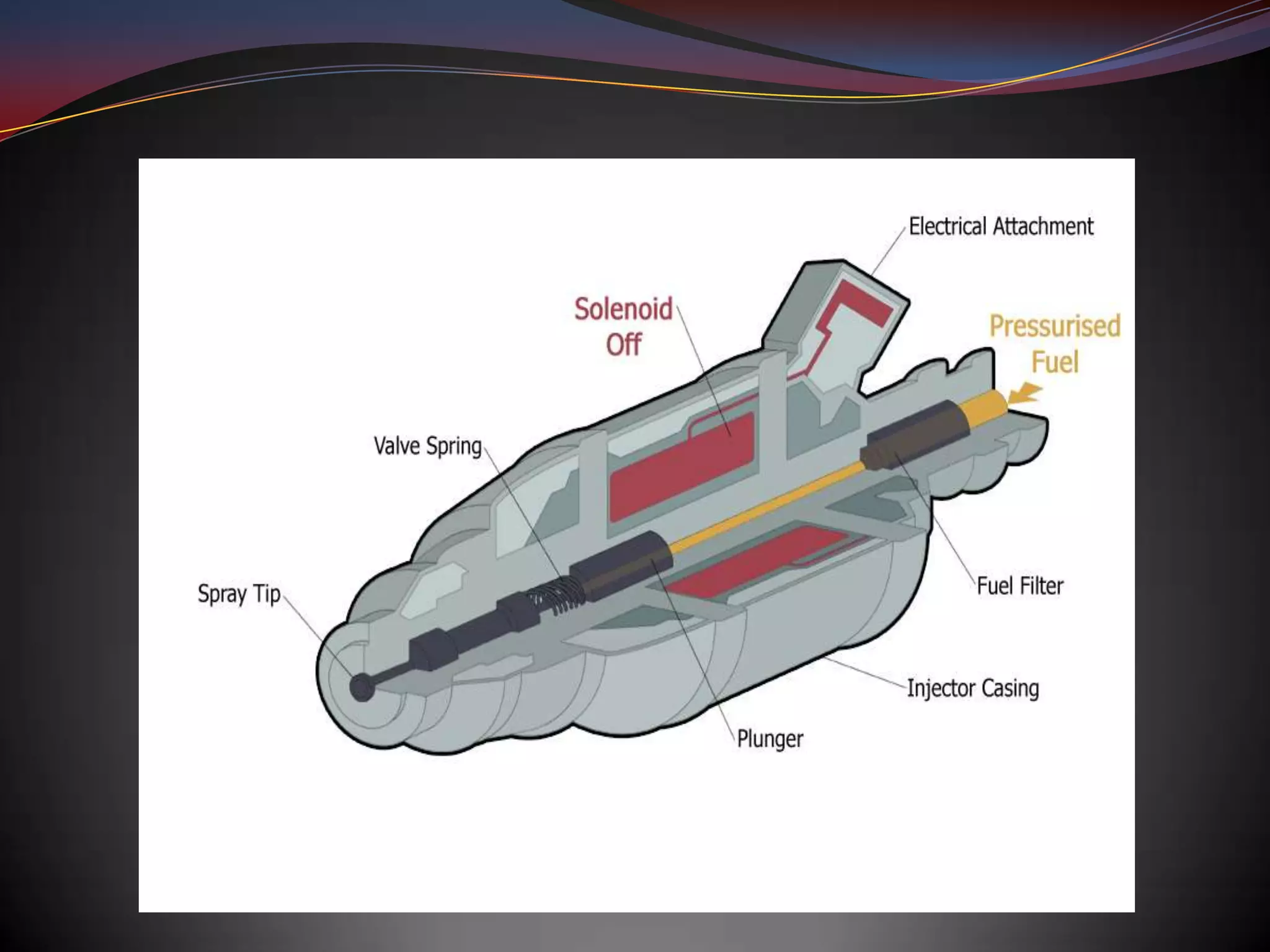
TYPICAL EFI (ELECTRONIC FUEL INJECTION) COMPONENTS

• Injectors
• Fuel Pump
• Fuel Pressure Regulator
• ECM - Engine Control Module; includes a digital computer and
  circuitry to communicate with sensors and control outputs.
• Wiring Harness
• Various Sensors (Some of the sensors required are listed here.)
     o Crank/Cam Position: Hall effect sensor
     o Airflow: MAF sensor, sometimes inferred with a MAP sensor
     o Exhaust Gas Oxygen: Oxygen sensor, EGO sensor, UEGO sensor
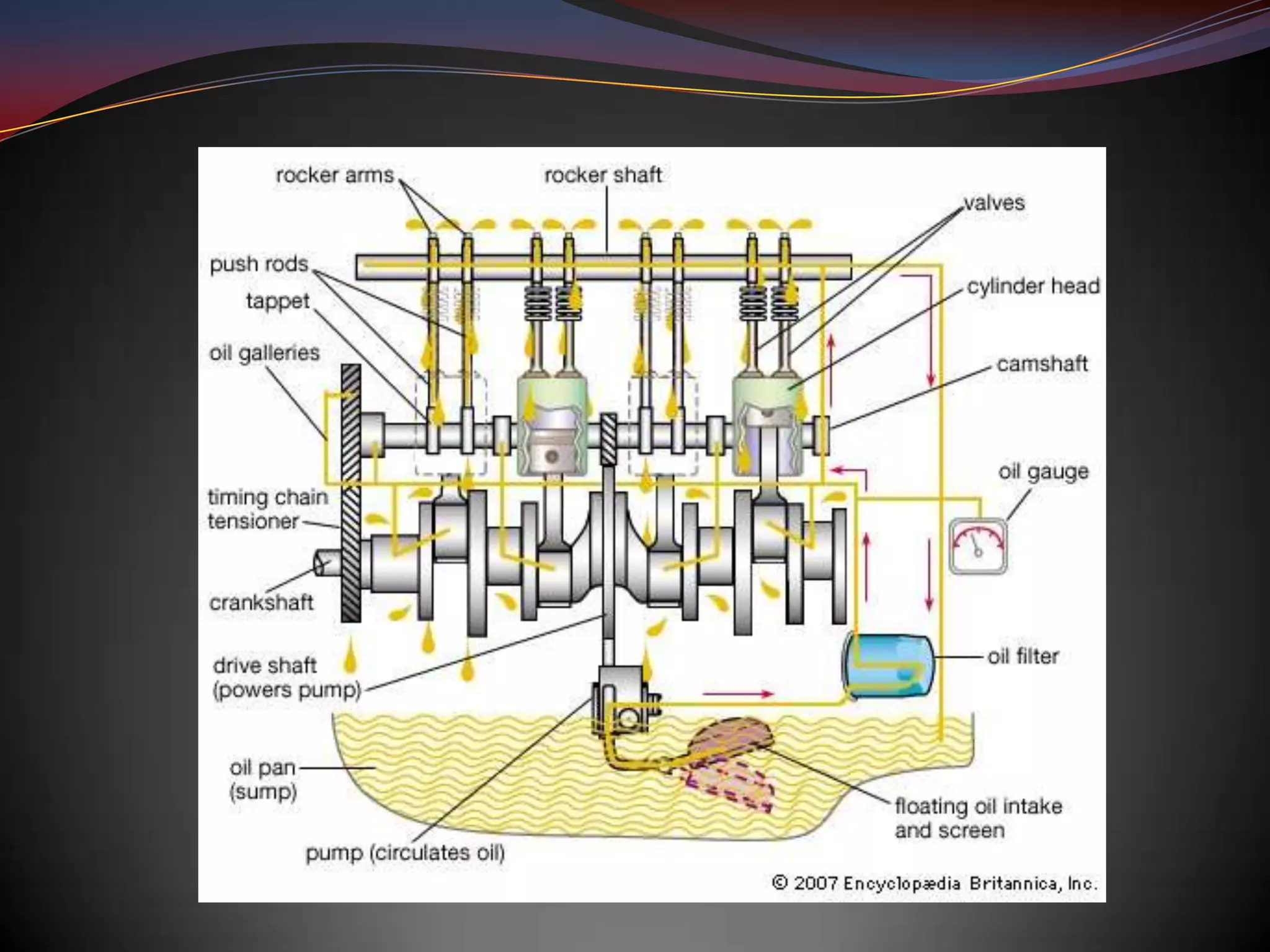
An internal combustion engine would not run for even a few
minutes if the moving parts were allowed to make metal-to-
metal contact. The heat generated due to the tremendous
amounts of friction would melt the metals, leading to the
destruction of the engine. To prevent this, all moving parts ride
on a thin film of oil that is pumped between all the moving parts
of the engine.

Once between the moving parts, the oil serves two purposes.
One purpose is to lubricate the bearing surfaces. The other
purpose is to cool the bearings by absorbing the friction-
generated heat. The flow of oil to the moving parts is
accomplished by the engine's internal lubricating system.
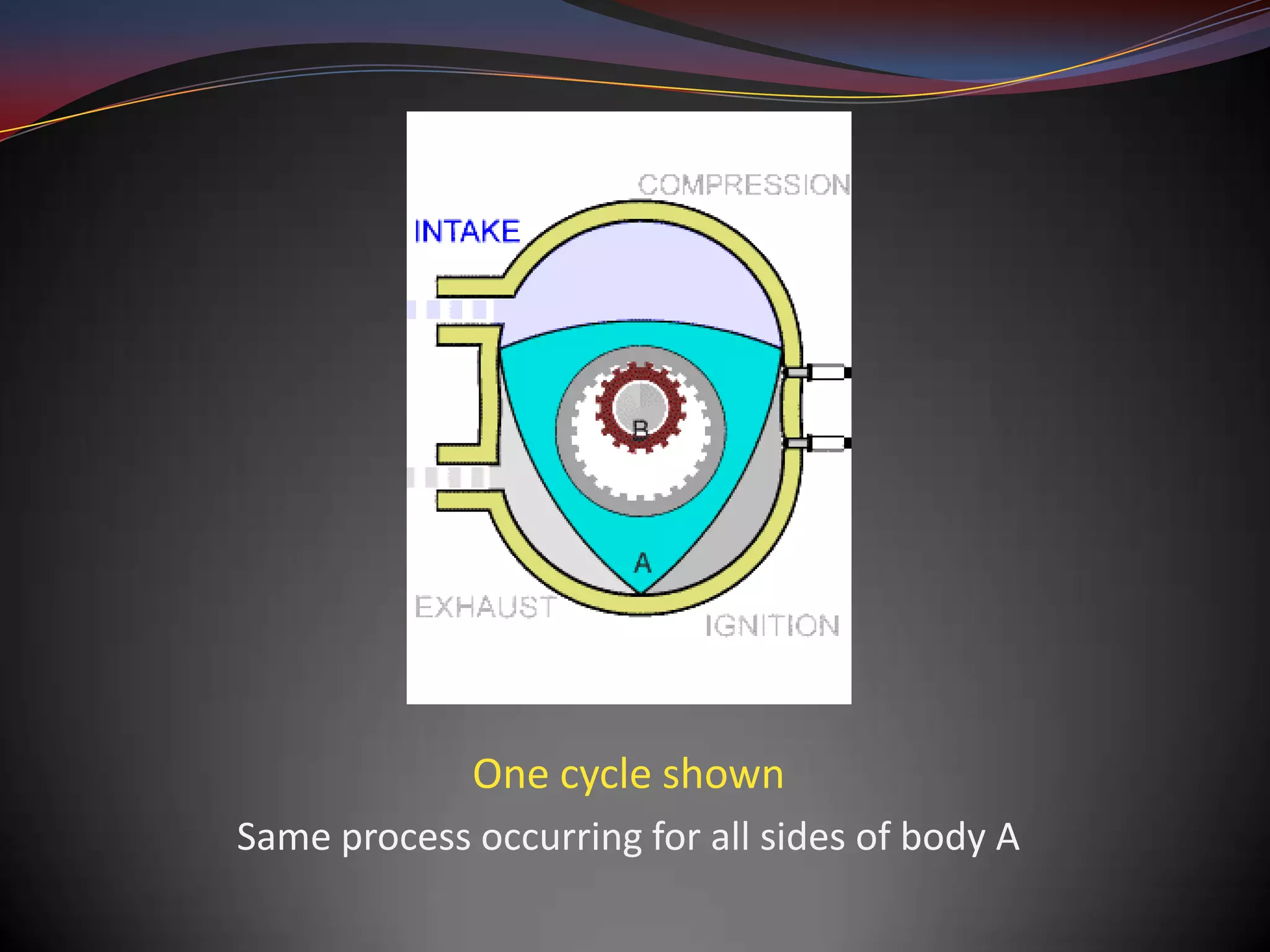
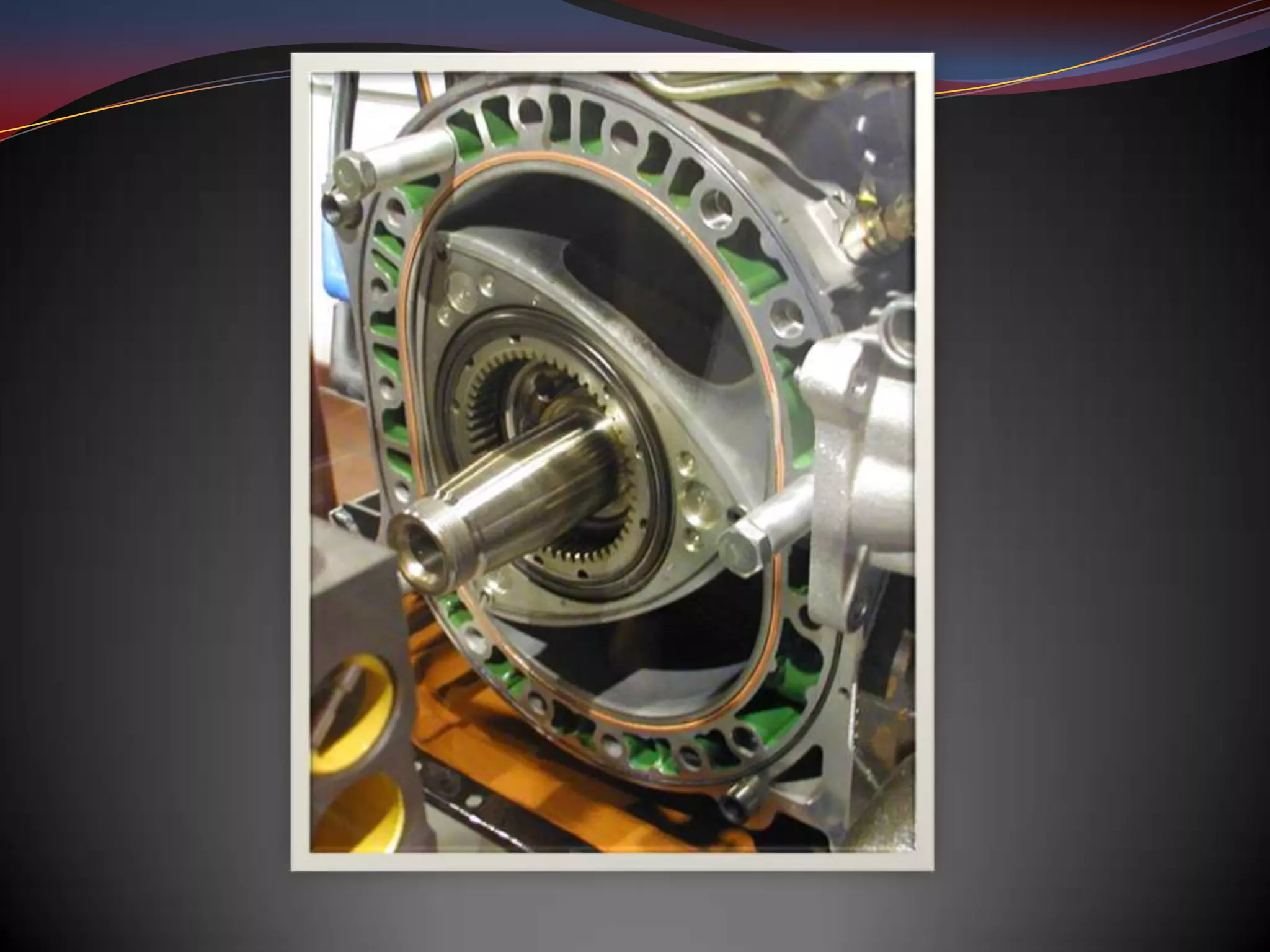
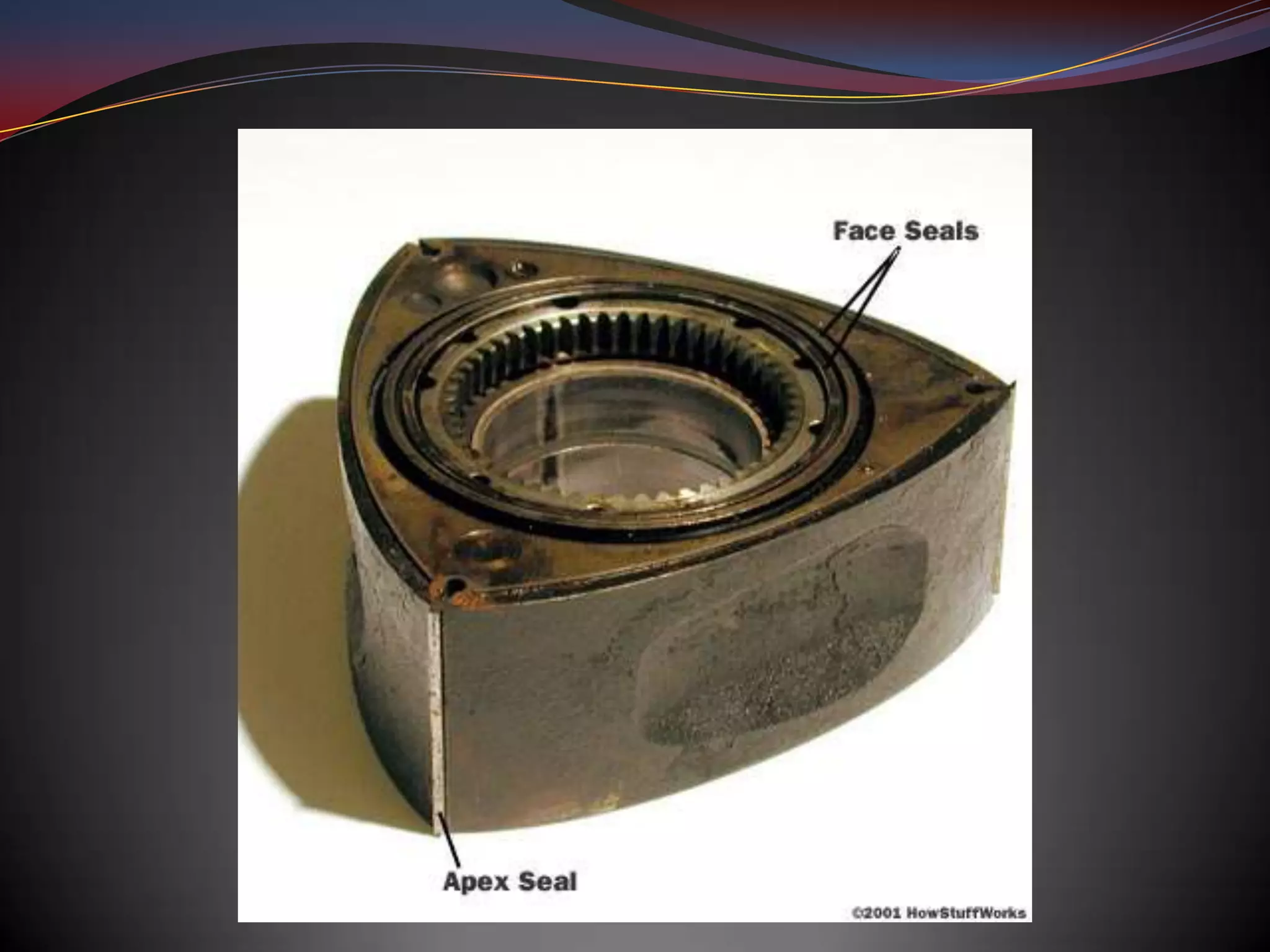
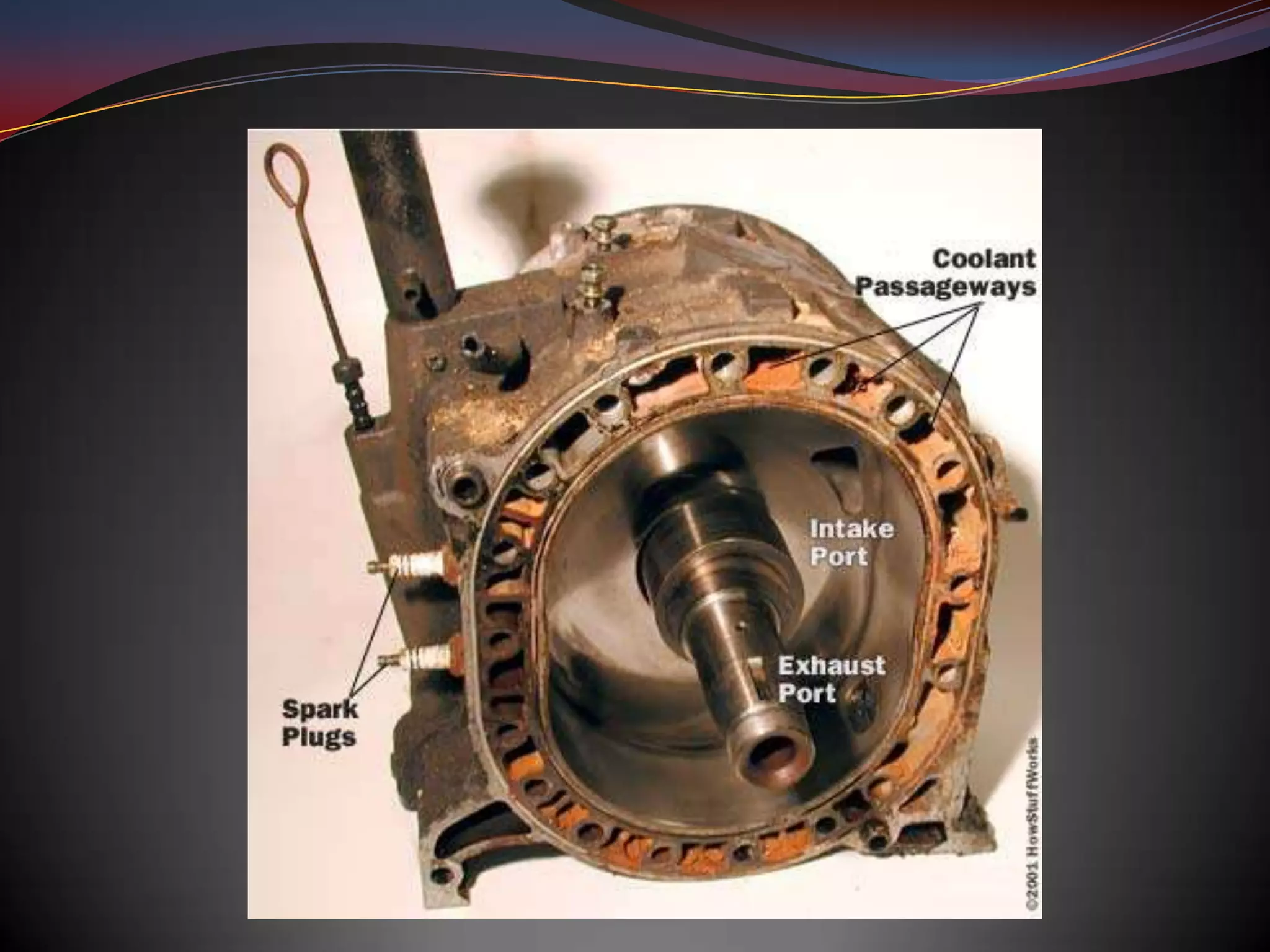
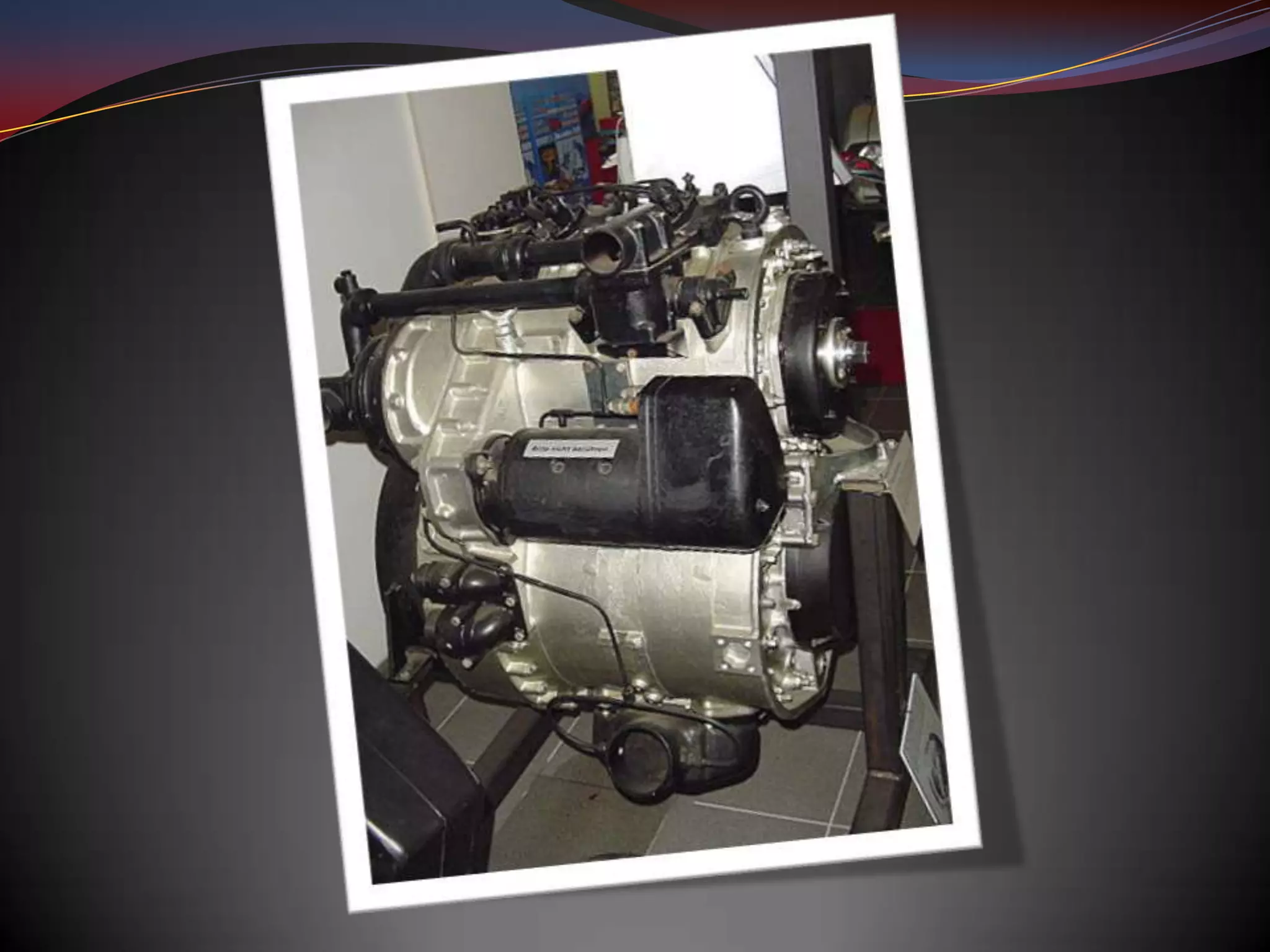
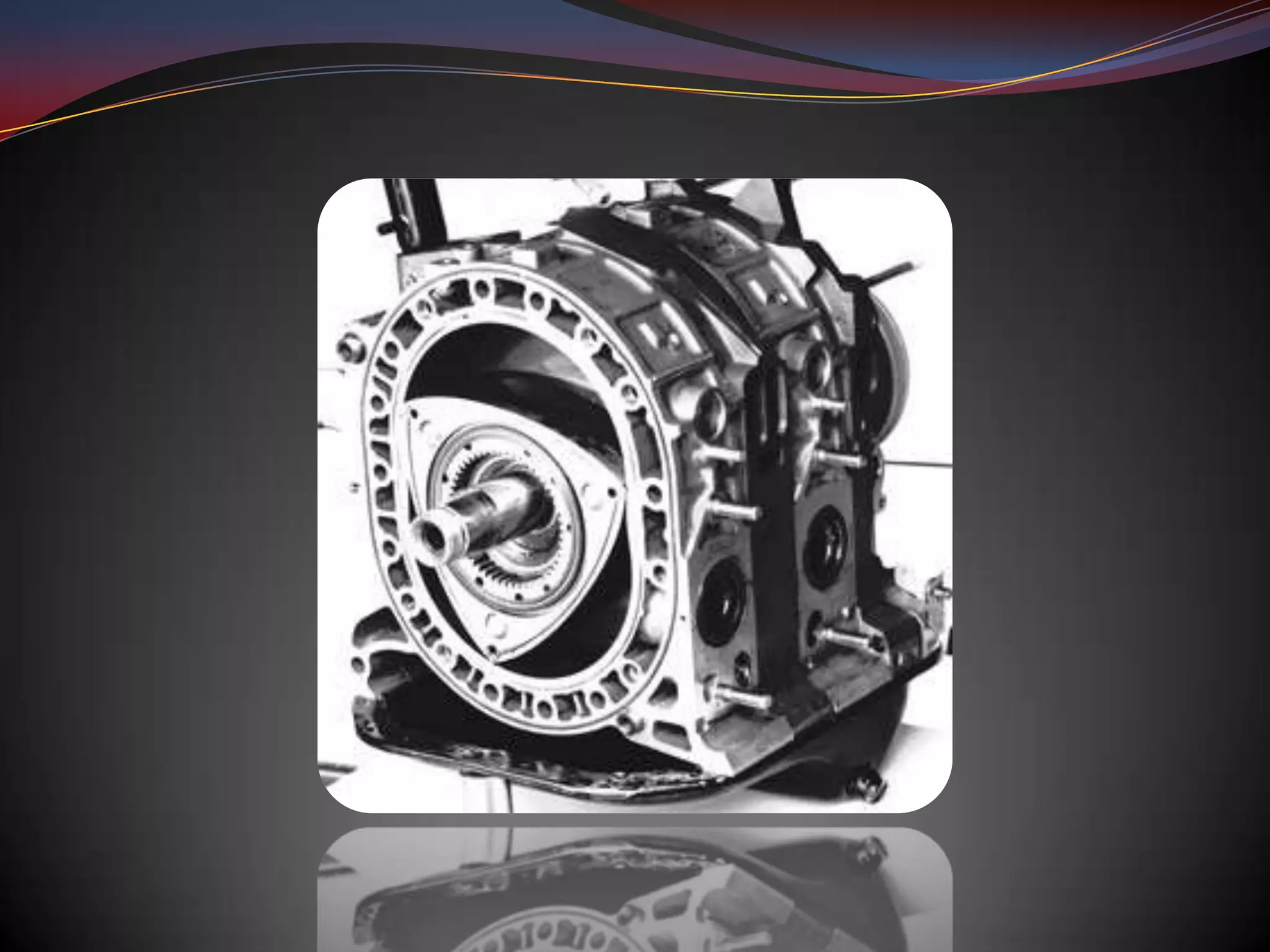
A Rotary Engine is an internal combustion engine, like the engine
in your car, but it works in a completely different way than the
conventional piston engine.
In a piston engine, the same volume of space (the cylinder)
alternately does four different jobs: intake, compression,
combustion and exhaust.

A rotary engine does these same four jobs, but each one
happens in its own part of the housing. It's kind of like having a
dedicated cylinder for each of the four jobs, with the piston
moving continually from one to the next.

The rotary engine (originally conceived and developed by Dr.
Felix Wankel) is sometimes called a Wankel engine, or Wankel
rotary engine.
One cycle shown
Same process occurring for all sides of body A
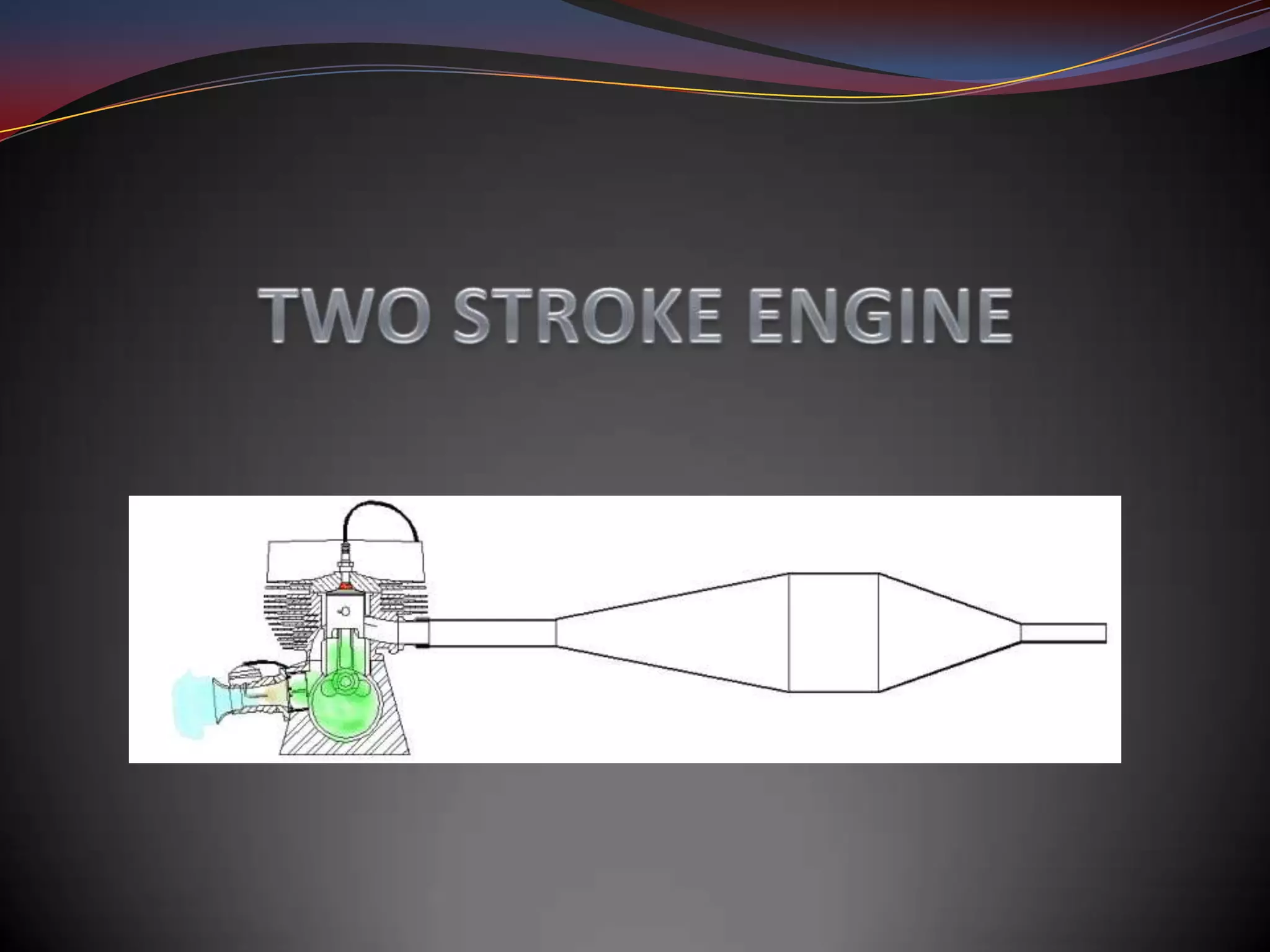
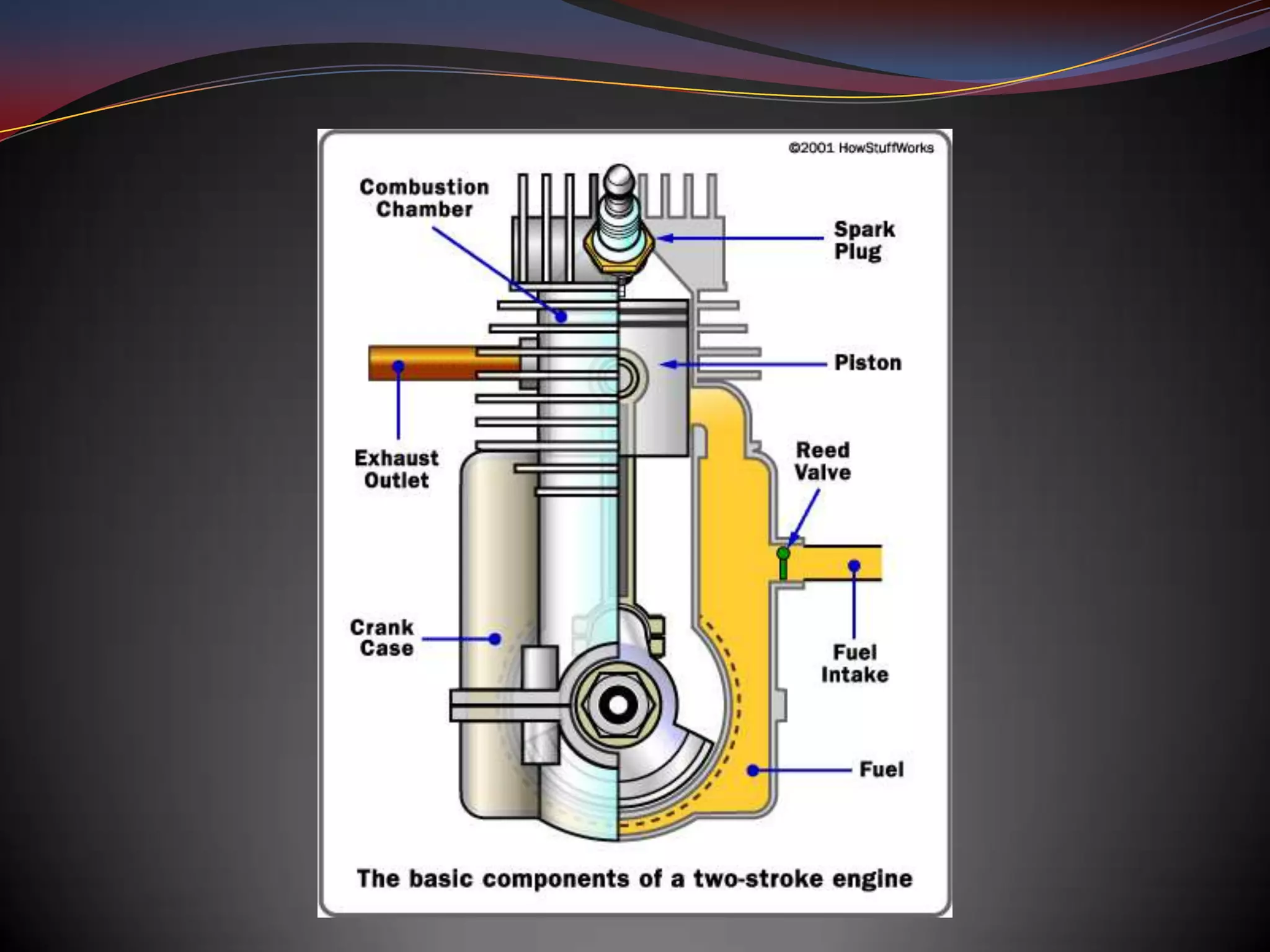
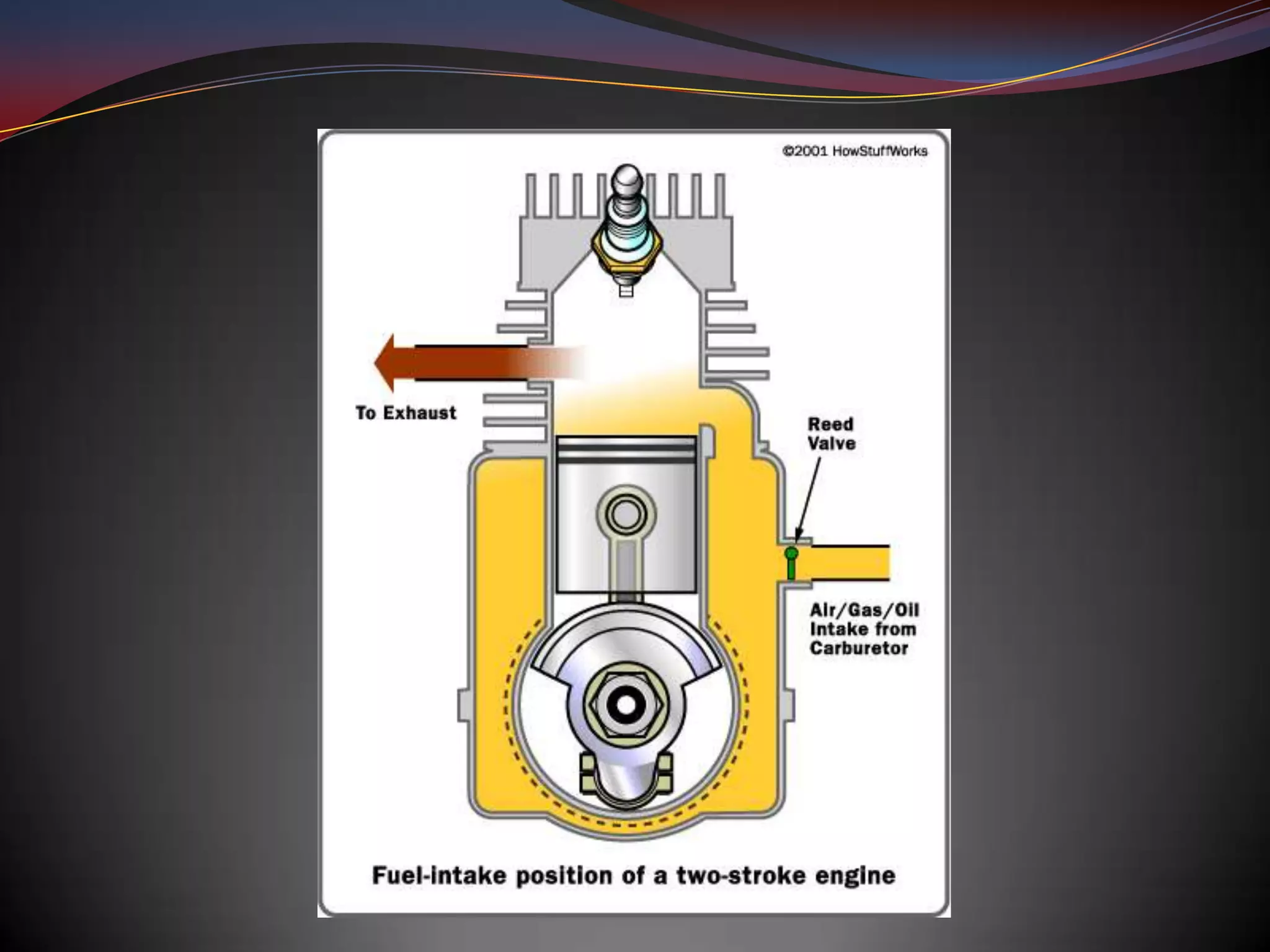
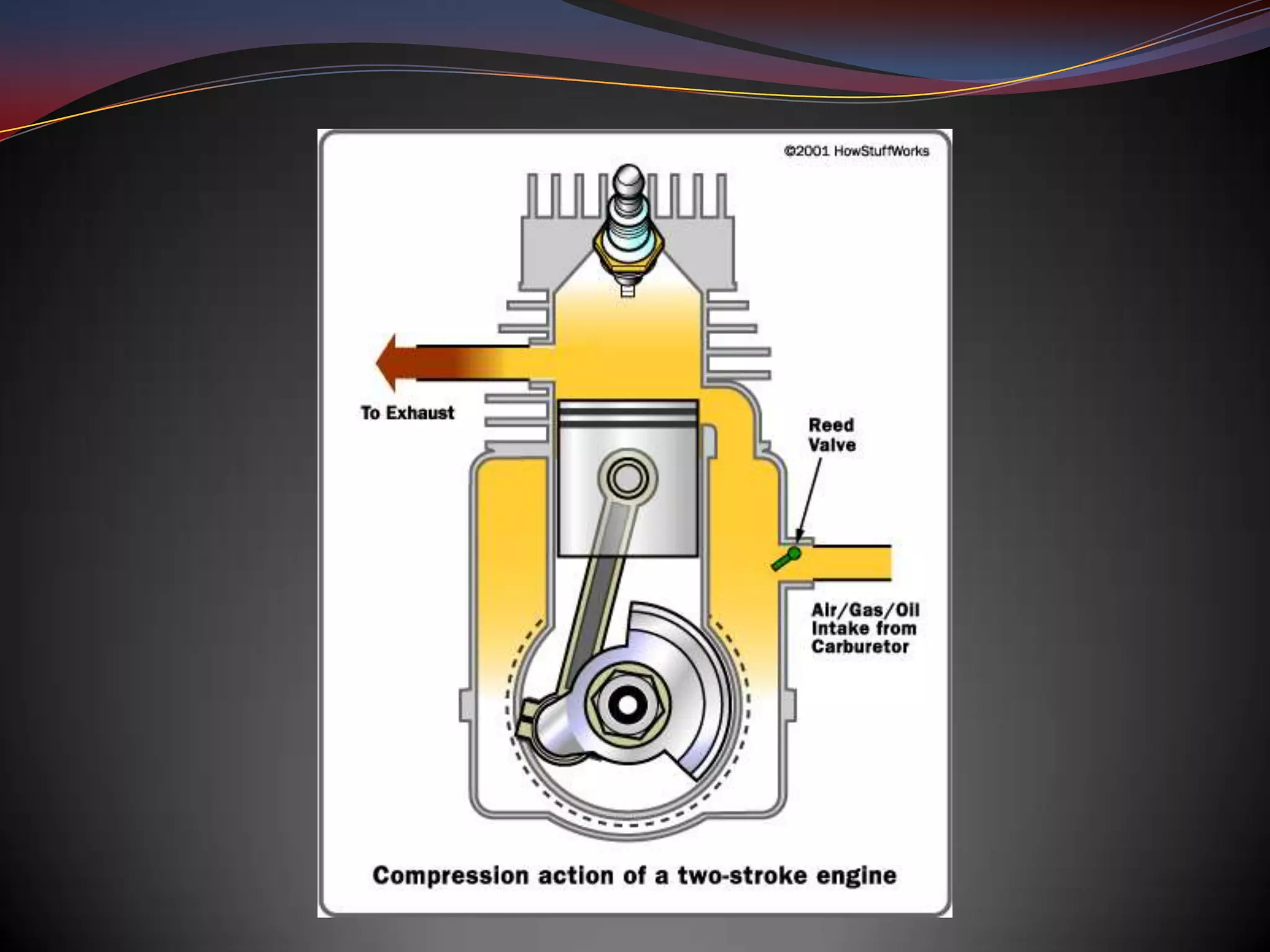
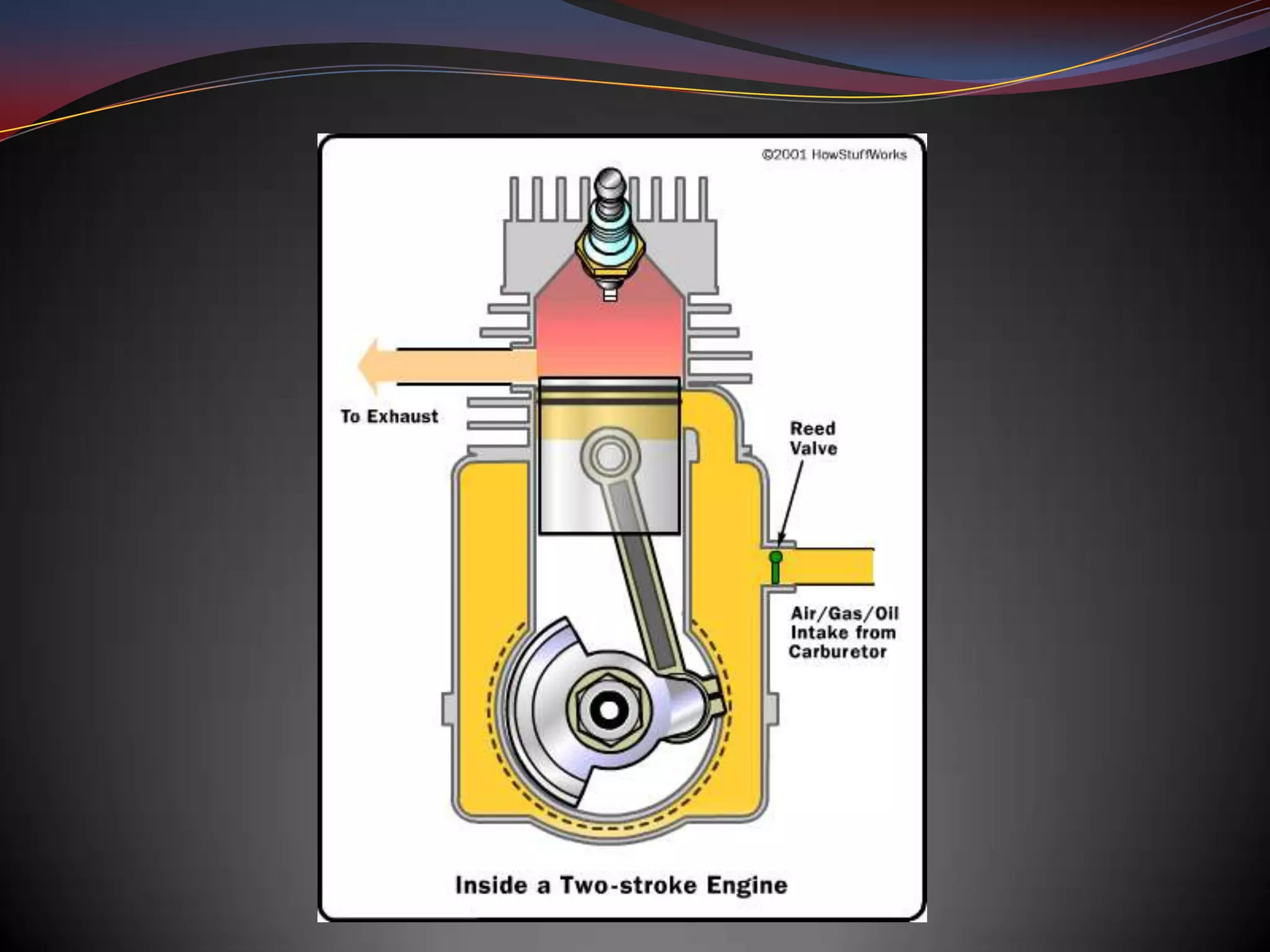
Engines based on the two-stroke cycle use two strokes (one
up, one down) for every power stroke. Since there are no
dedicated intake or exhaust strokes, alternative methods
must be used to scavenge the cylinders. The most common
method in spark-ignition two-strokes is to use the
downward motion of the piston to pressurize fresh charge
in the crankcase, which is then blown through the cylinder
through ports in the cylinder walls.
Engines based on the five-stroke cycle are a variant of the four-
stroke cycle. Normally, the four cycles are intake, compression,
combustion, and exhaust. The fifth cycle added by Delautour is
refrigeration. Engines running on a five-stroke cycle are claimed to
be up to 30% more efficient than equivalent four-stroke engines.

The six stroke engine captures the wasted heat from the four-
stroke Otto cycle and creates steam, which simultaneously cools
the engine while providing a free power stroke. This removes the
need for a cooling system making the engine lighter while giving
40% increased efficiency over the Otto Cycle. Beare Head
Technology combines a four-stroke engine bottom-end with a
ported cylinder which closely resembles that of a two-stroke: thus,
4+2 equals a six-stroke cycle. It has an opposing piston that acts in
unison with auxiliary low pressure reed and rotary valves, which
allows variable compression and a range of tuning options.

Internal Combustion Engines - Construction and Working (All you need to know, more than what you need to show)

  • 1.
  • 2.
  • 3.
    An Introduction  Theinternal combustion (IC) engine converts chemical energy into useful mechanical energy by burning fuel.  Chemical energy is released when the fuel-air mixture is ignited by the spark in the combustion chamber.  The gas produced in this reaction rapidly expands forcing the piston down the cylinder on the power stroke.
  • 7.
    Power Squash Exhaust Intake
  • 14.
    INLINE 4 V6 FLAT 4
  • 16.
  • 19.
    C: Crankshaft E: Exhaustvalve cam shaft I: Scavenge air valve cam shaft P: Piston R: Connecting rod S: Spark plug V: Valves. Red: exhaust, Blue: intake W: Cooling water ducts
  • 21.
    •The crankshaft, sometimescasually abbreviated to crank, is the part of an engine which translates reciprocating linear piston motion into rotation. •To convert the reciprocating motion into rotation, the crankshaft has "crank throws" or "crankpins"
  • 23.
    •In a reciprocatingpiston engine, the connecting rod or conrod connects the piston to the crank or crankshaft. •The connecting rod was invented sometime between 1174 and 1200
  • 25.
    •The camshaft isan apparatus often used in piston engines to operate poppet valves. •It consists of a cylindrical rod running the length of the cylinder bank with a number of oblong lobes or cams protruding from it, one for each valve.
  • 37.
    • A sparkplug is an electrical device that fits into the cylinder head of internal combustion engines and ignites compressed aerosol gasoline by means of an electric spark. • Internal combustion engines can be divided into spark-ignition engines, which require spark plugs to begin combustion, and compression-ignition engines (diesel engines), which compress the air and then inject diesel fuel into the heated compressed air mixture where it auto-ignites.
  • 38.
    Spark plug gapping:The centre electrode (dark rod) is a cylindrical rod, and the top ground electrode (a hook) has square edges. When regapping, the hook is raised or lowered to adjust the gap, often to 0.035 to 0.050 inches. The main issues with spark plug gaps are: · Narrow-Gap risk: spark might be too weak/small to ignite fuel; · Narrow-Gap benefit: plug always fires on each cycle; · Wide-Gap risk: plug might not fire, or miss at high speeds; · Wide-Gap benefit: spark is strong for a clean burn. A properly gapped plug will be wide enough to burn hot, but not so wide that it skips or misses at high speeds, causing that cylinder to drag, or the engine to begin to rattle.
  • 45.
    • The drivetrainis the mechanical path by which the engine sends power to the wheels (i.e. provides drive). • The drivetrain includes a gearbox, a power transmission or transfer system i.e. chain and sprocket or drive shaft, a differential, axles, CV joints, wheels and tyres and finally the braking system.
  • 53.
    Turbochargers are atype of forced induction system which has its compressor powered by a gas turbine running off the exhaust gases from the engine. The purpose of a turbocharger is to increase the mass of air entering the engine to create more power. The compressor which drives the turbocharger is powered by a turbine driven by the engine‘s own exhaust gases.
  • 61.
    A carburettor isa device that blends air and fuel for an internal combustion engine. It was invented by Karl Benz before 1885 , patented in 1886. It is colloquially called a carb
  • 65.
    Fuel injection isa system for mixing fuel with air in an internal combustion engine. It has become the primary system used in automotive engines, having almost completely replaced carburettors in the late 1980s.
  • 68.
    TYPICAL EFI (ELECTRONICFUEL INJECTION) COMPONENTS • Injectors • Fuel Pump • Fuel Pressure Regulator • ECM - Engine Control Module; includes a digital computer and circuitry to communicate with sensors and control outputs. • Wiring Harness • Various Sensors (Some of the sensors required are listed here.) o Crank/Cam Position: Hall effect sensor o Airflow: MAF sensor, sometimes inferred with a MAP sensor o Exhaust Gas Oxygen: Oxygen sensor, EGO sensor, UEGO sensor
  • 70.
    An internal combustionengine would not run for even a few minutes if the moving parts were allowed to make metal-to- metal contact. The heat generated due to the tremendous amounts of friction would melt the metals, leading to the destruction of the engine. To prevent this, all moving parts ride on a thin film of oil that is pumped between all the moving parts of the engine. Once between the moving parts, the oil serves two purposes. One purpose is to lubricate the bearing surfaces. The other purpose is to cool the bearings by absorbing the friction- generated heat. The flow of oil to the moving parts is accomplished by the engine's internal lubricating system.
  • 73.
    A Rotary Engineis an internal combustion engine, like the engine in your car, but it works in a completely different way than the conventional piston engine. In a piston engine, the same volume of space (the cylinder) alternately does four different jobs: intake, compression, combustion and exhaust. A rotary engine does these same four jobs, but each one happens in its own part of the housing. It's kind of like having a dedicated cylinder for each of the four jobs, with the piston moving continually from one to the next. The rotary engine (originally conceived and developed by Dr. Felix Wankel) is sometimes called a Wankel engine, or Wankel rotary engine.
  • 74.
    One cycle shown Sameprocess occurring for all sides of body A
  • 83.
    Engines based onthe two-stroke cycle use two strokes (one up, one down) for every power stroke. Since there are no dedicated intake or exhaust strokes, alternative methods must be used to scavenge the cylinders. The most common method in spark-ignition two-strokes is to use the downward motion of the piston to pressurize fresh charge in the crankcase, which is then blown through the cylinder through ports in the cylinder walls.
  • 88.
    Engines based onthe five-stroke cycle are a variant of the four- stroke cycle. Normally, the four cycles are intake, compression, combustion, and exhaust. The fifth cycle added by Delautour is refrigeration. Engines running on a five-stroke cycle are claimed to be up to 30% more efficient than equivalent four-stroke engines. The six stroke engine captures the wasted heat from the four- stroke Otto cycle and creates steam, which simultaneously cools the engine while providing a free power stroke. This removes the need for a cooling system making the engine lighter while giving 40% increased efficiency over the Otto Cycle. Beare Head Technology combines a four-stroke engine bottom-end with a ported cylinder which closely resembles that of a two-stroke: thus, 4+2 equals a six-stroke cycle. It has an opposing piston that acts in unison with auxiliary low pressure reed and rotary valves, which allows variable compression and a range of tuning options.