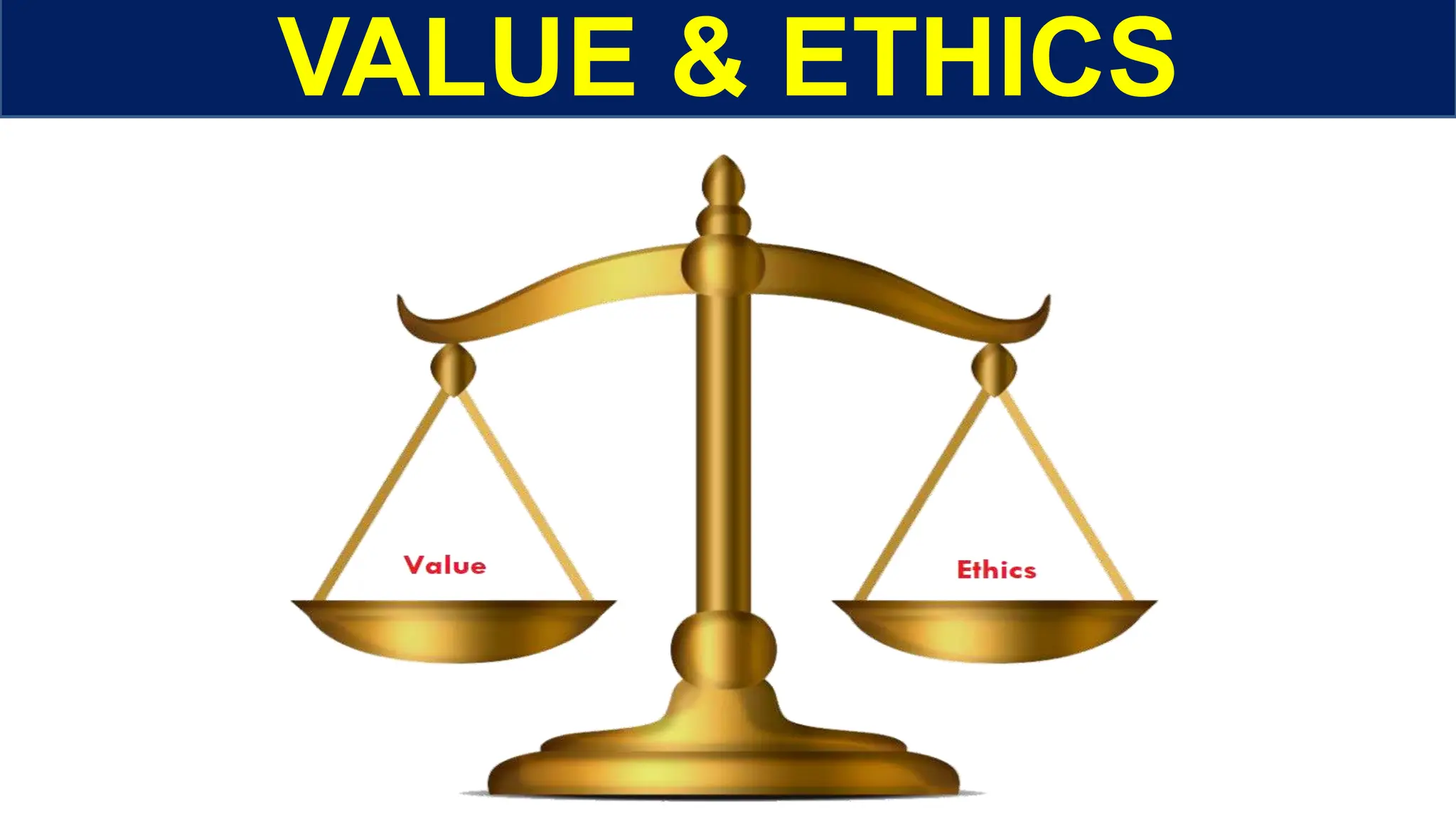
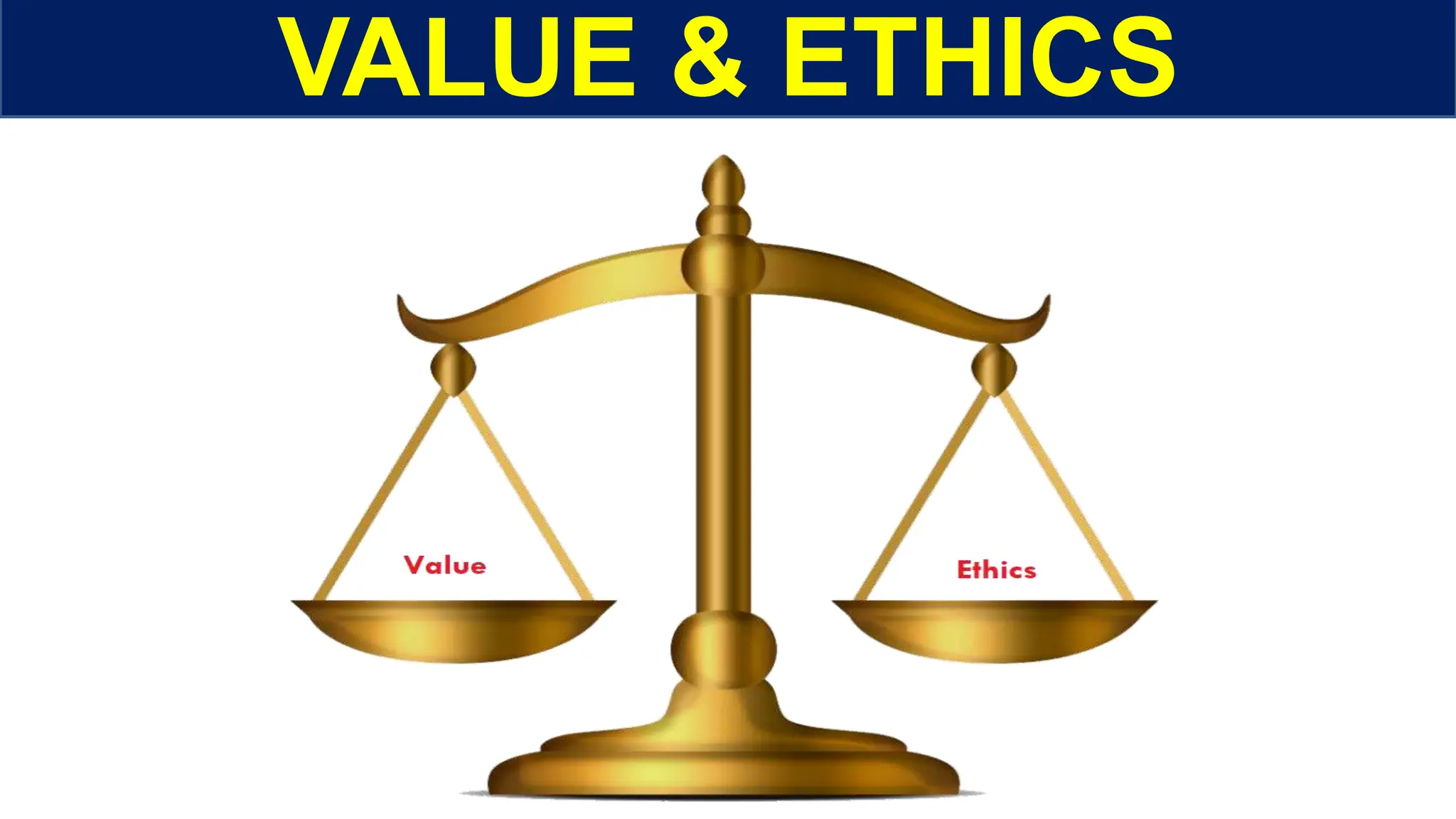
VALUE & ETHICS
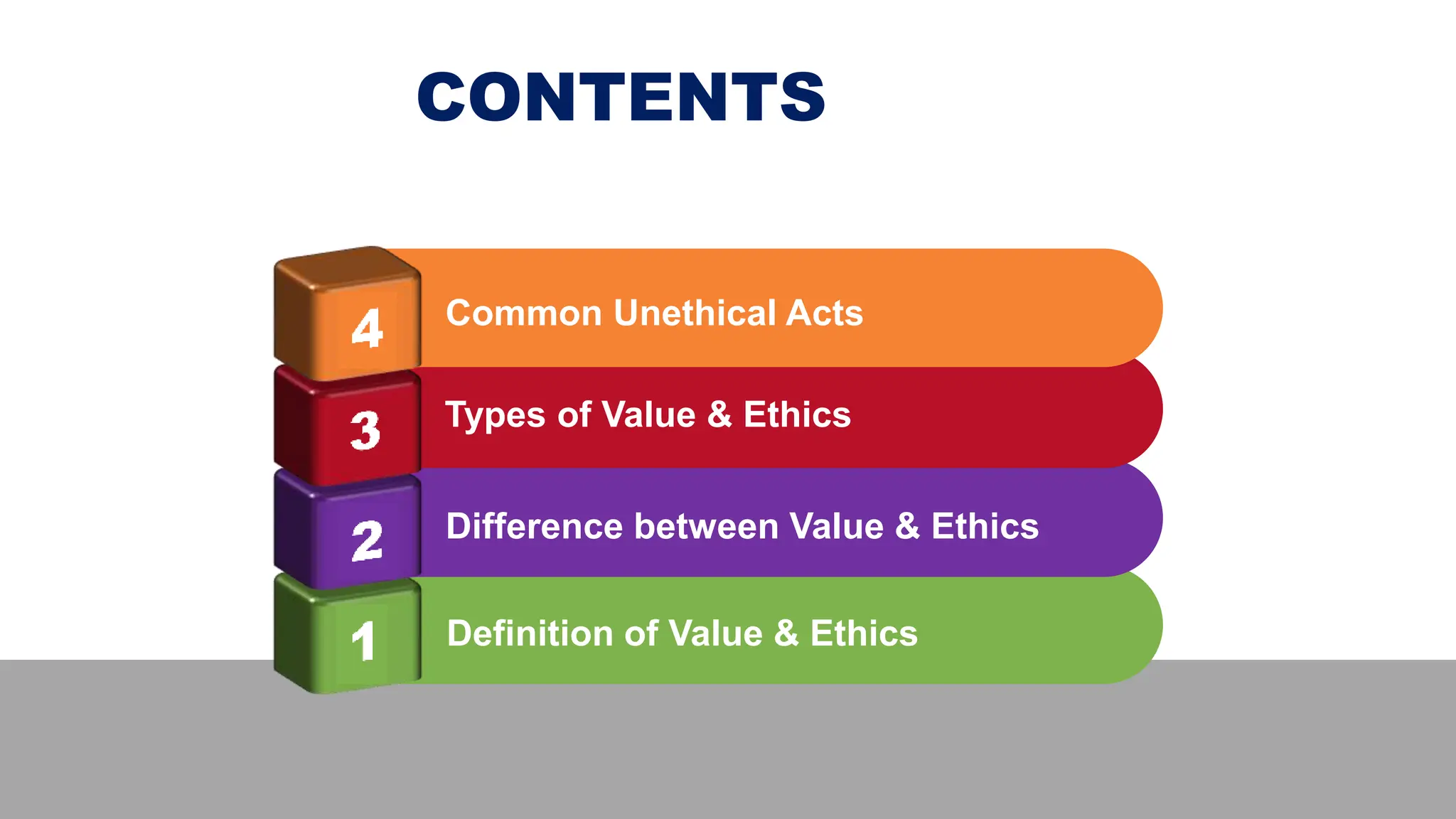
CONTENTS
Definition of Value & Ethics
Difference between Value & Ethics
Types of Value & Ethics
Common Unethical Acts
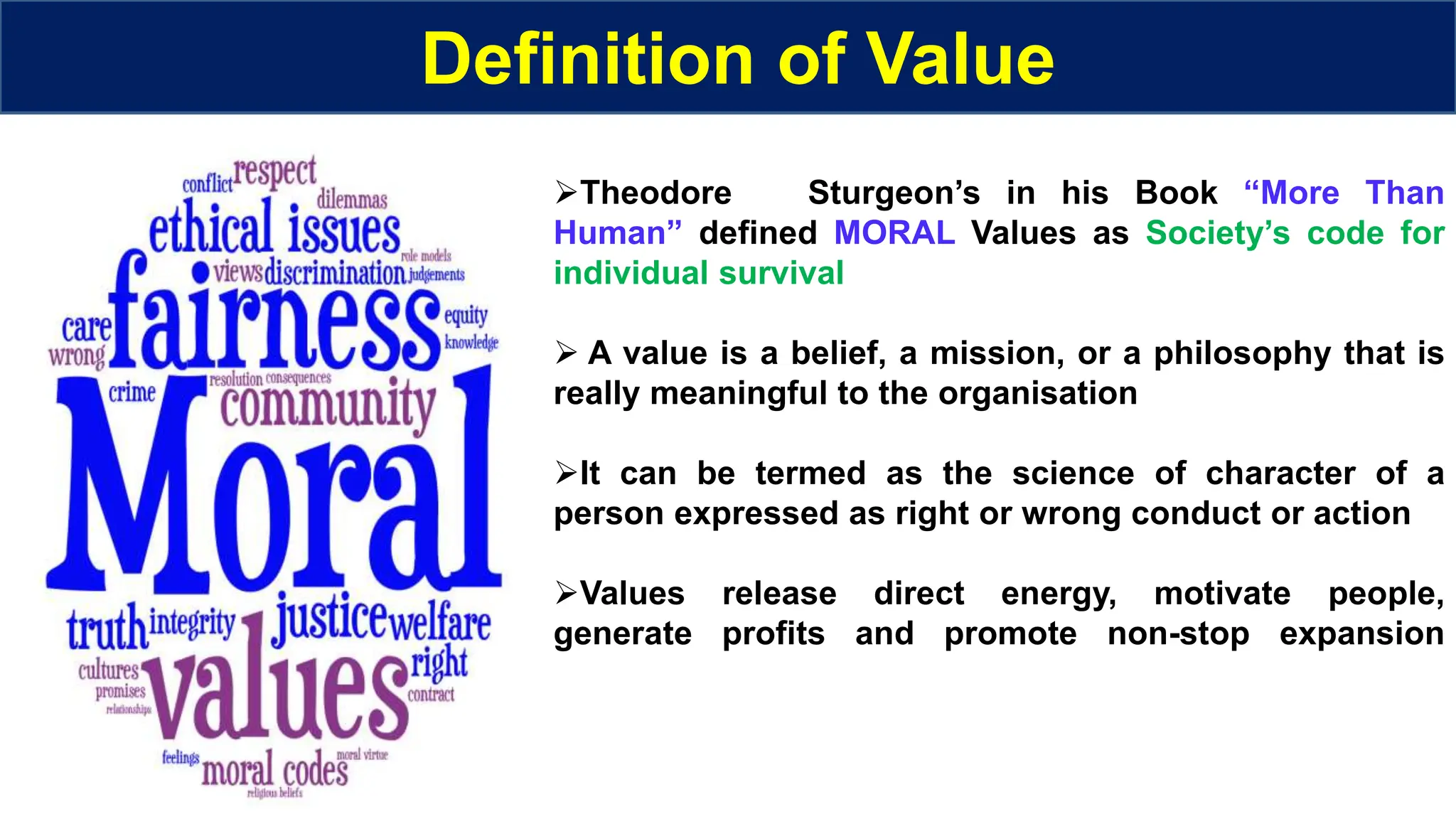
Definition of Value
Theodore Sturgeon’s in his Book “More Than
Human” defined MORAL Values as Society’s code for
individual survival
 A value is a belief, a mission, or a philosophy that is
really meaningful to the organisation
It can be termed as the science of character of a
person expressed as right or wrong conduct or action
Values release direct energy, motivate people,
generate profits and promote non-stop expansion
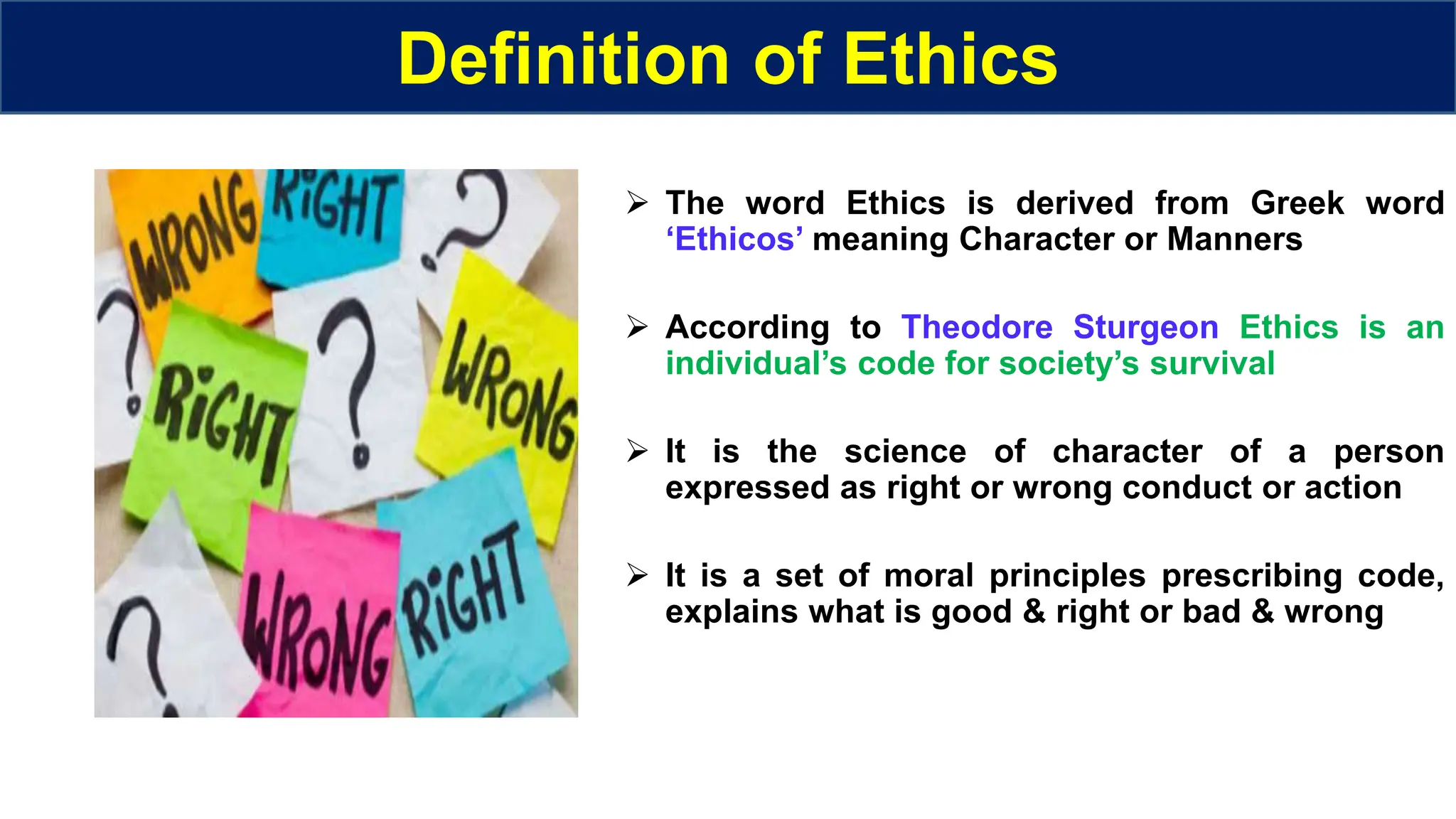
Definition of Ethics
 The word Ethics is derived from Greek word
‘Ethicos’ meaning Character or Manners
 According to Theodore Sturgeon Ethics is an
individual’s code for society’s survival
 It is the science of character of a person
expressed as right or wrong conduct or action
 It is a set of moral principles prescribing code,
explains what is good & right or bad & wrong
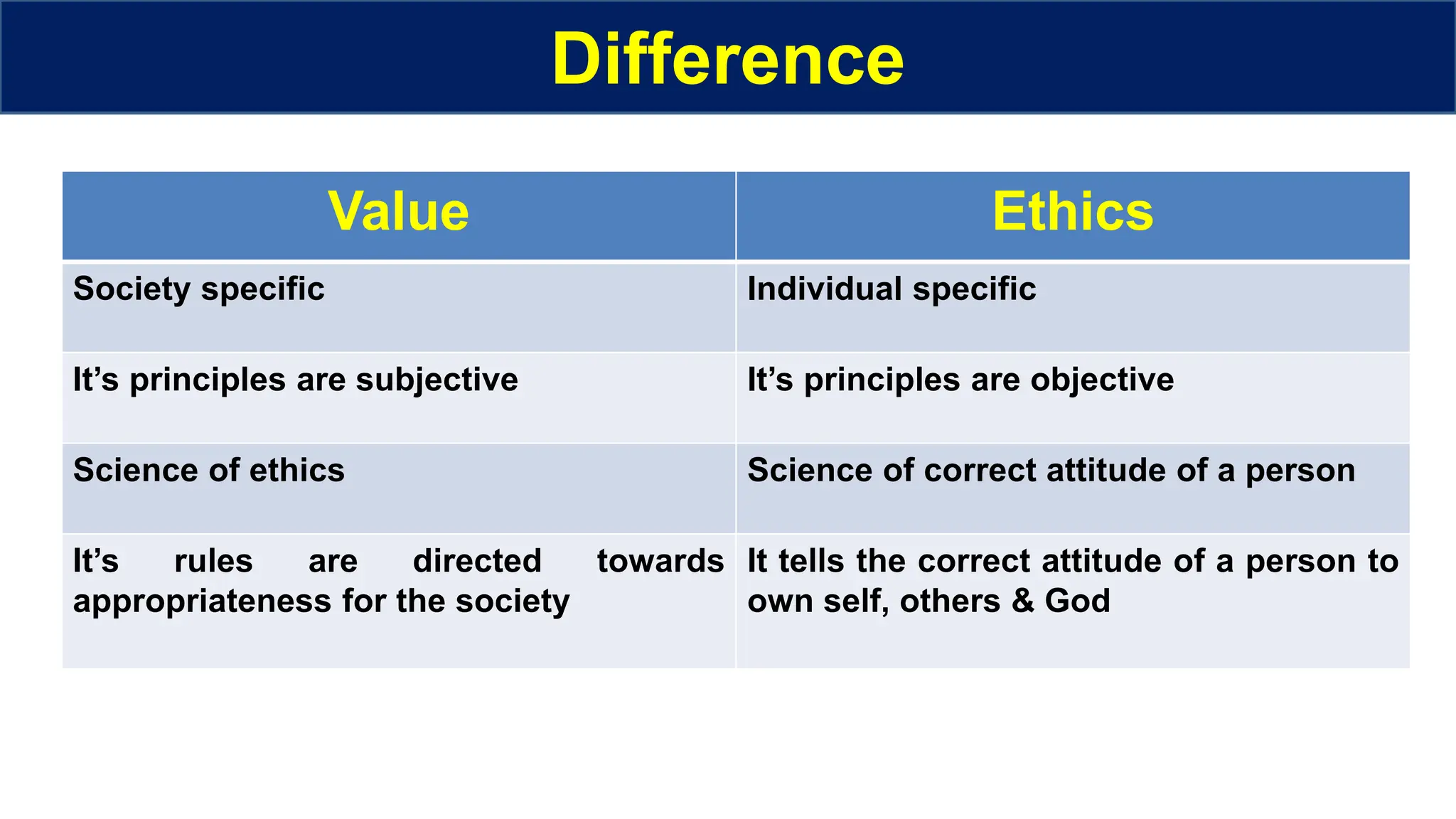
Difference
Value Ethics
Society specific Individual specific
It’s principles are subjective It’s principles are objective
Science of ethics Science of correct attitude of a person
It’s rules are directed towards
appropriateness for the society
It tells the correct attitude of a person to
own self, others & God
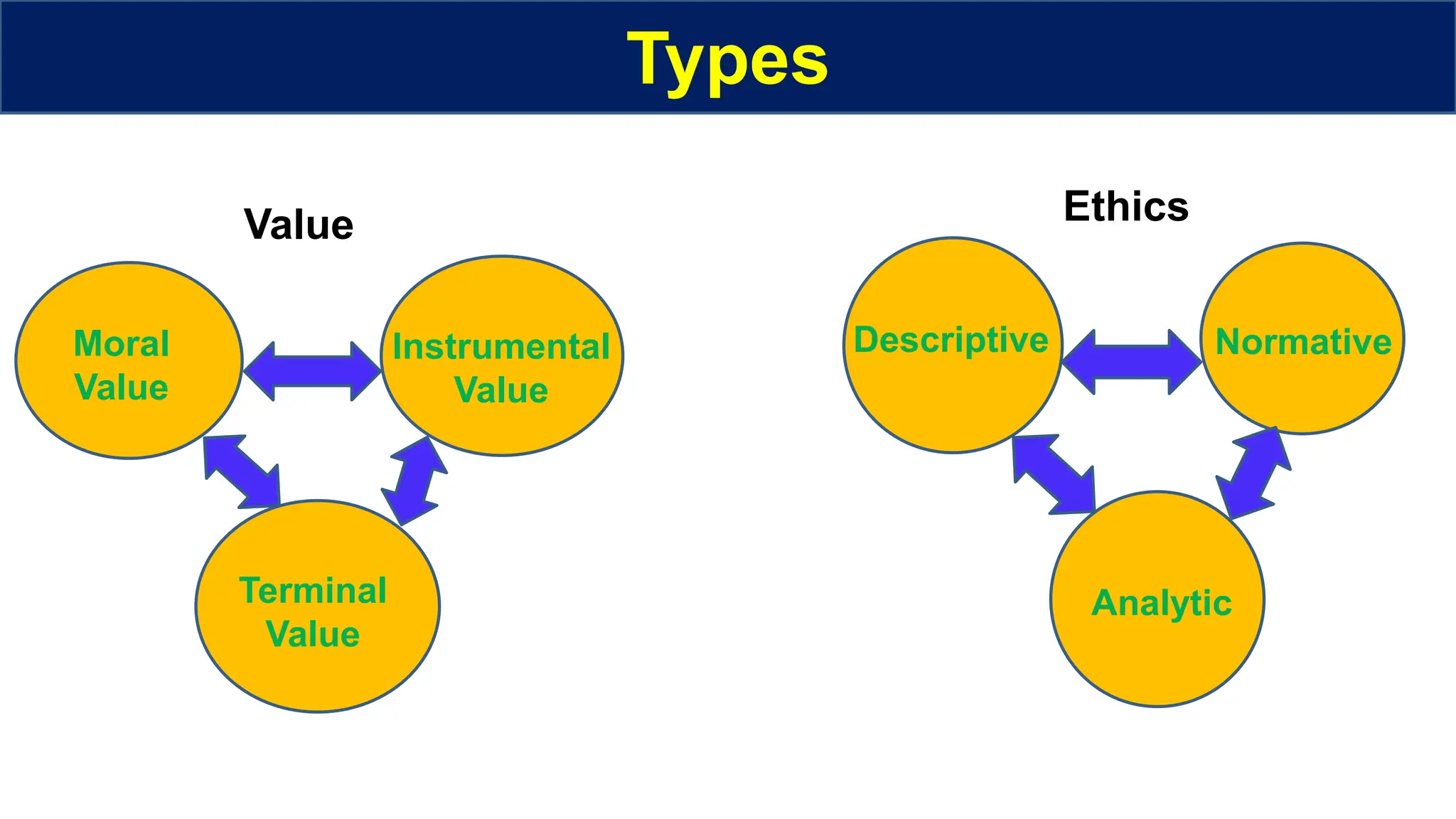
Types
Moral
Value
Instrumental
Value
Terminal
Value
Descriptive Normative
Analytic
Value Ethics
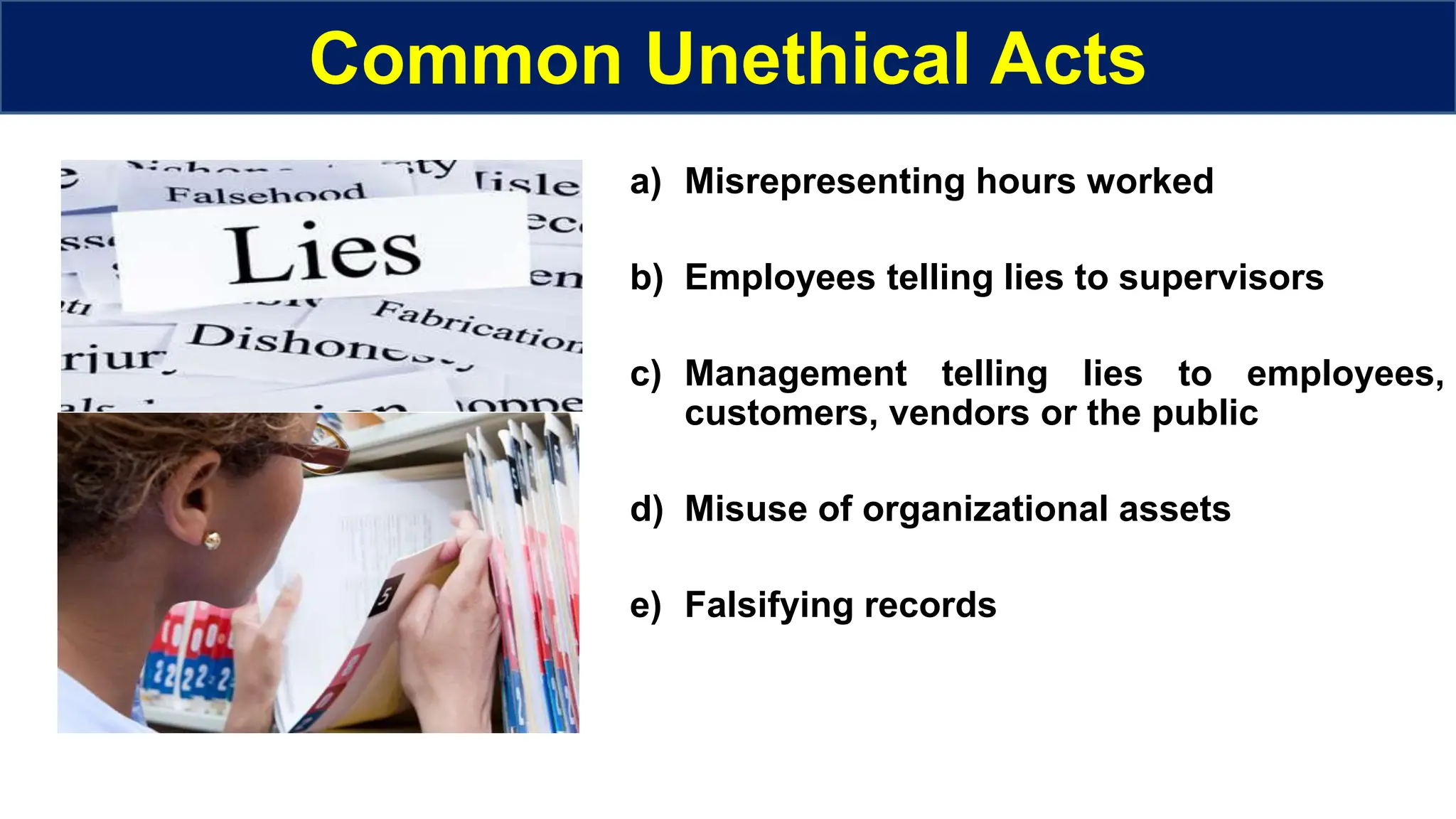
Common Unethical Acts
a) Misrepresenting hours worked
b) Employees telling lies to supervisors
c) Management telling lies to employees,
customers, vendors or the public
d) Misuse of organizational assets
e) Falsifying records
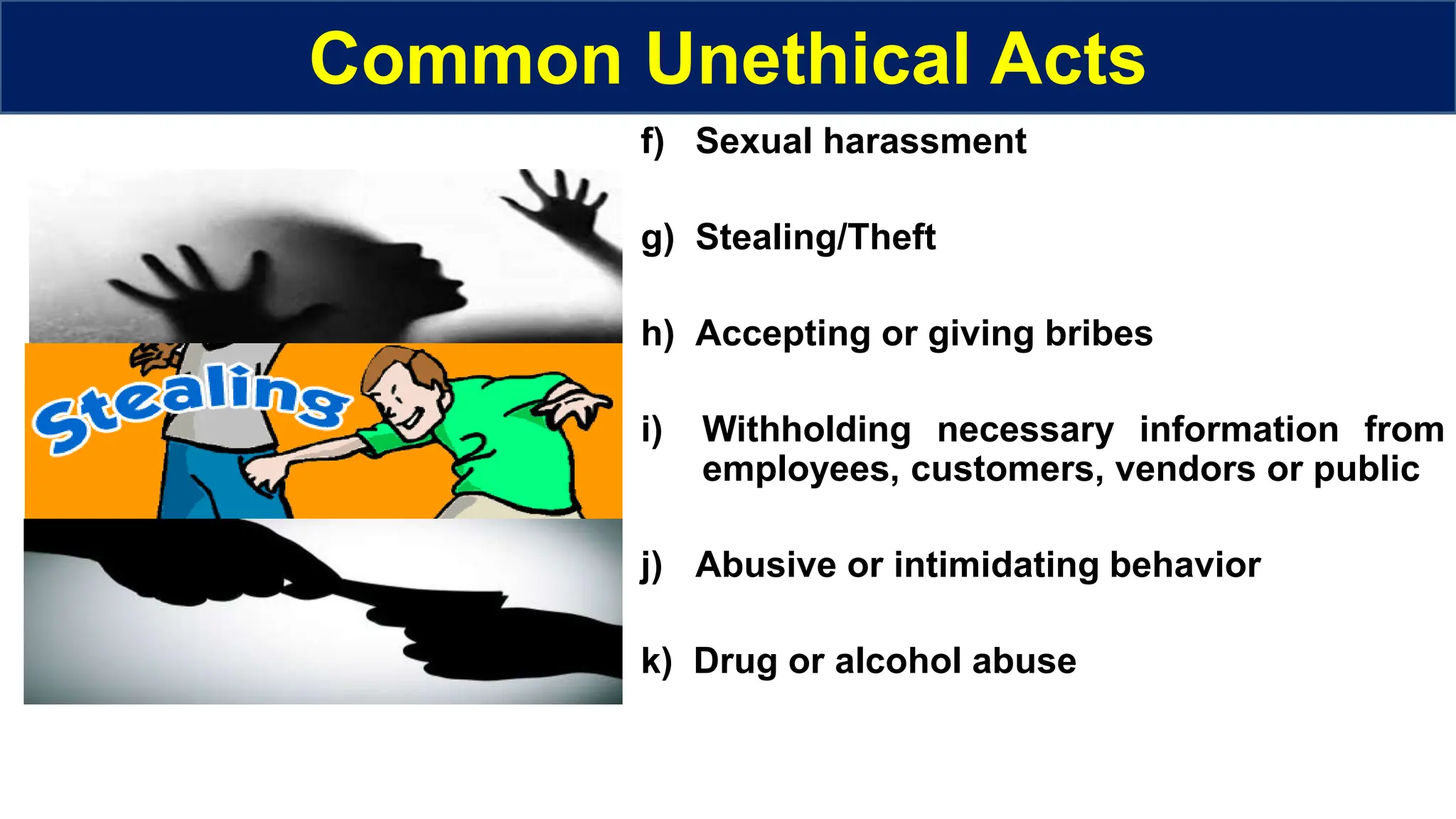
Common Unethical Acts
f) Sexual harassment
g) Stealing/Theft
h) Accepting or giving bribes
i) Withholding necessary information from
employees, customers, vendors or public
j) Abusive or intimidating behavior
k) Drug or alcohol abuse
VALUE & ETHICS
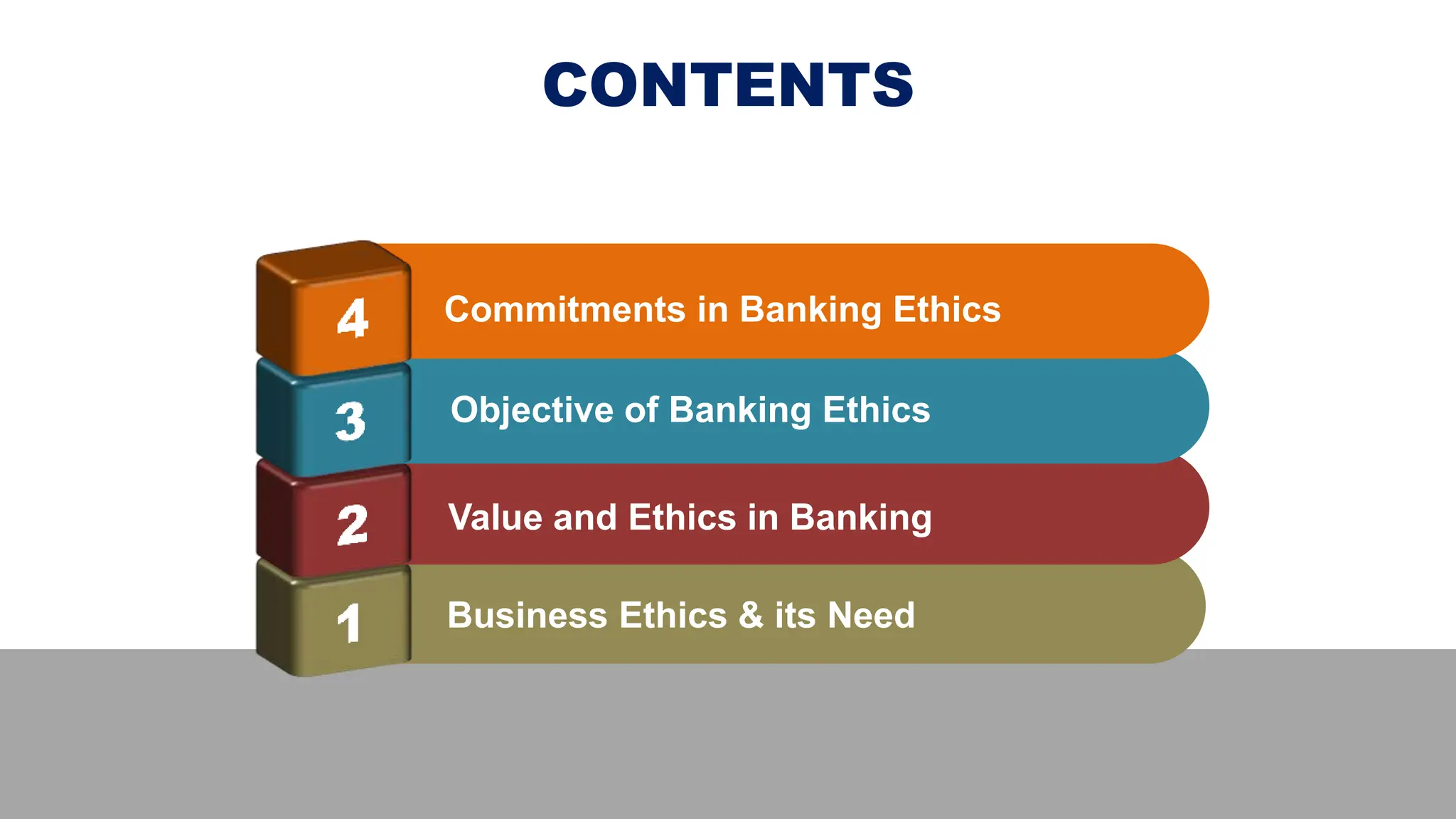
CONTENTS
Business Ethics & its Need
Value and Ethics in Banking
Objective of Banking Ethics
Commitments in Banking Ethics
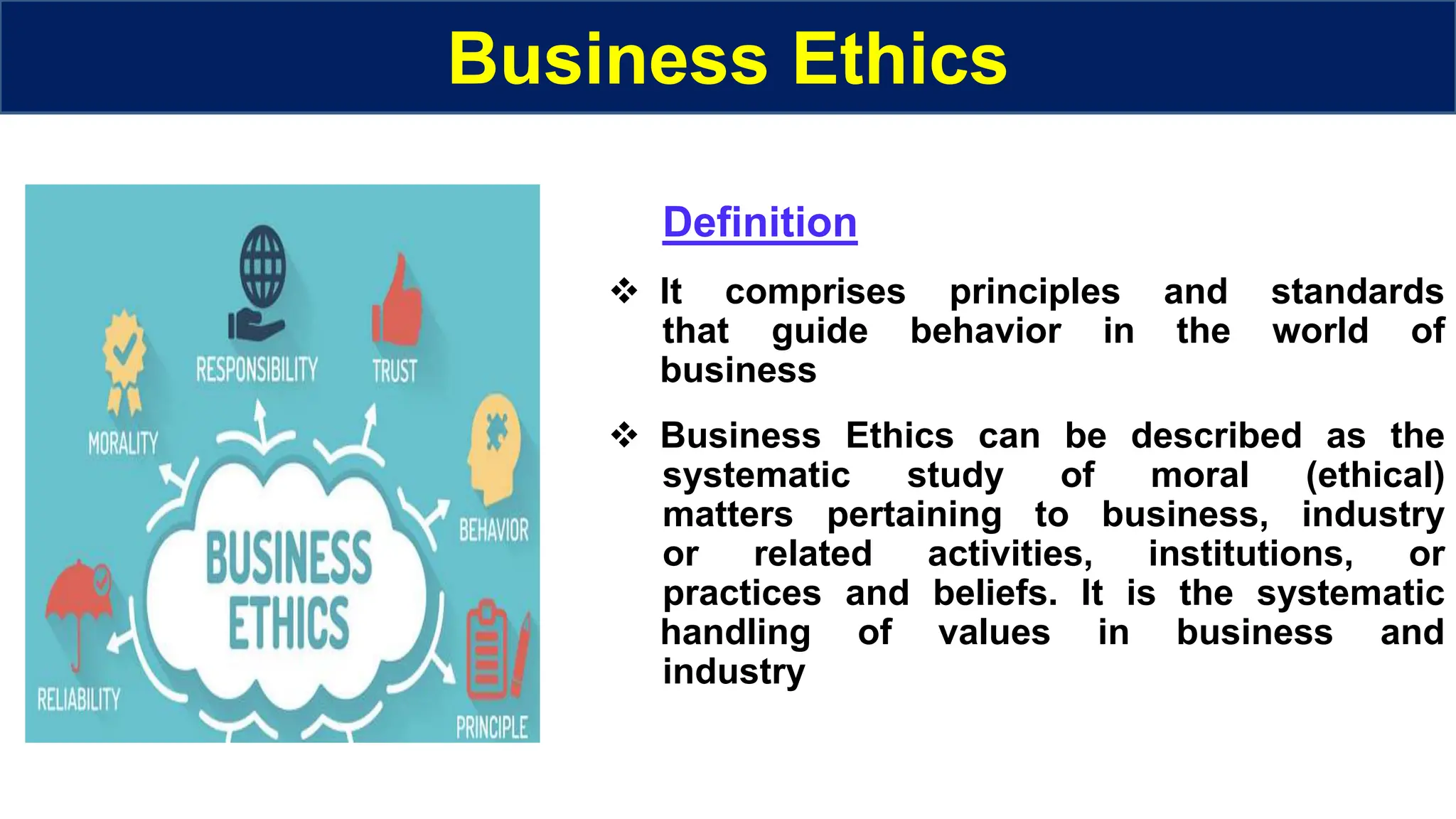
Business Ethics
Definition
 It comprises principles and standards
that guide behavior in the world of
business
 Business Ethics can be described as the
systematic study of moral (ethical)
matters pertaining to business, industry
or related activities, institutions, or
practices and beliefs. It is the systematic
handling of values in business and
industry
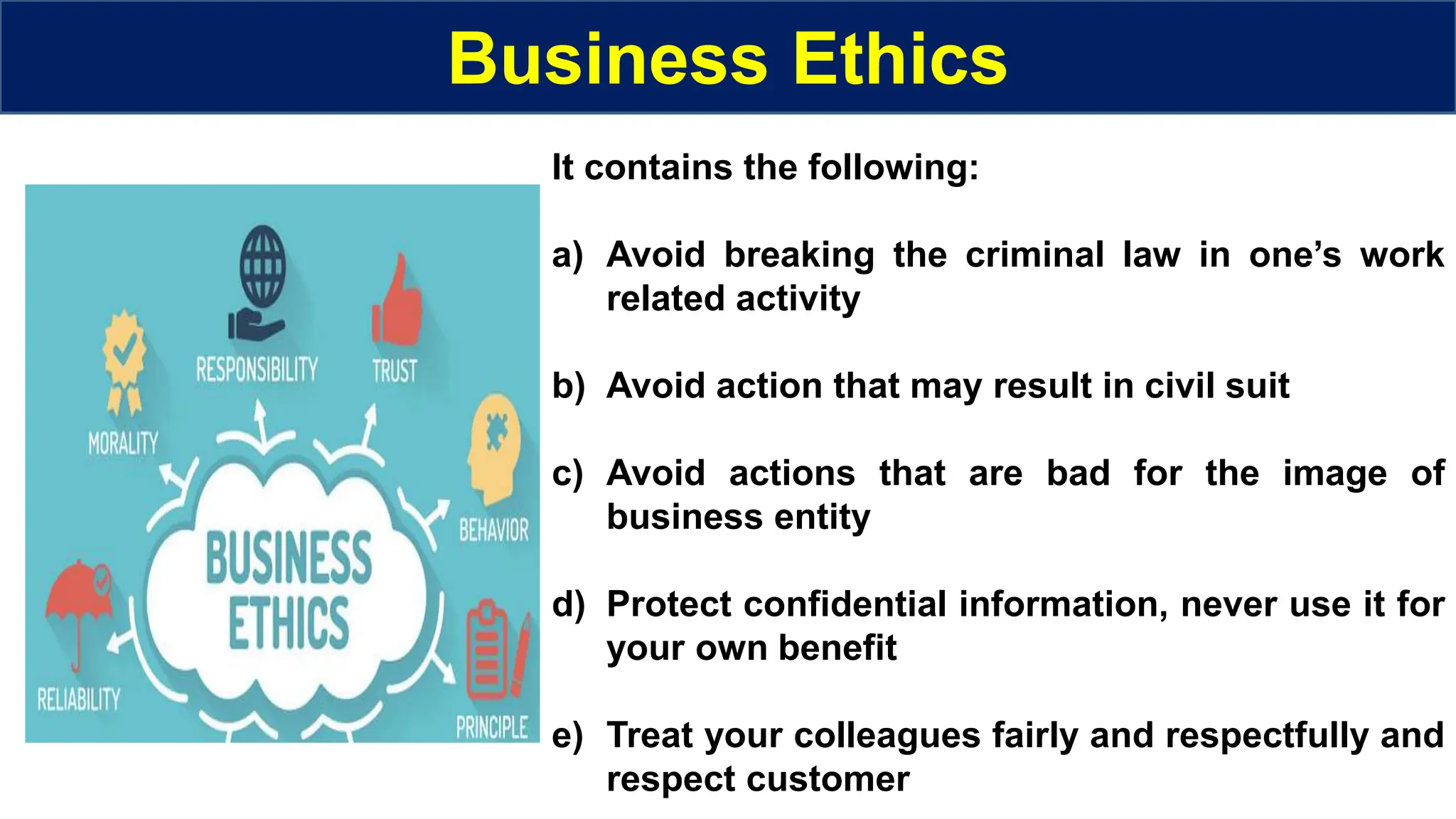
Business Ethics
It contains the following:
a) Avoid breaking the criminal law in one’s work
related activity
b) Avoid action that may result in civil suit
c) Avoid actions that are bad for the image of
business entity
d) Protect confidential information, never use it for
your own benefit
e) Treat your colleagues fairly and respectfully and
respect customer
Ethical Need in Business
It is necessary to earn money but not at the cost of ethics. Hence the need of
ethics is due to the following reasons:
a) LEGAL IMPERATIVE – Penalties attached to wrongdoing
b) SOCIETAL IMPERATIVE – Reputation
c) PRAGMATIC IMPERATIVE – Good for business, easier to attract business, joint
ventures, and direct foreign investment
d) CHANGE IMPERATIVE – Enables one to act through new choices where no
policies and procedures are in place
e) MULTINATIONAL IMPERATIVE – Business across borders
f) GLOBAL IMPERATIVE – Special interest groups and media
Value and Ethics in Banking
In today’s competitive scenario, every bank wants to
become the market leader, capture maximum market
share and have maximum customer base. As Banks
deal with money, Public & Govt. have more trust on
Banks. Hence, Value & Ethics play important role for
Banks:
a) Value & Ethics is a voluntary Code, which sets
minimum standards of practices to be followed
by banks while they are dealing with individual
customers
b) It provides protection to customers and explains
how banks are expected to deal with them for
their day-to-day operations
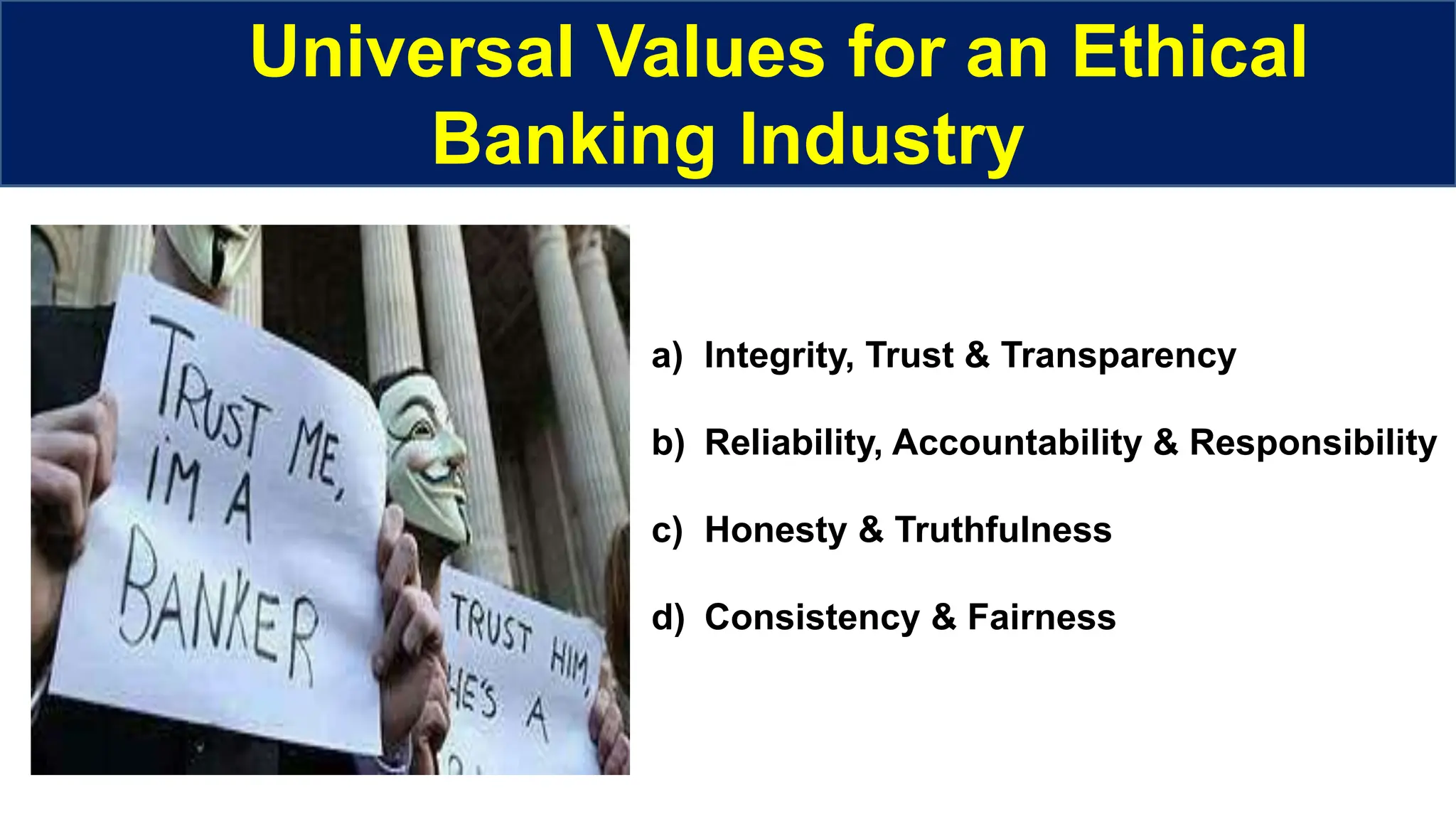
Universal Values for an Ethical
Banking Industry
a) Integrity, Trust & Transparency
b) Reliability, Accountability & Responsibility
c) Honesty & Truthfulness
d) Consistency & Fairness
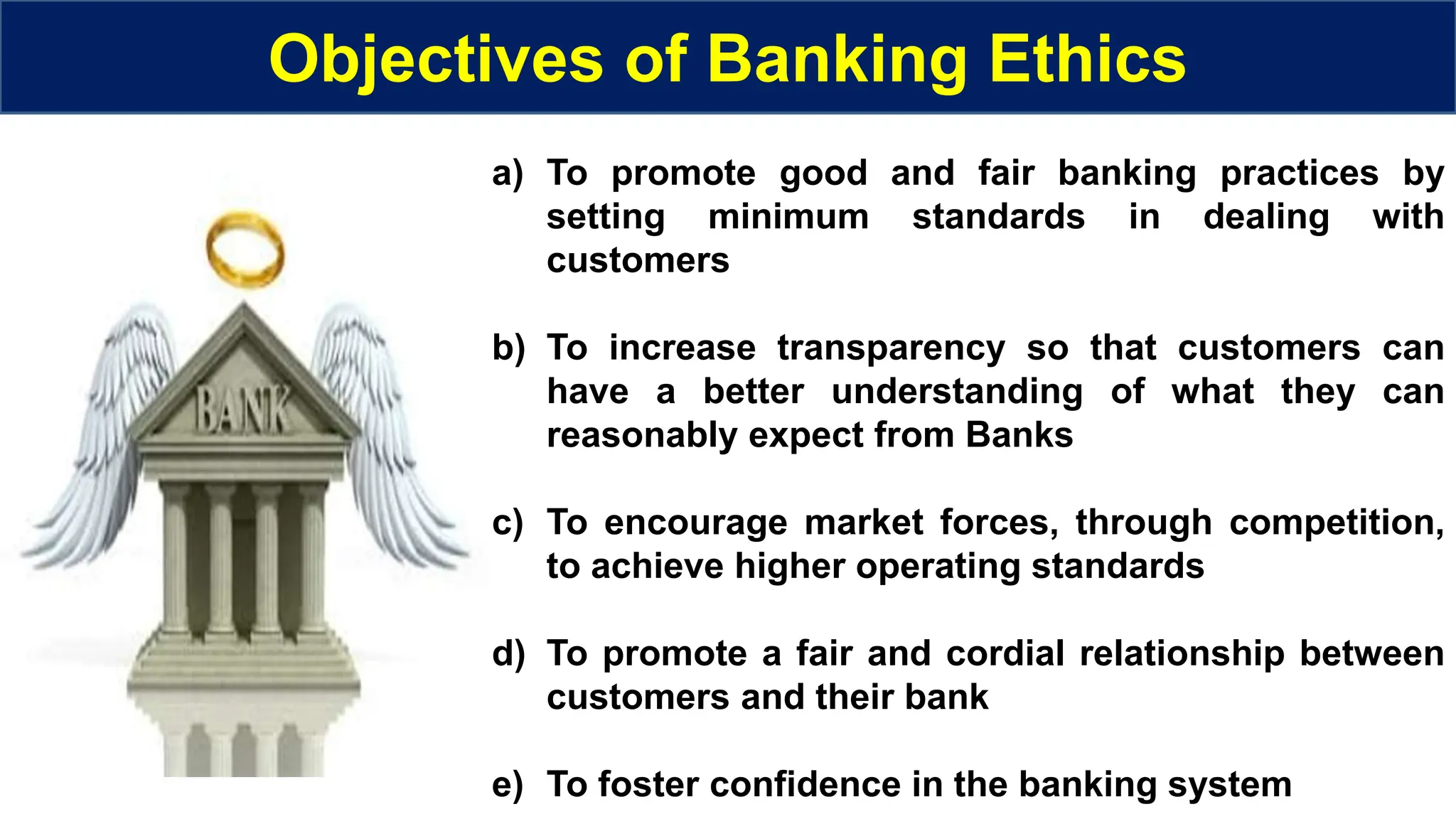
Objectives of Banking Ethics
a) To promote good and fair banking practices by
setting minimum standards in dealing with
customers
b) To increase transparency so that customers can
have a better understanding of what they can
reasonably expect from Banks
c) To encourage market forces, through competition,
to achieve higher operating standards
d) To promote a fair and cordial relationship between
customers and their bank
e) To foster confidence in the banking system
Commitments in Banking Ethics
a) To act Fairly and Reasonably in all our dealings
b) To help customer to understand how our
financial Products and Services work
c) To help customers how to they can operate their
accounts in banks
d) To deal Quickly and Sympathetically with things
that go wrong
e) To treat all customer’s Personal Information as
Private and Confidential
f) To adopt and practice a Non - Discrimination
Policy
g) Providing minimum banking facilities of receipt
and payment of cash/ cheques at the bank’s
counter
h) Meeting the commitments and standards in this
Code, for the products and services we offer,
and the procedures and practices we follow
i) Making sure our products and services meet
relevant laws and regulations in letter and spirit
j) Ensuring that our dealings with customer rest on
ethical principles of integrity and transparency
k) Operating secure and reliable banking and
payment systems
Commitments in Banking Ethics
Conclusion
a) Banks run on public trust which, in turn, is a function of ethical principles and
moral values. The world is witness to numerous bank failures, small and large,
which could not withstand the rigor of public trust
b) Banks are back bone of any country’s economy. Banks directly control
economical condition and drive development of a country, so there is a need to
have strong banking system which is only possible with the practice of Value &
Ethics
c) Value and Ethics are not a religion. They are logical, sensible principles of good
conduct that we need for a peaceful society
Success will come and go but Honesty and Integrity will last forever
INTEGRITY VALUE AND ETHICS   - HR ASPECT

INTEGRITY VALUE AND ETHICS - HR ASPECT

  • 1.
  • 2.
    CONTENTS Definition of Value& Ethics Difference between Value & Ethics Types of Value & Ethics Common Unethical Acts
  • 3.
    Definition of Value TheodoreSturgeon’s in his Book “More Than Human” defined MORAL Values as Society’s code for individual survival  A value is a belief, a mission, or a philosophy that is really meaningful to the organisation It can be termed as the science of character of a person expressed as right or wrong conduct or action Values release direct energy, motivate people, generate profits and promote non-stop expansion
  • 4.
    Definition of Ethics The word Ethics is derived from Greek word ‘Ethicos’ meaning Character or Manners  According to Theodore Sturgeon Ethics is an individual’s code for society’s survival  It is the science of character of a person expressed as right or wrong conduct or action  It is a set of moral principles prescribing code, explains what is good & right or bad & wrong
  • 5.
    Difference Value Ethics Society specificIndividual specific It’s principles are subjective It’s principles are objective Science of ethics Science of correct attitude of a person It’s rules are directed towards appropriateness for the society It tells the correct attitude of a person to own self, others & God
  • 6.
  • 7.
    Common Unethical Acts a)Misrepresenting hours worked b) Employees telling lies to supervisors c) Management telling lies to employees, customers, vendors or the public d) Misuse of organizational assets e) Falsifying records
  • 8.
    Common Unethical Acts f)Sexual harassment g) Stealing/Theft h) Accepting or giving bribes i) Withholding necessary information from employees, customers, vendors or public j) Abusive or intimidating behavior k) Drug or alcohol abuse
  • 10.
  • 11.
    CONTENTS Business Ethics &its Need Value and Ethics in Banking Objective of Banking Ethics Commitments in Banking Ethics
  • 12.
    Business Ethics Definition  Itcomprises principles and standards that guide behavior in the world of business  Business Ethics can be described as the systematic study of moral (ethical) matters pertaining to business, industry or related activities, institutions, or practices and beliefs. It is the systematic handling of values in business and industry
  • 13.
    Business Ethics It containsthe following: a) Avoid breaking the criminal law in one’s work related activity b) Avoid action that may result in civil suit c) Avoid actions that are bad for the image of business entity d) Protect confidential information, never use it for your own benefit e) Treat your colleagues fairly and respectfully and respect customer
  • 14.
    Ethical Need inBusiness It is necessary to earn money but not at the cost of ethics. Hence the need of ethics is due to the following reasons: a) LEGAL IMPERATIVE – Penalties attached to wrongdoing b) SOCIETAL IMPERATIVE – Reputation c) PRAGMATIC IMPERATIVE – Good for business, easier to attract business, joint ventures, and direct foreign investment d) CHANGE IMPERATIVE – Enables one to act through new choices where no policies and procedures are in place e) MULTINATIONAL IMPERATIVE – Business across borders f) GLOBAL IMPERATIVE – Special interest groups and media
  • 15.
    Value and Ethicsin Banking In today’s competitive scenario, every bank wants to become the market leader, capture maximum market share and have maximum customer base. As Banks deal with money, Public & Govt. have more trust on Banks. Hence, Value & Ethics play important role for Banks: a) Value & Ethics is a voluntary Code, which sets minimum standards of practices to be followed by banks while they are dealing with individual customers b) It provides protection to customers and explains how banks are expected to deal with them for their day-to-day operations
  • 16.
    Universal Values foran Ethical Banking Industry a) Integrity, Trust & Transparency b) Reliability, Accountability & Responsibility c) Honesty & Truthfulness d) Consistency & Fairness
  • 17.
    Objectives of BankingEthics a) To promote good and fair banking practices by setting minimum standards in dealing with customers b) To increase transparency so that customers can have a better understanding of what they can reasonably expect from Banks c) To encourage market forces, through competition, to achieve higher operating standards d) To promote a fair and cordial relationship between customers and their bank e) To foster confidence in the banking system
  • 18.
    Commitments in BankingEthics a) To act Fairly and Reasonably in all our dealings b) To help customer to understand how our financial Products and Services work c) To help customers how to they can operate their accounts in banks d) To deal Quickly and Sympathetically with things that go wrong e) To treat all customer’s Personal Information as Private and Confidential f) To adopt and practice a Non - Discrimination Policy
  • 19.
    g) Providing minimumbanking facilities of receipt and payment of cash/ cheques at the bank’s counter h) Meeting the commitments and standards in this Code, for the products and services we offer, and the procedures and practices we follow i) Making sure our products and services meet relevant laws and regulations in letter and spirit j) Ensuring that our dealings with customer rest on ethical principles of integrity and transparency k) Operating secure and reliable banking and payment systems Commitments in Banking Ethics
  • 20.
    Conclusion a) Banks runon public trust which, in turn, is a function of ethical principles and moral values. The world is witness to numerous bank failures, small and large, which could not withstand the rigor of public trust b) Banks are back bone of any country’s economy. Banks directly control economical condition and drive development of a country, so there is a need to have strong banking system which is only possible with the practice of Value & Ethics c) Value and Ethics are not a religion. They are logical, sensible principles of good conduct that we need for a peaceful society Success will come and go but Honesty and Integrity will last forever