AN INTEGRATIVE
CURRICULUM MODEL:
Incorporating CAM
Within an Allopathic Curriculum
Rita K. Benn, Ph.D., Sara L. Warber, M.D.
University of Michigan
Complementary & Alternative Medicine Research Center
Department of Family Medicine
Rationale
• Increased patient use of CAM without
disclosing such information to physicians
• Physicians have limited knowledge base of
CAM
• Physician and medical students attitudes
towards CAM correlate with educational
exposure
USF Survey Results
Most students agreed that traditional medicine
could benefit from CAM but
• only 1/4 students would refer for CAM
• 2/3 students understood principles of only
4/10 CAM modalities
• 40% would dissuade their patients
from using chiropractic care.
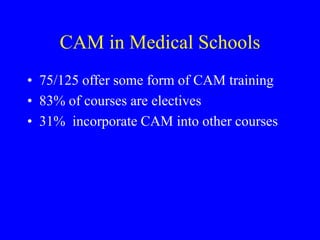
CAM in Medical Schools
• 75/125 offer some form of CAM training
• 83% of courses are electives
• 31% incorporate CAM into other courses
GOALS
Knowledge
• To expand physician base of information on
theory and practice of CAM
• To provide research based evidence for
efficacy and safety of CAM
Professional Behaviors
• To instill an attitude of openness & respect
for CAM
• To develop skills for:
– communicating information about CAM to
patients
– coordinating health care with CAM
practitioners
– use CAM for personal self-care
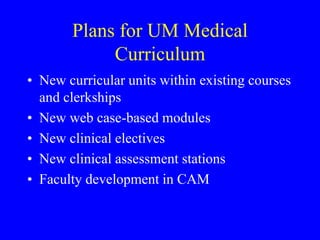
Plans for UM Medical
Curriculum
• New curricular units within existing courses
and clerkships
• New web case-based modules
• New clinical electives
• New clinical assessment stations
• Faculty development in CAM
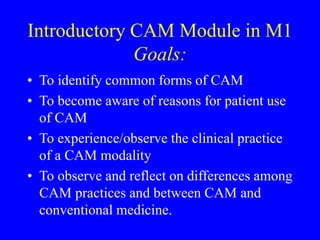
Introductory CAM Module in M1
Goals:
• To identify common forms of CAM
• To become aware of reasons for patient use
of CAM
• To experience/observe the clinical practice
of a CAM modality
• To observe and reflect on differences among
CAM practices and between CAM and
conventional medicine.
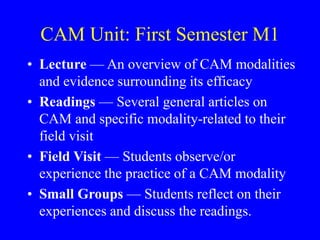
CAM Unit: First Semester M1
• Lecture — An overview of CAM modalities
and evidence surrounding its efficacy
• Readings — Several general articles on
CAM and specific modality-related to their
field visit
• Field Visit — Students observe/or
experience the practice of a CAM modality
• Small Groups — Students reflect on their
experiences and discuss the readings.
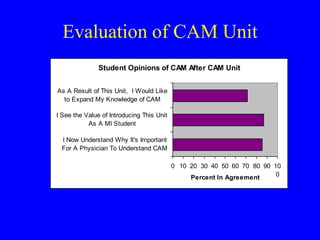
Evaluation of CAM Unit
Student Opinions of CAM After CAM Unit
0 10 20 30 40 50 60 70 80 90 10
0
I Now Understand Why It's Important
For A Physician To Understand CAM
I See the Value of Introducing This Unit
As A MI Student
As A Result of This Unit, I Would Like
to Expand My Knowledge of CAM
Percent In Agreement
CAM Selective Courses - M1
• Mind-Body Medicine for Care of Self
and Patient
• Understandings of Health and Disease
in the Classic Medical Systems of Asia
• The Role of Spirituality in Medicine
• Nutrition and Chronic Disease
Evaluation of Selectives
Mean Ratings
(1-low, 5-high) Mind-
Body
Medicine
Spirituality
in Medicine
Oriental
Medicine
Nutrition
& Chronic
Medical
Care
All
Selectives
Disease
Increased my interest in
this topic.
4.53 4.36 4.18 4.40 4.26
I have a broader
understanding of this
topic.
4.46 3.92 4.18 4.60 4.31
Increased my
understanding of the
relationship between
medicine and society.
4.23 4.36 3.94 4.40 4.19
Overall the quality of
teaching during this
course was
4.38 3.67 3.71 4.40 4.19
Overall, this course was 4.38 3.83 3.65 4.20 4.01
I would recommend
having this course
4.54 4.46 3.82 4.60 4.31
Future First Year Plans
• An Overview Lecture in Four Required
Courses:
– Pharmacology
– Immunology
– Host Defense
– Anatomy
• Two Panel Case Based Presentations
Focused on Herbs and Nutrition
Second Year Curriculum
Integration Plans
• CAM and Nutrition Content in all Courses
• Case Based Presentations
• Integrative Case for Standardized Patient
Interview
• Practice-based Modules in Alternative
Medicine and Spiritual History Taking
Web-Based Materials and
Consultation: Third year
• Standard Integrative Case Materials in all
Clerkships
• Case Consultation On-line with CAM
Faculty
• Packets of Readings
Fourth Year Electives
• Clinical Electives
-Complementary Medicine
-Specialized Topic Area Electives
• Science in the Clinic Research Elective
Faculty Development:
CAM Faculty Scholars Program
Three components:
• One day a month of CAM Content
• Individual Mentoring by CAM affiliate
faculty
• Educational Project
Medical Curriculum Evaluation
• Student Performance in Courses
• Course Evaluations
• Pre-Post Learner Attitudes and Knowledge
• Fourth Year Clinical Competence
• Qualitative Study of Physician Growth
Related Program Initiative
Interdisciplinary Graduate
Certificate Program
• Enrolled in Masters/Doctoral Program in
Schools of Pharmacy, Social Work, Nursing
and Public Health
• Three additional core courses
-Clinical Complementary Therapies
(Nursing School)
Challenges
• Building Relationships with Faculty Course
Directors
• Shifting Academic Faculty Attitudes about CAM
• Expanding Academic Faculty CAM Knowledge
• Engaging Faculty in Interdisciplinary
Collaboration
• Cultivating value in students for self-
reflection/self-care
• Developing Capacity for Clinical CAM Electives
Facilitating Factors
• Medical Education Administration Support
• NIH, Foundation, and Donor Funds
• CAM Research Center Grant
• Quality Courses and Positive Student
Evaluation
• Expansive Community Network of
Reputable CAM Providers
Conclusions
• Model program
• Curricular innovations
• Benchmarking quality education
• Preparation of health care professionals
and researchers of the future

integrated curriculum CAM.ppt

  • 1.
    AN INTEGRATIVE CURRICULUM MODEL: IncorporatingCAM Within an Allopathic Curriculum Rita K. Benn, Ph.D., Sara L. Warber, M.D. University of Michigan Complementary & Alternative Medicine Research Center Department of Family Medicine
  • 2.
    Rationale • Increased patientuse of CAM without disclosing such information to physicians • Physicians have limited knowledge base of CAM • Physician and medical students attitudes towards CAM correlate with educational exposure
  • 3.
    USF Survey Results Moststudents agreed that traditional medicine could benefit from CAM but • only 1/4 students would refer for CAM • 2/3 students understood principles of only 4/10 CAM modalities • 40% would dissuade their patients from using chiropractic care.
  • 4.
    CAM in MedicalSchools • 75/125 offer some form of CAM training • 83% of courses are electives • 31% incorporate CAM into other courses
  • 5.
    GOALS Knowledge • To expandphysician base of information on theory and practice of CAM • To provide research based evidence for efficacy and safety of CAM
  • 6.
    Professional Behaviors • Toinstill an attitude of openness & respect for CAM • To develop skills for: – communicating information about CAM to patients – coordinating health care with CAM practitioners – use CAM for personal self-care
  • 7.
    Plans for UMMedical Curriculum • New curricular units within existing courses and clerkships • New web case-based modules • New clinical electives • New clinical assessment stations • Faculty development in CAM
  • 8.
    Introductory CAM Modulein M1 Goals: • To identify common forms of CAM • To become aware of reasons for patient use of CAM • To experience/observe the clinical practice of a CAM modality • To observe and reflect on differences among CAM practices and between CAM and conventional medicine.
  • 9.
    CAM Unit: FirstSemester M1 • Lecture — An overview of CAM modalities and evidence surrounding its efficacy • Readings — Several general articles on CAM and specific modality-related to their field visit • Field Visit — Students observe/or experience the practice of a CAM modality • Small Groups — Students reflect on their experiences and discuss the readings.
  • 10.
    Evaluation of CAMUnit Student Opinions of CAM After CAM Unit 0 10 20 30 40 50 60 70 80 90 10 0 I Now Understand Why It's Important For A Physician To Understand CAM I See the Value of Introducing This Unit As A MI Student As A Result of This Unit, I Would Like to Expand My Knowledge of CAM Percent In Agreement
  • 11.
    CAM Selective Courses- M1 • Mind-Body Medicine for Care of Self and Patient • Understandings of Health and Disease in the Classic Medical Systems of Asia • The Role of Spirituality in Medicine • Nutrition and Chronic Disease
  • 12.
    Evaluation of Selectives MeanRatings (1-low, 5-high) Mind- Body Medicine Spirituality in Medicine Oriental Medicine Nutrition & Chronic Medical Care All Selectives Disease Increased my interest in this topic. 4.53 4.36 4.18 4.40 4.26 I have a broader understanding of this topic. 4.46 3.92 4.18 4.60 4.31 Increased my understanding of the relationship between medicine and society. 4.23 4.36 3.94 4.40 4.19 Overall the quality of teaching during this course was 4.38 3.67 3.71 4.40 4.19 Overall, this course was 4.38 3.83 3.65 4.20 4.01 I would recommend having this course 4.54 4.46 3.82 4.60 4.31
  • 13.
    Future First YearPlans • An Overview Lecture in Four Required Courses: – Pharmacology – Immunology – Host Defense – Anatomy • Two Panel Case Based Presentations Focused on Herbs and Nutrition
  • 14.
    Second Year Curriculum IntegrationPlans • CAM and Nutrition Content in all Courses • Case Based Presentations • Integrative Case for Standardized Patient Interview • Practice-based Modules in Alternative Medicine and Spiritual History Taking
  • 15.
    Web-Based Materials and Consultation:Third year • Standard Integrative Case Materials in all Clerkships • Case Consultation On-line with CAM Faculty • Packets of Readings
  • 16.
    Fourth Year Electives •Clinical Electives -Complementary Medicine -Specialized Topic Area Electives • Science in the Clinic Research Elective
  • 17.
    Faculty Development: CAM FacultyScholars Program Three components: • One day a month of CAM Content • Individual Mentoring by CAM affiliate faculty • Educational Project
  • 18.
    Medical Curriculum Evaluation •Student Performance in Courses • Course Evaluations • Pre-Post Learner Attitudes and Knowledge • Fourth Year Clinical Competence • Qualitative Study of Physician Growth
  • 19.
    Related Program Initiative InterdisciplinaryGraduate Certificate Program • Enrolled in Masters/Doctoral Program in Schools of Pharmacy, Social Work, Nursing and Public Health • Three additional core courses -Clinical Complementary Therapies (Nursing School)
  • 20.
    Challenges • Building Relationshipswith Faculty Course Directors • Shifting Academic Faculty Attitudes about CAM • Expanding Academic Faculty CAM Knowledge • Engaging Faculty in Interdisciplinary Collaboration • Cultivating value in students for self- reflection/self-care • Developing Capacity for Clinical CAM Electives
  • 21.
    Facilitating Factors • MedicalEducation Administration Support • NIH, Foundation, and Donor Funds • CAM Research Center Grant • Quality Courses and Positive Student Evaluation • Expansive Community Network of Reputable CAM Providers
  • 22.
    Conclusions • Model program •Curricular innovations • Benchmarking quality education • Preparation of health care professionals and researchers of the future