INSTRUCTIONAL
DESIGN PLAN
STEPS TO ACTION
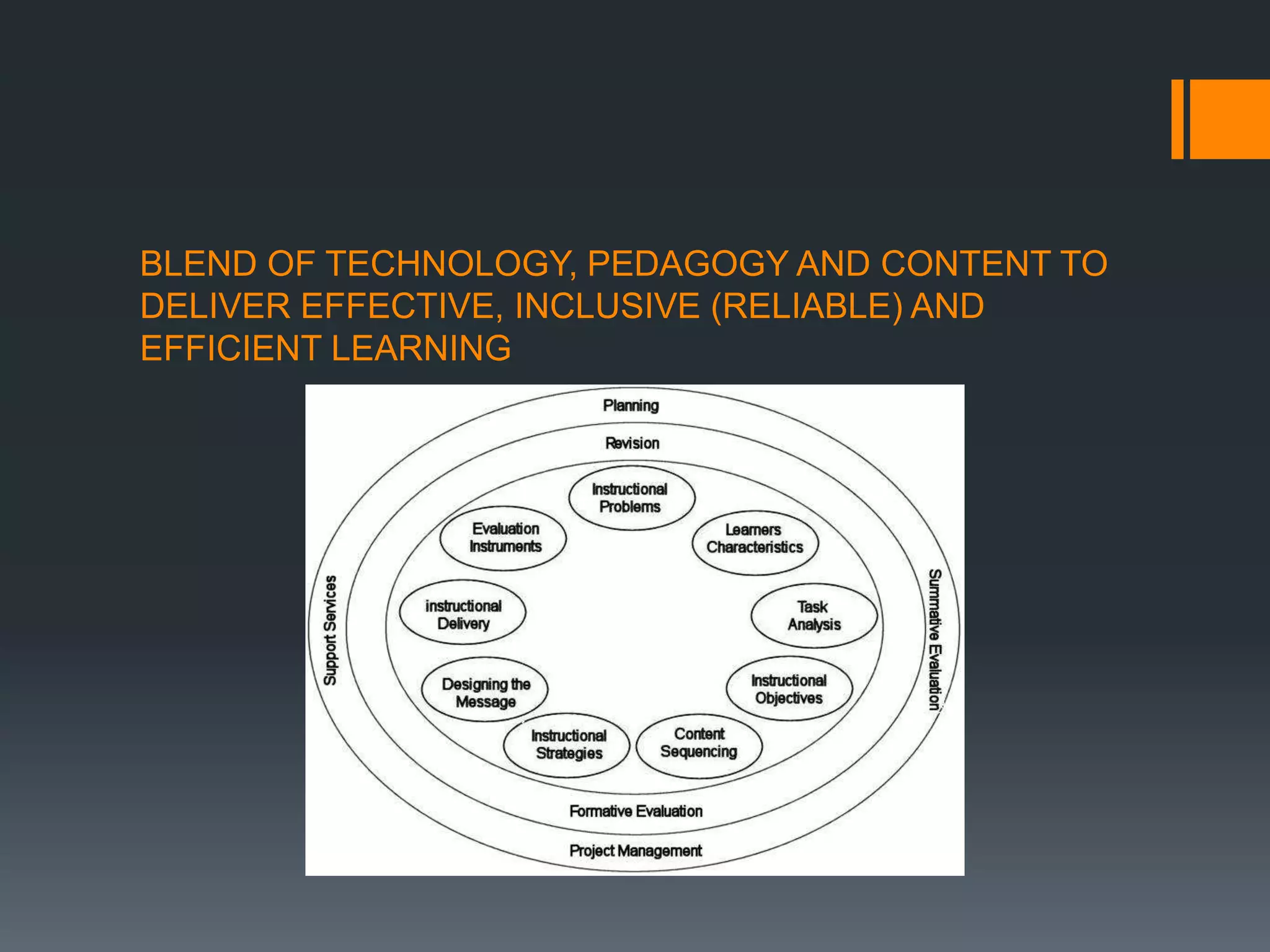
BLEND OF TECHNOLOGY, PEDAGOGY AND CONTENT TO
DELIVER EFFECTIVE, INCLUSIVE (RELIABLE) AND
EFFICIENT LEARNING
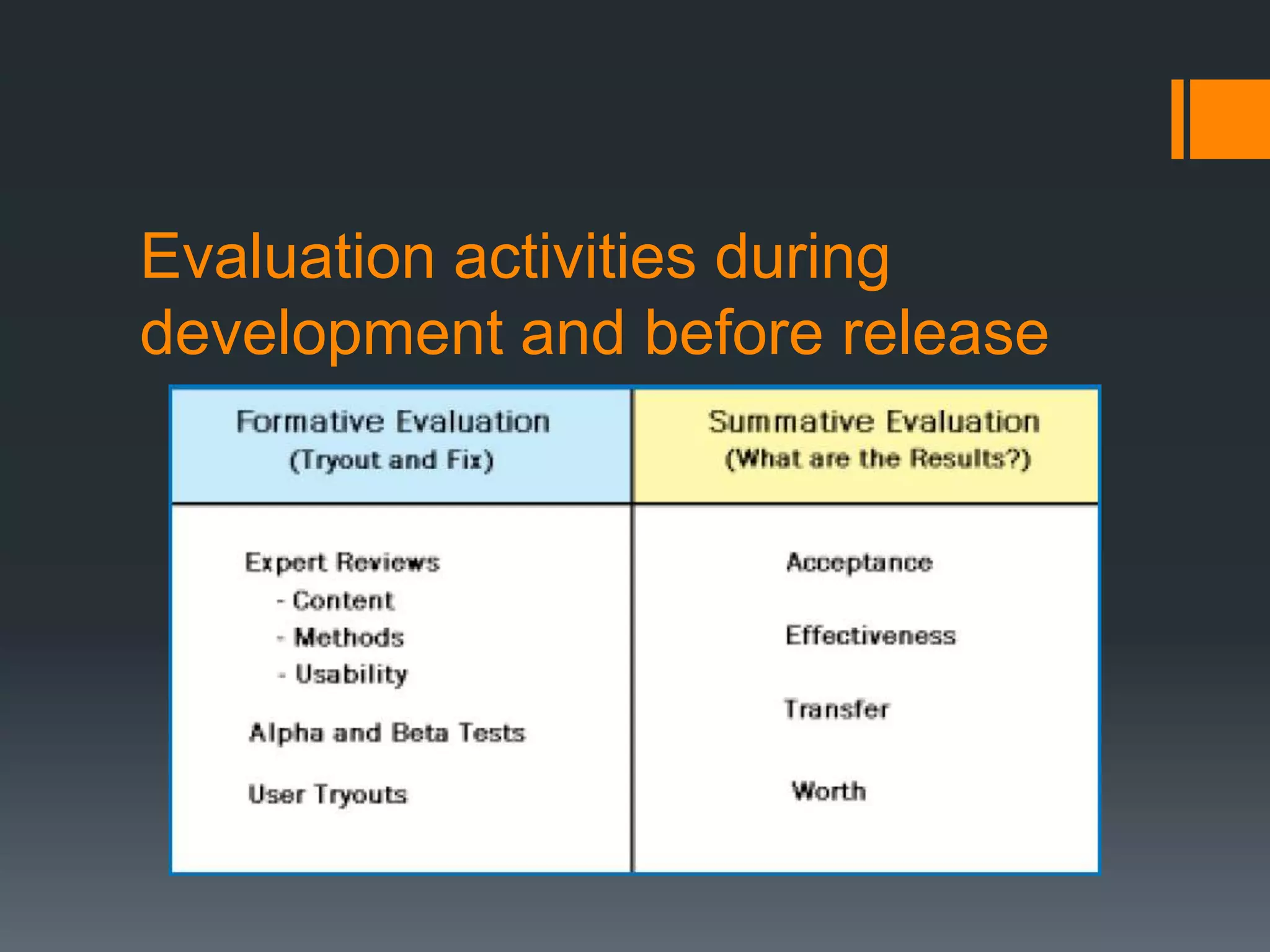
Evaluation activities during
development and before release
THREE CRITICAL ELEMENTS TO
OVERALL e-LEARNING QUALITY
 A system must be in place to do the front-end analysis of
  needs and learners, and to identify the desired outcomes of
  each e-Learning product;
 Learning objectives, stated in ways that can be measured,
  must support the outcomes; and
 Standards, supported by processes and templates, must be
  in place to give structure to the design and development
  efforts.
FORMATIVE EVALUATION
 Why do you want to do a formal pilot test?
 What information will we get from this tryout?
 How much will this cost?
 Will this delay product launch? If so, how much?
THE MODEL
 Identify instructional problems, and specify goals
  for designing an instructional program.
 Examine learner characteristics that should receive
  attention during planning.
 Identify subject content, and analyze task
  components related to stated goals and purposes.
 State Instructional objectives for the learner.
THE MODEL
 Sequence content within each instructional unit for
  logical learning.
 Design instructional strategies so that each learner
  can master the objectives.
 Plan the instructional message and delivery.
 Develop evaluation instruments to assess
  objectives.
 Select resources to support instruction and
  learning activities.

Instructional design plan

  • 1.
  • 2.
    BLEND OF TECHNOLOGY,PEDAGOGY AND CONTENT TO DELIVER EFFECTIVE, INCLUSIVE (RELIABLE) AND EFFICIENT LEARNING
  • 3.
  • 4.
    THREE CRITICAL ELEMENTSTO OVERALL e-LEARNING QUALITY  A system must be in place to do the front-end analysis of needs and learners, and to identify the desired outcomes of each e-Learning product;  Learning objectives, stated in ways that can be measured, must support the outcomes; and  Standards, supported by processes and templates, must be in place to give structure to the design and development efforts.
  • 5.
    FORMATIVE EVALUATION  Whydo you want to do a formal pilot test?  What information will we get from this tryout?  How much will this cost?  Will this delay product launch? If so, how much?
  • 6.
    THE MODEL  Identifyinstructional problems, and specify goals for designing an instructional program.  Examine learner characteristics that should receive attention during planning.  Identify subject content, and analyze task components related to stated goals and purposes.  State Instructional objectives for the learner.
  • 7.
    THE MODEL  Sequencecontent within each instructional unit for logical learning.  Design instructional strategies so that each learner can master the objectives.  Plan the instructional message and delivery.  Develop evaluation instruments to assess objectives.  Select resources to support instruction and learning activities.