Instructional Design: ADDIE Model
Actions and Outputs
Mo Aghazadeh, PhD, CTDP
dr.mo@yahoo.com
https://ca.linkedin.com/in/mo-aghazadeh-phd-ctdp-99211536
Learning Objective: Learners will be able to
• define each phase of the ADDIE model.
• identify actions and outputs of each phase of the ADDIE model.
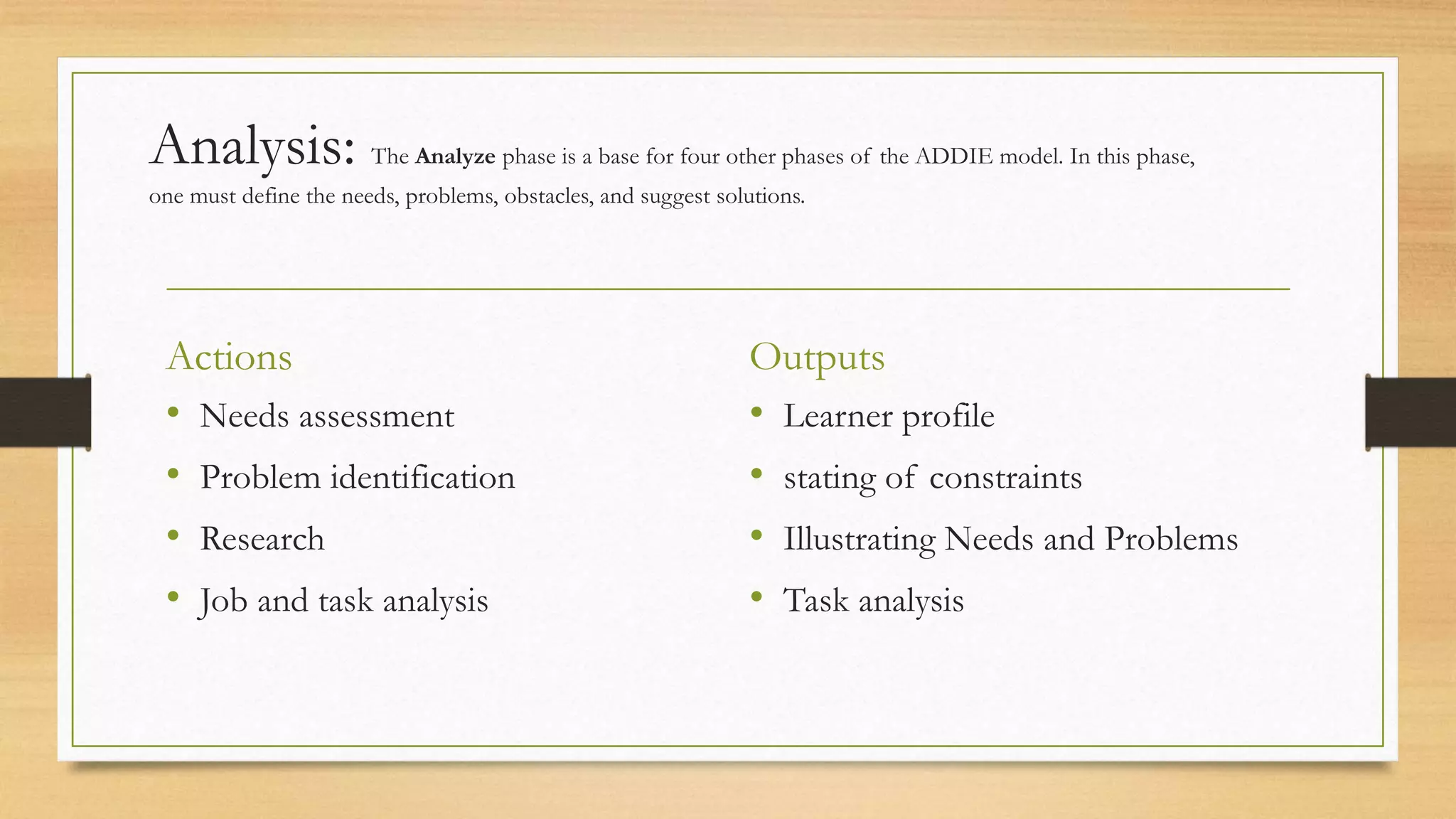
Analysis: The Analyze phase is a base for four other phases of the ADDIE model. In this phase,
one must define the needs, problems, obstacles, and suggest solutions.
Actions
• Needs assessment
• Problem identification
• Research
• Job and task analysis
Outputs
• Learner profile
• stating of constraints
• Illustrating Needs and Problems
• Task analysis
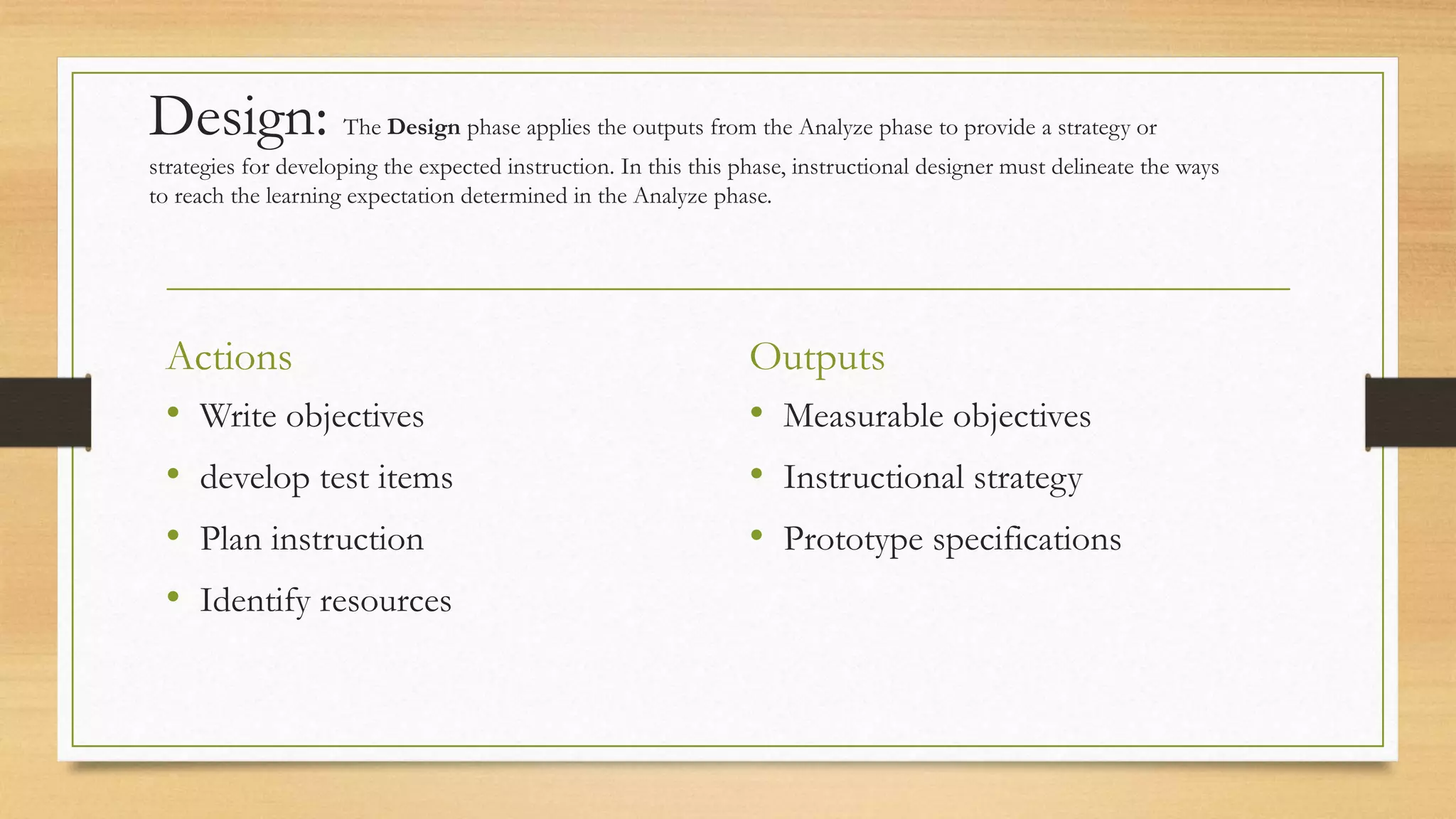
Design: The Design phase applies the outputs from the Analyze phase to provide a strategy or
strategies for developing the expected instruction. In this this phase, instructional designer must delineate the ways
to reach the learning expectation determined in the Analyze phase.
Actions
• Write objectives
• develop test items
• Plan instruction
• Identify resources
Outputs
• Measurable objectives
• Instructional strategy
• Prototype specifications
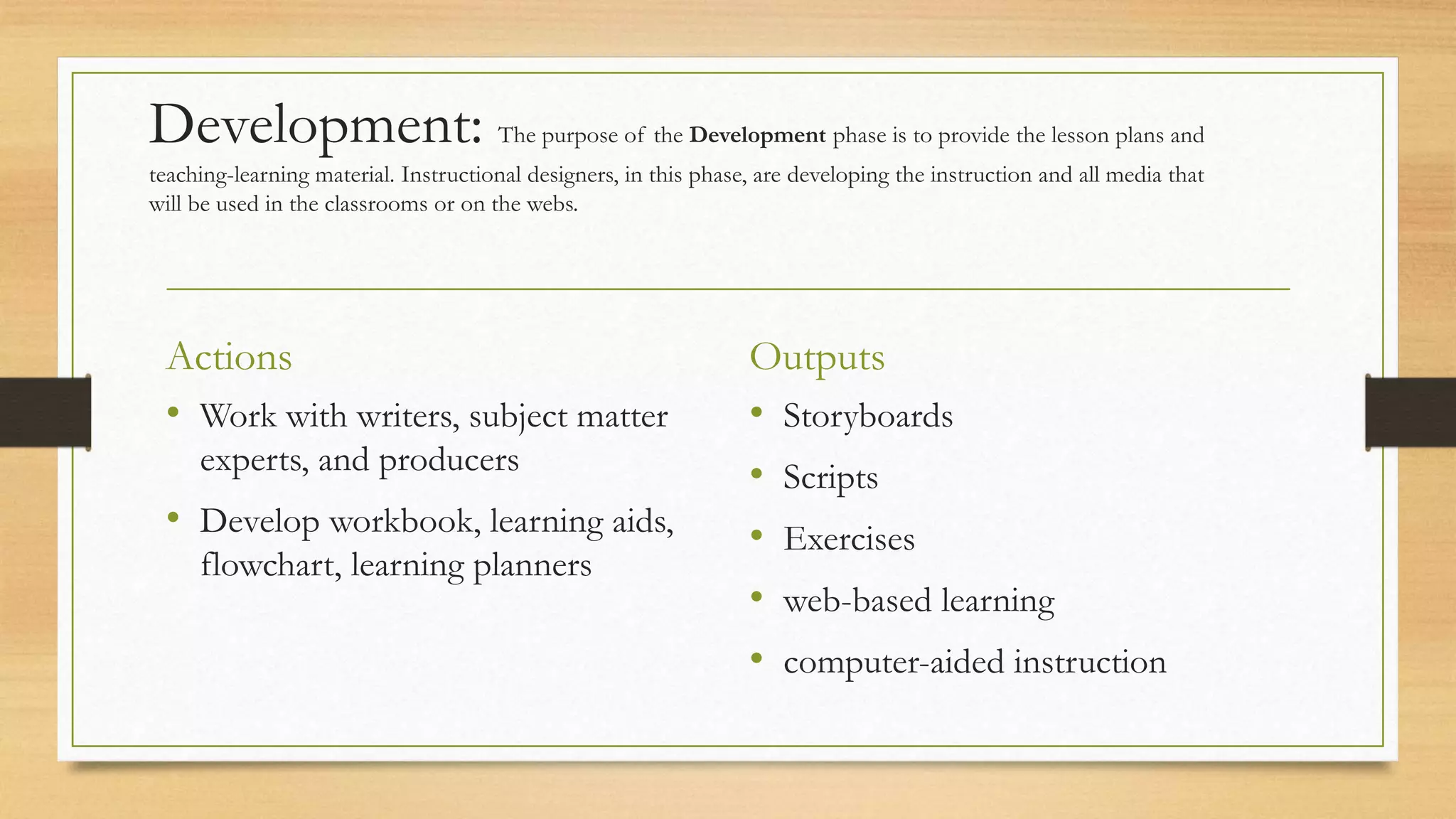
Development: The purpose of the Development phase is to provide the lesson plans and
teaching-learning material. Instructional designers, in this phase, are developing the instruction and all media that
will be used in the classrooms or on the webs.
Actions
• Work with writers, subject matter
experts, and producers
• Develop workbook, learning aids,
flowchart, learning planners
Outputs
• Storyboards
• Scripts
• Exercises
• web-based learning
• computer-aided instruction
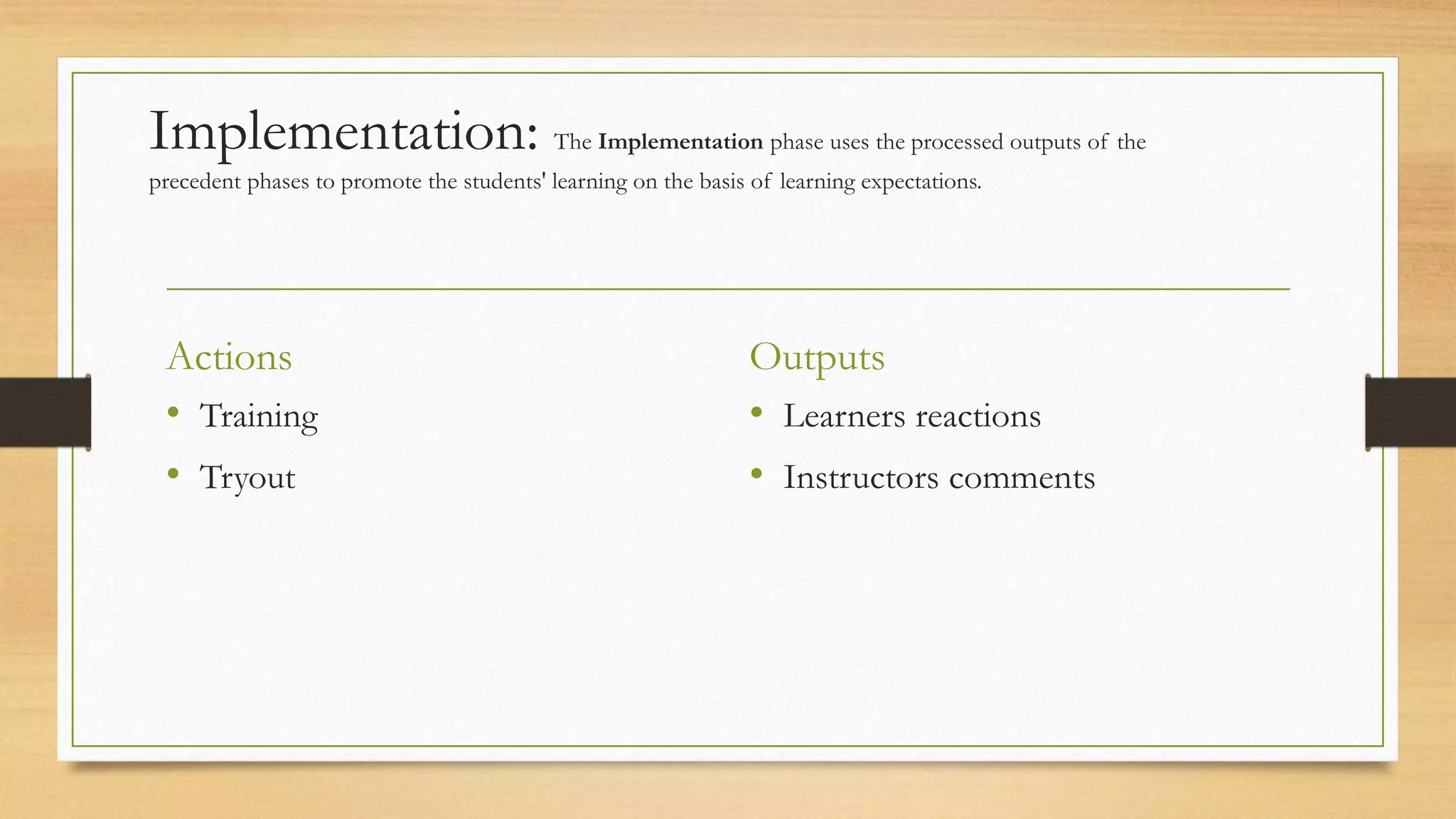
Implementation: The Implementation phase uses the processed outputs of the
precedent phases to promote the students' learning on the basis of learning expectations.
Actions
• Training
• Tryout
Outputs
• Learners reactions
• Instructors comments
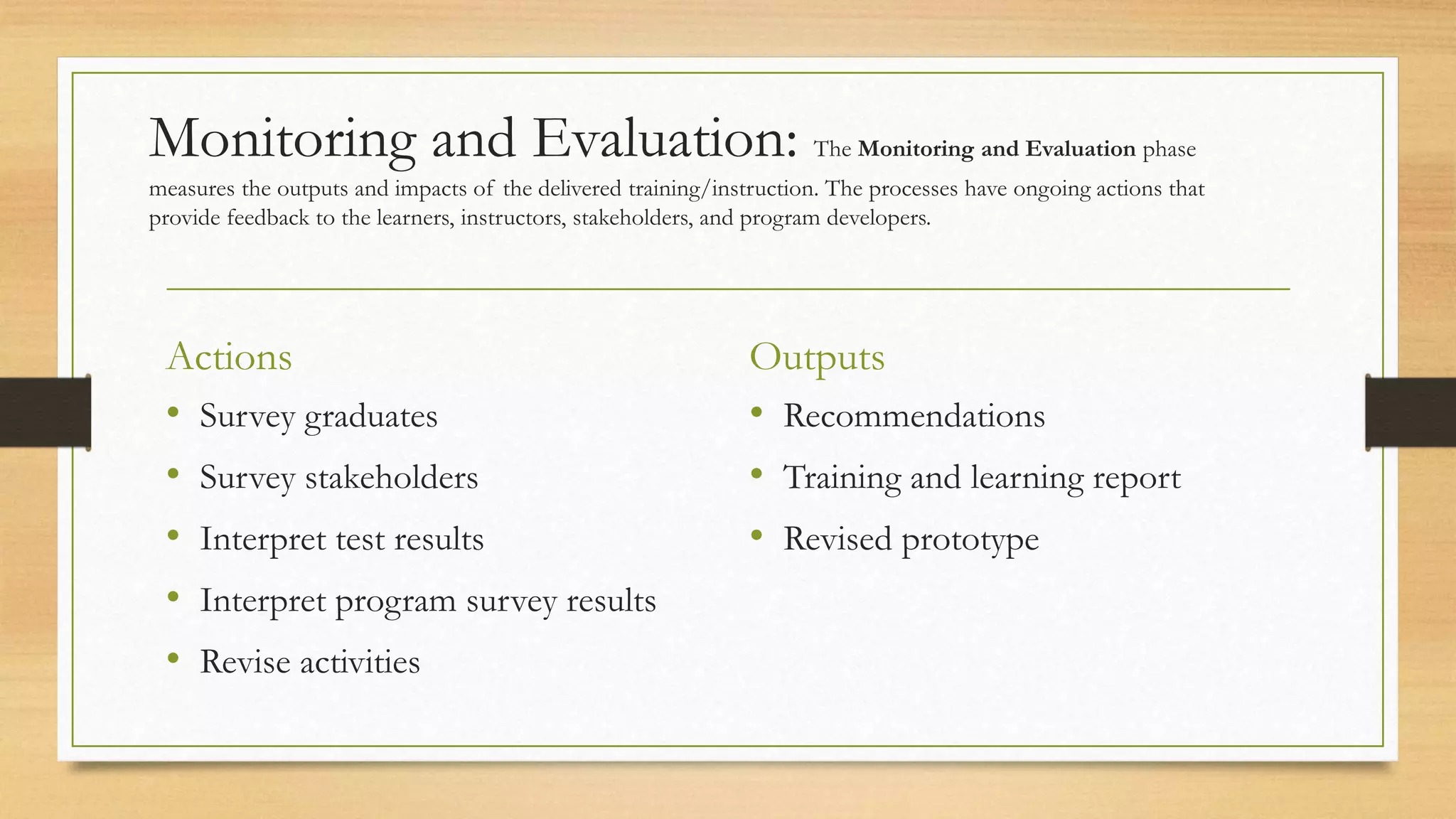
Monitoring and Evaluation: The Monitoring and Evaluation phase
measures the outputs and impacts of the delivered training/instruction. The processes have ongoing actions that
provide feedback to the learners, instructors, stakeholders, and program developers.
Actions
• Survey graduates
• Survey stakeholders
• Interpret test results
• Interpret program survey results
• Revise activities
Outputs
• Recommendations
• Training and learning report
• Revised prototype

Instructional Design

  • 1.
    Instructional Design: ADDIEModel Actions and Outputs Mo Aghazadeh, PhD, CTDP dr.mo@yahoo.com https://ca.linkedin.com/in/mo-aghazadeh-phd-ctdp-99211536
  • 2.
    Learning Objective: Learnerswill be able to • define each phase of the ADDIE model. • identify actions and outputs of each phase of the ADDIE model.
  • 3.
    Analysis: The Analyzephase is a base for four other phases of the ADDIE model. In this phase, one must define the needs, problems, obstacles, and suggest solutions. Actions • Needs assessment • Problem identification • Research • Job and task analysis Outputs • Learner profile • stating of constraints • Illustrating Needs and Problems • Task analysis
  • 4.
    Design: The Designphase applies the outputs from the Analyze phase to provide a strategy or strategies for developing the expected instruction. In this this phase, instructional designer must delineate the ways to reach the learning expectation determined in the Analyze phase. Actions • Write objectives • develop test items • Plan instruction • Identify resources Outputs • Measurable objectives • Instructional strategy • Prototype specifications
  • 5.
    Development: The purposeof the Development phase is to provide the lesson plans and teaching-learning material. Instructional designers, in this phase, are developing the instruction and all media that will be used in the classrooms or on the webs. Actions • Work with writers, subject matter experts, and producers • Develop workbook, learning aids, flowchart, learning planners Outputs • Storyboards • Scripts • Exercises • web-based learning • computer-aided instruction
  • 6.
    Implementation: The Implementationphase uses the processed outputs of the precedent phases to promote the students' learning on the basis of learning expectations. Actions • Training • Tryout Outputs • Learners reactions • Instructors comments
  • 7.
    Monitoring and Evaluation:The Monitoring and Evaluation phase measures the outputs and impacts of the delivered training/instruction. The processes have ongoing actions that provide feedback to the learners, instructors, stakeholders, and program developers. Actions • Survey graduates • Survey stakeholders • Interpret test results • Interpret program survey results • Revise activities Outputs • Recommendations • Training and learning report • Revised prototype