Infrastructure for the
Data Revolution
How OpenAIRE supports the EC’s Open
Access and Open Data Policies
Tony Ross-Hellauer, State and University Library Göttingen
Alen Vodopijevec, Institut Ruđer Bošković
Science set free.
Innovation unlocked.
Knowledge open for all.
2
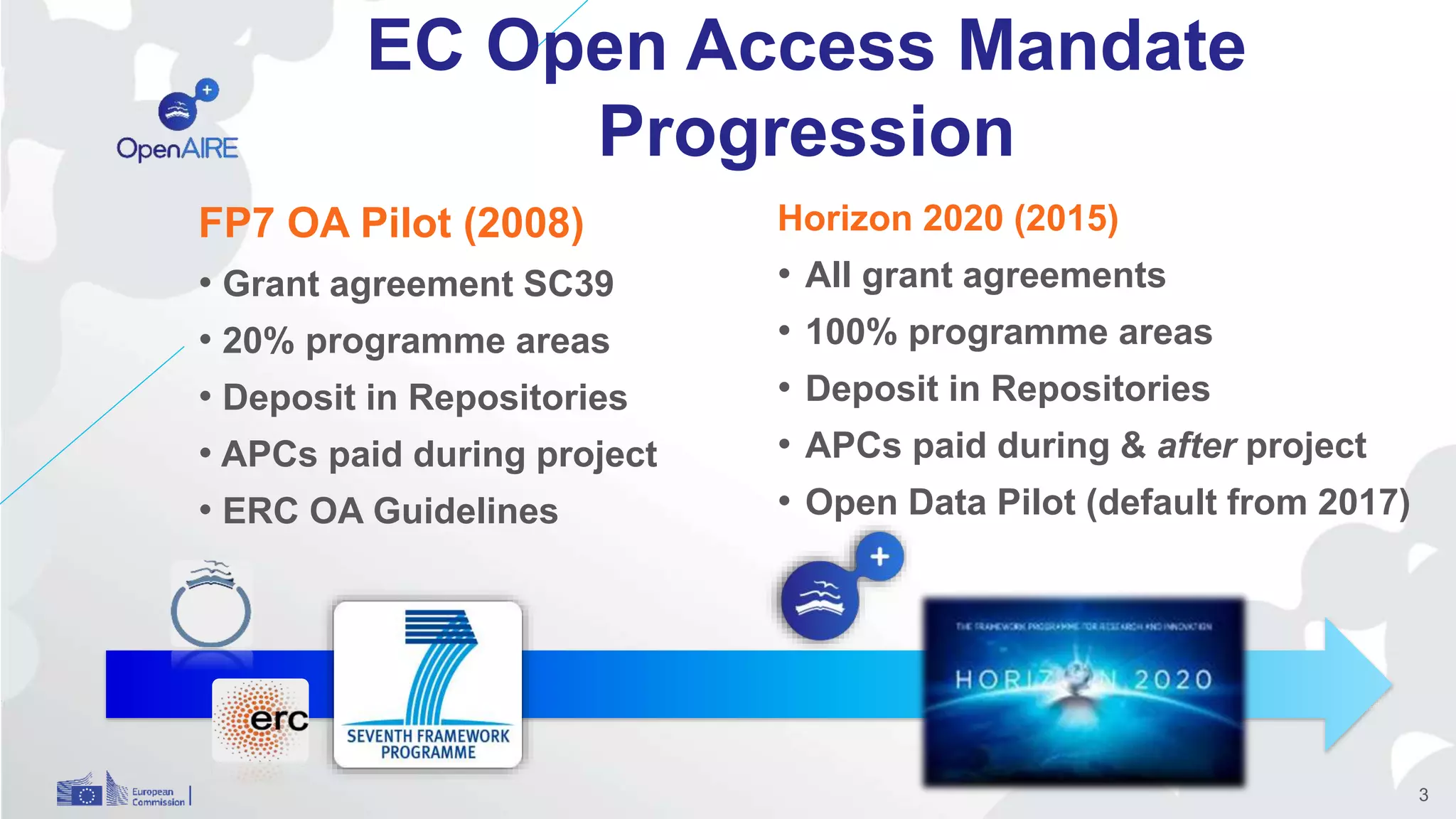
EC Open Access Mandate
Progression
FP7 OA Pilot (2008)
• Grant agreement SC39
• 20% programme areas
• Deposit in Repositories
• APCs paid during project
• ERC OA Guidelines
Horizon 2020 (2015)
• All grant agreements
• 100% programme areas
• Deposit in Repositories
• APCs paid during & after project
• Open Data Pilot (default from 2017)
3
EC Open Research Data Pilot
• Started beginning of 2015
• A limited, voluntary pilot (initially 7 programme areas)
• Easy opt-out and strict safeguards
• Participating projects must:
• Keep a data management plan, to be updated at regular intervals
• Deposit in an open access repository:
• the data, including associated metadata, needed to validate the results
presented in scientific publications as soon as possible;
• other data, including associated metadata, as specified and within the
deadlines laid down in the data management plan
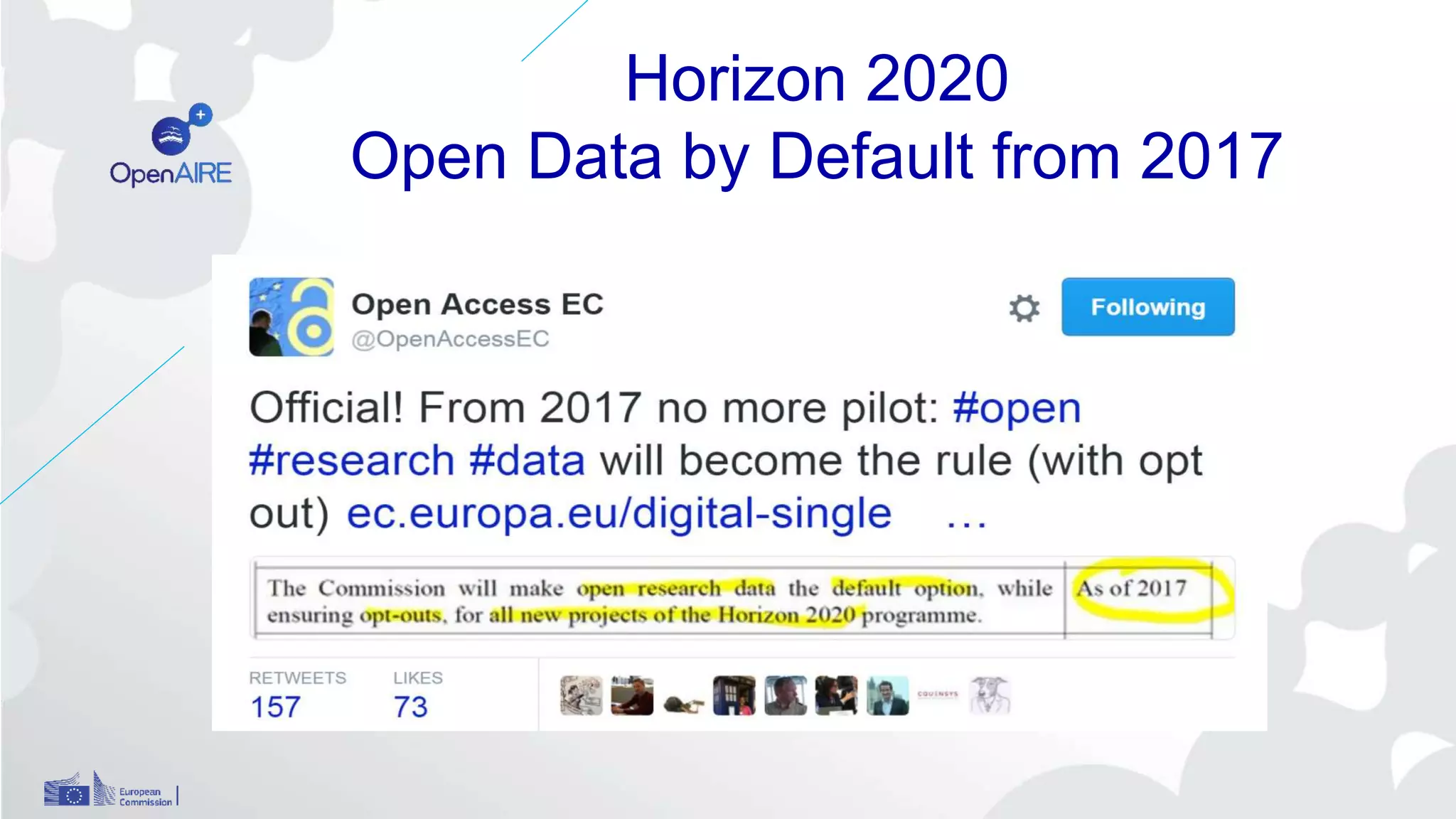
Horizon 2020
Open Data by Default from 2017
Just announced!
6
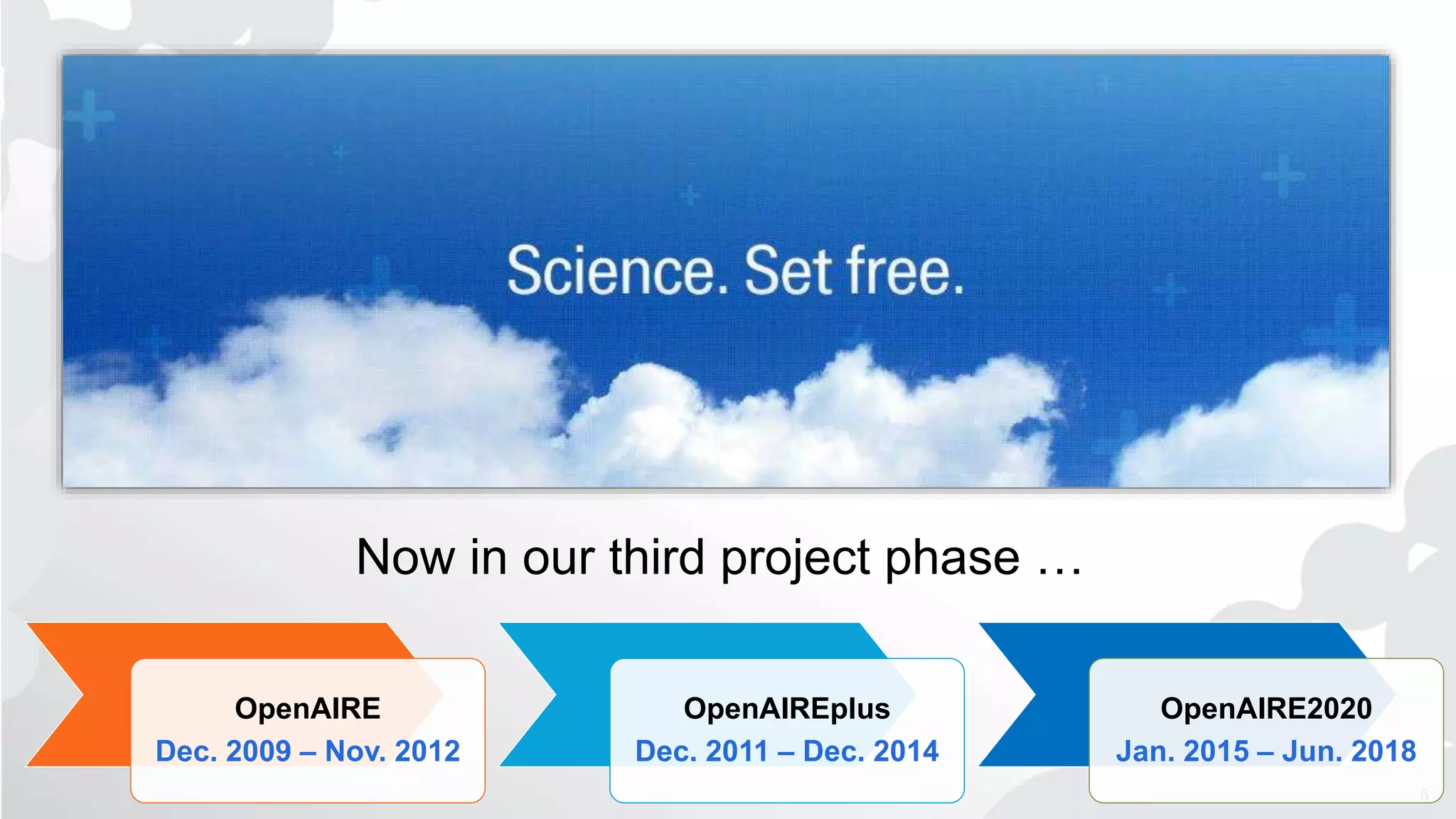
OpenAIRE
Dec. 2009 – Nov. 2012
OpenAIREplus
Dec. 2011 – Dec. 2014
OpenAIRE2020
Jan. 2015 – Jun. 2018
Now in our third project phase …
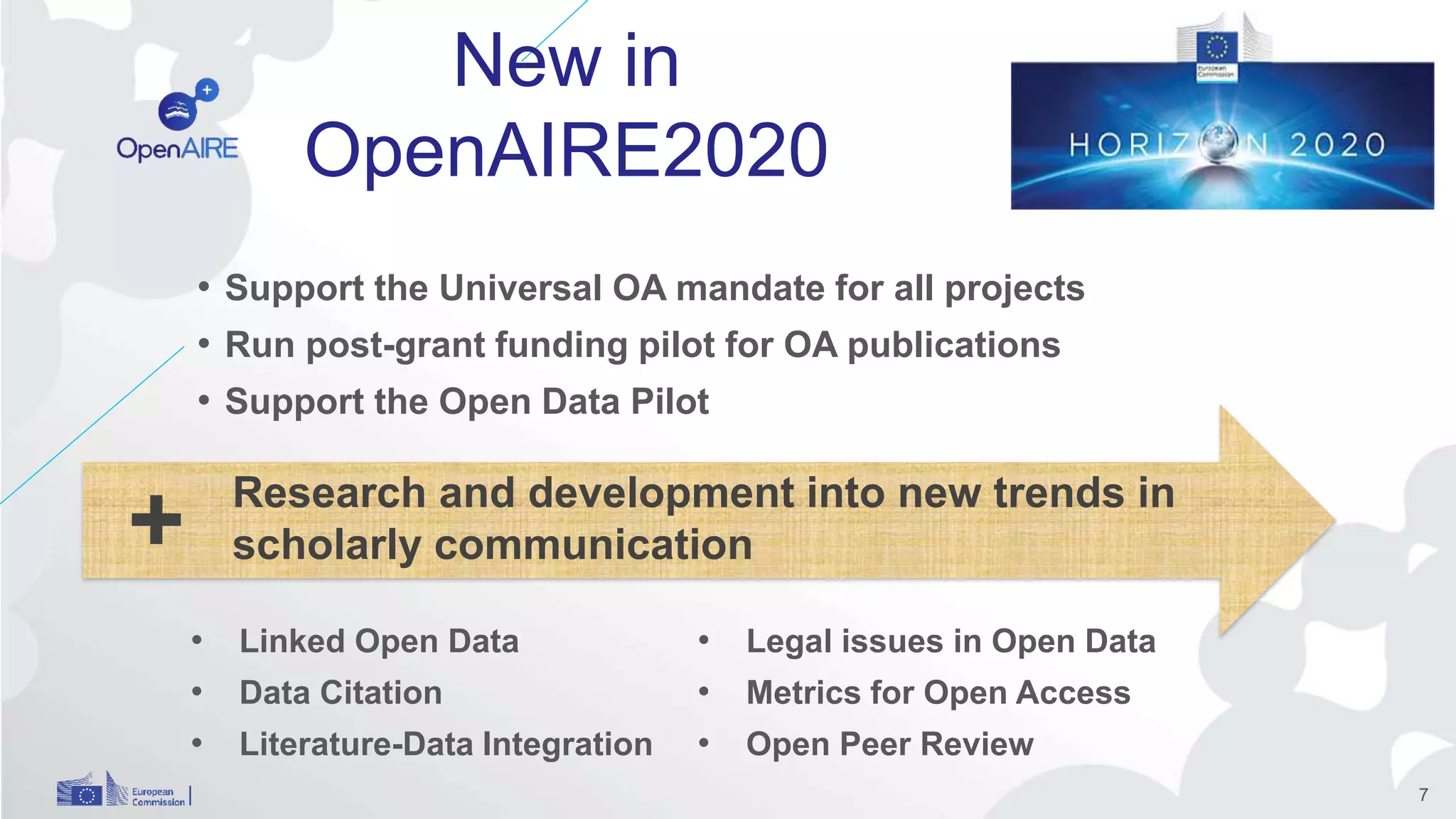
• Support the Universal OA mandate for all projects
• Run post-grant funding pilot for OA publications
• Support the Open Data Pilot
7
+ Research and development into new trends in
scholarly communication
• Linked Open Data
• Data Citation
• Literature-Data Integration
• Legal issues in Open Data
• Metrics for Open Access
• Open Peer Review
New in
OpenAIRE2020
8
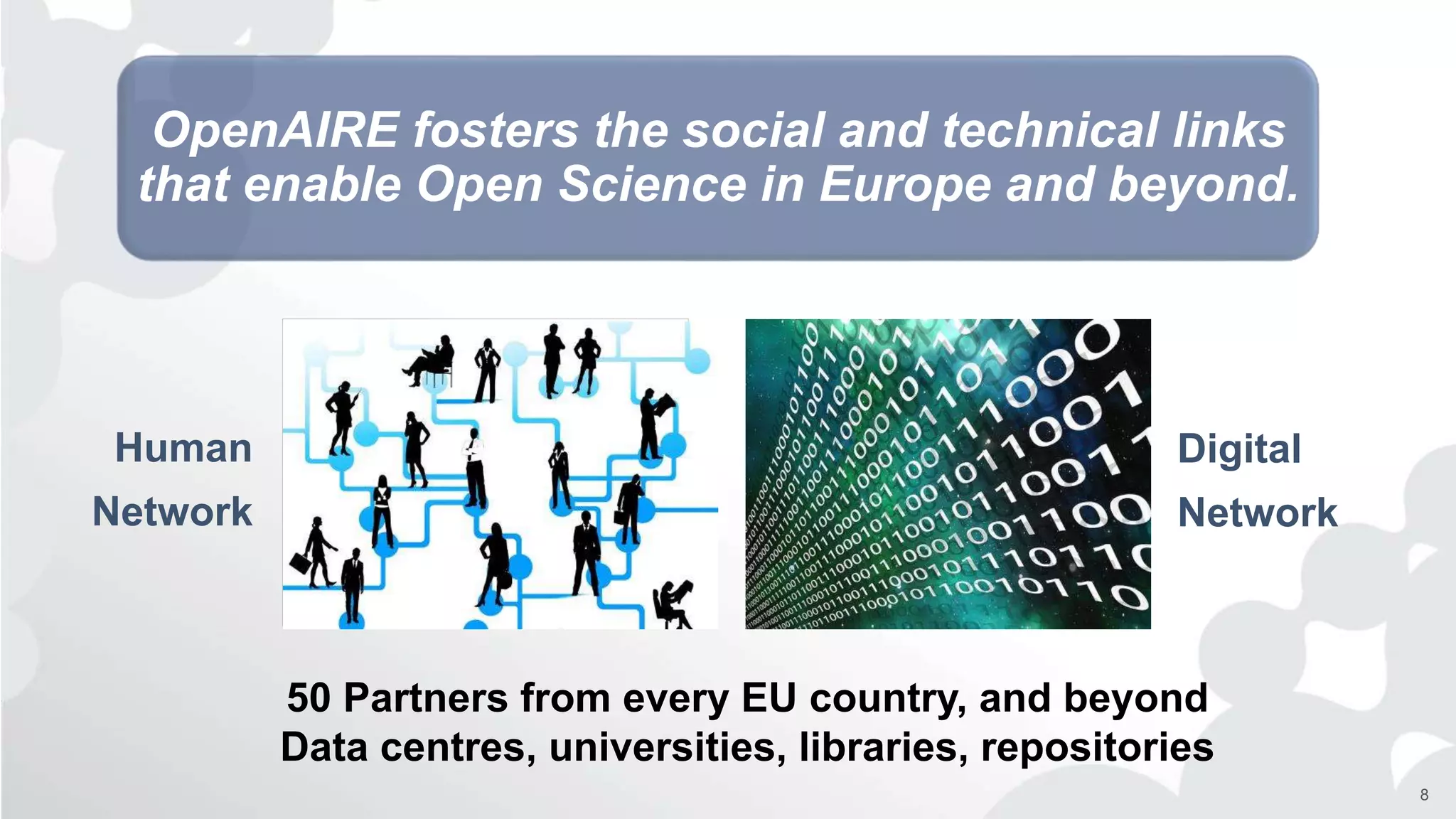
Human
Network
50 Partners from every EU country, and beyond
Data centres, universities, libraries, repositories
Digital
Network
OpenAIRE fosters the social and technical links
that enable Open Science in Europe and beyond.
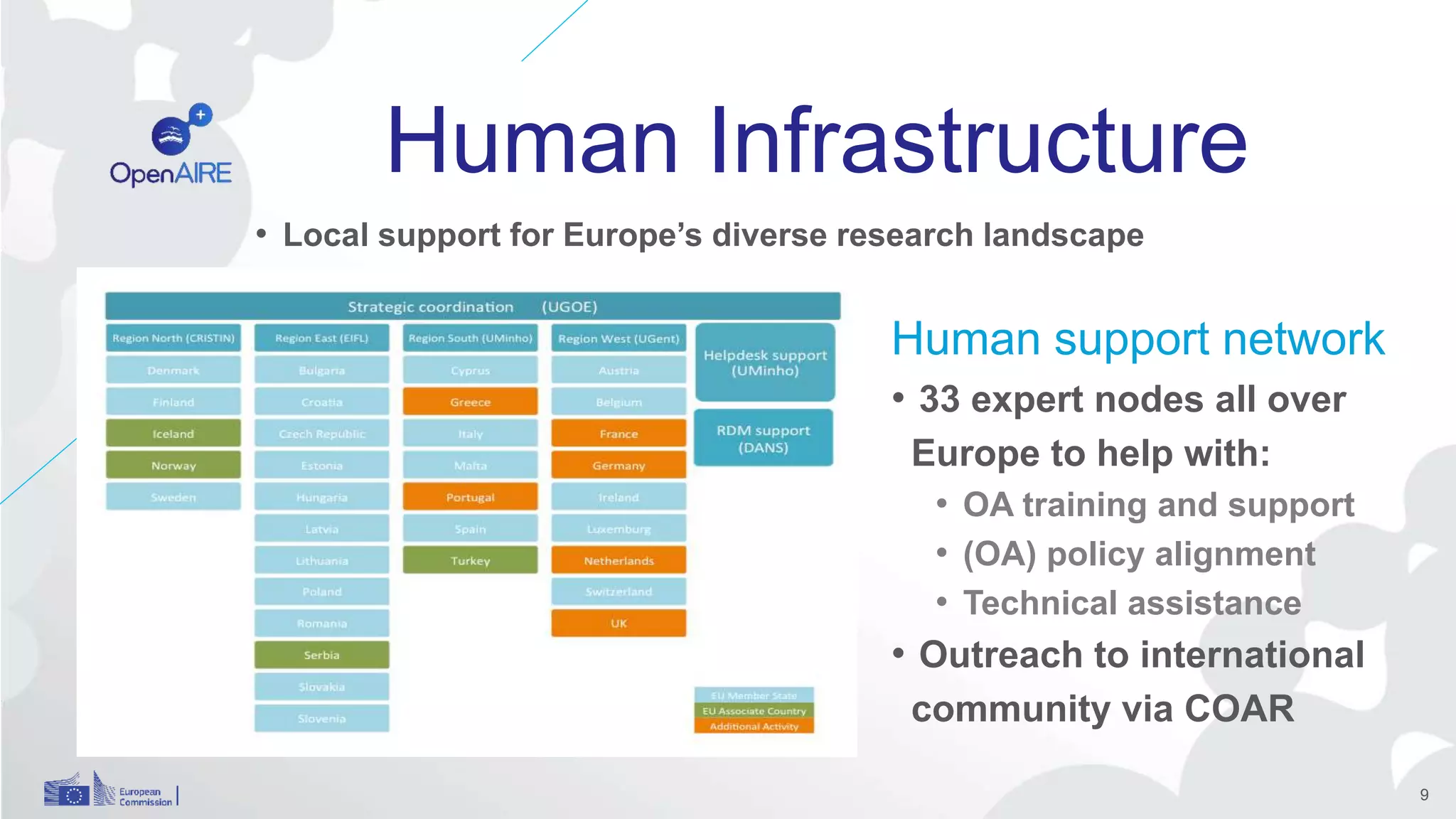
Human Infrastructure
• Local support for Europe’s diverse research landscape
9
Human support network
• 33 expert nodes all over
Europe to help with:
• OA training and support
• (OA) policy alignment
• Technical assistance
• Outreach to international
community via COAR
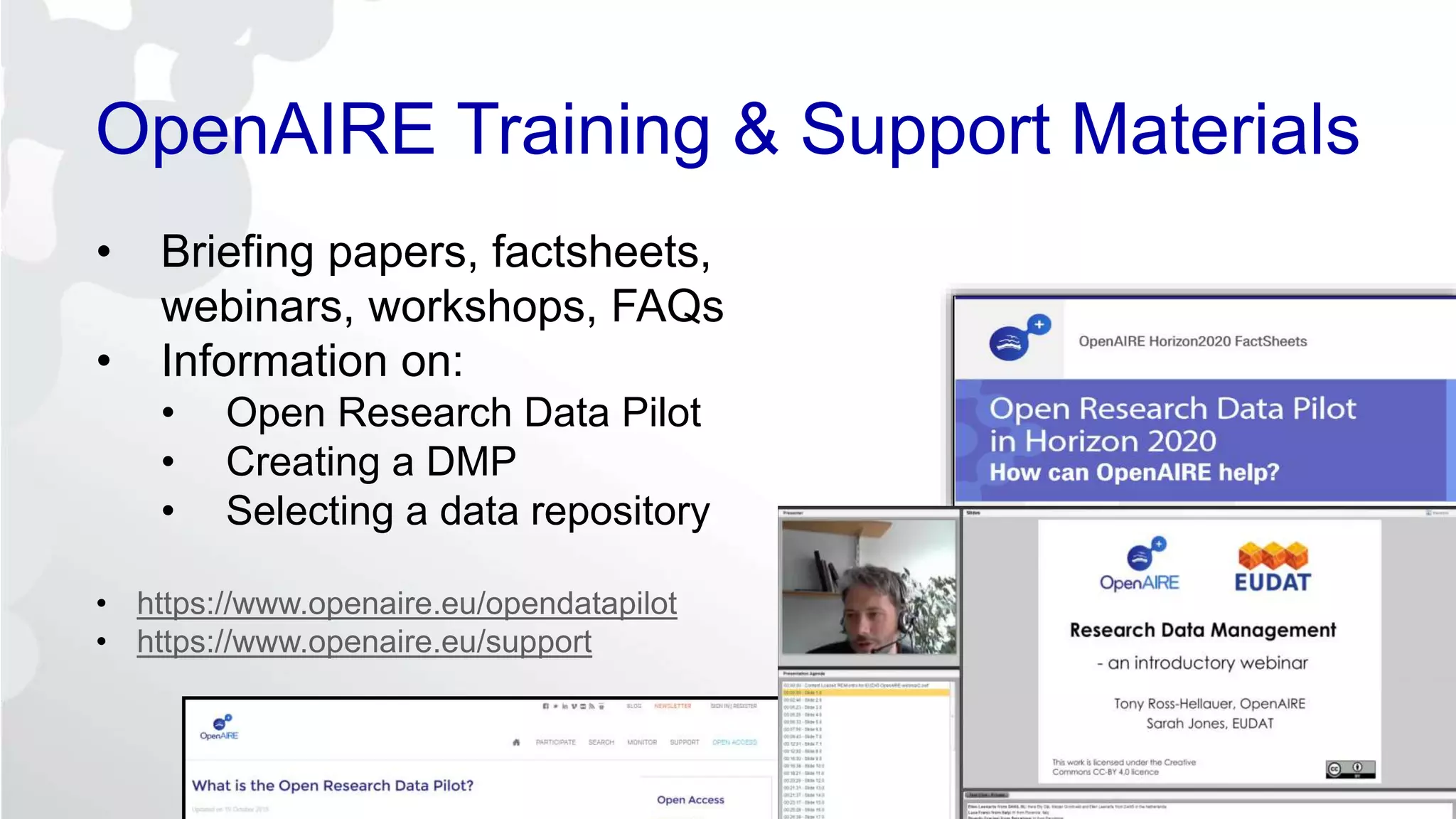
OpenAIRE Training & Support Materials
• Briefing papers, factsheets,
webinars, workshops, FAQs
• Information on:
• Open Research Data Pilot
• Creating a DMP
• Selecting a data repository
• https://www.openaire.eu/opendatapilot
• https://www.openaire.eu/support
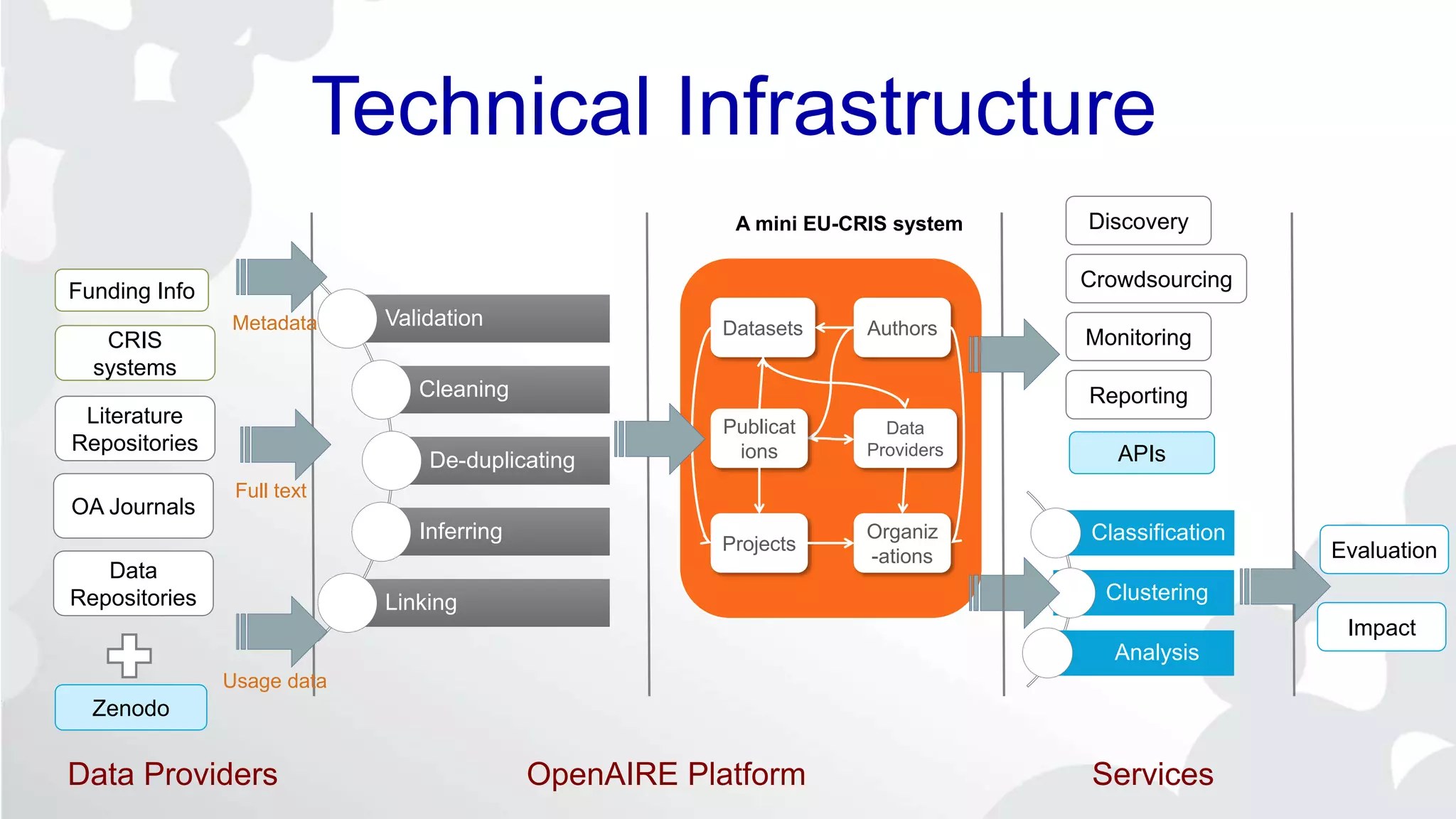
Technical Infrastructure
Literature
Repositories
OA Journals
Funding Info
Validation
Cleaning
De-duplicating
Inferring
Linking
Organiz
-ations
Projects
AuthorsDatasets
Publicat
ions
Data
Providers
Monitoring
Reporting
Evaluation
Impact
Classification
Clustering
Analysis
CRIS
systems
A mini EU-CRIS system
Data
Repositories
Metadata
Full text
Usage data
Discovery
Crowdsourcing
Zenodo
APIs
Data Providers OpenAIRE Platform Services
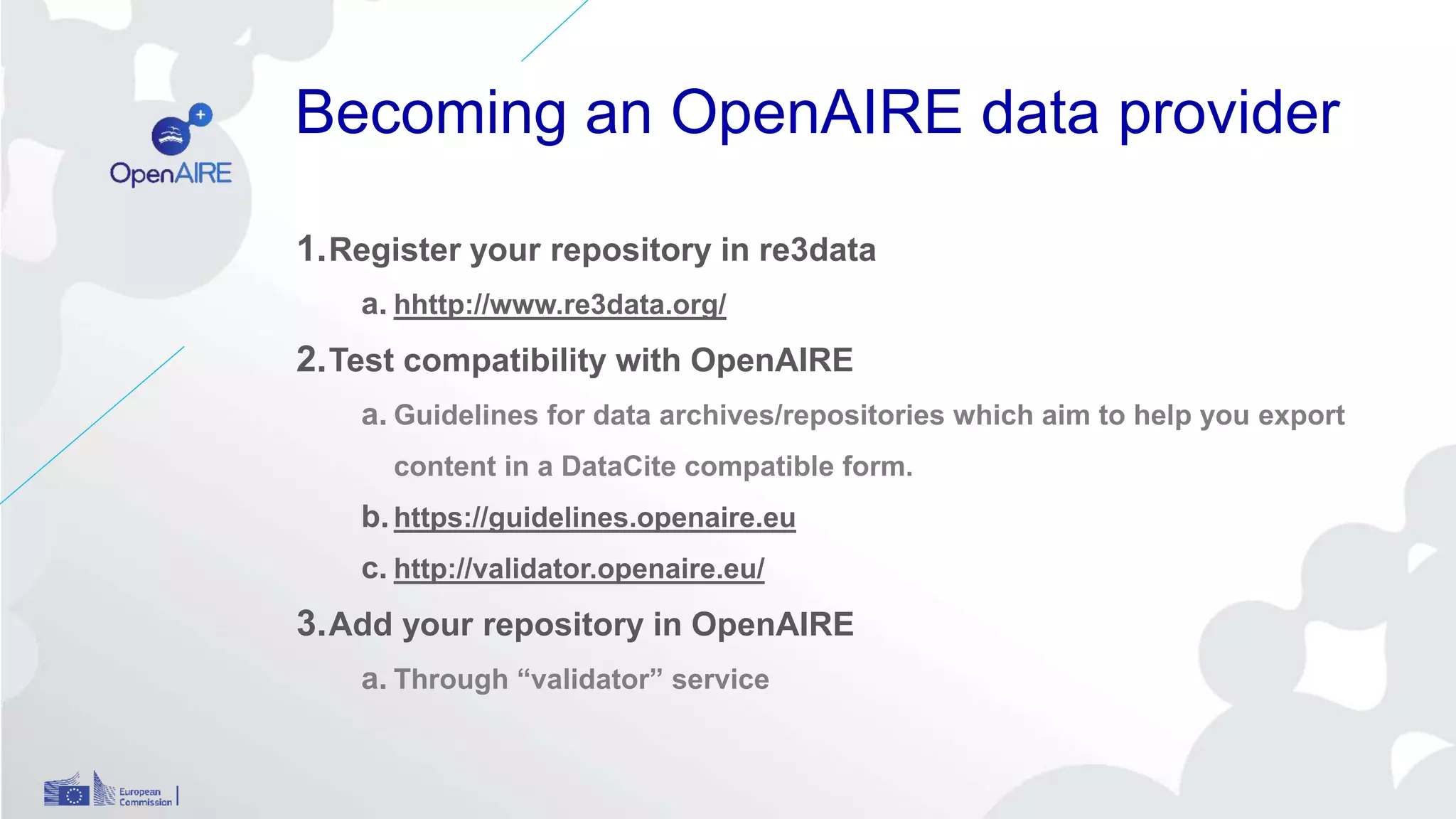
Becoming an OpenAIRE data provider
1.Register your repository in re3data
a. hhttp://www.re3data.org/
2.Test compatibility with OpenAIRE
a. Guidelines for data archives/repositories which aim to help you export
content in a DataCite compatible form.
b.https://guidelines.openaire.eu
c. http://validator.openaire.eu/
3.Add your repository in OpenAIRE
a. Through “validator” service
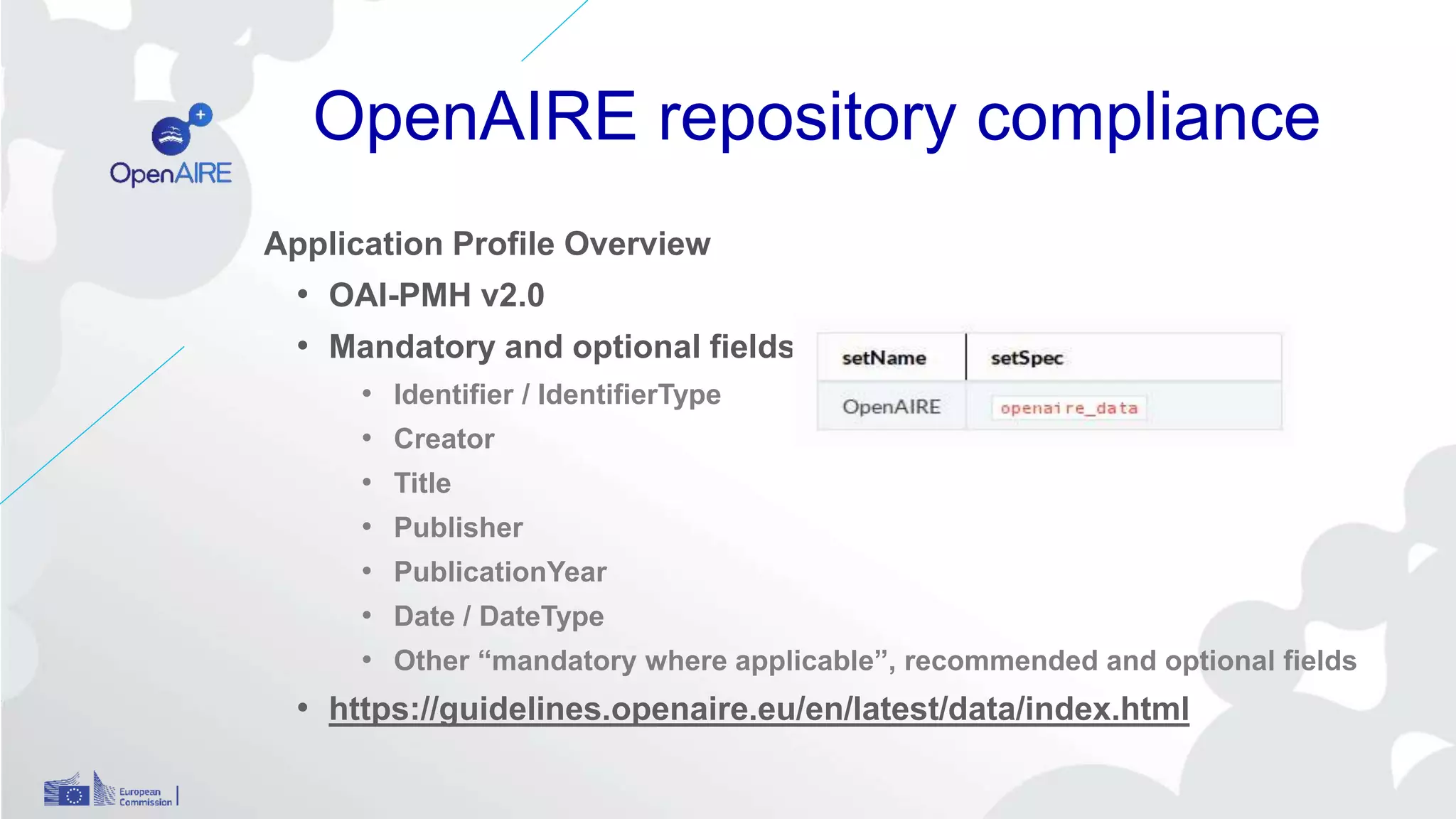
OpenAIRE repository compliance
Application Profile Overview
• OAI-PMH v2.0
• Mandatory and optional fields
• Identifier / IdentifierType
• Creator
• Title
• Publisher
• PublicationYear
• Date / DateType
• Other “mandatory where applicable”, recommended and optional fields
• https://guidelines.openaire.eu/en/latest/data/index.html
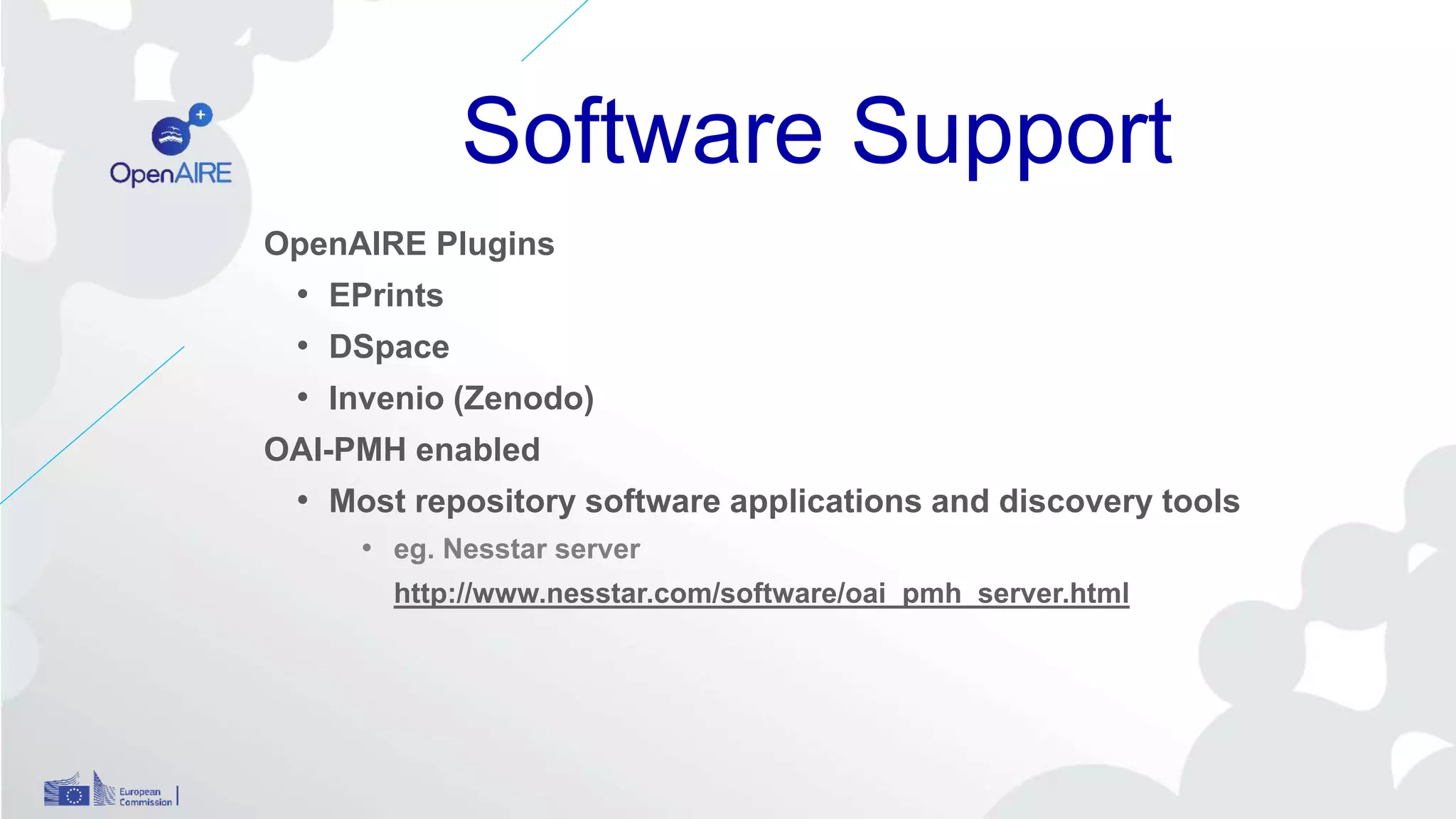
Software Support
OpenAIRE Plugins
• EPrints
• DSpace
• Invenio (Zenodo)
OAI-PMH enabled
• Most repository software applications and discovery tools
• eg. Nesstar server
http://www.nesstar.com/software/oai_pmh_server.html
Future Work
• BROKERING service where you will be able to register and get
notifications for any updates/differences on the content you provide to us
• Know the impact of your content - service that will gather usage data from
local repositories and will analyse them as a step towards the
establishment of article level metrics.
• Coming soon – Repository Manager Dashboard a single interface to
manage all these services
Help & Support
National Open Access Desks
• Open Access representatives and liaisons in all EU member
states.
https://www.openaire.eu/contact-noads
• https://www.openaire.eu
• info@openaire.eu
20
www.openaire.eu
@openaire_eu
facebook.com/groups/openaire
linkedin.com/groups/OpenAIRE-
3893548
Thank you!
National Open Access Desks: https://www.openaire.eu/contact-noads
ross-hellauer@sub.uni-goettingen.de
alen@irb.hr
21

Infrastructure for the Data Revolution: How OpenAIRE supports the EC’s Open Access and Open Data Policies

  • 1.
    Infrastructure for the DataRevolution How OpenAIRE supports the EC’s Open Access and Open Data Policies Tony Ross-Hellauer, State and University Library Göttingen Alen Vodopijevec, Institut Ruđer Bošković
  • 2.
    Science set free. Innovationunlocked. Knowledge open for all. 2
  • 3.
    EC Open AccessMandate Progression FP7 OA Pilot (2008) • Grant agreement SC39 • 20% programme areas • Deposit in Repositories • APCs paid during project • ERC OA Guidelines Horizon 2020 (2015) • All grant agreements • 100% programme areas • Deposit in Repositories • APCs paid during & after project • Open Data Pilot (default from 2017) 3
  • 4.
    EC Open ResearchData Pilot • Started beginning of 2015 • A limited, voluntary pilot (initially 7 programme areas) • Easy opt-out and strict safeguards • Participating projects must: • Keep a data management plan, to be updated at regular intervals • Deposit in an open access repository: • the data, including associated metadata, needed to validate the results presented in scientific publications as soon as possible; • other data, including associated metadata, as specified and within the deadlines laid down in the data management plan
  • 5.
    Horizon 2020 Open Databy Default from 2017 Just announced!
  • 6.
    6 OpenAIRE Dec. 2009 –Nov. 2012 OpenAIREplus Dec. 2011 – Dec. 2014 OpenAIRE2020 Jan. 2015 – Jun. 2018 Now in our third project phase …
  • 7.
    • Support theUniversal OA mandate for all projects • Run post-grant funding pilot for OA publications • Support the Open Data Pilot 7 + Research and development into new trends in scholarly communication • Linked Open Data • Data Citation • Literature-Data Integration • Legal issues in Open Data • Metrics for Open Access • Open Peer Review New in OpenAIRE2020
  • 8.
    8 Human Network 50 Partners fromevery EU country, and beyond Data centres, universities, libraries, repositories Digital Network OpenAIRE fosters the social and technical links that enable Open Science in Europe and beyond.
  • 9.
    Human Infrastructure • Localsupport for Europe’s diverse research landscape 9 Human support network • 33 expert nodes all over Europe to help with: • OA training and support • (OA) policy alignment • Technical assistance • Outreach to international community via COAR
  • 10.
    OpenAIRE Training &Support Materials • Briefing papers, factsheets, webinars, workshops, FAQs • Information on: • Open Research Data Pilot • Creating a DMP • Selecting a data repository • https://www.openaire.eu/opendatapilot • https://www.openaire.eu/support
  • 11.
    Technical Infrastructure Literature Repositories OA Journals FundingInfo Validation Cleaning De-duplicating Inferring Linking Organiz -ations Projects AuthorsDatasets Publicat ions Data Providers Monitoring Reporting Evaluation Impact Classification Clustering Analysis CRIS systems A mini EU-CRIS system Data Repositories Metadata Full text Usage data Discovery Crowdsourcing Zenodo APIs Data Providers OpenAIRE Platform Services
  • 12.
    Becoming an OpenAIREdata provider 1.Register your repository in re3data a. hhttp://www.re3data.org/ 2.Test compatibility with OpenAIRE a. Guidelines for data archives/repositories which aim to help you export content in a DataCite compatible form. b.https://guidelines.openaire.eu c. http://validator.openaire.eu/ 3.Add your repository in OpenAIRE a. Through “validator” service
  • 13.
    OpenAIRE repository compliance ApplicationProfile Overview • OAI-PMH v2.0 • Mandatory and optional fields • Identifier / IdentifierType • Creator • Title • Publisher • PublicationYear • Date / DateType • Other “mandatory where applicable”, recommended and optional fields • https://guidelines.openaire.eu/en/latest/data/index.html
  • 14.
    Software Support OpenAIRE Plugins •EPrints • DSpace • Invenio (Zenodo) OAI-PMH enabled • Most repository software applications and discovery tools • eg. Nesstar server http://www.nesstar.com/software/oai_pmh_server.html
  • 18.
    Future Work • BROKERINGservice where you will be able to register and get notifications for any updates/differences on the content you provide to us • Know the impact of your content - service that will gather usage data from local repositories and will analyse them as a step towards the establishment of article level metrics. • Coming soon – Repository Manager Dashboard a single interface to manage all these services
  • 19.
    Help & Support NationalOpen Access Desks • Open Access representatives and liaisons in all EU member states. https://www.openaire.eu/contact-noads • https://www.openaire.eu • info@openaire.eu
  • 20.
  • 21.
    www.openaire.eu @openaire_eu facebook.com/groups/openaire linkedin.com/groups/OpenAIRE- 3893548 Thank you! National OpenAccess Desks: https://www.openaire.eu/contact-noads ross-hellauer@sub.uni-goettingen.de alen@irb.hr 21

Editor's Notes

  • #5 Introduced at the start of 2015, covering just seven work programme areas, the Horizon 2020 Open Research Data Pilot has been a big success. In the first six months of the pilot, about a third of projects (65.4%, 431 signed grant agreements) that were part of the pilot chose to opt out. The most common reasons for opting out were: (1) concerns over intellectual property (37%), (2) the project did not expect to generate any data (18%), and privacy/data protection concerns (18%). Of those projects that were not originally part of the pilot, 11.9% (3268 projects) nonetheless have voluntarily opted in.