Introduction to Information
Security Management & The
Evolving Threat Landscape
Weeks 1 & 2
Your Name – Instructor
Course Name & Section
Date
Definition of Information Security
• Practice of protecting information from unauthorized access, use, disclosure, disruption, modification, or
destruction.
• Goal: Ensure confidentiality, integrity, and availability (CIA Triad).
• Example: Protecting student records from hackers.
Significance of Information Security
• Protects sensitive data from breaches.
• Maintains trust between organizations and customers.
• Ensures compliance with laws (Data Privacy Act, GDPR).
• Example: Securing online bank transactions.
The CIA Triad
• Confidentiality – Prevent unauthorized access (e.g., encrypting patient records).
• Integrity – Ensure data accuracy (e.g., checksums to verify files).
• Availability – Ensure data is accessible (e.g., cloud backups).
Internal Controls in InfoSec
• Administrative: Policies, training.
• Technical: Firewalls, encryption.
• Physical: Locked server rooms.
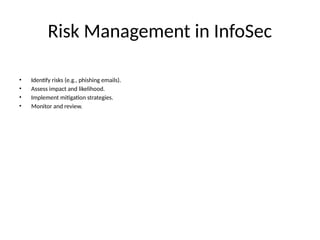
Risk Management in InfoSec
• Identify risks (e.g., phishing emails).
• Assess impact and likelihood.
• Implement mitigation strategies.
• Monitor and review.
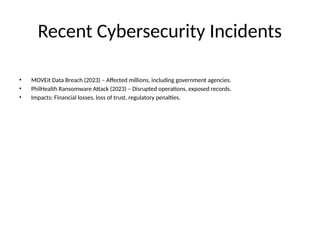
Recent Cybersecurity Incidents
• MOVEit Data Breach (2023) – Affected millions, including government agencies.
• PhilHealth Ransomware Attack (2023) – Disrupted operations, exposed records.
• Impacts: Financial losses, loss of trust, regulatory penalties.
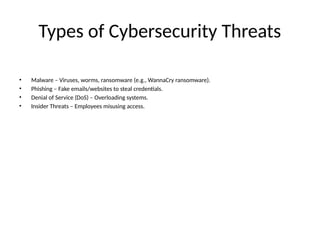
Types of Cybersecurity Threats
• Malware – Viruses, worms, ransomware (e.g., WannaCry ransomware).
• Phishing – Fake emails/websites to steal credentials.
• Denial of Service (DoS) – Overloading systems.
• Insider Threats – Employees misusing access.
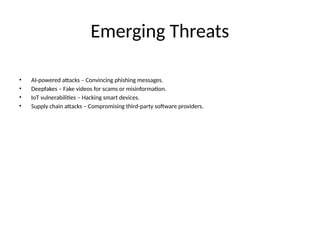
Emerging Threats
• AI-powered attacks – Convincing phishing messages.
• Deepfakes – Fake videos for scams or misinformation.
• IoT vulnerabilities – Hacking smart devices.
• Supply chain attacks – Compromising third-party software providers.
Cybersecurity Trends
• Zero Trust Security Model – 'Never trust, always verify.'
• Cloud Security Focus – Protecting cloud data.
• Multi-Factor Authentication (MFA) adoption.
• Security Awareness Training investments.
Summary
• Week 1: Introduction, CIA Triad, risk management, recent incidents.
• Week 2: Common and emerging threats, cybersecurity trends.
References
• Stallings, W. (2019). Effective Cybersecurity: A Guide to Using Best Practices.
• Peltier, T. R. (2016). Information Security Policies, Procedures, and Standards.
• National Institute of Standards and Technology (NIST) Cybersecurity Framework (2023).
• Philippine Data Privacy Act of 2012 (RA 10173).
• Krebs, B. (2023). PhilHealth Hack: What Happened and Lessons Learned.
• Symantec Threat Report (2024).

Information Security and Maintenance AIS11

  • 1.
    Introduction to Information SecurityManagement & The Evolving Threat Landscape Weeks 1 & 2 Your Name – Instructor Course Name & Section Date
  • 2.
    Definition of InformationSecurity • Practice of protecting information from unauthorized access, use, disclosure, disruption, modification, or destruction. • Goal: Ensure confidentiality, integrity, and availability (CIA Triad). • Example: Protecting student records from hackers.
  • 3.
    Significance of InformationSecurity • Protects sensitive data from breaches. • Maintains trust between organizations and customers. • Ensures compliance with laws (Data Privacy Act, GDPR). • Example: Securing online bank transactions.
  • 4.
    The CIA Triad •Confidentiality – Prevent unauthorized access (e.g., encrypting patient records). • Integrity – Ensure data accuracy (e.g., checksums to verify files). • Availability – Ensure data is accessible (e.g., cloud backups).
  • 5.
    Internal Controls inInfoSec • Administrative: Policies, training. • Technical: Firewalls, encryption. • Physical: Locked server rooms.
  • 6.
    Risk Management inInfoSec • Identify risks (e.g., phishing emails). • Assess impact and likelihood. • Implement mitigation strategies. • Monitor and review.
  • 7.
    Recent Cybersecurity Incidents •MOVEit Data Breach (2023) – Affected millions, including government agencies. • PhilHealth Ransomware Attack (2023) – Disrupted operations, exposed records. • Impacts: Financial losses, loss of trust, regulatory penalties.
  • 8.
    Types of CybersecurityThreats • Malware – Viruses, worms, ransomware (e.g., WannaCry ransomware). • Phishing – Fake emails/websites to steal credentials. • Denial of Service (DoS) – Overloading systems. • Insider Threats – Employees misusing access.
  • 9.
    Emerging Threats • AI-poweredattacks – Convincing phishing messages. • Deepfakes – Fake videos for scams or misinformation. • IoT vulnerabilities – Hacking smart devices. • Supply chain attacks – Compromising third-party software providers.
  • 10.
    Cybersecurity Trends • ZeroTrust Security Model – 'Never trust, always verify.' • Cloud Security Focus – Protecting cloud data. • Multi-Factor Authentication (MFA) adoption. • Security Awareness Training investments.
  • 11.
    Summary • Week 1:Introduction, CIA Triad, risk management, recent incidents. • Week 2: Common and emerging threats, cybersecurity trends.
  • 12.
    References • Stallings, W.(2019). Effective Cybersecurity: A Guide to Using Best Practices. • Peltier, T. R. (2016). Information Security Policies, Procedures, and Standards. • National Institute of Standards and Technology (NIST) Cybersecurity Framework (2023). • Philippine Data Privacy Act of 2012 (RA 10173). • Krebs, B. (2023). PhilHealth Hack: What Happened and Lessons Learned. • Symantec Threat Report (2024).