#2 Welcome to this presentation on essentials for excellence in engineering collaboration for the industrial machinery.
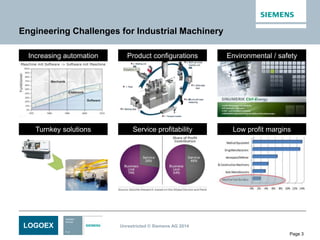
#4 Let’s take a look at the Industrial Machinery segment and some of the challenges that your organization may face.
Complexity (Increasing automation:/product configuration):
Machines need to be smarter: the amount of software content is increasing in machines, especially with the advent of the Internet of Things…e.g. production machines need to be able to communicate with other production machines, and the products they are producing, so mass customization customer demand can be met.
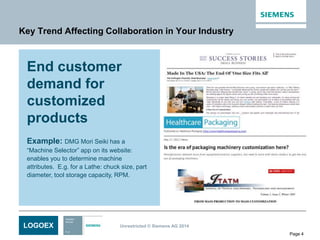
Product configurations: End customer demand for customized products drives OEM demand for customized machines
Environment and safety: Regulatory pressures driving many aspects of machine design – one such regulation is the Eco-design for energy efficiency – an EMEA based regulation demanding that machines be energy efficient.
Low profit margins: Largely driven by global, competitive pressures from low cost providers: margins are already critically low in Industrial machinery…and exacerbated by competitive pressures!
Services: manufacturers of goods in every industry expect their machinery providers to be full services partners…and machinery producers realize this presents a large profitability opportunity…to help offset the low margins that exist in the industry.
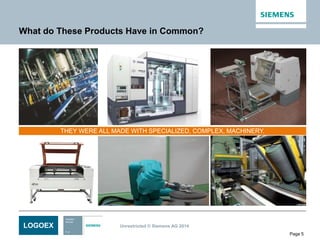
#5 This complexity in today’s industrial machines is driven in large part by mass customization – that is, end users of products in every industry (from cars, to computers, to consumer goods) demand their own unique “flavor” of the product so machines must be flexible and “smart” enough to meet these demands. And these machines need to be designed, modelled, and commissioned quickly, and meet the stringent performance and quality expectations of the customer.
#6 From beer, to Extreme ultraviolet lithography (EUVL) semi-conductor wafer, to cookies, to diamond rings, tablet computers, and tires….all require unique, complex machinery to make them.
…So machine builders need to have a development system that enables virtual validation (machine and commissioning), reuse of existing designs, easy sharing of designs with customers.
#7 With customer customization demands, your design and manufacturing approach needs to be flexible, and you can’t reinvent the wheel, so to speak, ever y time…so being able to sense and manage customer requirements and reuse designs and product information whenever possible is critical in order to meet rapid time to market, and time to value goals.
The key takeaway for all of this is that you need to be flexible…need the capability to meet diverse customer demands…
#8
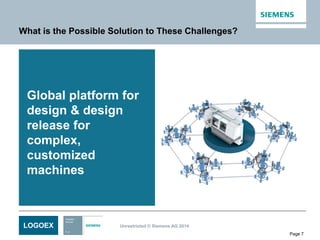
The possibility is that you have a global platform your team can collaborate on…with all information at their fingertips, and the ability to change and adjust machine engineering and design as your customers dictate.
#10 To enalbe Global collaboration for complex, customized machines, you need PDM
Let’s talk about what we mean by PDM.
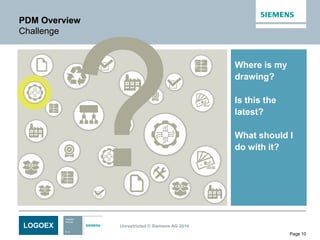
#11 Managing today’s products is not as simple as keeping track of your design data.
<BUILD>Other information, such as documentation, supplier data, manufacturing information, customer requirement and more all have an impact on what an engineer needs to do.
<BUILD>In many cases, engineers find themselves searching through irrelevant information to find the design data they need to work on.
<BUILD>And once they find something, often times is out of date or obsolete <BUILD>
<BUILD> They often struggle to figure out how it got to this point (why was this piece added?)
And where exactly it needs to go from here.
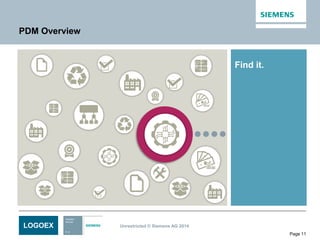
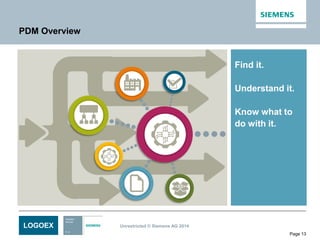
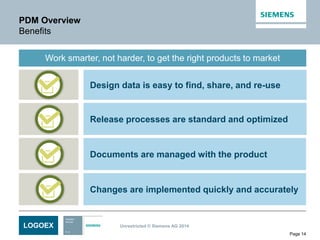
#12 PDM can help.
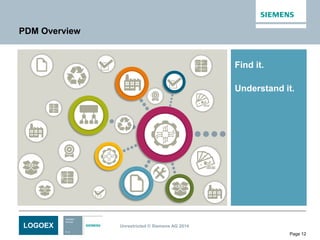
With PDM, engineers can quickly and easily find exactly what they are looking for.
#13 Once you find what you need, you can understand the context of what you’re working on – without wading through irrelevant information.
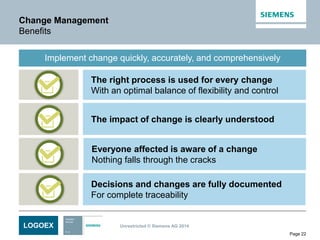
#14 And PDM provides process management capabilities that help you understand the history of what you’re working on, and what to do with it to move forward.
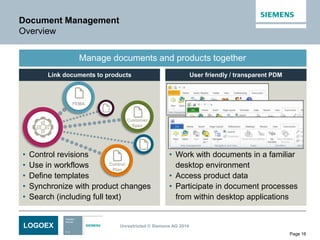
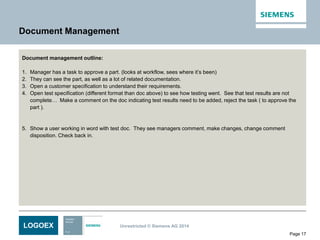
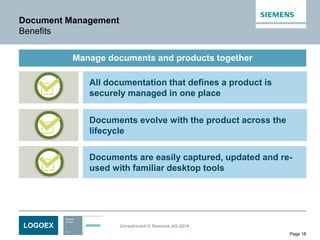
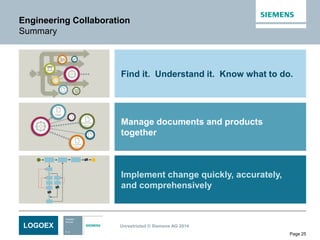
#16 When it comes to collaborating – with your team, with the rest of the organization, or with outside partners, it is critical to be able to track all the documentation that helps to define your product.
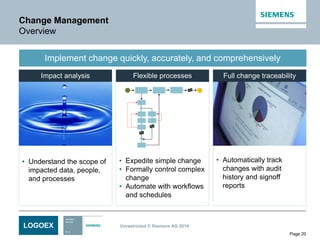
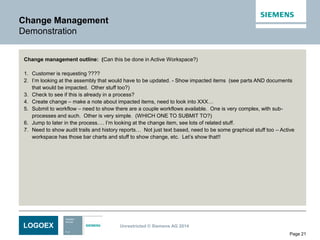
#20 When we talk about PDM, another critical area of concern is responding to customer needs.


![5G Explained! A High Level Overview [Introduction]](https://cdn.slidesharecdn.com/ss_thumbnails/5gexplainedahighleveloverview-260119165306-cc137a3e-thumbnail.jpg?width=640&height=640&fit=bounds)


