Incremental and
Dynamic updating of
the NavMesh in Godot
The Problem
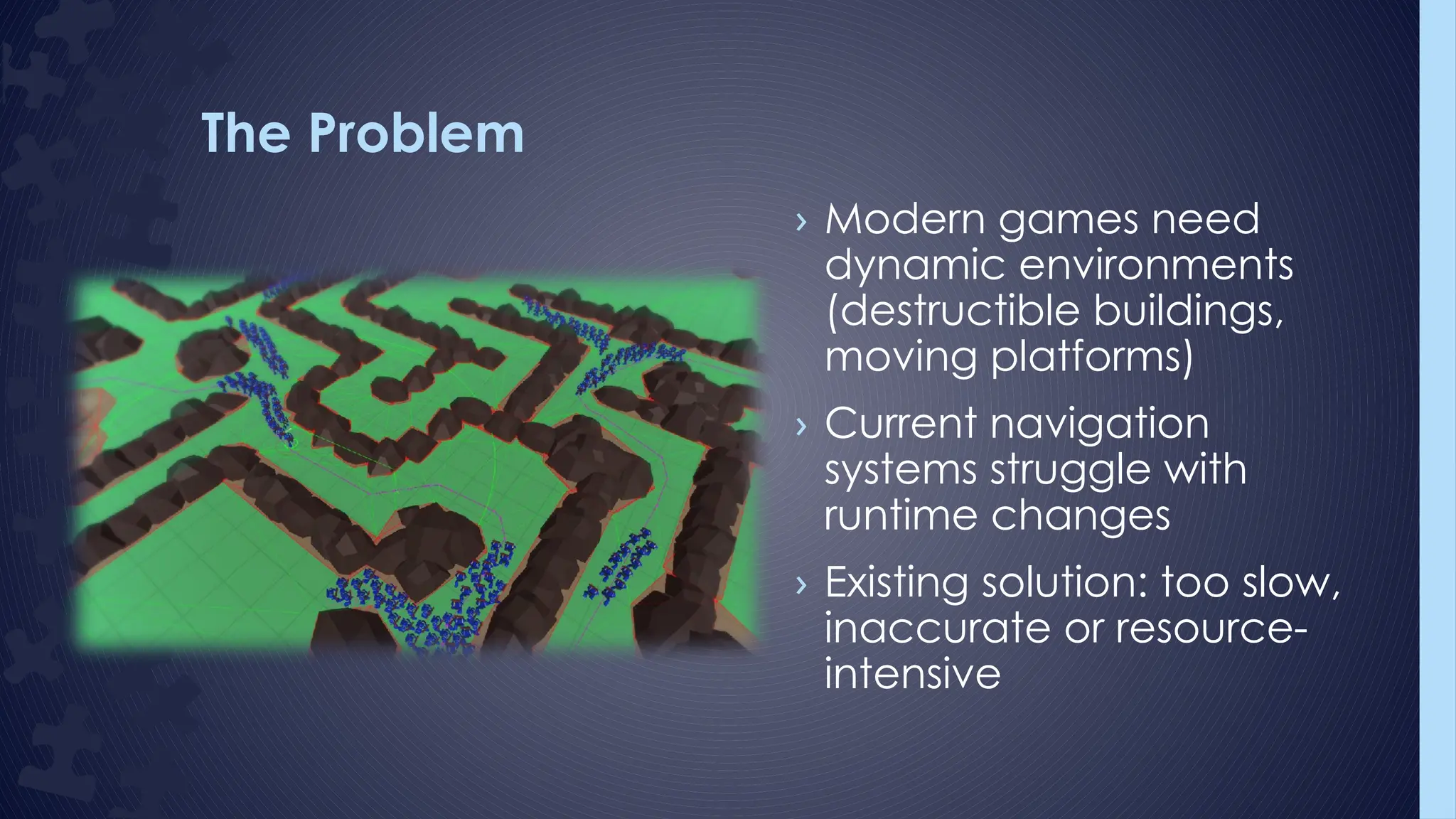
› Modern games need
dynamic environments
(destructible buildings,
moving platforms)
› Current navigation
systems struggle with
runtime changes
› Existing solution: too slow,
inaccurate or resource-
intensive
Research Gap and Objectives
› Current approaches: Complete rebuilding vs Local
regeneration vs Incremental updates
› Gap: no hybrid approach which combines multiple
strengths
› Our objective: developing an adaptive hybrid system for
the Godot engine
Methodology overview
› Mixed-methods
experimental design
› Test platform: Godot
engine 4.5
› Hardware: development
workstation + mid-range
laptop
System Architecture
Three main components:
1. Hierarchial spatial partitioning
2. Adaptive strategy selection mechanism
3. Integration layer with Godot
Implementation details
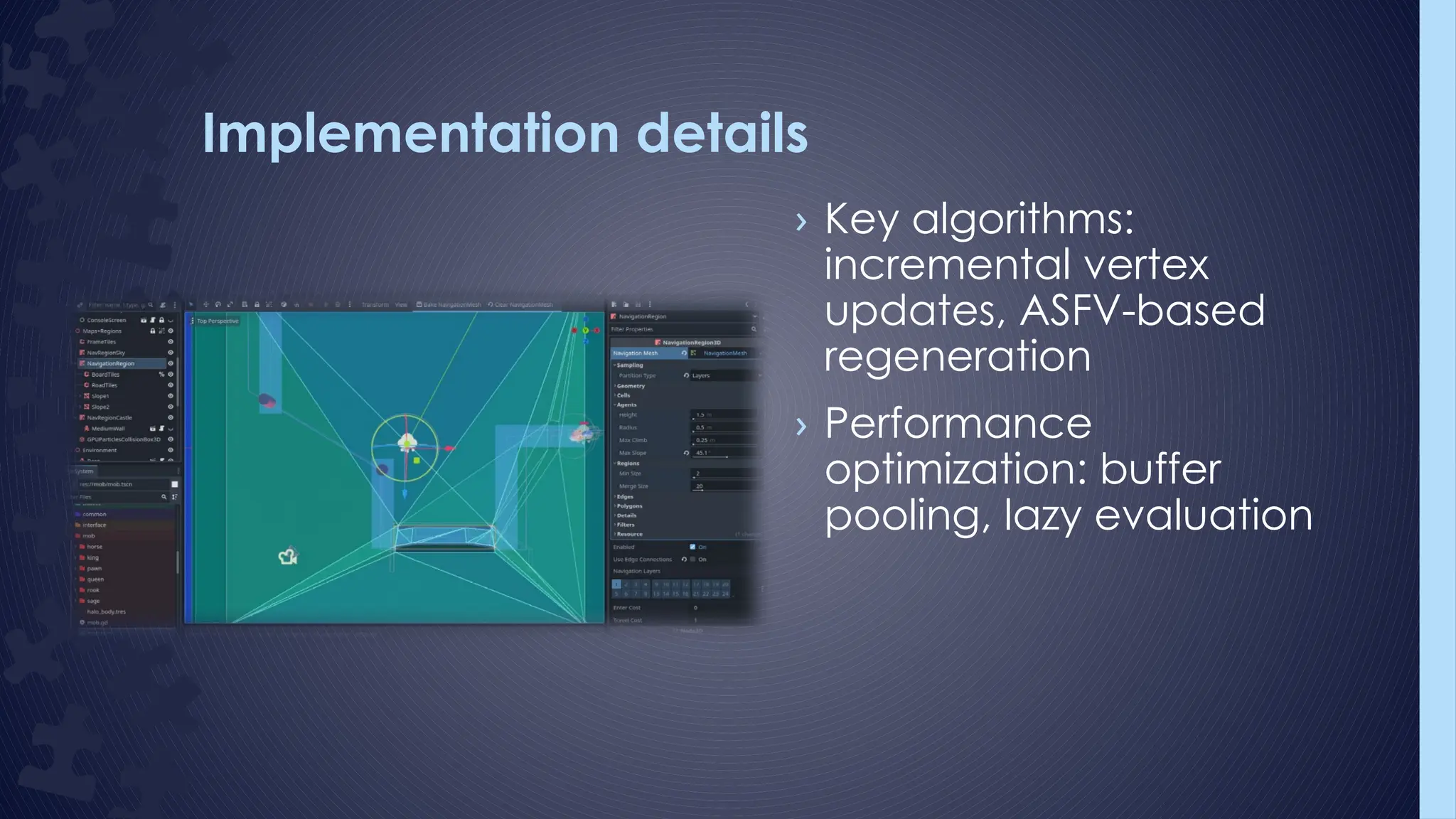
› Key algorithms:
incremental vertex
updates, ASFV-based
regeneration
› Performance
optimization: buffer
pooling, lazy evaluation
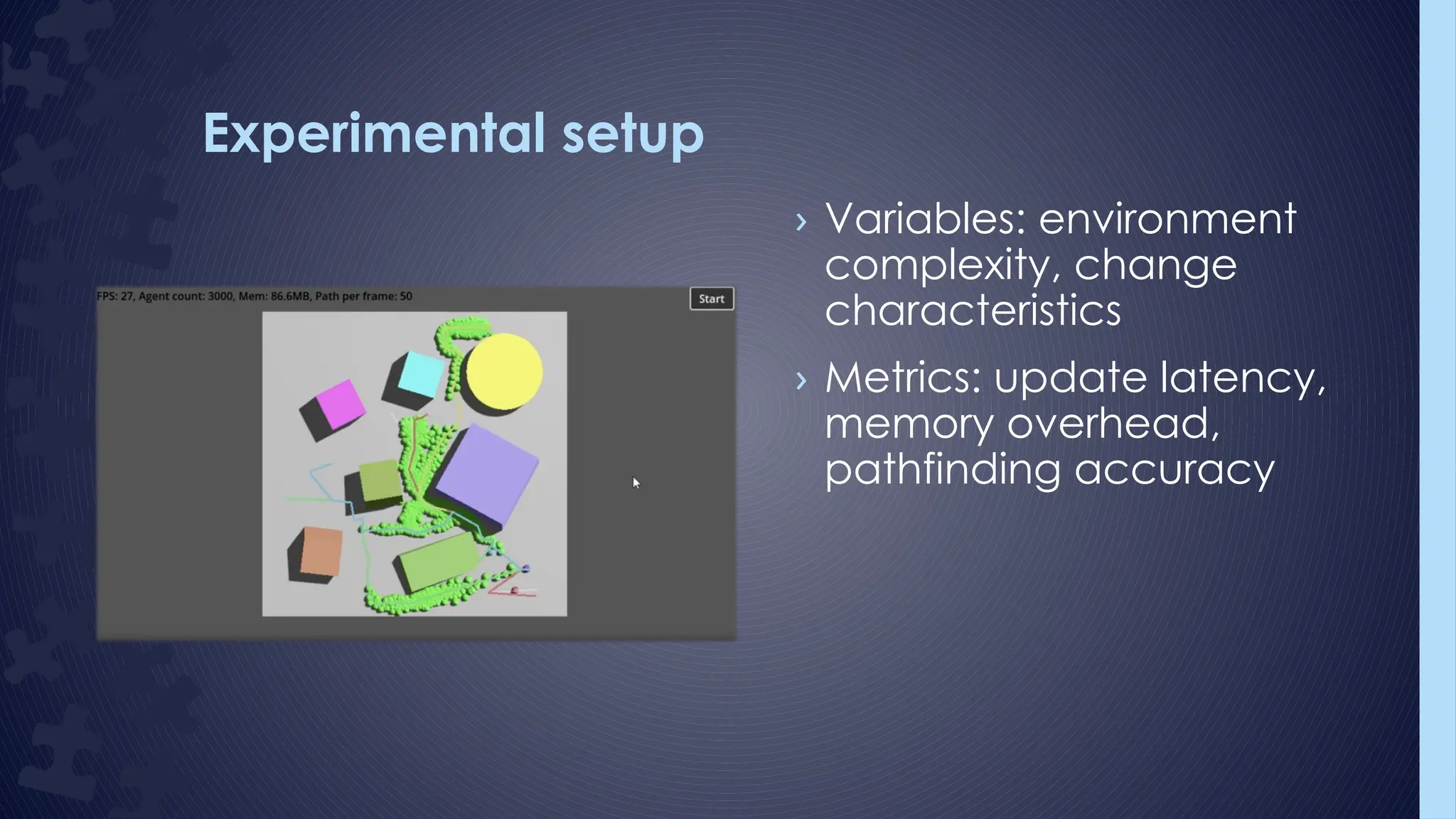
Experimental setup
› Variables: environment
complexity, change
characteristics
› Metrics: update latency,
memory overhead,
pathfinding accuracy
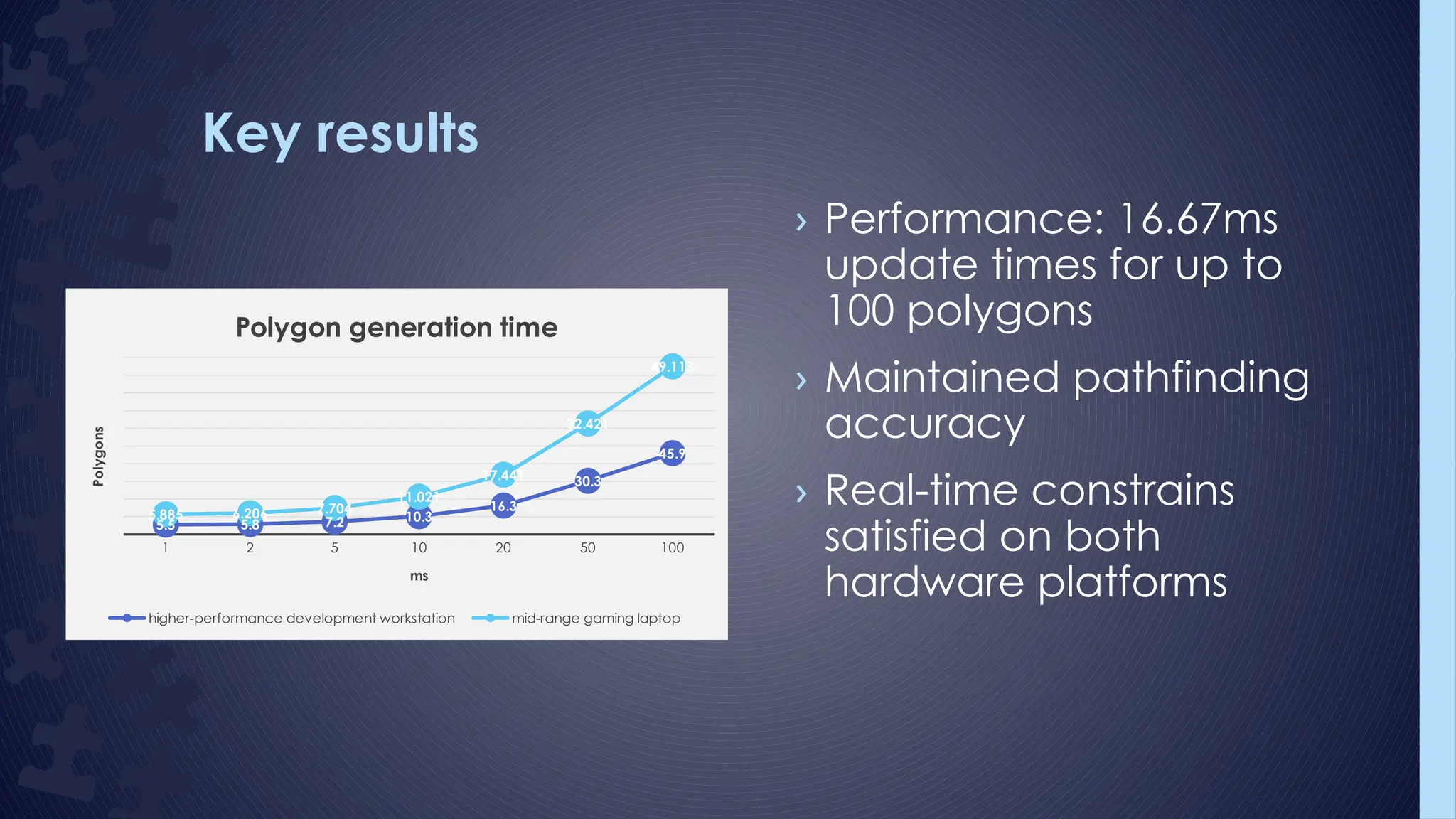
Key results
› Performance: 16.67ms
update times for up to
100 polygons
› Maintained pathfinding
accuracy
› Real-time constrains
satisfied on both
hardware platforms
1 2 5 10 20 50 100
5.5 5.8 7.2 10.3
16.3
30.3
45.9
5.885 6.206 7.704
11.021
17.441
32.421
49.113
Polygon generation time
higher-performance development workstation mid-range gaming laptop
ms
Polygons
Implications
› Validates incremental approach for real-time games
› Practical value for game devs
› Cross-platform compatibility achieved
Conclusions
› Future directions: GPU acceleration
› Main contribution: Practical hybrid solution for dynamic
navigation
› Impact: foundation for responsive, scalable navigation
systems
Thank you for your attention!
incremental_and_dynamic_updating_of_the_navmesh.pptx

  • 1.
    Incremental and Dynamic updatingof the NavMesh in Godot
  • 2.
    The Problem › Moderngames need dynamic environments (destructible buildings, moving platforms) › Current navigation systems struggle with runtime changes › Existing solution: too slow, inaccurate or resource- intensive
  • 3.
    Research Gap andObjectives › Current approaches: Complete rebuilding vs Local regeneration vs Incremental updates › Gap: no hybrid approach which combines multiple strengths › Our objective: developing an adaptive hybrid system for the Godot engine
  • 4.
    Methodology overview › Mixed-methods experimentaldesign › Test platform: Godot engine 4.5 › Hardware: development workstation + mid-range laptop
  • 5.
    System Architecture Three maincomponents: 1. Hierarchial spatial partitioning 2. Adaptive strategy selection mechanism 3. Integration layer with Godot
  • 6.
    Implementation details › Keyalgorithms: incremental vertex updates, ASFV-based regeneration › Performance optimization: buffer pooling, lazy evaluation
  • 7.
    Experimental setup › Variables:environment complexity, change characteristics › Metrics: update latency, memory overhead, pathfinding accuracy
  • 8.
    Key results › Performance:16.67ms update times for up to 100 polygons › Maintained pathfinding accuracy › Real-time constrains satisfied on both hardware platforms 1 2 5 10 20 50 100 5.5 5.8 7.2 10.3 16.3 30.3 45.9 5.885 6.206 7.704 11.021 17.441 32.421 49.113 Polygon generation time higher-performance development workstation mid-range gaming laptop ms Polygons
  • 9.
    Implications › Validates incrementalapproach for real-time games › Practical value for game devs › Cross-platform compatibility achieved
  • 10.
    Conclusions › Future directions:GPU acceleration › Main contribution: Practical hybrid solution for dynamic navigation › Impact: foundation for responsive, scalable navigation systems Thank you for your attention!