Image Source: Red Dust Heelers Facebook pageImage Source: Red Dust Heelers Facebook page
Improving the positive
impact of disability
services on the lives of
Aboriginal and Torres
Strait Islander people
with disabilities in
remote Australia
Steve Fisher
& Maureen Abbott
National Rural Health Conference
29th April
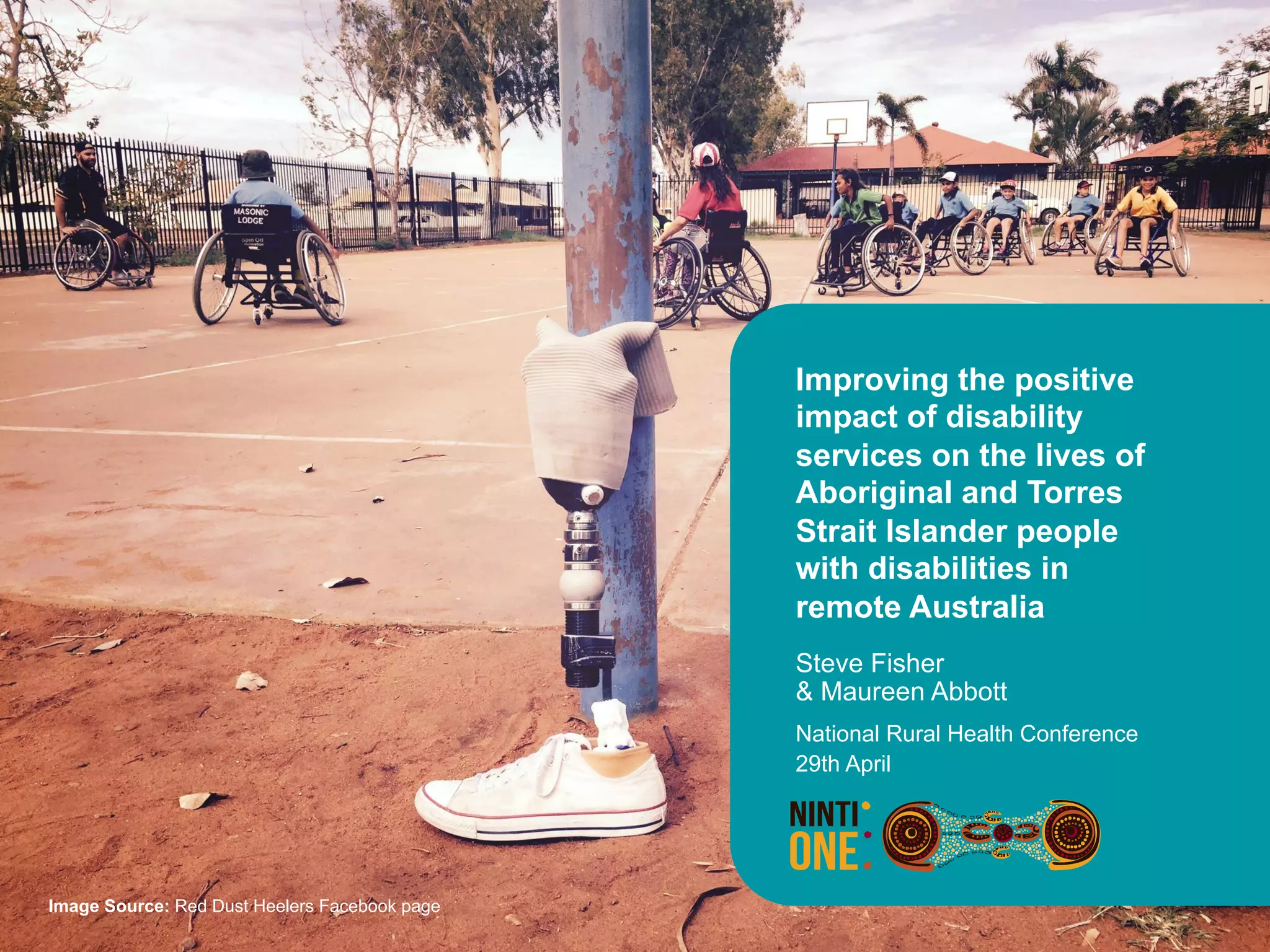
Image Source: Red Dust Heelers Facebook page
Image Source: Red Dust Heelers Facebook pageImage Source: Red Dust Heelers Facebook page
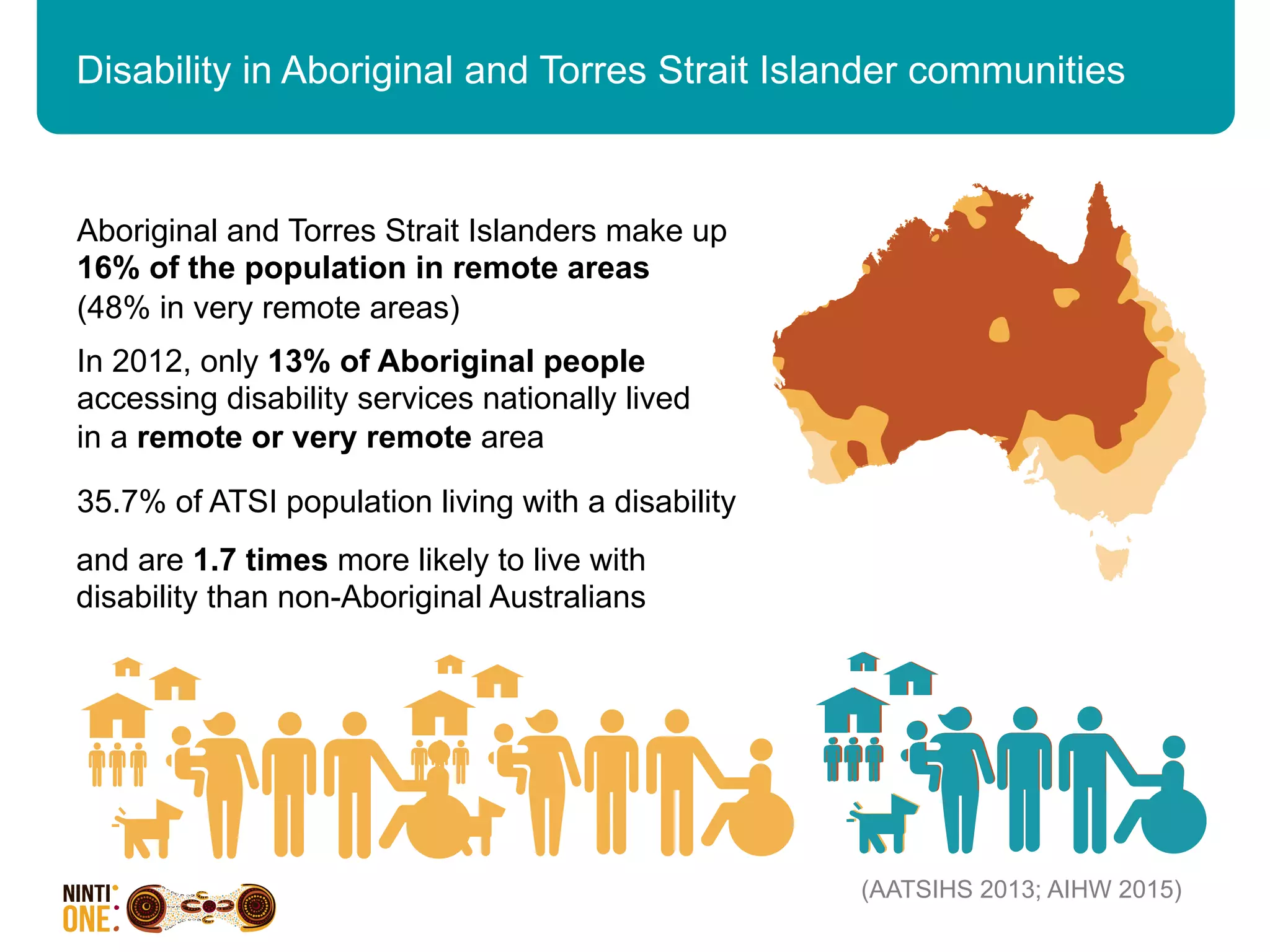
Disability in Aboriginal and Torres Strait Islander communities
(AATSIHS 2013; AIHW 2015)
Aboriginal and Torres Strait Islanders make up
16% of the population in remote areas
(48% in very remote areas)
In 2012, only 13% of Aboriginal people
accessing disability services nationally lived
in a remote or very remote area
35.7% of ATSI population living with a disability
and are 1.7 times more likely to live with
disability than non-Aboriginal Australians
Image Source: Red Dust Heelers Facebook pageImage Source: Red Dust Heelers Facebook page
Participation
Disability-inclusive development
Poverty
reduction
Equality
Inclusion
Integration
Image Source: Summer Foundation
Image Source: Red Dust Heelers Facebook pageImage Source: Red Dust Heelers Facebook page
NDIS: The missing link
Innovation & quality
Role of carers
Remote Aboriginal
context requires
more concerted
effort to achieve.
Advocacy
Active empowerment
Image Source: Red Dust Heelers Facebook pageImage Source: Red Dust Heelers Facebook page
Lessons from Ninti One
•  Passive response
to services
•  Low knowledge
about disability
•  Uneven standards
•  Cross-cultural capacity
under-developed
•  Lack of local disability
advocacy groups
•  Transactional rather
than transformative
Image Source: Red Dust Heelers Facebook pageImage Source: Red Dust Heelers Facebook page
Recommendations
Research
•  Alongside Aboriginal people in
remote settings
•  Determine reach, coverage and
character of disability and
services
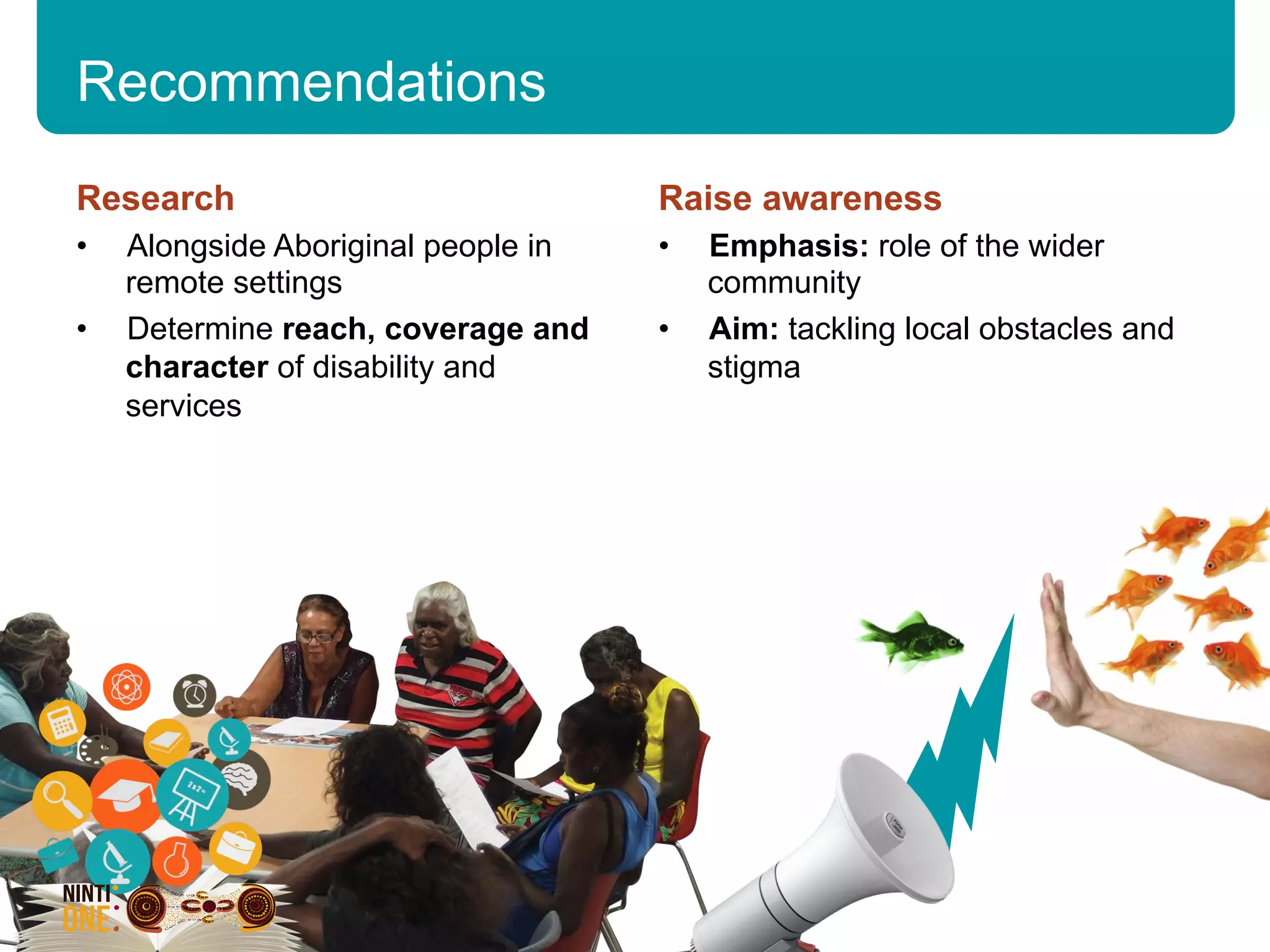
Raise awareness
•  Emphasis: role of the wider
community
•  Aim: tackling local obstacles and
stigma
Image Source: Red Dust Heelers Facebook pageImage Source: Red Dust Heelers Facebook page
Recommendations
Close the Disability Gap
•  Introduce new target into COAG’s
Closing the Gap framework
•  Aim: to decrease the significantly
greater chance of ATSI people to
be living with a disability
Build knowledge and skills
•  Augment National Disability
strategy
•  Aim: emphasise importance of
knowledge and inclusion for
enabling self-advocacy
Image Source: Red Dust Heelers Facebook pageImage Source: Red Dust Heelers Facebook page
Recommendations
Transformative services
•  Develop specific plan alongside
ATSI organisations
•  Links education and inclusion to
advocacy and empowerment
strategies
Culturally appropriate services
•  Train staff to work more effectively
across cultures
•  Aim: increase accessibility of
disability services to Aboriginal
and Torres Strait Islander people
Image Source: Red Dust Heelers Facebook pageImage Source: Red Dust Heelers Facebook page
Recommendations
Advocacy and empowerment
•  Build capacity of advocacy
networks empowering Aboriginal
leaders
•  Invite advocacy networks to
advise and contribute to service
improvement

Improving the positive impact of disability services on the lives of Aboriginal and Torres Strait Islander people with disabilities in remote Australia

  • 1.
    Image Source: RedDust Heelers Facebook pageImage Source: Red Dust Heelers Facebook page Improving the positive impact of disability services on the lives of Aboriginal and Torres Strait Islander people with disabilities in remote Australia Steve Fisher & Maureen Abbott National Rural Health Conference 29th April Image Source: Red Dust Heelers Facebook page
  • 2.
    Image Source: RedDust Heelers Facebook pageImage Source: Red Dust Heelers Facebook page Disability in Aboriginal and Torres Strait Islander communities (AATSIHS 2013; AIHW 2015) Aboriginal and Torres Strait Islanders make up 16% of the population in remote areas (48% in very remote areas) In 2012, only 13% of Aboriginal people accessing disability services nationally lived in a remote or very remote area 35.7% of ATSI population living with a disability and are 1.7 times more likely to live with disability than non-Aboriginal Australians
  • 3.
    Image Source: RedDust Heelers Facebook pageImage Source: Red Dust Heelers Facebook page Participation Disability-inclusive development Poverty reduction Equality Inclusion Integration Image Source: Summer Foundation
  • 4.
    Image Source: RedDust Heelers Facebook pageImage Source: Red Dust Heelers Facebook page NDIS: The missing link Innovation & quality Role of carers Remote Aboriginal context requires more concerted effort to achieve. Advocacy Active empowerment
  • 5.
    Image Source: RedDust Heelers Facebook pageImage Source: Red Dust Heelers Facebook page Lessons from Ninti One •  Passive response to services •  Low knowledge about disability •  Uneven standards •  Cross-cultural capacity under-developed •  Lack of local disability advocacy groups •  Transactional rather than transformative
  • 6.
    Image Source: RedDust Heelers Facebook pageImage Source: Red Dust Heelers Facebook page Recommendations Research •  Alongside Aboriginal people in remote settings •  Determine reach, coverage and character of disability and services Raise awareness •  Emphasis: role of the wider community •  Aim: tackling local obstacles and stigma
  • 7.
    Image Source: RedDust Heelers Facebook pageImage Source: Red Dust Heelers Facebook page Recommendations Close the Disability Gap •  Introduce new target into COAG’s Closing the Gap framework •  Aim: to decrease the significantly greater chance of ATSI people to be living with a disability Build knowledge and skills •  Augment National Disability strategy •  Aim: emphasise importance of knowledge and inclusion for enabling self-advocacy
  • 8.
    Image Source: RedDust Heelers Facebook pageImage Source: Red Dust Heelers Facebook page Recommendations Transformative services •  Develop specific plan alongside ATSI organisations •  Links education and inclusion to advocacy and empowerment strategies Culturally appropriate services •  Train staff to work more effectively across cultures •  Aim: increase accessibility of disability services to Aboriginal and Torres Strait Islander people
  • 9.
    Image Source: RedDust Heelers Facebook pageImage Source: Red Dust Heelers Facebook page Recommendations Advocacy and empowerment •  Build capacity of advocacy networks empowering Aboriginal leaders •  Invite advocacy networks to advise and contribute to service improvement