TABLE OF CONTENTS
Understanding RFID Asset tracking technology
Key Components of RFID Systems
Benefits of RFID Technology in Office Organization
Real-Time Applications of Tracking Technologies
Traditional Methods versus Modern Tracking
Technologies
Implementing an effective asset tracking system is crucial for businesses to efficiently manage their resources, prevent
losses, and make data-driven decisions.
ERIC COLLINS JANUARY 6, 2025 ASSET TRACKING ESSENTIALS
IMPROVING ASSET AWARENESS AND
UTILIZATION: RFID TECHNOLOGY VERSUS
MANUAL ASSET MANAGEMENT
/ /
As organizations evolve, the need for efficient asset management and organization within office
environments has become increasingly critical. Traditional methods of tracking and managing
assets often fall short in terms of efficiency and accuracy.
In contrast, Radio Frequency Identification (RFID) technology presents a modern solution that
enhances asset visibility, reduces administrative burdens, and improves overall productivity. This
blog explores the differences between RFID technology and traditional methods, highlighting
real-time applications and examples.
UNDERSTANDING RFID ASSET TRACKING TECHNOLOGY
RFID technology utilizes electromagnetic fields to automatically identify and track tags attached
to objects. These tags contain electronically stored information that can be read by RFID readers
without requiring a direct line of sight. This capability allows for faster and more accurate data
collection compared to traditional barcode systems. Assets, office equipment, documents, files
and archives can be labeled with RFID (radio wave) labels for streamlined tracking.
KEY COMPONENTS OF RFID SYSTEMS
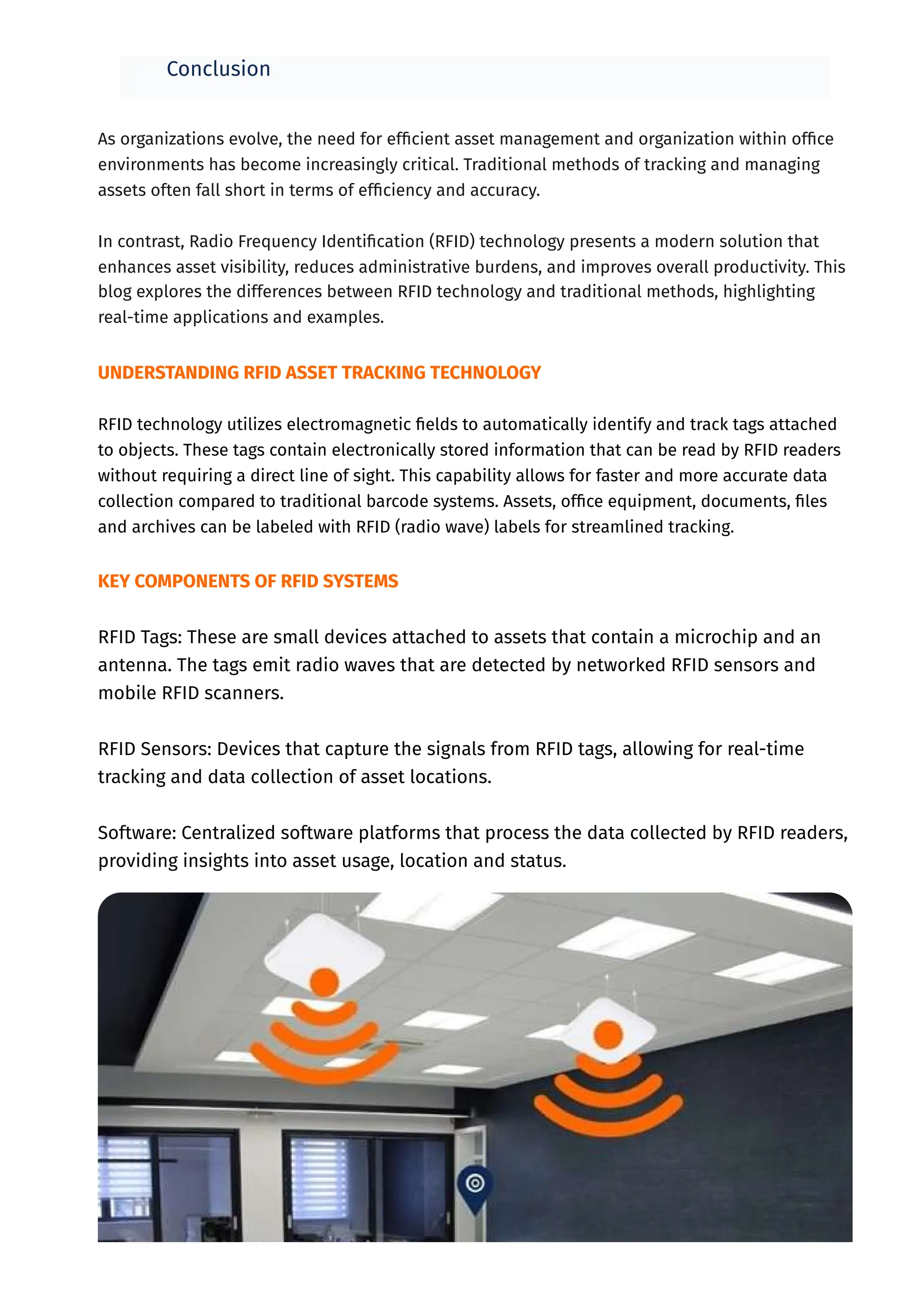
RFID Tags: These are small devices attached to assets that contain a microchip and an
antenna. The tags emit radio waves that are detected by networked RFID sensors and
mobile RFID scanners.
RFID Sensors: Devices that capture the signals from RFID tags, allowing for real-time
tracking and data collection of asset locations.
Software: Centralized software platforms that process the data collected by RFID readers,
providing insights into asset usage, location and status.
Conclusion
BENEFITS OF RFID TECHNOLOGY IN OFFICE ORGANIZATION
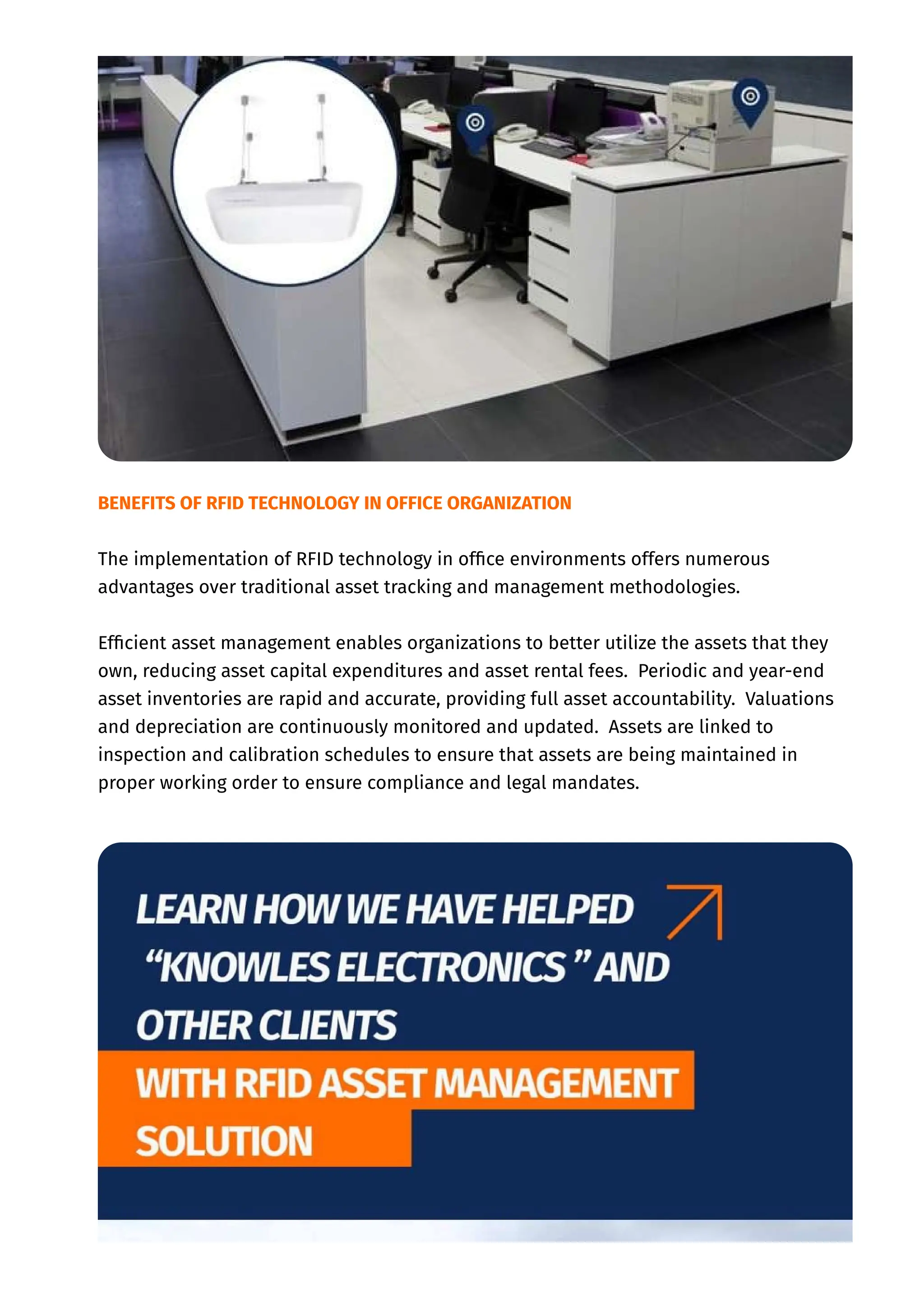
The implementation of RFID technology in office environments offers numerous
advantages over traditional asset tracking and management methodologies.
Efficient asset management enables organizations to better utilize the assets that they
own, reducing asset capital expenditures and asset rental fees. Periodic and year-end
asset inventories are rapid and accurate, providing full asset accountability. Valuations
and depreciation are continuously monitored and updated. Assets are linked to
inspection and calibration schedules to ensure that assets are being maintained in
proper working order to ensure compliance and legal mandates.
Knowles Electronics is the international leader in the development and design of advanced
hearing products. Asset tracker and RFID technology was implemented for Knowles
manufacturing centers in China, Malaysia, Philippines and throughout the U.S.A.. Data from RFID
devices and software keep asset management current and accurate, and push data to backend
core processing systems, such as Oracle and SAP ERP systems.
1. Real-Time Asset Tracking
RFID provides real-time visibility into the location and utilization of assets, enabling office
managers to monitor usage patterns effectively. For instance, an organization can track the
movement of laptops or other equipment throughout the office, ensuring that critical items are
always available when needed.
2. Improved Asset Utilization
By analyzing data on asset usage, organizations can identify underutilized resources and
redistribute them where needed most. This optimization leads to better resource allocation and
reduced unnecessary spending for asset purchases or rentals.
3. Reduced Administrative Burden
RFID technology automates many tasks traditionally performed manually, such as inventory
counts and asset tracking. This automation not only saves time but also reduces human error
associated with manual data entry. Automated Check-out and check-in are rapid and accurate by
scanning RFID labels and scanning or selecting the transfer destination. This automation helps in
reducing the administrative burden on the office staff, while always knowing the current locations
and statuses of assets.
For example, employees can simply scan an RFID tag to update the status of an asset rather than
filling out forms or spreadsheets.
4. Enhanced Maintenance Management
Asset management software monitors the maintenance history of assets, ensuring timely
servicing and reducing downtime. This proactive approach helps extend the lifespan of
equipment while minimizing maintenance and capital costs.
5. Increased Productivity
With faster access to asset information, employees spend less time searching for assets or
managing inventory. This increased efficiency allows them to focus on more productive tasks
versus searching for assets that are needed to get work done.
6. Cost Savings
The reduction in manual labor and improved asset utilization lead to significant cost savings over
time. Organizations can avoid unnecessary purchases by maximizing the use of existing assets,
while ensuring compliance and financial accounting requirements.
REAL-TIME APPLICATIONS OF TRACKING TECHNOLOGIES
Industries globally are successfully integrating RFID technology for asset tracking and
situational awareness of office and industrial assets, and motorized equipment and
vehicles, enabling organizations to improve operations, better serve and retain
customers, increase profitability and outperform competitors.
AssetTracker is integrated with all of the global leading tracking technologies:
• Barcoding
• UHF RFID
• Long-range RFID and Bluetooth
• GSM / GPS
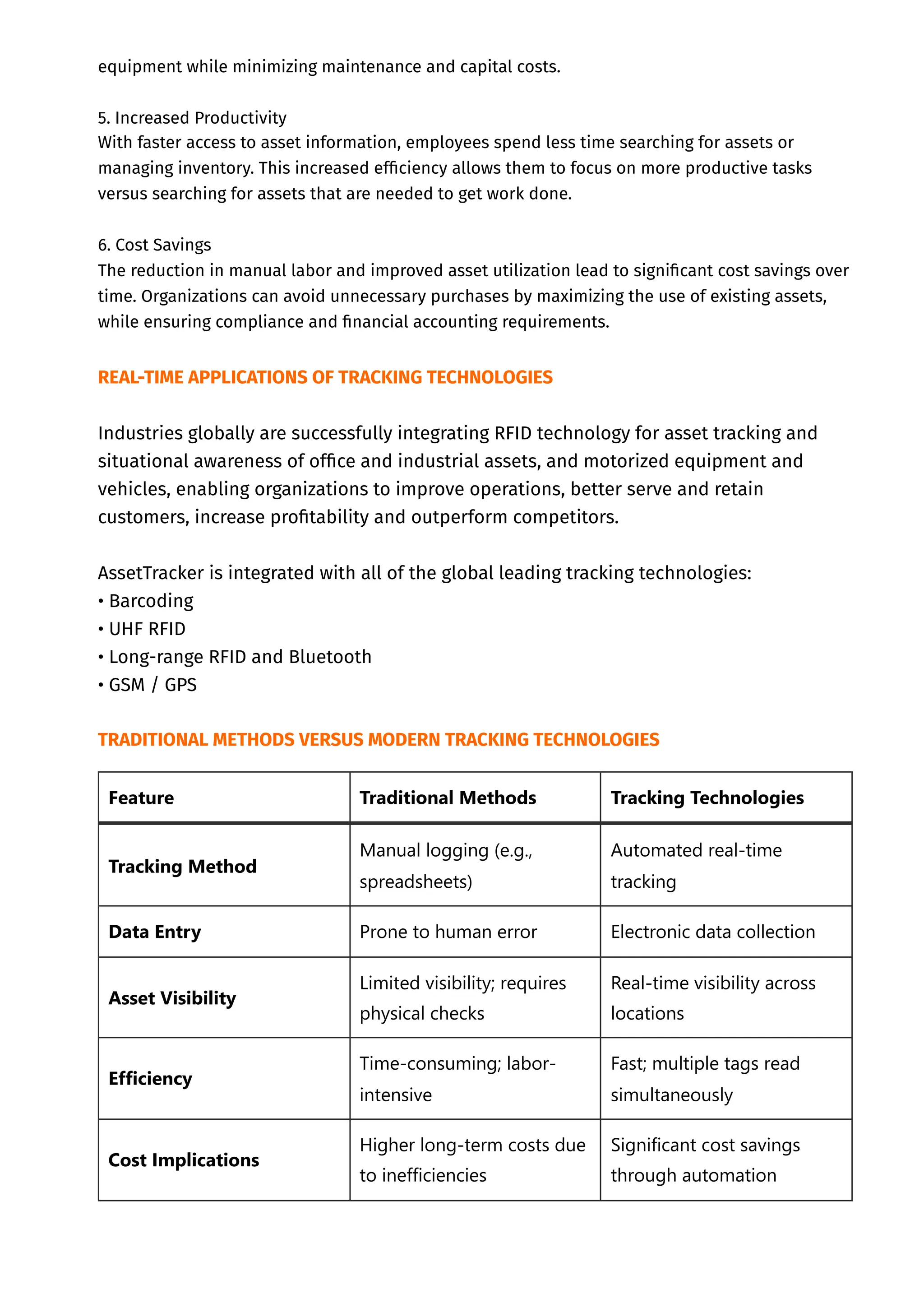
TRADITIONAL METHODS VERSUS MODERN TRACKING TECHNOLOGIES
Feature Traditional Methods Tracking Technologies
Tracking Method
Manual logging (e.g.,
spreadsheets)
Automated real-time
tracking
Data Entry Prone to human error Electronic data collection
Asset Visibility
Limited visibility; requires
physical checks
Real-time visibility across
locations
Efficiency
Time-consuming; labor-
intensive
Fast; multiple tags read
simultaneously
Cost Implications
Higher long-term costs due
to inefficiencies
Significant cost savings
through automation
CONCLUSION
The transition from traditional asset management methods to RFID, long-range and GSM/GPS
tracking technologies represents a significant advancement in office and industrial organizational
practices. By leveraging real-time tracking capabilities, organizations can enhance productivity,
reduce costs, and improve overall efficiency in managing their assets.
As more businesses adopt this innovative technology, worldwide markets can expect continued
improvements in operational effectiveness across almost all industries and applications.
Organizations that embrace and leverage these capabilities will be able to thrive, while
organizations that do not, will fall behind their competitors.
In summary, while traditional methods have served their purpose over the years, the future of
office organization clearly favors the integration of barcoding RFID, and long range tracking and
monitoring technologies to enhance operations. Modern tracking technology deliver extensive
benefits derived from tracking systems that enable streamlined operations and optimize
resources use effectively:
• Improved customer service and better retention of customers
• Reduced costs of doing business and increased profitability
• Ability to effectively meet compliance and legal responsibilities
Tags
RELATED POSTS
# Asset Barcode Scanning # asset management # asset tracking
# Asset Tracking Software # industrial asset tracking
# Industrial equipment tracking Warehouse inventory tracking Asset tracking system Asset theft
prevention Asset management software RFID
# inventory management # Office asset tracking # Real Time Asset Tracking
# RFID tracking system # Warehouse goods tracking
Asset Tracking: Its use cases
September 19, 2024
Cost of implementing RFID Asset
Tracking System: A complete guide.
September 5, 2024
Common Mistakes to Avoid When
Implementing Asset Tracking
Solutions
August 31, 2024
For the best office and industrial asset management and tracking system, AssetTracker is
the right choice.
IoT
Home
Software
Technologies
Office Assets
Industrial Assets
Heavy Equipment
About Us
Blog
CONTACT US
Address:
1680 Fruitville Road, Suite 512 Sarasota, Florida 34236 USA
Phone:+1 (941) 375-9437
Contact us at: info@trackingsystemsiot.com
Copyright © 2025 - WordPress Theme by Creative Themes
Terms & Conditions | Privacy Policy

Improving asset awareness and utilization RFID Technology versus Manual Asset Management

  • 1.
    TABLE OF CONTENTS UnderstandingRFID Asset tracking technology Key Components of RFID Systems Benefits of RFID Technology in Office Organization Real-Time Applications of Tracking Technologies Traditional Methods versus Modern Tracking Technologies Implementing an effective asset tracking system is crucial for businesses to efficiently manage their resources, prevent losses, and make data-driven decisions. ERIC COLLINS JANUARY 6, 2025 ASSET TRACKING ESSENTIALS IMPROVING ASSET AWARENESS AND UTILIZATION: RFID TECHNOLOGY VERSUS MANUAL ASSET MANAGEMENT / /
  • 2.
    As organizations evolve,the need for efficient asset management and organization within office environments has become increasingly critical. Traditional methods of tracking and managing assets often fall short in terms of efficiency and accuracy. In contrast, Radio Frequency Identification (RFID) technology presents a modern solution that enhances asset visibility, reduces administrative burdens, and improves overall productivity. This blog explores the differences between RFID technology and traditional methods, highlighting real-time applications and examples. UNDERSTANDING RFID ASSET TRACKING TECHNOLOGY RFID technology utilizes electromagnetic fields to automatically identify and track tags attached to objects. These tags contain electronically stored information that can be read by RFID readers without requiring a direct line of sight. This capability allows for faster and more accurate data collection compared to traditional barcode systems. Assets, office equipment, documents, files and archives can be labeled with RFID (radio wave) labels for streamlined tracking. KEY COMPONENTS OF RFID SYSTEMS RFID Tags: These are small devices attached to assets that contain a microchip and an antenna. The tags emit radio waves that are detected by networked RFID sensors and mobile RFID scanners. RFID Sensors: Devices that capture the signals from RFID tags, allowing for real-time tracking and data collection of asset locations. Software: Centralized software platforms that process the data collected by RFID readers, providing insights into asset usage, location and status. Conclusion
  • 3.
    BENEFITS OF RFIDTECHNOLOGY IN OFFICE ORGANIZATION The implementation of RFID technology in office environments offers numerous advantages over traditional asset tracking and management methodologies. Efficient asset management enables organizations to better utilize the assets that they own, reducing asset capital expenditures and asset rental fees. Periodic and year-end asset inventories are rapid and accurate, providing full asset accountability. Valuations and depreciation are continuously monitored and updated. Assets are linked to inspection and calibration schedules to ensure that assets are being maintained in proper working order to ensure compliance and legal mandates.
  • 4.
    Knowles Electronics isthe international leader in the development and design of advanced hearing products. Asset tracker and RFID technology was implemented for Knowles manufacturing centers in China, Malaysia, Philippines and throughout the U.S.A.. Data from RFID devices and software keep asset management current and accurate, and push data to backend core processing systems, such as Oracle and SAP ERP systems. 1. Real-Time Asset Tracking RFID provides real-time visibility into the location and utilization of assets, enabling office managers to monitor usage patterns effectively. For instance, an organization can track the movement of laptops or other equipment throughout the office, ensuring that critical items are always available when needed. 2. Improved Asset Utilization By analyzing data on asset usage, organizations can identify underutilized resources and redistribute them where needed most. This optimization leads to better resource allocation and reduced unnecessary spending for asset purchases or rentals. 3. Reduced Administrative Burden RFID technology automates many tasks traditionally performed manually, such as inventory counts and asset tracking. This automation not only saves time but also reduces human error associated with manual data entry. Automated Check-out and check-in are rapid and accurate by scanning RFID labels and scanning or selecting the transfer destination. This automation helps in reducing the administrative burden on the office staff, while always knowing the current locations and statuses of assets. For example, employees can simply scan an RFID tag to update the status of an asset rather than filling out forms or spreadsheets. 4. Enhanced Maintenance Management Asset management software monitors the maintenance history of assets, ensuring timely servicing and reducing downtime. This proactive approach helps extend the lifespan of
  • 5.
    equipment while minimizingmaintenance and capital costs. 5. Increased Productivity With faster access to asset information, employees spend less time searching for assets or managing inventory. This increased efficiency allows them to focus on more productive tasks versus searching for assets that are needed to get work done. 6. Cost Savings The reduction in manual labor and improved asset utilization lead to significant cost savings over time. Organizations can avoid unnecessary purchases by maximizing the use of existing assets, while ensuring compliance and financial accounting requirements. REAL-TIME APPLICATIONS OF TRACKING TECHNOLOGIES Industries globally are successfully integrating RFID technology for asset tracking and situational awareness of office and industrial assets, and motorized equipment and vehicles, enabling organizations to improve operations, better serve and retain customers, increase profitability and outperform competitors. AssetTracker is integrated with all of the global leading tracking technologies: • Barcoding • UHF RFID • Long-range RFID and Bluetooth • GSM / GPS TRADITIONAL METHODS VERSUS MODERN TRACKING TECHNOLOGIES Feature Traditional Methods Tracking Technologies Tracking Method Manual logging (e.g., spreadsheets) Automated real-time tracking Data Entry Prone to human error Electronic data collection Asset Visibility Limited visibility; requires physical checks Real-time visibility across locations Efficiency Time-consuming; labor- intensive Fast; multiple tags read simultaneously Cost Implications Higher long-term costs due to inefficiencies Significant cost savings through automation
  • 6.
    CONCLUSION The transition fromtraditional asset management methods to RFID, long-range and GSM/GPS tracking technologies represents a significant advancement in office and industrial organizational practices. By leveraging real-time tracking capabilities, organizations can enhance productivity, reduce costs, and improve overall efficiency in managing their assets. As more businesses adopt this innovative technology, worldwide markets can expect continued improvements in operational effectiveness across almost all industries and applications. Organizations that embrace and leverage these capabilities will be able to thrive, while organizations that do not, will fall behind their competitors. In summary, while traditional methods have served their purpose over the years, the future of office organization clearly favors the integration of barcoding RFID, and long range tracking and monitoring technologies to enhance operations. Modern tracking technology deliver extensive benefits derived from tracking systems that enable streamlined operations and optimize resources use effectively: • Improved customer service and better retention of customers • Reduced costs of doing business and increased profitability • Ability to effectively meet compliance and legal responsibilities Tags RELATED POSTS # Asset Barcode Scanning # asset management # asset tracking # Asset Tracking Software # industrial asset tracking # Industrial equipment tracking Warehouse inventory tracking Asset tracking system Asset theft prevention Asset management software RFID # inventory management # Office asset tracking # Real Time Asset Tracking # RFID tracking system # Warehouse goods tracking
  • 7.
    Asset Tracking: Itsuse cases September 19, 2024 Cost of implementing RFID Asset Tracking System: A complete guide. September 5, 2024 Common Mistakes to Avoid When Implementing Asset Tracking Solutions August 31, 2024 For the best office and industrial asset management and tracking system, AssetTracker is the right choice. IoT
  • 8.
    Home Software Technologies Office Assets Industrial Assets HeavyEquipment About Us Blog CONTACT US Address: 1680 Fruitville Road, Suite 512 Sarasota, Florida 34236 USA Phone:+1 (941) 375-9437 Contact us at: info@trackingsystemsiot.com Copyright © 2025 - WordPress Theme by Creative Themes Terms & Conditions | Privacy Policy