Anupam Ashish
LNMI, Patna
Corporate Trainer, Safeducate Learning Pvt Ltd
Import trade refers to the purchase of
goods from the foreign country.
The procedure for import trade differs
from country to country, depending upon the
import policy, the statutory requirements
and customs of different countries.
In almost all the countries of the world
import trade is controlled by the government
.
 TRADE ENQUIRY
 PROCUEMENT OF IMPORT LICENCE
 OBTAINING FOREGIN EXCHANGE
 PLACING THE INDENT
 DISPATCHING A LETTER OF CREDIT
 OBTAINING NECESSARY DEOCUMENTS
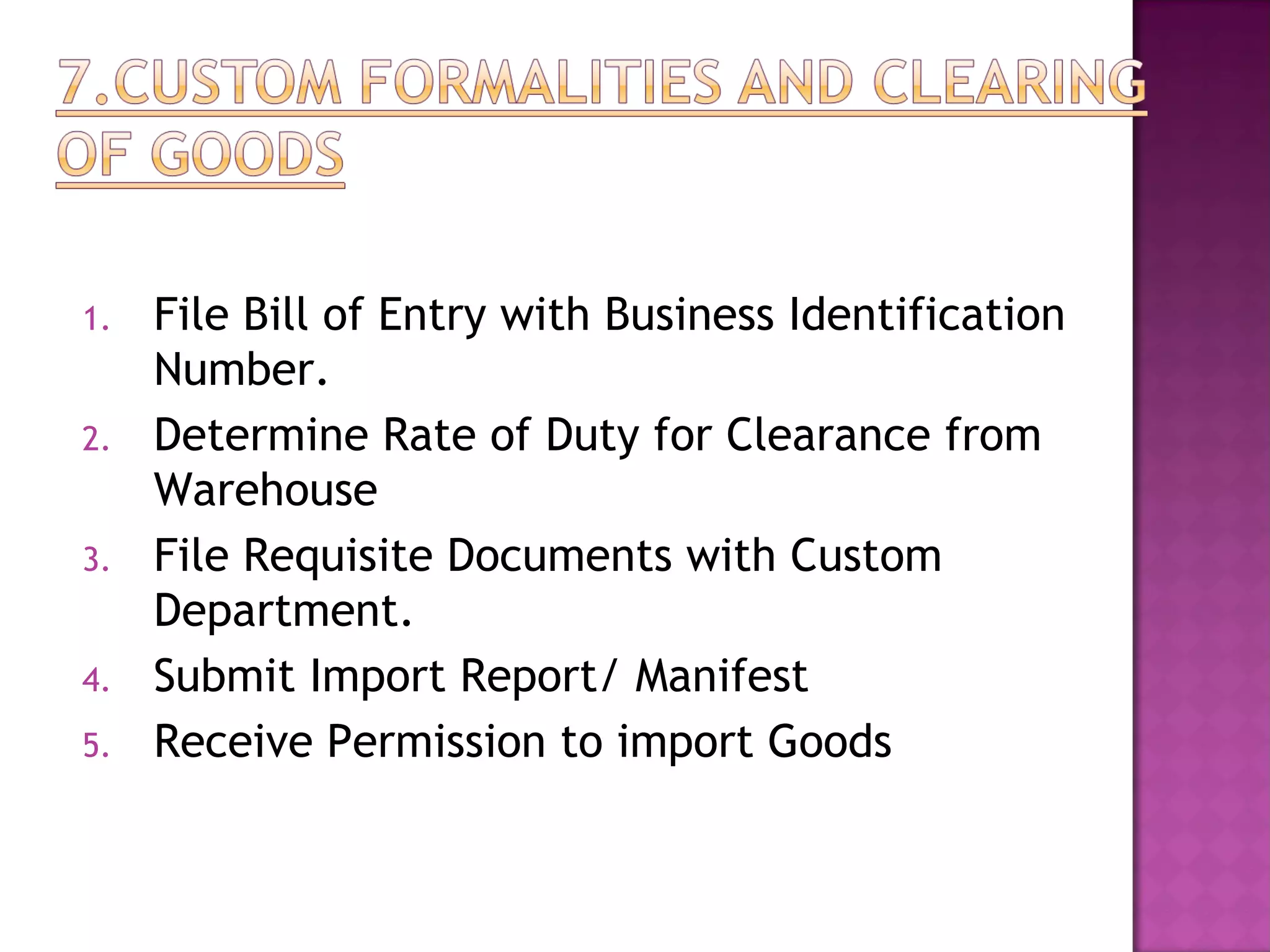
 CUSTOMS FORMALITIES AND CLEARING OF
GOODS
 MAKING THE PAYMENT
 An enquiry is a written request from the
intending buyer or its agent for information
regarding the price and terms on which the
exporter will be able to supply goods.
 -quantity
 Price
 Trade Terms
 Payment Terms etc
 A person or a firm cannot import goods into
India without a valid import license.
 10 digit
 General or specific license.
 Custom Coy & Foreign Exchange Copy
 Freely imported
 Restricted Item
 Prohibited Item
 Cannalised Item
 Importer has to make payment for imports in the
currency of exporting country.
 The foreign exchange reserves of any country are
controlled by Government and are released through
its central bank.
 In India, the exchange control department of
Reserves Bank of India deals with the foreign
exchange.
 The importers has to submit an application in the
prescribed form along with the import licence to any
exchange bank as per the provisions of exchange control
act.
 Scrutinizing the application on the basis of exchange
policy of government of India in force at the time of
application.
 Reserve Bank of India sanctions or reject the release of
foreign exchange.
 The order is known as Indent. It contains the
instructions from the importer so as to the quantity
and quality of goods required, methods for
forwarding them.
Exporter wants to be sure that there is
no risk of non-payment. Usually for this
purpose he asks the importer to send a letter
of credit to him. A letter of credit is
popularly known as L/C.
. Parties..Applicant, Issuing Bank, Beneficiary,
Advising Bank, Confirming Bank, Negotiating
Bank etc.
 On the receipt of letter of credit the exporter
arrange for shipment of goods and sends an advice
note to the importer immediately after the
shipment of goods.
 The exporter then draws a bill of exchange on the
importer for the invoice value of goods.
 The shipping documents such as the bill of lading,
e, insurance policy certificate, certificate of
origin, customer invoice etc. also attached to the
bill of exchange.
 Such bill of exchange with all these attached
documents is called documentary bill.
 Documentary bill of exchange is forwarded to the
importer through a foreign exchange bank which
has a branch or an agent in the importers country
for collecting payments of the bill.
1. File Bill of Entry with Business Identification
Number.
2. Determine Rate of Duty for Clearance from
Warehouse
3. File Requisite Documents with Custom
Department.
4. Submit Import Report/ Manifest
5. Receive Permission to import Goods
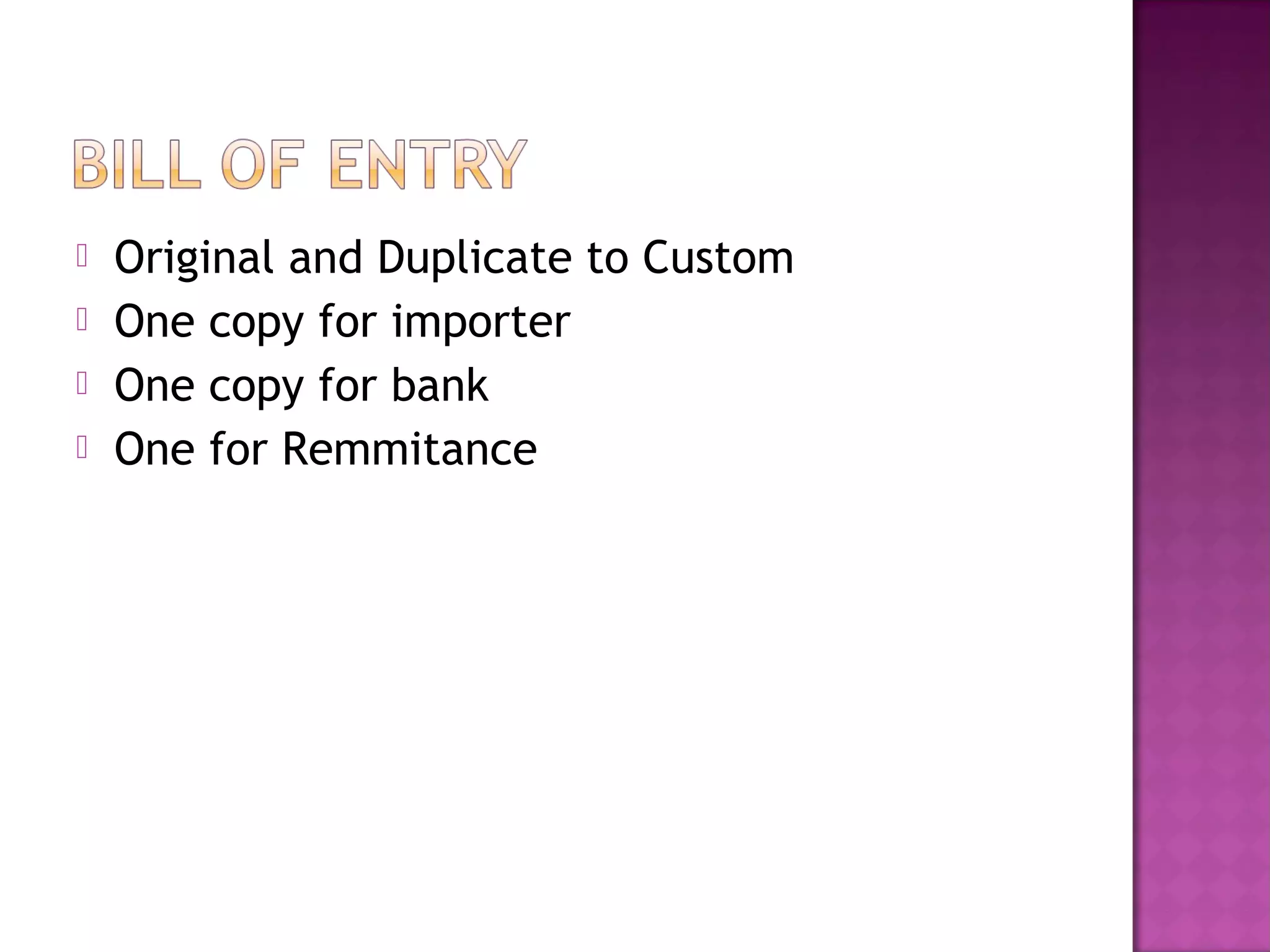
 Original and Duplicate to Custom
 One copy for importer
 One copy for bank
 One for Remmitance
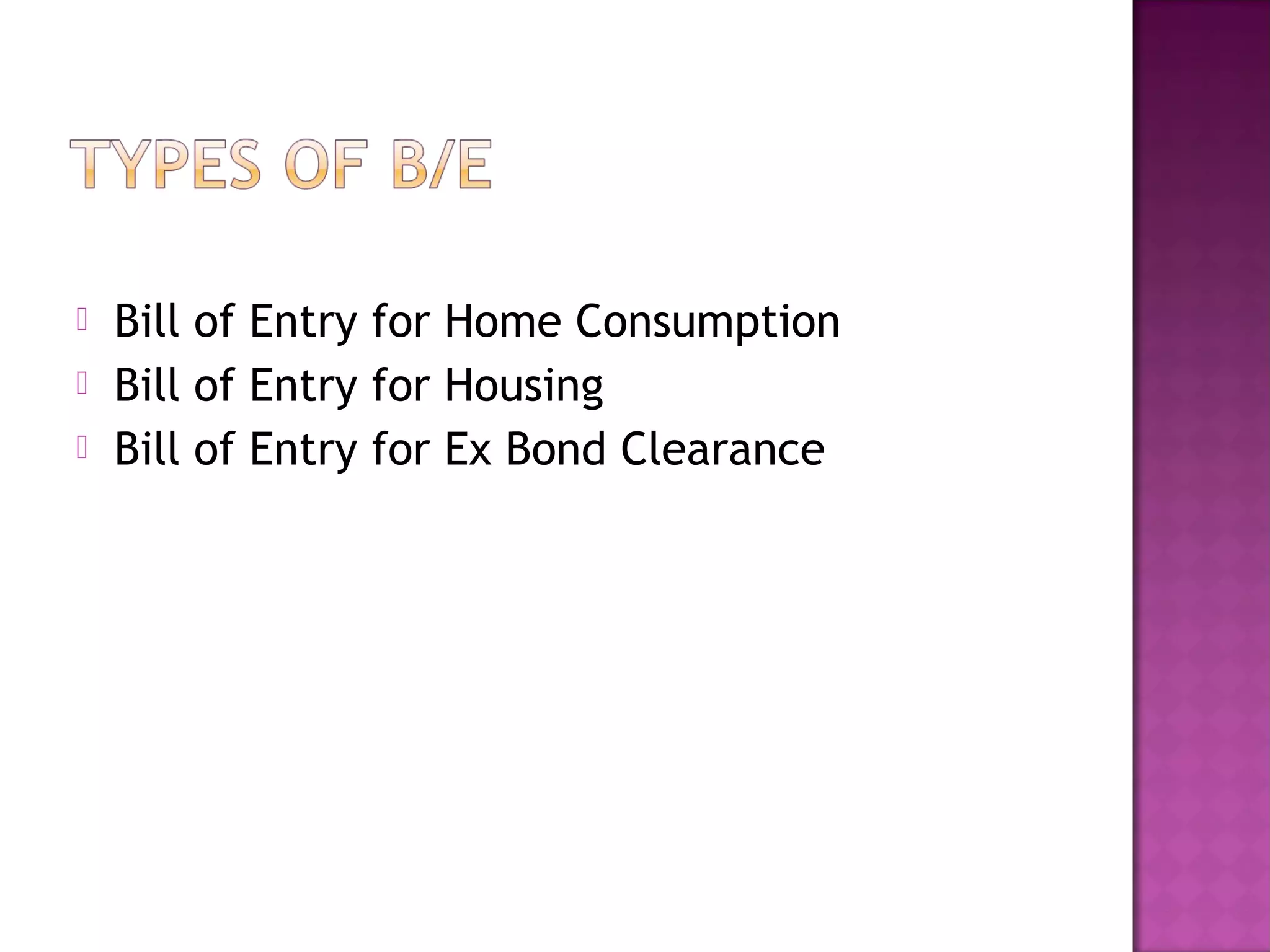
 Bill of Entry for Home Consumption
 Bill of Entry for Housing
 Bill of Entry for Ex Bond Clearance
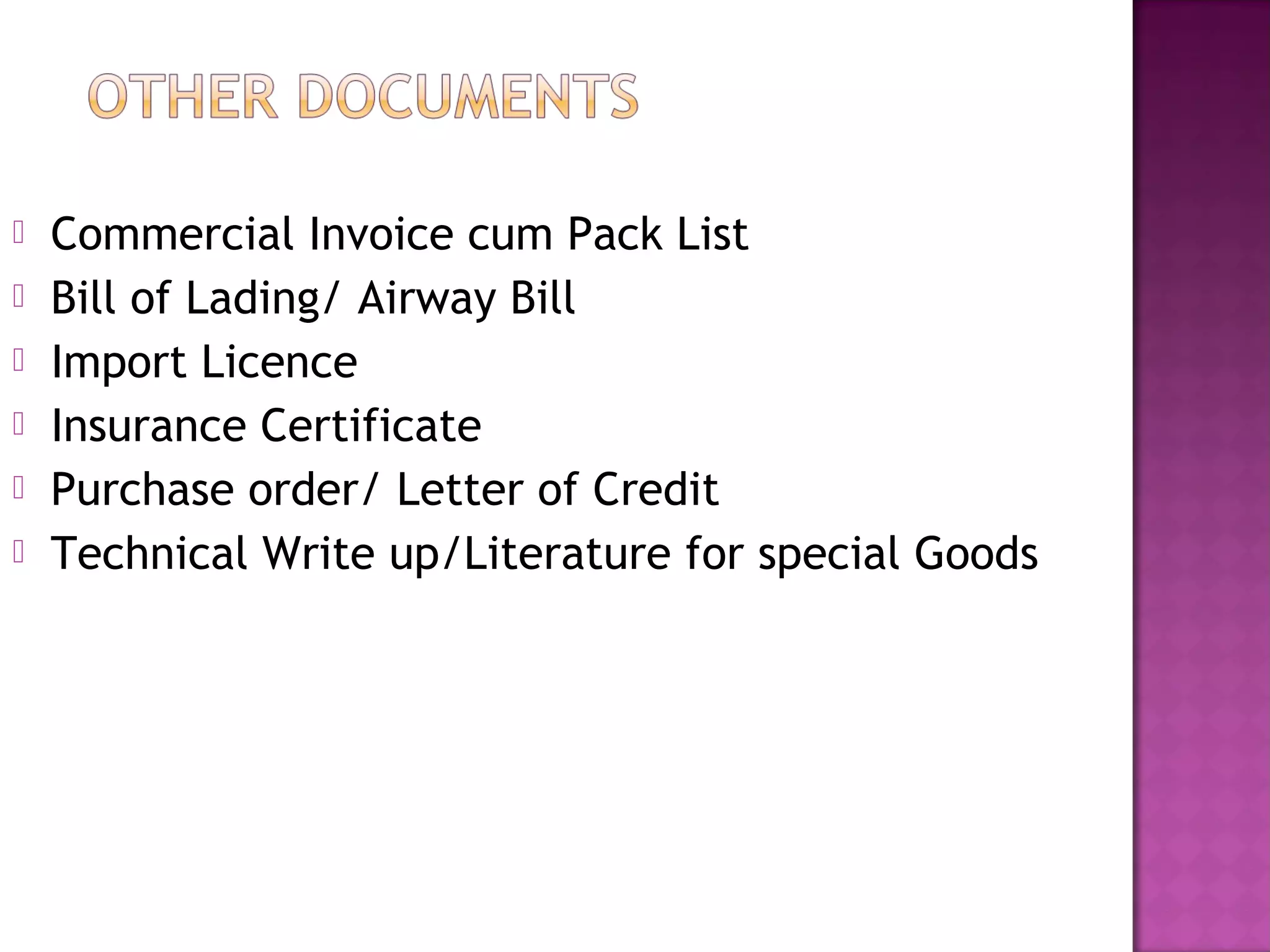
 Commercial Invoice cum Pack List
 Bill of Lading/ Airway Bill
 Import Licence
 Insurance Certificate
 Purchase order/ Letter of Credit
 Technical Write up/Literature for special Goods
 Industrial License, if any
 Registration cum Membership Certificate
 Test Report ,if required
 Central Excise Document
 DEPB/ECGC or other document
 The mode and time of making the payment is
determined according to the terms and conditions
as agreed to earlier between the importer and
exporter, usually 30 to90 days are allowed to the
importer for making the payment of D/A and D/P
bills.
Last step in import procedure is closing the
transaction. But if he is not satisfied with the quality
of goods he will write to the exporter and settle the
matters.
Incase the goods have been damaged in transit the
insurance company will pay him the compensation
under an advice to the exporters.
….It is done by submitting the relevant documents to
Custom
 Basic Duty
Preferential and standard
. Countervailing Duty /Additional Custom Duty
(Equal to Excise) (Highest)
. Aditional Duty (Equal to VAT)
. Anti- Dumping Duty
. Countervailing Duty on Subsidies Items (No in
case of Research )
.
 Safeguard Duty
 Protective Duties
 Education Cess and Higher Education Cess on
Custom Duty
 Commission and brokerage;
 Cost of container;
 Cost of packing
 labour or materials;
 Materials, components, tools, etc.
 Royalties and license fees;
 Subsequent sales;
 Other payment;
 Cost of transport up to place of importation;
Landing charges –
 Insurance
 Thankyou

Import procedure and documentation

  • 1.
    Anupam Ashish LNMI, Patna CorporateTrainer, Safeducate Learning Pvt Ltd
  • 2.
    Import trade refersto the purchase of goods from the foreign country. The procedure for import trade differs from country to country, depending upon the import policy, the statutory requirements and customs of different countries. In almost all the countries of the world import trade is controlled by the government .
  • 3.
     TRADE ENQUIRY PROCUEMENT OF IMPORT LICENCE  OBTAINING FOREGIN EXCHANGE  PLACING THE INDENT  DISPATCHING A LETTER OF CREDIT  OBTAINING NECESSARY DEOCUMENTS  CUSTOMS FORMALITIES AND CLEARING OF GOODS  MAKING THE PAYMENT
  • 4.
     An enquiryis a written request from the intending buyer or its agent for information regarding the price and terms on which the exporter will be able to supply goods.  -quantity  Price  Trade Terms  Payment Terms etc
  • 5.
     A personor a firm cannot import goods into India without a valid import license.  10 digit  General or specific license.  Custom Coy & Foreign Exchange Copy
  • 6.
     Freely imported Restricted Item  Prohibited Item  Cannalised Item
  • 7.
     Importer hasto make payment for imports in the currency of exporting country.  The foreign exchange reserves of any country are controlled by Government and are released through its central bank.  In India, the exchange control department of Reserves Bank of India deals with the foreign exchange.
  • 8.
     The importershas to submit an application in the prescribed form along with the import licence to any exchange bank as per the provisions of exchange control act.  Scrutinizing the application on the basis of exchange policy of government of India in force at the time of application.  Reserve Bank of India sanctions or reject the release of foreign exchange.
  • 9.
     The orderis known as Indent. It contains the instructions from the importer so as to the quantity and quality of goods required, methods for forwarding them.
  • 10.
    Exporter wants tobe sure that there is no risk of non-payment. Usually for this purpose he asks the importer to send a letter of credit to him. A letter of credit is popularly known as L/C. . Parties..Applicant, Issuing Bank, Beneficiary, Advising Bank, Confirming Bank, Negotiating Bank etc.
  • 11.
     On thereceipt of letter of credit the exporter arrange for shipment of goods and sends an advice note to the importer immediately after the shipment of goods.  The exporter then draws a bill of exchange on the importer for the invoice value of goods.  The shipping documents such as the bill of lading, e, insurance policy certificate, certificate of origin, customer invoice etc. also attached to the bill of exchange.
  • 12.
     Such billof exchange with all these attached documents is called documentary bill.  Documentary bill of exchange is forwarded to the importer through a foreign exchange bank which has a branch or an agent in the importers country for collecting payments of the bill.
  • 13.
    1. File Billof Entry with Business Identification Number. 2. Determine Rate of Duty for Clearance from Warehouse 3. File Requisite Documents with Custom Department. 4. Submit Import Report/ Manifest 5. Receive Permission to import Goods
  • 14.
     Original andDuplicate to Custom  One copy for importer  One copy for bank  One for Remmitance
  • 15.
     Bill ofEntry for Home Consumption  Bill of Entry for Housing  Bill of Entry for Ex Bond Clearance
  • 16.
     Commercial Invoicecum Pack List  Bill of Lading/ Airway Bill  Import Licence  Insurance Certificate  Purchase order/ Letter of Credit  Technical Write up/Literature for special Goods
  • 17.
     Industrial License,if any  Registration cum Membership Certificate  Test Report ,if required  Central Excise Document  DEPB/ECGC or other document
  • 18.
     The modeand time of making the payment is determined according to the terms and conditions as agreed to earlier between the importer and exporter, usually 30 to90 days are allowed to the importer for making the payment of D/A and D/P bills.
  • 19.
    Last step inimport procedure is closing the transaction. But if he is not satisfied with the quality of goods he will write to the exporter and settle the matters. Incase the goods have been damaged in transit the insurance company will pay him the compensation under an advice to the exporters. ….It is done by submitting the relevant documents to Custom
  • 20.
     Basic Duty Preferentialand standard . Countervailing Duty /Additional Custom Duty (Equal to Excise) (Highest) . Aditional Duty (Equal to VAT) . Anti- Dumping Duty . Countervailing Duty on Subsidies Items (No in case of Research ) .
  • 21.
     Safeguard Duty Protective Duties  Education Cess and Higher Education Cess on Custom Duty
  • 22.
     Commission andbrokerage;  Cost of container;  Cost of packing  labour or materials;  Materials, components, tools, etc.  Royalties and license fees;  Subsequent sales;  Other payment;  Cost of transport up to place of importation; Landing charges –  Insurance
  • 23.