NAME : RAVI SINHA (MBALS015015)
AMIR KHAN (MBALS015013)
COURSE : MBA IN LOGISTICS AND
SUPPLY CHAIN MANAGEMENT
SUBJECT : GLOBAL TRADE AND PRACTISE
TOPIC : IMPORT AND EXPORT
DOCUMENTATION
UNDER
GUIDANCE : DR RAVINDRA GUPTA SIR
IMPORT
IMPORT
Import trade refers to the purchase of goods from the foreign
country.
The procedure for import trade differs from country to country,
depending upon the import policy, the statutory requirements and
customs of different countries.
In almost all the countries of the world import trade is
controlled by the government
.
IMPORT PROCEDURE
 TRADE ENQUIRY
 PROCUEMENT OF IMPORT LICENCE
 OBTAINING FOREGIN EXCHANGE
 DISPATCHING A LETTER OF CREDIT
 OBTAINING NECESSARY DOCUMENTS
 CUSTOMS FORMALITIES AND CLEARING OF GOODS
 MAKING THE PAYMENT
 CLOSING THE TRANSCATION
1.TRADE ENQUIRY
 An enquiry is a written request from the intending buyer or its agent
for information regarding the price and terms on which the exporter
and terms on which the exporter will be able to supply goods.
2.PROCUREMENT OF IMPORT
LICENCE
 A person or a firm cannot import goods into India without a valid
import license.
 An import license may be either general license or specific license.
 Under general license goods can be imported from any country.
 Individual license authorizes to import only from specific countries.
FOR THE PURPOSE OF ISSUING
LICENSE, THE IMPORTERS ARE
DIVIDED INTO THREE
CATEGORIES
 Established Importer
 Actual users
 Registered Exporter
Established Importer
If the person imported goods of the class in which he is interested during
the basic period prescribed for such class, he is treated as an established
importer.
Actual user
If the person[importer]import goods for his own use in industrial
manufacturing process is called actual users.
Registered exporter
Registered exporter importing against exports made under a scheme of
export promotion and others have to obtain license from the chief controller
of exports and imports.
Open General Licence List[O.G.L]
The Government issues from time to time a list of commodities and
products which can be imported obtaining a general permission only. This
is called open General Licence List.
3.OBTAINING FOREIGN
EXCHANGE
 Importer has to make payment for imports in the currency of exporting
country.
 The foreign exchange reserves of any country are controlled by
Government and are released through its central bank.
 In India, the exchange control department of Reserves Bank of India deals
with the foreign exchange.
4.DISPACTCHING A LETTER OF
CREDIT
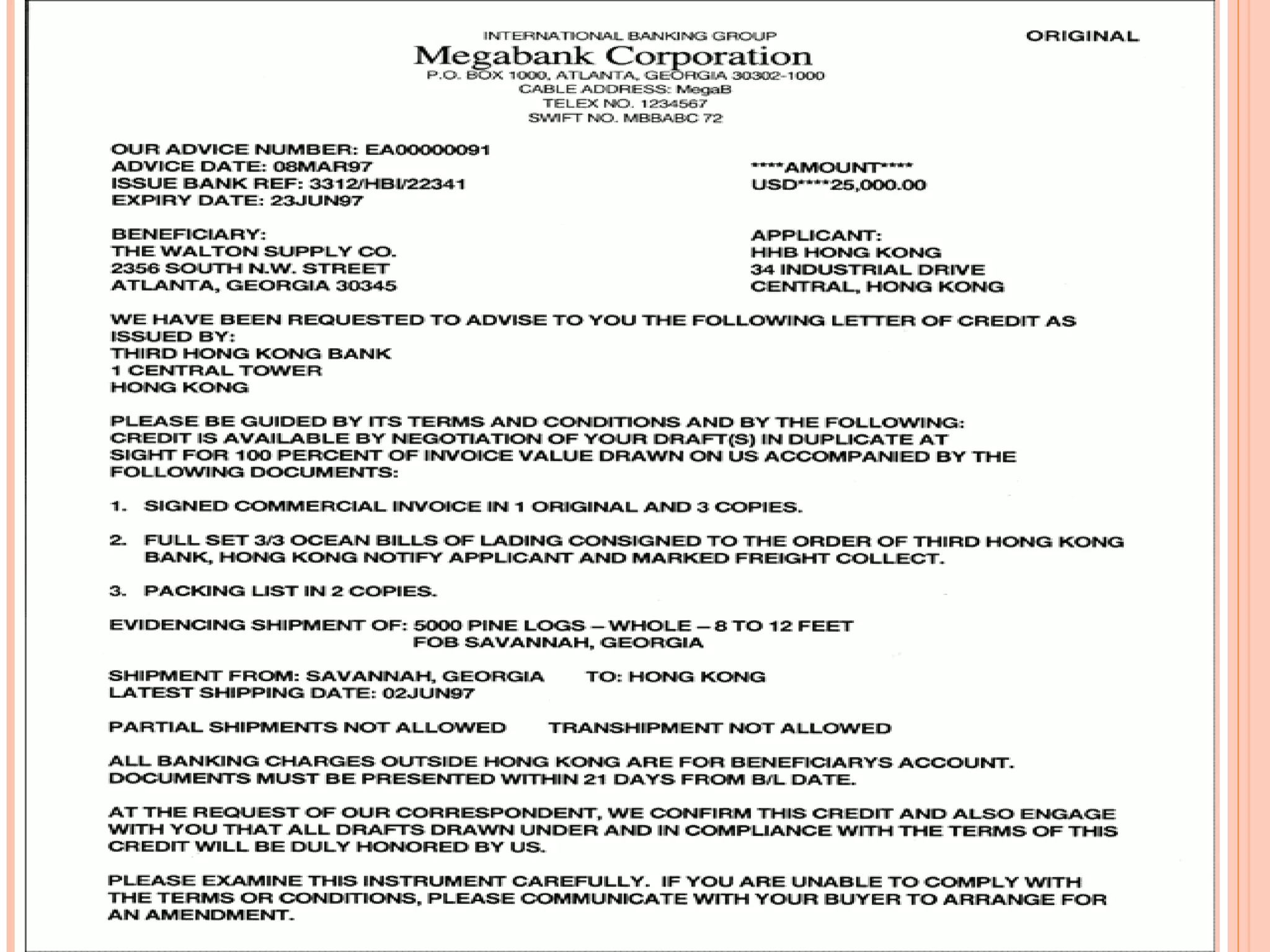
Exporter wants to be sure that there is no risk of non-payment.
Usually for this purpose he asks the importer to send a letter of
credit to him. A letter of credit is popularly known as L/C.
5.OBTAINING NECESSARY
DOCUMENTS
 On the receipt of letter of credit the exporter arrange for shipment of goods
and sends an advice note to the importer immediately after the shipment of
goods.
 The exporter then draws a bill of exchange on the importer for the invoice
value of goods.
 The shipping documents such as the bill of lading, invoice insurance
policy, certificate or origin, customer invoice etc. also attached to the bill of
exchange.
6.CUSTOM FORMALITIES AND
CLEARING OF GOODS
 After receiving documents of title of the goods, the importers only concern
is to take the delivery of goods when the ship arrive at the port and to bring
them to his own place of business.
7.MAKING THE PAYMENT
 The mode and time of making the payment is determined according to the
terms and conditions as agreed to earlier between the importer and exporter,
usually 30 to90 days are allowed to the importer for making the payment of
D/A and D/P bills.
8.CLOSING THE TRANSACTION
Last step in import procedure is closing the transaction. But if he is not
satisfied with the quality of goods he will write to the exporter and settle the
matters.
Incase the goods have been damaged in transit the insurance company will
pay him the compensation under an advice to the exporters.
EXPORT PROCEDURES AND
DOCUMENTS
OBJECTIVES
 What are the important steps in export transaction
 „ What are the standardized and aligned pre-shipment documents
 „ What are the documents related to goods
 „ What are the certificates related to shipment
TOPIC
 „What are the documents related to payment
 What are the documents related to inspection
 What are the documents related to excisable goods
 What are the documents related to exchange regulation
INTRODUCTION
 The exporting activity involves several commercial and regulatory
procedures. These procedure also involve considerable
documentation requirements. The export documentation involves
the preparation of the specified number of copies of the
prescribed documents pertaining to the different procedures.
PRELIMINARIES STEPS
 IEC number the IEC numbers are normally allotted by the regional licensing
authorities.
 Membership cum registration: membership of certain bodies will help the
exporters in a number of ways
 Inquiry and offer: An inquiry is a request from a prospective importer to be
informed of the terms and conditions of sale.
 Confirmation of order: Once the negotiation are completed and conditions are
acceptable to the buyer and seller, the buyer may place and order with the
exporter.
 Packing and marketing: once the goods are ready, they are packed and
marked properly.
 Export license: The exports of some items are banned and of some items
controlled by means of licenses, though many items are permitted to be exported
freely.
 „ Finance: If the exporter require pre-shipment financial assistance, he should
take the necessary steps to obtain it.
 Production/procurement of goods :Once the order is confirmed, the exporter
should take necessary steps to ensure the timely availability of the goods of the
specifications required and execute the export order promptly.
 Shipping space : As soon as the export order is confirmed, the exporter should
contract the shipping companies which have sailings for the port to which goods
have to be sent and book the required shipping space.
CUSTOMS FORMALITIES
 Goods may be shipped out of India only after Customs clearance has been
obtained.
 Following documents to the customs authorities,
 Shipping bill
 Declaration regarding truth or
statement made in the shipping bill
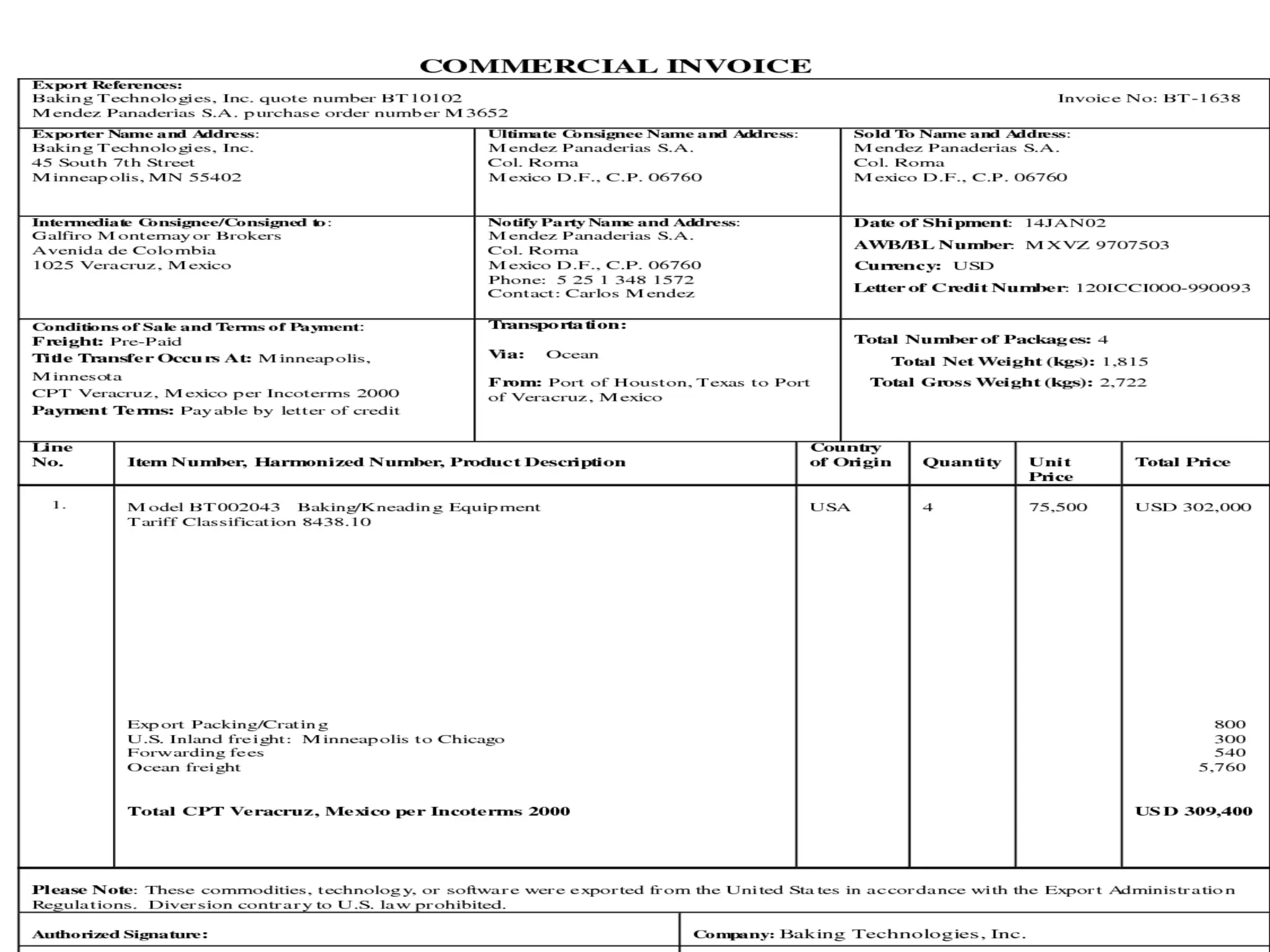
 Invoice
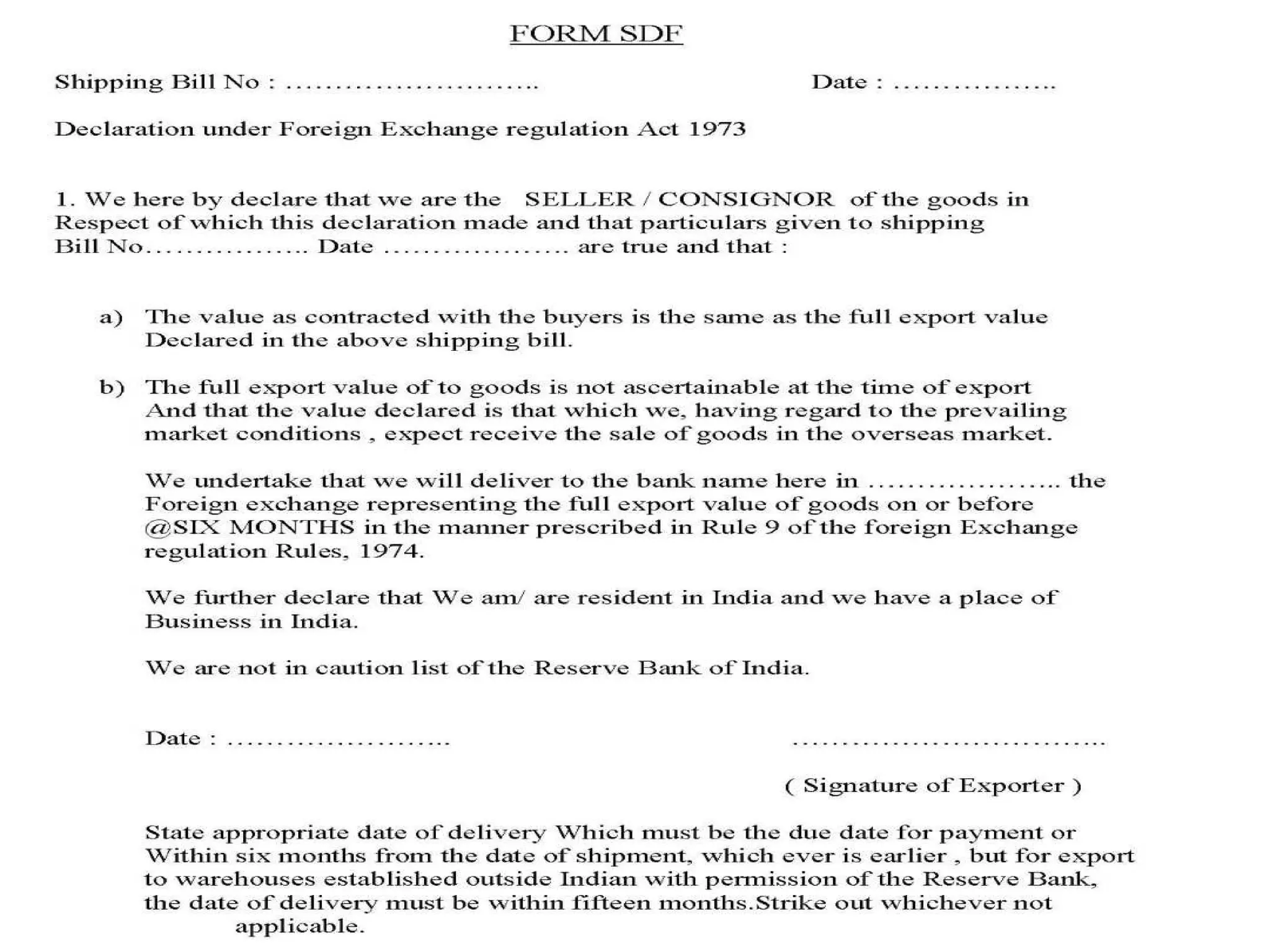
 SDF
 Export licence
 Quality control inspection certificate
 Certificate of origin
EXCHANGE CONTROL
FORMALITIES
 An exporter, who has sent goods outside the country, has the obligation to satisfy
the Reserve Bank of India that he has received payment from his overseas buyer.
Make a declaration on the prescribed form to the Collector of Customs that
foreign exchange, representing the full export value of goods, has been or
will be disposed of in the manner and within the period specified by the RBI
 Negotiate all shipping documents, including those relating to sales on
consignment basis, through authorized dealers. Receive payment by an
approved method„ Surrender the foreign exchange received from exports to the
exchange control authority through authorized dealers.
SHIPPING THE GOODS
 Goods may be exported to foreign by sea, air, post, land or river.
 Shipping by sea: To obtain the permission of the port authorities for the
movement of goods into the port, it is necessary to present the cart ticket to the
gate warden/inspector/keeper at the port gate.
 Shipping By Air : Shipping by air has become popular for such products as
commodities which are perishable and seasonal or high in cost but low in bulk.
 Shipping By Post : Shipping of goods may be effected by post, subject to the
foreign trade and foreign exchange regulations of the country.
 Shipping By Land : The procedure for the export of excisable goods by land to
countries like Afghanistan is, by and large, similar to the one laid down for
export by sea.
NEGOTIATION OF
DOCUMENTS
 After shipping the goods, the exporter should arrange to obtain
payment for the exports by negotiating the relevant documents
through the bank.
EXPORT INCENTIVES
 If the exporter is entitled to any export incentives, he should take the
necessary steps to realize it (them).
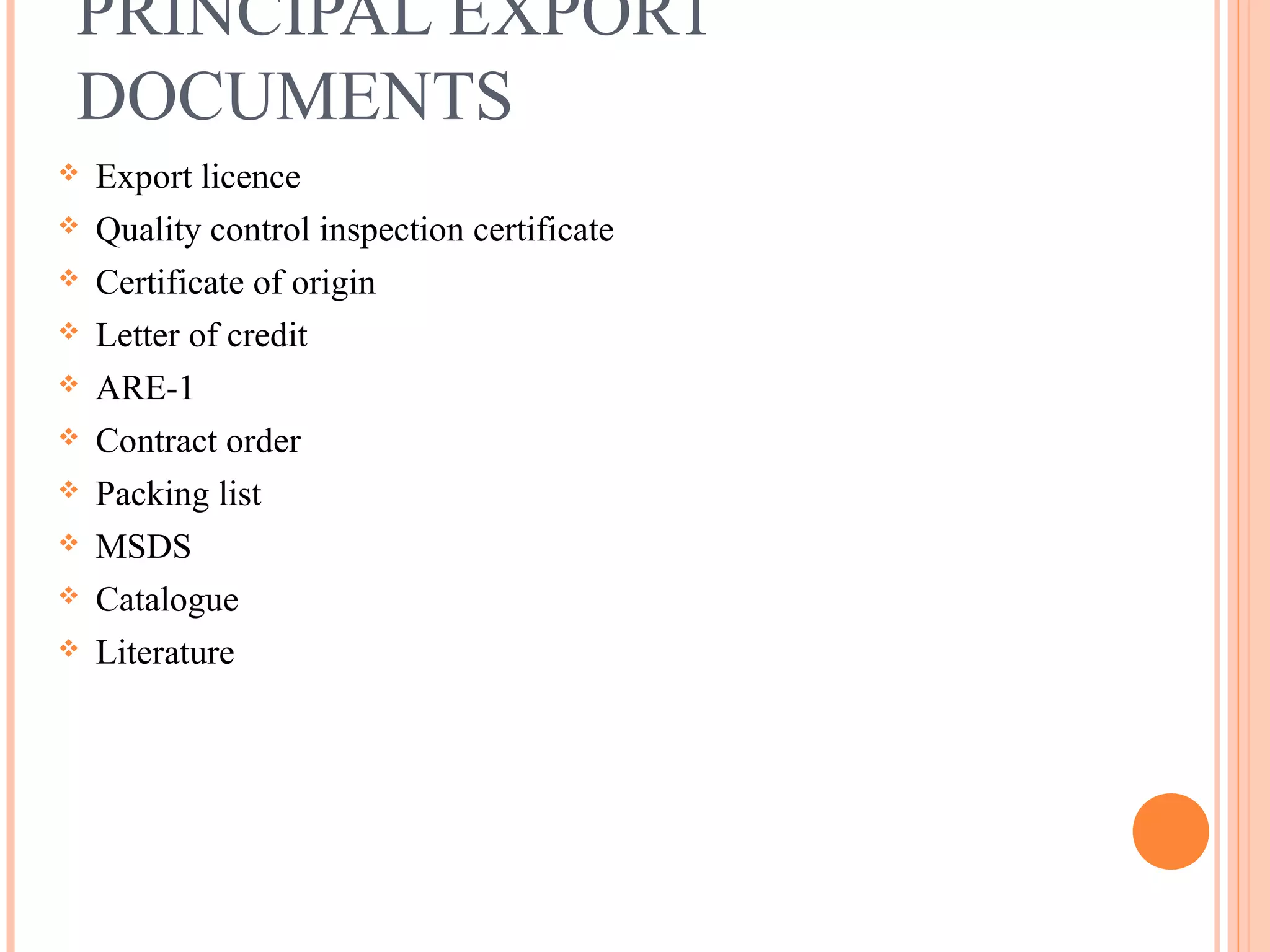
PRINCIPAL EXPORT
DOCUMENTS
 Export licence
 Quality control inspection certificate
 Certificate of origin
 Letter of credit
 ARE-1
 Contract order
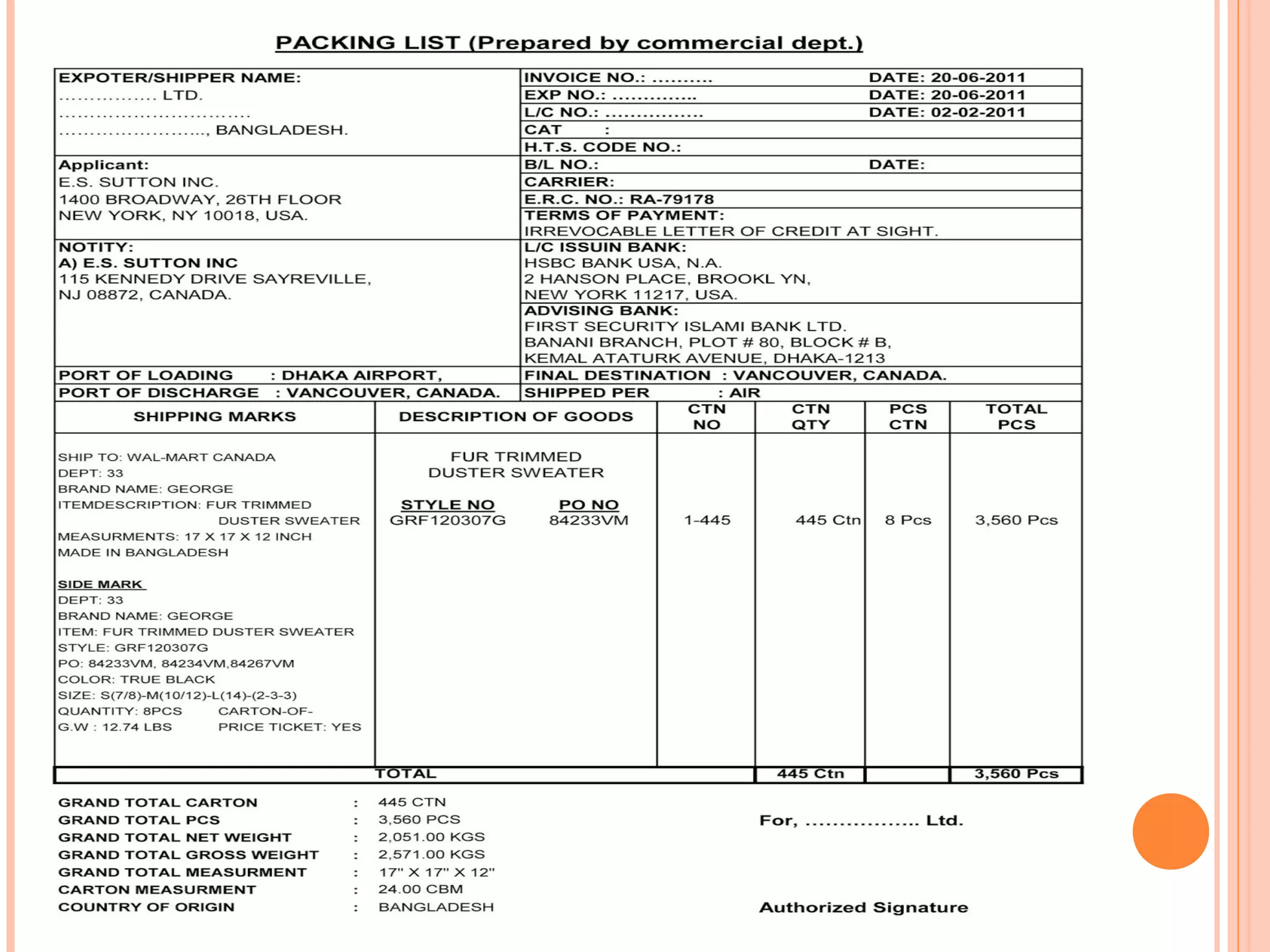
 Packing list
 MSDS
 Catalogue
 Literature
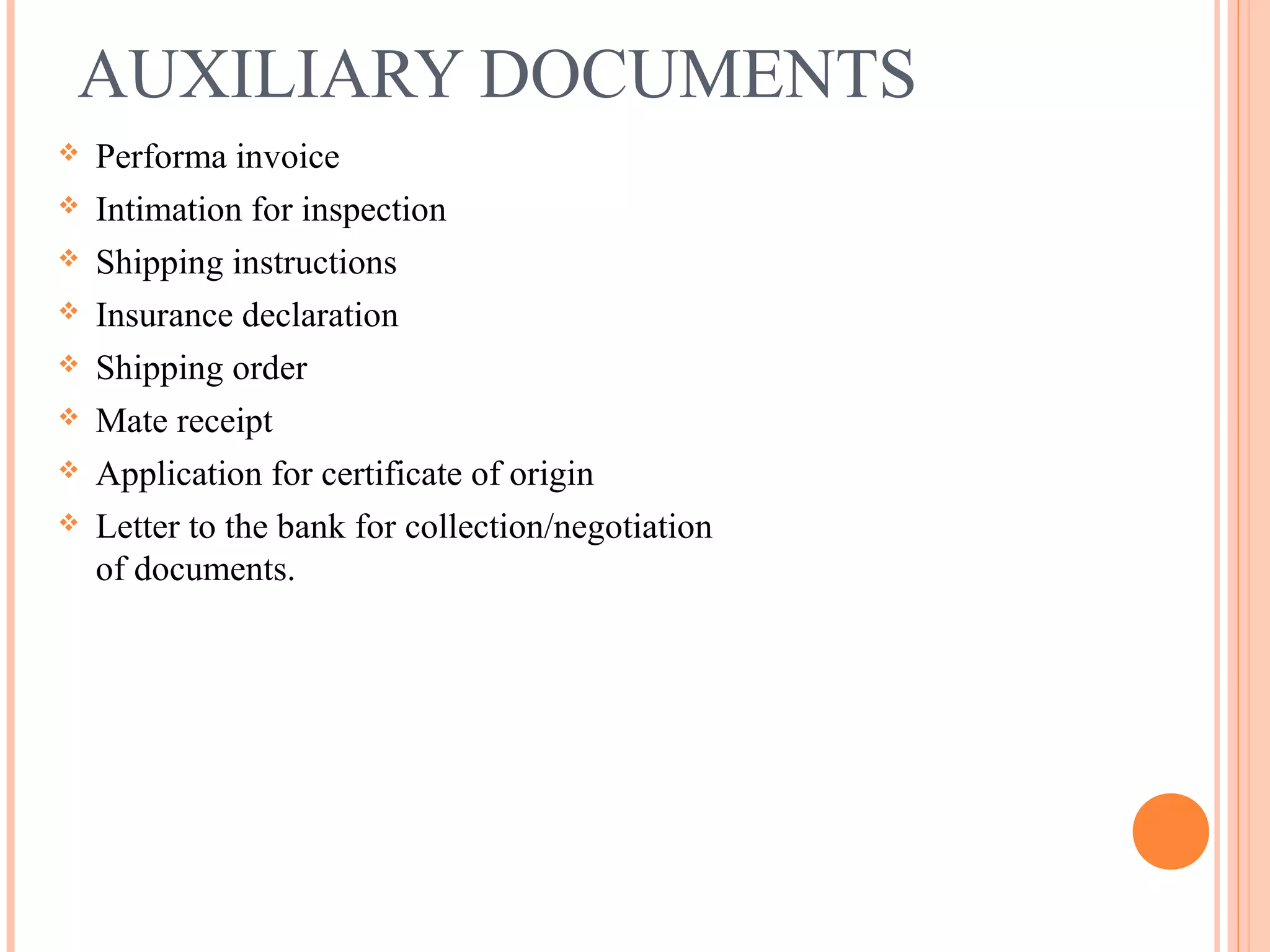
AUXILIARY DOCUMENTS
 Performa invoice
 Intimation for inspection
 Shipping instructions
 Insurance declaration
 Shipping order
 Mate receipt
 Application for certificate of origin
 Letter to the bank for collection/negotiation
of documents.
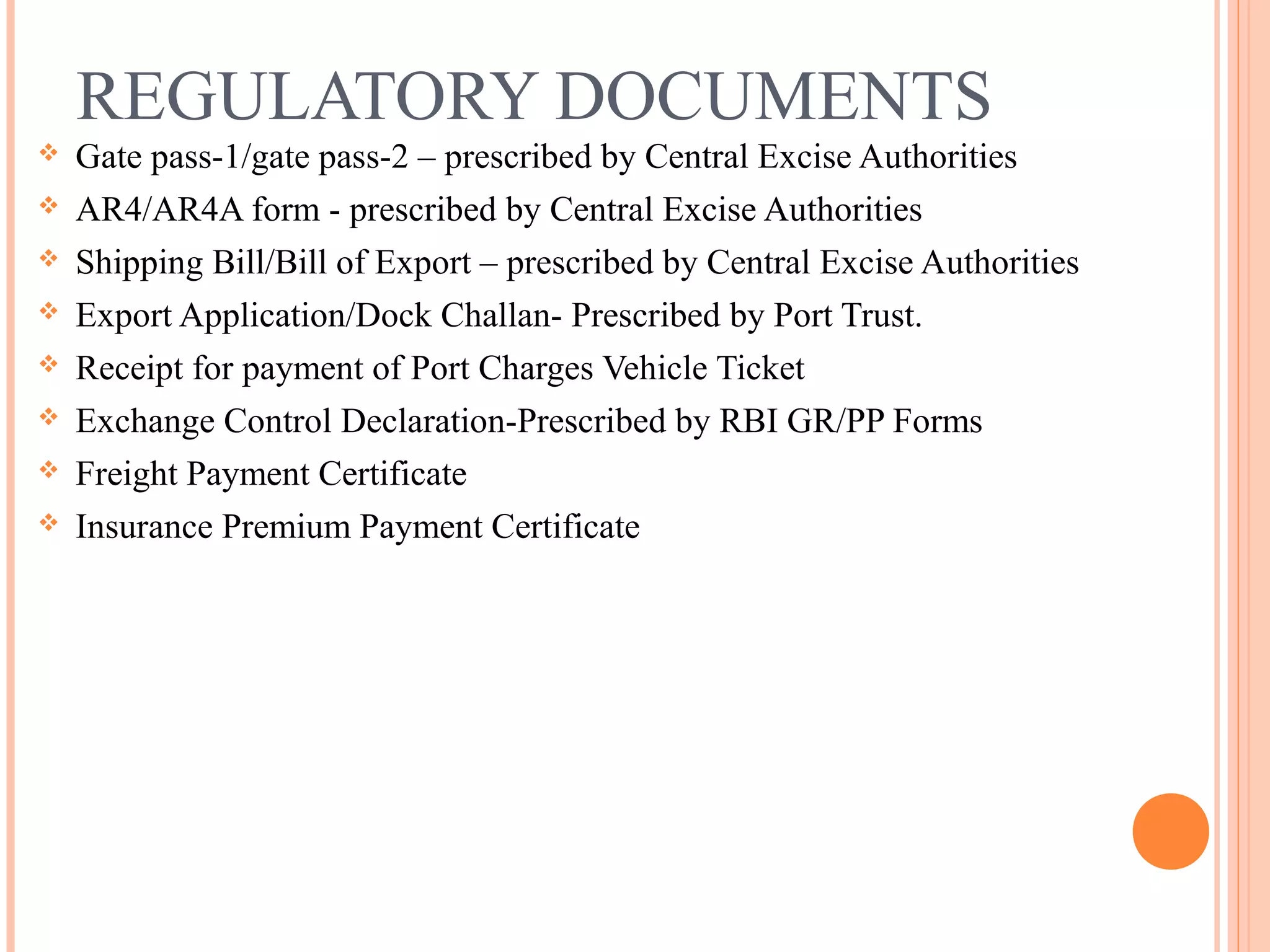
REGULATORY DOCUMENTS
 Gate pass-1/gate pass-2 – prescribed by Central Excise Authorities
 AR4/AR4A form - prescribed by Central Excise Authorities
 Shipping Bill/Bill of Export – prescribed by Central Excise Authorities
 Export Application/Dock Challan- Prescribed by Port Trust.
 Receipt for payment of Port Charges Vehicle Ticket
 Exchange Control Declaration-Prescribed by RBI GR/PP Forms
 Freight Payment Certificate
 Insurance Premium Payment Certificate
THANK YOU FOR YOUR VALUEABLE
TIME ON PROCEDURE
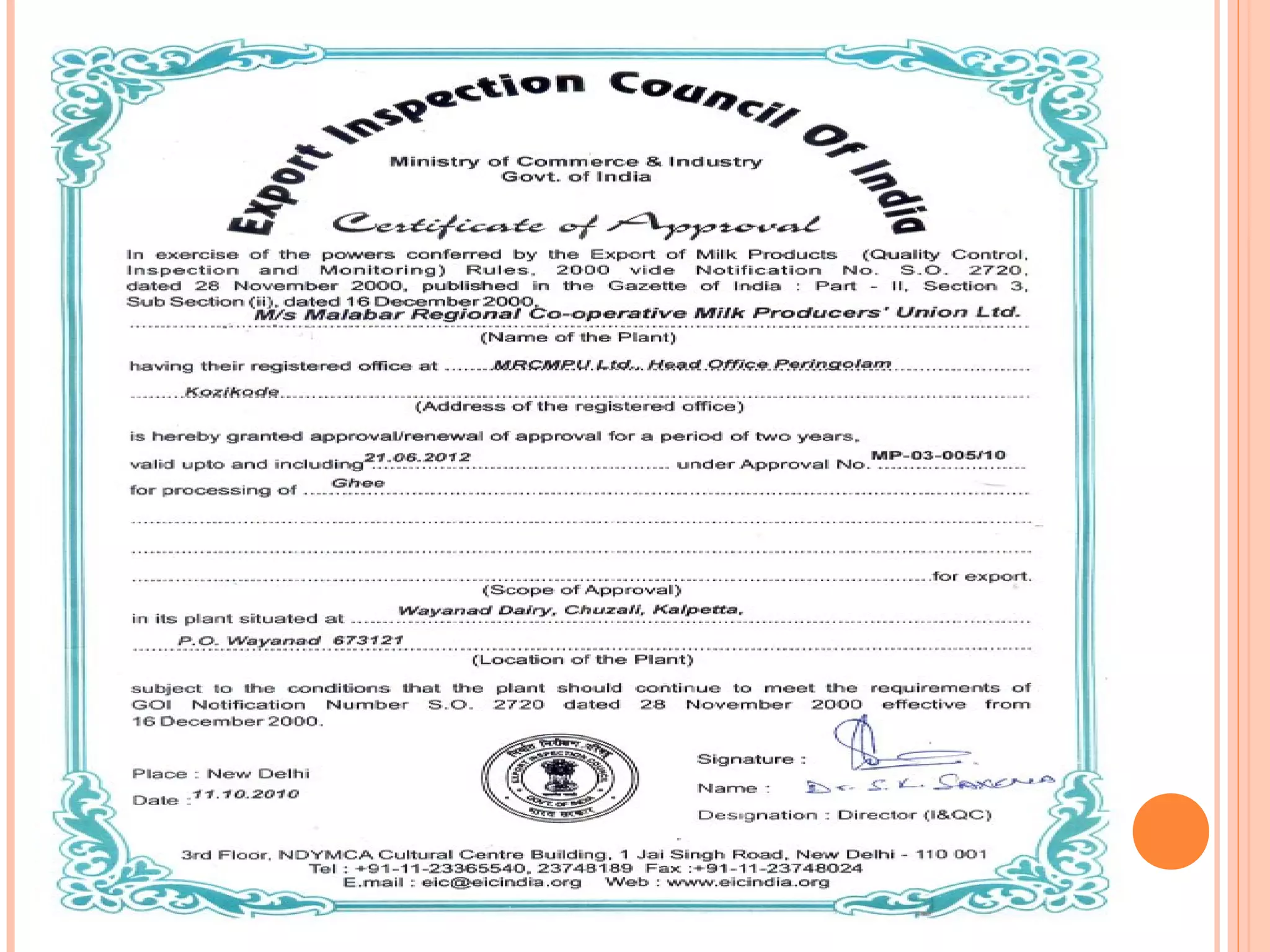
LETS PROCEED TO DOCUMENTATION
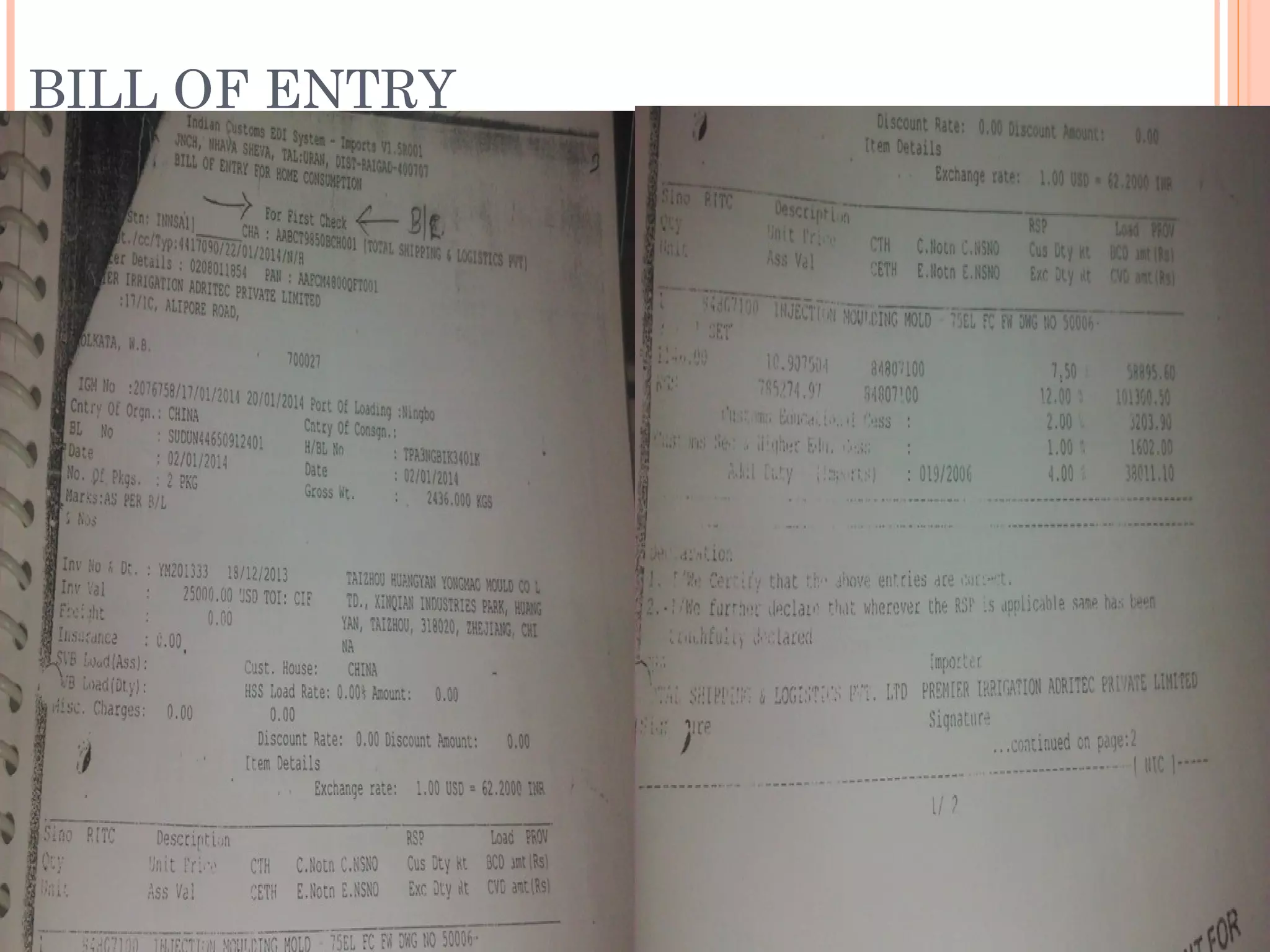
BILL OF ENTRY
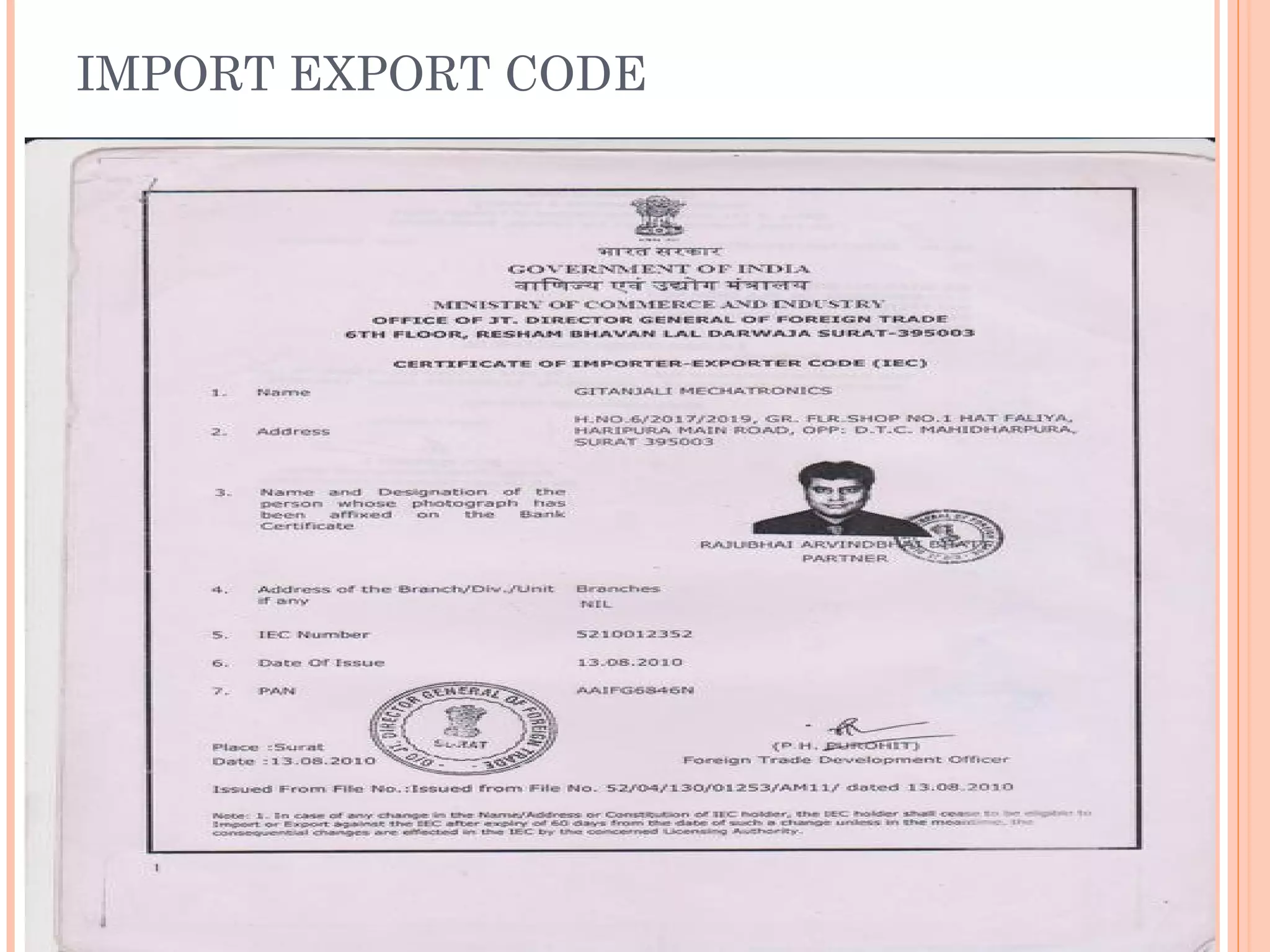
IMPORT EXPORT CODE
THANK YOU

Import export documentation

  • 1.
    NAME : RAVISINHA (MBALS015015) AMIR KHAN (MBALS015013) COURSE : MBA IN LOGISTICS AND SUPPLY CHAIN MANAGEMENT SUBJECT : GLOBAL TRADE AND PRACTISE TOPIC : IMPORT AND EXPORT DOCUMENTATION UNDER GUIDANCE : DR RAVINDRA GUPTA SIR
  • 2.
  • 3.
    IMPORT Import trade refersto the purchase of goods from the foreign country. The procedure for import trade differs from country to country, depending upon the import policy, the statutory requirements and customs of different countries. In almost all the countries of the world import trade is controlled by the government .
  • 4.
    IMPORT PROCEDURE  TRADEENQUIRY  PROCUEMENT OF IMPORT LICENCE  OBTAINING FOREGIN EXCHANGE  DISPATCHING A LETTER OF CREDIT  OBTAINING NECESSARY DOCUMENTS  CUSTOMS FORMALITIES AND CLEARING OF GOODS  MAKING THE PAYMENT  CLOSING THE TRANSCATION
  • 5.
    1.TRADE ENQUIRY  Anenquiry is a written request from the intending buyer or its agent for information regarding the price and terms on which the exporter and terms on which the exporter will be able to supply goods.
  • 6.
    2.PROCUREMENT OF IMPORT LICENCE A person or a firm cannot import goods into India without a valid import license.  An import license may be either general license or specific license.  Under general license goods can be imported from any country.  Individual license authorizes to import only from specific countries.
  • 7.
    FOR THE PURPOSEOF ISSUING LICENSE, THE IMPORTERS ARE DIVIDED INTO THREE CATEGORIES  Established Importer  Actual users  Registered Exporter
  • 8.
    Established Importer If theperson imported goods of the class in which he is interested during the basic period prescribed for such class, he is treated as an established importer. Actual user If the person[importer]import goods for his own use in industrial manufacturing process is called actual users. Registered exporter Registered exporter importing against exports made under a scheme of export promotion and others have to obtain license from the chief controller of exports and imports. Open General Licence List[O.G.L] The Government issues from time to time a list of commodities and products which can be imported obtaining a general permission only. This is called open General Licence List.
  • 9.
    3.OBTAINING FOREIGN EXCHANGE  Importerhas to make payment for imports in the currency of exporting country.  The foreign exchange reserves of any country are controlled by Government and are released through its central bank.  In India, the exchange control department of Reserves Bank of India deals with the foreign exchange.
  • 10.
    4.DISPACTCHING A LETTEROF CREDIT Exporter wants to be sure that there is no risk of non-payment. Usually for this purpose he asks the importer to send a letter of credit to him. A letter of credit is popularly known as L/C.
  • 11.
    5.OBTAINING NECESSARY DOCUMENTS  Onthe receipt of letter of credit the exporter arrange for shipment of goods and sends an advice note to the importer immediately after the shipment of goods.  The exporter then draws a bill of exchange on the importer for the invoice value of goods.  The shipping documents such as the bill of lading, invoice insurance policy, certificate or origin, customer invoice etc. also attached to the bill of exchange.
  • 12.
    6.CUSTOM FORMALITIES AND CLEARINGOF GOODS  After receiving documents of title of the goods, the importers only concern is to take the delivery of goods when the ship arrive at the port and to bring them to his own place of business.
  • 13.
    7.MAKING THE PAYMENT The mode and time of making the payment is determined according to the terms and conditions as agreed to earlier between the importer and exporter, usually 30 to90 days are allowed to the importer for making the payment of D/A and D/P bills.
  • 14.
    8.CLOSING THE TRANSACTION Laststep in import procedure is closing the transaction. But if he is not satisfied with the quality of goods he will write to the exporter and settle the matters. Incase the goods have been damaged in transit the insurance company will pay him the compensation under an advice to the exporters.
  • 15.
  • 16.
    OBJECTIVES  What arethe important steps in export transaction  „ What are the standardized and aligned pre-shipment documents  „ What are the documents related to goods  „ What are the certificates related to shipment
  • 17.
    TOPIC  „What arethe documents related to payment  What are the documents related to inspection  What are the documents related to excisable goods  What are the documents related to exchange regulation
  • 18.
    INTRODUCTION  The exportingactivity involves several commercial and regulatory procedures. These procedure also involve considerable documentation requirements. The export documentation involves the preparation of the specified number of copies of the prescribed documents pertaining to the different procedures.
  • 19.
    PRELIMINARIES STEPS  IECnumber the IEC numbers are normally allotted by the regional licensing authorities.  Membership cum registration: membership of certain bodies will help the exporters in a number of ways  Inquiry and offer: An inquiry is a request from a prospective importer to be informed of the terms and conditions of sale.  Confirmation of order: Once the negotiation are completed and conditions are acceptable to the buyer and seller, the buyer may place and order with the exporter.  Packing and marketing: once the goods are ready, they are packed and marked properly.  Export license: The exports of some items are banned and of some items controlled by means of licenses, though many items are permitted to be exported freely.  „ Finance: If the exporter require pre-shipment financial assistance, he should take the necessary steps to obtain it.
  • 20.
     Production/procurement ofgoods :Once the order is confirmed, the exporter should take necessary steps to ensure the timely availability of the goods of the specifications required and execute the export order promptly.  Shipping space : As soon as the export order is confirmed, the exporter should contract the shipping companies which have sailings for the port to which goods have to be sent and book the required shipping space.
  • 21.
    CUSTOMS FORMALITIES  Goodsmay be shipped out of India only after Customs clearance has been obtained.  Following documents to the customs authorities,  Shipping bill  Declaration regarding truth or statement made in the shipping bill  Invoice  SDF  Export licence  Quality control inspection certificate  Certificate of origin
  • 22.
    EXCHANGE CONTROL FORMALITIES  Anexporter, who has sent goods outside the country, has the obligation to satisfy the Reserve Bank of India that he has received payment from his overseas buyer. Make a declaration on the prescribed form to the Collector of Customs that foreign exchange, representing the full export value of goods, has been or will be disposed of in the manner and within the period specified by the RBI  Negotiate all shipping documents, including those relating to sales on consignment basis, through authorized dealers. Receive payment by an approved method„ Surrender the foreign exchange received from exports to the exchange control authority through authorized dealers.
  • 23.
    SHIPPING THE GOODS Goods may be exported to foreign by sea, air, post, land or river.  Shipping by sea: To obtain the permission of the port authorities for the movement of goods into the port, it is necessary to present the cart ticket to the gate warden/inspector/keeper at the port gate.  Shipping By Air : Shipping by air has become popular for such products as commodities which are perishable and seasonal or high in cost but low in bulk.  Shipping By Post : Shipping of goods may be effected by post, subject to the foreign trade and foreign exchange regulations of the country.  Shipping By Land : The procedure for the export of excisable goods by land to countries like Afghanistan is, by and large, similar to the one laid down for export by sea.
  • 24.
    NEGOTIATION OF DOCUMENTS  Aftershipping the goods, the exporter should arrange to obtain payment for the exports by negotiating the relevant documents through the bank.
  • 25.
    EXPORT INCENTIVES  Ifthe exporter is entitled to any export incentives, he should take the necessary steps to realize it (them).
  • 26.
    PRINCIPAL EXPORT DOCUMENTS  Exportlicence  Quality control inspection certificate  Certificate of origin  Letter of credit  ARE-1  Contract order  Packing list  MSDS  Catalogue  Literature
  • 27.
    AUXILIARY DOCUMENTS  Performainvoice  Intimation for inspection  Shipping instructions  Insurance declaration  Shipping order  Mate receipt  Application for certificate of origin  Letter to the bank for collection/negotiation of documents.
  • 28.
    REGULATORY DOCUMENTS  Gatepass-1/gate pass-2 – prescribed by Central Excise Authorities  AR4/AR4A form - prescribed by Central Excise Authorities  Shipping Bill/Bill of Export – prescribed by Central Excise Authorities  Export Application/Dock Challan- Prescribed by Port Trust.  Receipt for payment of Port Charges Vehicle Ticket  Exchange Control Declaration-Prescribed by RBI GR/PP Forms  Freight Payment Certificate  Insurance Premium Payment Certificate
  • 29.
    THANK YOU FORYOUR VALUEABLE TIME ON PROCEDURE LETS PROCEED TO DOCUMENTATION
  • 37.
  • 38.
  • 39.