HYPOTHYROIDSM
DEFINITION
 It is a syndrome characterised by the
clinical and biochemical
manifestations of thyroid hormone
deficiency in the target tissues of
thyroid hormone.
 Hypothyroidsm is a graded
phenomenon ranges from subclinical
hypothyroidsm to myxedema coma.
HISTORY
 GULL (1874) – Defined hypothyroidsm as clinical
syndrome (myxedema)
 Murray (1891) – cured myxedema by hypodermic
inj of sheep thyroid extract
 Kendall (1914) – isolated thyroxine
 Harrington (1926) – identified constitution of
thyroxine and synthesize it
 1960s – levothyroxine sodium used for treatment
HYPOTHYROIDISM
 Iodine deficiency remains a common cause
of hypothyroidism worldwide.
 In areas of iodine sufficiency, autoimmune
disease (Hashimoto’s thyroiditis) and
iatrogenic causes (treatment of
hyperthyroidism) are most common
GOITROUS HYPOTHYROIDISM
 Associated with enlargement of
thyroid
◦ Hashimoto thyroiditis
◦ Iodine deficiency
◦ Drugs (lithium, iodides, p-aminosalicylic
acid)
◦ Congenital biosynthetic defect
(dyshormonogenetic goiter) (rare)
CONGENITAL
HYPOTHYROIDISM
 transient, especially if the mother has TSH-R blocking antibodies or
has received antithyroid drugs
 Neonatal hypothyroidism is due to
◦ thyroid gland dysgenesis in 80–85%,
◦ inborn errors of thyroid hormone synthesis in 10–15%(dyshormonogenetic
goiter)
◦ TSH-R antibody-mediated in 5% of affected newborns.
 The developmental abnormalities are twice as common in girls.
 Transplacental passage of maternal thyroid hormone occurs
before the fetal thyroid gland begins to function and provides
partial hormone support to a fetus with congenital
hypothyroidism
CONGENITAL
HYPOTHYROIDISM
CONGENITAL HYPOTHYROIDISM
Clinical Manifestations
 appear normal at birth,
 prolonged jaundice, feeding problems,
 hypotonia, enlarged tongue,
 delayed bone maturation, and umbilical hernia.
 permanent neurologic damage results if treatment
is delayed.
 Typicalfeatures of adult hypothyroidism may also
be present
 Other congenital malformations, especially cardiac,
are four times more common in congenital
hypothyroidism.
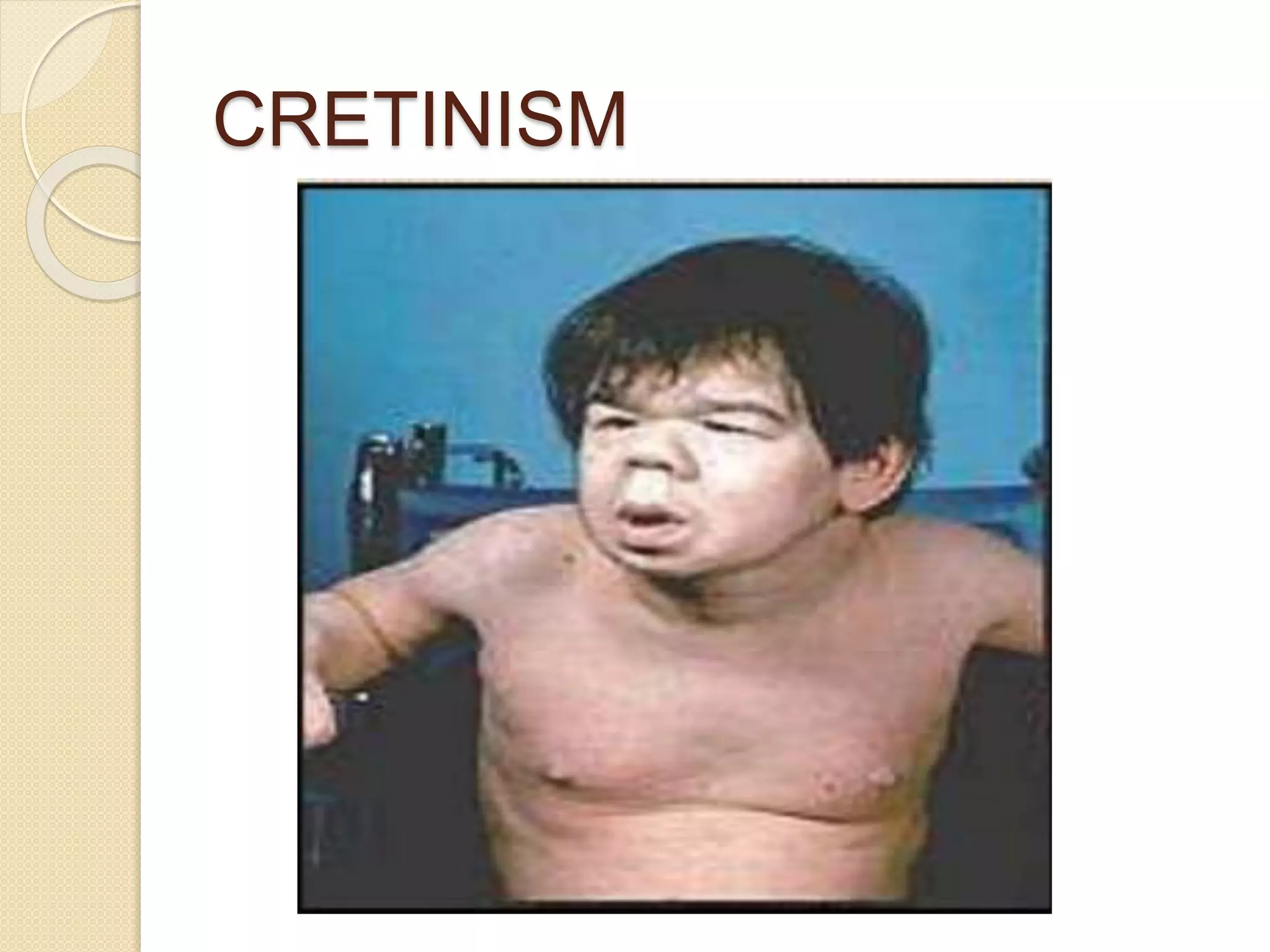
CRETINISM
 Cretinism: (from the French chrétien, meaning
“Christian” or “Christlike,” mentally retarded as to
be incapable of sinning)
◦ hypothyroidism that develops in infancy or
early childhood
◦ mental and growth retardation
◦ coarse facial features, a protruding tongue, and
umbilical hernia.
◦ often born to mothers with iodine deficiency
◦ Concomitant selenium deficiency may also
contribute to the neurologic manifestations
CRETINISM
CONGENITAL HYPOTHYROIDISM
Diagnosis and Treatment
 Neonatal screening programs measurement of
TSH or T4 levels in heel-prick blood specimens.
 T4 requirements are relatively great during the
first year of life (dose of 10–15 μg/kg per day,
and titrated according to tsh)
 Early treatment with T4 results in normal IQ
levels
AUTOIMMUNE
HYPOTHYROIDISM
 -Hashimoto’s,or goitrous thyroiditis
 -Atrophic thyroiditis.
 Because the autoimmune process gradually reduces
thyroid function, there is a phase of compensation
when normal thyroid hormone levels are maintained by
a rise in TSH-subclinical hypothyroidism.
 Later, unbound T4 levels fall and TSH levels rise further;
symptoms become more readily apparent at this stage
(usually tsh >10 mIU/l), which is referred to as clinical
hypothyroidism or overt hypothyroidism.
Hashimoto thyroiditis/
struma lymphomatosa
 An autoimmune disease that results in destruction
of the thyroid gland and gradual and progressive
thyroid failure
 Between 45 and 65 years
 Female predominance of 10 : 1 to 20 : 1. Also in
children
 Circulating autoantibodies:
 Antimicrosomal,
 Antithyroid peroxidase, and
 Antithyroglobulin antibodies
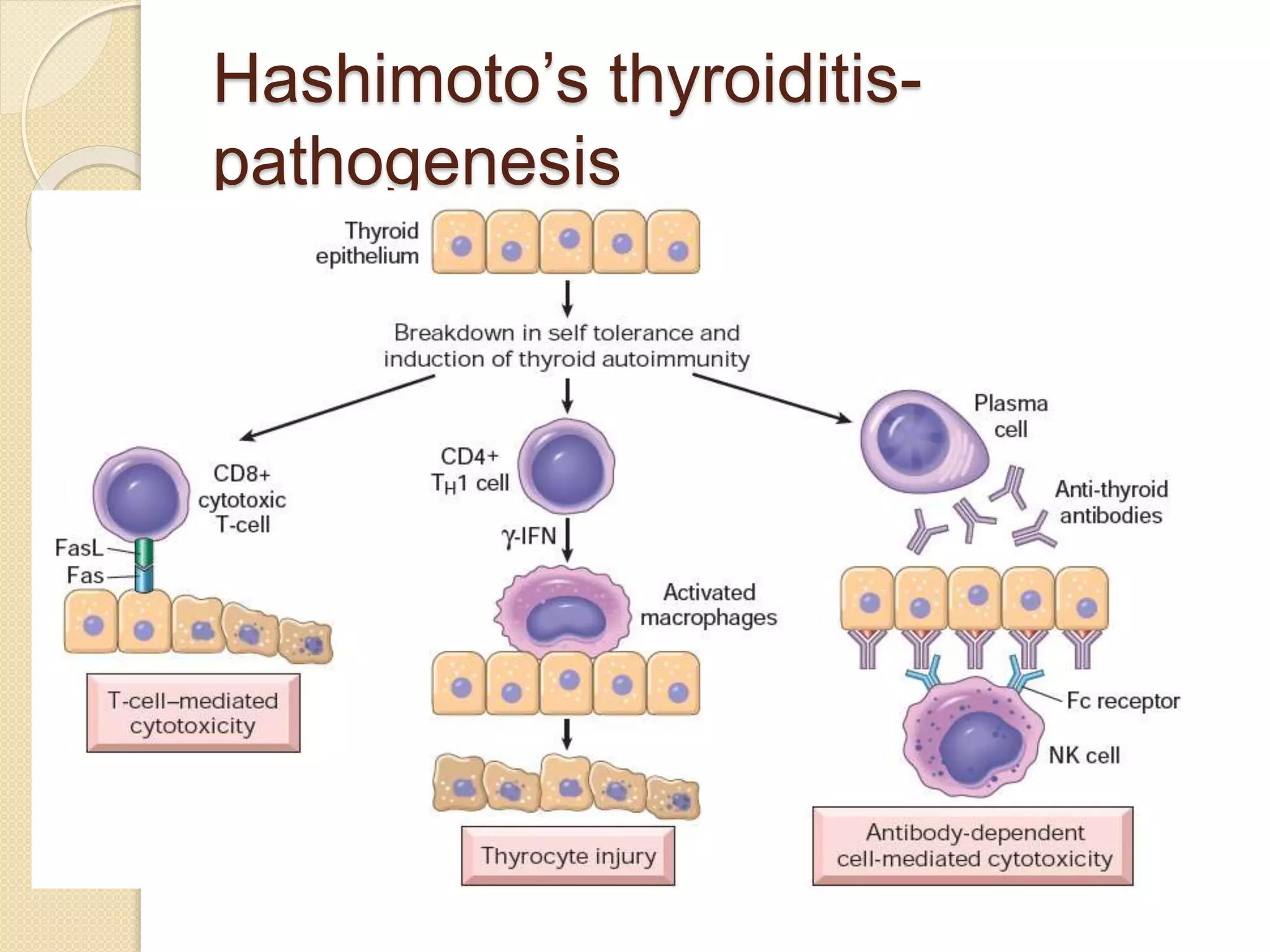
 Abnormalities of regulatory T cells (Tregs), or exposure
of normally sequestered thyroid antigens
 The thyroid follicles are atrophic and are lined by
epithelial cells distinguished by the presence of
abundant eosinophilic, granular cytoplasm, termed
hürthle cells in conjunction with a heterogeneous
population of lymphocytes
RISK FACTORS FOR AUTOIMMUNE
HYPOTHYROIDISM
◦ A high iodine intake
◦ decreased exposure to microorganisms in childhood
◦ HLA-DR3, -DR4, and -DR5 in Caucasians
◦ CTLA-4, a T cell–regulatory gene
◦ Protein tyrosine phosphatase-22 (PTPN22),
◦ Down’s syndrome(A gene on chromosome 21)
 Female preponderance of thyroid autoimmunity due to
◦ sex steroid effects on the immune response,
◦ X chromosome–related genetic factor(Turner’s syndrome)
Hashimoto’s thyroiditis-
pathogenesis
Clinical Manifestations
Hashimoto’s thyroiditis
 Insidious onset
 Painless enlargement of the thyroid
 Goiter -irregular and firm
 Complicated hashimoto’s
thyroiditis:associated with pain
 Patient may become aware of symptoms
only when euthyroidism is restored
 Hypothyroidism develops gradually
preceded by transient thyrotoxicosis caused
by disruption of thyroid follicles, leading to
release of thyroid hormones
Clinical Manifestations
atrophic thyroiditis
 Dry skin
 decreased sweating,
 thinning of the epidermis,and
 Increased dermal glycosaminoglycan content traps
water, giving rise to skin thickening without pitting
(myxedema).
 Typical features include a puffy face with edematous
eyelids and nonpitting pretibial edema
 pallor
 yellow tinge to the skin due to carotene accumulation.
 Nail growth is retarded
 hair is dry, brittle, difficult to manage, and falls out easily
 diffuse alopecia
 thinning of the outer third of the eyebrows
NEUROLOGIC PROBLEMS
 Carpal tunnel and other entrapment
syndromes
 Impairment of muscle function with
stiffness, cramps, and pain.
 Slow relaxation of tendon reflexes
 Pseudomyotonia.
 Memory and concentration are impaired.
 Reversible cerebellar ataxia,
 Dementia,
 Psychosis, and
 Myxedema coma
CLINICAL PRESENTATION-
SKIN
 PUFFY FACE, HANDS, FEET- NON PITTING
 ENLARGED TONGUE
 COOL PERIPHERY
 DRY COARSE SKIN
 HAIR- DRY, BRITTLE, FALLS OUT
 MADAROSIS- NOT SPECIFIC
 BRITTLE NAILS
 VITILIGO
 MYXEDEMA- ACCUMULATION OF
HYGROSCOPIC GLYCOSAMINOGLYCAN
 PRETIBIAL MYXEDEMA- GRAVES’
DISEASE
RESPIRATORY SYSTEM
 PLEURAL EFFUSION
 ALVEOLAR HYPOVENTILATION
 OBSTRUCTIVE SLEEP APNOEA
GASTROINTESTINAL
 WEIGHT GAIN, REDUCED
APPETITE
 CONSTIPATION
 MYXEDEMA MEGACOLON
 MYXEDEMA ILEUS
 CELIAC DISEASE, PERNICIOUS
ANAEMIA
 ASCITES- UNUSUAL
CENTRAL AND PERIPHERAL
NERVOUS SYSTEM
 DEMENTIA
 MYXEDEMA MADNESS
 SEIZURES
 SLURRED SPEECH, HOARSENESS
 CEREBELLAR ATAXIA
 TINGLING AND NUMBNESS
 CARPAL TUNNEL SYNDROME
 HUNG UP REFLEX
 HASHIMOTO’S ENCEPHALOPATHY
HASHIMOTO
ENCEPHALOPATHY
 STEROID RESPONSIVE
 TPO ab POSITIVE
 MYOCLONUS
 SLOW WAVE ACTIVITY IN EEG
Skeletal system
 GROWTH FAILURE
 EPIPHYSEAL DYSGENESIS
 CALCIUM SLIGHTLY INCREASED
RENAL
 DECREASED RENAL FLOW
 RENAL PARAMETERS NORMAL
 SIADH
 MILD PROTEINURIA
HEMATOPOIETIC SYSTEM
 NORMOCYTIC/ NORMOCHROMIC
 MACROCYTIC
 MICROCYTIC/ HYPOCHROMIC
 DECREASED FACTOR VIII, IX
REPRODUCTIVE FUNCTION
 DELAYED PUBERTY
 MENSTRUAL IRREGULARITY
 REDUCED FERTILITY
 PRETERM, SPONTANEOUS
ABORTIONS
 PRIMARY OVARIAN FAILURE
 ERECTILE DYSFUNCTION
MYXEDEMA
 Hypothyroidism developing in the older child or adult.
 Reduced cardiac output probably contributes to shortness of
breath and decreased exercise capacity,
 Hypothyroidism promotes an atherogenic profile—an
increase in total cholesterol and LDL levels
 Accumulation of matrix substances, such as
glycosaminoglycans and hyaluronic acid, in skin,
subcutaneous tissue, and a number of visceral sites. 
◦ Nonpitting edema,
◦ Broadening and coarsening of facial features,
◦ Enlargement of the tongue, and
◦ Deepening of the voice.
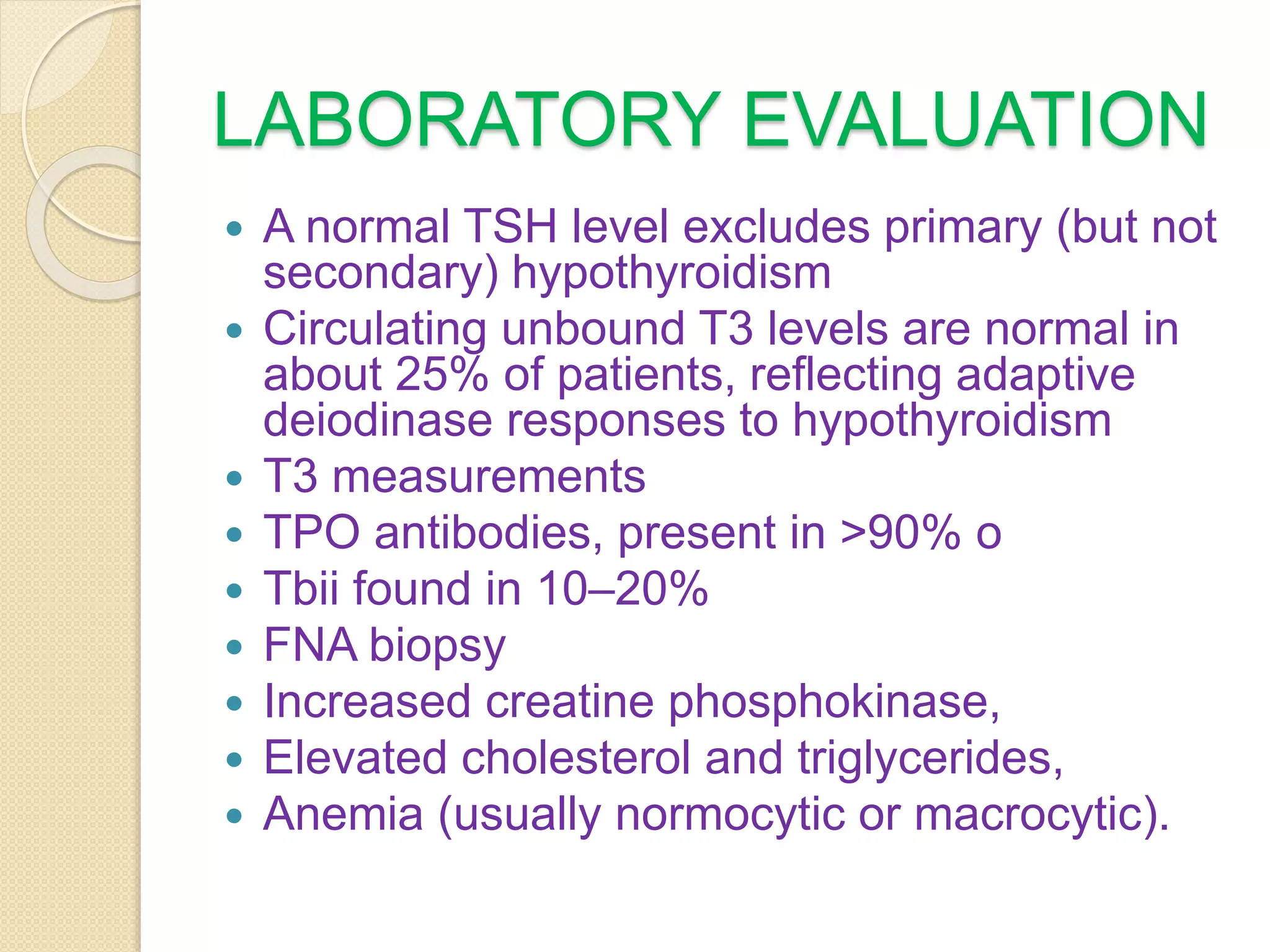
LABORATORY EVALUATION
 A normal TSH level excludes primary (but not
secondary) hypothyroidism
 Circulating unbound T3 levels are normal in
about 25% of patients, reflecting adaptive
deiodinase responses to hypothyroidism
 T3 measurements
 TPO antibodies, present in >90% o
 Tbii found in 10–20%
 FNA biopsy
 Increased creatine phosphokinase,
 Elevated cholesterol and triglycerides,
 Anemia (usually normocytic or macrocytic).
SUBCLINICAL
HYPOTHYROIDISM
 Refers to biochemical evidence of thyroid hormone
deficiency in patients who have few or no apparent
clinical features of hypothyroidism.
 4–10% of the general population but increases to
20% in women older than age 50
 Levothyroxine is recommended if the patient is A
woman who wishes to conceive or is pregnant, or
when TSH levels are above 10 miu/L.
Thyroid Preparations
 Synthetic(levothyroxine, liothyronine, liotrix) or of
animal origin (desiccated thyroid).
 Liotrix :more expensive;mixture of thyroxine and
liothyronine
 Synthetic levothyroxine is the preparation of choice
◦ Stability
◦ Content uniformity,
◦ Low cost,
◦ Lack of allergenic foreign protein,
◦ Easy laboratory measurement of serum levels,
and
◦ Long half-life (7 days), which permits once-daily
administration
 Although liothyronine is three to four times more
potent than levothyroxine, it is not recommended
for routine replacement because of
◦ shorter half-life (24 hours), which requires
multiple daily doses;
◦ Its higher cost; and
◦ The greater difficulty of monitoring its adequacy
of replacement by conventional laboratory tests.
◦ Greater risk of cardiotoxicity, avoided in patients
with cardiac disease.
◦ Best used for shortterm suppression of tsh.
 Desiccated thyroid:disadvantages:
◦ Protein antigenicity,
◦ Product instability,
◦ Variable hormone concentrations, and
◦ Difficulty in laboratory monitoring far outweigh the advantage of
lower cost
 Equi-effective doses are 100 mg of desiccated thyroid,100 mcg of
levothyroxine, and 37.5 mcg of liothyronine
 The shelf life of synthetic hormone preparations is about 2 years,
 Particularly if they are stored in dark bottles to minimize
spontaneous deiodination.
 The shelf life of desiccated thyroid is not known with certainty, but its
potency is better preserved if it is kept dry
 Infants and children require more T4 per kilogram of body weight
than adults.
 Average dosage for an infant 1–6 months of age is 10–15 mcg/kg/d,
whereas the average dosage for an adult is about 1.7 mcg/kg/d.
 Older adults (> 65 years of age) may require less thyroxine for
replacement
 Certain foods (eg, bran, soy, coffee) and drugs can impair its
absorption,
◦ Thyroxine should be administered on an empty stomach
(eg, 30 minutes before meals or 1 hour after meals or at
bedtime).
 Tsh maintained within an optimal range of 0.5–2.5 mu/L. It
takes 6–8 weeks after starting a given dose of thyroxine to
reach steady-state levels in the bloodstream
 In older patients, the heart is very sensitive to the level of
circulating thyroxine, and if angina pectoris or cardiac
arrhythmia develops, it is essential to stop or reduce the dose
of thyroxine immediately
 Dosage of 12.5–25 mcg/d for 2 weeks, increasing the
daily dose by 12.5–25 mcg every 2 weeks until
euthyroidism or drug toxicity is observed
 Chronic overtreatment with T 4 ,particularly in elderly
patients, can increase the risk of atrial fibrillation and
accelerated osteoporosis
 If coronary artery surgery is indicated, it should be
done first, prior to correction of the myxedema by
thyroxine administration.
TREATMENT Hypothyroidism
CLINICAL HYPOTHYROIDISM
 If there is no residual thyroid function, the daily
replacement dose of levothyroxine is usually 1.6
μg/kg body weight (typically 100–150 μg), ideally
taken at least 30 min before breakfast.
 If patients develop hypothyroidism after the
treatment of graves’ disease, there is often
underlying autonomous function, necessitating
lower replacement doses (typically 75–125 μg/d).
 Adult patients under 60 years old without evidence
of heart disease may be started on 50–100 μg
levothyroxine (T4) daily.
 Tsh responses should be measured about 2
months after instituting treatment or after any
subsequent change in levothyroxine dosage.
 Patients may not experience full relief from
symptoms until 3–6 months after normal tsh levels
are restored.
 Adjustment of levothyroxine dosage is made in
12.5- or 25-μg increments if the TSH is high;
 Patients with a suppressed TSH of any cause,
including T4 overtreatment, have an increased risk
of atrial fibrillation and reduced bone density.
 Once full replacement is achieved and tsh levels
are stable, follow-up measurement of tsh is
recommended at annual intervals and may be
extended to every 2–3 years if a normal tsh is
maintained over several years.
 In patients of normal body weight who are
taking ≥200 μg of levothyroxine per day, an
elevated tsh level is often a sign of poor
adherence to treatment.
 Because t4 has a long half-life (7 days),
patients who miss a dose can be advised to
take two doses of the skipped tablets at
once.
Other causes of increased
levothyroxine requirements
 malabsorption(e.g., celiac disease, small-bowel surgery),
 estrogen or selective estrogen receptor modulator therapy,
 ingestion with a meal,
 drugs that interfere with T4 absorption or metabolism such as
◦ cholestyramine,
◦ ferrous sulfate,
◦ calcium supplements,
◦ proton pump inhibitors,
◦ lovastatin,
◦ aluminum hydroxide,
◦ rifampicin,
◦ amiodarone,
◦ carbamazepine,
◦ phenytoin, and
◦ tyrosine kinase inhibitors.

Hypothyroidism.pptx

  • 1.
  • 2.
    DEFINITION  It isa syndrome characterised by the clinical and biochemical manifestations of thyroid hormone deficiency in the target tissues of thyroid hormone.  Hypothyroidsm is a graded phenomenon ranges from subclinical hypothyroidsm to myxedema coma.
  • 3.
    HISTORY  GULL (1874)– Defined hypothyroidsm as clinical syndrome (myxedema)  Murray (1891) – cured myxedema by hypodermic inj of sheep thyroid extract  Kendall (1914) – isolated thyroxine  Harrington (1926) – identified constitution of thyroxine and synthesize it  1960s – levothyroxine sodium used for treatment
  • 4.
    HYPOTHYROIDISM  Iodine deficiencyremains a common cause of hypothyroidism worldwide.  In areas of iodine sufficiency, autoimmune disease (Hashimoto’s thyroiditis) and iatrogenic causes (treatment of hyperthyroidism) are most common
  • 7.
    GOITROUS HYPOTHYROIDISM  Associatedwith enlargement of thyroid ◦ Hashimoto thyroiditis ◦ Iodine deficiency ◦ Drugs (lithium, iodides, p-aminosalicylic acid) ◦ Congenital biosynthetic defect (dyshormonogenetic goiter) (rare)
  • 8.
    CONGENITAL HYPOTHYROIDISM  transient, especiallyif the mother has TSH-R blocking antibodies or has received antithyroid drugs  Neonatal hypothyroidism is due to ◦ thyroid gland dysgenesis in 80–85%, ◦ inborn errors of thyroid hormone synthesis in 10–15%(dyshormonogenetic goiter) ◦ TSH-R antibody-mediated in 5% of affected newborns.  The developmental abnormalities are twice as common in girls.  Transplacental passage of maternal thyroid hormone occurs before the fetal thyroid gland begins to function and provides partial hormone support to a fetus with congenital hypothyroidism
  • 9.
  • 10.
    CONGENITAL HYPOTHYROIDISM Clinical Manifestations appear normal at birth,  prolonged jaundice, feeding problems,  hypotonia, enlarged tongue,  delayed bone maturation, and umbilical hernia.  permanent neurologic damage results if treatment is delayed.  Typicalfeatures of adult hypothyroidism may also be present  Other congenital malformations, especially cardiac, are four times more common in congenital hypothyroidism.
  • 11.
    CRETINISM  Cretinism: (fromthe French chrétien, meaning “Christian” or “Christlike,” mentally retarded as to be incapable of sinning) ◦ hypothyroidism that develops in infancy or early childhood ◦ mental and growth retardation ◦ coarse facial features, a protruding tongue, and umbilical hernia. ◦ often born to mothers with iodine deficiency ◦ Concomitant selenium deficiency may also contribute to the neurologic manifestations
  • 12.
  • 13.
    CONGENITAL HYPOTHYROIDISM Diagnosis andTreatment  Neonatal screening programs measurement of TSH or T4 levels in heel-prick blood specimens.  T4 requirements are relatively great during the first year of life (dose of 10–15 μg/kg per day, and titrated according to tsh)  Early treatment with T4 results in normal IQ levels
  • 14.
    AUTOIMMUNE HYPOTHYROIDISM  -Hashimoto’s,or goitrousthyroiditis  -Atrophic thyroiditis.  Because the autoimmune process gradually reduces thyroid function, there is a phase of compensation when normal thyroid hormone levels are maintained by a rise in TSH-subclinical hypothyroidism.  Later, unbound T4 levels fall and TSH levels rise further; symptoms become more readily apparent at this stage (usually tsh >10 mIU/l), which is referred to as clinical hypothyroidism or overt hypothyroidism.
  • 15.
    Hashimoto thyroiditis/ struma lymphomatosa An autoimmune disease that results in destruction of the thyroid gland and gradual and progressive thyroid failure  Between 45 and 65 years  Female predominance of 10 : 1 to 20 : 1. Also in children  Circulating autoantibodies:  Antimicrosomal,  Antithyroid peroxidase, and  Antithyroglobulin antibodies  Abnormalities of regulatory T cells (Tregs), or exposure of normally sequestered thyroid antigens  The thyroid follicles are atrophic and are lined by epithelial cells distinguished by the presence of abundant eosinophilic, granular cytoplasm, termed hürthle cells in conjunction with a heterogeneous population of lymphocytes
  • 17.
    RISK FACTORS FORAUTOIMMUNE HYPOTHYROIDISM ◦ A high iodine intake ◦ decreased exposure to microorganisms in childhood ◦ HLA-DR3, -DR4, and -DR5 in Caucasians ◦ CTLA-4, a T cell–regulatory gene ◦ Protein tyrosine phosphatase-22 (PTPN22), ◦ Down’s syndrome(A gene on chromosome 21)  Female preponderance of thyroid autoimmunity due to ◦ sex steroid effects on the immune response, ◦ X chromosome–related genetic factor(Turner’s syndrome)
  • 18.
  • 19.
    Clinical Manifestations Hashimoto’s thyroiditis Insidious onset  Painless enlargement of the thyroid  Goiter -irregular and firm  Complicated hashimoto’s thyroiditis:associated with pain  Patient may become aware of symptoms only when euthyroidism is restored  Hypothyroidism develops gradually preceded by transient thyrotoxicosis caused by disruption of thyroid follicles, leading to release of thyroid hormones
  • 21.
    Clinical Manifestations atrophic thyroiditis Dry skin  decreased sweating,  thinning of the epidermis,and  Increased dermal glycosaminoglycan content traps water, giving rise to skin thickening without pitting (myxedema).  Typical features include a puffy face with edematous eyelids and nonpitting pretibial edema  pallor  yellow tinge to the skin due to carotene accumulation.  Nail growth is retarded  hair is dry, brittle, difficult to manage, and falls out easily  diffuse alopecia  thinning of the outer third of the eyebrows
  • 22.
    NEUROLOGIC PROBLEMS  Carpaltunnel and other entrapment syndromes  Impairment of muscle function with stiffness, cramps, and pain.  Slow relaxation of tendon reflexes  Pseudomyotonia.  Memory and concentration are impaired.  Reversible cerebellar ataxia,  Dementia,  Psychosis, and  Myxedema coma
  • 23.
    CLINICAL PRESENTATION- SKIN  PUFFYFACE, HANDS, FEET- NON PITTING  ENLARGED TONGUE  COOL PERIPHERY  DRY COARSE SKIN  HAIR- DRY, BRITTLE, FALLS OUT  MADAROSIS- NOT SPECIFIC  BRITTLE NAILS  VITILIGO  MYXEDEMA- ACCUMULATION OF HYGROSCOPIC GLYCOSAMINOGLYCAN  PRETIBIAL MYXEDEMA- GRAVES’ DISEASE
  • 24.
    RESPIRATORY SYSTEM  PLEURALEFFUSION  ALVEOLAR HYPOVENTILATION  OBSTRUCTIVE SLEEP APNOEA
  • 25.
    GASTROINTESTINAL  WEIGHT GAIN,REDUCED APPETITE  CONSTIPATION  MYXEDEMA MEGACOLON  MYXEDEMA ILEUS  CELIAC DISEASE, PERNICIOUS ANAEMIA  ASCITES- UNUSUAL
  • 26.
    CENTRAL AND PERIPHERAL NERVOUSSYSTEM  DEMENTIA  MYXEDEMA MADNESS  SEIZURES  SLURRED SPEECH, HOARSENESS  CEREBELLAR ATAXIA  TINGLING AND NUMBNESS  CARPAL TUNNEL SYNDROME  HUNG UP REFLEX  HASHIMOTO’S ENCEPHALOPATHY
  • 27.
    HASHIMOTO ENCEPHALOPATHY  STEROID RESPONSIVE TPO ab POSITIVE  MYOCLONUS  SLOW WAVE ACTIVITY IN EEG
  • 28.
    Skeletal system  GROWTHFAILURE  EPIPHYSEAL DYSGENESIS  CALCIUM SLIGHTLY INCREASED
  • 29.
    RENAL  DECREASED RENALFLOW  RENAL PARAMETERS NORMAL  SIADH  MILD PROTEINURIA
  • 30.
    HEMATOPOIETIC SYSTEM  NORMOCYTIC/NORMOCHROMIC  MACROCYTIC  MICROCYTIC/ HYPOCHROMIC  DECREASED FACTOR VIII, IX
  • 31.
    REPRODUCTIVE FUNCTION  DELAYEDPUBERTY  MENSTRUAL IRREGULARITY  REDUCED FERTILITY  PRETERM, SPONTANEOUS ABORTIONS  PRIMARY OVARIAN FAILURE  ERECTILE DYSFUNCTION
  • 32.
    MYXEDEMA  Hypothyroidism developingin the older child or adult.  Reduced cardiac output probably contributes to shortness of breath and decreased exercise capacity,  Hypothyroidism promotes an atherogenic profile—an increase in total cholesterol and LDL levels  Accumulation of matrix substances, such as glycosaminoglycans and hyaluronic acid, in skin, subcutaneous tissue, and a number of visceral sites.  ◦ Nonpitting edema, ◦ Broadening and coarsening of facial features, ◦ Enlargement of the tongue, and ◦ Deepening of the voice.
  • 34.
    LABORATORY EVALUATION  Anormal TSH level excludes primary (but not secondary) hypothyroidism  Circulating unbound T3 levels are normal in about 25% of patients, reflecting adaptive deiodinase responses to hypothyroidism  T3 measurements  TPO antibodies, present in >90% o  Tbii found in 10–20%  FNA biopsy  Increased creatine phosphokinase,  Elevated cholesterol and triglycerides,  Anemia (usually normocytic or macrocytic).
  • 35.
    SUBCLINICAL HYPOTHYROIDISM  Refers tobiochemical evidence of thyroid hormone deficiency in patients who have few or no apparent clinical features of hypothyroidism.  4–10% of the general population but increases to 20% in women older than age 50  Levothyroxine is recommended if the patient is A woman who wishes to conceive or is pregnant, or when TSH levels are above 10 miu/L.
  • 36.
    Thyroid Preparations  Synthetic(levothyroxine,liothyronine, liotrix) or of animal origin (desiccated thyroid).  Liotrix :more expensive;mixture of thyroxine and liothyronine  Synthetic levothyroxine is the preparation of choice ◦ Stability ◦ Content uniformity, ◦ Low cost, ◦ Lack of allergenic foreign protein, ◦ Easy laboratory measurement of serum levels, and ◦ Long half-life (7 days), which permits once-daily administration
  • 37.
     Although liothyronineis three to four times more potent than levothyroxine, it is not recommended for routine replacement because of ◦ shorter half-life (24 hours), which requires multiple daily doses; ◦ Its higher cost; and ◦ The greater difficulty of monitoring its adequacy of replacement by conventional laboratory tests. ◦ Greater risk of cardiotoxicity, avoided in patients with cardiac disease. ◦ Best used for shortterm suppression of tsh.
  • 38.
     Desiccated thyroid:disadvantages: ◦Protein antigenicity, ◦ Product instability, ◦ Variable hormone concentrations, and ◦ Difficulty in laboratory monitoring far outweigh the advantage of lower cost  Equi-effective doses are 100 mg of desiccated thyroid,100 mcg of levothyroxine, and 37.5 mcg of liothyronine  The shelf life of synthetic hormone preparations is about 2 years,  Particularly if they are stored in dark bottles to minimize spontaneous deiodination.  The shelf life of desiccated thyroid is not known with certainty, but its potency is better preserved if it is kept dry  Infants and children require more T4 per kilogram of body weight than adults.  Average dosage for an infant 1–6 months of age is 10–15 mcg/kg/d, whereas the average dosage for an adult is about 1.7 mcg/kg/d.  Older adults (> 65 years of age) may require less thyroxine for replacement
  • 39.
     Certain foods(eg, bran, soy, coffee) and drugs can impair its absorption, ◦ Thyroxine should be administered on an empty stomach (eg, 30 minutes before meals or 1 hour after meals or at bedtime).  Tsh maintained within an optimal range of 0.5–2.5 mu/L. It takes 6–8 weeks after starting a given dose of thyroxine to reach steady-state levels in the bloodstream  In older patients, the heart is very sensitive to the level of circulating thyroxine, and if angina pectoris or cardiac arrhythmia develops, it is essential to stop or reduce the dose of thyroxine immediately
  • 40.
     Dosage of12.5–25 mcg/d for 2 weeks, increasing the daily dose by 12.5–25 mcg every 2 weeks until euthyroidism or drug toxicity is observed  Chronic overtreatment with T 4 ,particularly in elderly patients, can increase the risk of atrial fibrillation and accelerated osteoporosis  If coronary artery surgery is indicated, it should be done first, prior to correction of the myxedema by thyroxine administration.
  • 41.
    TREATMENT Hypothyroidism CLINICAL HYPOTHYROIDISM If there is no residual thyroid function, the daily replacement dose of levothyroxine is usually 1.6 μg/kg body weight (typically 100–150 μg), ideally taken at least 30 min before breakfast.  If patients develop hypothyroidism after the treatment of graves’ disease, there is often underlying autonomous function, necessitating lower replacement doses (typically 75–125 μg/d).
  • 42.
     Adult patientsunder 60 years old without evidence of heart disease may be started on 50–100 μg levothyroxine (T4) daily.  Tsh responses should be measured about 2 months after instituting treatment or after any subsequent change in levothyroxine dosage.  Patients may not experience full relief from symptoms until 3–6 months after normal tsh levels are restored.
  • 43.
     Adjustment oflevothyroxine dosage is made in 12.5- or 25-μg increments if the TSH is high;  Patients with a suppressed TSH of any cause, including T4 overtreatment, have an increased risk of atrial fibrillation and reduced bone density.  Once full replacement is achieved and tsh levels are stable, follow-up measurement of tsh is recommended at annual intervals and may be extended to every 2–3 years if a normal tsh is maintained over several years.
  • 44.
     In patientsof normal body weight who are taking ≥200 μg of levothyroxine per day, an elevated tsh level is often a sign of poor adherence to treatment.  Because t4 has a long half-life (7 days), patients who miss a dose can be advised to take two doses of the skipped tablets at once.
  • 45.
    Other causes ofincreased levothyroxine requirements  malabsorption(e.g., celiac disease, small-bowel surgery),  estrogen or selective estrogen receptor modulator therapy,  ingestion with a meal,  drugs that interfere with T4 absorption or metabolism such as ◦ cholestyramine, ◦ ferrous sulfate, ◦ calcium supplements, ◦ proton pump inhibitors, ◦ lovastatin, ◦ aluminum hydroxide, ◦ rifampicin, ◦ amiodarone, ◦ carbamazepine, ◦ phenytoin, and ◦ tyrosine kinase inhibitors.