Hypocalcaemia
Amarendra B Singh
090201263
Calcium
Normal total calcium level is 8.5 -10.5mg/dl
Normal ionized Ca+2 level is 4.5 – 5.6mg/dl
Hypocalcaemia
Total calcium <8.5 mg/dL, if serum protein is
normal
OR
Ionized calcium < 4.5mg/dL
22/06/2013 Hypocalcaemia 2
Role of Mg
• Always measure serum magnesium in a
hypocalcaemic patient.
• Hypomagnesemia impairs PTH secretion
• It also causes resistance to the actions of
PTH at the level of kidney and bone
22/06/2013 Hypocalcaemia 3
22/06/2013 Hypocalcaemia 4
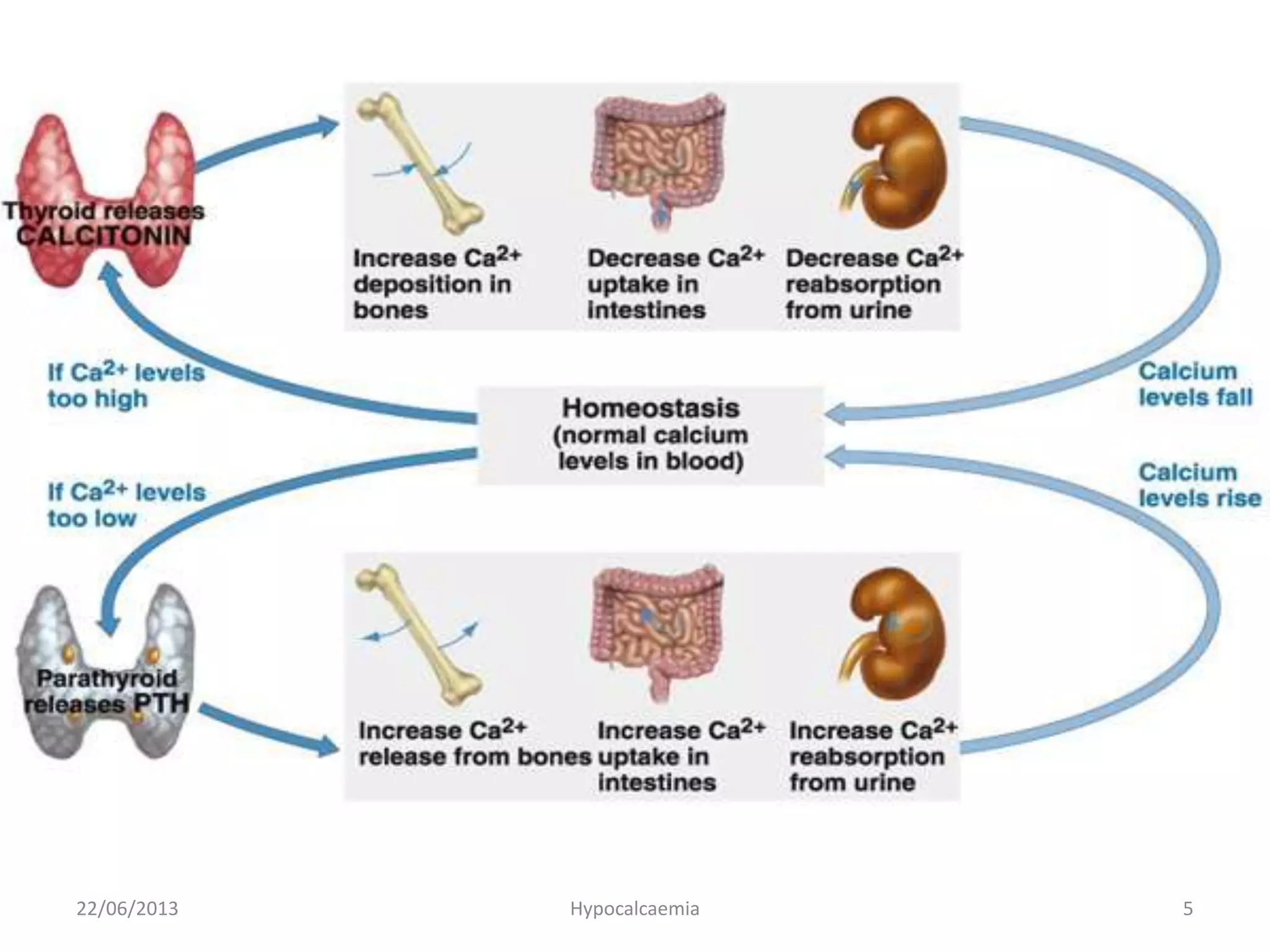
22/06/2013 Hypocalcaemia 5
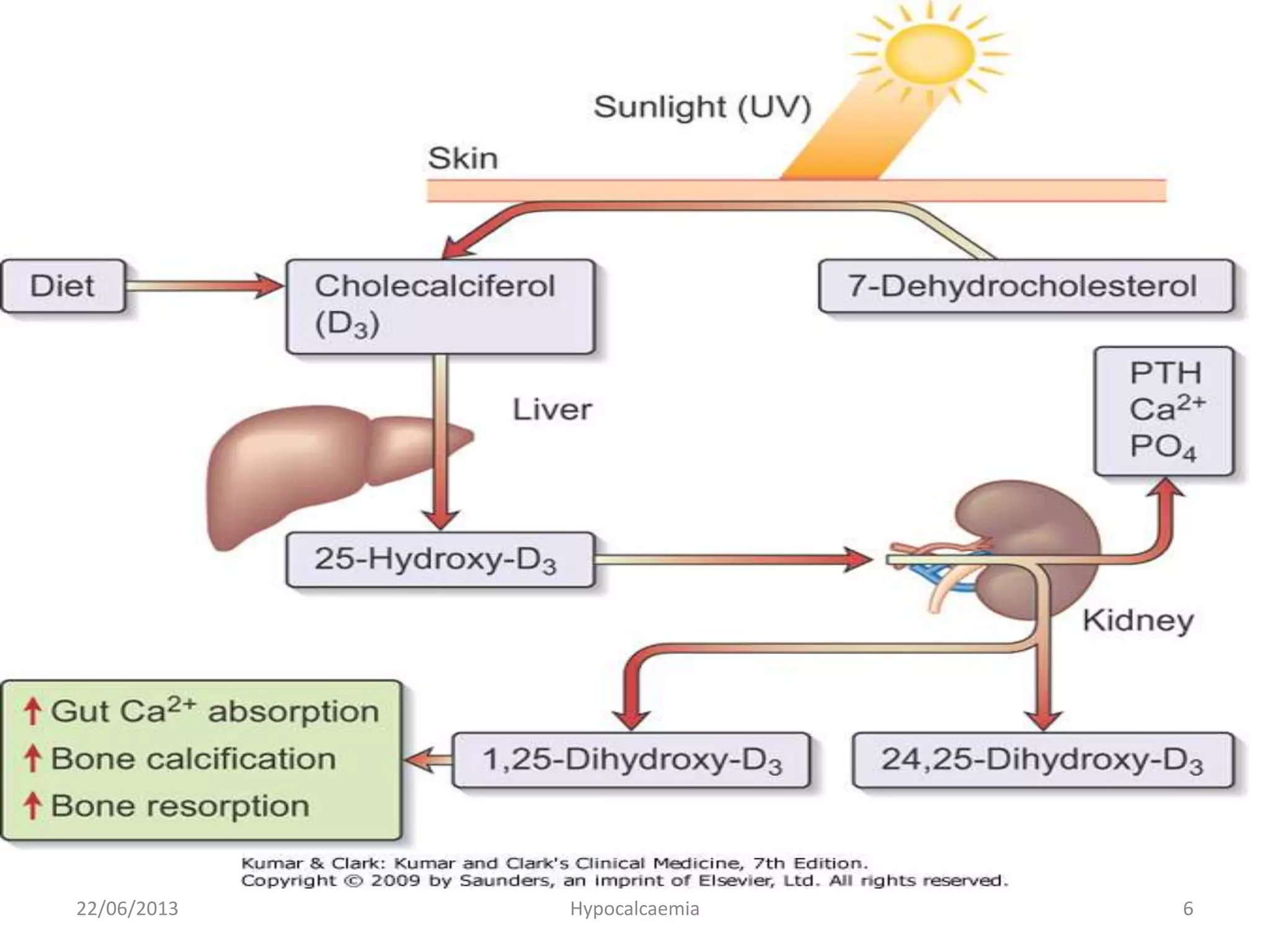
22/06/2013 Hypocalcaemia 6
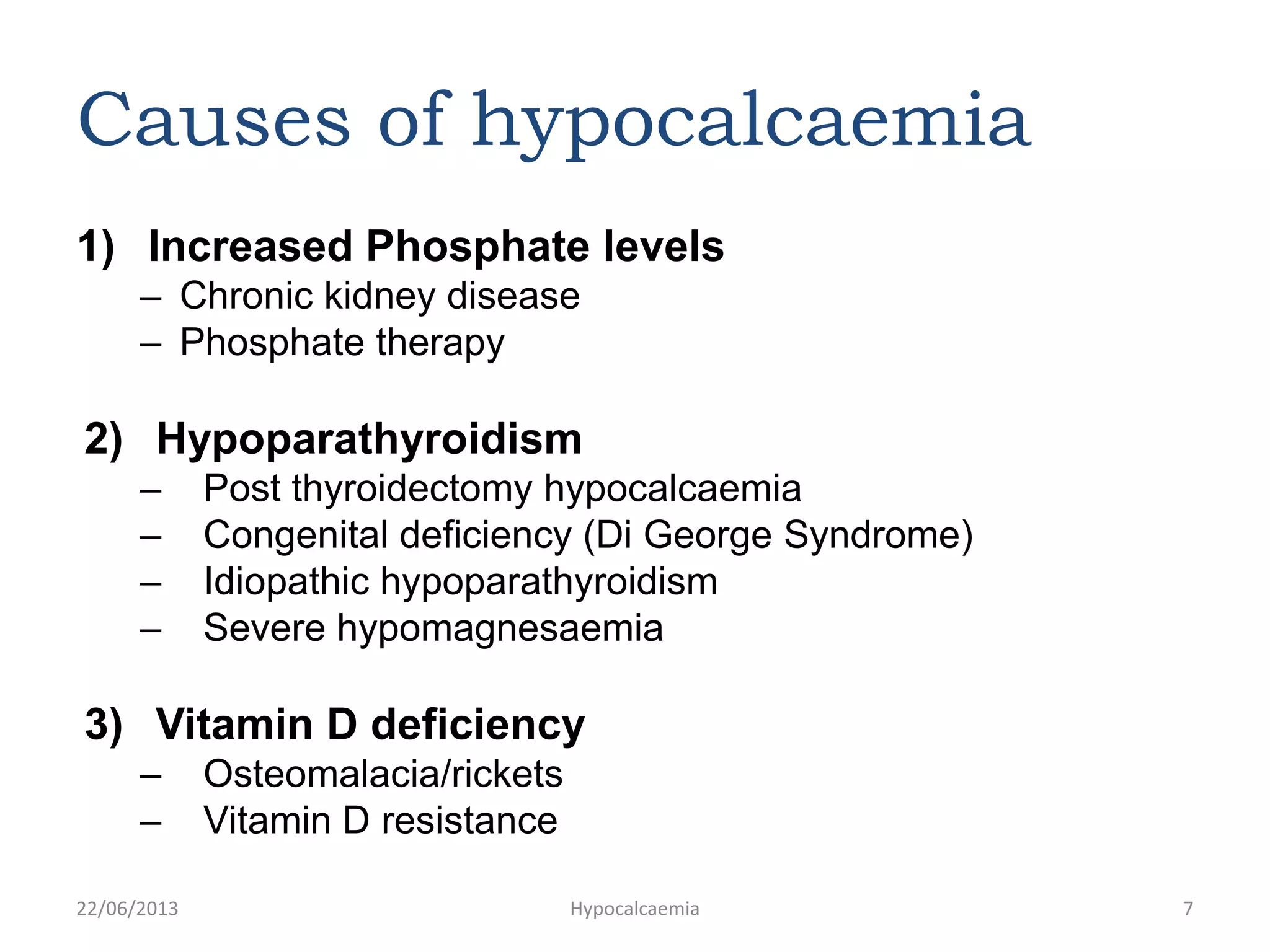
Causes of hypocalcaemia
1) Increased Phosphate levels
– Chronic kidney disease
– Phosphate therapy
2) Hypoparathyroidism
– Post thyroidectomy hypocalcaemia
– Congenital deficiency (Di George Syndrome)
– Idiopathic hypoparathyroidism
– Severe hypomagnesaemia
3) Vitamin D deficiency
– Osteomalacia/rickets
– Vitamin D resistance
22/06/2013 Hypocalcaemia 7
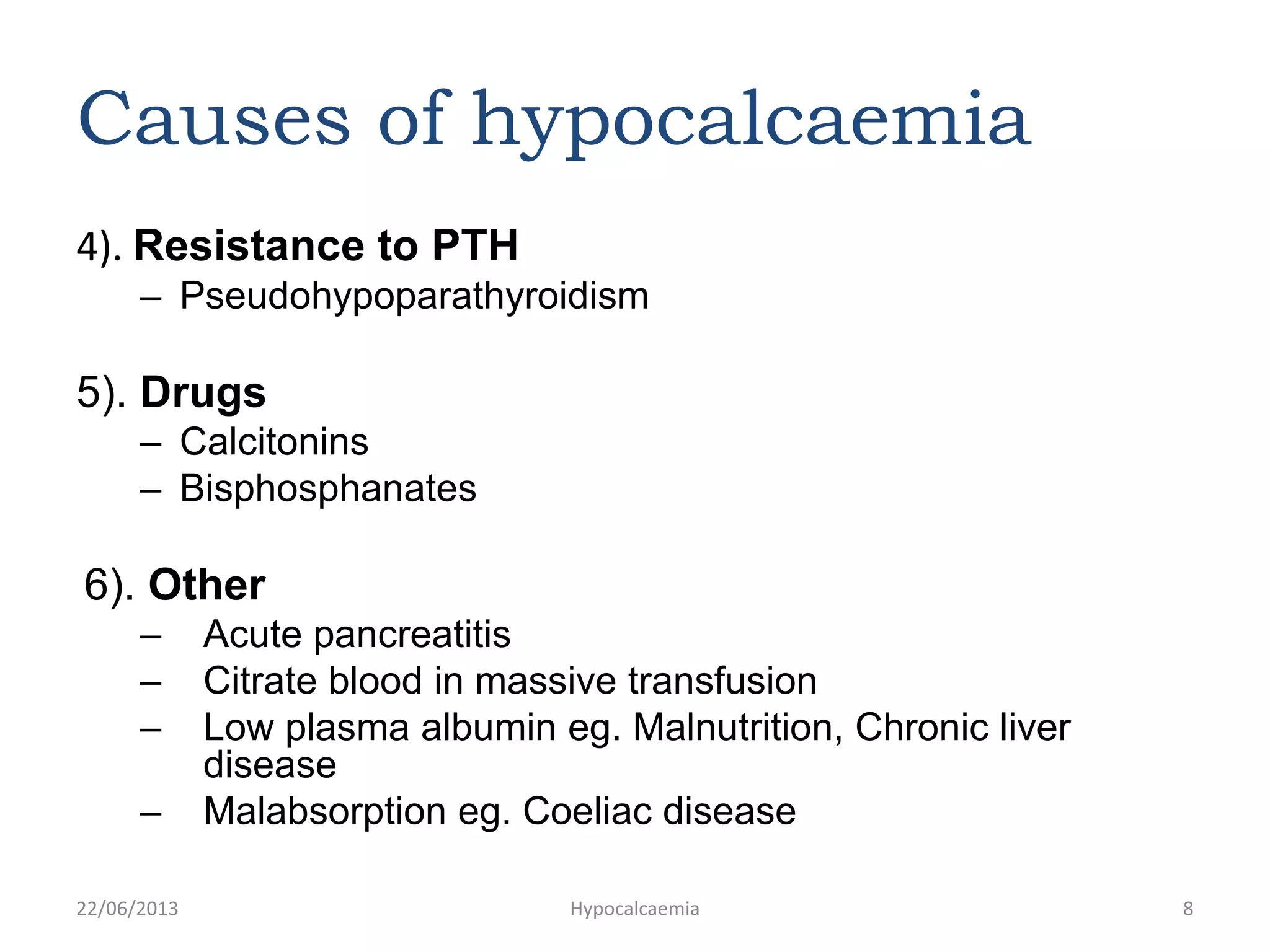
Causes of hypocalcaemia
4). Resistance to PTH
– Pseudohypoparathyroidism
5). Drugs
– Calcitonins
– Bisphosphanates
6). Other
– Acute pancreatitis
– Citrate blood in massive transfusion
– Low plasma albumin eg. Malnutrition, Chronic liver
disease
– Malabsorption eg. Coeliac disease
22/06/2013 Hypocalcaemia 8
Clinical Features
• The clinical manifestations of hypocalcaemia result
from increased neuromuscular irritability.
• Paraesthesia (tingling sensation) around mouth,
fingers and toes
• Muscle cramps, carpopedal spasms
• Tetany
• Seizures – focal or generalised
• Laryngospasm, stridor and apnoeas (neonates)
• Cardiac rhythm disturbances (prolonged QT interval)
• Chvostek’s and Trousseau’s signs – latent
hypocalcemia
22/06/2013 Hypocalcaemia 9
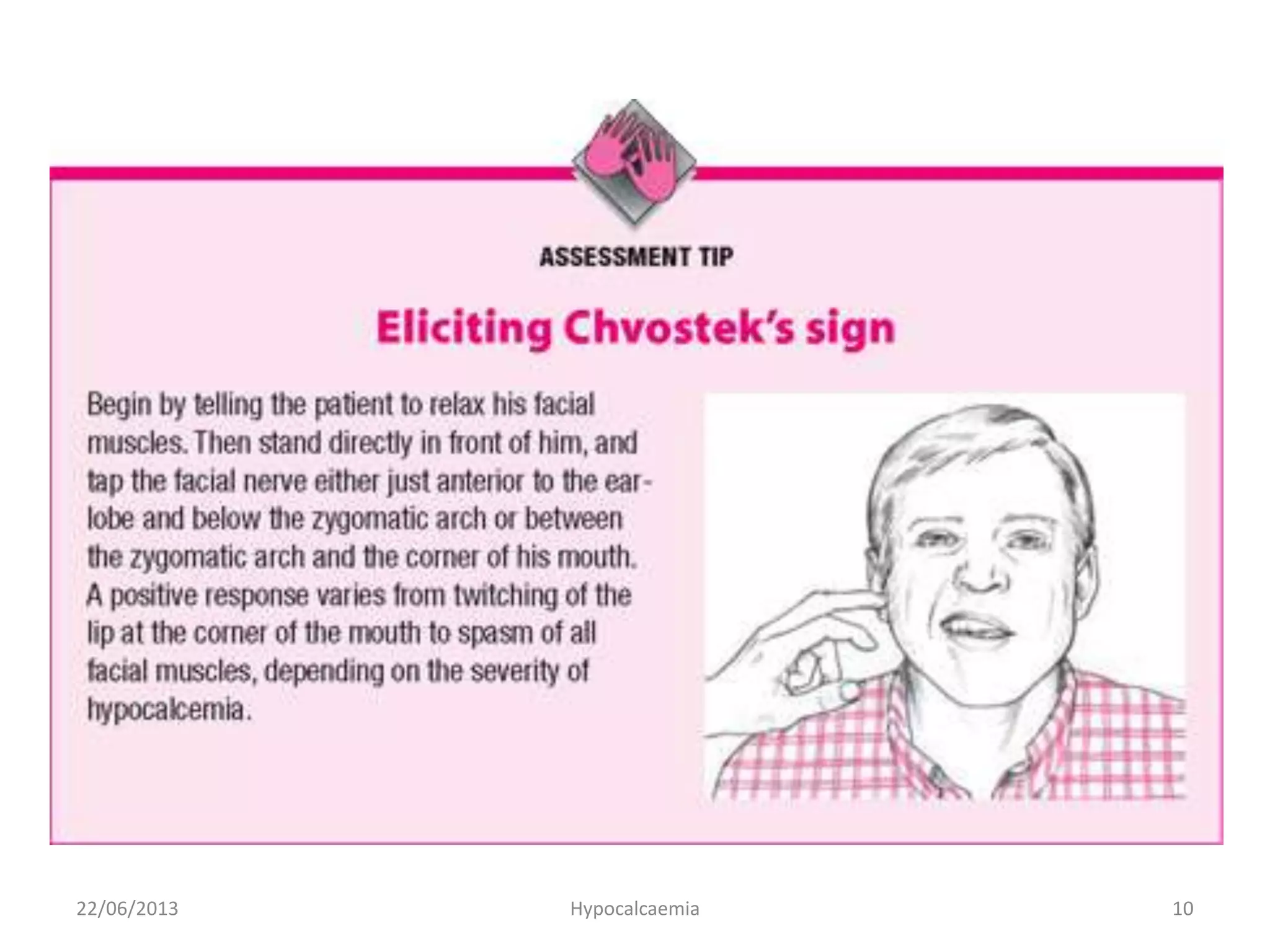
Signs & Symptoms: A 2-in-1 Reference for Nurses, Copyright © 2007 Lippincott Williams & Wilkins,
www.wrongdiagnosis.com/bookimages/14/4721.1.png
22/06/2013 Hypocalcaemia 10
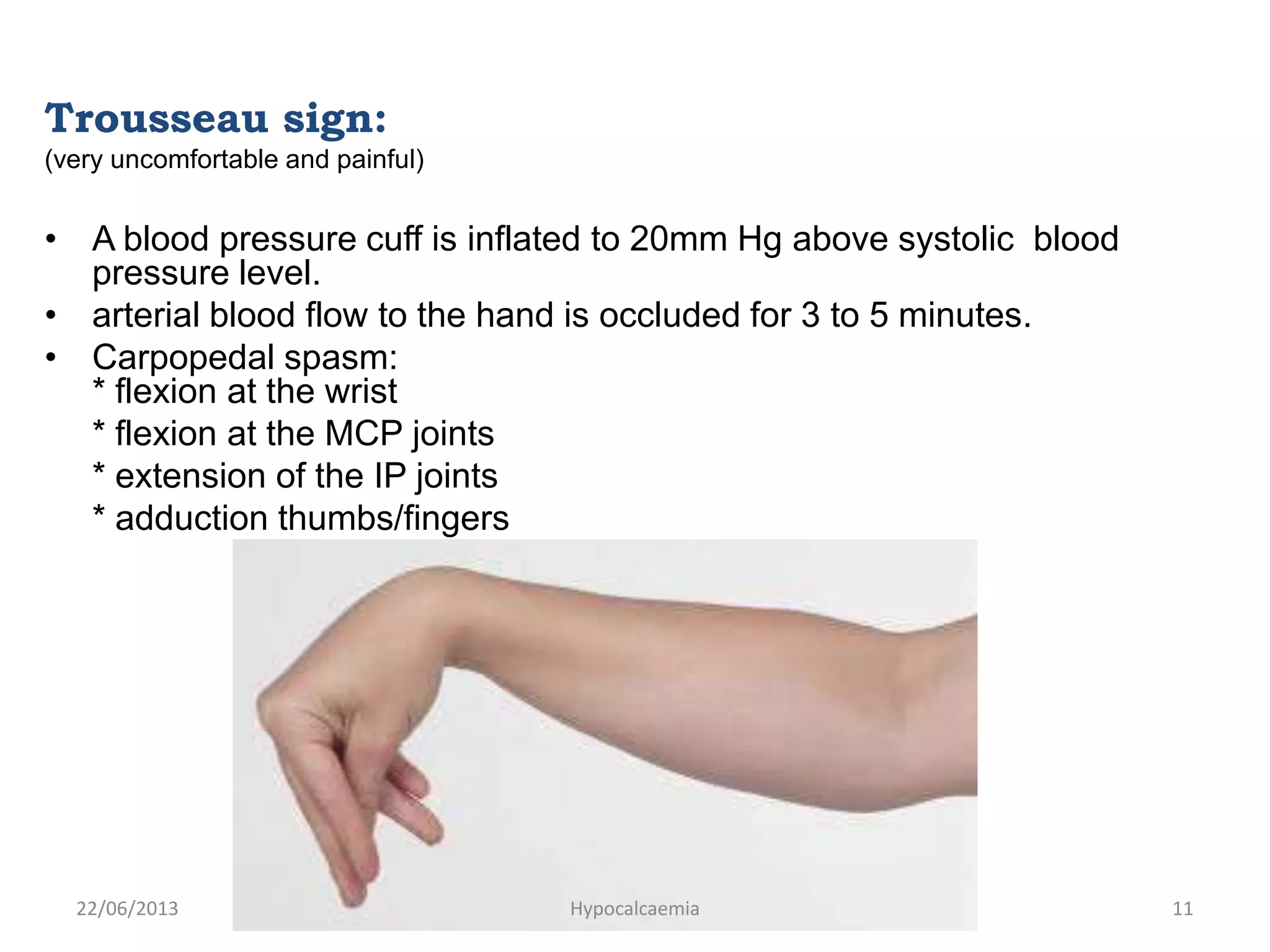
Trousseau sign:
(very uncomfortable and painful)
• A blood pressure cuff is inflated to 20mm Hg above systolic blood
pressure level.
• arterial blood flow to the hand is occluded for 3 to 5 minutes.
• Carpopedal spasm:
* flexion at the wrist
* flexion at the MCP joints
* extension of the IP joints
* adduction thumbs/fingers
22/06/2013 Hypocalcaemia 11
Investigations
• S. Calcium and Phosphate levels
• S. Albumin
• S. & Urinary Creatinine (for renal disease)
• PTH levels in serum
• Parathyroid antibodies (present in idiopathic
hypoparathyroidism)
• Vitamin D serum level (low in Vitamin D def.)
• Magnesium level
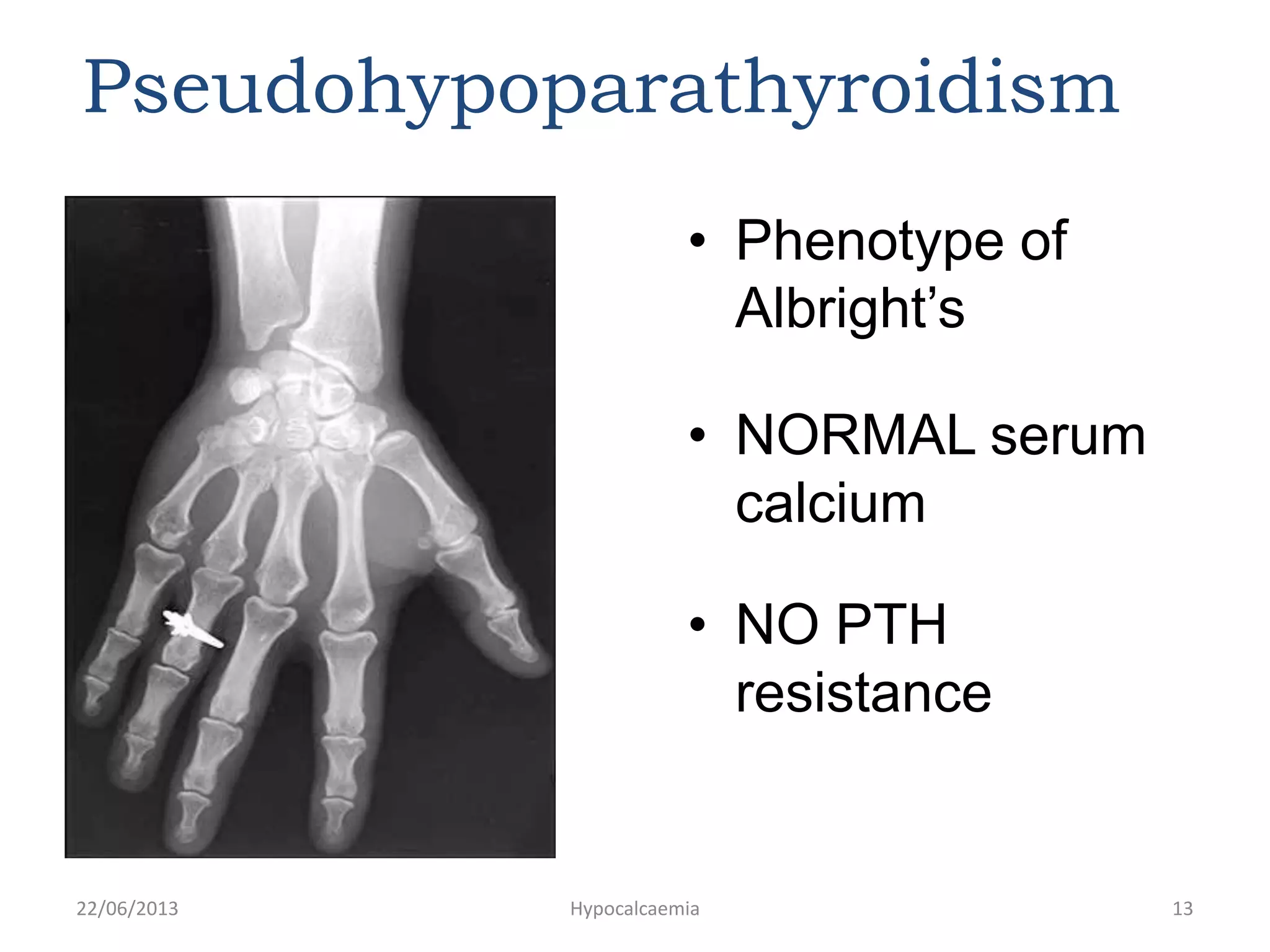
• X-rays of metacarpals (showing short 4th
metacarpals which occur in pseudo
hypoparathyroidism)
• ECG
22/06/2013 Hypocalcaemia 12
Pseudohypoparathyroidism
• Phenotype of
Albright’s
• NORMAL serum
calcium
• NO PTH
resistance
22/06/2013 Hypocalcaemia 13
22/06/2013 Hypocalcaemia 14
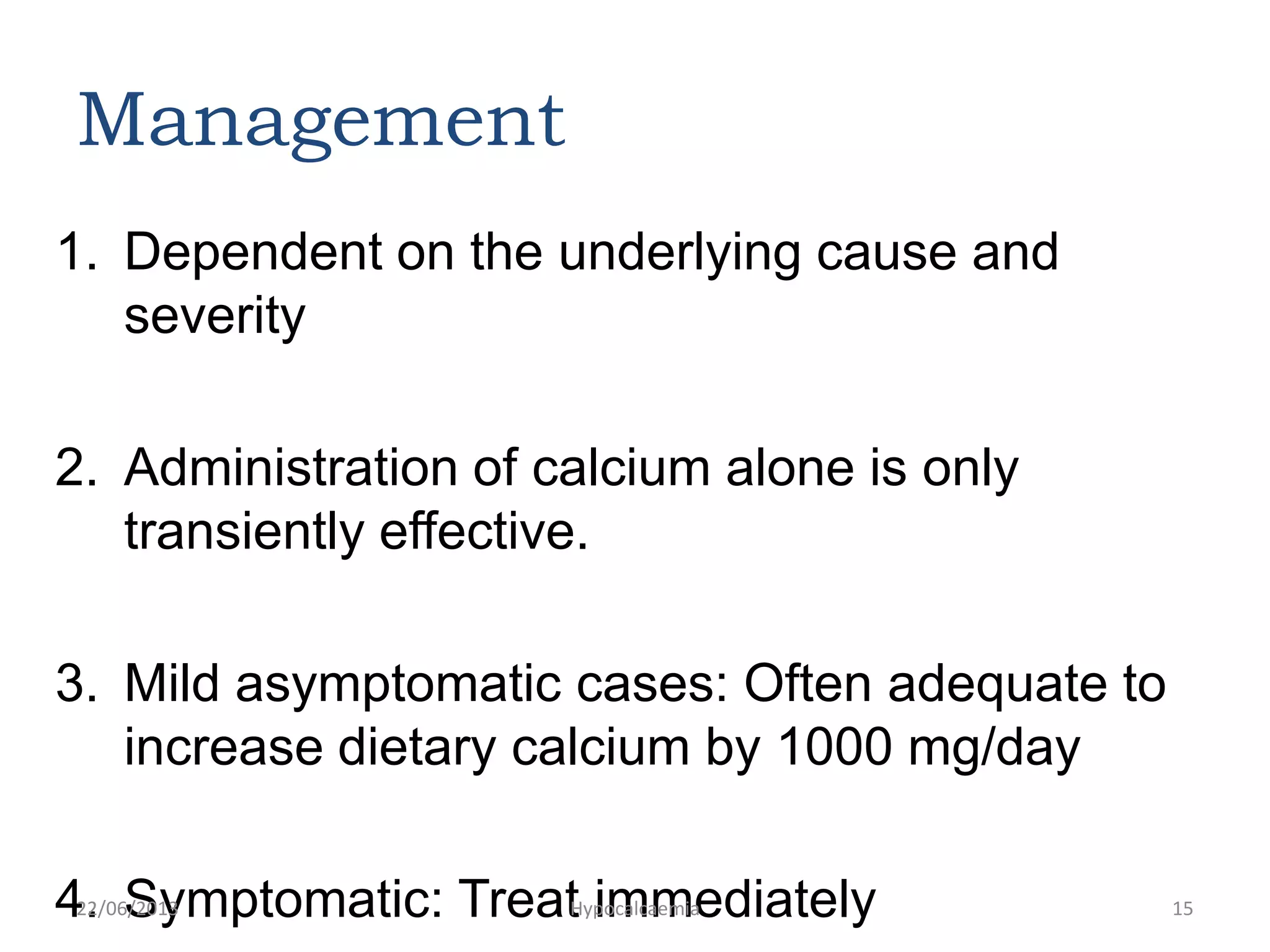
Management
1. Dependent on the underlying cause and
severity
2. Administration of calcium alone is only
transiently effective.
3. Mild asymptomatic cases: Often adequate to
increase dietary calcium by 1000 mg/day
4. Symptomatic: Treat immediately22/06/2013 Hypocalcaemia 15
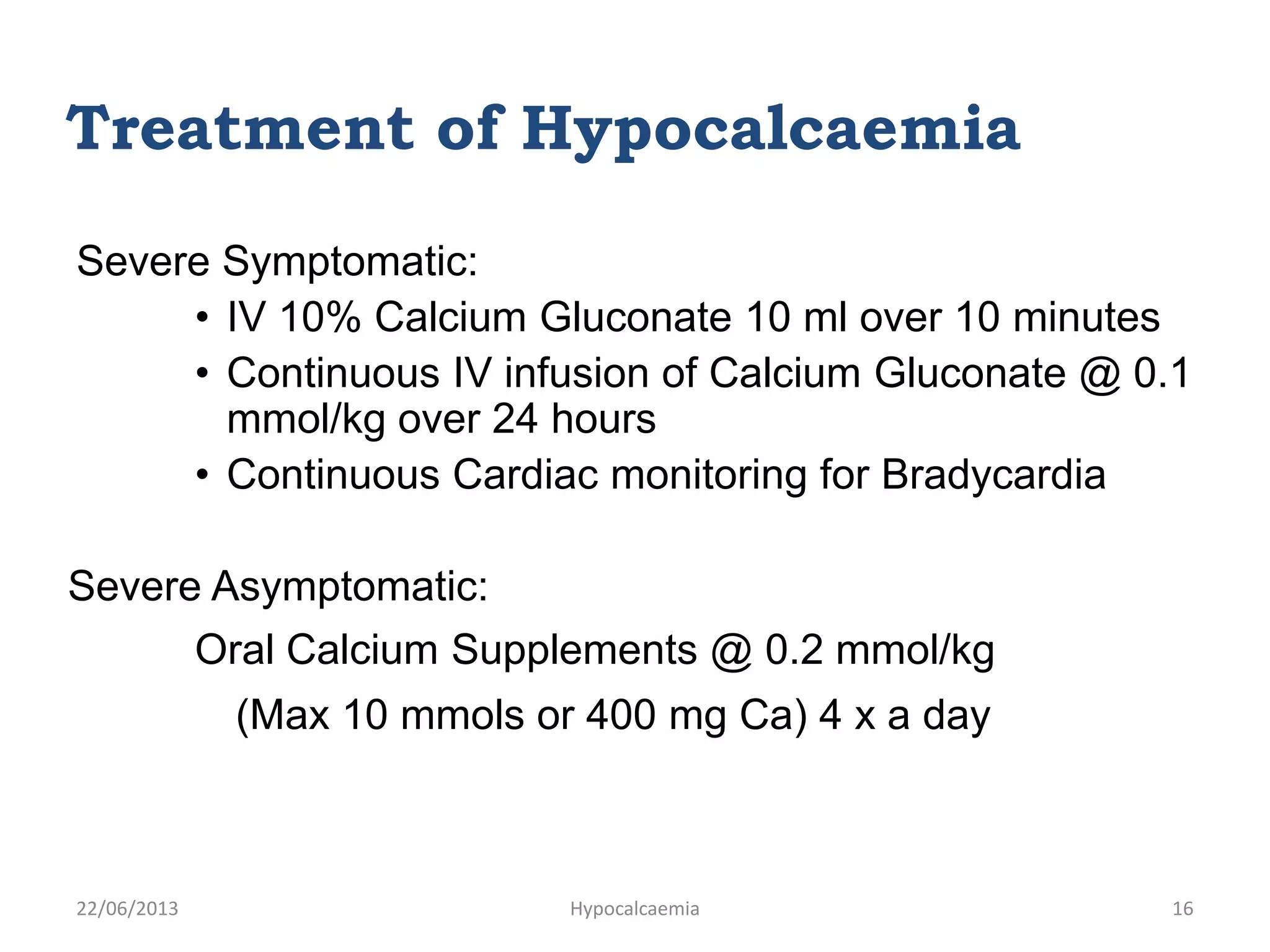
Severe Symptomatic:
• IV 10% Calcium Gluconate 10 ml over 10 minutes
• Continuous IV infusion of Calcium Gluconate @ 0.1
mmol/kg over 24 hours
• Continuous Cardiac monitoring for Bradycardia
Severe Asymptomatic:
Oral Calcium Supplements @ 0.2 mmol/kg
(Max 10 mmols or 400 mg Ca) 4 x a day
Treatment of Hypocalcaemia
22/06/2013 Hypocalcaemia 16
• Aim to keep serum Ca between 8-8.5mg/dl
• Oral Calcium supplements
• Active preparations of Vitamin D
• 1,25-dihydroxyvitamin D (Calcitriol)
• 1-α-hydroxyvitamin D (Alfacalcidiol) @ 50
nanograms/kg (Max ~2 micrograms/day)
• Monitoring
• Urine Ca/Cr (<0.7)
• Plasma Ca+2
Treatment of
Hypoparathyroidism
22/06/2013 Hypocalcaemia 17
Thank You!
22/06/2013 Hypocalcaemia 18

Hypocalcaemia

  • 1.
  • 2.
    Calcium Normal total calciumlevel is 8.5 -10.5mg/dl Normal ionized Ca+2 level is 4.5 – 5.6mg/dl Hypocalcaemia Total calcium <8.5 mg/dL, if serum protein is normal OR Ionized calcium < 4.5mg/dL 22/06/2013 Hypocalcaemia 2
  • 3.
    Role of Mg •Always measure serum magnesium in a hypocalcaemic patient. • Hypomagnesemia impairs PTH secretion • It also causes resistance to the actions of PTH at the level of kidney and bone 22/06/2013 Hypocalcaemia 3
  • 4.
  • 5.
  • 6.
  • 7.
    Causes of hypocalcaemia 1)Increased Phosphate levels – Chronic kidney disease – Phosphate therapy 2) Hypoparathyroidism – Post thyroidectomy hypocalcaemia – Congenital deficiency (Di George Syndrome) – Idiopathic hypoparathyroidism – Severe hypomagnesaemia 3) Vitamin D deficiency – Osteomalacia/rickets – Vitamin D resistance 22/06/2013 Hypocalcaemia 7
  • 8.
    Causes of hypocalcaemia 4).Resistance to PTH – Pseudohypoparathyroidism 5). Drugs – Calcitonins – Bisphosphanates 6). Other – Acute pancreatitis – Citrate blood in massive transfusion – Low plasma albumin eg. Malnutrition, Chronic liver disease – Malabsorption eg. Coeliac disease 22/06/2013 Hypocalcaemia 8
  • 9.
    Clinical Features • Theclinical manifestations of hypocalcaemia result from increased neuromuscular irritability. • Paraesthesia (tingling sensation) around mouth, fingers and toes • Muscle cramps, carpopedal spasms • Tetany • Seizures – focal or generalised • Laryngospasm, stridor and apnoeas (neonates) • Cardiac rhythm disturbances (prolonged QT interval) • Chvostek’s and Trousseau’s signs – latent hypocalcemia 22/06/2013 Hypocalcaemia 9
  • 10.
    Signs & Symptoms:A 2-in-1 Reference for Nurses, Copyright © 2007 Lippincott Williams & Wilkins, www.wrongdiagnosis.com/bookimages/14/4721.1.png 22/06/2013 Hypocalcaemia 10
  • 11.
    Trousseau sign: (very uncomfortableand painful) • A blood pressure cuff is inflated to 20mm Hg above systolic blood pressure level. • arterial blood flow to the hand is occluded for 3 to 5 minutes. • Carpopedal spasm: * flexion at the wrist * flexion at the MCP joints * extension of the IP joints * adduction thumbs/fingers 22/06/2013 Hypocalcaemia 11
  • 12.
    Investigations • S. Calciumand Phosphate levels • S. Albumin • S. & Urinary Creatinine (for renal disease) • PTH levels in serum • Parathyroid antibodies (present in idiopathic hypoparathyroidism) • Vitamin D serum level (low in Vitamin D def.) • Magnesium level • X-rays of metacarpals (showing short 4th metacarpals which occur in pseudo hypoparathyroidism) • ECG 22/06/2013 Hypocalcaemia 12
  • 13.
    Pseudohypoparathyroidism • Phenotype of Albright’s •NORMAL serum calcium • NO PTH resistance 22/06/2013 Hypocalcaemia 13
  • 14.
  • 15.
    Management 1. Dependent onthe underlying cause and severity 2. Administration of calcium alone is only transiently effective. 3. Mild asymptomatic cases: Often adequate to increase dietary calcium by 1000 mg/day 4. Symptomatic: Treat immediately22/06/2013 Hypocalcaemia 15
  • 16.
    Severe Symptomatic: • IV10% Calcium Gluconate 10 ml over 10 minutes • Continuous IV infusion of Calcium Gluconate @ 0.1 mmol/kg over 24 hours • Continuous Cardiac monitoring for Bradycardia Severe Asymptomatic: Oral Calcium Supplements @ 0.2 mmol/kg (Max 10 mmols or 400 mg Ca) 4 x a day Treatment of Hypocalcaemia 22/06/2013 Hypocalcaemia 16
  • 17.
    • Aim tokeep serum Ca between 8-8.5mg/dl • Oral Calcium supplements • Active preparations of Vitamin D • 1,25-dihydroxyvitamin D (Calcitriol) • 1-α-hydroxyvitamin D (Alfacalcidiol) @ 50 nanograms/kg (Max ~2 micrograms/day) • Monitoring • Urine Ca/Cr (<0.7) • Plasma Ca+2 Treatment of Hypoparathyroidism 22/06/2013 Hypocalcaemia 17
  • 18.

Editor's Notes

  • #3 Although as many as half the patients in a intensive care setting are reported to have calcium concentrations &lt;8.5 most do not have a reduction in ionized calcium.Patients with severe sepsis may have a decrease in ionized calcium (true hypocalcaemia),In other severely ill individuals Hypoalbuminaemia is the primary cause for the reduced total calcium concentration.The serum level of calcium is closely regulated with a normal total calcium of 2.2-2.6 mmol/L (9-10.5 mg/dL) and a normal ionized calcium of 1.1-1.4 mmol/L (4.5-5.6 mg/dL). The amount of total calcium varies with the level of serum albumin, a protein to which calcium is bound. The biologic effect of calcium is determined by the amount of ionized calcium, rather than the total calcium. Ionized calcium does not vary with the albumin level, and therefore it is useful to measure the ionized calcium level when the serum albumin is not within normal ranges, or when a calcium disorder is suspected despite a normal total calcium level.
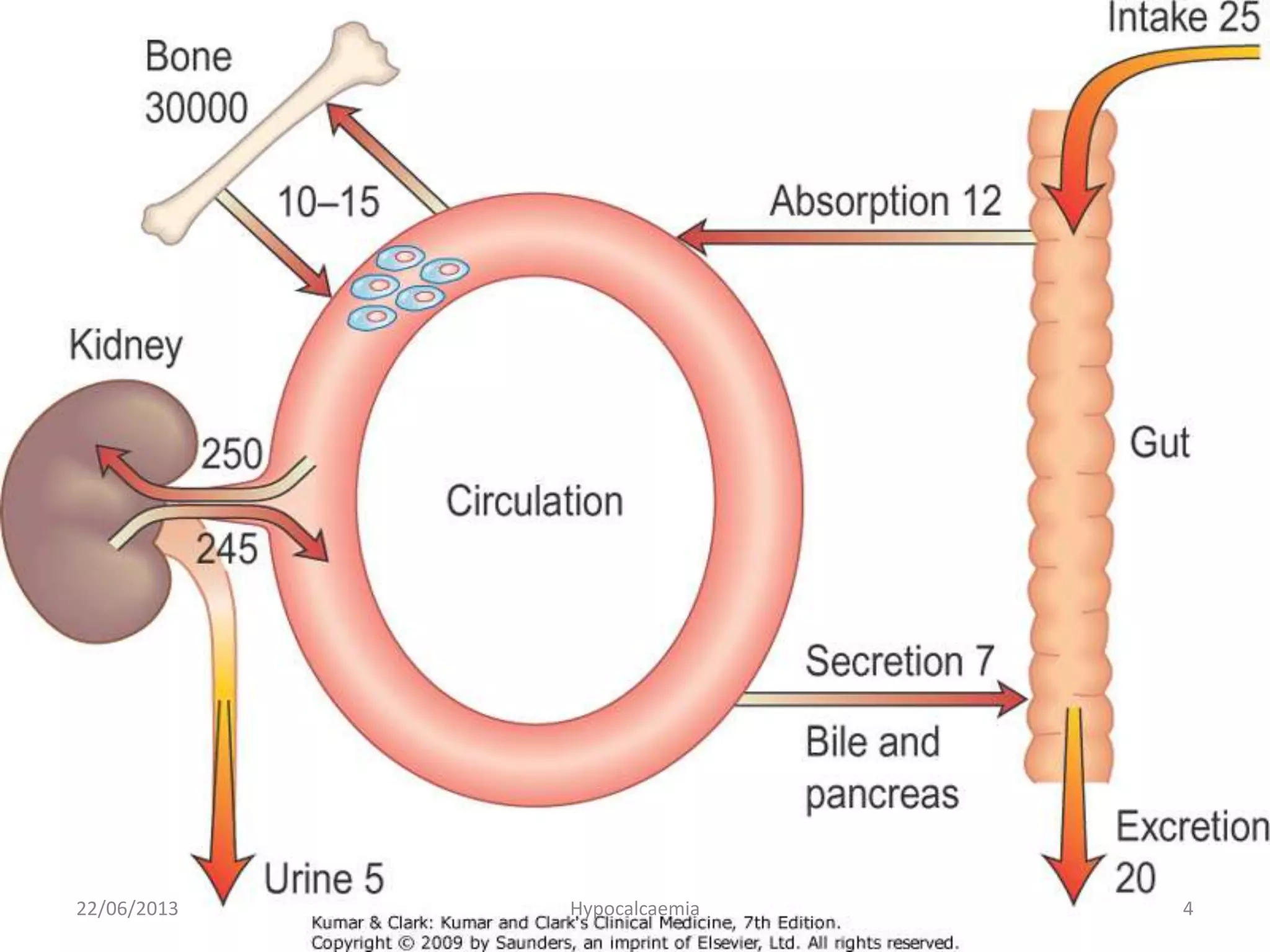
  • #5 BLOOD CALCIUM IS TIGHTLY REGULATEDPRINCIPLE ORGAN SYSTEMSGUT, BONE, KIDNEYSHORMONESPARATHYROID HORMONE (PTH), Calcitonin, VITAMIN DINTEGRATED PHYSIOLOGY OF ORGAN SYSTEMS AND HORMONES MAINTAIN BLOOD CALCIUM
  • #7 TISSUE SPECIFICVit. D responseGUTSTIMULATE TRANSEPITHELIAL TRANSPORT OF CALCIUM AND PHOSPHATE IN THE SMALL INTESTINE (PRINCIPALLY DUODENUM)BONESTIMULATE TERMINAL DIFFERENTIATION OF OSTEOCLASTSSTIMULATE OSTEOBLASTS TO STIMULATE OSTEOCLASTS TO MOBILIZE CALCIUMPARATHYROIDINHIBIT TRANSCRIPTION OF THE PTH GENE (FEEDBACK REGULATION)
  • #9 Due to mutation in PTH receptor
  • #11 facial spasms produced by lightly tapping over the facial nerve just in front of the ear
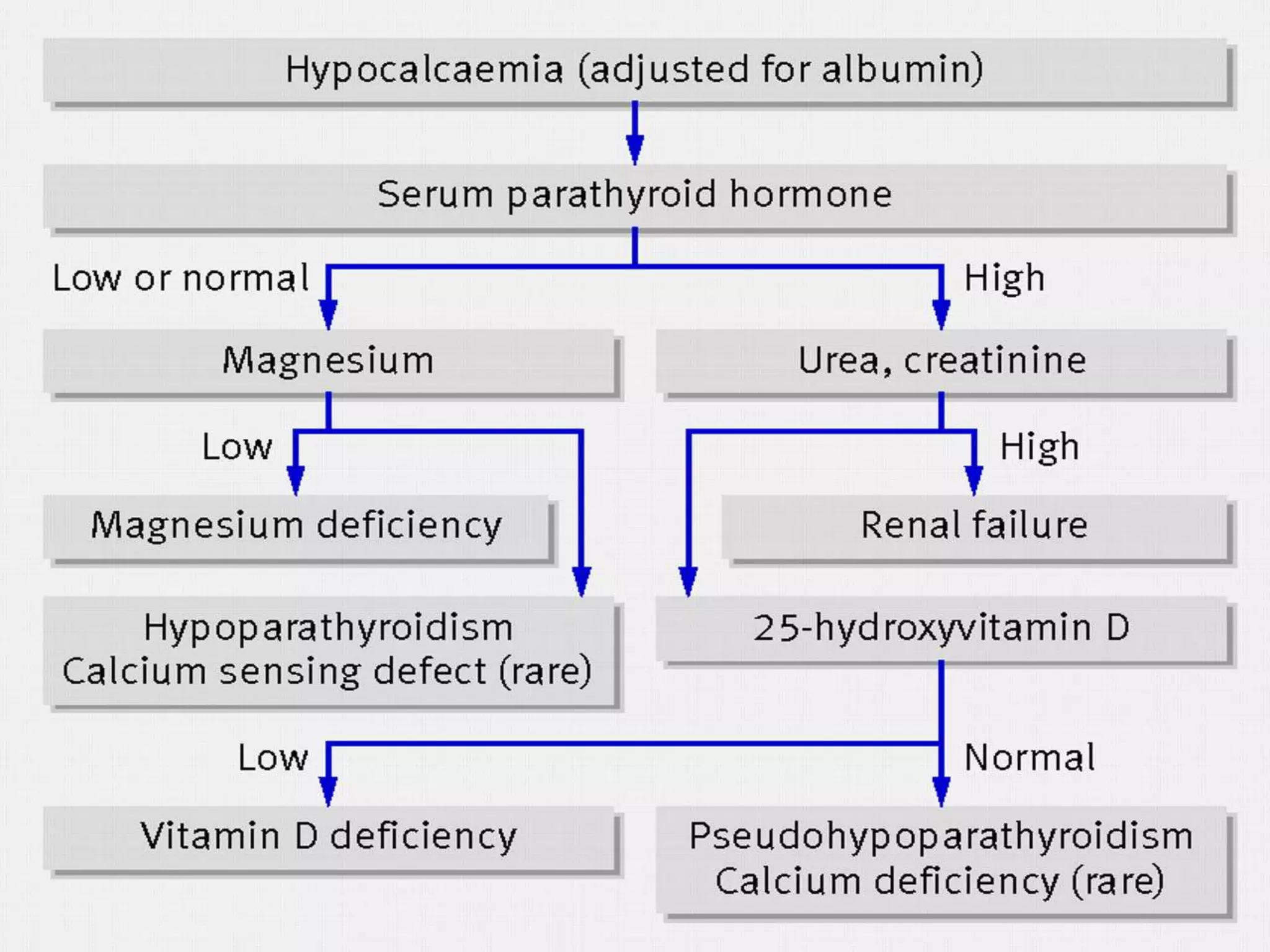
  • #13 Clinical history and picture is usually diagnostic and is confirmed by a low S. calcium level (after correction for any albumin abnormality)Low PTHHypoparathyroidismPrimary/ secondaryNormalMg deficiencyHigh PTHVit D deficiencyPseudohypoparathyroidism – types 1, 2Severe hypomagnesaemia results in functional hypoparathyroidism which is reversed by magnesium replacement
  • #14 Albright’s hereditary osteodystrophy have short stature, characteristically shortened fourth and fifth metacarpals, rounded facies, and often mild mental retardation
  • #15 Evaluation of a paent with hypocalcaemia