Hypertension
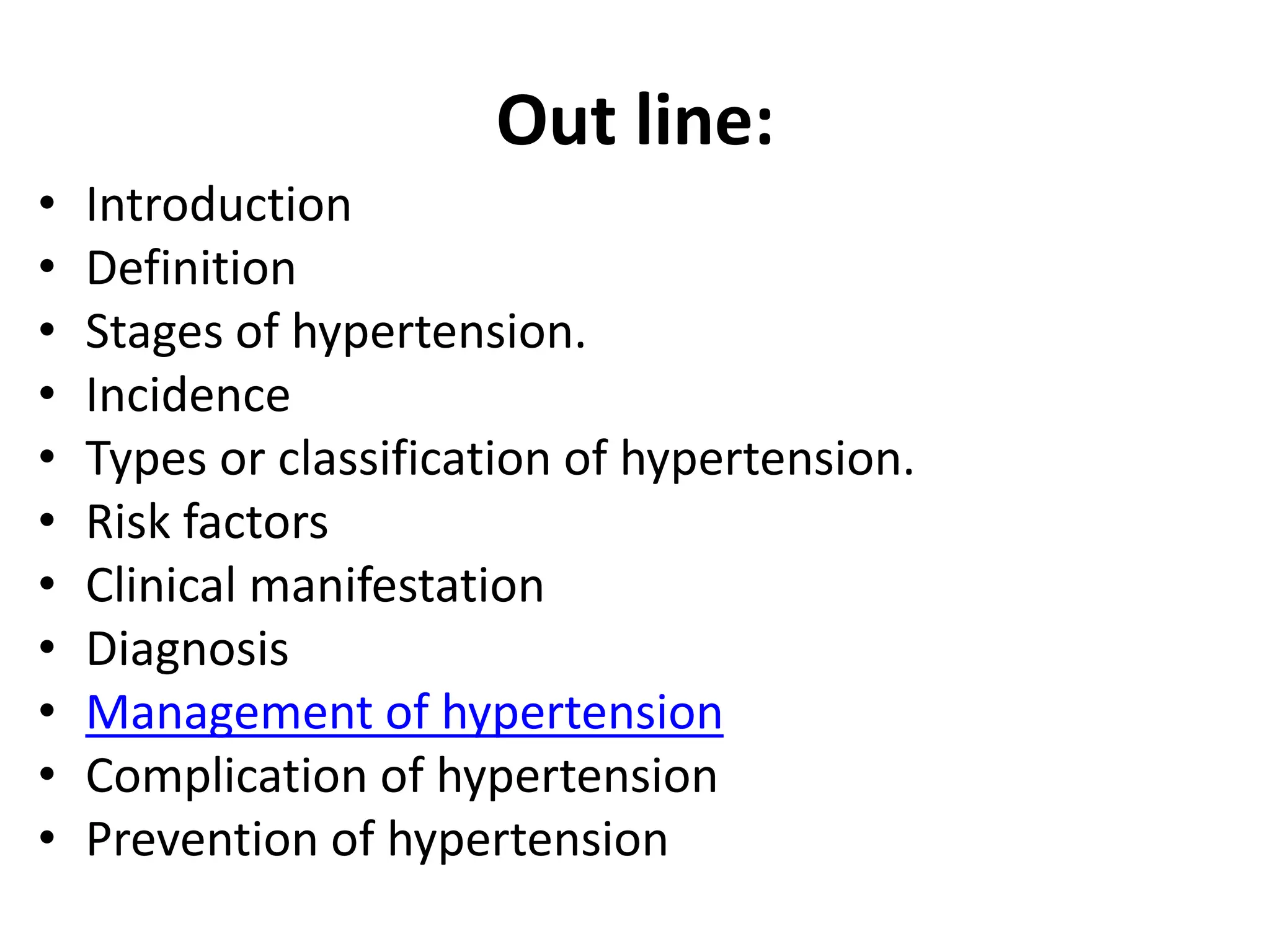
Out line:
• Introduction
• Definition
• Stages of hypertension.
• Incidence
• Types or classification of hypertension.
• Risk factors
• Clinical manifestation
• Diagnosis
• Management of hypertension
• Complication of hypertension
• Prevention of hypertension
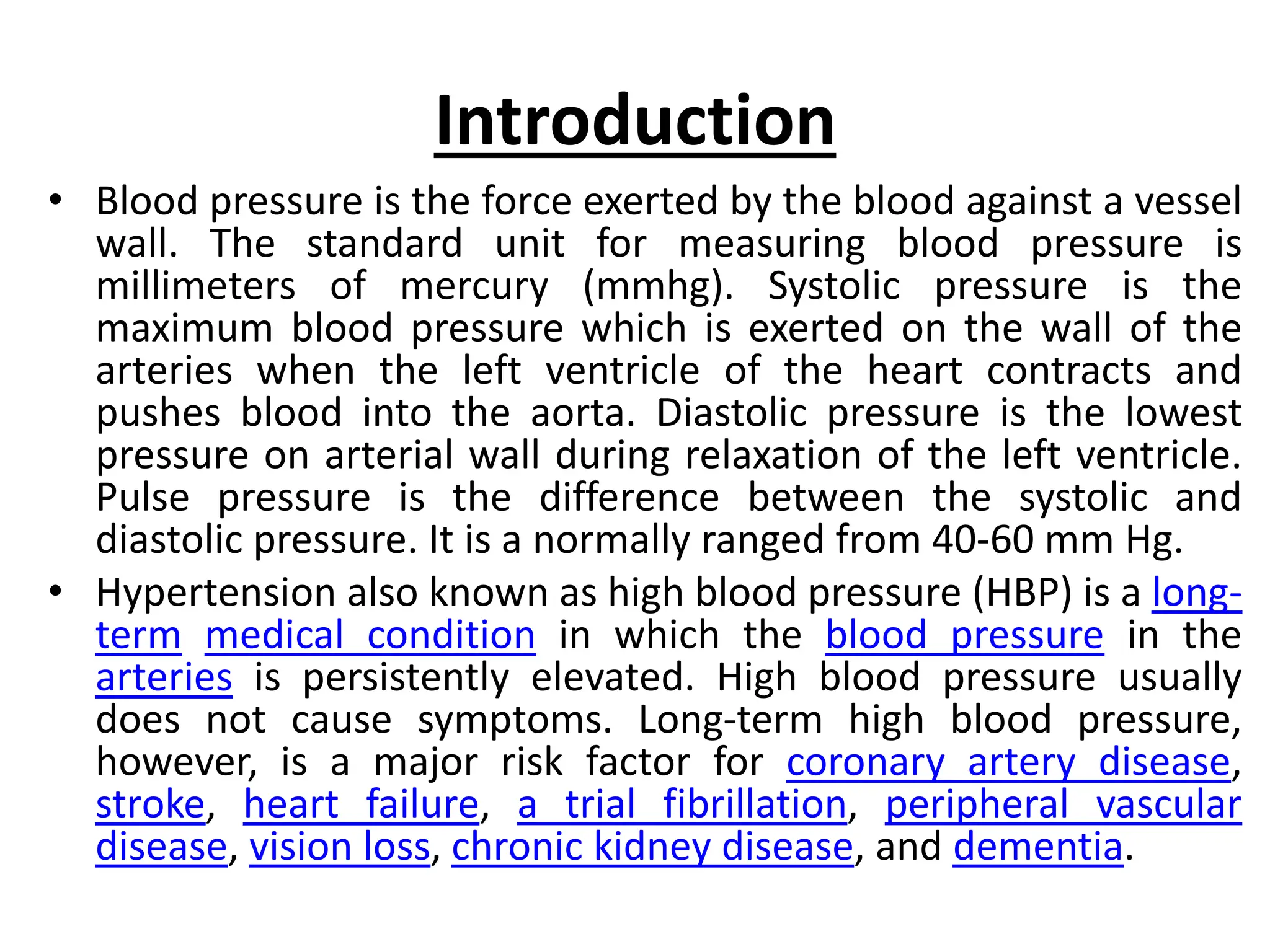
Introduction
• Blood pressure is the force exerted by the blood against a vessel
wall. The standard unit for measuring blood pressure is
millimeters of mercury (mmhg). Systolic pressure is the
maximum blood pressure which is exerted on the wall of the
arteries when the left ventricle of the heart contracts and
pushes blood into the aorta. Diastolic pressure is the lowest
pressure on arterial wall during relaxation of the left ventricle.
Pulse pressure is the difference between the systolic and
diastolic pressure. It is a normally ranged from 40-60 mm Hg.
• Hypertension also known as high blood pressure (HBP) is a long-
term medical condition in which the blood pressure in the
arteries is persistently elevated. High blood pressure usually
does not cause symptoms. Long-term high blood pressure,
however, is a major risk factor for coronary artery disease,
stroke, heart failure, a trial fibrillation, peripheral vascular
disease, vision loss, chronic kidney disease, and dementia.
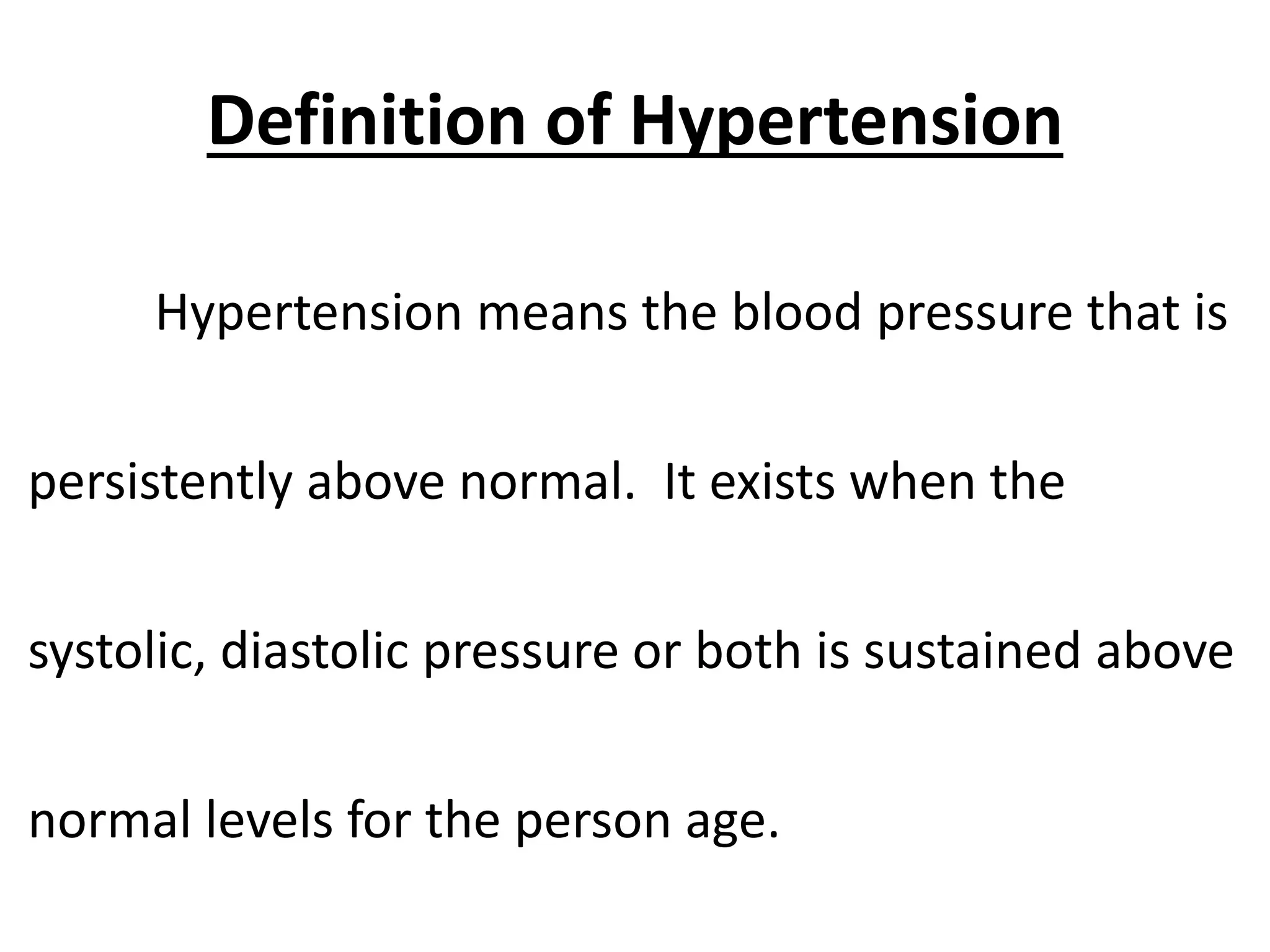
Definition of Hypertension
Hypertension means the blood pressure that is
persistently above normal. It exists when the
systolic, diastolic pressure or both is sustained above
normal levels for the person age.
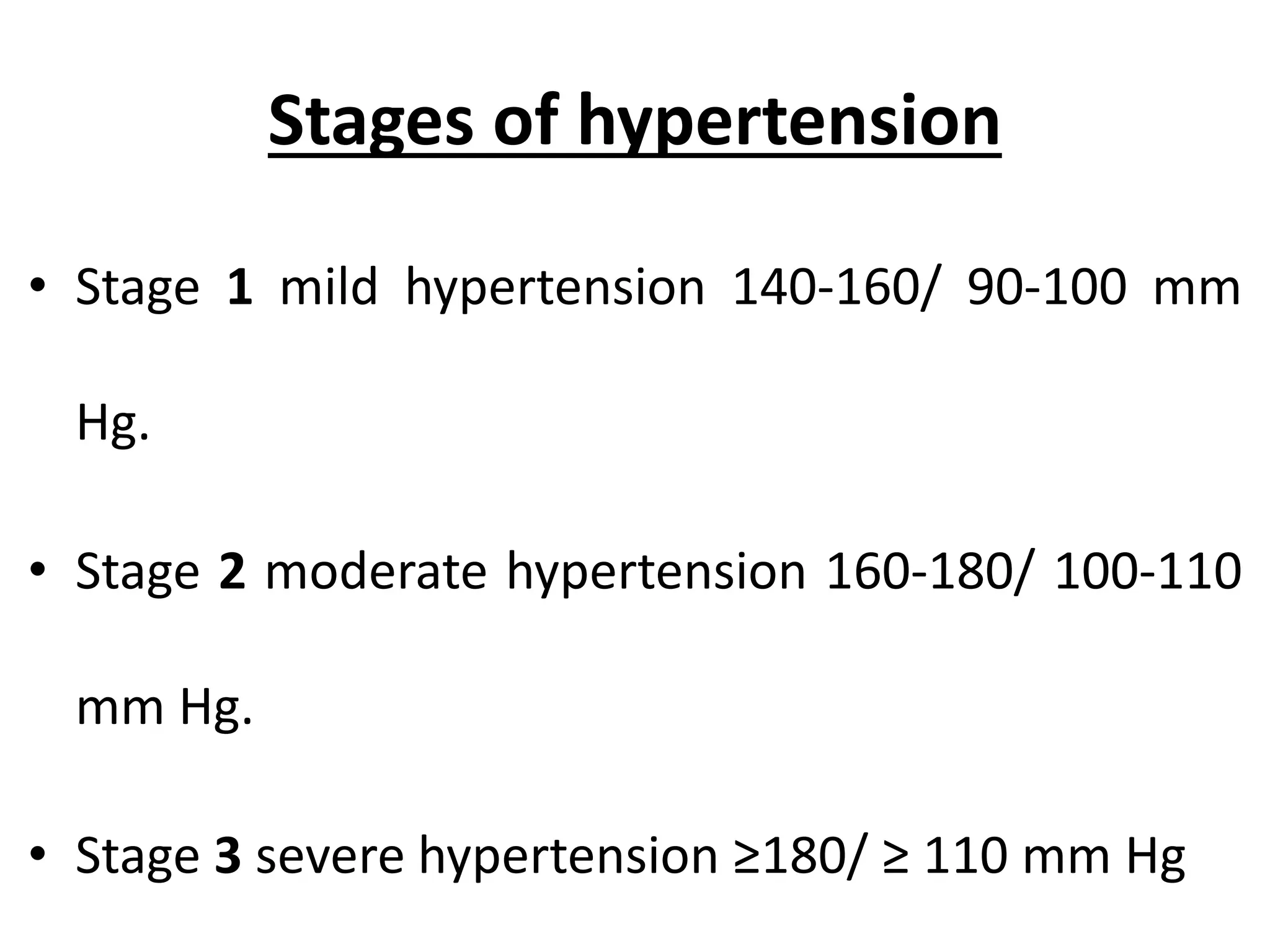
Stages of hypertension
• Stage 1 mild hypertension 140-160/ 90-100 mm
Hg.
• Stage 2 moderate hypertension 160-180/ 100-110
mm Hg.
• Stage 3 severe hypertension ≥180/ ≥ 110 mm Hg
Incidence
The incidence of hypertension increases with
advancing age and is the most prevalent
cardiovascular diseases of the elderly. It is estimated
that 50% of people older than 65 years are
hypertensive.
Types or classification of
hypertension
• Primary (essential) hypertension: An elevated blood pressure is
unknown cause or due to nonspecific lifestyle and genetic
factors. Lifestyle factors that increase the risk include excess salt
in the diet, excess body weight, smoking, and alcohol use.
• Secondary hypertension: high blood pressure due to an
identifiable cause, such as chronic kidney disease, narrowing of
the kidney arteries, an endocrine disorder, or the use of birth
control pills.
• Malignant hypertension
• Isolated systolic hypertension
• Isolated diastolic hypertension
• Pseudo hypertension
• White coat or office hypertension
• Borderline hypertension
Risk factors
• Non modifiable risk factor as family history, gender,
race and aging hypertension increased with age.
• Modifiable risk factor as obesity, smoking, stress,
sedentary life style, diet high in sodium or saturated
fat, use of oral contraceptive and hormonal intake of
estrogen.
Clinical manifestation:
• Asymptomatic and discovered suddenly (silent
killer).
• Awakening with occipital headache.
• Dizziness.
• Confusion, disorientation
• Slow tremors, nausea, vomiting, impaired
memory.
• Tinnitus and impotence.
• Fatigue
• Palpitation
• With vascular involvement there is epistaxis,
hematuria, blurring of vision.
Diagnosis:
Hypertension is diagnosed by:
• assessment clinical manifestation,
• history taking,
• Physical examination.
• Laboratory investigation.
Management of hypertension
Management is aimed to maintain a blood
pressure below 140/90mmHg, modifying risk
factors, and prevent complications.
• Non pharmacological treatment
• Pharmacological treatment (Medications)
Complication of hypertension
• Cerebral complication as cerebral infraction leads
to transient ischemic attack and stroke.
• Retinal complication: hemorrhage and
hypertensive retinopathy can lead to blindness.
• Cardiac complication: angina, heart failure and
sudden death.
• Renal complications: reno-vascular hypertension
can cause renal failure
Nursing intervention:
• Assess the heart rate and rhythm because it can affect
cardiac functioning.
• Encourage patient to be compliance with
antihypertensive therapy.
• Observe for side effects of medications and instruct
the patient to report any adverse effects to the
physician immediately.
• Advice the patient about importance of follow up.
• Encourage patient to modify his lifestyle
Prevention of hypertension
1) Primary level of prevention
2) Secondary level of prevention
3) Tertiary level of prevention
Thanks

Hypertension.pptx

  • 1.
  • 2.
    Out line: • Introduction •Definition • Stages of hypertension. • Incidence • Types or classification of hypertension. • Risk factors • Clinical manifestation • Diagnosis • Management of hypertension • Complication of hypertension • Prevention of hypertension
  • 3.
    Introduction • Blood pressureis the force exerted by the blood against a vessel wall. The standard unit for measuring blood pressure is millimeters of mercury (mmhg). Systolic pressure is the maximum blood pressure which is exerted on the wall of the arteries when the left ventricle of the heart contracts and pushes blood into the aorta. Diastolic pressure is the lowest pressure on arterial wall during relaxation of the left ventricle. Pulse pressure is the difference between the systolic and diastolic pressure. It is a normally ranged from 40-60 mm Hg. • Hypertension also known as high blood pressure (HBP) is a long- term medical condition in which the blood pressure in the arteries is persistently elevated. High blood pressure usually does not cause symptoms. Long-term high blood pressure, however, is a major risk factor for coronary artery disease, stroke, heart failure, a trial fibrillation, peripheral vascular disease, vision loss, chronic kidney disease, and dementia.
  • 4.
    Definition of Hypertension Hypertensionmeans the blood pressure that is persistently above normal. It exists when the systolic, diastolic pressure or both is sustained above normal levels for the person age.
  • 5.
    Stages of hypertension •Stage 1 mild hypertension 140-160/ 90-100 mm Hg. • Stage 2 moderate hypertension 160-180/ 100-110 mm Hg. • Stage 3 severe hypertension ≥180/ ≥ 110 mm Hg
  • 6.
    Incidence The incidence ofhypertension increases with advancing age and is the most prevalent cardiovascular diseases of the elderly. It is estimated that 50% of people older than 65 years are hypertensive.
  • 7.
    Types or classificationof hypertension • Primary (essential) hypertension: An elevated blood pressure is unknown cause or due to nonspecific lifestyle and genetic factors. Lifestyle factors that increase the risk include excess salt in the diet, excess body weight, smoking, and alcohol use. • Secondary hypertension: high blood pressure due to an identifiable cause, such as chronic kidney disease, narrowing of the kidney arteries, an endocrine disorder, or the use of birth control pills. • Malignant hypertension • Isolated systolic hypertension • Isolated diastolic hypertension • Pseudo hypertension • White coat or office hypertension • Borderline hypertension
  • 8.
    Risk factors • Nonmodifiable risk factor as family history, gender, race and aging hypertension increased with age. • Modifiable risk factor as obesity, smoking, stress, sedentary life style, diet high in sodium or saturated fat, use of oral contraceptive and hormonal intake of estrogen.
  • 9.
    Clinical manifestation: • Asymptomaticand discovered suddenly (silent killer). • Awakening with occipital headache. • Dizziness. • Confusion, disorientation • Slow tremors, nausea, vomiting, impaired memory. • Tinnitus and impotence. • Fatigue • Palpitation • With vascular involvement there is epistaxis, hematuria, blurring of vision.
  • 10.
    Diagnosis: Hypertension is diagnosedby: • assessment clinical manifestation, • history taking, • Physical examination. • Laboratory investigation.
  • 11.
    Management of hypertension Managementis aimed to maintain a blood pressure below 140/90mmHg, modifying risk factors, and prevent complications. • Non pharmacological treatment • Pharmacological treatment (Medications)
  • 12.
    Complication of hypertension •Cerebral complication as cerebral infraction leads to transient ischemic attack and stroke. • Retinal complication: hemorrhage and hypertensive retinopathy can lead to blindness. • Cardiac complication: angina, heart failure and sudden death. • Renal complications: reno-vascular hypertension can cause renal failure
  • 13.
    Nursing intervention: • Assessthe heart rate and rhythm because it can affect cardiac functioning. • Encourage patient to be compliance with antihypertensive therapy. • Observe for side effects of medications and instruct the patient to report any adverse effects to the physician immediately. • Advice the patient about importance of follow up. • Encourage patient to modify his lifestyle
  • 14.
    Prevention of hypertension 1)Primary level of prevention 2) Secondary level of prevention 3) Tertiary level of prevention
  • 15.