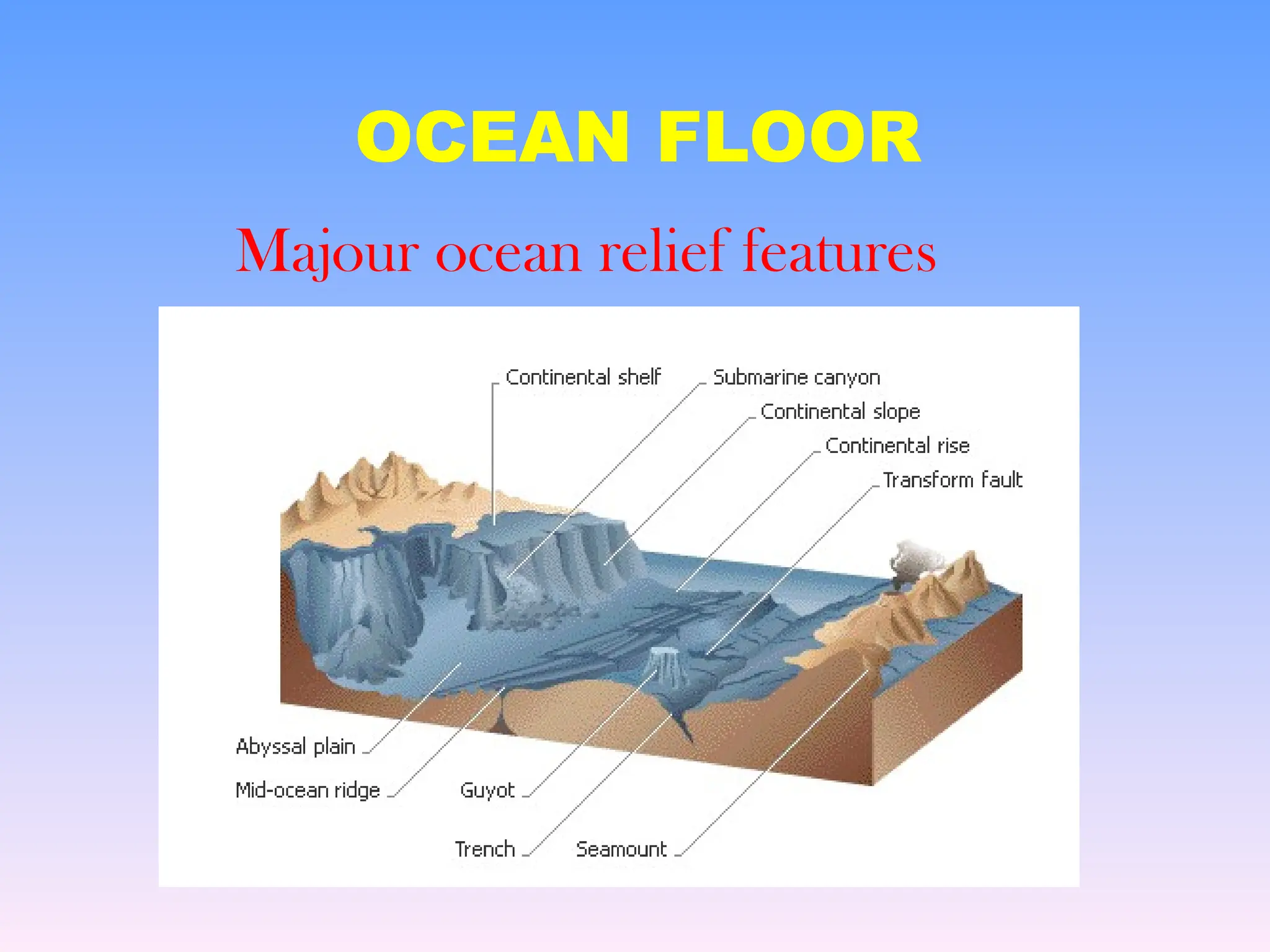
a)Continental shelf:-
•7% oftotal ocean area
•Coastal part not very deep
•Slopy and gentle
•Extends to a depth of 100 fathoms (1 Fathom-1.8
meter)
•The Siberian shelf is widest (1200 KM)
•It is famous for richest fishing ground
•Indian’s western costal margin is wider then
eastern one
•Marine life exists entirely here
6.
Continental slope:-
•It is8.5% of total ocean area
Extends sea wards from the
continental shelf
•Depth upto 2000 fathoms
•The boundary between shelf and
slope is known as andesite line
7.
c)Continental Rise:-
•It isfound at the foot of slope
•An area slightly rising due to the
accumulation of debris
transported over the slope
Oil deposits occur here
8.
Abyssal or Deepsea plains:-
•Most extensive part and cccunts
40% of total ocean floor
•These are flattest and smoothest
•These plains are covered with clay
and slit
9.
Minor ocean Relieffeatures:-
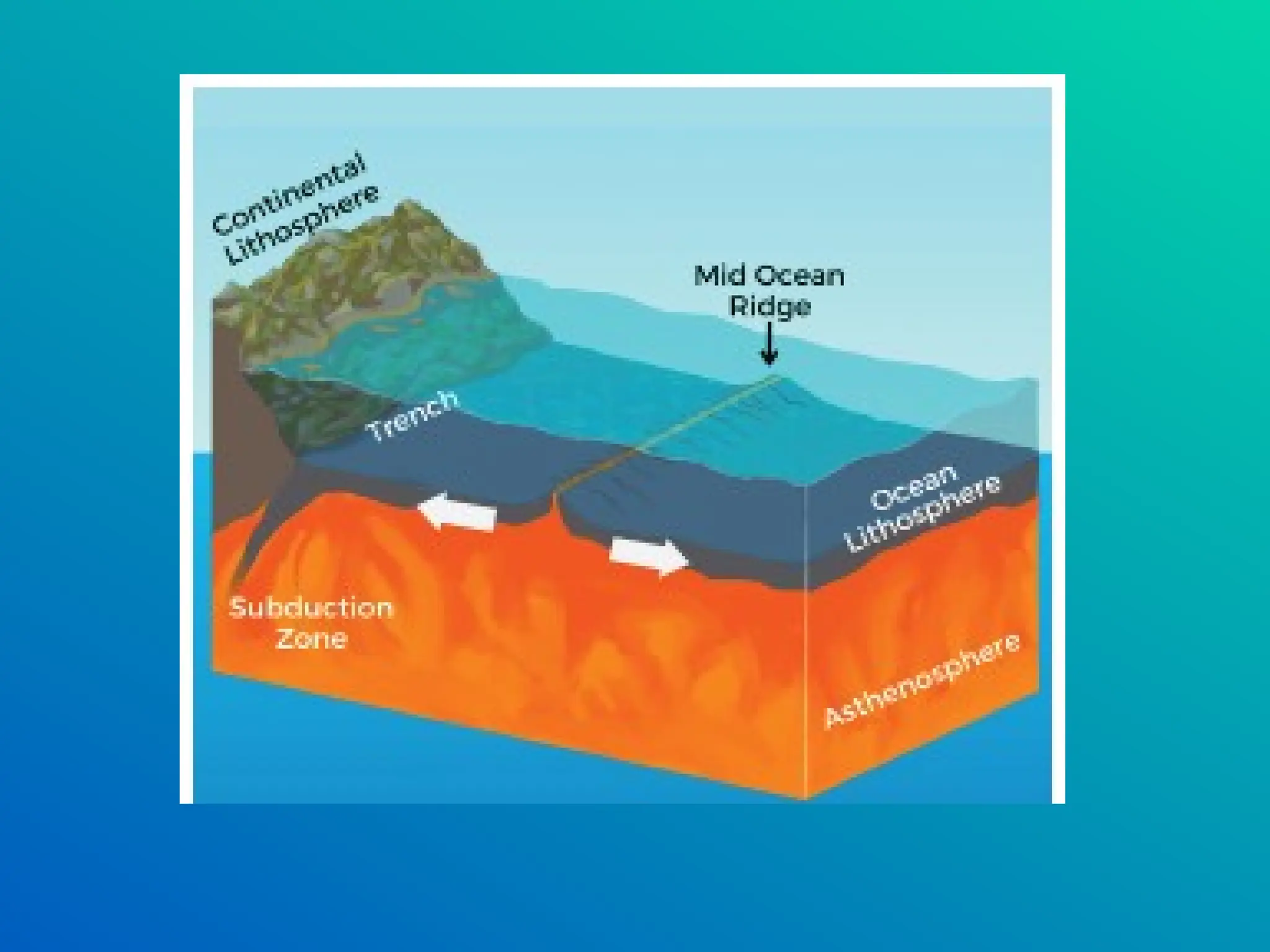
Oceanic deeps or trenches:-
•Narrow and steep sided depressions
•They occur where two plates of earth’s
crust are moving together and one is
being pushed down below the other
E.g. Challenger deep. A part Mariana
Trench (Pacific Ocean)
Deepest Trench
10.
Ridges:-
The raised areasin sea
E.g. Mid Atlantic ridge (S-shaped), Indian
Ocean ridge(Inverted Y-shaped)
11.
Sea Mount:-
A ridgerising more than 1000m above the ocean floor is
called sea mount.
Guytots:-
Flat topped sea monts are called Guyots (Maximum in
pacific ocean)
Submarine canyons:-
These are deep gorges on the ocean floor and are
found in continental slopes and deep sea plains.