How to Use Inventory
Financing
How to Use Inventory
Financing
Without Adding Debt Burden
The Business
Challenge
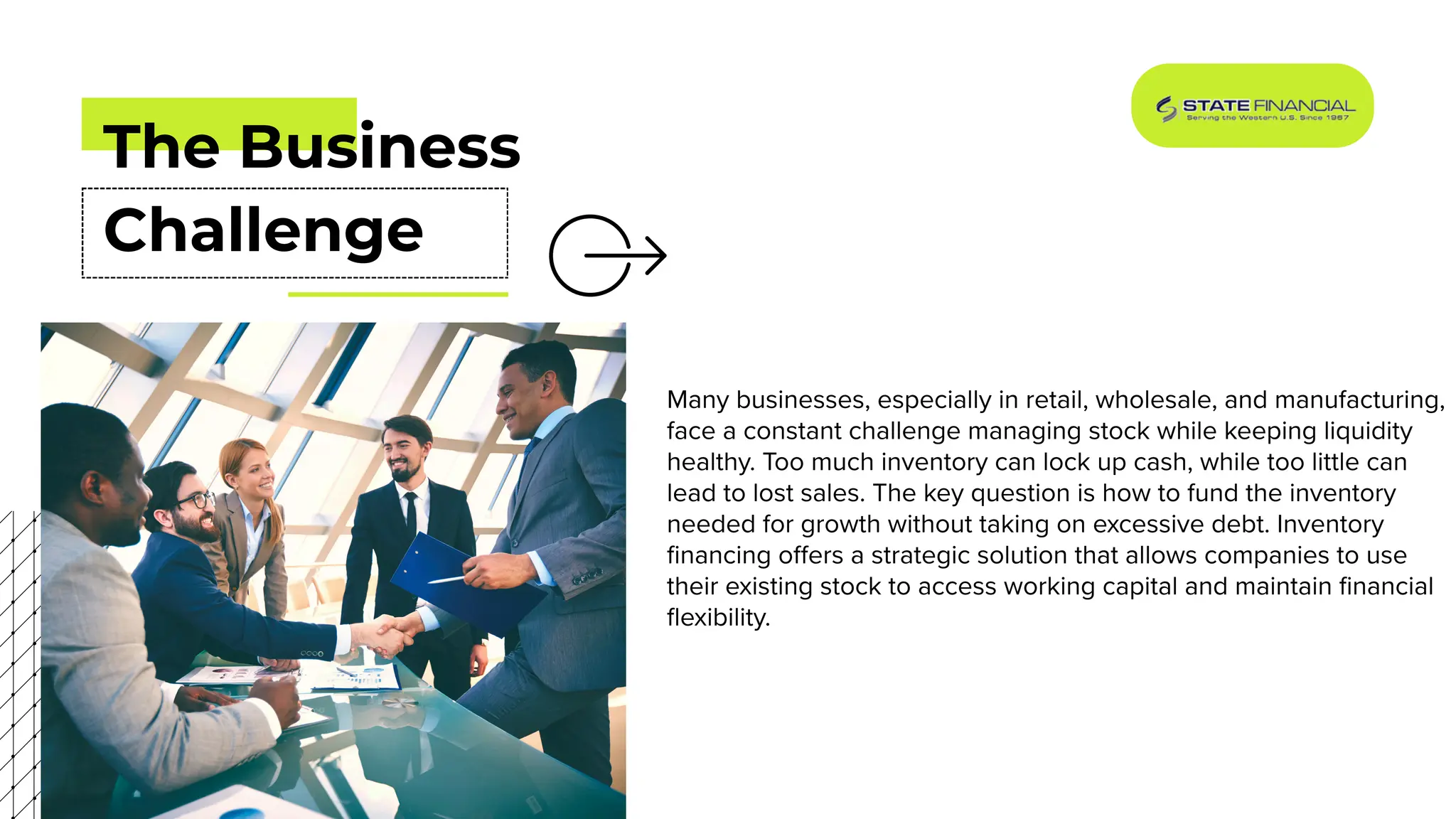
Many businesses, especially in retail, wholesale, and manufacturing,
face a constant challenge managing stock while keeping liquidity
healthy. Too much inventory can lock up cash, while too little can
lead to lost sales. The key question is how to fund the inventory
needed for growth without taking on excessive debt. Inventory
financing offers a strategic solution that allows companies to use
their existing stock to access working capital and maintain financial
flexibility.
What Is Inventory
Financing?
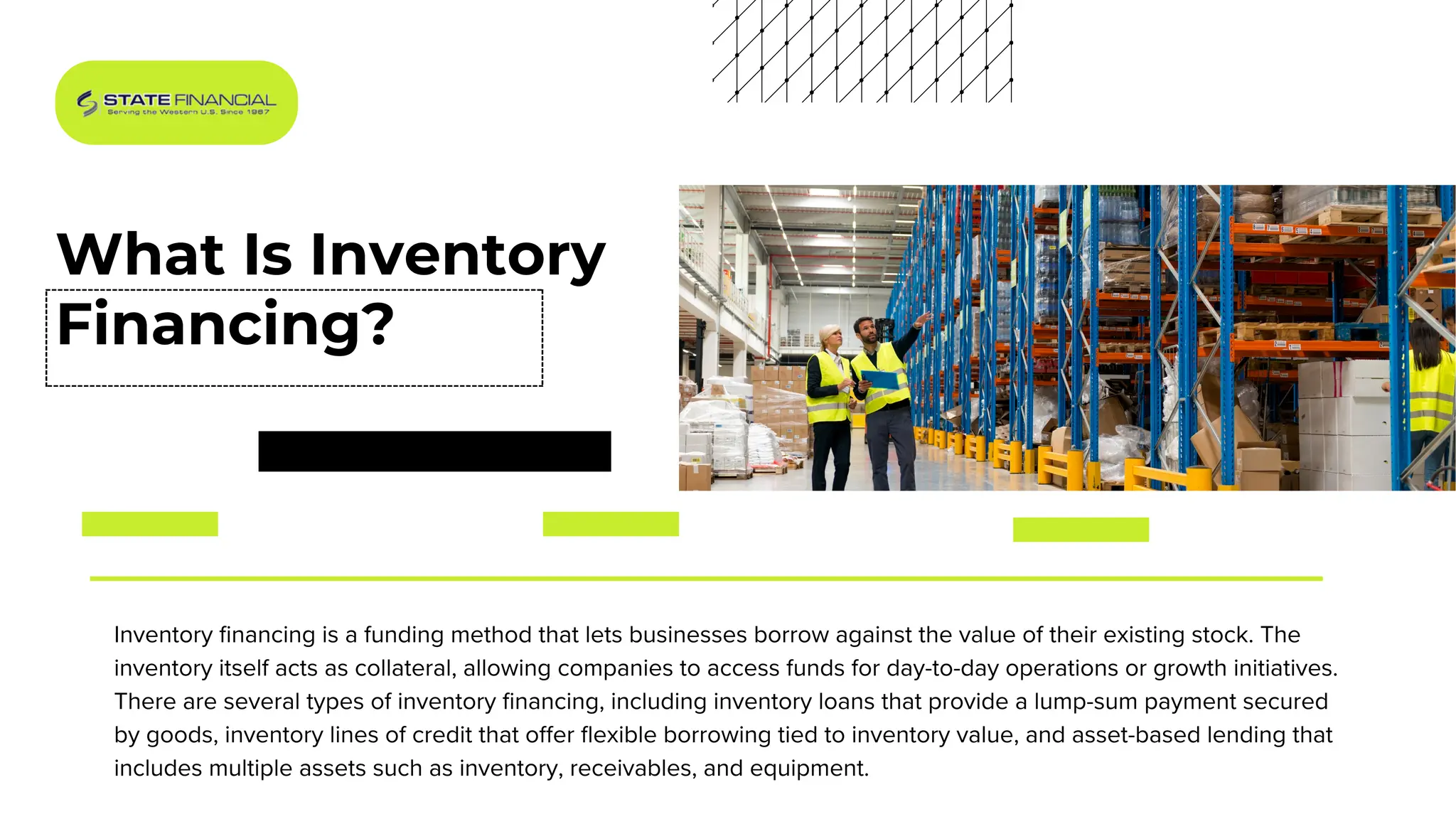
Inventory financing is a funding method that lets businesses borrow against the value of their existing stock. The
inventory itself acts as collateral, allowing companies to access funds for day-to-day operations or growth initiatives.
There are several types of inventory financing, including inventory loans that provide a lump-sum payment secured
by goods, inventory lines of credit that offer flexible borrowing tied to inventory value, and asset-based lending that
includes multiple assets such as inventory, receivables, and equipment.
Why Businesses
Choose It
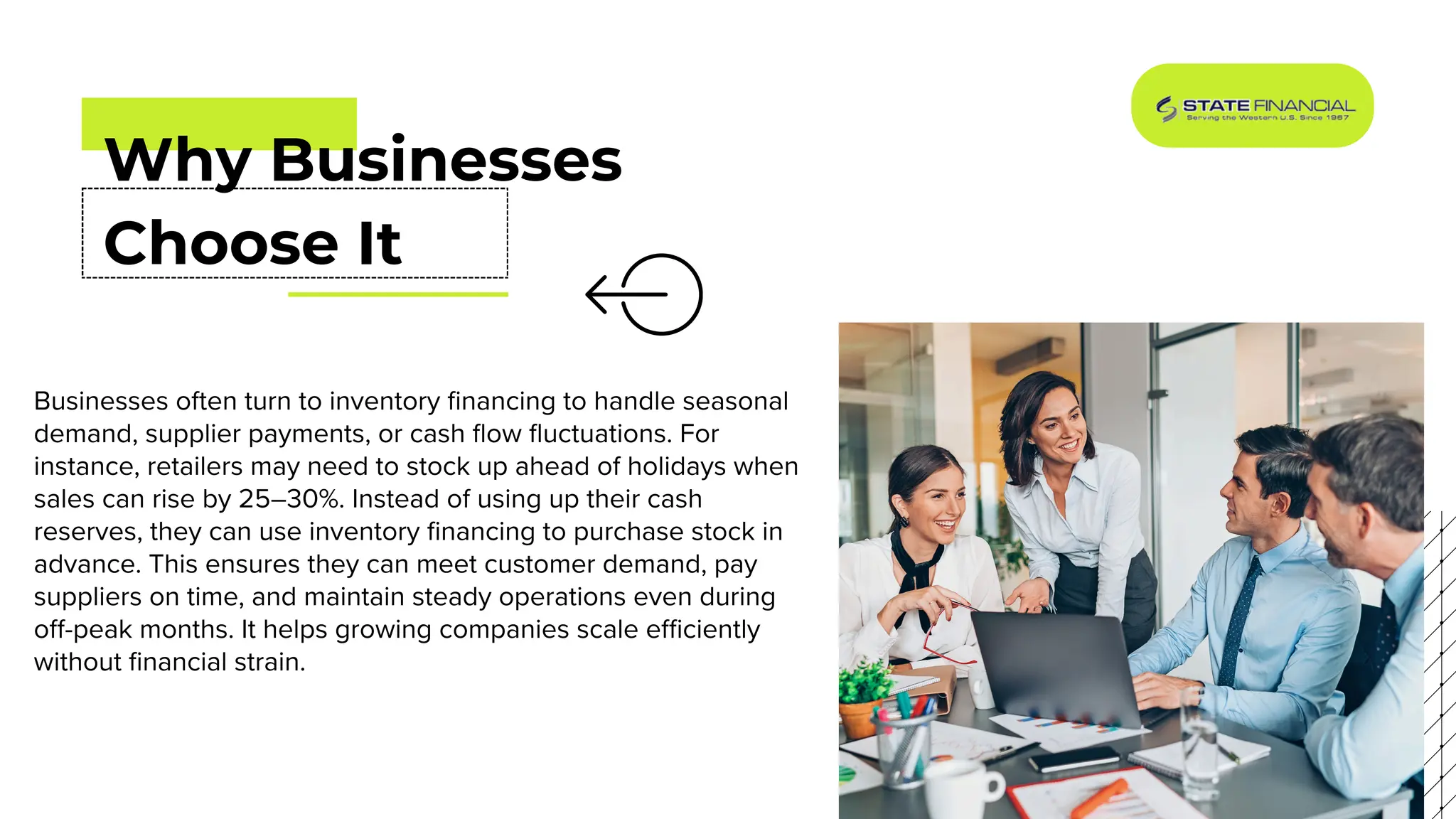
Businesses often turn to inventory financing to handle seasonal
demand, supplier payments, or cash flow fluctuations. For
instance, retailers may need to stock up ahead of holidays when
sales can rise by 25–30%. Instead of using up their cash
reserves, they can use inventory financing to purchase stock in
advance. This ensures they can meet customer demand, pay
suppliers on time, and maintain steady operations even during
off-peak months. It helps growing companies scale efficiently
without financial strain.
How It Differs
from Traditional
Debt
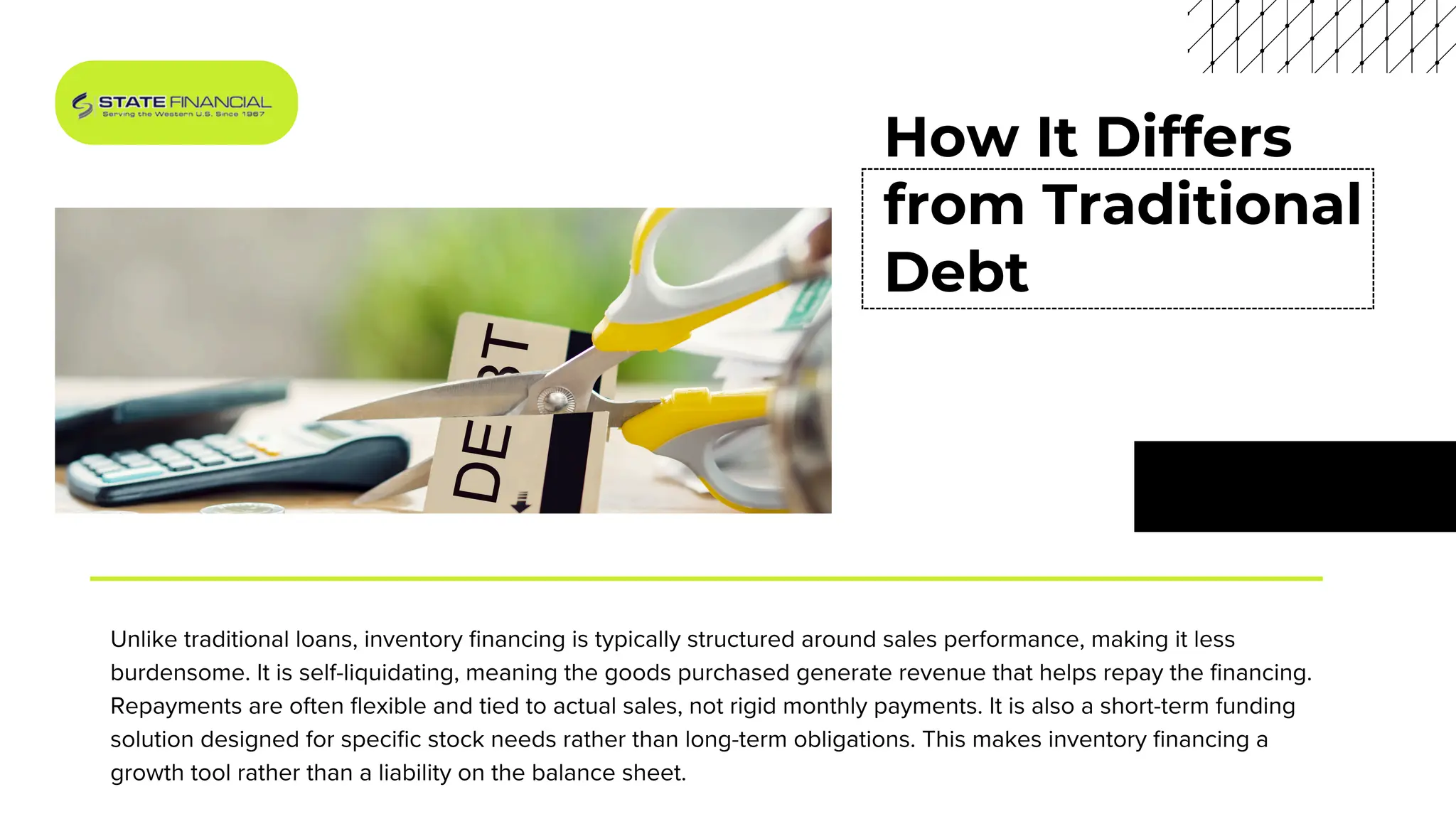
Unlike traditional loans, inventory financing is typically structured around sales performance, making it less
burdensome. It is self-liquidating, meaning the goods purchased generate revenue that helps repay the financing.
Repayments are often flexible and tied to actual sales, not rigid monthly payments. It is also a short-term funding
solution designed for specific stock needs rather than long-term obligations. This makes inventory financing a
growth tool rather than a liability on the balance sheet.
Strategic Use of
Inventory Financing
To use inventory financing effectively, businesses must
approach it strategically. The first step is to match financing
with predictable sales cycles—borrow only when you can
reasonably forecast demand. Companies should also borrow
conservatively, financing only what they can realistically sell.
Tracking inventory turnover is essential, as faster-selling
products reduce repayment risk. It’s also wise to negotiate
flexible repayment terms and use financing as a growth
catalyst rather than emergency cash to patch financial gaps.
Real-World
Example
Consider a mid-sized apparel company preparing for the holiday
season. They needed $500,000 to purchase additional stock but
were declined by a traditional bank due to strict credit
requirements. Instead, they secured inventory financing, with
repayment linked directly to sales. Over six months, they sold
through their inventory, repaid the financing in full, and achieved
a 30% increase in year-over-year revenue. This example
demonstrates how inventory financing can fuel expansion rather
than create long-term debt.
Benefits and
Misconceptions
Inventory financing provides several key benefits. It preserves cash flow by preventing capital from being tied up in
unsold stock, increases sales capacity by enabling larger orders, and strengthens supplier relationships through
timely payments. It also supports business growth without adding long-term debt. Common misconceptions include
the belief that it’s just another loan or only for struggling companies. In reality, it’s a flexible, performance-based
funding tool used by many growing businesses.
Combining Financing Tools and
Final Thoughts
Inventory financing works even better when combined with other funding solutions. Many businesses pair it with accounts
receivable financing to unlock cash from unpaid invoices, creating a balanced cash flow strategy. This approach ensures they can
fund inventory, pay suppliers, and maintain liquidity simultaneously. When used wisely, inventory financing turns your warehouse
into working capital, supporting expansion without adding debt burden. At State Financial, we help businesses leverage financing
solutions to grow stronger and more sustainably.
Feel free to reach
out to us if you
have any question
Phone Number
310 820 6454
E-mail
info@statefinancial.com
Website
www.statefinancial.com
Thank You
For Your Attention

How to Use Inventory Financing Without Adding Debt Burden

  • 1.
    How to UseInventory Financing How to Use Inventory Financing Without Adding Debt Burden Without Adding Debt Burden
  • 2.
    The Business Challenge Many businesses,especially in retail, wholesale, and manufacturing, face a constant challenge managing stock while keeping liquidity healthy. Too much inventory can lock up cash, while too little can lead to lost sales. The key question is how to fund the inventory needed for growth without taking on excessive debt. Inventory financing offers a strategic solution that allows companies to use their existing stock to access working capital and maintain financial flexibility.
  • 3.
    What Is Inventory Financing? Inventoryfinancing is a funding method that lets businesses borrow against the value of their existing stock. The inventory itself acts as collateral, allowing companies to access funds for day-to-day operations or growth initiatives. There are several types of inventory financing, including inventory loans that provide a lump-sum payment secured by goods, inventory lines of credit that offer flexible borrowing tied to inventory value, and asset-based lending that includes multiple assets such as inventory, receivables, and equipment.
  • 4.
    Why Businesses Choose It Businessesoften turn to inventory financing to handle seasonal demand, supplier payments, or cash flow fluctuations. For instance, retailers may need to stock up ahead of holidays when sales can rise by 25–30%. Instead of using up their cash reserves, they can use inventory financing to purchase stock in advance. This ensures they can meet customer demand, pay suppliers on time, and maintain steady operations even during off-peak months. It helps growing companies scale efficiently without financial strain.
  • 5.
    How It Differs fromTraditional Debt Unlike traditional loans, inventory financing is typically structured around sales performance, making it less burdensome. It is self-liquidating, meaning the goods purchased generate revenue that helps repay the financing. Repayments are often flexible and tied to actual sales, not rigid monthly payments. It is also a short-term funding solution designed for specific stock needs rather than long-term obligations. This makes inventory financing a growth tool rather than a liability on the balance sheet.
  • 6.
    Strategic Use of InventoryFinancing To use inventory financing effectively, businesses must approach it strategically. The first step is to match financing with predictable sales cycles—borrow only when you can reasonably forecast demand. Companies should also borrow conservatively, financing only what they can realistically sell. Tracking inventory turnover is essential, as faster-selling products reduce repayment risk. It’s also wise to negotiate flexible repayment terms and use financing as a growth catalyst rather than emergency cash to patch financial gaps.
  • 7.
    Real-World Example Consider a mid-sizedapparel company preparing for the holiday season. They needed $500,000 to purchase additional stock but were declined by a traditional bank due to strict credit requirements. Instead, they secured inventory financing, with repayment linked directly to sales. Over six months, they sold through their inventory, repaid the financing in full, and achieved a 30% increase in year-over-year revenue. This example demonstrates how inventory financing can fuel expansion rather than create long-term debt.
  • 8.
    Benefits and Misconceptions Inventory financingprovides several key benefits. It preserves cash flow by preventing capital from being tied up in unsold stock, increases sales capacity by enabling larger orders, and strengthens supplier relationships through timely payments. It also supports business growth without adding long-term debt. Common misconceptions include the belief that it’s just another loan or only for struggling companies. In reality, it’s a flexible, performance-based funding tool used by many growing businesses.
  • 9.
    Combining Financing Toolsand Final Thoughts Inventory financing works even better when combined with other funding solutions. Many businesses pair it with accounts receivable financing to unlock cash from unpaid invoices, creating a balanced cash flow strategy. This approach ensures they can fund inventory, pay suppliers, and maintain liquidity simultaneously. When used wisely, inventory financing turns your warehouse into working capital, supporting expansion without adding debt burden. At State Financial, we help businesses leverage financing solutions to grow stronger and more sustainably.
  • 10.
    Feel free toreach out to us if you have any question Phone Number 310 820 6454 E-mail info@statefinancial.com Website www.statefinancial.com
  • 11.