8 STEPS TO MAKE IT
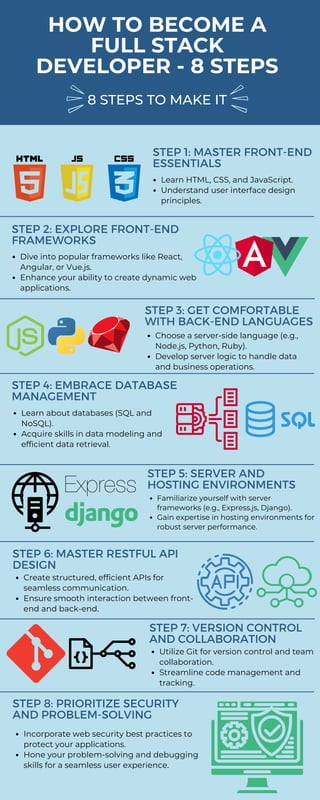
HOW TO BECOME A
FULL STACK
DEVELOPER - 8 STEPS
STEP 5: SERVER AND
HOSTING ENVIRONMENTS
STEP 4: EMBRACE DATABASE
MANAGEMENT
STEP 3: GET COMFORTABLE
WITH BACK-END LANGUAGES
Choose a server-side language (e.g.,
Node.js, Python, Ruby).
Develop server logic to handle data
and business operations.
STEP 2: EXPLORE FRONT-END
FRAMEWORKS
Dive into popular frameworks like React,
Angular, or Vue.js.
Enhance your ability to create dynamic web
applications.
STEP 1: MASTER FRONT-END
ESSENTIALS
Learn HTML, CSS, and JavaScript.
Understand user interface design
principles.
STEP 6: MASTER RESTFUL API
DESIGN
Create structured, efficient APIs for
seamless communication.
Ensure smooth interaction between front-
end and back-end.
STEP 7: VERSION CONTROL
AND COLLABORATION
Utilize Git for version control and team
collaboration.
Streamline code management and
tracking.
STEP 8: PRIORITIZE SECURITY
AND PROBLEM-SOLVING
Incorporate web security best practices to
protect your applications.
Hone your problem-solving and debugging
skills for a seamless user experience.
Learn about databases (SQL and
NoSQL).
Acquire skills in data modeling and
efficient data retrieval.
Familiarize yourself with server
frameworks (e.g., Express.js, Django).
Gain expertise in hosting environments for
robust server performance.

How To Become A Full Stack Developer - 8 Steps

  • 1.
    8 STEPS TOMAKE IT HOW TO BECOME A FULL STACK DEVELOPER - 8 STEPS STEP 5: SERVER AND HOSTING ENVIRONMENTS STEP 4: EMBRACE DATABASE MANAGEMENT STEP 3: GET COMFORTABLE WITH BACK-END LANGUAGES Choose a server-side language (e.g., Node.js, Python, Ruby). Develop server logic to handle data and business operations. STEP 2: EXPLORE FRONT-END FRAMEWORKS Dive into popular frameworks like React, Angular, or Vue.js. Enhance your ability to create dynamic web applications. STEP 1: MASTER FRONT-END ESSENTIALS Learn HTML, CSS, and JavaScript. Understand user interface design principles. STEP 6: MASTER RESTFUL API DESIGN Create structured, efficient APIs for seamless communication. Ensure smooth interaction between front- end and back-end. STEP 7: VERSION CONTROL AND COLLABORATION Utilize Git for version control and team collaboration. Streamline code management and tracking. STEP 8: PRIORITIZE SECURITY AND PROBLEM-SOLVING Incorporate web security best practices to protect your applications. Hone your problem-solving and debugging skills for a seamless user experience. Learn about databases (SQL and NoSQL). Acquire skills in data modeling and efficient data retrieval. Familiarize yourself with server frameworks (e.g., Express.js, Django). Gain expertise in hosting environments for robust server performance.