DEVELOPMENT
FULL STACK
What is Full-Stack
Development?
Full-stack development
involves working on both the
front-end (client side) and
back-end (server side) of web
applications.
Front-End: User interface and experience
Back-End: Server, database, application logic
Database: Data storage and management
IMPORTANCE OF
FULL-STACK
DEVELOPMENT
High demand for versatile
developers
Ability to handle complete
projects
Increased employability and
job security
Comprehensive understanding
of web development
FRONT-END
DEVELOPMENT
The part of the application users interact
with directly (client side)
Key Technologies
HTML: Structure of web pages
1.
CSS: Styling of web pages
2.
JavaScript: Adds interactivity
3.
Frameworks: React, Angular, Vue.js
4.
Creating user-friendly interfaces
1.
Ensuring responsive design
2.
Implementing design principles
3.
Responsibilities:
BACK-END DEVELOPMENT
The server side of the application managing
logic, database, and server configuration
Languages: Node.js, Python, Java, Ruby, PHP
1.
Frameworks: Express.js, Django, Spring Boot,
Ruby on Rails
2.
APIs: RESTful services, GraphQL
3.
Key Technologies
Responsibilities
Managing application logic and database
interactions
1.
Ensuring security and data protection
2.
Handling server-side operations
3.
DATABASE
MANAGEMENT
Organized collections of data for
storage, management, and retrieval
Types of Databases:
SQL Databases: MySQL, PostgreSQL
1.
NoSQL Databases: MongoDB, Cassandra
2.
Key Concepts:
CRUD Operations: Create, Read, Update,
Delete
1.
Database Design: Schemas, indexing,
normalization
2.
Database Management: Query
optimization, backup, and recovery
3.
Responsibilities:
Storing and organizing data
1.
Ensuring data integrity and security
2.
Optimizing queries for performance
3.
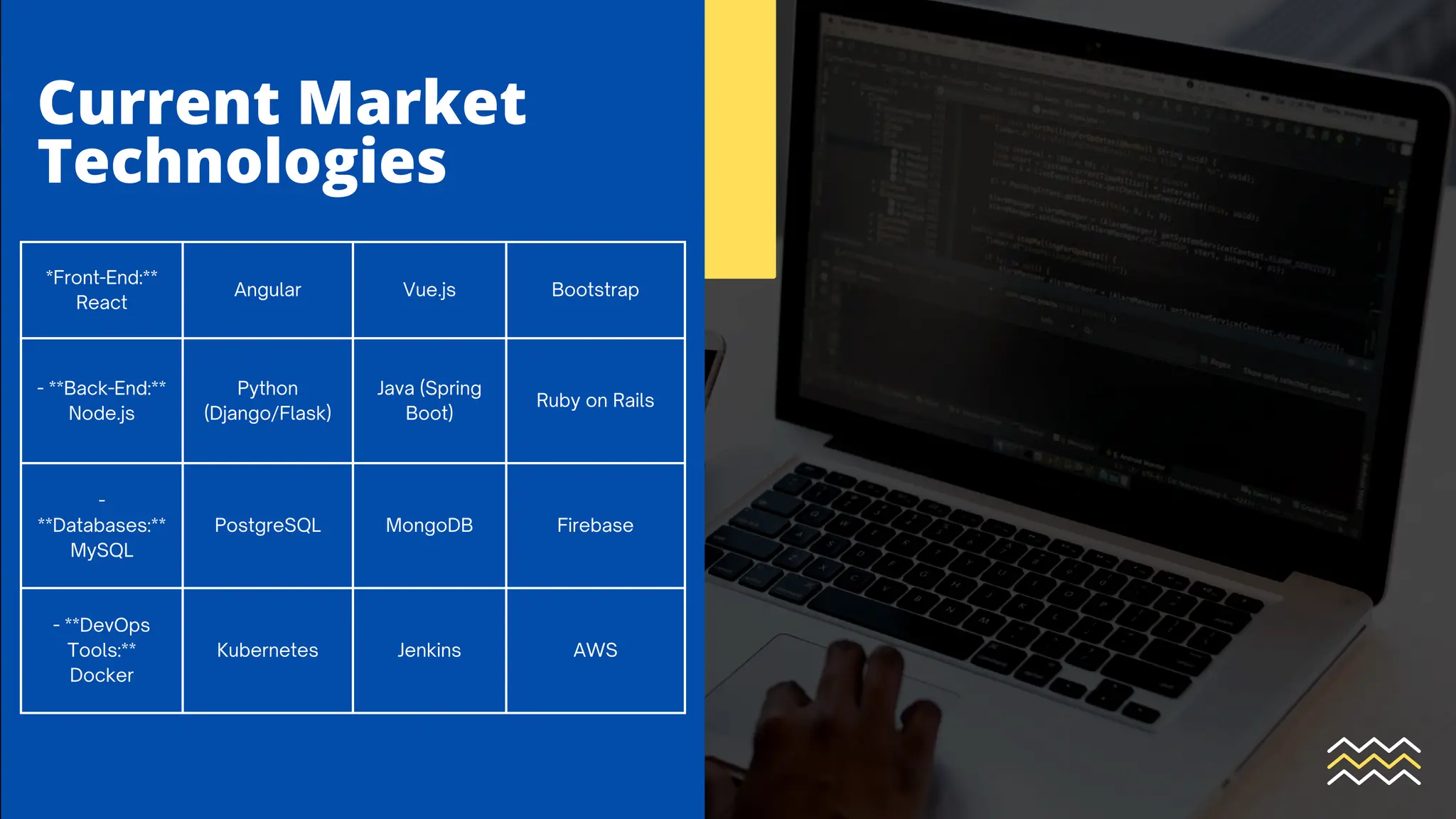
*Front-End:**
React
Angular Vue.js Bootstrap
- **Back-End:**
Node.js
Python
(Django/Flask)
Java (Spring
Boot)
Ruby on Rails
-
**Databases:**
MySQL
PostgreSQL MongoDB Firebase
- **DevOps
Tools:**
Docker
Kubernetes Jenkins AWS
Current Market
Technologies
TRENDS IN
FULL-STACK
DEVELOPMENT
Increasing use of JavaScript frameworks
and libraries
Growth of serverless architectures
Rise of microservices
Emphasis on performance and
scalability
Focus on security and data privacy
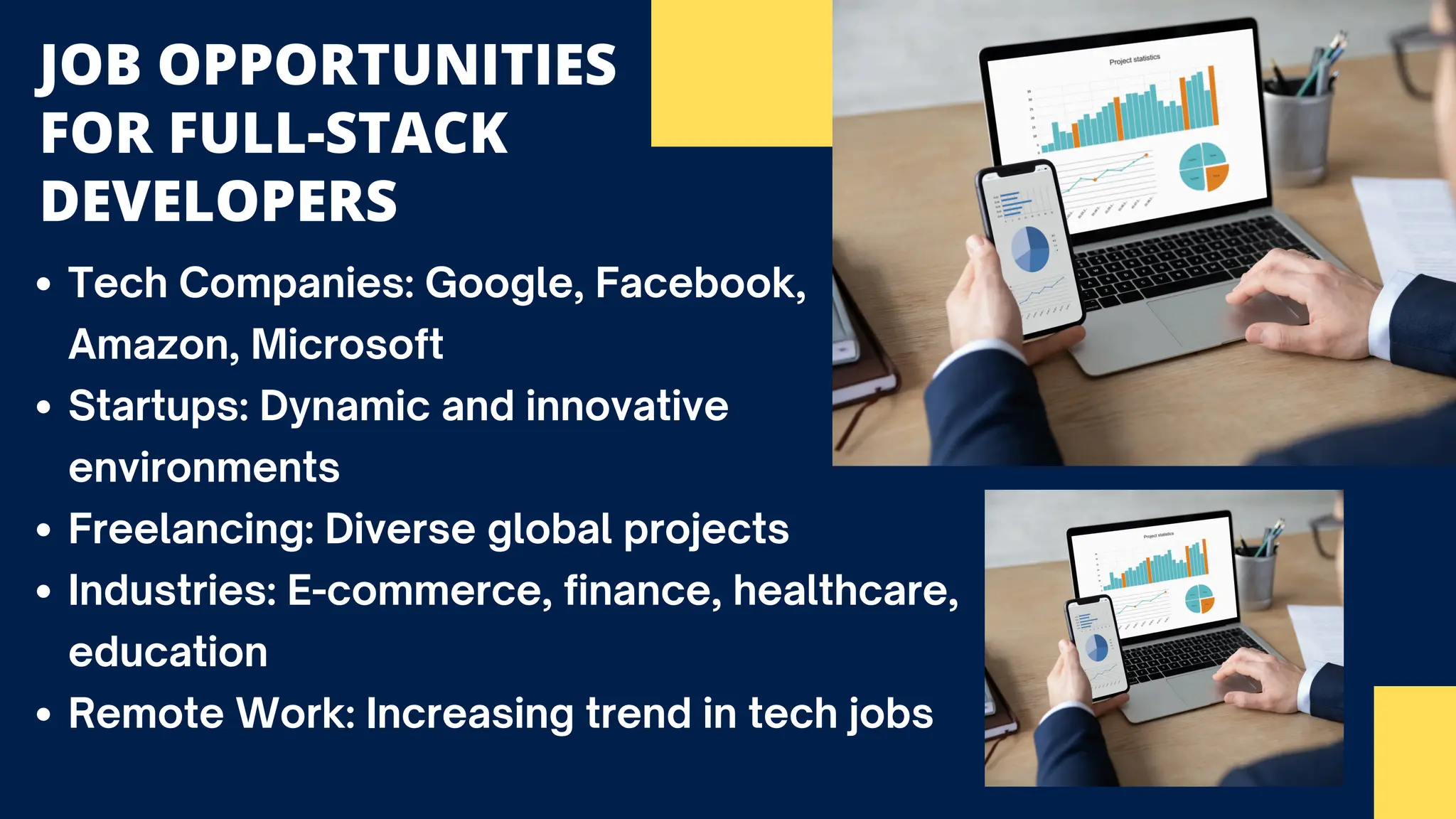
JOB OPPORTUNITIES
FOR FULL-STACK
DEVELOPERS
Tech Companies: Google, Facebook,
Amazon, Microsoft
Startups: Dynamic and innovative
environments
Freelancing: Diverse global projects
Industries: E-commerce, finance, healthcare,
education
Remote Work: Increasing trend in tech jobs
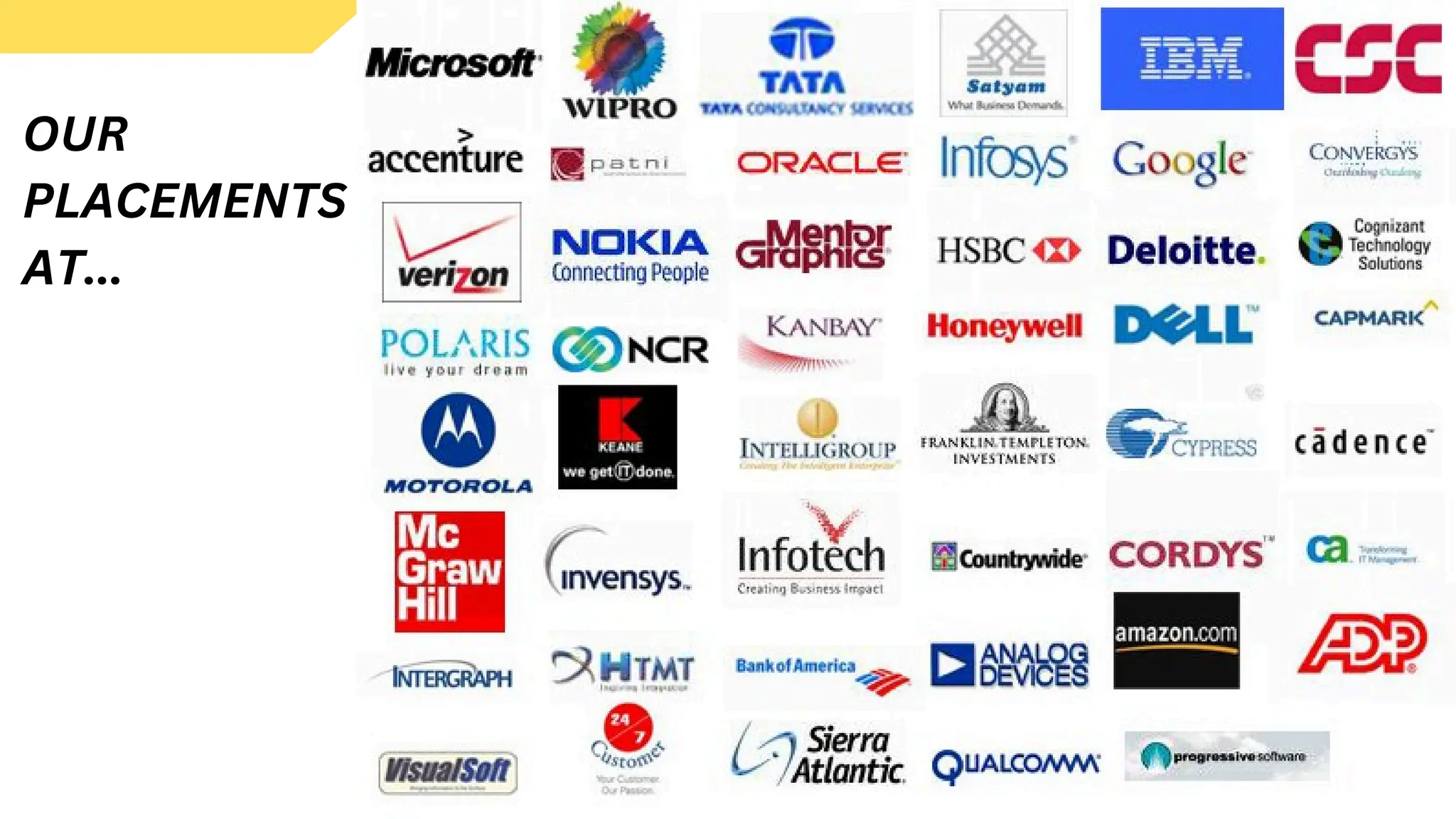
OUR
PLACEMENTS
AT...
THANK
YOU!! 9175978889
sapalogytraining.com
info@sapalogytraining.com
607, 608 B-wing, Lokmat Bhavan,
Lokmat Square, Ramdaspeth, Nagpur,
Maharashtra 440012
CONTACT
Sapalogy Training is award winning
training and placement providing IT
training institute in Nagpur established
in 2012. It is considered as one of the best
training institutes in central India. We are
currently offering our services to
individual candidates, colleges and
universities across PAN India.

Full Stack Development ppt for students.pdf

  • 1.
  • 2.
    What is Full-Stack Development? Full-stackdevelopment involves working on both the front-end (client side) and back-end (server side) of web applications. Front-End: User interface and experience Back-End: Server, database, application logic Database: Data storage and management
  • 3.
    IMPORTANCE OF FULL-STACK DEVELOPMENT High demandfor versatile developers Ability to handle complete projects Increased employability and job security Comprehensive understanding of web development
  • 4.
    FRONT-END DEVELOPMENT The part ofthe application users interact with directly (client side) Key Technologies HTML: Structure of web pages 1. CSS: Styling of web pages 2. JavaScript: Adds interactivity 3. Frameworks: React, Angular, Vue.js 4. Creating user-friendly interfaces 1. Ensuring responsive design 2. Implementing design principles 3. Responsibilities:
  • 5.
    BACK-END DEVELOPMENT The serverside of the application managing logic, database, and server configuration Languages: Node.js, Python, Java, Ruby, PHP 1. Frameworks: Express.js, Django, Spring Boot, Ruby on Rails 2. APIs: RESTful services, GraphQL 3. Key Technologies Responsibilities Managing application logic and database interactions 1. Ensuring security and data protection 2. Handling server-side operations 3.
  • 6.
    DATABASE MANAGEMENT Organized collections ofdata for storage, management, and retrieval Types of Databases: SQL Databases: MySQL, PostgreSQL 1. NoSQL Databases: MongoDB, Cassandra 2. Key Concepts: CRUD Operations: Create, Read, Update, Delete 1. Database Design: Schemas, indexing, normalization 2. Database Management: Query optimization, backup, and recovery 3. Responsibilities: Storing and organizing data 1. Ensuring data integrity and security 2. Optimizing queries for performance 3.
  • 7.
    *Front-End:** React Angular Vue.js Bootstrap -**Back-End:** Node.js Python (Django/Flask) Java (Spring Boot) Ruby on Rails - **Databases:** MySQL PostgreSQL MongoDB Firebase - **DevOps Tools:** Docker Kubernetes Jenkins AWS Current Market Technologies
  • 8.
    TRENDS IN FULL-STACK DEVELOPMENT Increasing useof JavaScript frameworks and libraries Growth of serverless architectures Rise of microservices Emphasis on performance and scalability Focus on security and data privacy
  • 9.
    JOB OPPORTUNITIES FOR FULL-STACK DEVELOPERS TechCompanies: Google, Facebook, Amazon, Microsoft Startups: Dynamic and innovative environments Freelancing: Diverse global projects Industries: E-commerce, finance, healthcare, education Remote Work: Increasing trend in tech jobs
  • 11.
  • 12.
    THANK YOU!! 9175978889 sapalogytraining.com info@sapalogytraining.com 607, 608B-wing, Lokmat Bhavan, Lokmat Square, Ramdaspeth, Nagpur, Maharashtra 440012 CONTACT Sapalogy Training is award winning training and placement providing IT training institute in Nagpur established in 2012. It is considered as one of the best training institutes in central India. We are currently offering our services to individual candidates, colleges and universities across PAN India.