www.acadecraft.com
The advancements in technology have transformed the education
sector in different ways. The adoption of online learning and digital
learning systems are the best examples of the use of technology in the
learning and training sector. Thanks to the dedicated e-learning
services, it is easy for educational institutes and training businesses to
offer improved educational experiences.
This article delves into the role of digital learning and learning
management systems in catering to diverse learner needs. We’ll go
through the multifaceted ways in which digital learning and LMS
contribute to the overall educational journey.
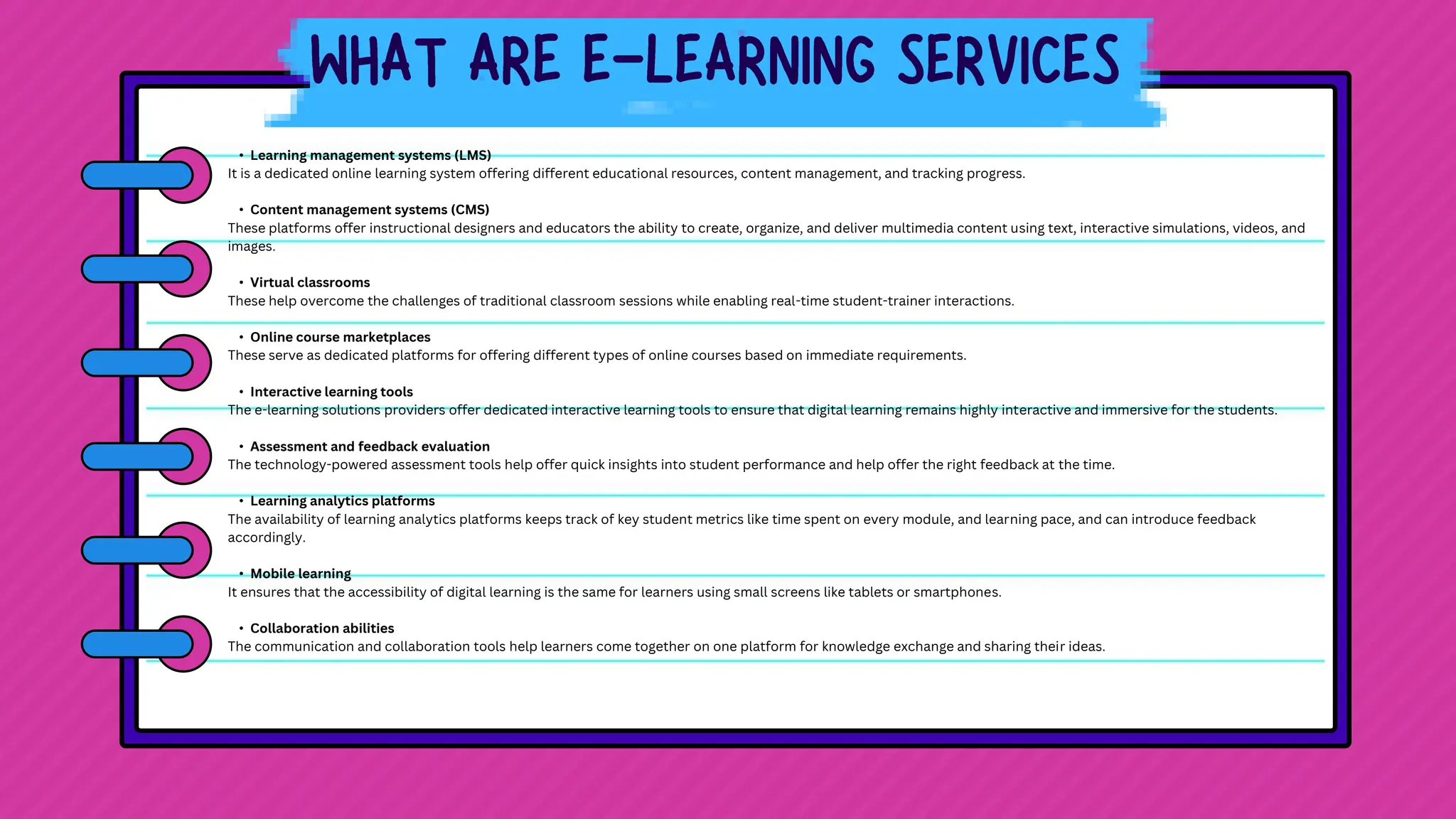
• Learning management systems (LMS)
It is a dedicated online learning system offering different educational resources, content management, and tracking progress.
• Content management systems (CMS)
These platforms offer instructional designers and educators the ability to create, organize, and deliver multimedia content using text, interactive simulations, videos, and
images.
• Virtual classrooms
These help overcome the challenges of traditional classroom sessions while enabling real-time student-trainer interactions.
• Online course marketplaces
These serve as dedicated platforms for offering different types of online courses based on immediate requirements.
• Interactive learning tools
The e-learning solutions providers offer dedicated interactive learning tools to ensure that digital learning remains highly interactive and immersive for the students.
• Assessment and feedback evaluation
The technology-powered assessment tools help offer quick insights into student performance and help offer the right feedback at the time.
• Learning analytics platforms
The availability of learning analytics platforms keeps track of key student metrics like time spent on every module, and learning pace, and can introduce feedback
accordingly.
• Mobile learning
It ensures that the accessibility of digital learning is the same for learners using small screens like tablets or smartphones.
• Collaboration abilities
The communication and collaboration tools help learners come together on one platform for knowledge exchange and sharing their ideas.
• Accessible and flexible learning
Firstly, the use of online learning and learning management systems ensures that it is easy for
learners to access the learning content according to their needs.
The availability of learning content using the internet while eliminating the challenges of
traditional learning solutions ensures that modern learners can become a part of these flexible
learning solutions.
• Personalized learning
The e-learning services focus on harnessing the potential of customized learning to tailor the
educational content according to the learner's needs. These learning systems can quickly identify
the learner preferences, needs, and styles to offer customized learning content based on the data
assessment and analytics.
The top-notch e-learning services like e-learning and LMS are the
right catalysts to improve the overall learning experiences for the
education system. The multidimensional benefits of using these
solutions help educational institutes stress their implementation for
enhanced learning efficiencies.
Not to miss is the integral role of these solutions and other
technology-backed investments in empowering education in the
upcoming years.
www.acadecraft.com

How Elearning and LMS Enhance the Educational Experience.pptx

  • 1.
  • 2.
    The advancements intechnology have transformed the education sector in different ways. The adoption of online learning and digital learning systems are the best examples of the use of technology in the learning and training sector. Thanks to the dedicated e-learning services, it is easy for educational institutes and training businesses to offer improved educational experiences. This article delves into the role of digital learning and learning management systems in catering to diverse learner needs. We’ll go through the multifaceted ways in which digital learning and LMS contribute to the overall educational journey.

  • 3.
    • Learning managementsystems (LMS) It is a dedicated online learning system offering different educational resources, content management, and tracking progress. • Content management systems (CMS) These platforms offer instructional designers and educators the ability to create, organize, and deliver multimedia content using text, interactive simulations, videos, and images. • Virtual classrooms These help overcome the challenges of traditional classroom sessions while enabling real-time student-trainer interactions. • Online course marketplaces These serve as dedicated platforms for offering different types of online courses based on immediate requirements. • Interactive learning tools The e-learning solutions providers offer dedicated interactive learning tools to ensure that digital learning remains highly interactive and immersive for the students. • Assessment and feedback evaluation The technology-powered assessment tools help offer quick insights into student performance and help offer the right feedback at the time. • Learning analytics platforms The availability of learning analytics platforms keeps track of key student metrics like time spent on every module, and learning pace, and can introduce feedback accordingly. • Mobile learning It ensures that the accessibility of digital learning is the same for learners using small screens like tablets or smartphones. • Collaboration abilities The communication and collaboration tools help learners come together on one platform for knowledge exchange and sharing their ideas.
  • 4.
    • Accessible andflexible learning Firstly, the use of online learning and learning management systems ensures that it is easy for learners to access the learning content according to their needs. The availability of learning content using the internet while eliminating the challenges of traditional learning solutions ensures that modern learners can become a part of these flexible learning solutions. • Personalized learning The e-learning services focus on harnessing the potential of customized learning to tailor the educational content according to the learner's needs. These learning systems can quickly identify the learner preferences, needs, and styles to offer customized learning content based on the data assessment and analytics.
  • 5.
    The top-notch e-learningservices like e-learning and LMS are the right catalysts to improve the overall learning experiences for the education system. The multidimensional benefits of using these solutions help educational institutes stress their implementation for enhanced learning efficiencies. Not to miss is the integral role of these solutions and other technology-backed investments in empowering education in the upcoming years.
  • 6.