Empowering Education:
Unleashing the Potential of
Educational Technology
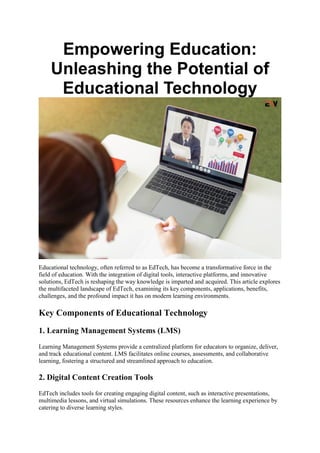
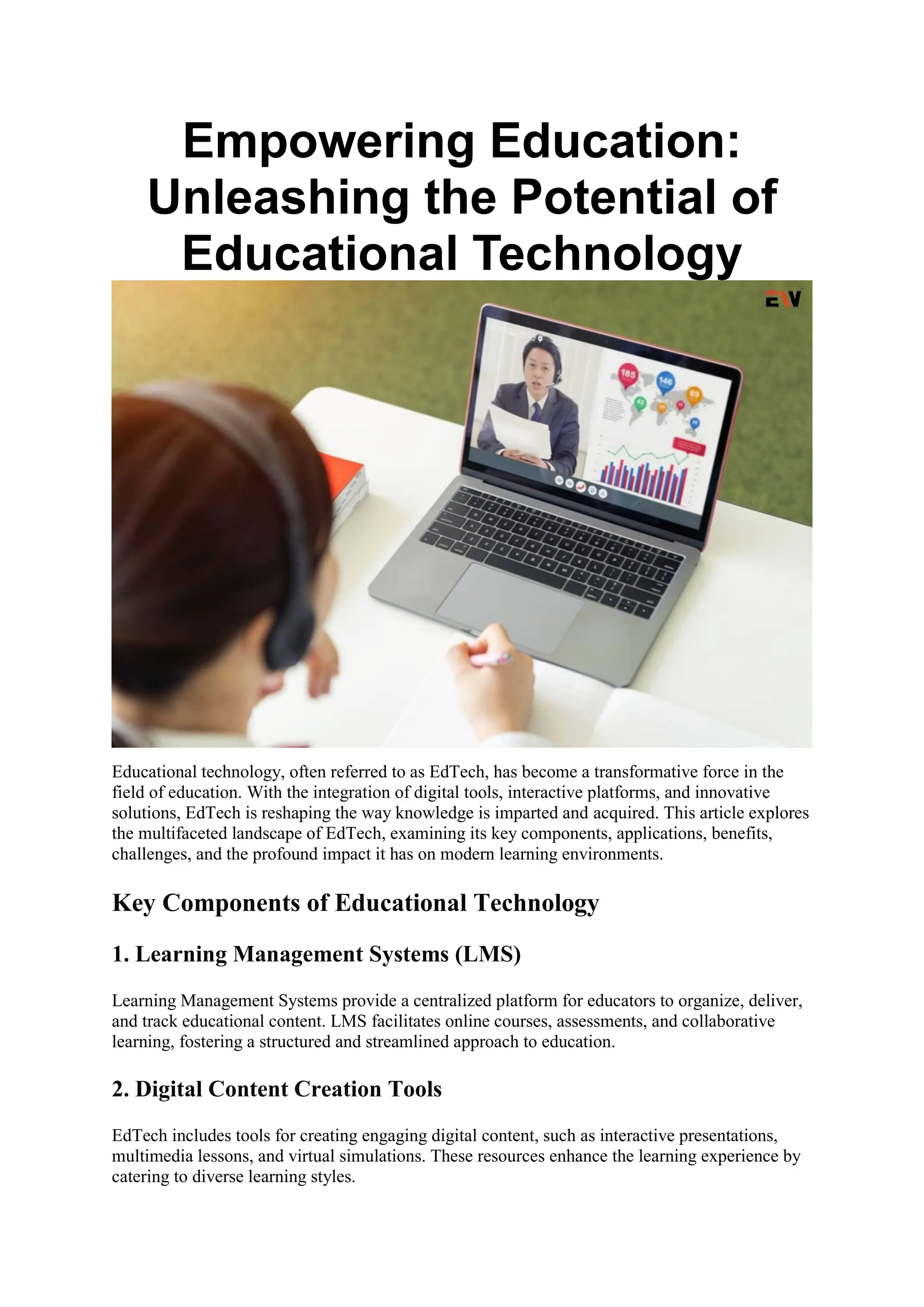
Educational technology, often referred to as EdTech, has become a transformative force in the
field of education. With the integration of digital tools, interactive platforms, and innovative
solutions, EdTech is reshaping the way knowledge is imparted and acquired. This article explores
the multifaceted landscape of EdTech, examining its key components, applications, benefits,
challenges, and the profound impact it has on modern learning environments.
Key Components of Educational Technology
1. Learning Management Systems (LMS)
Learning Management Systems provide a centralized platform for educators to organize, deliver,
and track educational content. LMS facilitates online courses, assessments, and collaborative
learning, fostering a structured and streamlined approach to education.
2. Digital Content Creation Tools
EdTech includes tools for creating engaging digital content, such as interactive presentations,
multimedia lessons, and virtual simulations. These resources enhance the learning experience by
catering to diverse learning styles.
3. Collaborative Platforms
Online collaborative platforms enable students and educators to interact, share ideas, and work on
projects in real-time. These platforms promote teamwork, communication skills, and the
exchange of knowledge beyond traditional classroom boundaries.
4. Adaptive Learning Systems
Adaptive learning systems use data and algorithms to tailor educational content to individual
student needs. These systems adjust the pace, difficulty, and content based on a student’s
progress, providing personalized learning experiences.
5. Virtual Reality (VR) and Augmented Reality (AR)
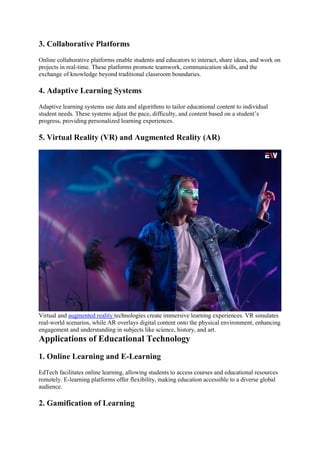
Virtual and augmented reality technologies create immersive learning experiences. VR simulates
real-world scenarios, while AR overlays digital content onto the physical environment, enhancing
engagement and understanding in subjects like science, history, and art.
Applications of Educational Technology
1. Online Learning and E-Learning
EdTech facilitates online learning, allowing students to access courses and educational resources
remotely. E-learning platforms offer flexibility, making education accessible to a diverse global
audience.
2. Gamification of Learning
Gamification incorporates game elements into educational activities to enhance engagement and
motivation. EdTech leverages gamified approaches to make learning more interactive and
enjoyable.
3. Blended Learning Environments
Blended learning combines traditional classroom instruction with online components.
Educational technology supports this hybrid approach, providing a dynamic learning environment
that integrates both face-to-face and virtual experiences.
4. Distance Education and Remote Learning
Especially relevant in the current global landscape, EdTech enables distance education and
remote learning. Virtual classrooms, video conferencing, and collaborative tools connect students
and educators regardless of geographical distance.
5. Professional Development for Educators
EdTech supports the continuous professional development of educators. Online workshops,
webinars, and collaborative platforms empower teachers with new skills, resources, and
pedagogical approaches.
Benefits of Educational Technology
1. Enhanced Accessibility
EdTech breaks down geographical barriers, providing access to educational resources for
individuals worldwide. This increased accessibility promotes inclusivity and lifelong learning.
2. Personalized Learning Experiences
Adaptive learning technologies tailor educational content to individual learning styles and
progress, fostering personalized learning experiences that cater to the unique needs of each
student.
3. Improved Engagement and Motivation
Gamified elements, interactive content, and immersive technologies enhance student engagement
and motivation. Educational technology introduces elements of play and exploration into the
learning process.
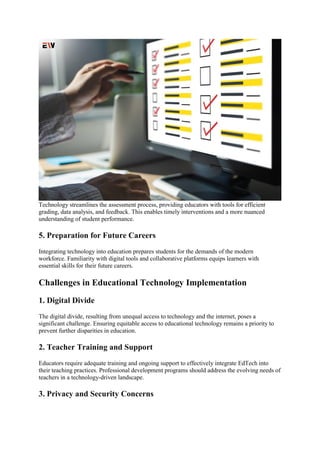
4. Efficient Assessment and Feedback
Technology streamlines the assessment process, providing educators with tools for efficient
grading, data analysis, and feedback. This enables timely interventions and a more nuanced
understanding of student performance.
5. Preparation for Future Careers
Integrating technology into education prepares students for the demands of the modern
workforce. Familiarity with digital tools and collaborative platforms equips learners with
essential skills for their future careers.
Challenges in Educational Technology Implementation
1. Digital Divide
The digital divide, resulting from unequal access to technology and the internet, poses a
significant challenge. Ensuring equitable access to educational technology remains a priority to
prevent further disparities in education.
2. Teacher Training and Support
Educators require adequate training and ongoing support to effectively integrate EdTech into
their teaching practices. Professional development programs should address the evolving needs of
teachers in a technology-driven landscape.
3. Privacy and Security Concerns
Safeguarding student data and ensuring privacy in online learning environments are critical
challenges. Educational institutions must implement robust security measures to protect sensitive
information.
4. Quality of Online Content
The abundance of online content does not always guarantee quality. Ensuring that digital
resources meet educational standards and align with curriculum objectives requires careful
curation and evaluation.
5. Resistance to Change
Resistance to change among educators, administrators, and even students can impede the
successful integration of educational technology. Addressing concerns, fostering a culture of
innovation, and providing support are crucial for overcoming resistance.
Future Trends in Educational Technology
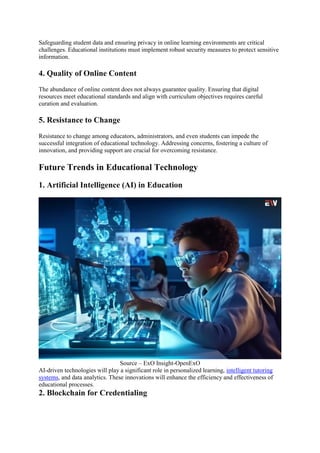
1. Artificial Intelligence (AI) in Education
Source – ExO Insight-OpenExO
AI-driven technologies will play a significant role in personalized learning, intelligent tutoring
systems, and data analytics. These innovations will enhance the efficiency and effectiveness of
educational processes.
2. Blockchain for Credentialing
Blockchain technology has the potential to revolutionize credentialing and verification processes
in education. Transparent and secure credentialing systems can reduce fraud and streamline the
recognition of academic achievements.
3. Immersive Learning Experiences
Continued advancements in VR and AR technologies will provide increasingly immersive
learning experiences. From virtual field trips to interactive simulations, these technologies will
become integral components of educational strategies.
4. Microlearning Platforms
Short, focused learning modules, known as microlearning, will gain popularity. These platforms
offer bite-sized content that can be easily consumed, catering to the preferences of learners for
concise and accessible information.
5. Data-Driven Decision Making
Data analytics will play a crucial role in shaping educational strategies. Institutions will
increasingly leverage data to assess student performance, identify learning trends, and make
informed decisions for curriculum development and improvement.
Conclusion
From fostering personalized learning experiences to addressing global challenges in accessibility,
the impact of educational technology is far-reaching. As we navigate the complexities and
opportunities presented by the digital age, the integration of technology in education continues to
evolve. By embracing innovation, addressing challenges, and staying attuned to the needs of
diverse learners, EdTech has the potential to unlock the full spectrum of human potential,
providing equitable and empowering educational experiences for all.

Educational Technology: Benefits, Applications And Components | Enterprise Wired

  • 1.
    Empowering Education: Unleashing thePotential of Educational Technology Educational technology, often referred to as EdTech, has become a transformative force in the field of education. With the integration of digital tools, interactive platforms, and innovative solutions, EdTech is reshaping the way knowledge is imparted and acquired. This article explores the multifaceted landscape of EdTech, examining its key components, applications, benefits, challenges, and the profound impact it has on modern learning environments. Key Components of Educational Technology 1. Learning Management Systems (LMS) Learning Management Systems provide a centralized platform for educators to organize, deliver, and track educational content. LMS facilitates online courses, assessments, and collaborative learning, fostering a structured and streamlined approach to education. 2. Digital Content Creation Tools EdTech includes tools for creating engaging digital content, such as interactive presentations, multimedia lessons, and virtual simulations. These resources enhance the learning experience by catering to diverse learning styles.
  • 2.
    3. Collaborative Platforms Onlinecollaborative platforms enable students and educators to interact, share ideas, and work on projects in real-time. These platforms promote teamwork, communication skills, and the exchange of knowledge beyond traditional classroom boundaries. 4. Adaptive Learning Systems Adaptive learning systems use data and algorithms to tailor educational content to individual student needs. These systems adjust the pace, difficulty, and content based on a student’s progress, providing personalized learning experiences. 5. Virtual Reality (VR) and Augmented Reality (AR) Virtual and augmented reality technologies create immersive learning experiences. VR simulates real-world scenarios, while AR overlays digital content onto the physical environment, enhancing engagement and understanding in subjects like science, history, and art. Applications of Educational Technology 1. Online Learning and E-Learning EdTech facilitates online learning, allowing students to access courses and educational resources remotely. E-learning platforms offer flexibility, making education accessible to a diverse global audience. 2. Gamification of Learning
  • 3.
    Gamification incorporates gameelements into educational activities to enhance engagement and motivation. EdTech leverages gamified approaches to make learning more interactive and enjoyable. 3. Blended Learning Environments Blended learning combines traditional classroom instruction with online components. Educational technology supports this hybrid approach, providing a dynamic learning environment that integrates both face-to-face and virtual experiences. 4. Distance Education and Remote Learning Especially relevant in the current global landscape, EdTech enables distance education and remote learning. Virtual classrooms, video conferencing, and collaborative tools connect students and educators regardless of geographical distance. 5. Professional Development for Educators EdTech supports the continuous professional development of educators. Online workshops, webinars, and collaborative platforms empower teachers with new skills, resources, and pedagogical approaches. Benefits of Educational Technology 1. Enhanced Accessibility EdTech breaks down geographical barriers, providing access to educational resources for individuals worldwide. This increased accessibility promotes inclusivity and lifelong learning. 2. Personalized Learning Experiences Adaptive learning technologies tailor educational content to individual learning styles and progress, fostering personalized learning experiences that cater to the unique needs of each student. 3. Improved Engagement and Motivation Gamified elements, interactive content, and immersive technologies enhance student engagement and motivation. Educational technology introduces elements of play and exploration into the learning process. 4. Efficient Assessment and Feedback
  • 4.
    Technology streamlines theassessment process, providing educators with tools for efficient grading, data analysis, and feedback. This enables timely interventions and a more nuanced understanding of student performance. 5. Preparation for Future Careers Integrating technology into education prepares students for the demands of the modern workforce. Familiarity with digital tools and collaborative platforms equips learners with essential skills for their future careers. Challenges in Educational Technology Implementation 1. Digital Divide The digital divide, resulting from unequal access to technology and the internet, poses a significant challenge. Ensuring equitable access to educational technology remains a priority to prevent further disparities in education. 2. Teacher Training and Support Educators require adequate training and ongoing support to effectively integrate EdTech into their teaching practices. Professional development programs should address the evolving needs of teachers in a technology-driven landscape. 3. Privacy and Security Concerns
  • 5.
    Safeguarding student dataand ensuring privacy in online learning environments are critical challenges. Educational institutions must implement robust security measures to protect sensitive information. 4. Quality of Online Content The abundance of online content does not always guarantee quality. Ensuring that digital resources meet educational standards and align with curriculum objectives requires careful curation and evaluation. 5. Resistance to Change Resistance to change among educators, administrators, and even students can impede the successful integration of educational technology. Addressing concerns, fostering a culture of innovation, and providing support are crucial for overcoming resistance. Future Trends in Educational Technology 1. Artificial Intelligence (AI) in Education Source – ExO Insight-OpenExO AI-driven technologies will play a significant role in personalized learning, intelligent tutoring systems, and data analytics. These innovations will enhance the efficiency and effectiveness of educational processes. 2. Blockchain for Credentialing
  • 6.
    Blockchain technology hasthe potential to revolutionize credentialing and verification processes in education. Transparent and secure credentialing systems can reduce fraud and streamline the recognition of academic achievements. 3. Immersive Learning Experiences Continued advancements in VR and AR technologies will provide increasingly immersive learning experiences. From virtual field trips to interactive simulations, these technologies will become integral components of educational strategies. 4. Microlearning Platforms Short, focused learning modules, known as microlearning, will gain popularity. These platforms offer bite-sized content that can be easily consumed, catering to the preferences of learners for concise and accessible information. 5. Data-Driven Decision Making Data analytics will play a crucial role in shaping educational strategies. Institutions will increasingly leverage data to assess student performance, identify learning trends, and make informed decisions for curriculum development and improvement. Conclusion From fostering personalized learning experiences to addressing global challenges in accessibility, the impact of educational technology is far-reaching. As we navigate the complexities and opportunities presented by the digital age, the integration of technology in education continues to evolve. By embracing innovation, addressing challenges, and staying attuned to the needs of diverse learners, EdTech has the potential to unlock the full spectrum of human potential, providing equitable and empowering educational experiences for all.