MARKETPLACE WORK?
HOW DOES AN NFT
Every day, we hear something about a new NFT

marketplace being launched or an existing NFT

marketplace making headlines because an NFT

was sold there by several million dollars.
How do NFT marketplaces work? Is it possible

for people to buy from an NFT marketplace

using a credit card instead of crypto?
Even Instagram and Facebook might possibly

become NFT marketplaces or feature the

possibility of NFTs being sold on their platforms

in the future.
These are some common questions we get

asked at What are NFTs, so here’s a detailed

overview of how an NFT marketplace works:
WHAT IS AN NFT?
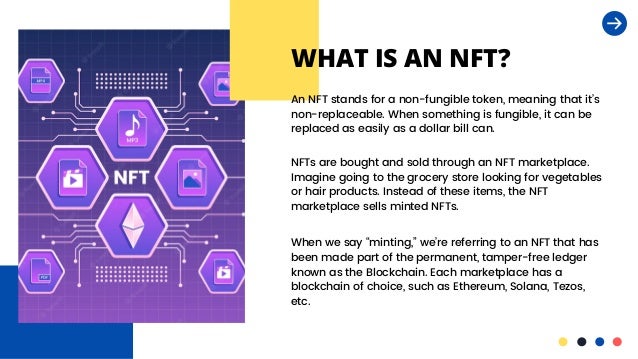
An NFT stands for a non-fungible token, meaning that it’s

non-replaceable. When something is fungible, it can be

replaced as easily as a dollar bill can.
NFTs are bought and sold through an NFT marketplace.

Imagine going to the grocery store looking for vegetables

or hair products. Instead of these items, the NFT

marketplace sells minted NFTs.
When we say “minting,” we’re referring to an NFT that has

been made part of the permanent, tamper-free ledger

known as the Blockchain. Each marketplace has a

blockchain of choice, such as Ethereum, Solana, Tezos,

etc.
WHAT IS AN NFT

MARKETPLACE?
The biggest marketplaces tend to prefer Ethereum,

though that doesn’t mean that other marketplaces

aren’t on the rise.
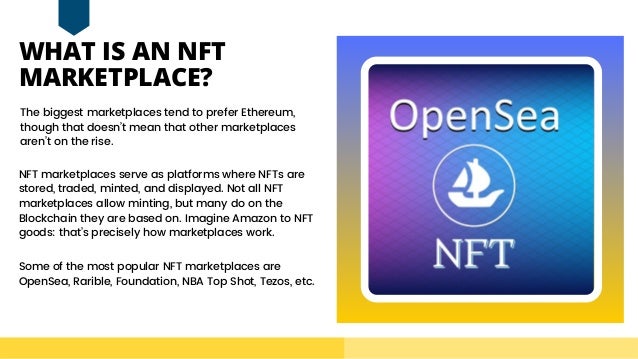
Some of the most popular NFT marketplaces are

OpenSea, Rarible, Foundation, NBA Top Shot, Tezos, etc.
NFT marketplaces serve as platforms where NFTs are

stored, traded, minted, and displayed. Not all NFT

marketplaces allow minting, but many do on the

Blockchain they are based on. Imagine Amazon to NFT

goods: that’s precisely how marketplaces work.
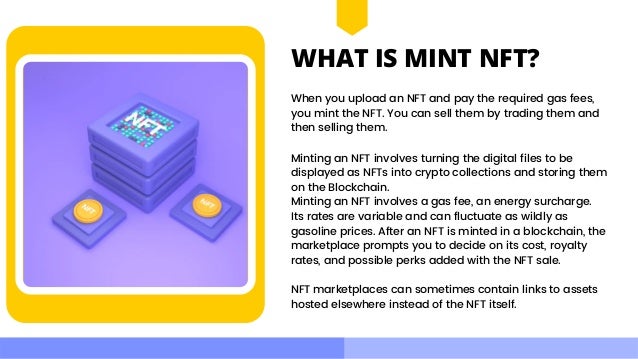
WHAT IS MINT NFT?
When you upload an NFT and pay the required gas fees,

you mint the NFT. You can sell them by trading them and

then selling them.
Minting an NFT involves turning the digital files to be
displayed as NFTs into crypto collections and storing them

on the Blockchain.
Minting an NFT involves a gas fee, an energy surcharge.

Its rates are variable and can fluctuate as wildly as

gasoline prices. After an NFT is minted in a blockchain, the

marketplace prompts you to decide on its cost, royalty

rates, and possible perks added with the NFT sale.
NFT marketplaces can sometimes contain links to assets

hosted elsewhere instead of the NFT itself.
Most NFTs are digital, and they also provide options for creators to obtain novel ways of offering
something rare and unique to their supporters with revenue streams. NFT marketplaces are growing
exponentially every day, and many have already garnered more than $1 billion in sales.
How does an NFT marketplace work?
NFT marketplaces serve as a bridge between blockchain technology, NFTs, and content creators to
obtain income from their work. NFT marketplaces cut the middleman of the past and provide artists with
a place where they can sell their work directly to the buyer in the form of NFTs, also increasing their
profits by giving them a clean share.
Now, how do these marketplaces really work?
First things first: a person desiring to join an NFT marketplace has to sign up before anything else. The
main steps to signing up involve creating an account using your personal information and connecting a
crypto wallet supported by the marketplace.
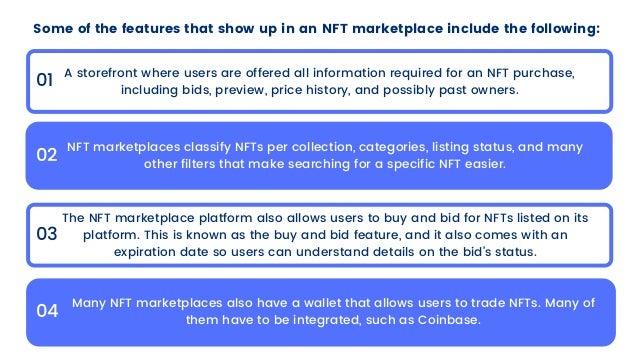
Some of the features that show up in an NFT marketplace include the following:
01
02
03
04
A storefront where users are offered all information required for an NFT purchase,

including bids, preview, price history, and possibly past owners.
NFT marketplaces classify NFTs per collection, categories, listing status, and many

other filters that make searching for a specific NFT easier.
The NFT marketplace platform also allows users to buy and bid for NFTs listed on its

platform. This is known as the buy and bid feature, and it also comes with an

expiration date so users can understand details on the bid’s status.
Many NFT marketplaces also have a wallet that allows users to trade NFTs. Many of

them have to be integrated, such as Coinbase.
WHAT DO I NEED TO BUY
ON AN NFT MARKETPLACE?
The first thing you’ll need to buy on an NFT marketplace is

a crypto wallet. You need to select a wallet that’s

compatible with the Blockchain associated with the NFT

marketplace of your interest. If your wallet doesn’t support

the NFT marketplace you want to purchase the NFT from,
you might need to change wallets.
A crypto wallet
Funds
You’ll need to purchase cryptocurrency for the purchase of

the NFTs themselves. The funds you have in crypto should

be enough to support both the purchase and the

associated fees. Ethereum is the most widely used

cryptocurrency for NFT purchases, so there’s a high chance

you’ll need to purchase Ethereum.
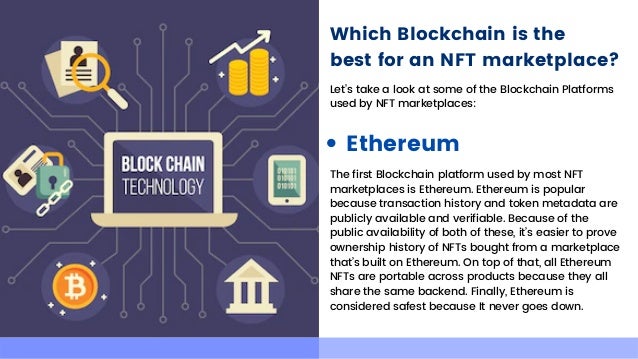
Which Blockchain is the
best for an NFT marketplace?
Let’s take a look at some of the Blockchain Platforms

used by NFT marketplaces:
Ethereum
The first Blockchain platform used by most NFT

marketplaces is Ethereum. Ethereum is popular

because transaction history and token metadata are

publicly available and verifiable. Because of the

public availability of both of these, it’s easier to prove

ownership history of NFTs bought from a marketplace

that’s built on Ethereum. On top of that, all Ethereum

NFTs are portable across products because they all

share the same backend. Finally, Ethereum is

considered safest because It never goes down.
Tezos is an open-source blockchain developed
by a community of builders that employ pre-

compiled FA2 NFT contracts. Tezos supports

smart contract functionality, and unlike

Ethereum, it is not based on the mining of tez.

Tezos token holders obtain a reward using the

proof-of-stake consensus mechanism (PoS).
Tezos
One of the main problems faced by Tezos is the

delay found in the issuance of tokens, which

causes users to miss out on rewards without

knowing. It also faces steep competition from the

other coins, mainly because there’s a lack of

support for Tezos at a commercial level.
Flow is another type of Blockchain used to

develop digital games, assets, and all manners

of content. It uses the Cadence programming

language and is used to create the NFT

marketplace with the same name.
Flow
What are some NFT
marketplaces?
Here are some examples of NFT marketplaces

you can check out if you’re interested in

purchasing NFTs:
Crypto.com
Crypto.com is one of the best overall NFT marketplaces. It’s based on the Ethereum blockchain and

is one of the top cryptocurrency exchanges globally. It launched its marketplace in 2021 and sells

NFTs in the domains of gaming, music, crypto, and sports.
What makes Crypto.com tempting as a choice is its purpose of making the investment process

easy and providing users with a way to sign up for a crypto.com NFT account in minutes, providing

NFTs through an auction or a fixed price. Users can also purchase NFTs with their credit card,

something unheard of in even the most exclusive NFT marketplaces.
Finally, crypto.com doesn’t feature an annoying transaction fee for purchasing NFTs, providing a

considerable contrast with many other NFT platforms.
OpenSea
OpenSea is the biggest and most famous NFT marketplace of all. It’s

well-established and features NFTs representing ownership of sports,

virtual worlds, artwork, PNGs, videos, and other digital files. What

makes OpenSea the go-to marketplace for many is its ease of use

compared to other marketplaces: it will take you less than an hour to

set up your account, connect your crypto wallet and purchase your

first NFT using OpenSea.
Nifty Gateway
Nifty Gateway is one of the most respected high-end MFT

marketplaces, where some of the most expensive crypto art pieces

have traded digital hands. However, being accepted on Nifty

Gateway as an NFT artist is a feat of its own. Only the top brands,

creators, and artists can access Nifty Gateway. It supports payments

in crypto using ETH, credit cards, and even debit cards.
NFT marketplaces are thriving and serving as the medium that makes NFT sales possible in the

digital space. Giants like OpenSea and Rarible are slowly taking over the world by making the bar

easier for those interested in minting NFTs and making a profit.
Final words about NFT marketplaces
It’s a brilliant idea to learn about each NFT marketplace, how they work and which one is the best

for selling the NFTs you desire to trade.
Get in Touch!
WhatareNFTs_
whatarenfts
whatarenfts__
www.whatarenfts.com

How does an NFT marketplace work.pdf

  • 1.
  • 2.
    Every day, wehear something about a new NFT marketplace being launched or an existing NFT marketplace making headlines because an NFT was sold there by several million dollars. How do NFT marketplaces work? Is it possible for people to buy from an NFT marketplace using a credit card instead of crypto? Even Instagram and Facebook might possibly become NFT marketplaces or feature the possibility of NFTs being sold on their platforms in the future. These are some common questions we get asked at What are NFTs, so here’s a detailed overview of how an NFT marketplace works:
  • 3.
    WHAT IS ANNFT? An NFT stands for a non-fungible token, meaning that it’s non-replaceable. When something is fungible, it can be replaced as easily as a dollar bill can. NFTs are bought and sold through an NFT marketplace. Imagine going to the grocery store looking for vegetables or hair products. Instead of these items, the NFT marketplace sells minted NFTs. When we say “minting,” we’re referring to an NFT that has been made part of the permanent, tamper-free ledger known as the Blockchain. Each marketplace has a blockchain of choice, such as Ethereum, Solana, Tezos, etc.
  • 4.
    WHAT IS ANNFT MARKETPLACE? The biggest marketplaces tend to prefer Ethereum, though that doesn’t mean that other marketplaces aren’t on the rise. Some of the most popular NFT marketplaces are OpenSea, Rarible, Foundation, NBA Top Shot, Tezos, etc. NFT marketplaces serve as platforms where NFTs are stored, traded, minted, and displayed. Not all NFT marketplaces allow minting, but many do on the Blockchain they are based on. Imagine Amazon to NFT goods: that’s precisely how marketplaces work.
  • 5.
    WHAT IS MINTNFT? When you upload an NFT and pay the required gas fees, you mint the NFT. You can sell them by trading them and then selling them. Minting an NFT involves turning the digital files to be displayed as NFTs into crypto collections and storing them on the Blockchain. Minting an NFT involves a gas fee, an energy surcharge. Its rates are variable and can fluctuate as wildly as gasoline prices. After an NFT is minted in a blockchain, the marketplace prompts you to decide on its cost, royalty rates, and possible perks added with the NFT sale. NFT marketplaces can sometimes contain links to assets hosted elsewhere instead of the NFT itself.
  • 6.
    Most NFTs aredigital, and they also provide options for creators to obtain novel ways of offering something rare and unique to their supporters with revenue streams. NFT marketplaces are growing exponentially every day, and many have already garnered more than $1 billion in sales. How does an NFT marketplace work? NFT marketplaces serve as a bridge between blockchain technology, NFTs, and content creators to obtain income from their work. NFT marketplaces cut the middleman of the past and provide artists with a place where they can sell their work directly to the buyer in the form of NFTs, also increasing their profits by giving them a clean share. Now, how do these marketplaces really work? First things first: a person desiring to join an NFT marketplace has to sign up before anything else. The main steps to signing up involve creating an account using your personal information and connecting a crypto wallet supported by the marketplace.
  • 7.
    Some of thefeatures that show up in an NFT marketplace include the following: 01 02 03 04 A storefront where users are offered all information required for an NFT purchase, including bids, preview, price history, and possibly past owners. NFT marketplaces classify NFTs per collection, categories, listing status, and many other filters that make searching for a specific NFT easier. The NFT marketplace platform also allows users to buy and bid for NFTs listed on its platform. This is known as the buy and bid feature, and it also comes with an expiration date so users can understand details on the bid’s status. Many NFT marketplaces also have a wallet that allows users to trade NFTs. Many of them have to be integrated, such as Coinbase.
  • 8.
    WHAT DO INEED TO BUY ON AN NFT MARKETPLACE? The first thing you’ll need to buy on an NFT marketplace is a crypto wallet. You need to select a wallet that’s compatible with the Blockchain associated with the NFT marketplace of your interest. If your wallet doesn’t support the NFT marketplace you want to purchase the NFT from, you might need to change wallets. A crypto wallet Funds You’ll need to purchase cryptocurrency for the purchase of the NFTs themselves. The funds you have in crypto should be enough to support both the purchase and the associated fees. Ethereum is the most widely used cryptocurrency for NFT purchases, so there’s a high chance you’ll need to purchase Ethereum.
  • 9.
    Which Blockchain isthe best for an NFT marketplace? Let’s take a look at some of the Blockchain Platforms used by NFT marketplaces: Ethereum The first Blockchain platform used by most NFT marketplaces is Ethereum. Ethereum is popular because transaction history and token metadata are publicly available and verifiable. Because of the public availability of both of these, it’s easier to prove ownership history of NFTs bought from a marketplace that’s built on Ethereum. On top of that, all Ethereum NFTs are portable across products because they all share the same backend. Finally, Ethereum is considered safest because It never goes down.
  • 10.
    Tezos is anopen-source blockchain developed by a community of builders that employ pre- compiled FA2 NFT contracts. Tezos supports smart contract functionality, and unlike Ethereum, it is not based on the mining of tez. Tezos token holders obtain a reward using the proof-of-stake consensus mechanism (PoS). Tezos One of the main problems faced by Tezos is the delay found in the issuance of tokens, which causes users to miss out on rewards without knowing. It also faces steep competition from the other coins, mainly because there’s a lack of support for Tezos at a commercial level.
  • 11.
    Flow is anothertype of Blockchain used to develop digital games, assets, and all manners of content. It uses the Cadence programming language and is used to create the NFT marketplace with the same name. Flow What are some NFT marketplaces? Here are some examples of NFT marketplaces you can check out if you’re interested in purchasing NFTs:
  • 12.
    Crypto.com Crypto.com is oneof the best overall NFT marketplaces. It’s based on the Ethereum blockchain and is one of the top cryptocurrency exchanges globally. It launched its marketplace in 2021 and sells NFTs in the domains of gaming, music, crypto, and sports. What makes Crypto.com tempting as a choice is its purpose of making the investment process easy and providing users with a way to sign up for a crypto.com NFT account in minutes, providing NFTs through an auction or a fixed price. Users can also purchase NFTs with their credit card, something unheard of in even the most exclusive NFT marketplaces. Finally, crypto.com doesn’t feature an annoying transaction fee for purchasing NFTs, providing a considerable contrast with many other NFT platforms.
  • 13.
    OpenSea OpenSea is thebiggest and most famous NFT marketplace of all. It’s well-established and features NFTs representing ownership of sports, virtual worlds, artwork, PNGs, videos, and other digital files. What makes OpenSea the go-to marketplace for many is its ease of use compared to other marketplaces: it will take you less than an hour to set up your account, connect your crypto wallet and purchase your first NFT using OpenSea. Nifty Gateway Nifty Gateway is one of the most respected high-end MFT marketplaces, where some of the most expensive crypto art pieces have traded digital hands. However, being accepted on Nifty Gateway as an NFT artist is a feat of its own. Only the top brands, creators, and artists can access Nifty Gateway. It supports payments in crypto using ETH, credit cards, and even debit cards.
  • 14.
    NFT marketplaces arethriving and serving as the medium that makes NFT sales possible in the digital space. Giants like OpenSea and Rarible are slowly taking over the world by making the bar easier for those interested in minting NFTs and making a profit. Final words about NFT marketplaces It’s a brilliant idea to learn about each NFT marketplace, how they work and which one is the best for selling the NFTs you desire to trade.
  • 15.