Daisy Gilardini
By Grace Ong
Class ANN3A
What she is most known for? Most
important (or most famous) work?
Her work received awards such as “IPA
International Photography Award”, “BBC Wildlife
Photographer of the Year”, “Photography Master
Award”, “Travel Photography of the Year”, and
“Nature’s Best”.
BBC Wildlife Photographer of the Year was
consider as the “Oscars” of nature photography
photo contests.
Her work is known for the wildlife in Antarctica
and the Arctic.
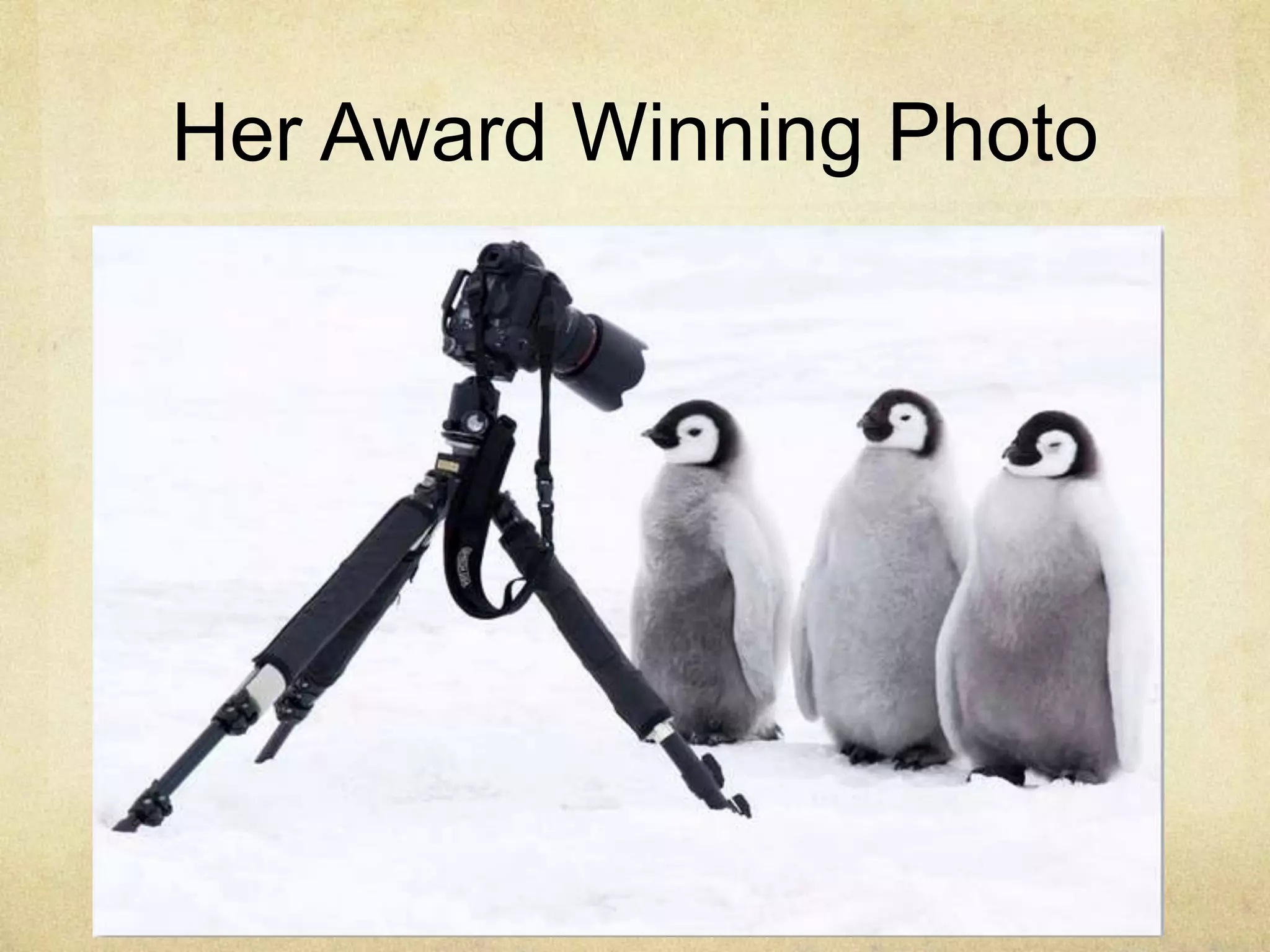
Her Award Winning Photo
Specific information about the
photographer’s style of photography.
Has their style (or subject matter)
change over the course of their career?
She visited 65 over countries before falling in
love with Antarctica and spent most of her time in
the Polar regions.
Contribution to the field of
photography?
Her passion for the natural world grew into a
lifelong commitment spread messages around
the world to respect and care for our fragile
planet.
How has his/her work influence or
make a positive change?
She dedicated herself to help the environment.
In the fall of 2009, she was a member of the
Emerging League of iLCP, the International
League of Conservation Photographers.
In 2010, she was a helper at “The Explorer Club”,
it contributed to scientific knowledge in
geographical exploration and/or other related
sciences.
How does he/she make a living?
(assignment, stock photo, prints,
workshops, etc)
She offers assignments to others to join her in a
journey to photographing in the Arctic and many
other places.
She also has a book called Polar Wonders.
She sells prints with many different sizes.
She also sponsors many different brands like
Nikon, Energizer, The North Face, etc.
Special techniques used ( like lighting,
color, black and white, etc.)
Many of her photos are under natural lighting and
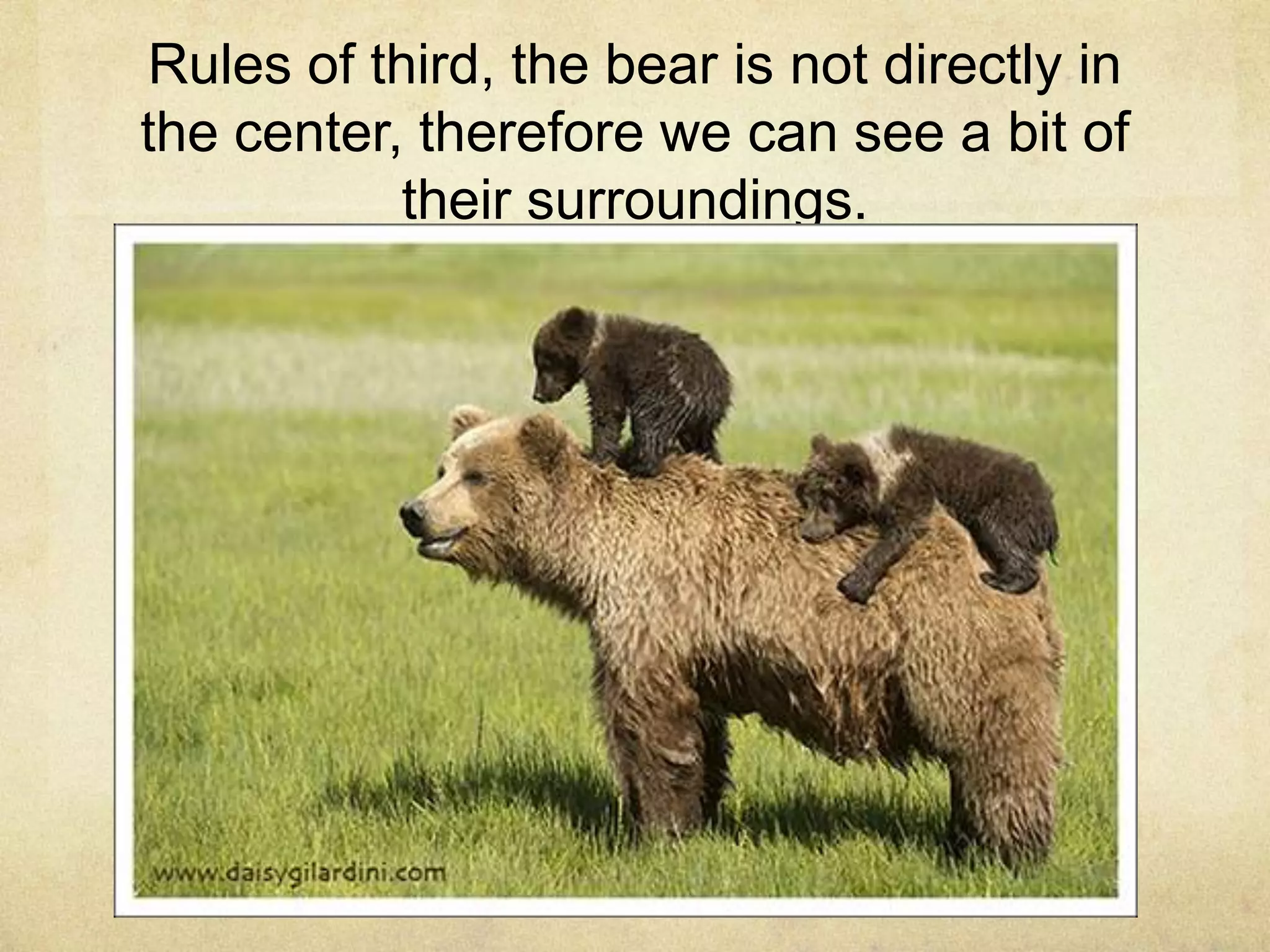
many are close up views. Her close up views
mainly show a lot of emotion from the creatures,
the distant shots are to show action or their
physical appearance, both their natural colors or
shadows.
How distinguish his/her work from
others?
The photographer I’ve chosen, loves to have her
shots either taken at a distance or really up close
to the face or body of the animal.
How do you respond to the
photographer’s work? What did you
learn from him/her?
The up close shots of the animals is what drew
me to her photos, the expressions of the animals
(when they aren’t fierce), and the different
features in every single animal.
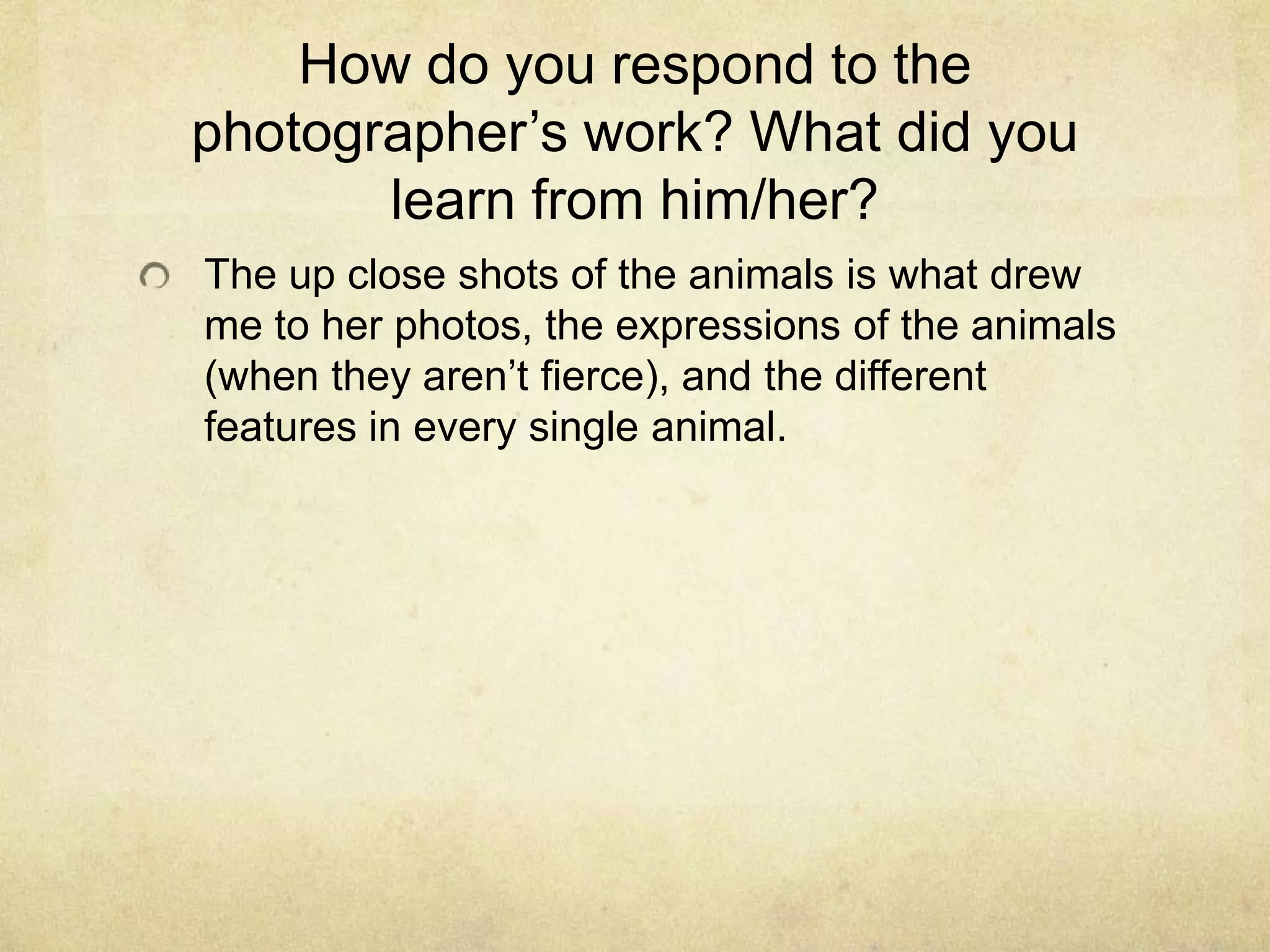
Choose 5 of the photographer's works
and talk about the
technical/aesthetics/importance of
these photos.
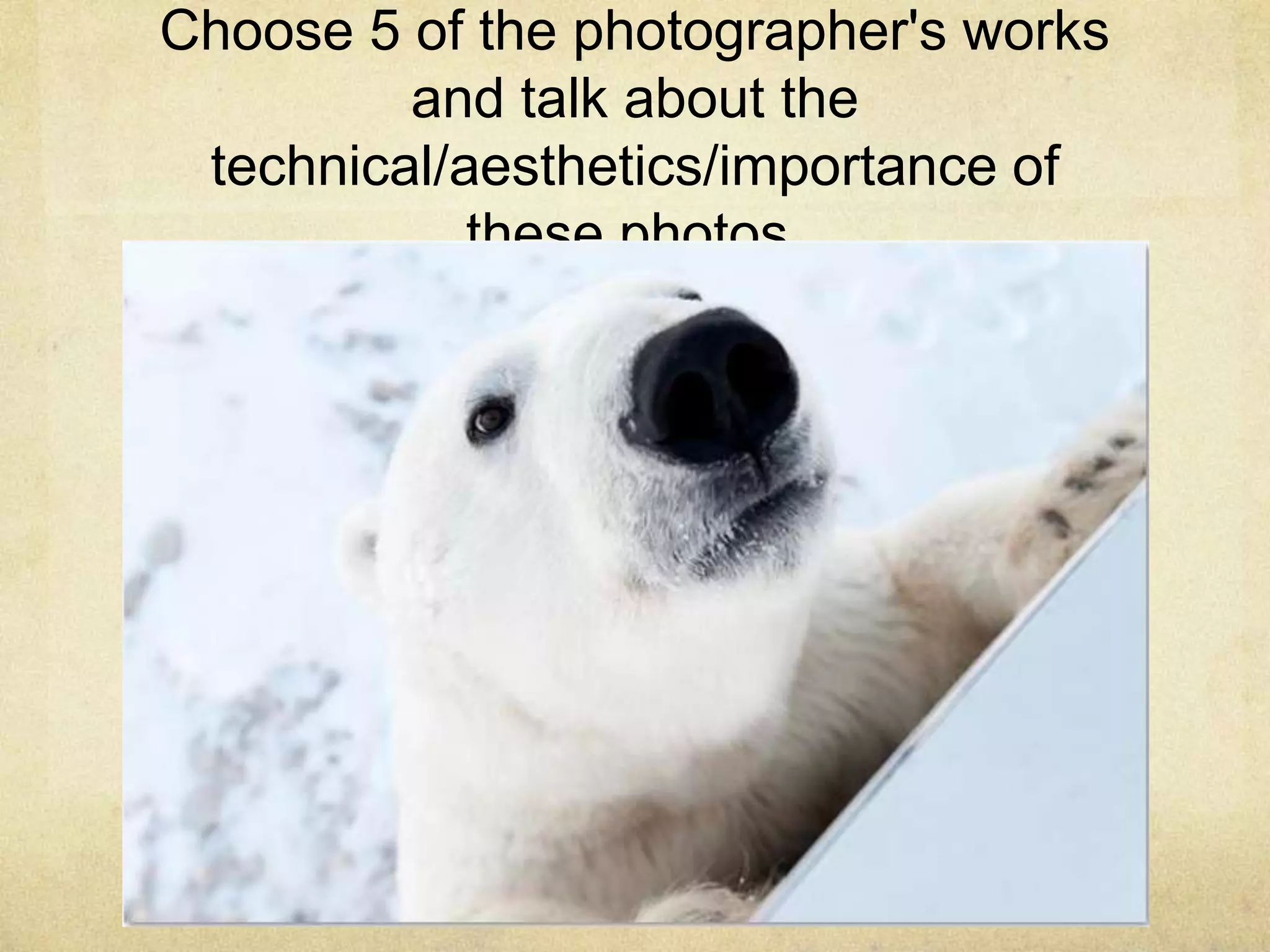
Close up views help to see the
expressions on the creatures face,
especially the details of their facial
structure.
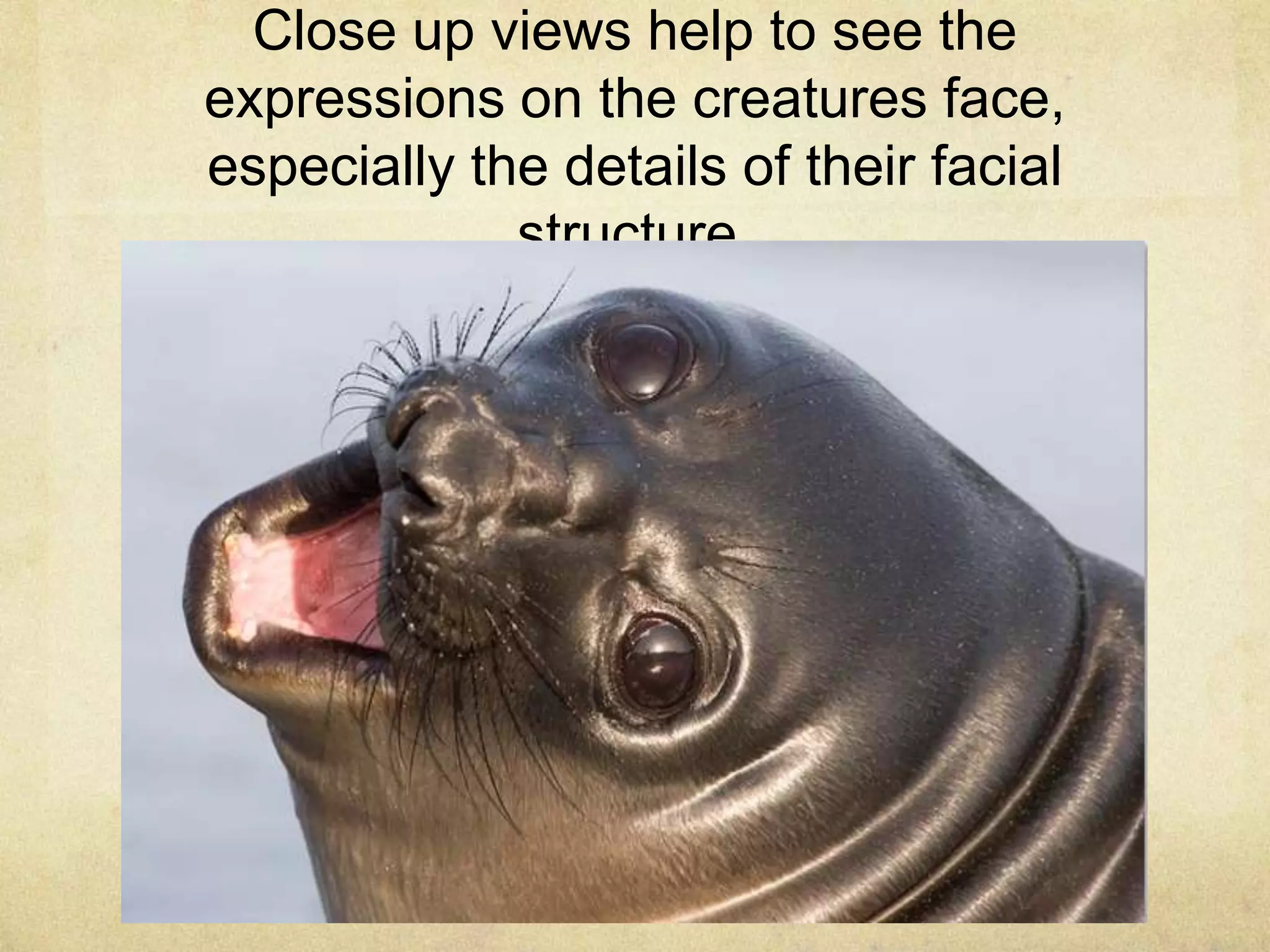
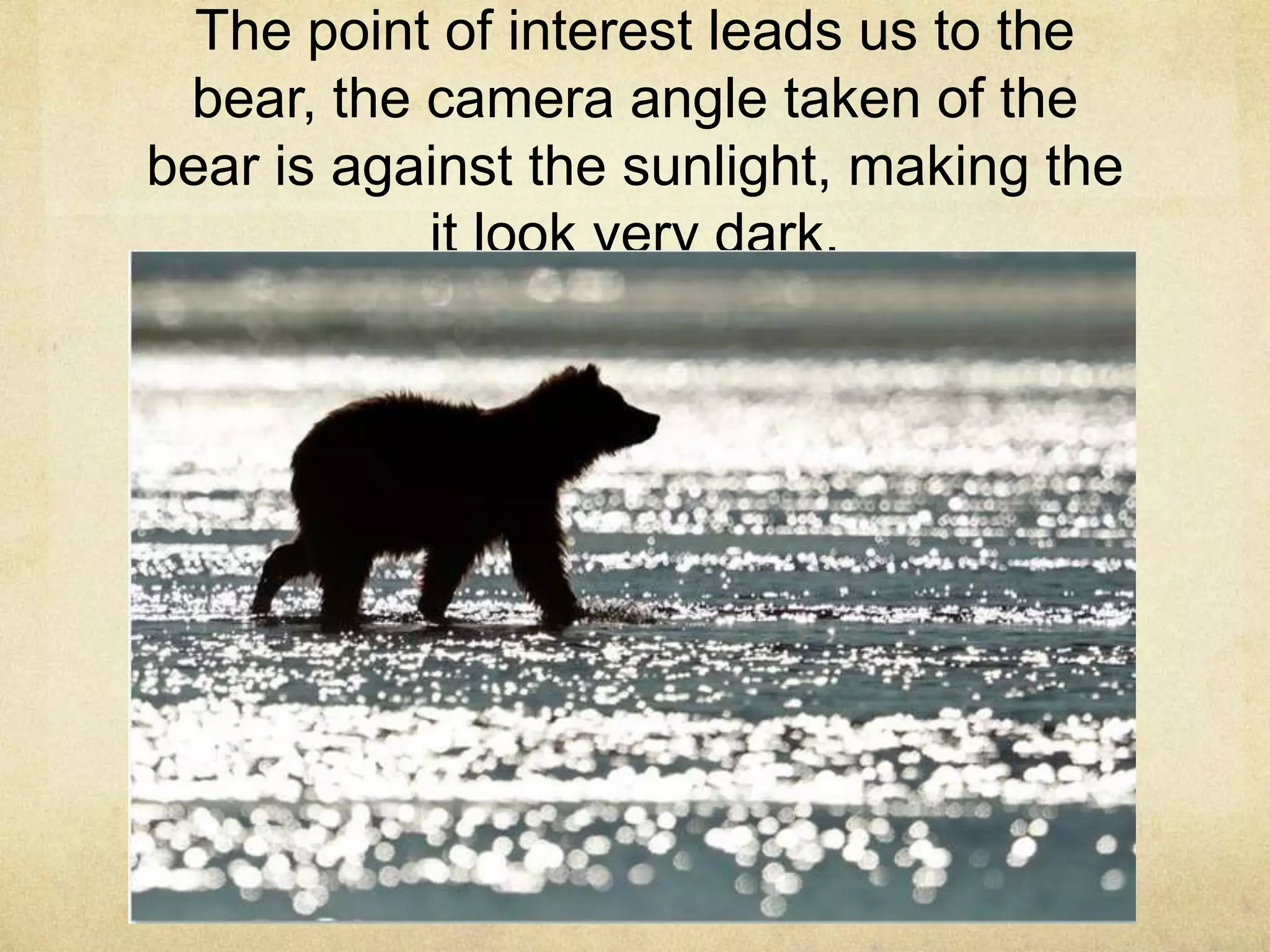
Rules of third, the bear is not directly in
the center, therefore we can see a bit of
their surroundings.
The point of interest leads us to the
bear, the camera angle taken of the
bear is against the sunlight, making the
it look very dark.
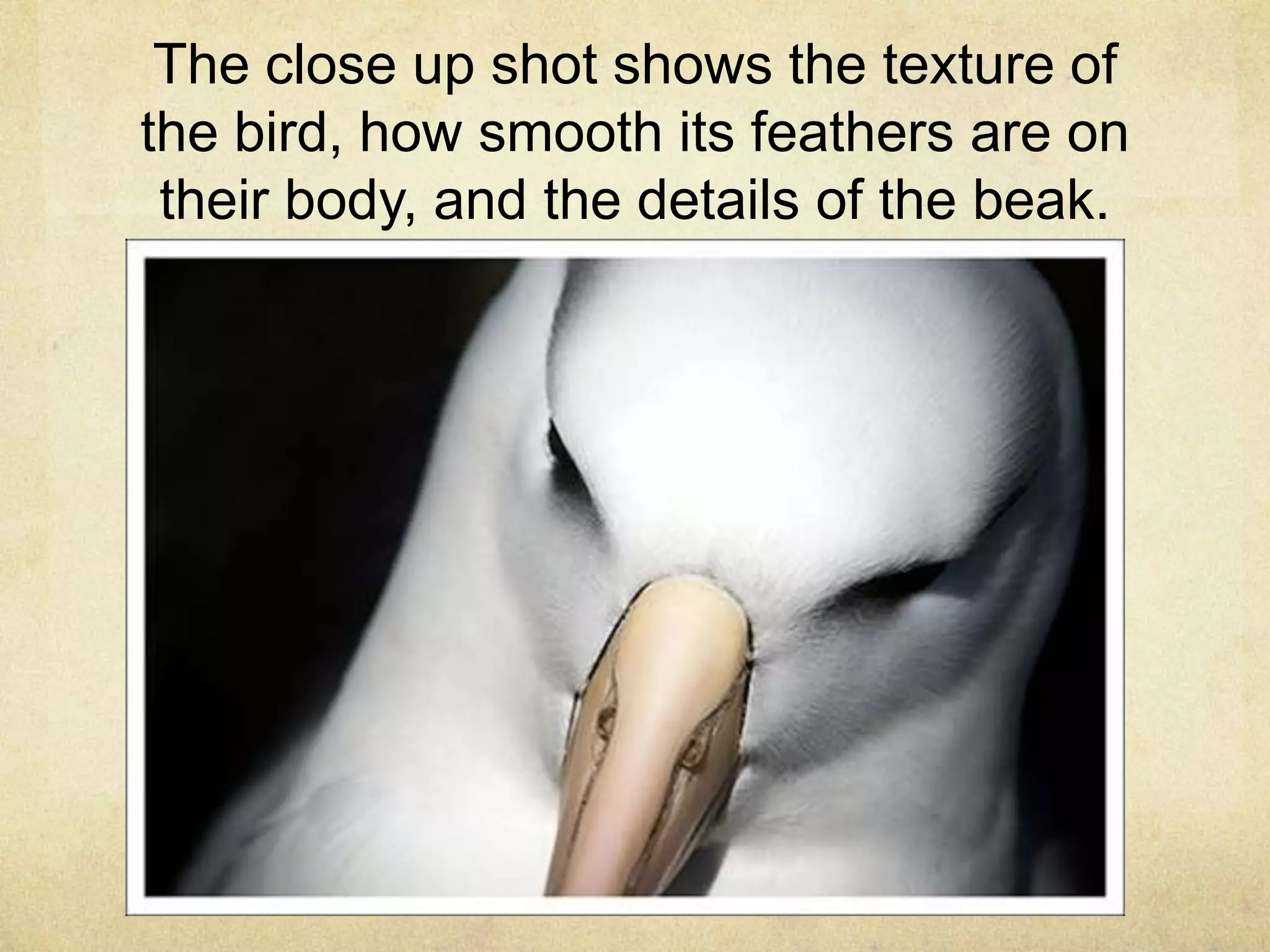
The close up shot shows the texture of
the bird, how smooth its feathers are on
their body, and the details of the beak.
References
http://www.daisygilardini.com/about-2/about/

Photography

  • 1.
    Daisy Gilardini By GraceOng Class ANN3A
  • 2.
    What she ismost known for? Most important (or most famous) work? Her work received awards such as “IPA International Photography Award”, “BBC Wildlife Photographer of the Year”, “Photography Master Award”, “Travel Photography of the Year”, and “Nature’s Best”. BBC Wildlife Photographer of the Year was consider as the “Oscars” of nature photography photo contests. Her work is known for the wildlife in Antarctica and the Arctic.
  • 3.
  • 4.
    Specific information aboutthe photographer’s style of photography. Has their style (or subject matter) change over the course of their career? She visited 65 over countries before falling in love with Antarctica and spent most of her time in the Polar regions.
  • 5.
    Contribution to thefield of photography? Her passion for the natural world grew into a lifelong commitment spread messages around the world to respect and care for our fragile planet.
  • 6.
    How has his/herwork influence or make a positive change? She dedicated herself to help the environment. In the fall of 2009, she was a member of the Emerging League of iLCP, the International League of Conservation Photographers. In 2010, she was a helper at “The Explorer Club”, it contributed to scientific knowledge in geographical exploration and/or other related sciences.
  • 7.
    How does he/shemake a living? (assignment, stock photo, prints, workshops, etc) She offers assignments to others to join her in a journey to photographing in the Arctic and many other places. She also has a book called Polar Wonders. She sells prints with many different sizes. She also sponsors many different brands like Nikon, Energizer, The North Face, etc.
  • 8.
    Special techniques used( like lighting, color, black and white, etc.) Many of her photos are under natural lighting and many are close up views. Her close up views mainly show a lot of emotion from the creatures, the distant shots are to show action or their physical appearance, both their natural colors or shadows.
  • 9.
    How distinguish his/herwork from others? The photographer I’ve chosen, loves to have her shots either taken at a distance or really up close to the face or body of the animal.
  • 10.
    How do yourespond to the photographer’s work? What did you learn from him/her? The up close shots of the animals is what drew me to her photos, the expressions of the animals (when they aren’t fierce), and the different features in every single animal.
  • 11.
    Choose 5 ofthe photographer's works and talk about the technical/aesthetics/importance of these photos.
  • 12.
    Close up viewshelp to see the expressions on the creatures face, especially the details of their facial structure.
  • 13.
    Rules of third,the bear is not directly in the center, therefore we can see a bit of their surroundings.
  • 14.
    The point ofinterest leads us to the bear, the camera angle taken of the bear is against the sunlight, making the it look very dark.
  • 15.
    The close upshot shows the texture of the bird, how smooth its feathers are on their body, and the details of the beak.
  • 16.