Hmong Traditions:MedicineTreatment and Diagnosis
We Americans live in a culture where we have full access to top of the line doctors, tests and medicines. This is sometimes referred to as Western Medicine. As a developed country we have much more advanced technologies than much of the world.
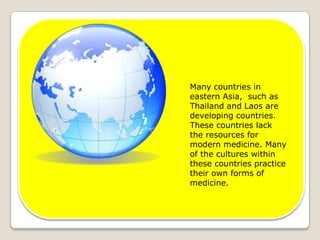
Many countries in eastern Asia,  such as Thailand and Laos are developing countries. These countries lack the resources for modern medicine. Many of the cultures within these countries practice their own forms of medicine.
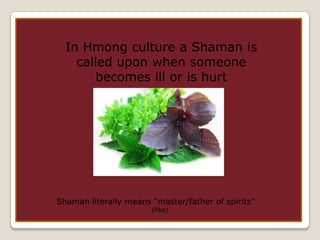
In Hmong culture a Shaman is called upon when someone  becomes ill or is hurt  Shaman literally means “master/father of spirits”(Pbs)
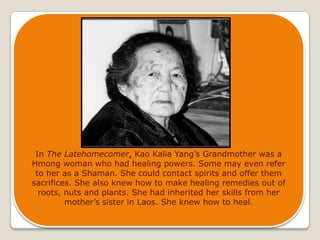
In The Latehomecomer, Kao Kalia Yang’s Grandmother was a Hmong woman who had healing powers. Some may even refer to her as a Shaman. She could contact spirits and offer them sacrifices. She also knew how to make healing remedies out of roots, nuts and plants. She had inherited her skills from her mother’s sister in Laos. She knew how to heal.
“Grandma was the type of woman that looked like she knew things, and did, people came to her for medicinal remedies frequently” – TheLatehomecomer,Page 69In traditional Hmong Medicine illness is categorized in two ways. It is  considered spiritual or non-spiritual. These two different categories require different healing methods. In some cases, for the Hmong that reside in the United States, they may pair western medicine practices with their own. Some of their traditional practices are illustrated in The Latehomecomer.
On page 59 of The Latehomecomer, Kao Kalia Yang tells a story of a time her sister fell ill. She explained how her grandmother called upon the spirits, ”My grandmother talked with the spirit world and offered the lives of chickens and pigs – she promised to find the animals if Dawb got better.”
What Kao’s grandmother is offering the sprits is an example of ANIMAL SACRIFICE. Hmong people often offer sacrifices to the spirits, the souls of the animals are believed to be linked to the soul of the person who is ill.
When an animal is sacrificed it is thought to protect    the human soul.
The sacrificed animal is many times prepared as a meal “I have a memory of being sick and my grandma curing me with a shamans walk on the dawn of a misty morning” (Yang 70)
Kao went on to explain about how she had to pee all the time. She had what western medicine would label a bladder infection.What is Shamans walk? This is how the Ritual was performed by Kao’s grandma on pages 70-71 of The Latehomecomer.Her grandma’s eyes and part of her nose were covered by a piece of red cloth.
 With her Shaman’s tools in their hands, she looked into the spirit world, and was lost in a spiritual chant.
They then went to their neighbors in the houses around their own, her grandmother asked for “hospitality and care for her sick spirit” (Yang 71)Shaman’s ToolsJust like Kao’s grandma every shaman has their own tools. These special instruments assist them in Spritual Ceremoniessome of these tools include:Iron Gong Ring of CoinsWater Buffalo Horns(Yang 37)
Herbal RemediesA few quick remedies and their usesTea – made from boiled herbs, roots and leaves- used when when simply feeling under the weather

Hmong Traditions Power Point

  • 1.
  • 2.
    We Americans livein a culture where we have full access to top of the line doctors, tests and medicines. This is sometimes referred to as Western Medicine. As a developed country we have much more advanced technologies than much of the world.
  • 3.
    Many countries ineastern Asia, such as Thailand and Laos are developing countries. These countries lack the resources for modern medicine. Many of the cultures within these countries practice their own forms of medicine.
  • 4.
    In Hmong culturea Shaman is called upon when someone becomes ill or is hurt Shaman literally means “master/father of spirits”(Pbs)
  • 5.
    In The Latehomecomer,Kao Kalia Yang’s Grandmother was a Hmong woman who had healing powers. Some may even refer to her as a Shaman. She could contact spirits and offer them sacrifices. She also knew how to make healing remedies out of roots, nuts and plants. She had inherited her skills from her mother’s sister in Laos. She knew how to heal.
  • 6.
    “Grandma was thetype of woman that looked like she knew things, and did, people came to her for medicinal remedies frequently” – TheLatehomecomer,Page 69In traditional Hmong Medicine illness is categorized in two ways. It is considered spiritual or non-spiritual. These two different categories require different healing methods. In some cases, for the Hmong that reside in the United States, they may pair western medicine practices with their own. Some of their traditional practices are illustrated in The Latehomecomer.
  • 7.
    On page 59of The Latehomecomer, Kao Kalia Yang tells a story of a time her sister fell ill. She explained how her grandmother called upon the spirits, ”My grandmother talked with the spirit world and offered the lives of chickens and pigs – she promised to find the animals if Dawb got better.”
  • 8.
    What Kao’s grandmotheris offering the sprits is an example of ANIMAL SACRIFICE. Hmong people often offer sacrifices to the spirits, the souls of the animals are believed to be linked to the soul of the person who is ill.
  • 9.
    When an animalis sacrificed it is thought to protect the human soul.
  • 10.
    The sacrificed animalis many times prepared as a meal “I have a memory of being sick and my grandma curing me with a shamans walk on the dawn of a misty morning” (Yang 70)
  • 11.
    Kao went onto explain about how she had to pee all the time. She had what western medicine would label a bladder infection.What is Shamans walk? This is how the Ritual was performed by Kao’s grandma on pages 70-71 of The Latehomecomer.Her grandma’s eyes and part of her nose were covered by a piece of red cloth.
  • 12.
    With herShaman’s tools in their hands, she looked into the spirit world, and was lost in a spiritual chant.
  • 13.
    They then wentto their neighbors in the houses around their own, her grandmother asked for “hospitality and care for her sick spirit” (Yang 71)Shaman’s ToolsJust like Kao’s grandma every shaman has their own tools. These special instruments assist them in Spritual Ceremoniessome of these tools include:Iron Gong Ring of CoinsWater Buffalo Horns(Yang 37)
  • 14.
    Herbal RemediesA fewquick remedies and their usesTea – made from boiled herbs, roots and leaves- used when when simply feeling under the weather