HIV IN PEDIATRICS
DR LAKSHIT BHALALA
GUIDE BY : DR HARDIK SHAH
 There are 2 types of Human Immunodeficiency Virus (HIV) viz. HIV type I
(HIV-1) and HIV type2 (HIV-2).
 The most common cause of HIV infection throughout the world is HIV-1
that comprises of several subtypes with different geographic distributions.
WHO Clinical Staging in
Adolescents and Children
STAGE 1
 Asymptomatic
 Persistent generalized lymphadenopathy (PGL)
STAGE-2
 Unexplained persistent hepatosplenomegaly
 Recurrent or chronic upper respiratory tract
 infections (Otitis Media, Otorrhoea, Sinusitis,
Tonsillitis)
 Recurrent oral ulceration
 Papular Pruritic Eruption
 Fungal nail infections
 Extensive wart virus infection
 Extensive Molluscum Contagiosum
STAGE-3
 Unexplained moderate malnutrition,persistent diarrhoea
 Unexplained persistent fever
 persistent Oral Candidiasis,Oral Hairy Leucoplakia
 Lymph node Tuberculosis ,Pulmonary tuberculosis
 Severe recurrent bacterial Pneumonia
 Acute necrotizing ulcerative gingivitis or Periodontitis
 Unexplained anaemia or neutropenia or chronic
thrombocytopaenia
 Chronic HIV-associated lung disease, including Bronchiectasis
STAGE-4
 Unexplained severe wasting, stunting or severe malnutrition
 Pneumocystis (jiroveci) Pneumonia
 Recurrent severe bacterial infectection
 Chronic Herpes Simplex infection
 Oesophageal Candidiasis
 Kaposi’s sarcoma, Cytomegalovirus infection
 Central nervous system Toxoplasmosis
 HIV encephalopathy, Extra pulmonary Cryptococcosis
 Disseminated nontuberculous mycobacterial infection
 Progressive Multifocal Leukoencephalopathy
 Chronic Cryptosporidiosis (with diarrhoea)
 Chronic Isosporiasis
 Disseminated endemic mycosis
(extra pulmonary Histoplasmosis,
Coccidioidomycosis, Penicilliosis)
 Cerebral or B-cell non-Hodgkin’s Lymphoma
 HIV-associated nephropathy
 DIAGNOSIS
 TREATMENT
 MONITORING
Diagnosis of HIV
infection in infants and
children
Early infant diagnosis
 Maternal HIV antibodies transferred passively to the infant during
pregnancy usually persist for nearly 9-12 months in the infant.
 In some children, they may persist for as long as 18 months.
 Thus, during this period, children born to HIV-infected mothers will test
positive for HIV antibodies regardless of their own infection status.
 A positive ELISA/Rapid test that detects antibodies to HIV, therefore,
does not necessarily indicate the presence of HIV infection in the
infant/child.
 Rather, a positive ELISA/Rapid test indicates exposure to HIV.
 More reliable indicators of the HIV infection status of the infant are tests
that detect HIV viral RNA or antigens.
Tests for diagnosis of HIV
infection:
Anti- HIV antibody
tests:
Antigen detection Virus isolation/
detection of viral
nucleic acids
Screening tests
(micro well ELISA test,
Rapid tests)
P24 antigen assay Viral culture
Supplemental tests
(western blot, line
immunoassay,
recombinant
immunoblotting assay)
PCR tests
(DNA/RNA)
Less than 6 month old child with
symptoms
Symptomatic infant
Mother status
not known
Mother is not
available
Serological test
of mother
If postive :sent
HIV TNA PCR
Of Child
Serological test
of child
If postive :sent
HIV TNA PCR Of
Child
ADDITIONAL TESTS:
 Depending on clinical presentation:
• Sputum / gastric aspirate / other body fluids as applicable for
AFB / CBNAAT
• USG Abdomen / CT scan chest / CT scan Brain
• CSF Analysis
 Tests for special situations:
• For patients with Hepatitis B or C co-infection: further tests may
be required to assess for chronic active hepatitis.
• For patients started on PI based regimen: Baseline investigations
including blood Sugar, LFT and lipid profile to be done.
ART:
 WHEN TO START
 CONSIDERATION BEFORE INITIATION OF ART
 GOALS
 GROUPS AND CLASSES OF DRUGS
When to start ART for infants and
children?
 ART should be initiated in all children and adolescents living with HIV,
regardless of the age.
Considerations before Initiation of
ART
 Treatment should be started based on a parent’s/guardian’s informed
decision and preparedness to initiate ART with an understanding of the
benefits of the treatment, lifelong medication, issues related to adherence
and positive prevention.
 A caregiver should be identified for each person to provide adequate
support. Caregivers must be counselled and trained to support treatment
adherence, follow-up visits, and shared decision-making.
 Co-trimoxazole Preventive Therapy (CPT) should be started in children as
per the paediatric guidelines.
 All patients should be screened for TB, using the 4-symptom tool (recurrent
cough, fever, weight loss and history of contact with TB) and those who do
not have TB should be started on Isoniazid Preventive Therapy (IPT) in
addition to ART.
 ART should not be started in the presence of an active OI.
GOALS:
GROUPS AND CLASSES OF DRUGS
 Fusion Inhibitors and CCR 5 co
receptor blockers
 Reverse transcriptase inhibitors
 Integrase inhibitors
 Protease inhibitors
REGIMENS:
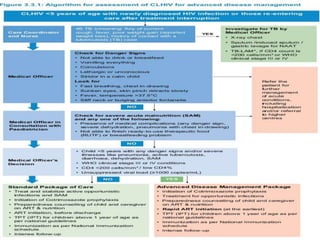
Advanced Disease Management in
CLHIV less than 5 Years of Age
 WHO defines advanced HIV disease for adults and
adolescents (and children 5 years and older) as having
a CD4 cell count of less than 200 cells/mm3 or WHO
clinical stage 3 or 4.
Advanced HIV disease includes
 Newly diagnosed CLHIV aged less than 5 years
 Severe immune suppression following treatment
failure
 Re-engaging with the care after treatment
interruption
Care of CLHIV: Post ART
Initiation
 Monitoring after initiation of ART
 Adverse events of ARVs – identification and
substitution
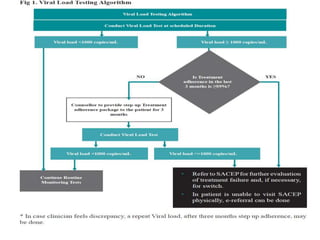
 Identification of treatment failure
 Adherence counselling
What happens to CLHIV in first six
months of therapy
 Viral suppression
 Clinical and immunological improvement
 Improvement in quality of life and decrease in morbidity and mortality
 Certain opportunistic infections may appear
 Immune reconstitution inflammatory syndrome (IRIS) may develop
 Early adverse drug reactions, such as drug hypersensitivity may occur
1.Monitoring:
Adverse events of ARVs – identification
and substitution
ART FAILURE:
Child centred counseling:
 Child-centred counseling includes:
• Development of rapport between the child, caregiver and
counsellor.
• Focusing on the child’s needs and is tailored to the child’s physical
and psychological development.
• Striving to promote the child’s potential and abilities.
• Building self-esteem and respects the child’s identity and emotions.
Barriers for the communication
with the children:
 These barriers can be classified into:
• Language – language barrier is when there is no common language (e.g. when
an adult uses non-age appropriate language with the child)
• Cultural barriers
• Due to poor skills – lack of active listening, recipient problem
• Knowledge – wrong message or wrong information
• Age – adult’s failure to come to the child’s level
 The assumption that parents/ guardian will handle communication with the child
and therefore there is no need to communicate with the child.
 The assumption that the child is too young to understand.
 The assumption that certain medical information might harm the child or that the
child is too weak to receive the information.
Key Counseling Issues for Child
Clients:
 Adherence - taking medicine regularly.
 Disclosure - Learning about being infected.
 Coping - Learning to live with a chronic illness.
Key Counselling Issues for Parents
/ Caregivers:
 Acceptance of Infection in Child.
 Disclosure Issues.
 Preparing for Treatment.
 Supporting treatment.
 Immunization Advisory.
 Planning for the future.
THANK YOU

Hiv final ppt.pptx

  • 1.
    HIV IN PEDIATRICS DRLAKSHIT BHALALA GUIDE BY : DR HARDIK SHAH
  • 2.
     There are2 types of Human Immunodeficiency Virus (HIV) viz. HIV type I (HIV-1) and HIV type2 (HIV-2).  The most common cause of HIV infection throughout the world is HIV-1 that comprises of several subtypes with different geographic distributions.
  • 4.
    WHO Clinical Stagingin Adolescents and Children STAGE 1  Asymptomatic  Persistent generalized lymphadenopathy (PGL)
  • 5.
    STAGE-2  Unexplained persistenthepatosplenomegaly  Recurrent or chronic upper respiratory tract  infections (Otitis Media, Otorrhoea, Sinusitis, Tonsillitis)  Recurrent oral ulceration  Papular Pruritic Eruption  Fungal nail infections  Extensive wart virus infection  Extensive Molluscum Contagiosum
  • 6.
    STAGE-3  Unexplained moderatemalnutrition,persistent diarrhoea  Unexplained persistent fever  persistent Oral Candidiasis,Oral Hairy Leucoplakia  Lymph node Tuberculosis ,Pulmonary tuberculosis  Severe recurrent bacterial Pneumonia  Acute necrotizing ulcerative gingivitis or Periodontitis  Unexplained anaemia or neutropenia or chronic thrombocytopaenia  Chronic HIV-associated lung disease, including Bronchiectasis
  • 7.
    STAGE-4  Unexplained severewasting, stunting or severe malnutrition  Pneumocystis (jiroveci) Pneumonia  Recurrent severe bacterial infectection  Chronic Herpes Simplex infection  Oesophageal Candidiasis  Kaposi’s sarcoma, Cytomegalovirus infection  Central nervous system Toxoplasmosis  HIV encephalopathy, Extra pulmonary Cryptococcosis  Disseminated nontuberculous mycobacterial infection  Progressive Multifocal Leukoencephalopathy
  • 8.
     Chronic Cryptosporidiosis(with diarrhoea)  Chronic Isosporiasis  Disseminated endemic mycosis (extra pulmonary Histoplasmosis, Coccidioidomycosis, Penicilliosis)  Cerebral or B-cell non-Hodgkin’s Lymphoma  HIV-associated nephropathy
  • 9.
  • 10.
    Diagnosis of HIV infectionin infants and children
  • 11.
    Early infant diagnosis Maternal HIV antibodies transferred passively to the infant during pregnancy usually persist for nearly 9-12 months in the infant.  In some children, they may persist for as long as 18 months.  Thus, during this period, children born to HIV-infected mothers will test positive for HIV antibodies regardless of their own infection status.  A positive ELISA/Rapid test that detects antibodies to HIV, therefore, does not necessarily indicate the presence of HIV infection in the infant/child.  Rather, a positive ELISA/Rapid test indicates exposure to HIV.  More reliable indicators of the HIV infection status of the infant are tests that detect HIV viral RNA or antigens.
  • 13.
    Tests for diagnosisof HIV infection: Anti- HIV antibody tests: Antigen detection Virus isolation/ detection of viral nucleic acids Screening tests (micro well ELISA test, Rapid tests) P24 antigen assay Viral culture Supplemental tests (western blot, line immunoassay, recombinant immunoblotting assay) PCR tests (DNA/RNA)
  • 17.
    Less than 6month old child with symptoms Symptomatic infant Mother status not known Mother is not available Serological test of mother If postive :sent HIV TNA PCR Of Child Serological test of child If postive :sent HIV TNA PCR Of Child
  • 21.
    ADDITIONAL TESTS:  Dependingon clinical presentation: • Sputum / gastric aspirate / other body fluids as applicable for AFB / CBNAAT • USG Abdomen / CT scan chest / CT scan Brain • CSF Analysis  Tests for special situations: • For patients with Hepatitis B or C co-infection: further tests may be required to assess for chronic active hepatitis. • For patients started on PI based regimen: Baseline investigations including blood Sugar, LFT and lipid profile to be done.
  • 22.
    ART:  WHEN TOSTART  CONSIDERATION BEFORE INITIATION OF ART  GOALS  GROUPS AND CLASSES OF DRUGS
  • 23.
    When to startART for infants and children?  ART should be initiated in all children and adolescents living with HIV, regardless of the age.
  • 24.
    Considerations before Initiationof ART  Treatment should be started based on a parent’s/guardian’s informed decision and preparedness to initiate ART with an understanding of the benefits of the treatment, lifelong medication, issues related to adherence and positive prevention.  A caregiver should be identified for each person to provide adequate support. Caregivers must be counselled and trained to support treatment adherence, follow-up visits, and shared decision-making.
  • 25.
     Co-trimoxazole PreventiveTherapy (CPT) should be started in children as per the paediatric guidelines.  All patients should be screened for TB, using the 4-symptom tool (recurrent cough, fever, weight loss and history of contact with TB) and those who do not have TB should be started on Isoniazid Preventive Therapy (IPT) in addition to ART.  ART should not be started in the presence of an active OI.
  • 27.
  • 28.
    GROUPS AND CLASSESOF DRUGS  Fusion Inhibitors and CCR 5 co receptor blockers  Reverse transcriptase inhibitors  Integrase inhibitors  Protease inhibitors
  • 32.
  • 38.
    Advanced Disease Managementin CLHIV less than 5 Years of Age  WHO defines advanced HIV disease for adults and adolescents (and children 5 years and older) as having a CD4 cell count of less than 200 cells/mm3 or WHO clinical stage 3 or 4.
  • 39.
    Advanced HIV diseaseincludes  Newly diagnosed CLHIV aged less than 5 years  Severe immune suppression following treatment failure  Re-engaging with the care after treatment interruption
  • 41.
    Care of CLHIV:Post ART Initiation  Monitoring after initiation of ART  Adverse events of ARVs – identification and substitution  Identification of treatment failure  Adherence counselling
  • 42.
    What happens toCLHIV in first six months of therapy  Viral suppression  Clinical and immunological improvement  Improvement in quality of life and decrease in morbidity and mortality  Certain opportunistic infections may appear  Immune reconstitution inflammatory syndrome (IRIS) may develop  Early adverse drug reactions, such as drug hypersensitivity may occur
  • 43.
  • 45.
    Adverse events ofARVs – identification and substitution
  • 50.
  • 60.
    Child centred counseling: Child-centred counseling includes: • Development of rapport between the child, caregiver and counsellor. • Focusing on the child’s needs and is tailored to the child’s physical and psychological development. • Striving to promote the child’s potential and abilities. • Building self-esteem and respects the child’s identity and emotions.
  • 61.
    Barriers for thecommunication with the children:  These barriers can be classified into: • Language – language barrier is when there is no common language (e.g. when an adult uses non-age appropriate language with the child) • Cultural barriers • Due to poor skills – lack of active listening, recipient problem • Knowledge – wrong message or wrong information • Age – adult’s failure to come to the child’s level  The assumption that parents/ guardian will handle communication with the child and therefore there is no need to communicate with the child.  The assumption that the child is too young to understand.  The assumption that certain medical information might harm the child or that the child is too weak to receive the information.
  • 62.
    Key Counseling Issuesfor Child Clients:  Adherence - taking medicine regularly.  Disclosure - Learning about being infected.  Coping - Learning to live with a chronic illness.
  • 63.
    Key Counselling Issuesfor Parents / Caregivers:  Acceptance of Infection in Child.  Disclosure Issues.  Preparing for Treatment.  Supporting treatment.  Immunization Advisory.  Planning for the future.
  • 64.