Principles of Haemodialysis
Richard McCrory
10/10/2012
Summary
• A description of the HD technique
– Physics of solute and fluid removal
• Diffusion / Convection
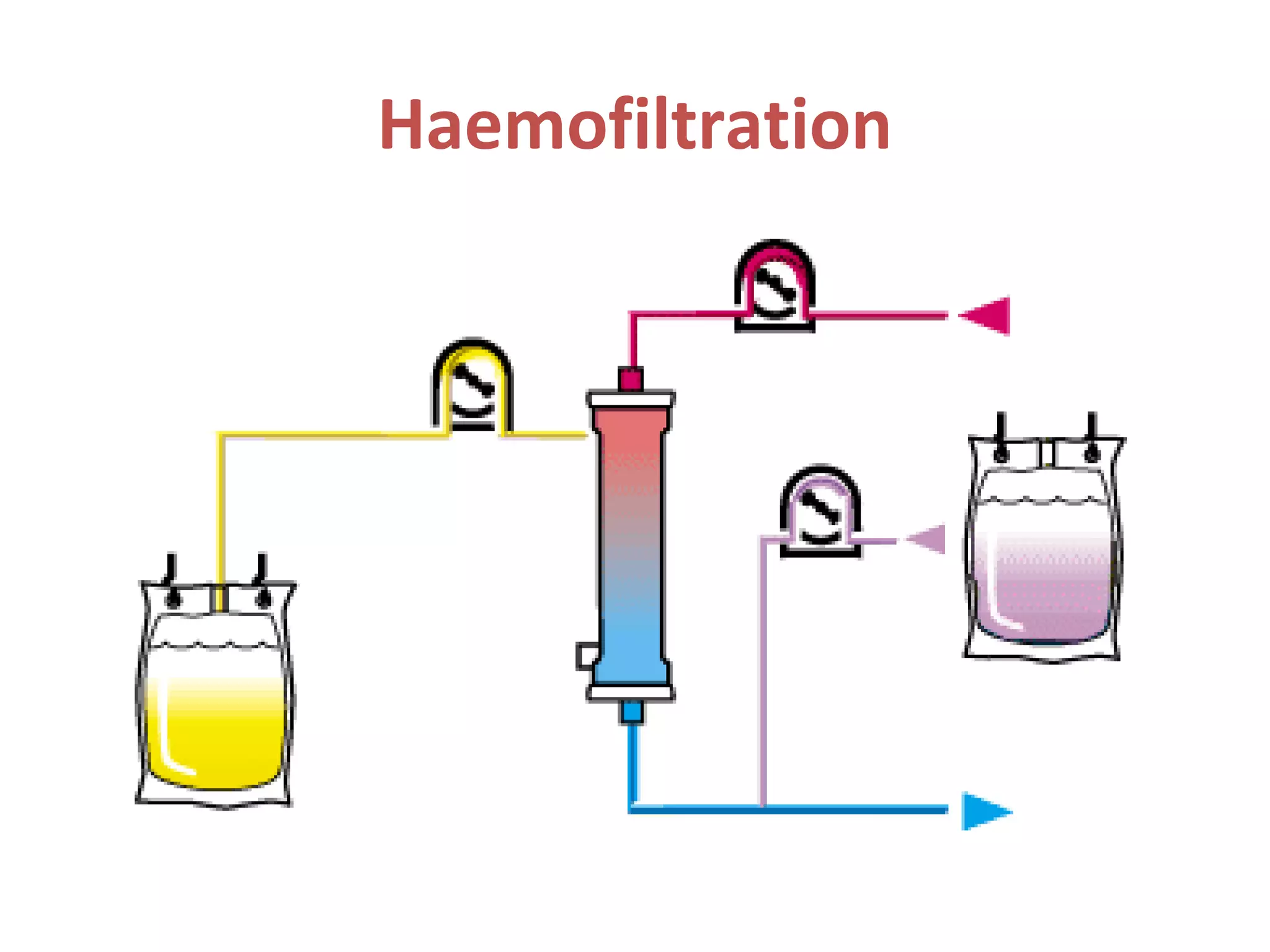
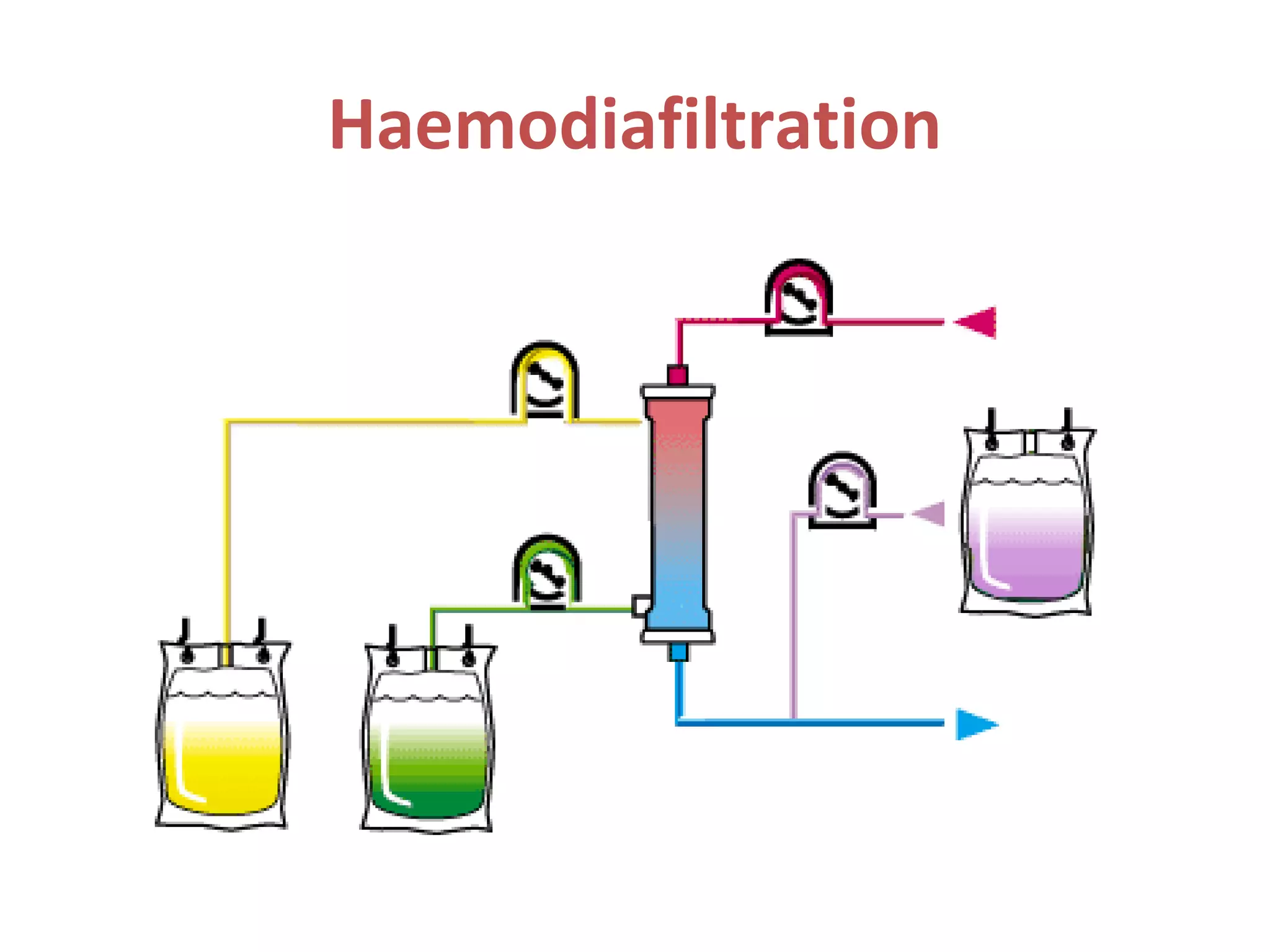
– Haemodialysis vs. Haemofiltration vs.
Haemodiafiltration
• The importance of water purity
• Dialysate
– Sodium Profiling
The Aim of Haemodialysis
‘To deliver blood in a fail safe manner from the
patient to the dialyzer, to enable an efficient
removal of uraemic toxins and fluid, and to
deliver the cleared blood back to the patient’
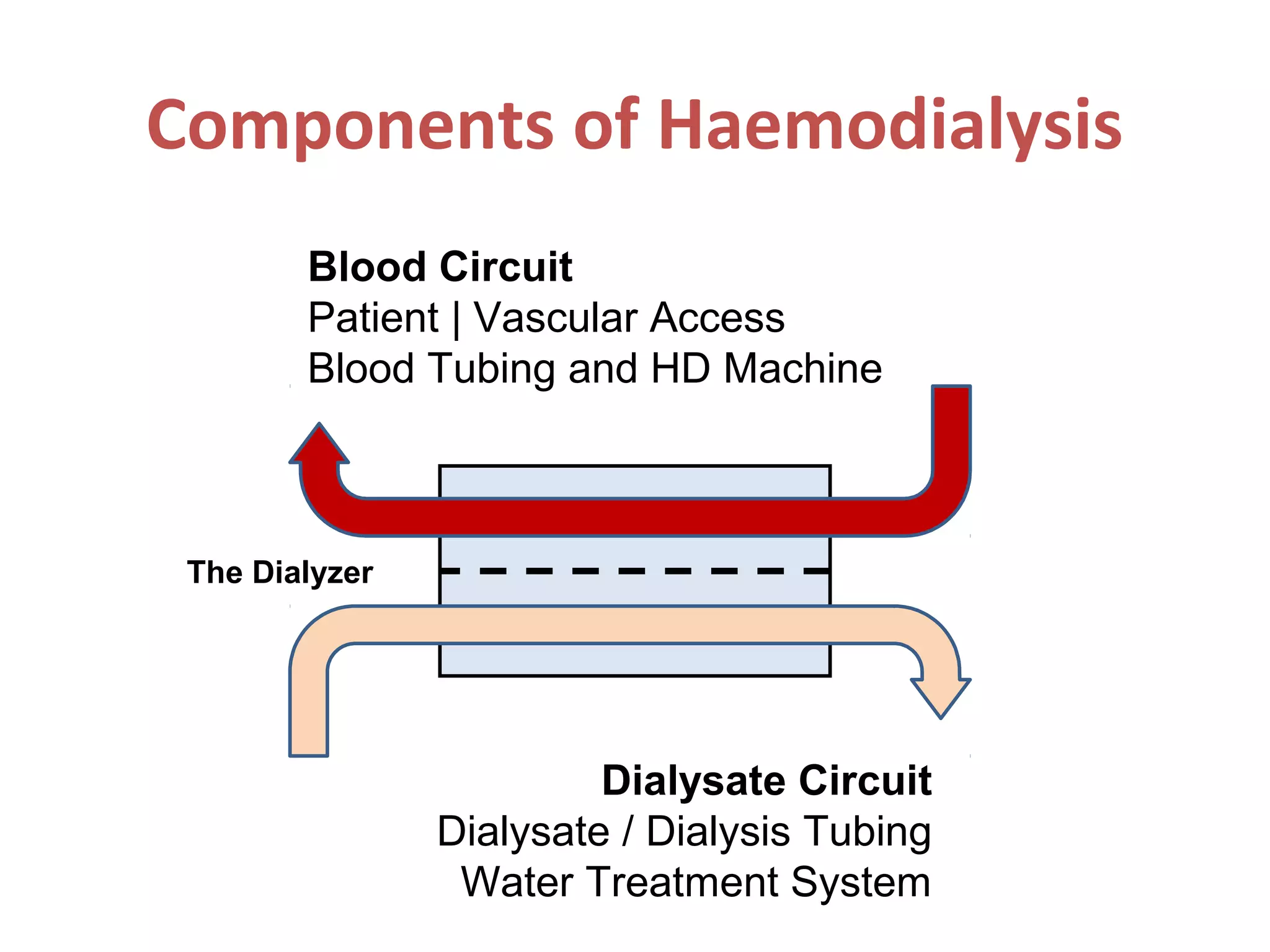
Components of Haemodialysis
Blood Circuit
Patient | Vascular Access
Blood Tubing and HD Machine
Dialysate Circuit
Dialysate / Dialysis Tubing
Water Treatment System
The Dialyzer
The Dialyzer
Composition
1)Blood Compartment
2)Dialysate Compartment
3)Semipermeable membrane
4)Membrane support structure
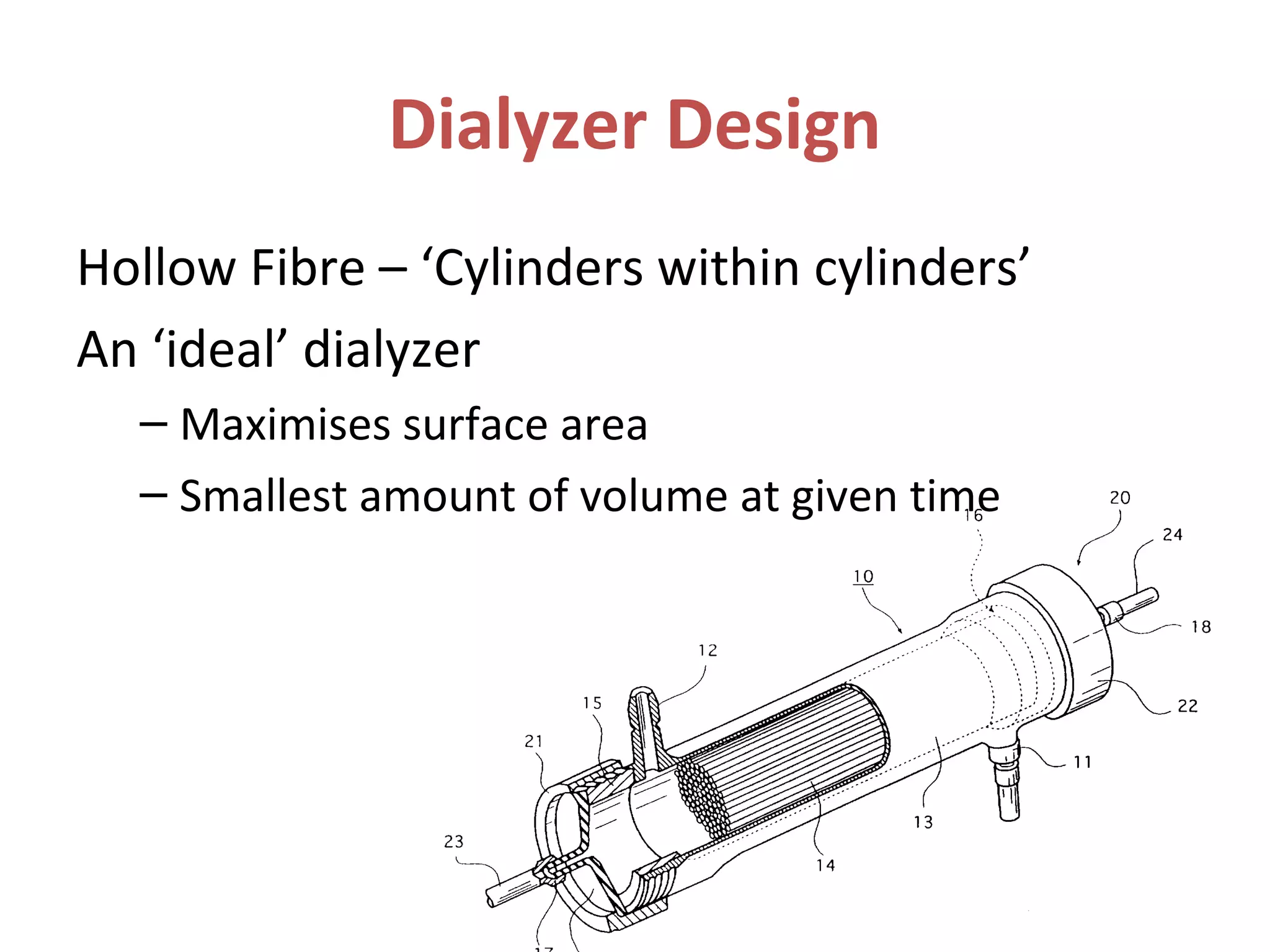
Dialyzer Design
Hollow Fibre – ‘Cylinders within cylinders’
An ‘ideal’ dialyzer
– Maximises surface area
– Smallest amount of volume at given time
And now for some mathematics…
The Hagen-Pouseille Equation
‘Blood flow more strongly dictated by radius
rather than length’
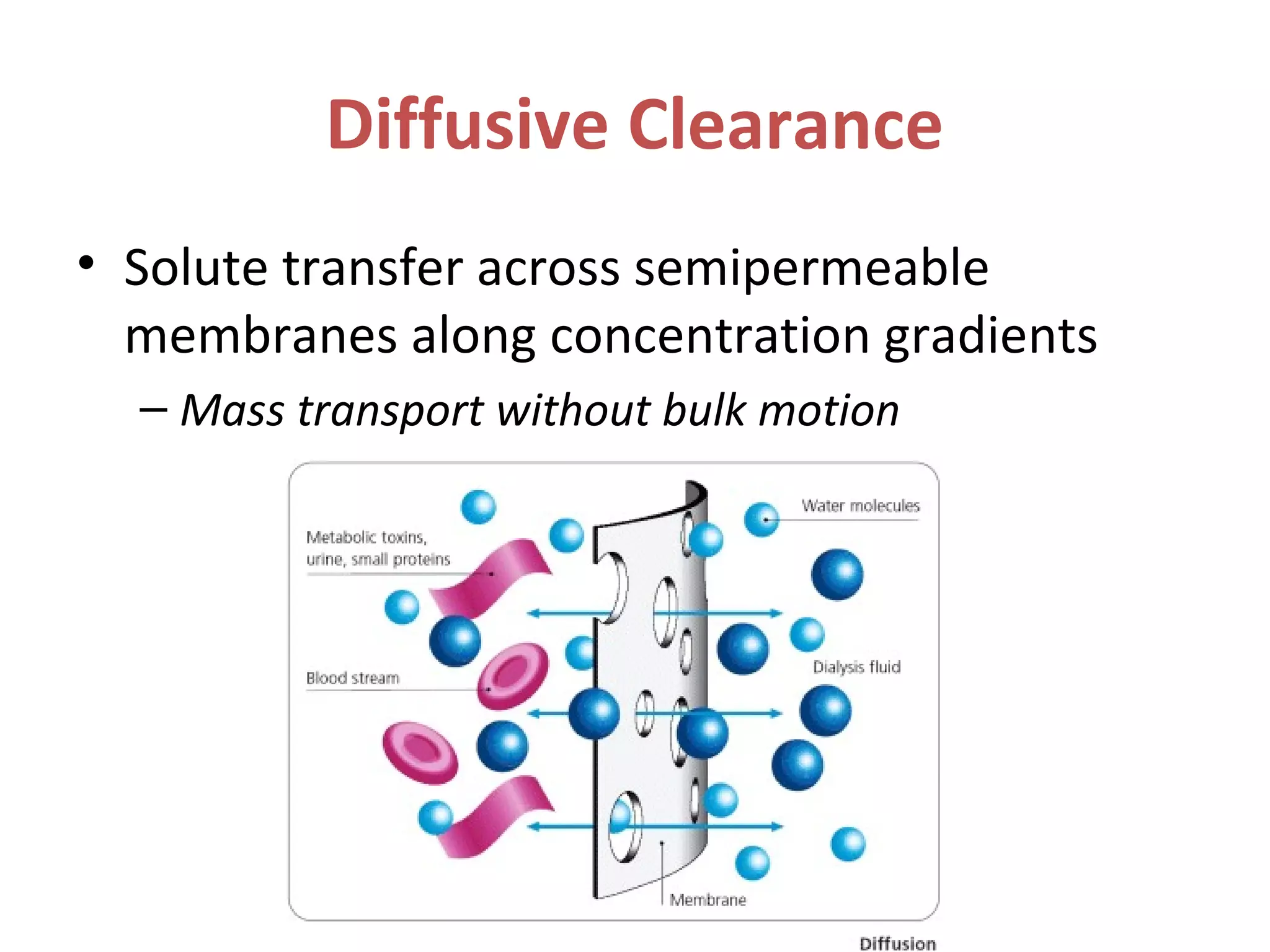
Diffusive Clearance
• Solute transfer across semipermeable
membranes along concentration gradients
– Mass transport without bulk motion
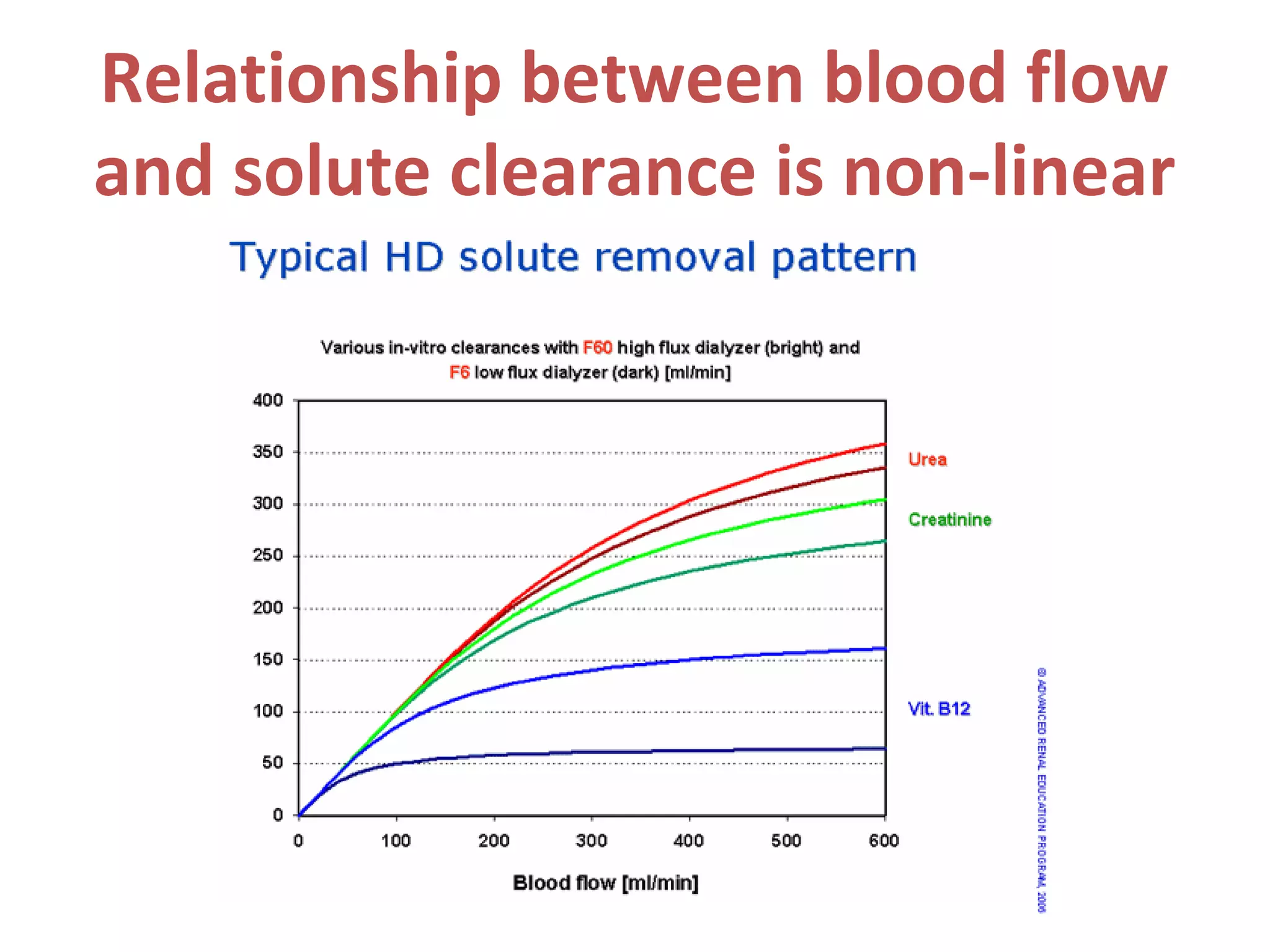
Factors influencing Diffusion Rate
• Concentration gradient
• Molecular weight/size
• Membrane surface area
• Membrane Permeability
• Blood flow rate (Qb)
• Dialysate flow rate (Qd)
Relationship between blood flow
and solute clearance is non-linear
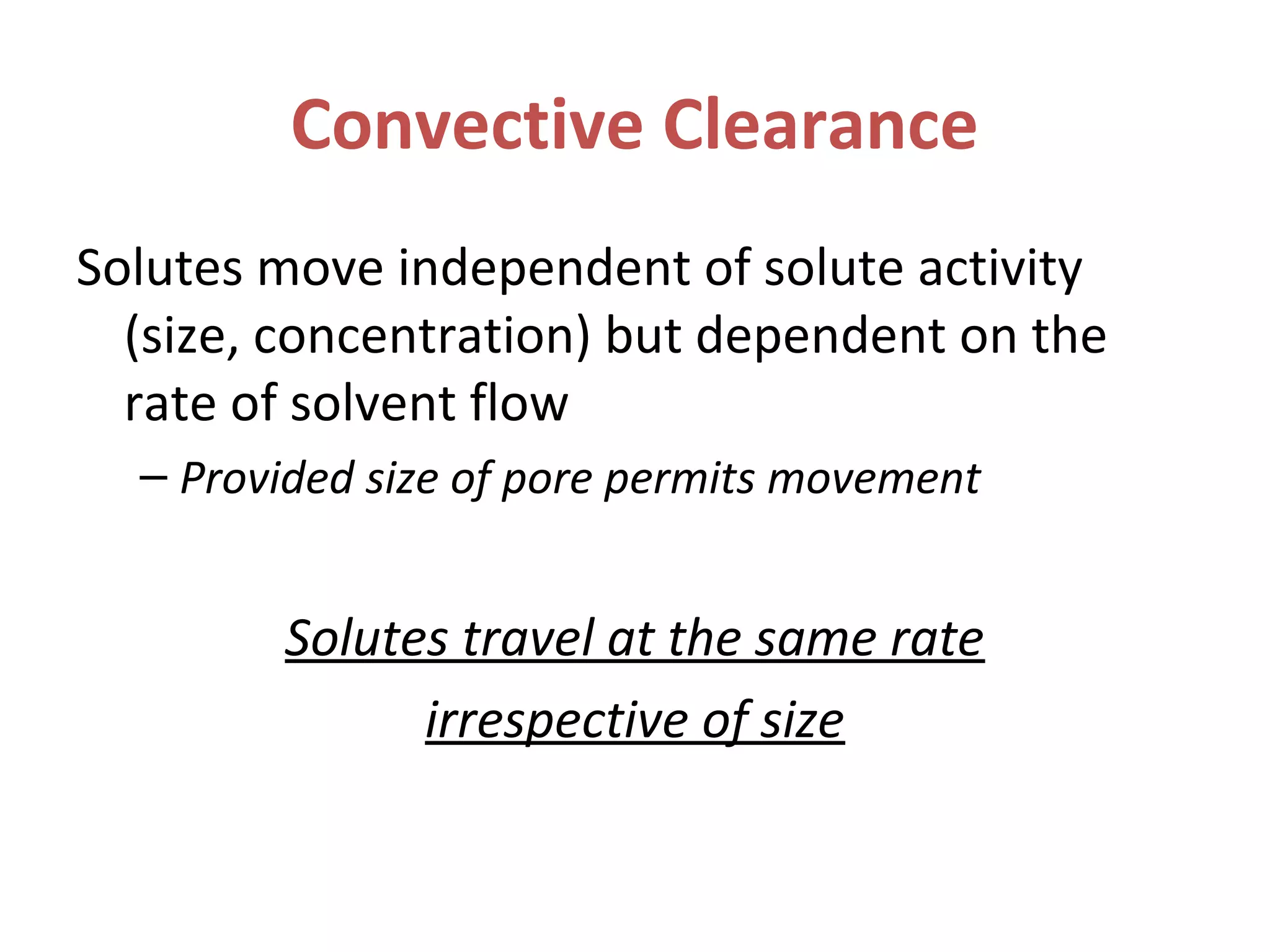
Convective Clearance
Solutes move independent of solute activity
(size, concentration) but dependent on the
rate of solvent flow
– Provided size of pore permits movement
Solutes travel at the same rate
irrespective of size
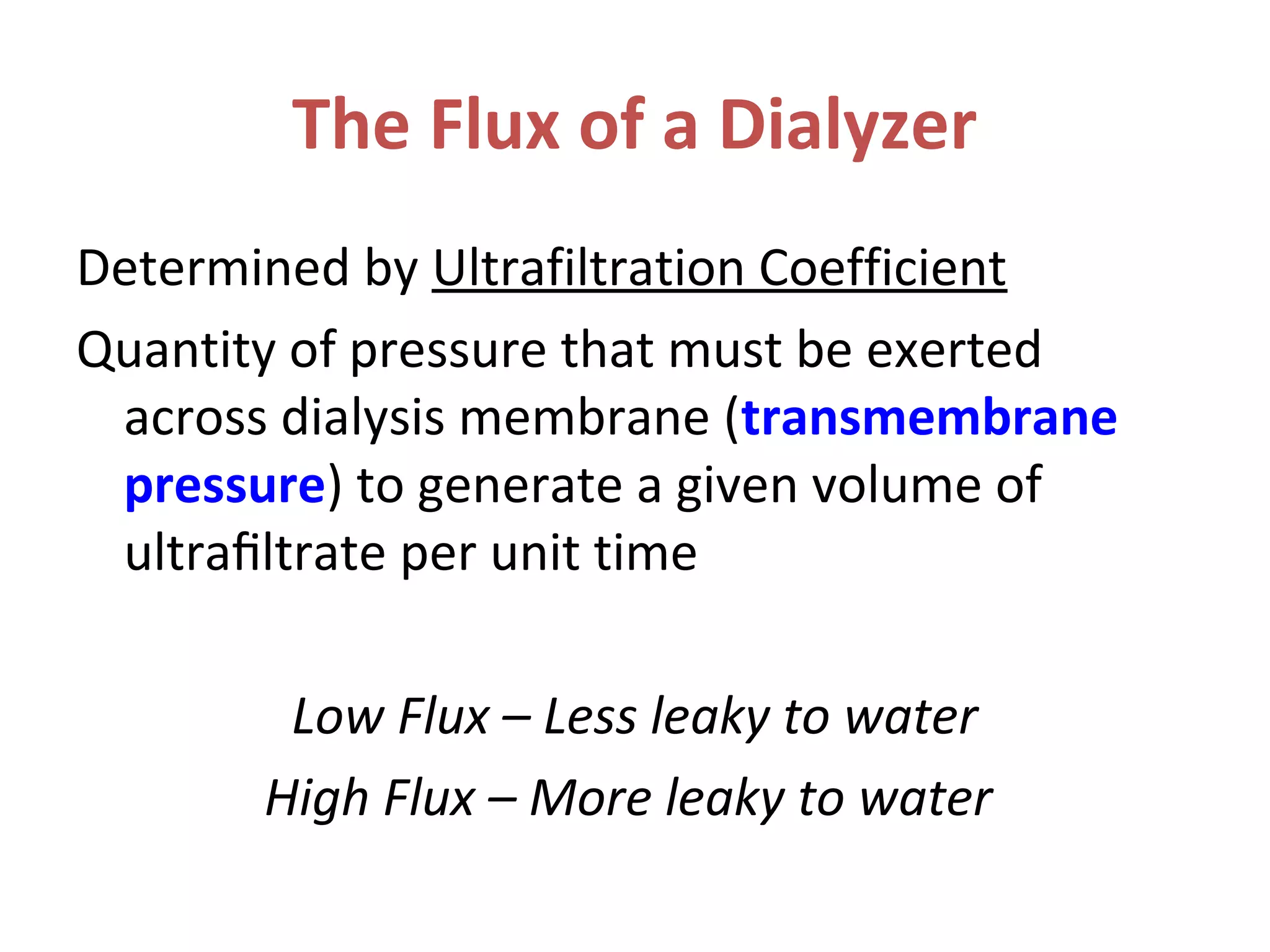
The Flux of a Dialyzer
Determined by Ultrafiltration Coefficient
Quantity of pressure that must be exerted
across dialysis membrane (transmembrane
pressure) to generate a given volume of
ultrafiltrate per unit time
Low Flux – Less leaky to water
High Flux – More leaky to water
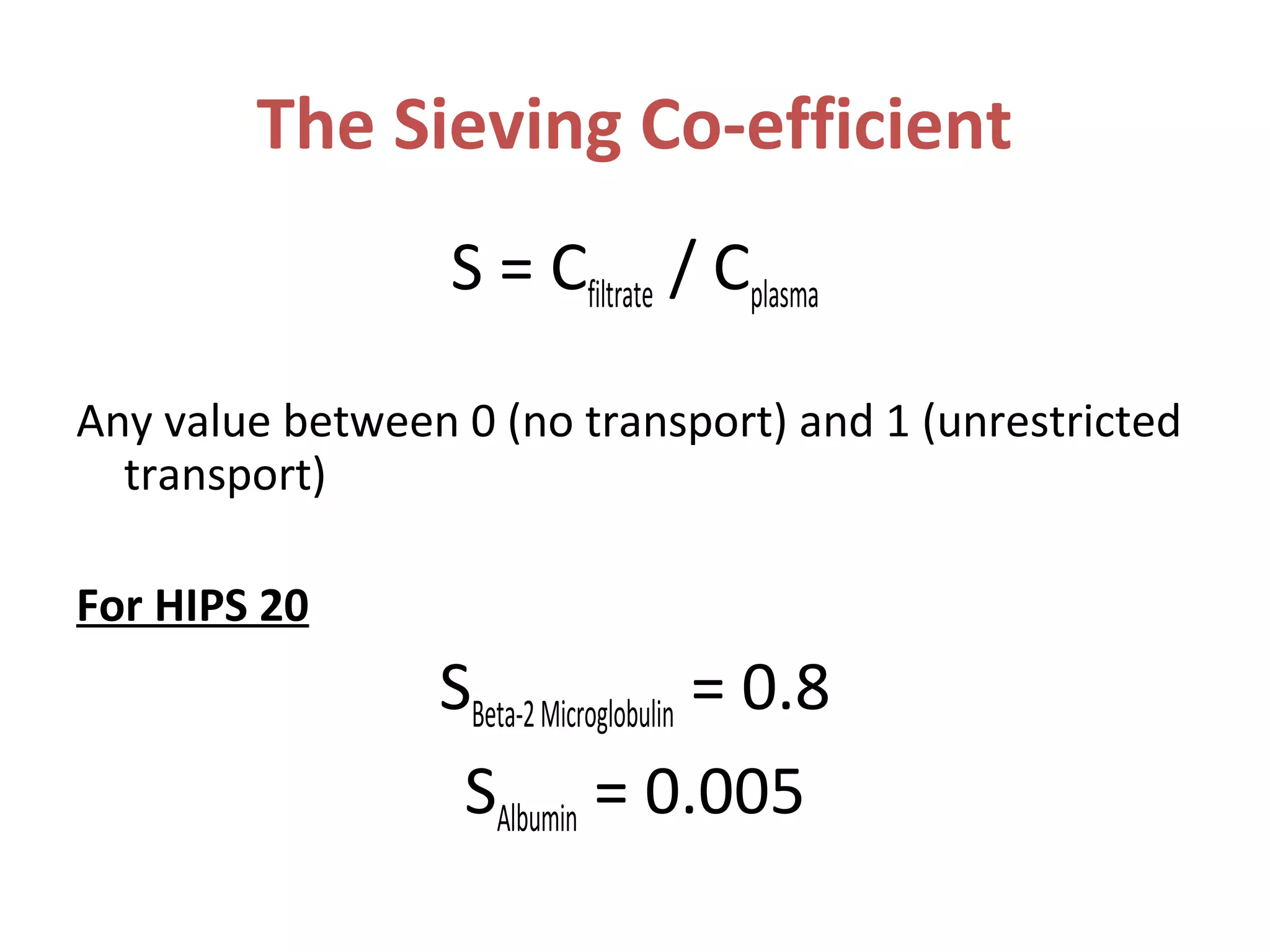
The Sieving Co-efficient
S = Cfiltrate / Cplasma
Any value between 0 (no transport) and 1 (unrestricted
transport)
For HIPS 20
SBeta-2Microglobulin = 0.8
SAlbumin = 0.005
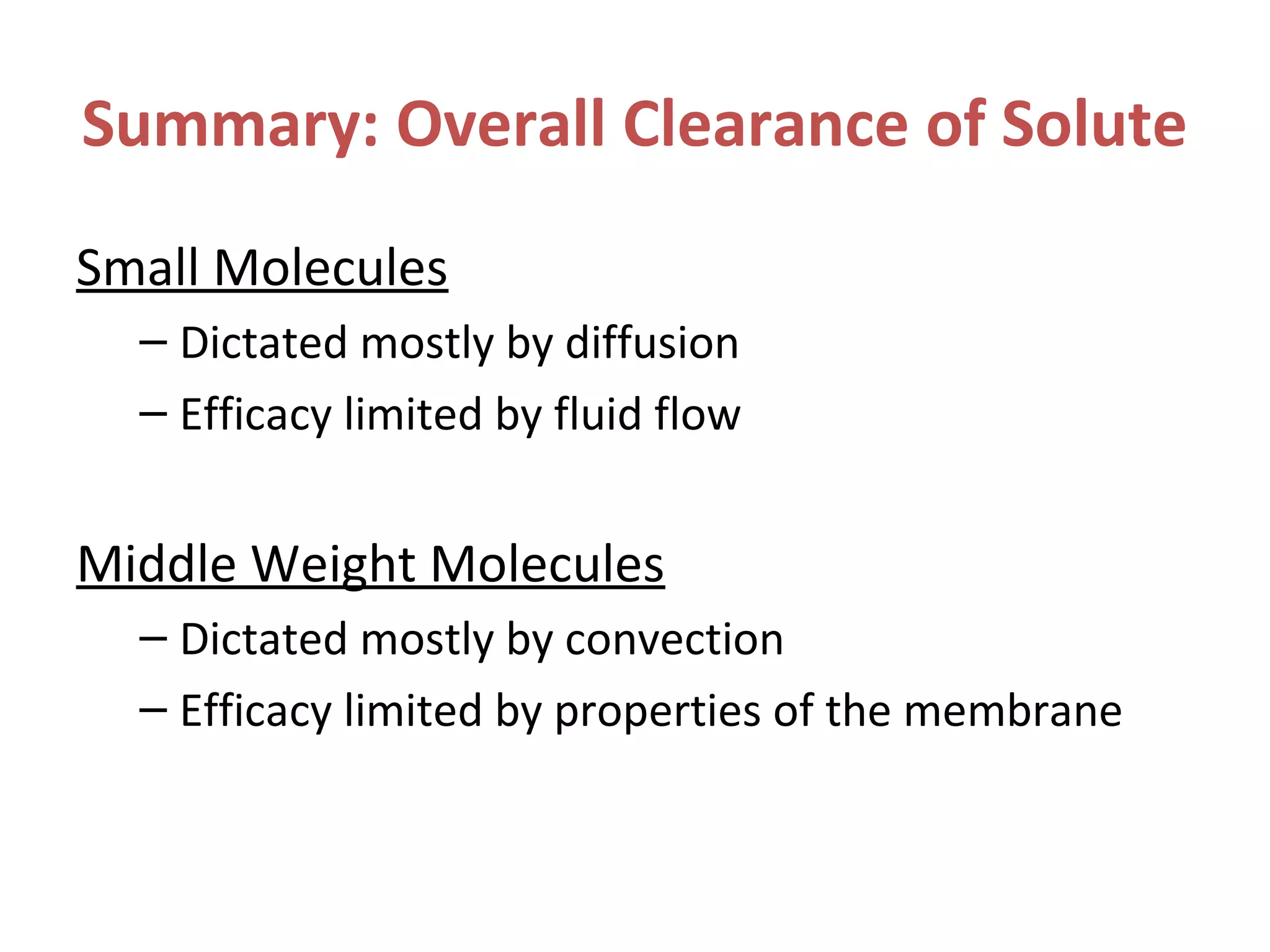
Summary: Overall Clearance of Solute
Small Molecules
– Dictated mostly by diffusion
– Efficacy limited by fluid flow
Middle Weight Molecules
– Dictated mostly by convection
– Efficacy limited by properties of the membrane
Techniques of Haemodialysis
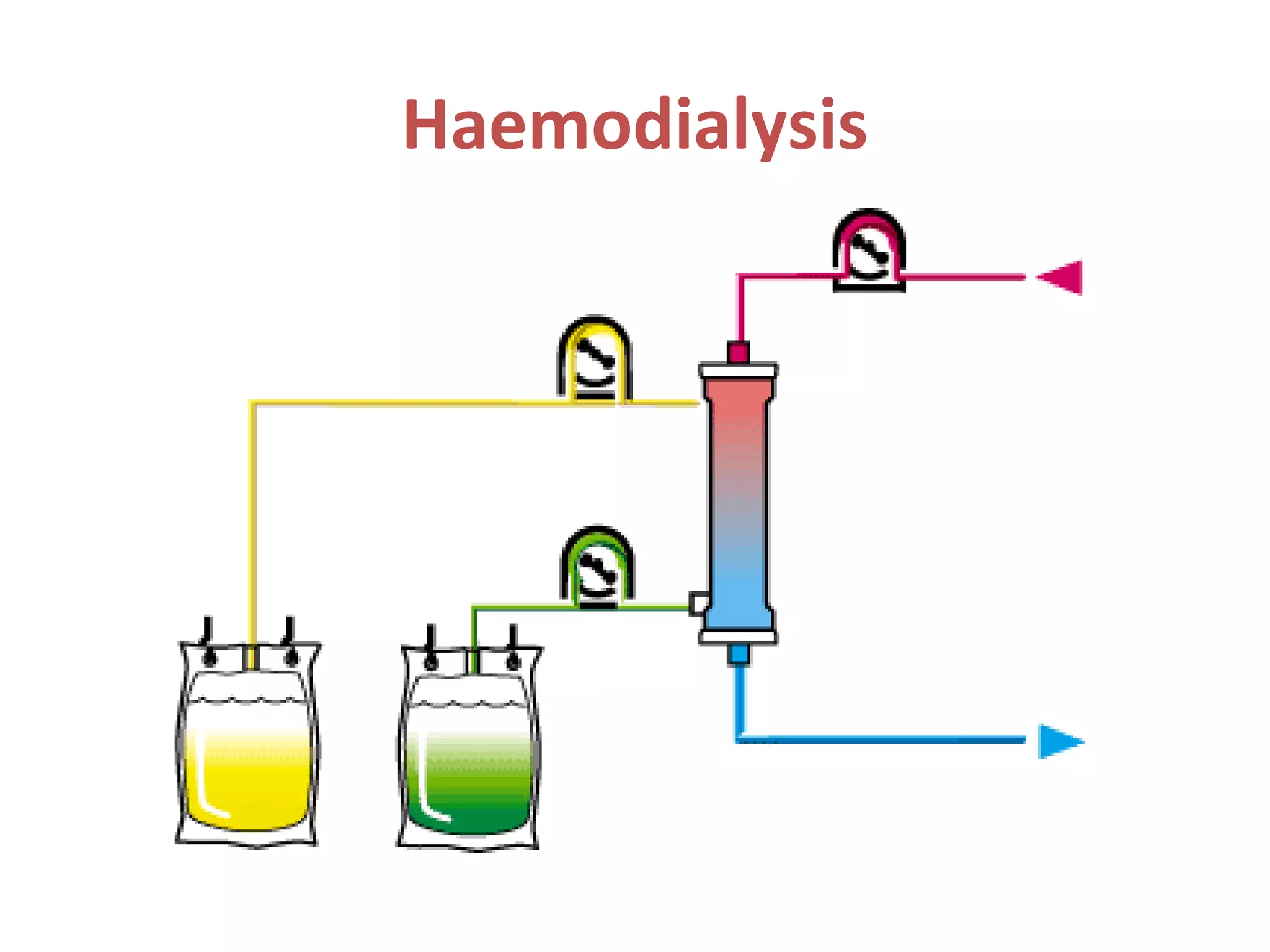
Haemodialysis
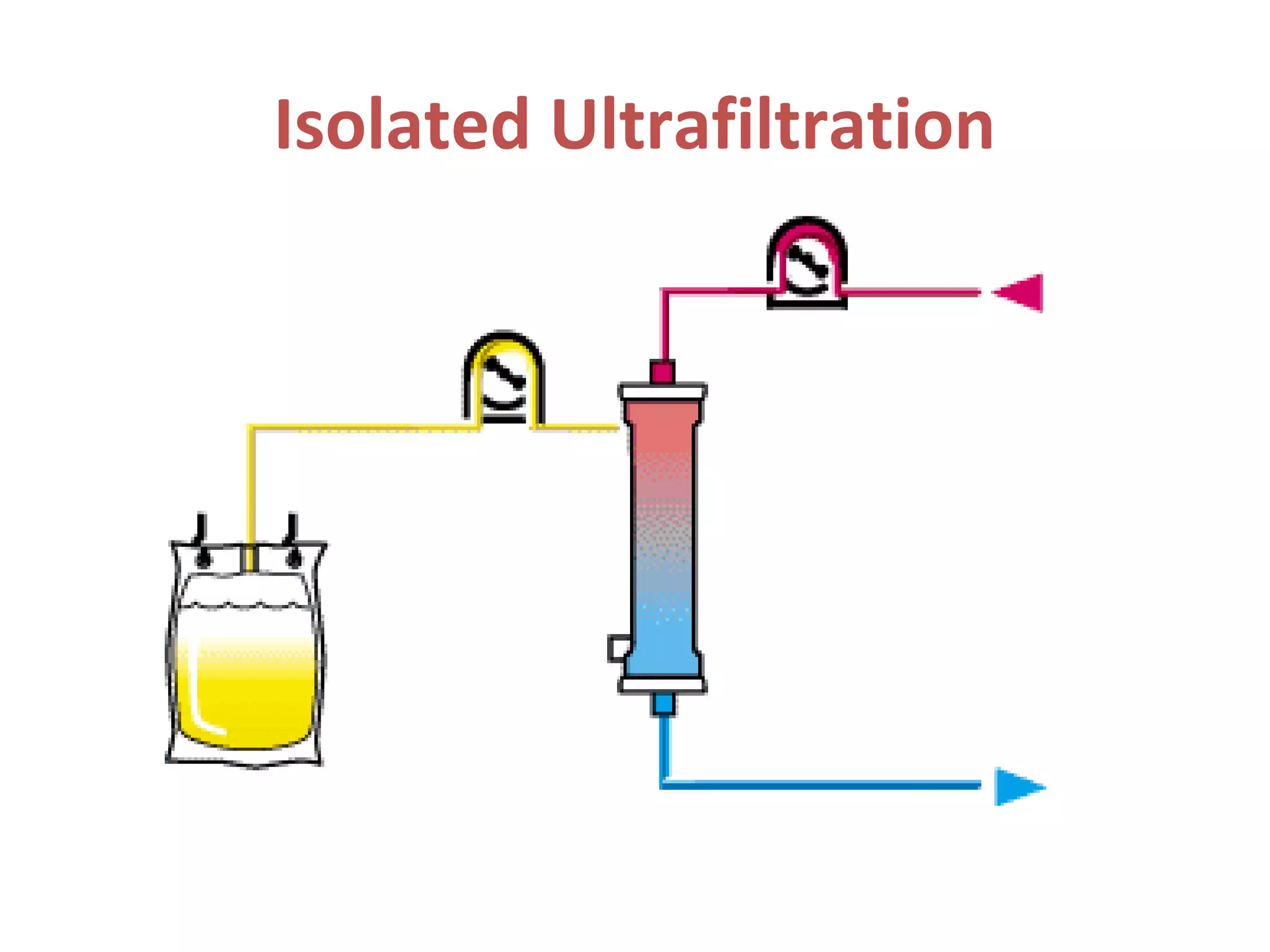
Isolated Ultrafiltration
Haemofiltration
Haemodiafiltration
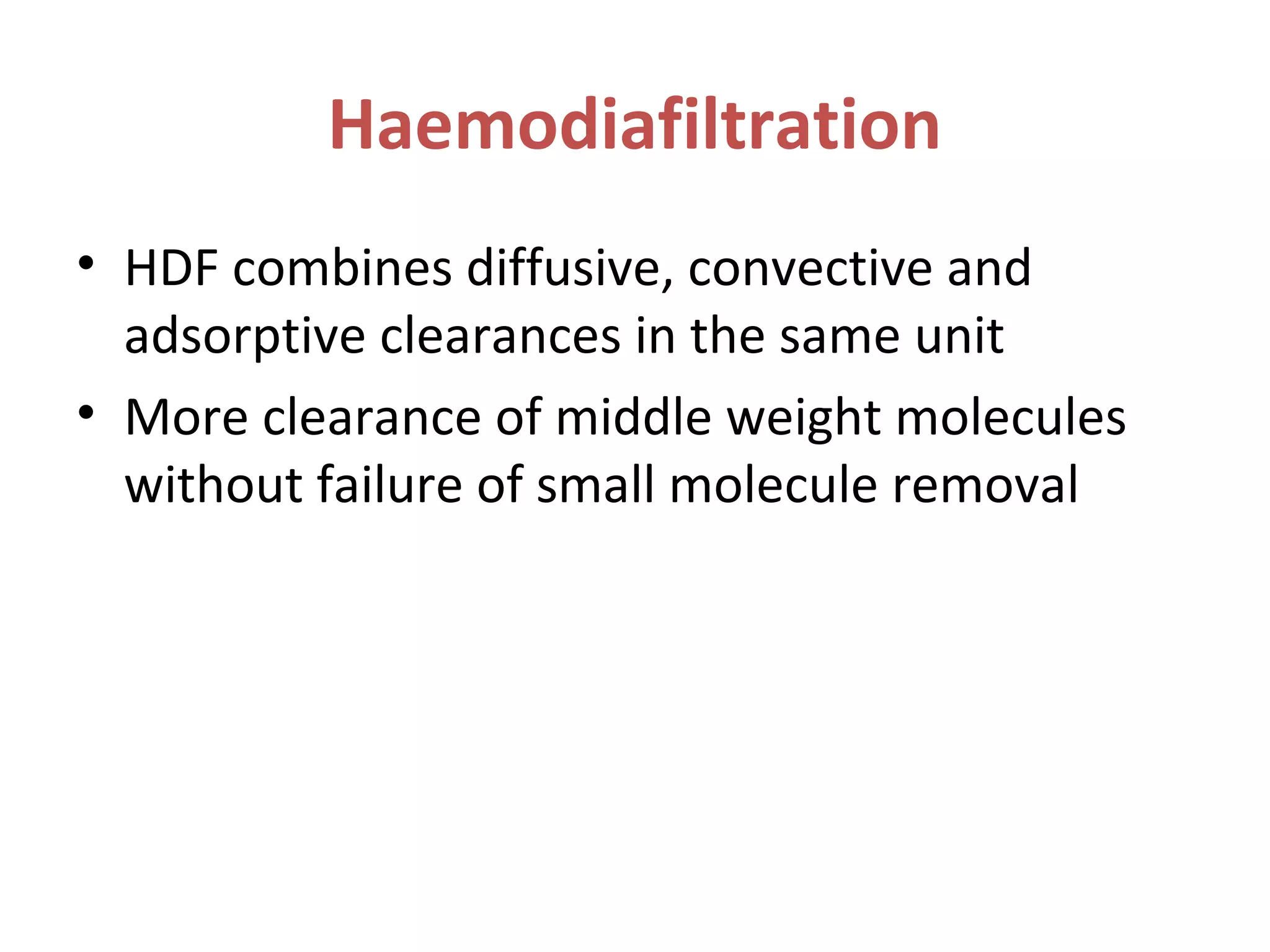
Haemodiafiltration
• HDF combines diffusive, convective and
adsorptive clearances in the same unit
• More clearance of middle weight molecules
without failure of small molecule removal
Question
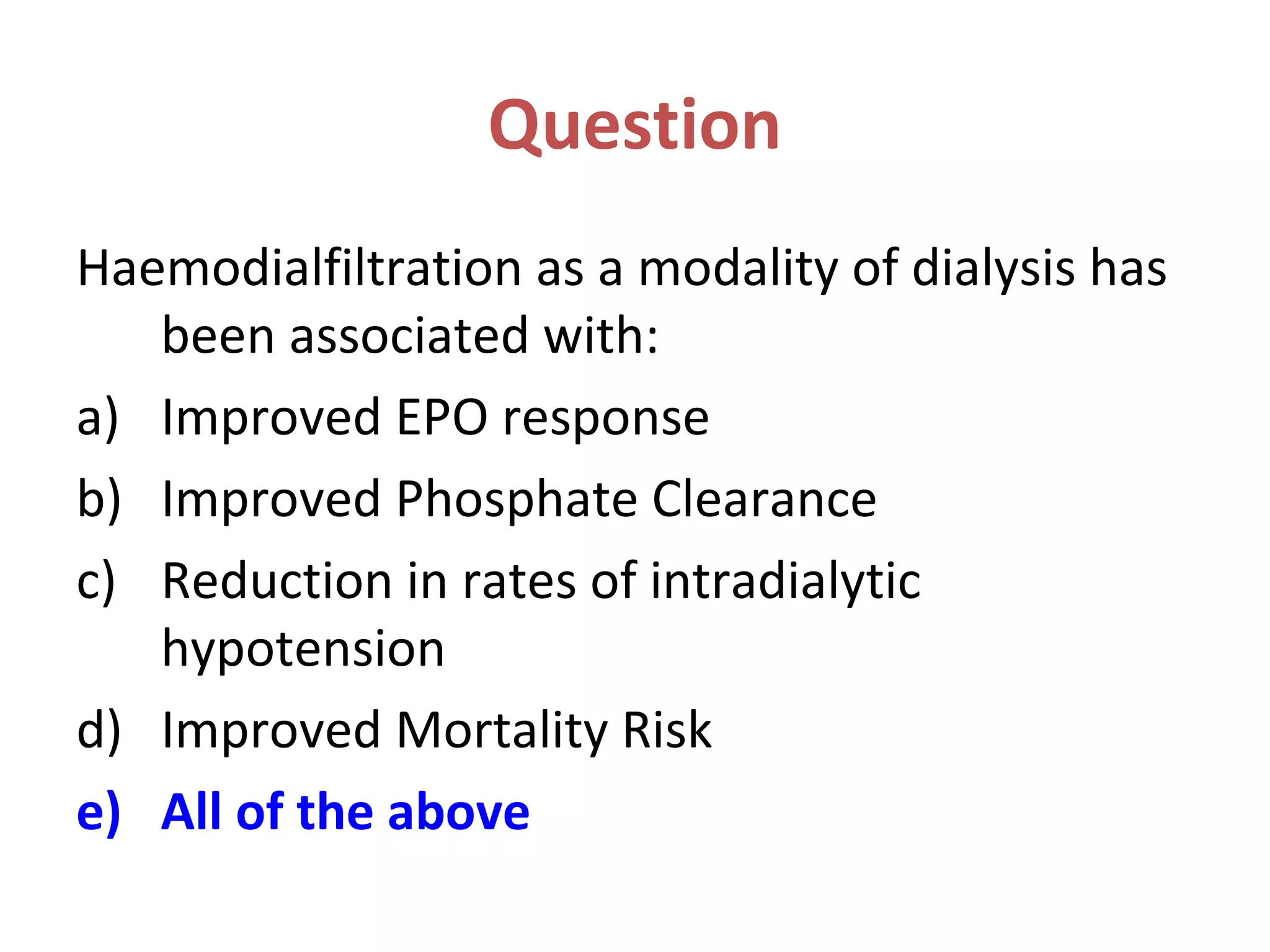
Haemodialfiltration as a modality of dialysis has
been associated with:
a) Improved EPO response
b) Improved Phosphate Clearance
c) Reduction in rates of intradialytic
hypotension
d) Improved Mortality Risk
e) All of the above
Question
Haemodialfiltration as a modality of dialysis has
been associated with:
a) Improved EPO response
b) Improved Phosphate Clearance
c) Reduction in rates of intradialytic
hypotension
d) Improved Mortality Risk
e) All of the above
Question
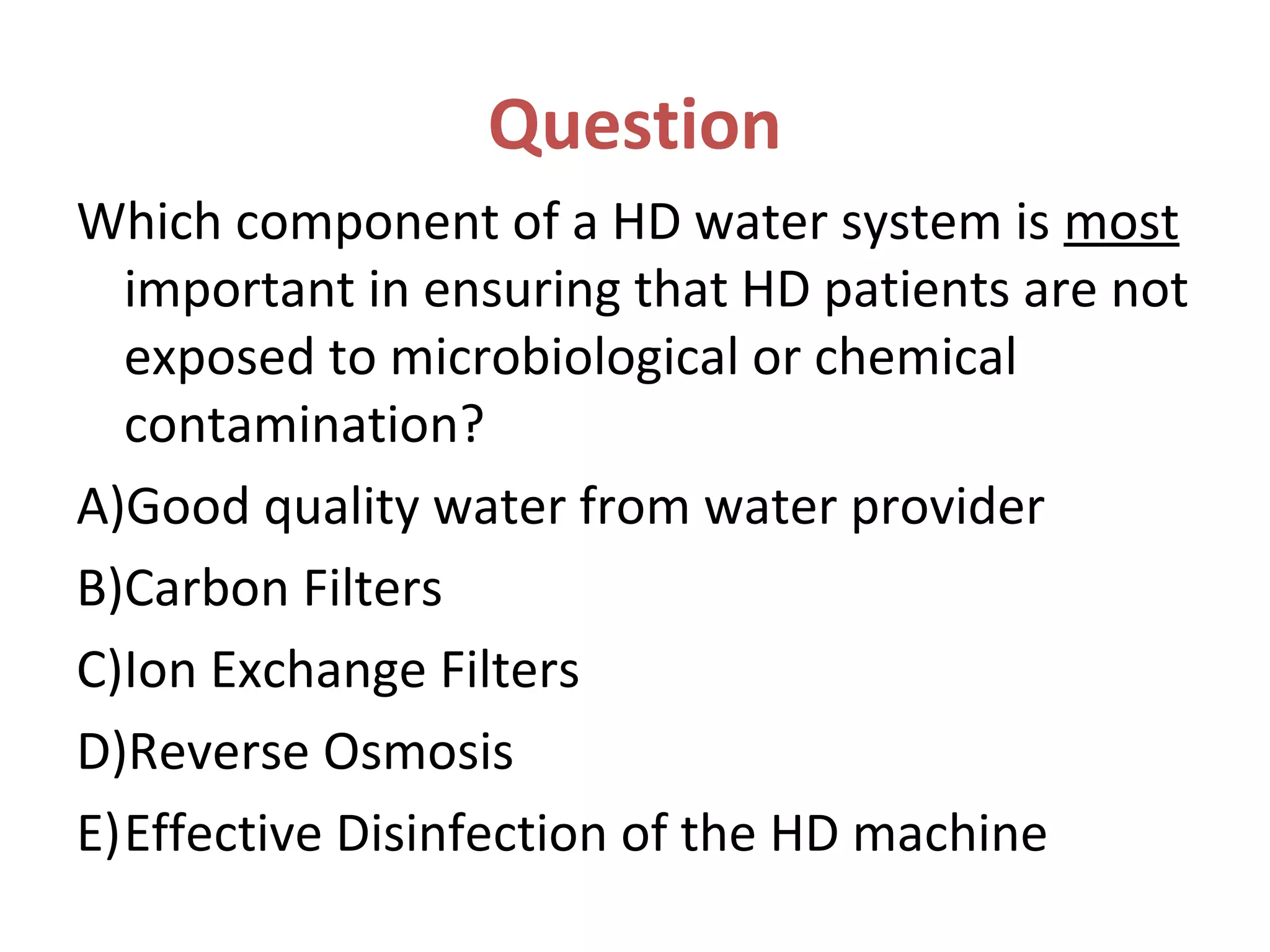
Which component of a HD water system is most
important in ensuring that HD patients are not
exposed to microbiological or chemical
contamination?
A)Good quality water from water provider
B)Carbon Filters
C)Ion Exchange Filters
D)Reverse Osmosis
E)Effective Disinfection of the HD machine
Question
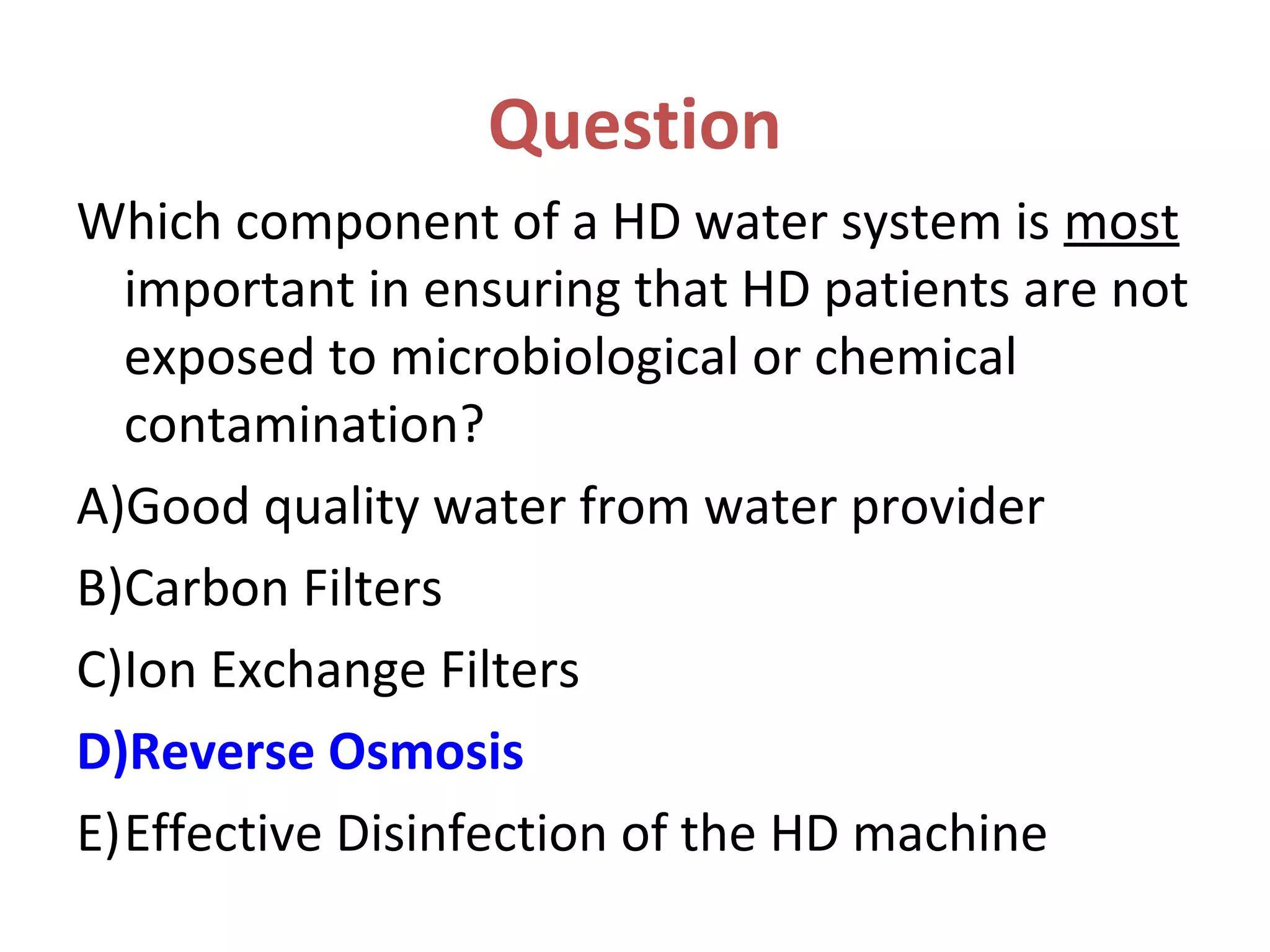
Which component of a HD water system is most
important in ensuring that HD patients are not
exposed to microbiological or chemical
contamination?
A)Good quality water from water provider
B)Carbon Filters
C)Ion Exchange Filters
D)Reverse Osmosis
E)Effective Disinfection of the HD machine
‘As human beings,
you and I need
fresh, pure water
to replenish our
precious bodily
fluids.’
Water Exposure in Haemodialysis
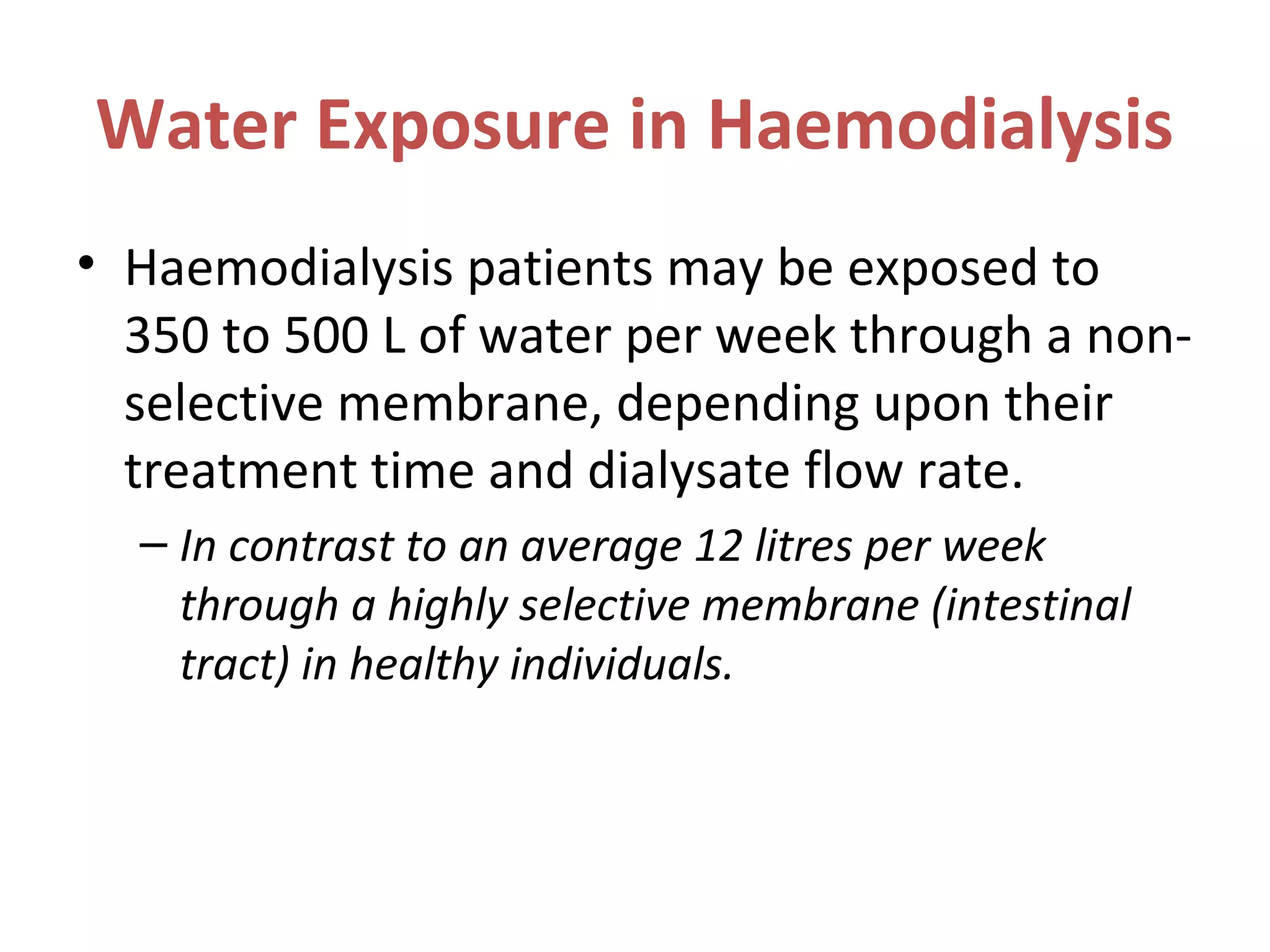
• Haemodialysis patients may be exposed to
350 to 500 L of water per week through a non-
selective membrane, depending upon their
treatment time and dialysate flow rate.
– In contrast to an average 12 litres per week
through a highly selective membrane (intestinal
tract) in healthy individuals.
Regulation of Water Purity
‘Guideline on water treatment facilities,
dialysis water and dialysis fluid quality for
haemodialysis and related therapies’ – Jan
2012
Association of Renal Technologists
http://www.artery.org.uk
International Regulation of Water
Purity for RRT
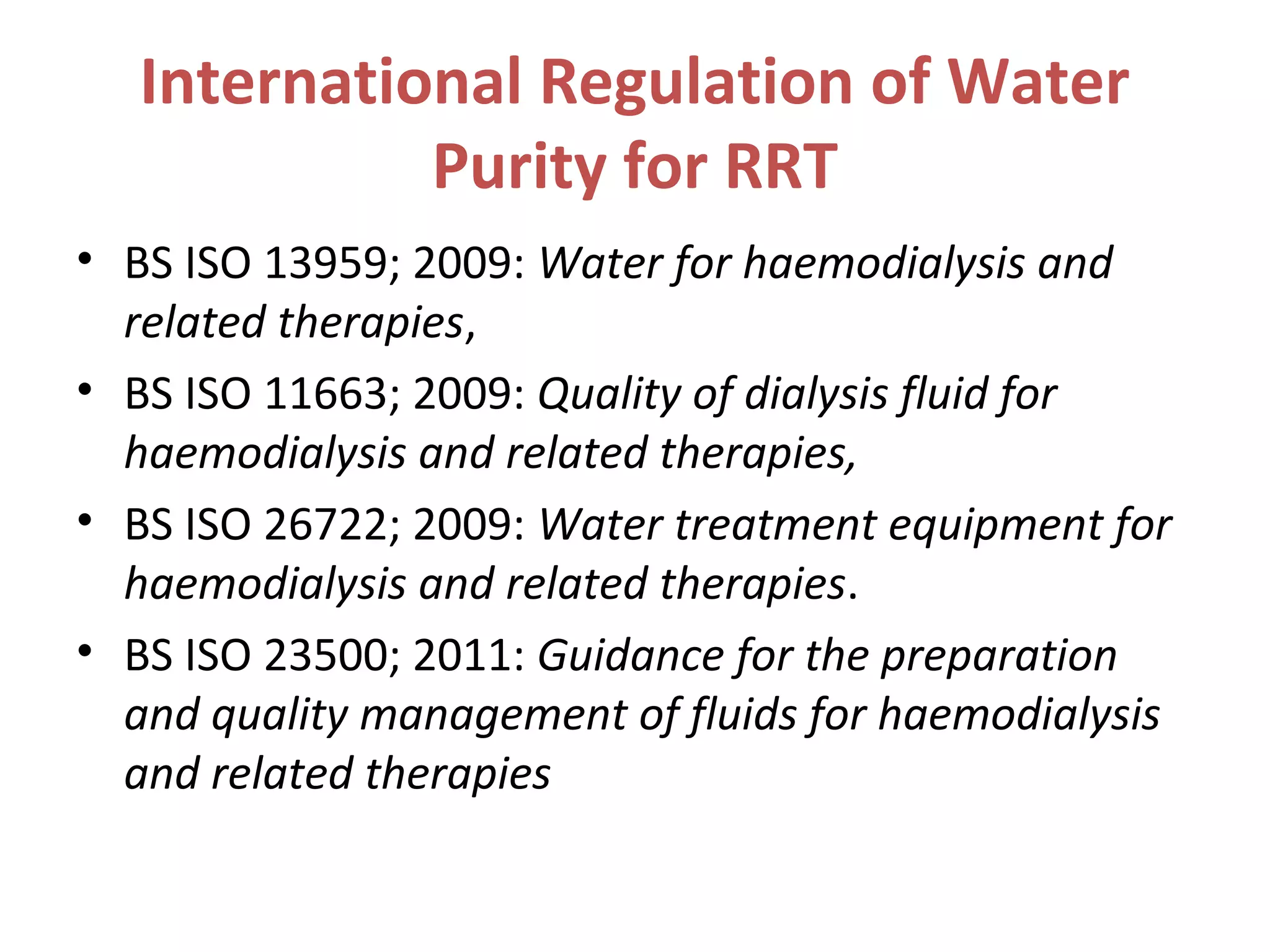
• BS ISO 13959; 2009: Water for haemodialysis and
related therapies,
• BS ISO 11663; 2009: Quality of dialysis fluid for
haemodialysis and related therapies,
• BS ISO 26722; 2009: Water treatment equipment for
haemodialysis and related therapies.
• BS ISO 23500; 2011: Guidance for the preparation
and quality management of fluids for haemodialysis
and related therapies
Standards (From ART Guidelines 2012)
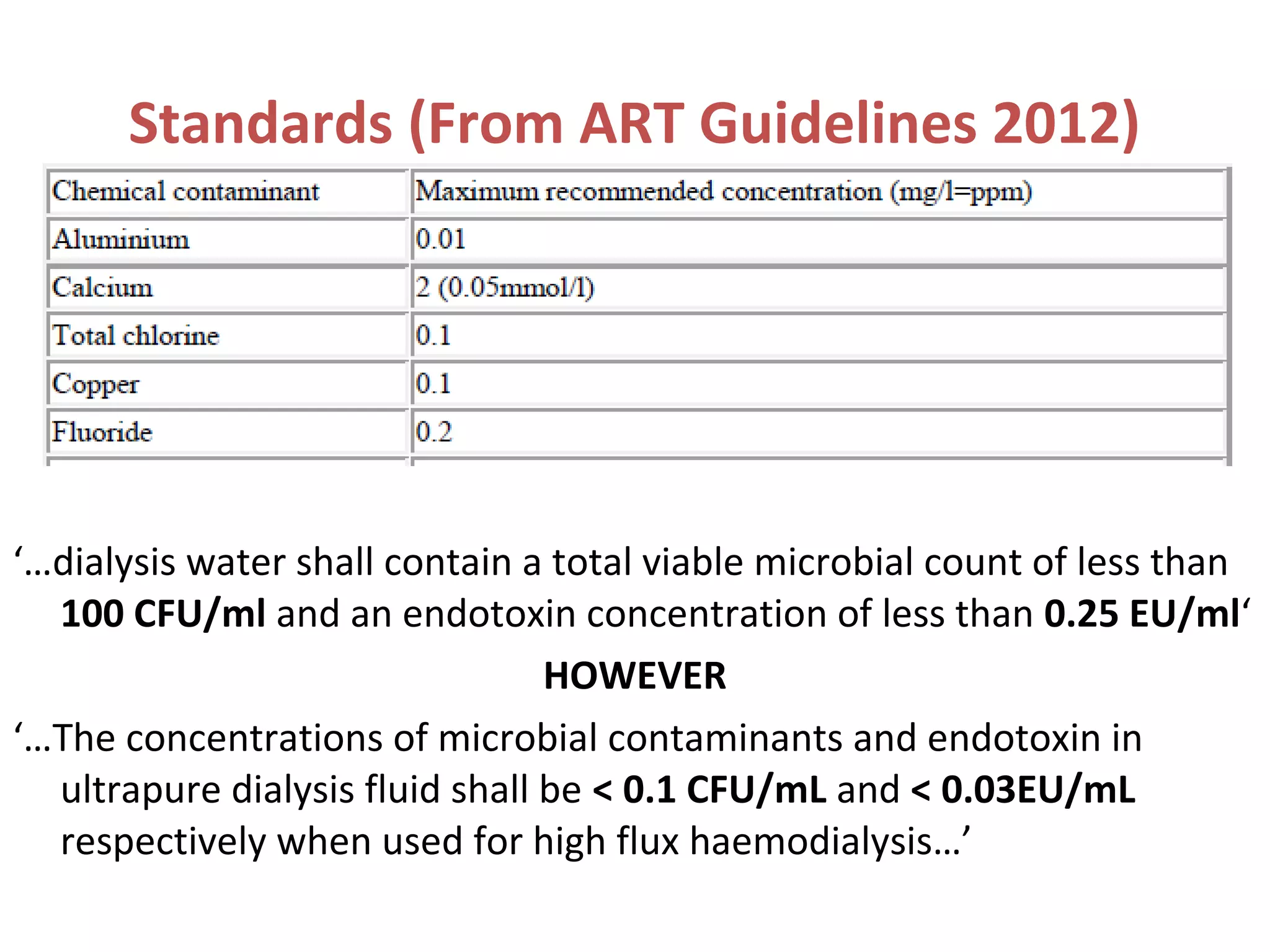
‘…dialysis water shall contain a total viable microbial count of less than
100 CFU/ml and an endotoxin concentration of less than 0.25 EU/ml‘
HOWEVER
‘…The concentrations of microbial contaminants and endotoxin in
ultrapure dialysis fluid shall be < 0.1 CFU/mL and < 0.03EU/mL
respectively when used for high flux haemodialysis…’
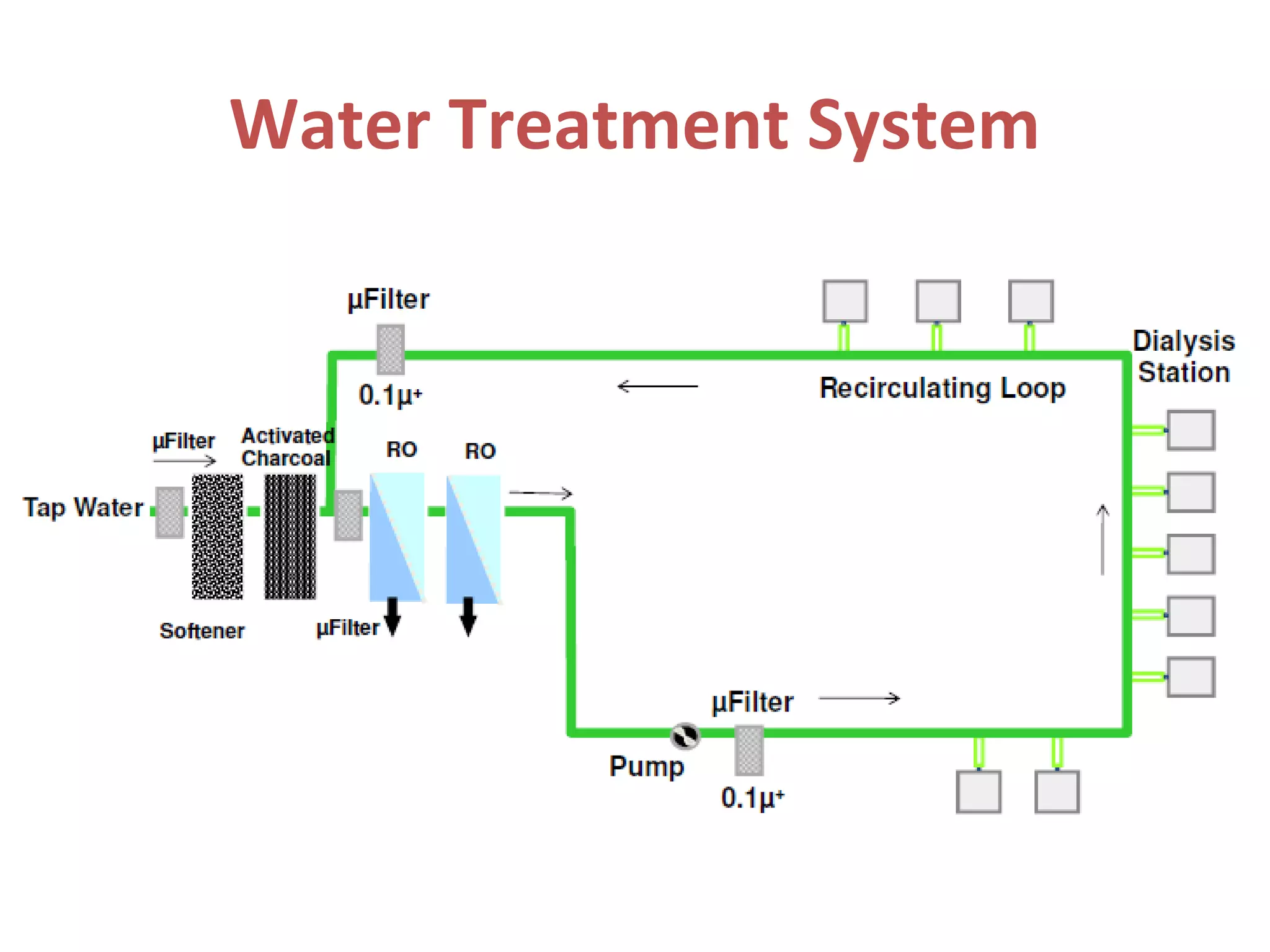
Water Treatment System
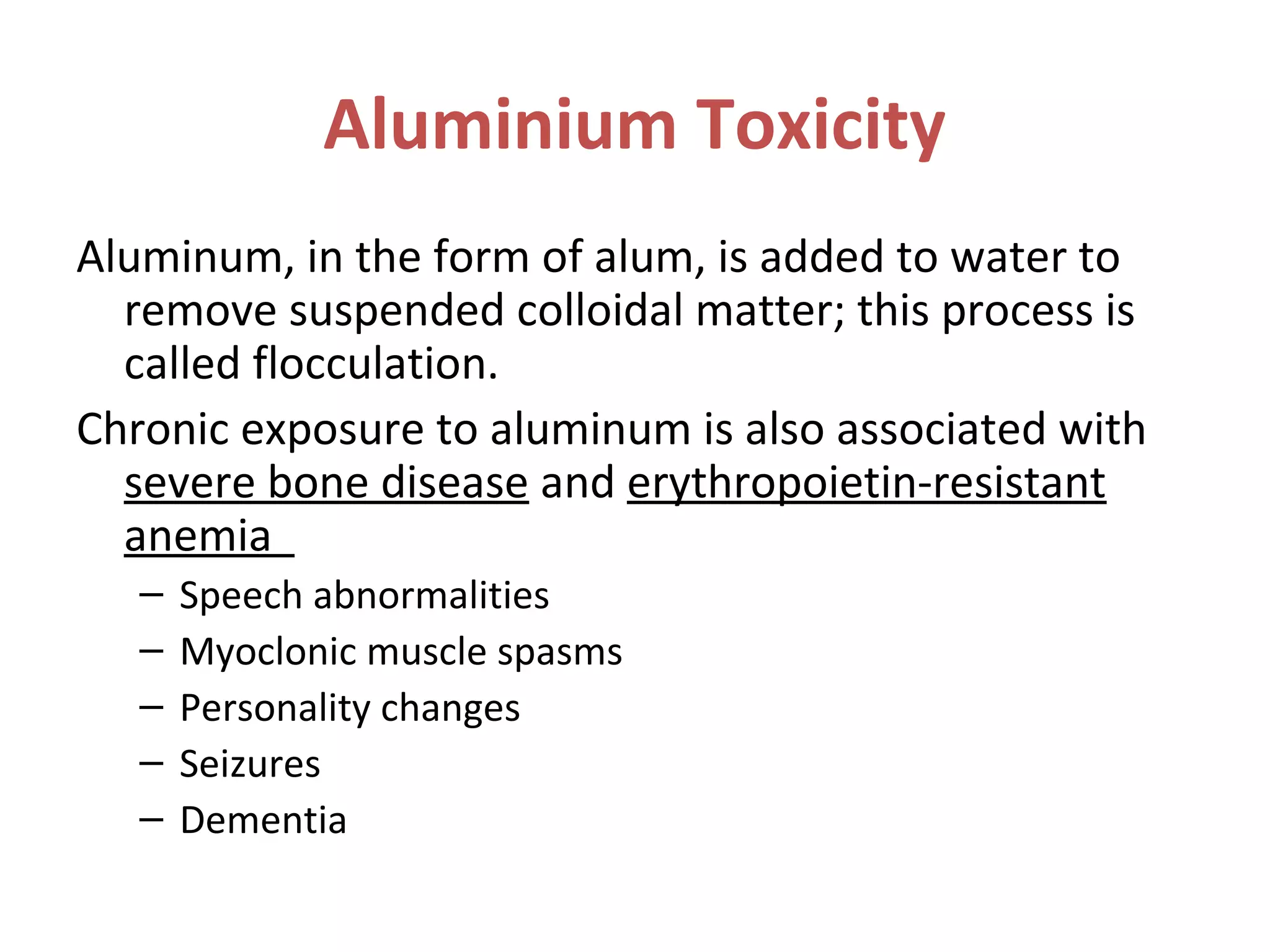
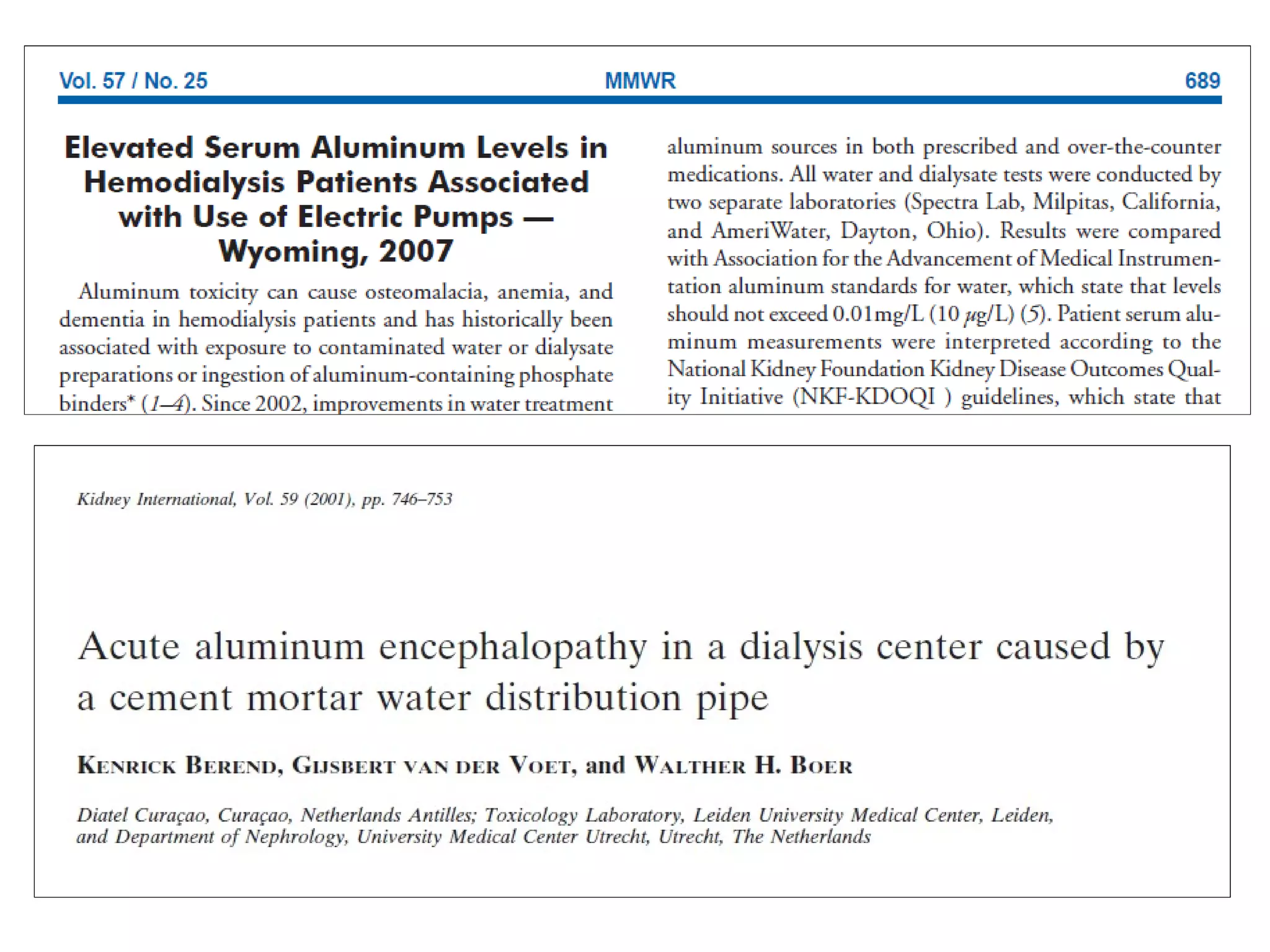
Aluminium Toxicity
Aluminum, in the form of alum, is added to water to
remove suspended colloidal matter; this process is
called flocculation.
Chronic exposure to aluminum is also associated with
severe bone disease and erythropoietin-resistant
anemia
– Speech abnormalities
– Myoclonic muscle spasms
– Personality changes
– Seizures
– Dementia
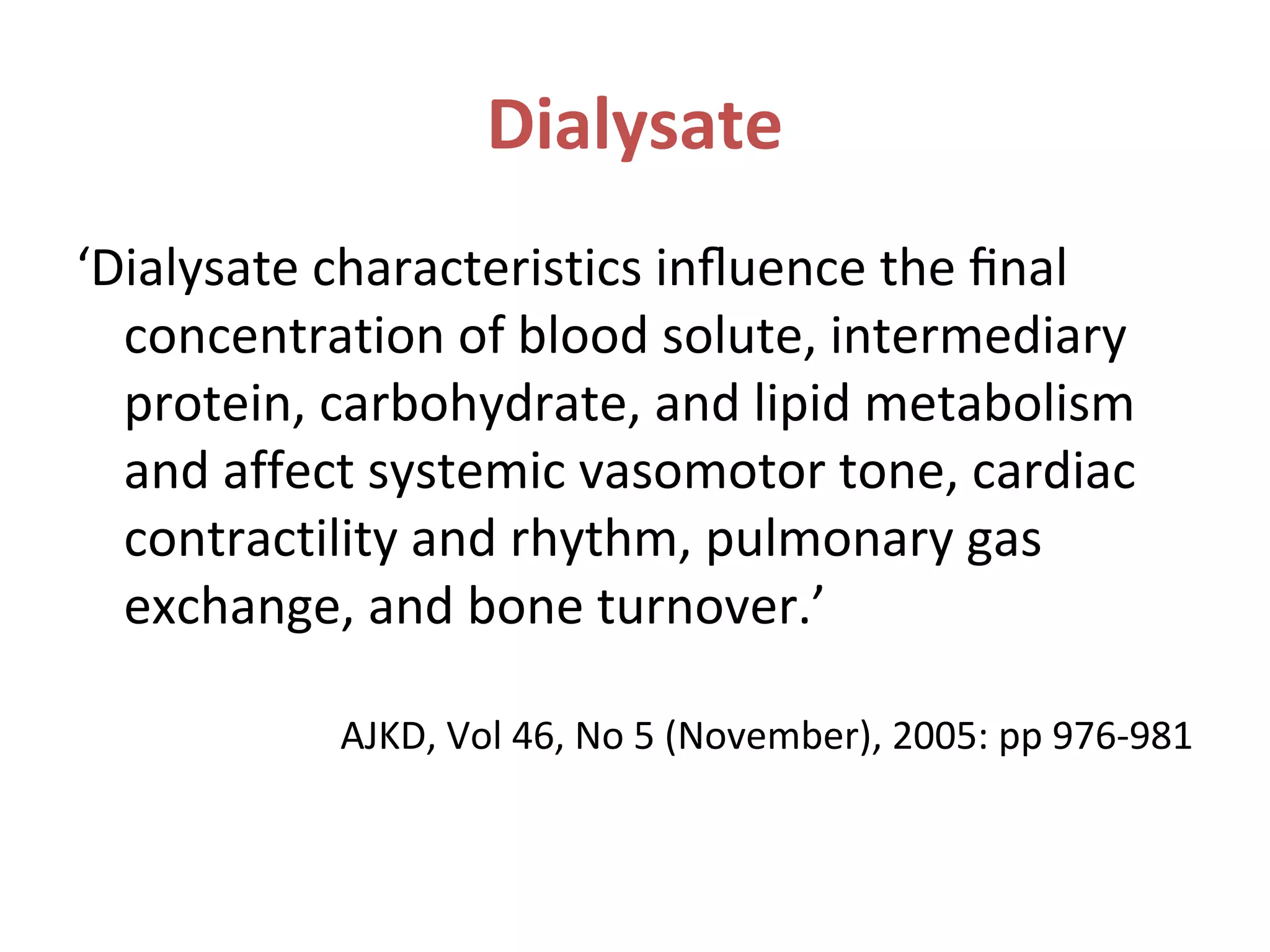
Dialysate
‘Dialysate characteristics influence the final
concentration of blood solute, intermediary
protein, carbohydrate, and lipid metabolism
and affect systemic vasomotor tone, cardiac
contractility and rhythm, pulmonary gas
exchange, and bone turnover.’
AJKD, Vol 46, No 5 (November), 2005: pp 976-981
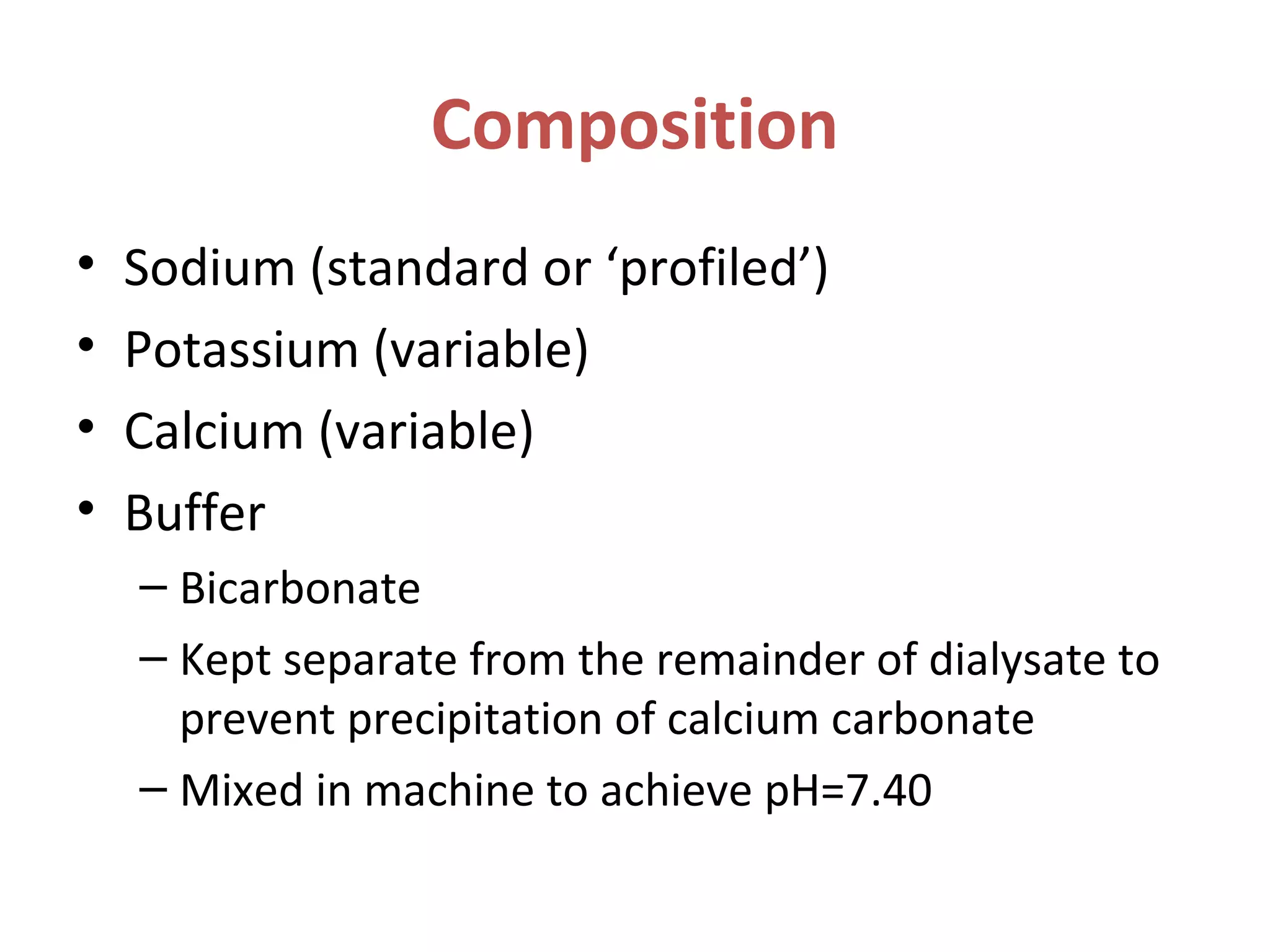
Composition
• Sodium (standard or ‘profiled’)
• Potassium (variable)
• Calcium (variable)
• Buffer
– Bicarbonate
– Kept separate from the remainder of dialysate to
prevent precipitation of calcium carbonate
– Mixed in machine to achieve pH=7.40
Sodium Profiling
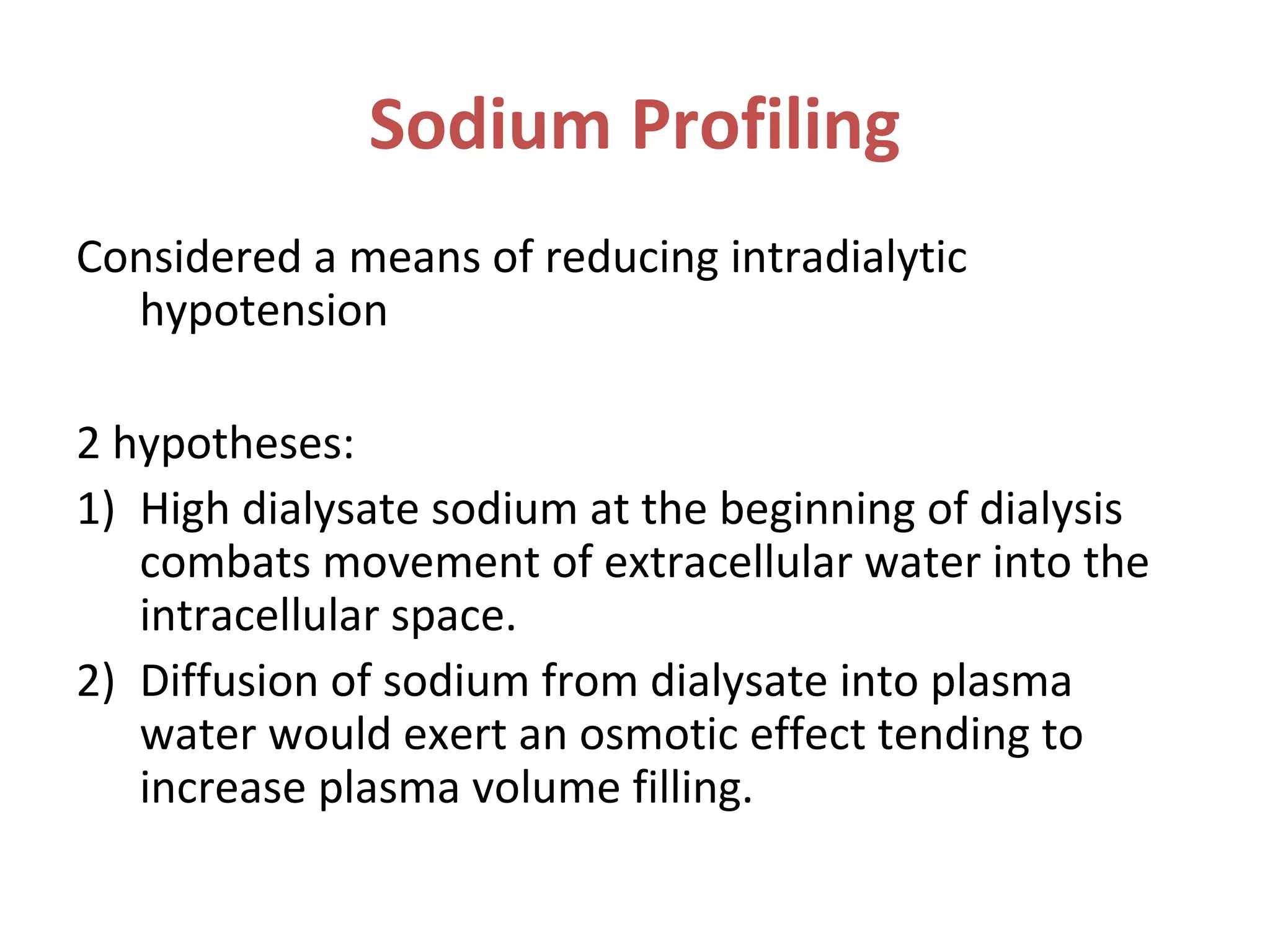
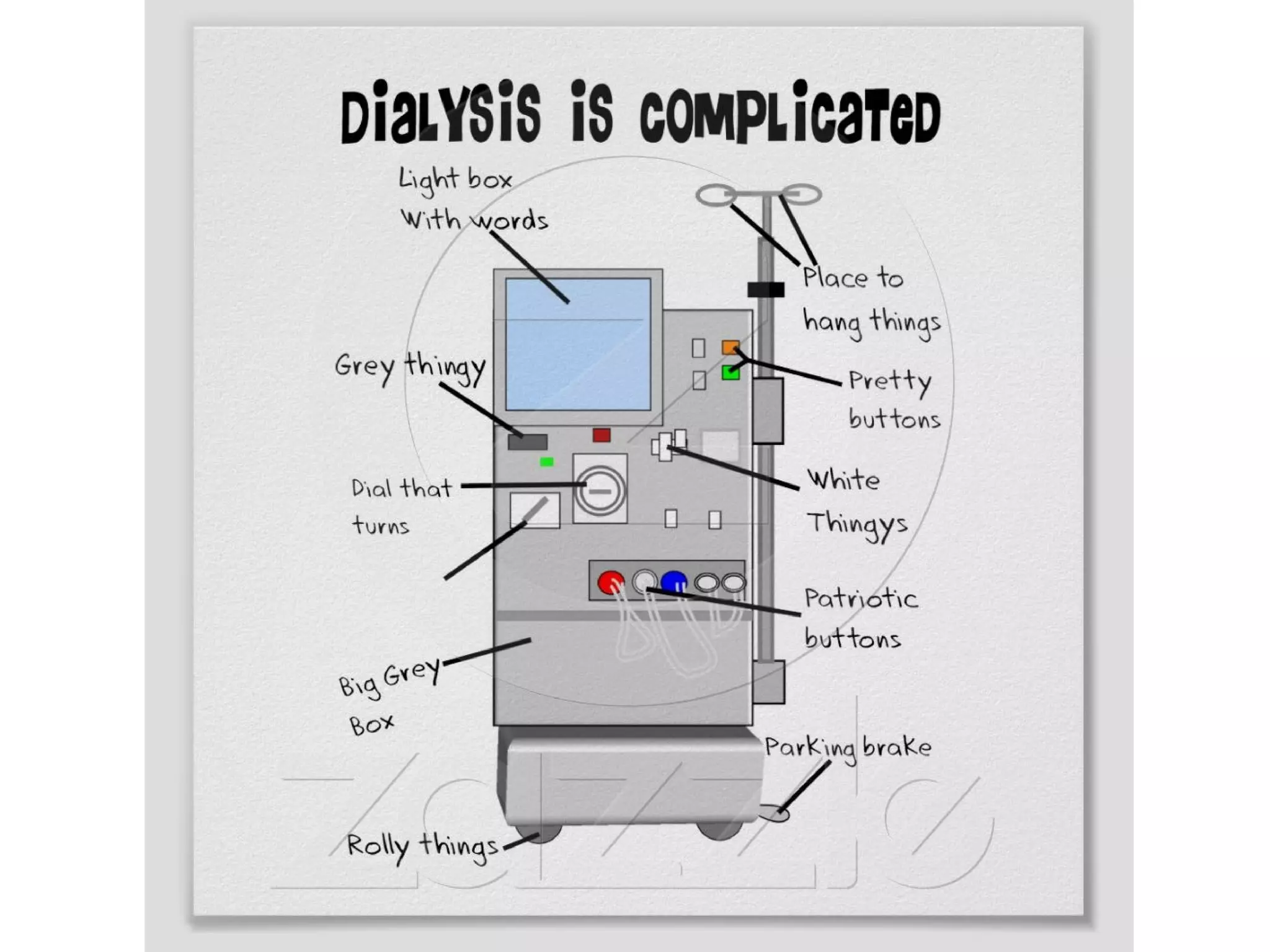
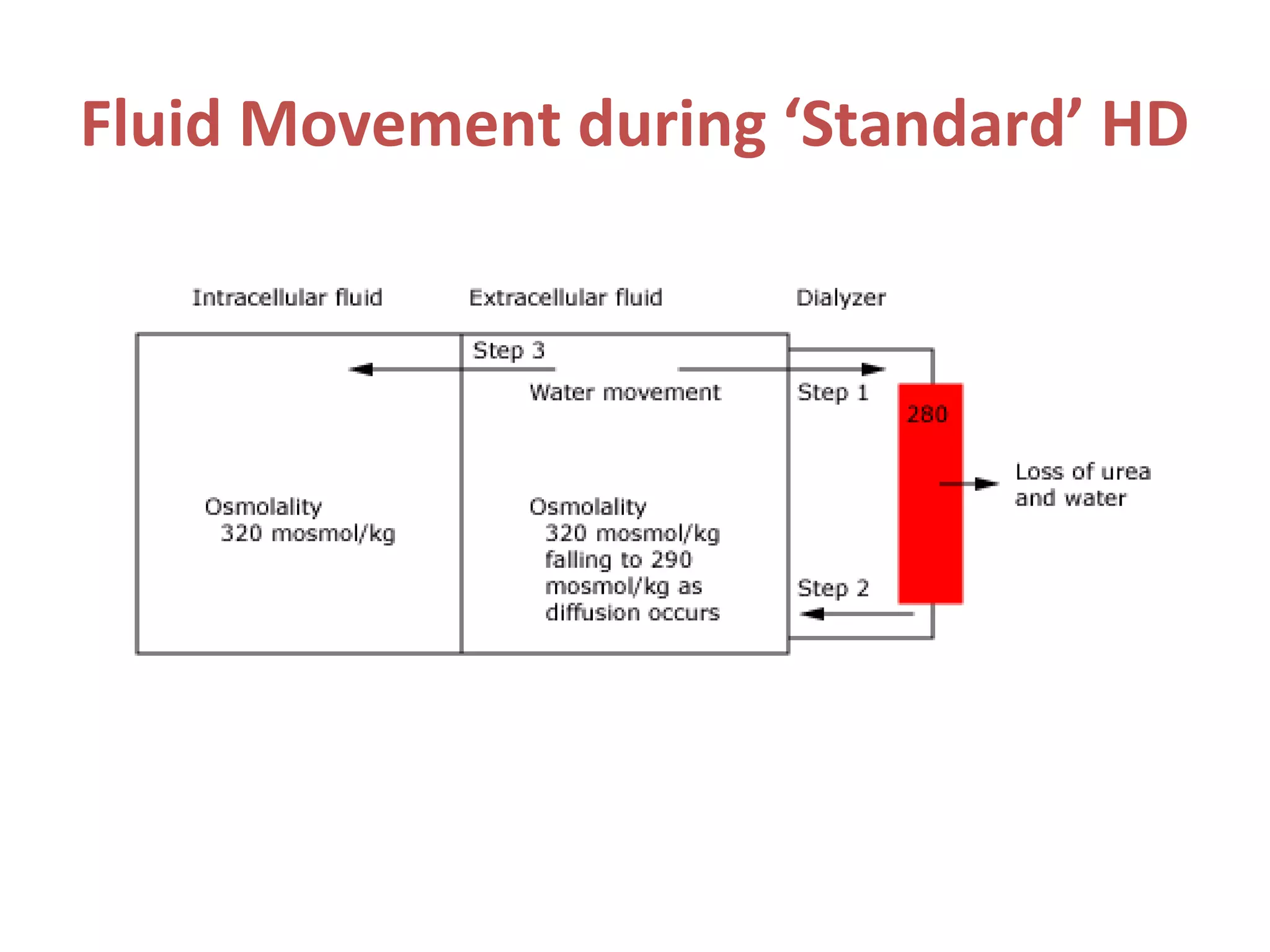
Considered a means of reducing intradialytic
hypotension
2 hypotheses:
1) High dialysate sodium at the beginning of dialysis
combats movement of extracellular water into the
intracellular space.
2) Diffusion of sodium from dialysate into plasma
water would exert an osmotic effect tending to
increase plasma volume filling.
Fluid shifts during Ultrafiltration
Fluid Movement during ‘Standard’ HD
Sodium Profiling
• Requires techniques to accurately follow the
changes in plasma sodium levels during the
session.
• Only advantageous for the patient in the long-
term if it results in a neutral sodium balance.
– Otherwise excess sodium will lead to higher IDWG,
thirst, hypertension
Summary
• Haemodialysis achieves its aims by a
combination of diffusive and convective
clearance.
• High standards of water purity required for
safety of the HD patient
• HDF holds promise for improved dialysis
outcomes but hurdles for implementation
need overcome
Hd and hdf

Hd and hdf

  • 1.
  • 2.
    Summary • A descriptionof the HD technique – Physics of solute and fluid removal • Diffusion / Convection – Haemodialysis vs. Haemofiltration vs. Haemodiafiltration • The importance of water purity • Dialysate – Sodium Profiling
  • 3.
    The Aim ofHaemodialysis ‘To deliver blood in a fail safe manner from the patient to the dialyzer, to enable an efficient removal of uraemic toxins and fluid, and to deliver the cleared blood back to the patient’
  • 4.
    Components of Haemodialysis BloodCircuit Patient | Vascular Access Blood Tubing and HD Machine Dialysate Circuit Dialysate / Dialysis Tubing Water Treatment System The Dialyzer
  • 5.
    The Dialyzer Composition 1)Blood Compartment 2)DialysateCompartment 3)Semipermeable membrane 4)Membrane support structure
  • 6.
    Dialyzer Design Hollow Fibre– ‘Cylinders within cylinders’ An ‘ideal’ dialyzer – Maximises surface area – Smallest amount of volume at given time
  • 7.
    And now forsome mathematics… The Hagen-Pouseille Equation ‘Blood flow more strongly dictated by radius rather than length’
  • 8.
    Diffusive Clearance • Solutetransfer across semipermeable membranes along concentration gradients – Mass transport without bulk motion
  • 9.
    Factors influencing DiffusionRate • Concentration gradient • Molecular weight/size • Membrane surface area • Membrane Permeability • Blood flow rate (Qb) • Dialysate flow rate (Qd)
  • 10.
    Relationship between bloodflow and solute clearance is non-linear
  • 11.
    Convective Clearance Solutes moveindependent of solute activity (size, concentration) but dependent on the rate of solvent flow – Provided size of pore permits movement Solutes travel at the same rate irrespective of size
  • 12.
    The Flux ofa Dialyzer Determined by Ultrafiltration Coefficient Quantity of pressure that must be exerted across dialysis membrane (transmembrane pressure) to generate a given volume of ultrafiltrate per unit time Low Flux – Less leaky to water High Flux – More leaky to water
  • 13.
    The Sieving Co-efficient S= Cfiltrate / Cplasma Any value between 0 (no transport) and 1 (unrestricted transport) For HIPS 20 SBeta-2Microglobulin = 0.8 SAlbumin = 0.005
  • 14.
    Summary: Overall Clearanceof Solute Small Molecules – Dictated mostly by diffusion – Efficacy limited by fluid flow Middle Weight Molecules – Dictated mostly by convection – Efficacy limited by properties of the membrane
  • 15.
  • 16.
  • 17.
  • 18.
  • 19.
  • 20.
    Haemodiafiltration • HDF combinesdiffusive, convective and adsorptive clearances in the same unit • More clearance of middle weight molecules without failure of small molecule removal
  • 21.
    Question Haemodialfiltration as amodality of dialysis has been associated with: a) Improved EPO response b) Improved Phosphate Clearance c) Reduction in rates of intradialytic hypotension d) Improved Mortality Risk e) All of the above
  • 22.
    Question Haemodialfiltration as amodality of dialysis has been associated with: a) Improved EPO response b) Improved Phosphate Clearance c) Reduction in rates of intradialytic hypotension d) Improved Mortality Risk e) All of the above
  • 23.
    Question Which component ofa HD water system is most important in ensuring that HD patients are not exposed to microbiological or chemical contamination? A)Good quality water from water provider B)Carbon Filters C)Ion Exchange Filters D)Reverse Osmosis E)Effective Disinfection of the HD machine
  • 24.
    Question Which component ofa HD water system is most important in ensuring that HD patients are not exposed to microbiological or chemical contamination? A)Good quality water from water provider B)Carbon Filters C)Ion Exchange Filters D)Reverse Osmosis E)Effective Disinfection of the HD machine
  • 25.
    ‘As human beings, youand I need fresh, pure water to replenish our precious bodily fluids.’
  • 26.
    Water Exposure inHaemodialysis • Haemodialysis patients may be exposed to 350 to 500 L of water per week through a non- selective membrane, depending upon their treatment time and dialysate flow rate. – In contrast to an average 12 litres per week through a highly selective membrane (intestinal tract) in healthy individuals.
  • 27.
    Regulation of WaterPurity ‘Guideline on water treatment facilities, dialysis water and dialysis fluid quality for haemodialysis and related therapies’ – Jan 2012 Association of Renal Technologists http://www.artery.org.uk
  • 28.
    International Regulation ofWater Purity for RRT • BS ISO 13959; 2009: Water for haemodialysis and related therapies, • BS ISO 11663; 2009: Quality of dialysis fluid for haemodialysis and related therapies, • BS ISO 26722; 2009: Water treatment equipment for haemodialysis and related therapies. • BS ISO 23500; 2011: Guidance for the preparation and quality management of fluids for haemodialysis and related therapies
  • 29.
    Standards (From ARTGuidelines 2012) ‘…dialysis water shall contain a total viable microbial count of less than 100 CFU/ml and an endotoxin concentration of less than 0.25 EU/ml‘ HOWEVER ‘…The concentrations of microbial contaminants and endotoxin in ultrapure dialysis fluid shall be < 0.1 CFU/mL and < 0.03EU/mL respectively when used for high flux haemodialysis…’
  • 30.
  • 31.
    Aluminium Toxicity Aluminum, inthe form of alum, is added to water to remove suspended colloidal matter; this process is called flocculation. Chronic exposure to aluminum is also associated with severe bone disease and erythropoietin-resistant anemia – Speech abnormalities – Myoclonic muscle spasms – Personality changes – Seizures – Dementia
  • 33.
    Dialysate ‘Dialysate characteristics influencethe final concentration of blood solute, intermediary protein, carbohydrate, and lipid metabolism and affect systemic vasomotor tone, cardiac contractility and rhythm, pulmonary gas exchange, and bone turnover.’ AJKD, Vol 46, No 5 (November), 2005: pp 976-981
  • 34.
    Composition • Sodium (standardor ‘profiled’) • Potassium (variable) • Calcium (variable) • Buffer – Bicarbonate – Kept separate from the remainder of dialysate to prevent precipitation of calcium carbonate – Mixed in machine to achieve pH=7.40
  • 35.
    Sodium Profiling Considered ameans of reducing intradialytic hypotension 2 hypotheses: 1) High dialysate sodium at the beginning of dialysis combats movement of extracellular water into the intracellular space. 2) Diffusion of sodium from dialysate into plasma water would exert an osmotic effect tending to increase plasma volume filling.
  • 36.
    Fluid shifts duringUltrafiltration
  • 37.
    Fluid Movement during‘Standard’ HD
  • 38.
    Sodium Profiling • Requirestechniques to accurately follow the changes in plasma sodium levels during the session. • Only advantageous for the patient in the long- term if it results in a neutral sodium balance. – Otherwise excess sodium will lead to higher IDWG, thirst, hypertension
  • 39.
    Summary • Haemodialysis achievesits aims by a combination of diffusive and convective clearance. • High standards of water purity required for safety of the HD patient • HDF holds promise for improved dialysis outcomes but hurdles for implementation need overcome

Editor's Notes

  • #26 General who has found a scapegoat for his own sexual inadequacies in the Russkies, Commies are unaffected by the plot to pollute the water of the world because they drink vodka.