Hazmat TrainingHazmat Training
W.E. Train ConsultingW.E. Train Consulting
To maintain the highest quality W.E. Train Consulting performs face-to-face
training, which means the trainer can adjust, slow down, repeat, or re-phrase
until each student understands the regulations. Training is customized to
your products and to your systems.
This Training is intended to provide emergency responders with the
knowledge, skills, and personal health strategies they need to safely and
effectively:
• Respond to hazardous materials incidents that occur at fixed sites and
during transport.
• Rectify hazardous situations that develop within routine calls.
Training ObjectivesTraining Objectives
 Recognize and identify the clues that determine the presence of
HazMat/WMD
 Research and evaluate exposure information.
 Consult references for information
 Make decisions and execute First Responder actions
 Implement defensive control measures that minimize risks to health and
safety
 Hazmat transportation regulatory context
 Overview of legal, and regulatory process
 Hazmat legislation and regulations
 USDOT regulations
 Compliance and enforcement
 Other regulatory requirements, standards, and guidelines
 Issues involving multiple/overlapping regulations
Topics cover in Training
Why Regulate Hazmat Transportation?Why Regulate Hazmat Transportation?
 The dangerous goods transported, if released or ignited, could cause harm
to human health or the environment.
 Some releases are catastrophic.
• Texas City, TX, cargo ship explosions, April 1947
• Waverly, TN, LP gas tank car, February 1978
• Caldecott Tunnel, CA, April 1982
• Baltimore, MD, rail tunnel fire, July 2001
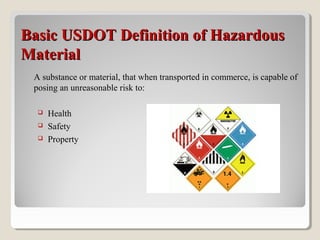
Basic USDOT Definition of HazardousBasic USDOT Definition of Hazardous
MaterialMaterial
A substance or material, that when transported in commerce, is capable of
posing an unreasonable risk to:
 Health
 Safety
 Property
Email: info@WEtrainConsulting.com
Website: www. wetrainconsulting.com

Hazmat training

  • 1.
  • 2.
    W.E. Train ConsultingW.E.Train Consulting To maintain the highest quality W.E. Train Consulting performs face-to-face training, which means the trainer can adjust, slow down, repeat, or re-phrase until each student understands the regulations. Training is customized to your products and to your systems. This Training is intended to provide emergency responders with the knowledge, skills, and personal health strategies they need to safely and effectively: • Respond to hazardous materials incidents that occur at fixed sites and during transport. • Rectify hazardous situations that develop within routine calls.
  • 3.
    Training ObjectivesTraining Objectives Recognize and identify the clues that determine the presence of HazMat/WMD  Research and evaluate exposure information.  Consult references for information  Make decisions and execute First Responder actions  Implement defensive control measures that minimize risks to health and safety
  • 4.
     Hazmat transportationregulatory context  Overview of legal, and regulatory process  Hazmat legislation and regulations  USDOT regulations  Compliance and enforcement  Other regulatory requirements, standards, and guidelines  Issues involving multiple/overlapping regulations Topics cover in Training
  • 5.
    Why Regulate HazmatTransportation?Why Regulate Hazmat Transportation?  The dangerous goods transported, if released or ignited, could cause harm to human health or the environment.  Some releases are catastrophic. • Texas City, TX, cargo ship explosions, April 1947 • Waverly, TN, LP gas tank car, February 1978 • Caldecott Tunnel, CA, April 1982 • Baltimore, MD, rail tunnel fire, July 2001
  • 6.
    Basic USDOT Definitionof HazardousBasic USDOT Definition of Hazardous MaterialMaterial A substance or material, that when transported in commerce, is capable of posing an unreasonable risk to:  Health  Safety  Property
  • 7.