English communication lab
BHUM-022
M.M. INSTITUTE OF COMPUTER TECHNOLOGY & BUSINESS MANAGEMENT
MAHARISHI MARKANDESHWAR (DEEMED TO BE UNIVERSITY)
MULLANA–AMBALA, HARYANA (INDIA) - 133207
(Established under Section 3 of the UGC Act, 1956
(Accredited by NAAC with Grade A++)
Submitted to –
Ms. Reshu rana
Assistant professor
MMICT BM
Submitted by –
Rahul Kumar Shrivastaw.
Roll no.-1322275
Section - D
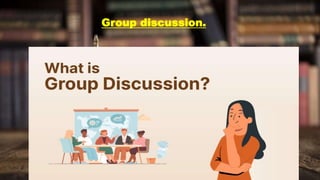
Group discussion.
What is group discussion?
Group discussion is a modern method of assesing students personality.
Group discussion is a process where exchange od idios and opinion take
place.
A topic is discussed by group.
How it conducted ?
A typically Group discussion comprises of a small group of candidates i.e
5 to 10.
Students sit in circular or shape arrangement.
Each group is then given a topic for discussion.
Students are given paper and pen and 2 minutes to think before they
start discussing.
A group discussion should last not more than 15-20 minutes.
Types of GD.
1) Factual topics
2) Abstract topics
3) Controversial topics
4) Case study based
1) Factual topics –
 A factual topic for discussion gives a candidate a chance to prove that
he is aware of and sensitive to his environment. Examples: The
education policy of India, Tourism in India, State of the aged in the
nation.
2.) Abstract topics –
 An abstract argument or discussion is general and not based on
particular examples: This debate is becoming too abstract - let's have
some hard facts! Opposite. concrete. Thesaurus: synonyms, antonyms,
and examples.
3.) Controversial topics –
Discussing controversial issues helps students with different backgrounds
and lifestyles to learn to live and work together peacefully and respectfully.
It encourages them to listen to each other and talk through their differences
sensitively.
Topics typically become controversial when students have competing
values and interests; when they strongly disagree about statements,
assertions, or actions; when the subject touches on some particular
sensitivity (e.g. political or religious); or when they arouse an emotional
reaction.
4.)Case study based topics –
The discussion focuses on analyzing the case study, identifying the problem
or issue, and proposing potential solutions or courses of action. Case studies-
based group discussions are commonly used in educational settings, such as
business schools, law schools, and medical schools.
Benefits.
a) Stimulation of thinking in a new way.
b) Expansion of knowledge.
c) Understanding your strength and weakness.
d) Your true personality is revealed and qualities of leadership crystallize.
e) Language skills.
f) Academic knowledge.
g) Leadership skills.
h) People handling skills.
i) Team work.
j) General knowledge.
Pre-requisites of a Group Discussion.
a) Planning and prepration.
b) Knowledge.
c) Communication skills.
d) Presentation
e) Body language and personal appearance.
f) Being calm and cool.
g) Listening skills.
h) Co-operation
i) Alertness and presence your mind.
j) Tone of talking.
k) Pitch of talking.
l) Articulation.
m) Fluency.
n) Modulation.
o) Good delivery.
p) Flow of thought.
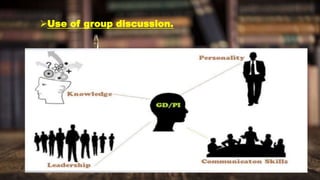
Use of group discussion.
Skills in group discussion.
Communication skills
Interpersonal skills
Leadership skills
Motivational skills
Team building skills
Tolerance skills
Academic skills
Listening skills
Presentation skills.
Analytical/logical skills.
What is judged?
How good you are at communication with others.
How you behave and interact with group.
How open minded are you.
You listening skills.
How your put forward your views.
Your leadership and decision making skills.
Your analysis and subject knowledge.
Problem solving critical thinking skills.
Your attitude and confidence.
Do’s-
Be a good listener.
Do not use high vocabulary.
Never use technical language while speaking.
Not knowing is not a problem, do not try to bluff.
Talk appropriate to the issue.
Make original points and support them by substantial reasoning.
Listen to the other participants actively and carefully.
Whatever you say must be with a logical flow.
Make only accurate statements.
Speak pleasantly and politely to the group.
Respect the contribution of every speaker.
Think about your contribution before you speak.
Try to stick to the discussion topic. Don’t introduce irrelevant
information.
Don’t-
Do not criticize on religion.
Do not get personal anyone.
Never ever try to bluff.
Do not shy or nervous.
Do not Interrupt another participant before his argument is over.
Do not change opinion.
Do not make fun of any other participants even he is argument funny.
Do not get irrited.
Don’t lose your temper , a discussion is not argument.
group discussion for any technical sector for example b.tech,bca,bba .pptx

group discussion for any technical sector for example b.tech,bca,bba .pptx

  • 1.
    English communication lab BHUM-022 M.M.INSTITUTE OF COMPUTER TECHNOLOGY & BUSINESS MANAGEMENT MAHARISHI MARKANDESHWAR (DEEMED TO BE UNIVERSITY) MULLANA–AMBALA, HARYANA (INDIA) - 133207 (Established under Section 3 of the UGC Act, 1956 (Accredited by NAAC with Grade A++) Submitted to – Ms. Reshu rana Assistant professor MMICT BM Submitted by – Rahul Kumar Shrivastaw. Roll no.-1322275 Section - D
  • 2.
  • 3.
    What is groupdiscussion? Group discussion is a modern method of assesing students personality. Group discussion is a process where exchange od idios and opinion take place. A topic is discussed by group.
  • 4.
    How it conducted? A typically Group discussion comprises of a small group of candidates i.e 5 to 10. Students sit in circular or shape arrangement. Each group is then given a topic for discussion. Students are given paper and pen and 2 minutes to think before they start discussing. A group discussion should last not more than 15-20 minutes.
  • 5.
    Types of GD. 1)Factual topics 2) Abstract topics 3) Controversial topics 4) Case study based
  • 6.
    1) Factual topics–  A factual topic for discussion gives a candidate a chance to prove that he is aware of and sensitive to his environment. Examples: The education policy of India, Tourism in India, State of the aged in the nation.
  • 7.
    2.) Abstract topics–  An abstract argument or discussion is general and not based on particular examples: This debate is becoming too abstract - let's have some hard facts! Opposite. concrete. Thesaurus: synonyms, antonyms, and examples.
  • 8.
    3.) Controversial topics– Discussing controversial issues helps students with different backgrounds and lifestyles to learn to live and work together peacefully and respectfully. It encourages them to listen to each other and talk through their differences sensitively. Topics typically become controversial when students have competing values and interests; when they strongly disagree about statements, assertions, or actions; when the subject touches on some particular sensitivity (e.g. political or religious); or when they arouse an emotional reaction.
  • 9.
    4.)Case study basedtopics – The discussion focuses on analyzing the case study, identifying the problem or issue, and proposing potential solutions or courses of action. Case studies- based group discussions are commonly used in educational settings, such as business schools, law schools, and medical schools.
  • 10.
    Benefits. a) Stimulation ofthinking in a new way. b) Expansion of knowledge. c) Understanding your strength and weakness. d) Your true personality is revealed and qualities of leadership crystallize. e) Language skills. f) Academic knowledge. g) Leadership skills. h) People handling skills. i) Team work. j) General knowledge.
  • 11.
    Pre-requisites of aGroup Discussion. a) Planning and prepration. b) Knowledge. c) Communication skills. d) Presentation e) Body language and personal appearance. f) Being calm and cool. g) Listening skills. h) Co-operation i) Alertness and presence your mind. j) Tone of talking. k) Pitch of talking. l) Articulation. m) Fluency. n) Modulation. o) Good delivery. p) Flow of thought.
  • 12.
    Use of groupdiscussion.
  • 13.
    Skills in groupdiscussion. Communication skills Interpersonal skills Leadership skills Motivational skills Team building skills Tolerance skills Academic skills Listening skills Presentation skills. Analytical/logical skills.
  • 14.
    What is judged? Howgood you are at communication with others. How you behave and interact with group. How open minded are you. You listening skills. How your put forward your views. Your leadership and decision making skills. Your analysis and subject knowledge. Problem solving critical thinking skills. Your attitude and confidence.
  • 15.
    Do’s- Be a goodlistener. Do not use high vocabulary. Never use technical language while speaking. Not knowing is not a problem, do not try to bluff. Talk appropriate to the issue. Make original points and support them by substantial reasoning. Listen to the other participants actively and carefully. Whatever you say must be with a logical flow. Make only accurate statements. Speak pleasantly and politely to the group. Respect the contribution of every speaker. Think about your contribution before you speak. Try to stick to the discussion topic. Don’t introduce irrelevant information.
  • 16.
    Don’t- Do not criticizeon religion. Do not get personal anyone. Never ever try to bluff. Do not shy or nervous. Do not Interrupt another participant before his argument is over. Do not change opinion. Do not make fun of any other participants even he is argument funny. Do not get irrited. Don’t lose your temper , a discussion is not argument.