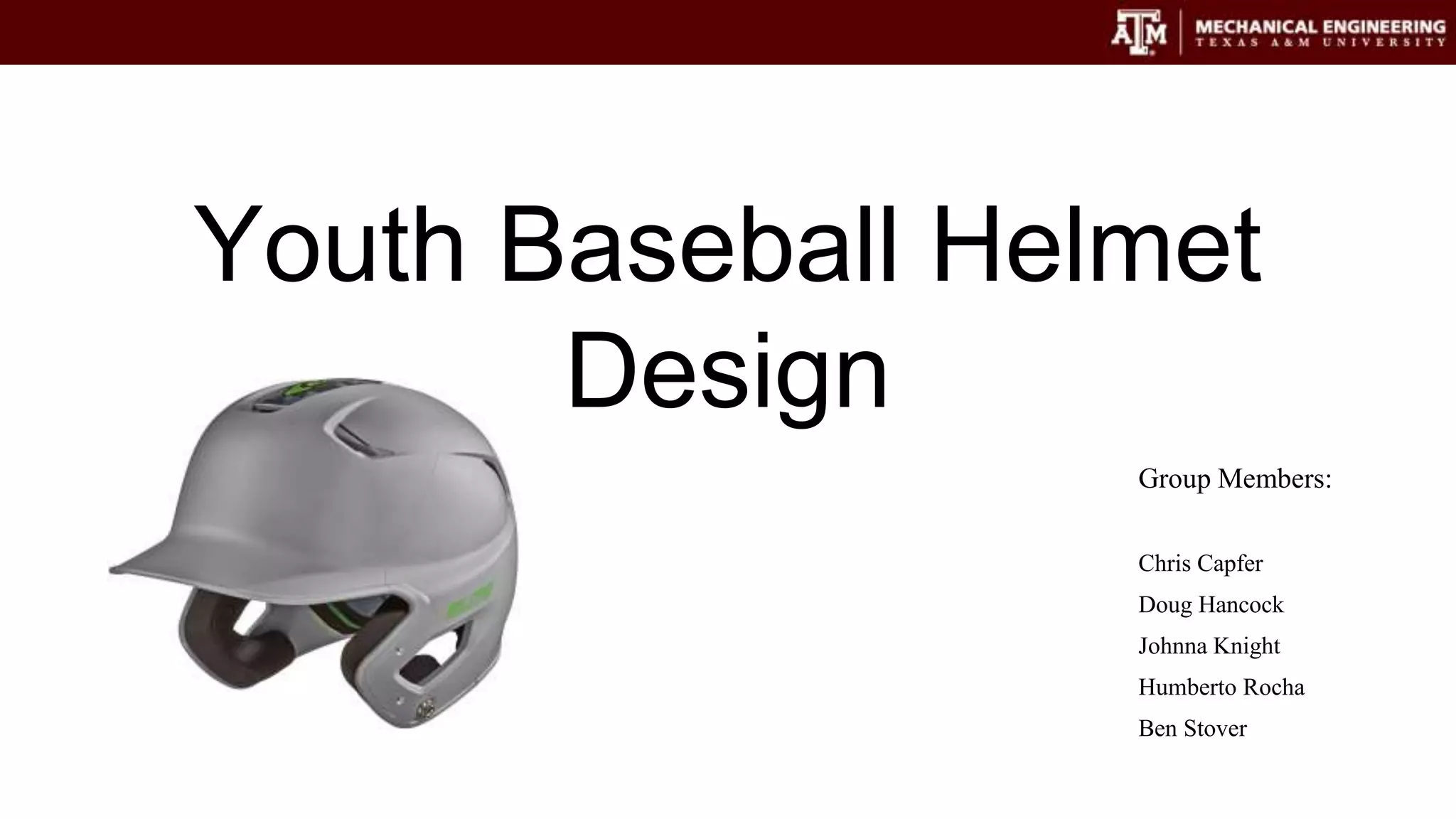
Youth Baseball Helmet
Design
Group Members:
Chris Capfer
Doug Hancock
Johnna Knight
Humberto Rocha
Ben Stover
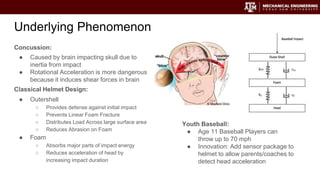
Underlying Phenomenon
Concussion:
● Caused by brain impacting skull due to
inertia from impact
● Rotational Acceleration is more dangerous
because it induces shear forces in brain
Classical Helmet Design:
● Outershell
○ Provides defense against initial impact
○ Prevents Linear Foam Fracture
○ Distributes Load Across large surface area
○ Reduces Abrasion on Foam
● Foam
○ Absorbs major parts of impact energy
○ Reduces acceleration of head by
increasing impact duration
Youth Baseball:
● Age 11 Baseball Players can
throw up to 70 mph
● Innovation: Add sensor package to
helmet to allow parents/coaches to
detect head acceleration
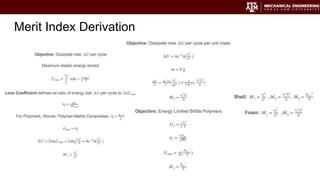
Merit Index Derivation
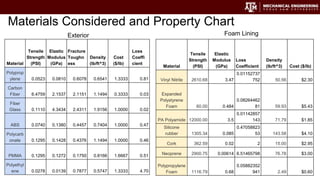
Materials Considered and Property Chart
Material
Tensile
Strength
(PSI)
Elastic
Modulus
(GPa)
Loss
Coefficient
Density
(lb/ft^3) Cost ($/lb)
Vinyl Nitrile 2610.68 3.47
0.01152737
752 50.56 $2.30
Expanded
Polystyrene
Foam 60.00 0.484
0.08264462
81 59.93 $5.43
PA Polyamide 12000.00 3.5
0.01142857
143 71.79 $1.85
Silicone
rubber 1305.34 0.085
0.47058823
53 143.58 $4.10
Cork 362.59 0.02 2 15.00 $2.95
Neoprene 2900.75 0.00614 6.51465798 76.78 $3.00
Polypropylene
Foam 1116.79 0.68
0.05882352
941 2.49 $0.60
Exterior Foam Lining
Material
Tensile
Strength
(PSI)
Elastic
Modulus
(GPa)
Fracture
Toughn
ess
Density
(lb/ft^3)
Cost
($/lb)
Loss
Coeffi
cient
Polyprop
ylene 0.0523 0.0810 0.6078 0.6541 1.3333 0.81
Carbon
Fiber 6.4759 2.1537 2.1151 1.1494 0.3333 0.03
Fiber
Glass 0.1110 4.3434 2.4311 1.9156 1.0000 0.02
ABS 0.0740 0.1380 0.4457 0.7404 1.0000 0.47
Polycarb
onate 0.1295 0.1428 0.4376 1.1494 1.0000 0.46
PMMA 0.1295 0.1272 0.1750 0.8166 1.6667 0.51
Polyethyl
ene 0.0278 0.0139 0.7877 0.5747 1.3333 4.70
Analysis Results
Interior AHP Material Selection
MATERIAL SCORE RANK
Vinyl Nitrile 0.1497 5
Expanded Polystyrene Foam 0.0668 6
PA Polyamide 0.2733 2
Silicone rubber 0.1641 3
Cork 0.1628 4
Neoprene 0.5411 1
Polypropylene Foam 0.0424 7
Exterior AHP Material Selection
MATERIAL SCORE RANK
Polypropylene 0.0841 4
Carbon Fiber 0.3652 2
Fiber Glass 0.4009 1
ABS 0.0716 5
Polycarbonate 0.0628 7
PMMA 0.0693 6
Polyethylene 0.1218 3
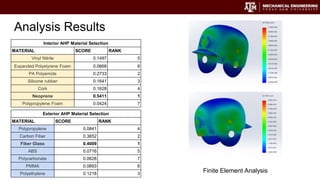
Finite Element Analysis
References
Image
1. “Concussions.” Mayfield Clinc,
mayfieldclinic.com/Images/PE-TBIfig1.jpg.
Research
1. Fernandes, F.a.o., and R.j. Alves De Sousa. “Motorcycle
helmets—A state of the art review.” Accident Analysis &
Prevention, vol. 56, 2013, pp. 1–21.,
doi:10.1016/j.aap.2013.03.011.
2. Pinnoji, P.k., et al. “Impact dynamics of metal foam shells for
motorcycle helmets: Experiments & numerical modeling.”
International Journal of Impact Engineering, vol. 37, no. 3,
2010, pp. 274–284., doi:10.1016/j.ijimpeng.2009.05.013.
3. Qiao, Pizhong, et al. “Impact Mechanics and High-Energy
Absorbing Materials: Review.” Journal of Aerospace
Engineering, vol. 21, no. 4, 2008, pp. 235–248.,
doi:10.1061/(asce)0893-1321(2008)21:4(235).
4. Robinson, Matthew B., et al. “Reducing effect of softball-to-
Head impact by incorporating slip-Surface in helmet.”
Procedia Engineering, vol. 13, 2011, pp. 415–421.,
doi:10.1016/j.proeng.2011.05.107.
5. Schwizer, Patrick, et al. “Evaluation of Catcher Mask
Impacts.” Procedia Engineering, vol. 147, 2016, pp. 228–
233., doi:10.1016/j.proeng.2016.06.218.

Group 6 MEEN 475 baseball_helmet

  • 1.
    Youth Baseball Helmet Design GroupMembers: Chris Capfer Doug Hancock Johnna Knight Humberto Rocha Ben Stover
  • 2.
    Underlying Phenomenon Concussion: ● Causedby brain impacting skull due to inertia from impact ● Rotational Acceleration is more dangerous because it induces shear forces in brain Classical Helmet Design: ● Outershell ○ Provides defense against initial impact ○ Prevents Linear Foam Fracture ○ Distributes Load Across large surface area ○ Reduces Abrasion on Foam ● Foam ○ Absorbs major parts of impact energy ○ Reduces acceleration of head by increasing impact duration Youth Baseball: ● Age 11 Baseball Players can throw up to 70 mph ● Innovation: Add sensor package to helmet to allow parents/coaches to detect head acceleration
  • 3.
  • 4.
    Materials Considered andProperty Chart Material Tensile Strength (PSI) Elastic Modulus (GPa) Loss Coefficient Density (lb/ft^3) Cost ($/lb) Vinyl Nitrile 2610.68 3.47 0.01152737 752 50.56 $2.30 Expanded Polystyrene Foam 60.00 0.484 0.08264462 81 59.93 $5.43 PA Polyamide 12000.00 3.5 0.01142857 143 71.79 $1.85 Silicone rubber 1305.34 0.085 0.47058823 53 143.58 $4.10 Cork 362.59 0.02 2 15.00 $2.95 Neoprene 2900.75 0.00614 6.51465798 76.78 $3.00 Polypropylene Foam 1116.79 0.68 0.05882352 941 2.49 $0.60 Exterior Foam Lining Material Tensile Strength (PSI) Elastic Modulus (GPa) Fracture Toughn ess Density (lb/ft^3) Cost ($/lb) Loss Coeffi cient Polyprop ylene 0.0523 0.0810 0.6078 0.6541 1.3333 0.81 Carbon Fiber 6.4759 2.1537 2.1151 1.1494 0.3333 0.03 Fiber Glass 0.1110 4.3434 2.4311 1.9156 1.0000 0.02 ABS 0.0740 0.1380 0.4457 0.7404 1.0000 0.47 Polycarb onate 0.1295 0.1428 0.4376 1.1494 1.0000 0.46 PMMA 0.1295 0.1272 0.1750 0.8166 1.6667 0.51 Polyethyl ene 0.0278 0.0139 0.7877 0.5747 1.3333 4.70
  • 5.
    Analysis Results Interior AHPMaterial Selection MATERIAL SCORE RANK Vinyl Nitrile 0.1497 5 Expanded Polystyrene Foam 0.0668 6 PA Polyamide 0.2733 2 Silicone rubber 0.1641 3 Cork 0.1628 4 Neoprene 0.5411 1 Polypropylene Foam 0.0424 7 Exterior AHP Material Selection MATERIAL SCORE RANK Polypropylene 0.0841 4 Carbon Fiber 0.3652 2 Fiber Glass 0.4009 1 ABS 0.0716 5 Polycarbonate 0.0628 7 PMMA 0.0693 6 Polyethylene 0.1218 3 Finite Element Analysis
  • 6.
    References Image 1. “Concussions.” MayfieldClinc, mayfieldclinic.com/Images/PE-TBIfig1.jpg. Research 1. Fernandes, F.a.o., and R.j. Alves De Sousa. “Motorcycle helmets—A state of the art review.” Accident Analysis & Prevention, vol. 56, 2013, pp. 1–21., doi:10.1016/j.aap.2013.03.011. 2. Pinnoji, P.k., et al. “Impact dynamics of metal foam shells for motorcycle helmets: Experiments & numerical modeling.” International Journal of Impact Engineering, vol. 37, no. 3, 2010, pp. 274–284., doi:10.1016/j.ijimpeng.2009.05.013. 3. Qiao, Pizhong, et al. “Impact Mechanics and High-Energy Absorbing Materials: Review.” Journal of Aerospace Engineering, vol. 21, no. 4, 2008, pp. 235–248., doi:10.1061/(asce)0893-1321(2008)21:4(235). 4. Robinson, Matthew B., et al. “Reducing effect of softball-to- Head impact by incorporating slip-Surface in helmet.” Procedia Engineering, vol. 13, 2011, pp. 415–421., doi:10.1016/j.proeng.2011.05.107. 5. Schwizer, Patrick, et al. “Evaluation of Catcher Mask Impacts.” Procedia Engineering, vol. 147, 2016, pp. 228– 233., doi:10.1016/j.proeng.2016.06.218.