Green
Technology
Green Technology
• Green technology acts to reduce contaminants
and harmful processes through directly
counteracting them, or through altering the
conditions that creates them.
• It is technology which is environmentally
friendly, developed and used in such way so
that it doesn’t disturb our environment and
conserves natural resources.
Types of green technology
 Green chemistry
 Green nanotechnology
 Green building
 Green Information Technology
 Green energy
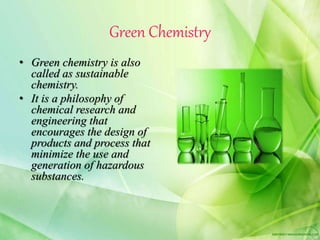
Green Chemistry
• Green chemistry is also
called as sustainable
chemistry.
• It is a philosophy of
chemical research and
engineering that
encourages the design of
products and process that
minimize the use and
generation of hazardous
substances.
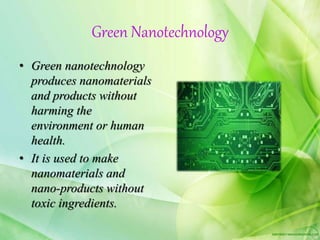
Green Nanotechnology
• Green nanotechnology
produces nanomaterials
and products without
harming the
environment or human
health.
• It is used to make
nanomaterials and
nano-products without
toxic ingredients.
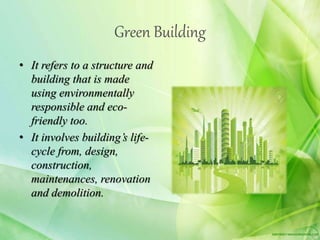
Green Building
• It refers to a structure and
building that is made
using environmentally
responsible and eco-
friendly too.
• It involves building’s life-
cycle from, design,
construction,
maintenances, renovation
and demolition.
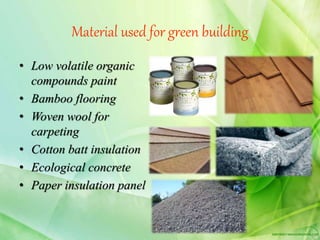
Material used for green building
• Low volatile organic
compounds paint
• Bamboo flooring
• Woven wool for
carpeting
• Cotton batt insulation
• Ecological concrete
• Paper insulation panel
Famous green building
Of the world.....
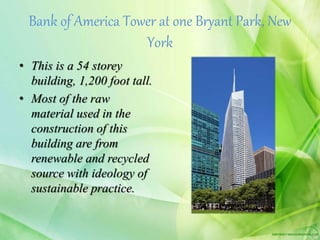
Bank of America Tower at one Bryant Park, New
York
• This is a 54 storey
building, 1,200 foot tall.
• Most of the raw
material used in the
construction of this
building are from
renewable and recycled
source with ideology of
sustainable practice.
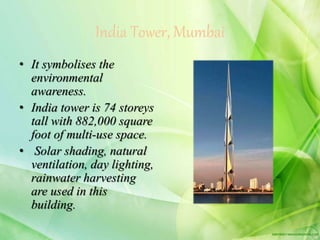
India Tower, Mumbai
• It symbolises the
environmental
awareness.
• India tower is 74 storeys
tall with 882,000 square
foot of multi-use space.
• Solar shading, natural
ventilation, day lighting,
rainwater harvesting
are used in this
building.
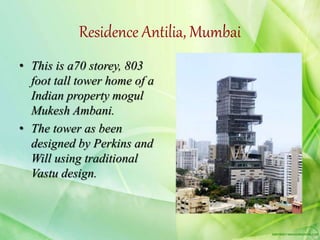
Residence Antilia, Mumbai
• This is a70 storey, 803
foot tall tower home of a
Indian property mogul
Mukesh Ambani.
• The tower as been
designed by Perkins and
Will using traditional
Vastu design.
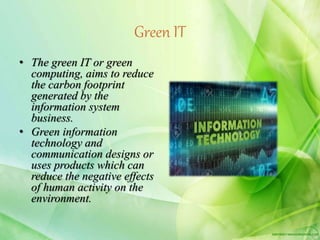
Green IT
• The green IT or green
computing, aims to reduce
the carbon footprint
generated by the
information system
business.
• Green information
technology and
communication designs or
uses products which can
reduce the negative effects
of human activity on the
environment.
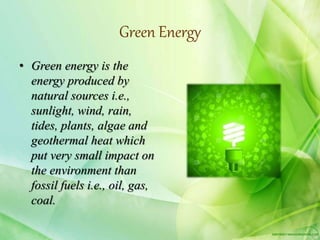
Green Energy
• Green energy is the
energy produced by
natural sources i.e.,
sunlight, wind, rain,
tides, plants, algae and
geothermal heat which
put very small impact on
the environment than
fossil fuels i.e., oil, gas,
coal.
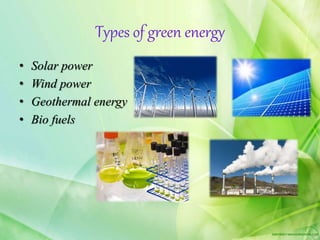
Types of green energy
• Solar power
• Wind power
• Geothermal energy
• Bio fuels
Technical companies who are proactive about being
Green
• Nokia
• Dell
• Cisco
• Intel
Indian companies using Green Technology
• IBM
• LG Electronics
• Tata Motors
• Hero Honda Motors
• Reliance Industries
What we can do for
Our nature.....
• Use eco friendly products.
• Use renewable energy sources.
• Switch to compact florescent or LED light bulbs.
• Turn off the water when you are not using it.
• Avoid using disposable items.
• Grow more and more plants.
• Create awareness among people about the
environmental issues and ways to save it.
Advantages of Green Technology
• Green construction and technologies focuses
on reducing the overall impact of construction
on human health and the natural environment.
• Green products and techniques work to utilize
resources-water, gas, electricity, etc more
efficiently while reducing waste, pollution, and
environmental degradation.
• It is renewable which means it will never run out.
• It reduces carbon emissions and control
temperature rise.
• It does not emit anything harmful into the air.
• It can bring economic benefits to certain areas.
• It requires less maintenance.
Disadvantages of Green Technology
• High implementing costs.
• Lack of information.
• No known alternative chemical or raw
material inputs.
• No known alternative process technology.
• Uncertainty about performance impact.
• Lack of human resources and skills.
Made by:- Aayushi
Gautam
Class:- IXth
Roll no.:- 01

Green technology

  • 1.
  • 2.
    Green Technology • Greentechnology acts to reduce contaminants and harmful processes through directly counteracting them, or through altering the conditions that creates them. • It is technology which is environmentally friendly, developed and used in such way so that it doesn’t disturb our environment and conserves natural resources.
  • 3.
    Types of greentechnology  Green chemistry  Green nanotechnology  Green building  Green Information Technology  Green energy
  • 4.
    Green Chemistry • Greenchemistry is also called as sustainable chemistry. • It is a philosophy of chemical research and engineering that encourages the design of products and process that minimize the use and generation of hazardous substances.
  • 5.
    Green Nanotechnology • Greennanotechnology produces nanomaterials and products without harming the environment or human health. • It is used to make nanomaterials and nano-products without toxic ingredients.
  • 6.
    Green Building • Itrefers to a structure and building that is made using environmentally responsible and eco- friendly too. • It involves building’s life- cycle from, design, construction, maintenances, renovation and demolition.
  • 7.
    Material used forgreen building • Low volatile organic compounds paint • Bamboo flooring • Woven wool for carpeting • Cotton batt insulation • Ecological concrete • Paper insulation panel
  • 8.
  • 9.
    Bank of AmericaTower at one Bryant Park, New York • This is a 54 storey building, 1,200 foot tall. • Most of the raw material used in the construction of this building are from renewable and recycled source with ideology of sustainable practice.
  • 10.
    India Tower, Mumbai •It symbolises the environmental awareness. • India tower is 74 storeys tall with 882,000 square foot of multi-use space. • Solar shading, natural ventilation, day lighting, rainwater harvesting are used in this building.
  • 11.
    Residence Antilia, Mumbai •This is a70 storey, 803 foot tall tower home of a Indian property mogul Mukesh Ambani. • The tower as been designed by Perkins and Will using traditional Vastu design.
  • 12.
    Green IT • Thegreen IT or green computing, aims to reduce the carbon footprint generated by the information system business. • Green information technology and communication designs or uses products which can reduce the negative effects of human activity on the environment.
  • 13.
    Green Energy • Greenenergy is the energy produced by natural sources i.e., sunlight, wind, rain, tides, plants, algae and geothermal heat which put very small impact on the environment than fossil fuels i.e., oil, gas, coal.
  • 14.
    Types of greenenergy • Solar power • Wind power • Geothermal energy • Bio fuels
  • 15.
    Technical companies whoare proactive about being Green • Nokia • Dell • Cisco • Intel
  • 16.
    Indian companies usingGreen Technology • IBM • LG Electronics • Tata Motors • Hero Honda Motors • Reliance Industries
  • 17.
    What we cando for Our nature.....
  • 18.
    • Use ecofriendly products. • Use renewable energy sources. • Switch to compact florescent or LED light bulbs. • Turn off the water when you are not using it. • Avoid using disposable items. • Grow more and more plants. • Create awareness among people about the environmental issues and ways to save it.
  • 19.
    Advantages of GreenTechnology • Green construction and technologies focuses on reducing the overall impact of construction on human health and the natural environment. • Green products and techniques work to utilize resources-water, gas, electricity, etc more efficiently while reducing waste, pollution, and environmental degradation.
  • 20.
    • It isrenewable which means it will never run out. • It reduces carbon emissions and control temperature rise. • It does not emit anything harmful into the air. • It can bring economic benefits to certain areas. • It requires less maintenance.
  • 21.
    Disadvantages of GreenTechnology • High implementing costs. • Lack of information. • No known alternative chemical or raw material inputs. • No known alternative process technology. • Uncertainty about performance impact. • Lack of human resources and skills.
  • 22.