Green Strings:
Exploring Eco-
Friendly Guitar
Options
As musicians become more environmentally conscious,
there's growing curiosity about the sustainability of
guitar gear—especially guitar strings. While many
components of a guitar, such as the guitar bridge, guitar
tailpiece, and bridge saddles, are durable and long-
lasting, strings are consumables, regularly replaced and
often discarded. This article explores the environmental
implications of traditional guitar strings and the
emerging eco-friendly alternatives.
Introduction
The
Environmental
Footprint of Guitar
Strings
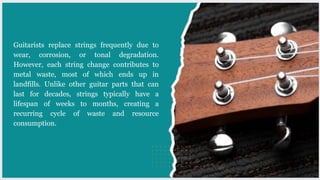
Guitarists replace strings frequently due to
wear, corrosion, or tonal degradation.
However, each string change contributes to
metal waste, most of which ends up in
landfills. Unlike other guitar parts that can
last for decades, strings typically have a
lifespan of weeks to months, creating a
recurring cycle of waste and resource
consumption.
Most guitar strings are made from metals like nickel,
stainless steel, and phosphor bronze. These materials
require significant energy and water to extract and
process, which results in a notable carbon footprint.
Some strings also have polymer coatings to increase their
lifespan, but these coatings are not biodegradable and
complicate recycling efforts.
What Are Guitar Strings
Made Of?
The environmental impact of guitar strings isn’t limited to the strings themselves.
Many come in individually sealed plastic or foil pouches, often with paper inserts and
adhesives. These mixed-material packages are difficult to recycle and frequently end up
in the trash. Given the frequency of string changes, the packaging waste alone adds up
quickly.
Packaging Waste
Most guitar parts, such as the bridge saddles
and tailpiece, are made from solid metals and can
last a lifetime with minimal care. In contrast, guitar
strings are inherently temporary. This highlights a
major sustainability challenge: the more disposable
a component, the greater its environmental toll.
Lifespan Comparison with Other Guitar Parts
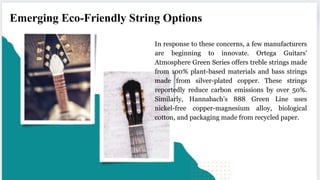
In response to these concerns, a few manufacturers
are beginning to innovate. Ortega Guitars'
Atmosphere Green Series offers treble strings made
from 100% plant-based materials and bass strings
made from silver-plated copper. These strings
reportedly reduce carbon emissions by over 50%.
Similarly, Hannabach’s 888 Green Line uses
nickel-free copper-magnesium alloy, biological
cotton, and packaging made from recycled paper.
Emerging Eco-Friendly String Options
Recycling and Upcycling Initiatives
Beyond new materials, some
programs aim to close the loop.
D’Addario’s Playback Program, in
partnership with TerraCycle, enables
guitarists to send in used strings for
recycling. Meanwhile, companies like
Restrung Jewelry transform old
strings into handmade accessories
and donate part of their proceeds to
music charities.
Eco-conscious musicians can take several steps to
reduce waste. Choose string brands that use
minimal or recyclable packaging. Clean your hands
before playing and wipe down your strings
afterward to extend their lifespan. If recycling isn’t
an option, consider creative ways to reuse strings,
such as turning them into art or tools.
Tips for Greener Guitar Habits
The focus on sustainable strings reflects a broader shift in how
musicians engage with their gear. By paying attention to the
environmental impact of even small components, artists can
reduce their ecological footprint without sacrificing
performance. Choosing greener strings, recycling what we
can, and valuing long-lasting guitar parts helps align our musical
practices with a more sustainable future.
Why This Matters

Green Strings: Exploring Eco-Friendly Guitar Options

  • 1.
  • 2.
    As musicians becomemore environmentally conscious, there's growing curiosity about the sustainability of guitar gear—especially guitar strings. While many components of a guitar, such as the guitar bridge, guitar tailpiece, and bridge saddles, are durable and long- lasting, strings are consumables, regularly replaced and often discarded. This article explores the environmental implications of traditional guitar strings and the emerging eco-friendly alternatives. Introduction
  • 3.
  • 4.
    Guitarists replace stringsfrequently due to wear, corrosion, or tonal degradation. However, each string change contributes to metal waste, most of which ends up in landfills. Unlike other guitar parts that can last for decades, strings typically have a lifespan of weeks to months, creating a recurring cycle of waste and resource consumption.
  • 5.
    Most guitar stringsare made from metals like nickel, stainless steel, and phosphor bronze. These materials require significant energy and water to extract and process, which results in a notable carbon footprint. Some strings also have polymer coatings to increase their lifespan, but these coatings are not biodegradable and complicate recycling efforts. What Are Guitar Strings Made Of?
  • 6.
    The environmental impactof guitar strings isn’t limited to the strings themselves. Many come in individually sealed plastic or foil pouches, often with paper inserts and adhesives. These mixed-material packages are difficult to recycle and frequently end up in the trash. Given the frequency of string changes, the packaging waste alone adds up quickly. Packaging Waste
  • 7.
    Most guitar parts,such as the bridge saddles and tailpiece, are made from solid metals and can last a lifetime with minimal care. In contrast, guitar strings are inherently temporary. This highlights a major sustainability challenge: the more disposable a component, the greater its environmental toll. Lifespan Comparison with Other Guitar Parts
  • 8.
    In response tothese concerns, a few manufacturers are beginning to innovate. Ortega Guitars' Atmosphere Green Series offers treble strings made from 100% plant-based materials and bass strings made from silver-plated copper. These strings reportedly reduce carbon emissions by over 50%. Similarly, Hannabach’s 888 Green Line uses nickel-free copper-magnesium alloy, biological cotton, and packaging made from recycled paper. Emerging Eco-Friendly String Options
  • 9.
    Recycling and UpcyclingInitiatives Beyond new materials, some programs aim to close the loop. D’Addario’s Playback Program, in partnership with TerraCycle, enables guitarists to send in used strings for recycling. Meanwhile, companies like Restrung Jewelry transform old strings into handmade accessories and donate part of their proceeds to music charities.
  • 10.
    Eco-conscious musicians cantake several steps to reduce waste. Choose string brands that use minimal or recyclable packaging. Clean your hands before playing and wipe down your strings afterward to extend their lifespan. If recycling isn’t an option, consider creative ways to reuse strings, such as turning them into art or tools. Tips for Greener Guitar Habits
  • 11.
    The focus onsustainable strings reflects a broader shift in how musicians engage with their gear. By paying attention to the environmental impact of even small components, artists can reduce their ecological footprint without sacrificing performance. Choosing greener strings, recycling what we can, and valuing long-lasting guitar parts helps align our musical practices with a more sustainable future. Why This Matters